

 Download PDF
Market Overview
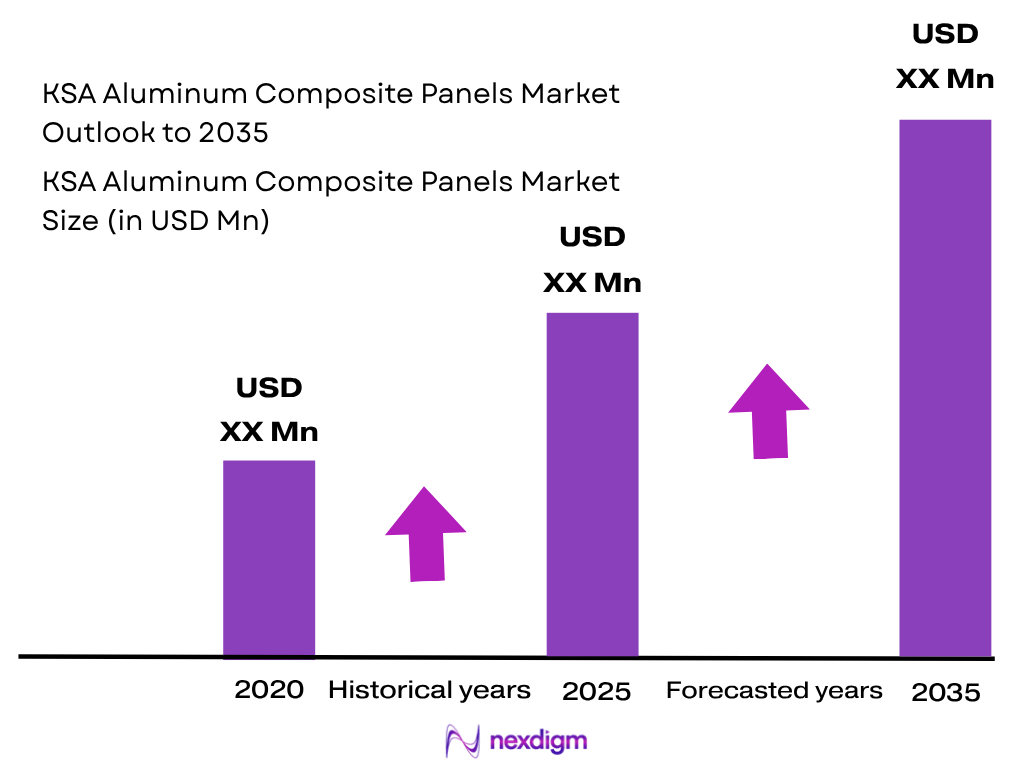
The KSA Aluminum Composite Panels Market is valued at ~USD XX billion, supported by increasing demand from commercial construction, high-rise developments, retail complexes, hospitality projects, and facade renovation activities. The market is driven by the adoption of lightweight, durable, and aesthetically flexible cladding materials across modern building projects. Growth in urban development programs, including large-scale infrastructure and mixed-use developments under national transformation initiatives, is strengthening demand for aluminum composite panels across architectural and construction applications.
The KSA Aluminum Composite Panels Market is concentrated in major urban centers including Riyadh, Jeddah, and Dammam due to their strong construction activity, commercial development pipelines, and expanding real estate infrastructure. Riyadh dominates due to government-led development programs, corporate office construction, and mega urban projects. Jeddah experiences strong demand from hospitality, retail, and coastal commercial developments, while Dammam benefits from industrial expansion and infrastructure investments. These cities have higher adoption of advanced facade materials due to increasing requirements for modern building aesthetics, thermal performance, and durable exterior cladding solutions.
Market Segmentation
By Core Material Type
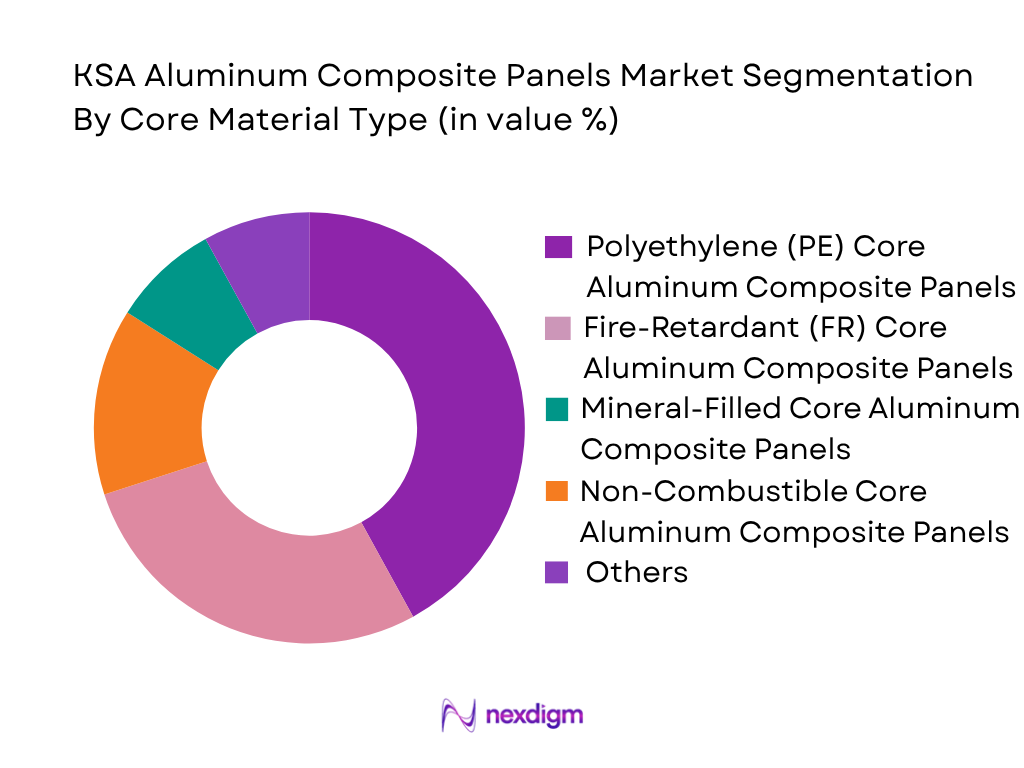
The KSA Aluminum Composite Panels Market is segmented by core material type into polyethylene (PE) core aluminum composite panels, fire-retardant (FR) core aluminum composite panels, mineral-filled core aluminum composite panels, non-combustible core aluminum composite panels, aluminum honeycomb composite panels, and hybrid core aluminum composite panels. Polyethylene (PE) core aluminum composite panels represent the dominant segment with a market share of ~XX% in 2024 due to their extensive usage in commercial buildings, residential projects, signage applications, and interior decoration projects. PE-core ACP panels are preferred because of their lightweight characteristics, cost efficiency, easy fabrication process, and availability through established construction material suppliers. The segment continues to benefit from widespread contractor familiarity and suitability for standard facade applications. However, rising emphasis on fire safety regulations in high-rise buildings and public infrastructure projects is increasing adoption of FR-core and mineral-filled ACP solutions.
By Application
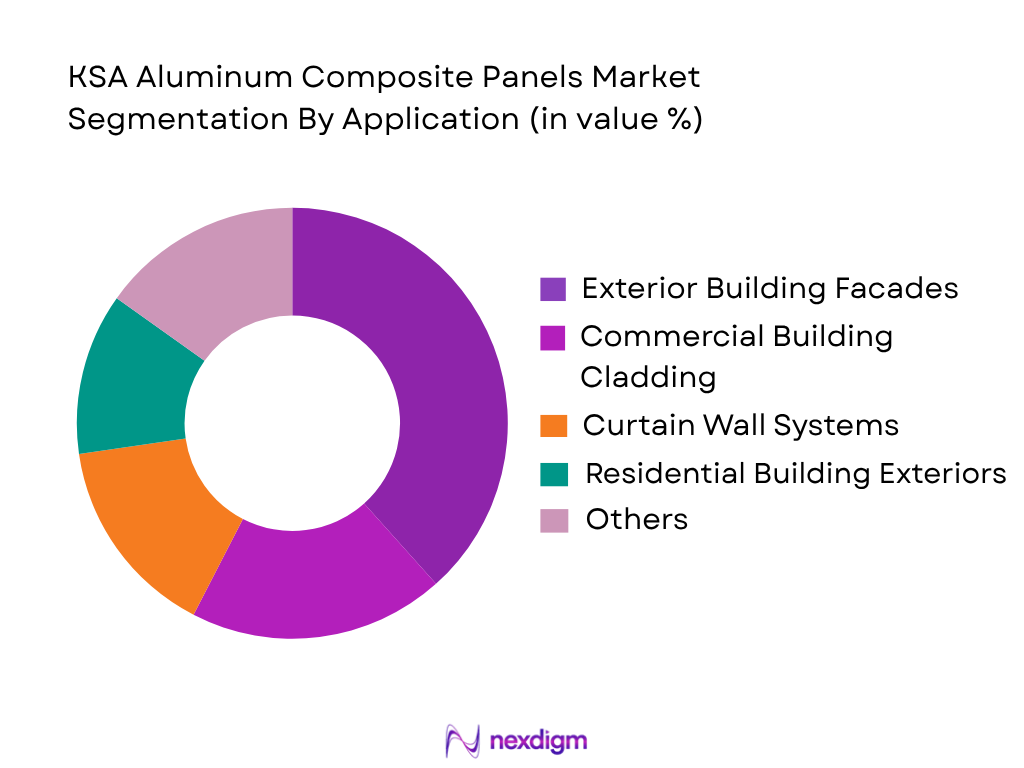
The KSA Aluminum Composite Panels Market is segmented by application into exterior building facades, curtain wall systems, ventilated facade systems, commercial building cladding, residential building exteriors, industrial cladding, transportation infrastructure, interior wall applications, and signage applications. Exterior building facade applications represent the dominant segment with a market share of ~XX% in 2024 due to increasing utilization of ACP systems in commercial towers, hospitality buildings, shopping malls, and mixed-use developments. Aluminum composite panels are extensively adopted for external applications because of their lightweight structure, corrosion resistance, design flexibility, and compatibility with modern architectural requirements. Expansion of urban construction activities in Riyadh, Jeddah, and other metropolitan areas is increasing demand for contemporary facade solutions. Additionally, facade renovation projects are supporting ACP adoption as property owners seek improved aesthetics, durability, and energy-efficient building envelope solutions.
Competitive Landscape
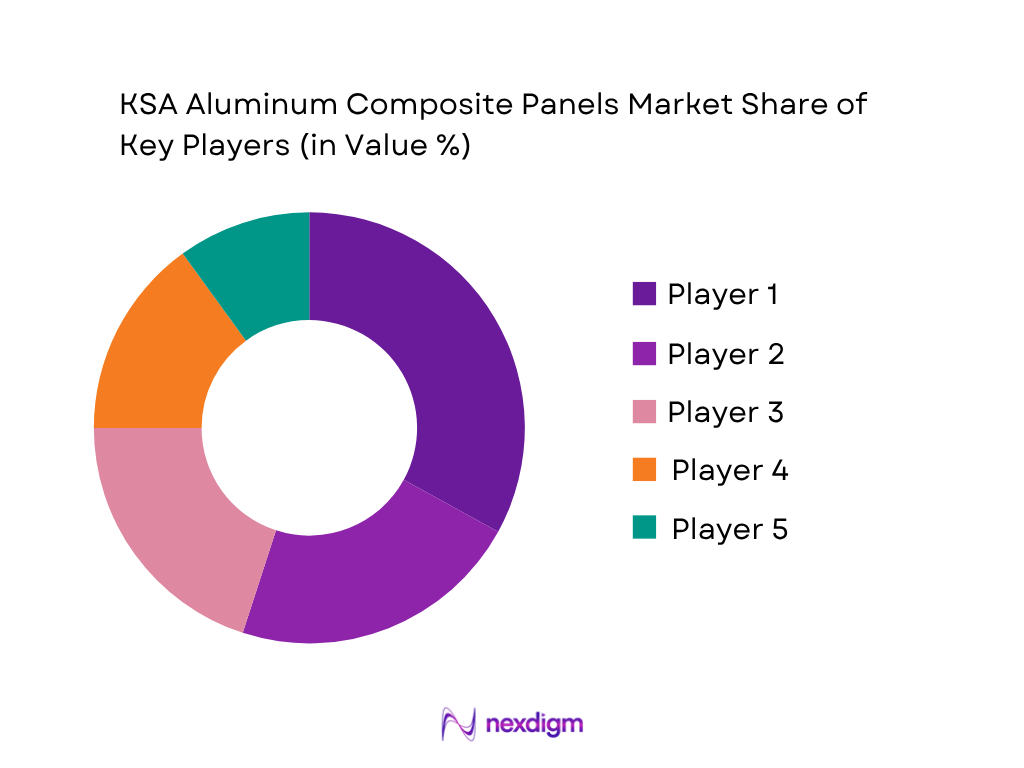
The KSA Aluminum Composite Panels Market is characterized by the presence of international ACP manufacturers, regional facade solution providers, and construction material suppliers. Major companies compete through product durability, fire-rated panel offerings, coating technologies, color customization, manufacturing capacity, and project execution capabilities. Leading players serve commercial buildings, residential developments, infrastructure projects, retail complexes, and industrial facilities across Saudi Arabia.
| Company | Establishment Year | Headquarters | ACP Product Portfolio | Core Technology | Manufacturing Capability | Fire-Rated Solutions | Distribution Network | Major Applications |
| 3A Composites | 1959 | Sins, Switzerland | ~ | ~ | ~ | ~ | ~ | ~ |
| Alucobond (3A Composites) | 1969 | Singen, Germany | ~ | ~ | ~ | ~ | ~ | ~ |
| Mitsubishi Chemical Group | 1933 | Tokyo, Japan | ~ | ~ | ~ | ~ | ~ | ~ |
| Alcoa Corporation | 1888 | Pittsburgh, United States | ~ | ~ | ~ | ~ | ~ | ~ |
| Almaxco | 2005 | Johor, Malaysia | ~ | ~ | ~ | ~ | ~ | ~ |
KSA Aluminum Composite Panels Market Analysis
Growth Drivers
Expansion of Construction and Real Estate Development Activities
The KSA Aluminum Composite Panels Market is supported by continued expansion in construction activities, commercial infrastructure development, and urban transformation projects across Saudi Arabia. The country recorded a GDP value of approximately USD 1.1 trillion in current prices, reflecting continued economic activity and investment capacity according to the World Bank. Construction demand is further supported by population growth, with Saudi Arabia’s population reaching approximately 36.9 million people, increasing requirements for residential buildings, commercial complexes, hospitality facilities, and public infrastructure. The Kingdom’s urban development programs have accelerated demand for lightweight facade materials, where aluminum composite panels are preferred due to their durability, aesthetic flexibility, corrosion resistance, and suitability for high-rise applications. Major urban centers including Riyadh, Jeddah, and Dammam continue to experience extensive building development due to government-backed infrastructure initiatives and private-sector investments. Additionally, the construction sector benefits from ongoing transportation, tourism, and real estate projects, increasing the requirement for modern facade solutions. These macroeconomic conditions create a favorable environment for ACP adoption in commercial towers, retail developments, airports, hotels, and mixed-use projects across Saudi Arabia.
Growth of Non-Oil Economic Activities and Infrastructure Modernization
Saudi Arabia’s economic diversification initiatives are increasing investments in infrastructure, tourism, entertainment, and commercial developments, supporting demand for advanced building envelope materials such as aluminum composite panels. According to the World Bank, Saudi Arabia’s economy remains one of the largest in the Middle East, supported by diversification programs and infrastructure investments beyond the traditional oil sector. The country’s gross fixed capital formation reached approximately SAR 1 trillion, indicating continued investment activity in productive assets and construction-related developments. Large-scale developments associated with urban modernization, hospitality expansion, and transportation infrastructure require materials that offer lightweight installation, weather resistance, and architectural customization. Aluminum composite panels are increasingly utilized in airports, shopping malls, corporate buildings, educational facilities, and public structures due to their ability to improve exterior appearance while reducing structural loading requirements. Government initiatives focused on improving urban environments and expanding tourism infrastructure are contributing to demand for premium facade systems. Additionally, increasing investment in commercial real estate and industrial facilities is creating opportunities for ACP manufacturers and suppliers offering fire-rated, energy-efficient, and customized panel solutions.
Market Challenges
Fire Safety Compliance Requirements and Regulatory Pressure
The KSA Aluminum Composite Panels Market faces challenges related to increasing fire safety requirements and stricter building regulations for facade materials. High-rise construction projects require compliance with advanced fire-performance standards, creating pressure on manufacturers to transition from conventional polyethylene core panels toward fire-retardant and non-combustible ACP solutions. Saudi Arabia has strengthened construction safety requirements through regulations implemented by authorities such as the Saudi Building Code National Committee, focusing on fire protection, building materials, and facade safety. The Kingdom has more than 36 million residents, resulting in continuous development of high-density urban areas where building safety has become a critical consideration. ACP suppliers must invest in improved core materials, testing procedures, and certification processes to meet evolving requirements. Fire-rated panels typically involve higher manufacturing complexity due to mineral-filled cores and specialized bonding technologies. This creates challenges for smaller manufacturers competing against established global suppliers with advanced production capabilities. Additionally, contractors and developers increasingly require documented fire performance certifications before approving facade materials, influencing procurement decisions across commercial and residential construction projects.
Dependence on Imported Raw Materials and Supply Chain Volatility
The KSA Aluminum Composite Panels Market is affected by dependence on imported raw materials, including aluminum coils, polymer resins, coatings, and specialized fire-resistant core materials. Saudi Arabia remains a major aluminum producer; however, certain specialized ACP inputs and finished panel technologies continue to rely on international supply chains. According to the International Monetary Fund, Saudi Arabia maintains significant trade integration, with merchandise trade flows exceeding hundreds of billions of US dollars annually, creating exposure to global supply chain fluctuations. Aluminum price volatility, transportation disruptions, and changes in international manufacturing costs can influence procurement conditions for ACP producers and distributors. The availability of high-quality aluminum sheets and coating materials directly affects panel durability, surface finish, and performance characteristics. Additionally, construction companies managing large-scale projects require reliable delivery schedules, making supply chain efficiency an important competitive factor. Local manufacturers face challenges in maintaining consistent raw material availability while competing with international suppliers offering broader product portfolios. These factors encourage companies to develop localized sourcing strategies and strengthen domestic production capabilities.
Market Opportunities
Increasing Demand for Sustainable and Energy-Efficient Facade Systems
The KSA Aluminum Composite Panels Market has opportunities arising from growing demand for sustainable construction materials and energy-efficient building solutions. Saudi Arabia’s construction sector is increasingly focusing on materials that support improved building performance, reduced maintenance requirements, and enhanced environmental efficiency. According to the World Bank, Saudi Arabia’s urban population exceeded 29 million people, increasing the need for efficient building infrastructure and modern urban development solutions. Aluminum composite panels provide opportunities in sustainable facade applications due to their lightweight characteristics, recyclability of aluminum components, and compatibility with modern insulation systems. The expansion of green building practices and sustainability-focused projects is encouraging adoption of advanced ACP technologies, including recyclable aluminum panels, fire-resistant cores, and high-performance coating systems. Commercial buildings, hospitality facilities, and government developments increasingly require facade materials that combine aesthetic appeal with long-term durability. Additionally, the integration of ACP systems with energy-efficient building envelopes creates opportunities for manufacturers offering customized solutions for premium construction projects. Suppliers focusing on environmentally responsible production methods and certified facade systems are positioned to address evolving market requirements.
Expansion of Tourism, Hospitality, and Mega Development Projects
The growth of Saudi Arabia’s tourism and entertainment infrastructure creates significant opportunities for aluminum composite panel applications across hotels, resorts, retail centers, and mixed-use developments. According to the World Tourism Organization and Saudi government tourism data, Saudi Arabia recorded more than 100 million tourist visits, reflecting increasing investment in hospitality infrastructure and visitor-focused developments. Projects associated with urban transformation, entertainment districts, and destination developments require modern architectural materials capable of delivering premium visual appearance and long-term weather performance. Aluminum composite panels are widely suitable for hospitality applications because they enable customized colors, metallic finishes, complex facade designs, and faster installation compared with traditional cladding materials. Cities such as Riyadh, Jeddah, and AlUla are experiencing increased development activity due to tourism expansion and cultural infrastructure investments. The growing number of hotels, commercial complexes, and entertainment venues creates demand for specialized ACP products, including PVDF-coated panels, fire-rated systems, and customized facade solutions. Manufacturers capable of providing design flexibility, technical support, and project-specific engineering solutions can benefit from expanding opportunities within Saudi Arabia’s evolving construction landscape.
Future Outlook
The KSA Aluminum Composite Panels Market is expected to witness continued expansion driven by urban transformation projects, commercial construction activity, hospitality infrastructure development, and increasing demand for advanced facade materials. Growing preference for lightweight building envelope solutions, fire-rated ACP systems, and customized architectural finishes will support future market development. Increasing investments in large-scale construction projects and modernization of existing buildings are expected to create additional opportunities for ACP manufacturers and facade contractors.
Major Players
- 3A Composites
- Alucobond
- Mitsubishi Chemical Group
- Alcoa Corporation
- Jyi Shyang Industrial Co., Ltd.
- Guangzhou Goodsense Decorative Building Materials Co., Ltd.
- Zhejiang Geely Decoration Materials Co., Ltd.
- Shanghai Huayuan New Composite Materials Co., Ltd.
- Jiangsu Kingertai New Material Co., Ltd.
- Seven Group
- Alstrong Enterprises India Limited
- Eurobond
- Viva Composite Panel
- Almaxco
- Yaret Industrial Group
Key Target Audience
- Aluminum Composite Panel Manufacturers and Facade Solution Providers
- Real Estate Developers and Construction Companies
- Architectural Design and Building Envelope Firms
- Commercial Property Owners and Facility Management Companies
- Investments and Venture Capitalist Firms
- Government and Regulatory Bodies (Saudi Building Code National Committee, Ministry of Municipalities and Housing, Saudi Standards, Metrology and Quality Organization)
- Infrastructure Development Companies
- Construction Material Distributors and Trading Companies
Research Methodology
Step 1: Identification of Key Variables
The initial phase involves developing an ecosystem map covering major stakeholders operating within the KSA Aluminum Composite Panels Market. This stage includes analysis of ACP manufacturers, raw material suppliers, facade contractors, construction companies, architects, distributors, and end-use sectors. Key market variables such as panel type, core material, application areas, construction demand, and regulatory requirements are identified through extensive secondary research and industry databases.
Step 2: Market Analysis and Construction
This phase involves analyzing historical market developments, construction activity, building material consumption patterns, and demand trends within Saudi Arabia. The assessment includes evaluation of ACP adoption across commercial buildings, residential projects, hospitality developments, infrastructure projects, and industrial facilities. Supply-side and demand-side factors are analyzed to construct a comprehensive market framework.
Step 3: Hypothesis Validation and Expert Consultation
Market assumptions are validated through discussions with industry participants including ACP manufacturers, facade contractors, distributors, and construction professionals. These consultations provide insights into product preferences, competitive positioning, installation practices, procurement behavior, and evolving requirements for fire-resistant and sustainable facade materials.
Step 4: Research Synthesis and Final Output
The final stage integrates collected information from primary and secondary sources to develop a validated market analysis. Data points related to product segmentation, competitive landscape, application trends, and future opportunities are reviewed to ensure accuracy and provide actionable insights for business decision-making.

- Executive Summary
- Research Methodology (Market Definition and Scope, KSA Aluminum Composite Panels Market Classification, Aluminum Composite Panel Manufacturing Process Mapping, Aluminum Alloy Grade Assessment, Aluminum Skin Thickness Evaluation, Core Material Technology Assessment, Polyethylene Core ACP Analysis, Fire-Retardant Core ACP Evaluation, Mineral-Filled Core ACP Assessment, Non-Combustible ACP Technology Mapping, Aluminum Honeycomb Panel Assessment, PVDF Coating Performance Evaluation, FEVE Coating Technology Assessment, Polyester Coating Analysis, Surface Finish Evaluation, Color Retention Assessment, Gloss Level Analysis, UV Resistance Testing Assessment, Corrosion Resistance Evaluation, Bond Strength Assessment, Peel Strength Analysis, Thermal Insulation Performance Evaluation, Fire Performance Assessment, Facade System Mapping, Curtain Wall Application Assessment, Interior Cladding Evaluation, High-Rise Construction Demand Analysis, Mega Project Material Assessment, Vision 2030 Construction Pipeline Assessment, Domestic Manufacturing Capability Assessment, Import Dependency Assessment, Supply-Side Assessment, Demand-Side Assessment)

- Definition and Scope
- KSA Aluminum Composite Panels Industry Evolution and Development of Aluminum Composite Cladding Systems, Architectural Facade Solutions, High-Rise Building Envelope Systems, Commercial Building Exterior Applications, Curtain Wall Systems, Interior Decorative Panels, Fire-Retardant ACP Systems, PVDF Coated Panels, FEVE Coating Solutions, Wood Finish ACP Applications, Stone Finish ACP Applications, Digital Printed ACP Systems, Sustainable Aluminum Cladding Solutions, Lightweight Construction Materials, Green Building Facade Systems, Advanced Architectural Panel Manufacturing
- Aluminum Composite Panels Value Chain Analysis
- Aluminum Composite Panels Supply Chain Analysis
- Aluminum Producers, Aluminum Coil Suppliers, Aluminum Alloy Manufacturers, Polymer Core Suppliers, Mineral Core Manufacturers, Fire-Retardant Core Producers, Coating Material Suppliers, Surface Treatment Providers, Aluminum Composite Panel Manufacturers, Facade Fabricators, Construction Contractors, Architectural Consultants, Building Material Distributors, Real Estate Developers, Commercial Building Owners, Industrial Developers, Hospitality Developers, Interior Designers and Facility Management Companies

- Growth Drivers (Saudi Vision 2030 Mega Projects, High-Rise Construction Expansion, Commercial Real Estate Development, Tourism Infrastructure Growth, Urbanization Activities, Demand for Lightweight Facade Materials, Industrial Facility Expansion, Green Building Adoption, Modern Architectural Designs, Building Renovation Activities)
- Market Challenges (Imported Raw Material Dependency, Aluminum Price Volatility, Fire Safety Compliance Requirements, Competition from Alternative Facade Materials, Quality Variation Among Suppliers, Extreme Desert Climate Conditions, UV Exposure Impact, Skilled Installation Requirements, Regulatory Compliance Complexity, Supply Chain Disruptions)
- Market Opportunities (NEOM and Mega Project Development, Fire-Retardant ACP Adoption, Sustainable Aluminum Solutions, Premium Architectural Facades, Smart Building Envelope Systems, Hospitality Infrastructure Expansion, Commercial Building Renovation, Energy-Efficient Facade Solutions, Local ACP Manufacturing Expansion, Customized Architectural Panels)
- Market Trends (Increasing Use of PVDF Coatings, Premium Facade Designs, Large Format ACP Panels, Fire-Safe Cladding Systems, Sustainable Aluminum Materials, Customized Surface Finishes, High-Durability Coatings, Luxury Real Estate Applications, Digital Printing Technology, Advanced Architectural Panel Systems)
- Government Regulations and Standards (Saudi Building Code Requirements, Saudi Standards Metrology and Quality Organization Standards, Civil Defense Fire Safety Regulations, Vision 2030 Construction Guidelines, Green Building Standards, Facade Fire Performance Requirements, Material Quality Regulations, Construction Safety Standards, Import Quality Standards, Environmental Compliance Requirements)
- SWOT Analysis
- Porter’s Five Forces Analysis
- PESTLE Analysis
- Stakeholder Ecosystem
- Competition Ecosystem

- By Market Value (2020-2025)
- By Panel Volume Consumption (2020-2025)
- By Installed Surface Area (2020-2025)
- By Average Selling Price per Square Meter (2020-2025)
- By Aluminum Composite Panel Production Volume (2020-2025)
- By Aluminum Coil Consumption Volume (2020-2025)
- By Exterior Facade Application Volume (2020-2025)
- By Interior Decorative Application Volume (2020-2025)
- By Fire-Retardant ACP Consumption Volume (2020-2025)
- By High-Rise Building Facade Application Volume (2020-2025)
- By Commercial Real Estate Cladding Volume (2020-2025)

- By Core Material Type (In Value %)
Polyethylene (PE) Core Aluminum Composite Panels
Fire-Retardant (FR) Core Aluminum Composite Panels
Mineral-Filled Core Aluminum Composite Panels
Non-Combustible Core Aluminum Composite Panels
Aluminum Honeycomb Composite Panels
Hybrid Core Aluminum Composite Panels
Recycled Core Aluminum Composite Panels - By Coating Technology (In Value %)
PVDF Coated Aluminum Composite Panels
FEVE Coated Aluminum Composite Panels
Polyester Coated Aluminum Composite Panels
Anodized Surface Aluminum Composite Panels
Laminated Surface Aluminum Composite Panels
Digital Printed Aluminum Composite Panels
Anti-Graffiti Coated Aluminum Composite Panels - By Application (In Value %)
Exterior Building Facades
Curtain Wall Systems
Ventilated Facade Systems
Commercial Building Cladding
Residential Building Exteriors
Industrial Building Cladding
Retail and Shopping Mall Facades
Hospitality Building Facades
Transportation Infrastructure
Interior Wall Applications
Ceiling Applications
Signage and Display Applications - By End-Use Building Type (In Value %)
Commercial Office Buildings
Luxury Residential Buildings
Shopping Centers and Retail Complexes
Hotels and Hospitality Buildings
Industrial Facilities
Oil and Gas Facilities
Healthcare Buildings
Educational Institutions
Government Buildings
Transportation Terminals
Entertainment Facilities
Corporate Headquarters - By Surface Finish (In Value %)
Solid Color Finish ACP
Metallic Finish ACP
Wood Grain Finish ACP
Stone Finish ACP
Mirror Finish ACP
Brushed Aluminum Finish ACP
Custom Printed Finish ACP
Texture Finish ACP - By Region (In Value %)
Riyadh Region
Makkah Region
Eastern Province
Madinah Region
Asir Region
Tabuk Region
Jazan Region
Rest of Saudi Arabia

- Market Share of Major Players (By KSA Revenue, Aluminum Composite Panel Production Capacity, ACP Product Portfolio, Aluminum Skin Thickness Range, Core Material Technology, Fire-Retardant ACP Capability, Coating Technology Capability, Manufacturing Facilities, Distribution Network Reach, Mega Project Portfolio, Customization Capability, Architectural Specification Reach, Technical Support Capability, Sustainability Initiatives, Regional Market Presence)
- Cross Comparison Parameters (Fire-Retardant Core Technology, PVDF and FEVE Coating Capability, UV and Weather Resistance Performance, Aluminum Skin Thickness Range, Panel Size and Dimensional Capability, Desert Climate Durability Performance, Saudi Project Execution Capability, Distribution and Technical Support Network)
- SWOT Analysis of Major Players
- Competitive Positioning Matrix
- Aluminum Composite Panel Technology and Architectural Application Benchmarking
- Exterior Weathering and Durability Capability Assessment
- KSA Distribution Architectural Specification and Technical Support Assessment
- Major Companies
Alucobond / 3A Composites
Alubond USA
Mulk Holdings
Alstrong Enterprises
Mitsubishi Chemical Group / ALPOLIC
Almaxco Group
Jyi Shyang Industrial Co. Ltd.
Yaret Industrial Group
Shanghai Huayuan New Composite Materials
Guangzhou Goodsense Decorative Building Materials
Henan Huawei Aluminum Co. Ltd.
Foshan Alucrown Building Materials
Seven Composite Materials
Foshan M-CITY Aluminum Composite Panel
Alucoil

- Architectural Facade Requirement Assessment
- High-Rise Building Cladding Demand Analysis
- Mega Project Material Requirement Assessment
- Commercial Real Estate Developer Assessment
- Luxury Residential Construction Assessment
- Retail and Shopping Mall Application Assessment
- Hospitality Infrastructure Application Analysis
- Industrial Facility Cladding Assessment
- Oil and Gas Facility Requirement Assessment
- Building Owner Material Selection Criteria Assessment
- Contractor Procurement Assessment

- By Market Value (2026-2035)
- By Panel Volume Consumption (2026-2035)
- By Installed Surface Area (2026-2035)
- By Average Selling Price per Square Meter (2026-2035)
- By Aluminum Composite Panel Production Volume (2026-2035)
- By Exterior Facade Application Volume (2026-2035)
- By Interior Decorative Application Volume (2026-2035)
- By Fire-Retardant ACP Consumption Volume (2026-2035)
- By Commercial Building Cladding Volume (2026-2035)
- By High-Rise Building Facade Application Volume (2026-2035)


 Request a Sample
 Ask for Customization
 Get a Quote
 Enquire Now