
 Download PDF
Market Overview
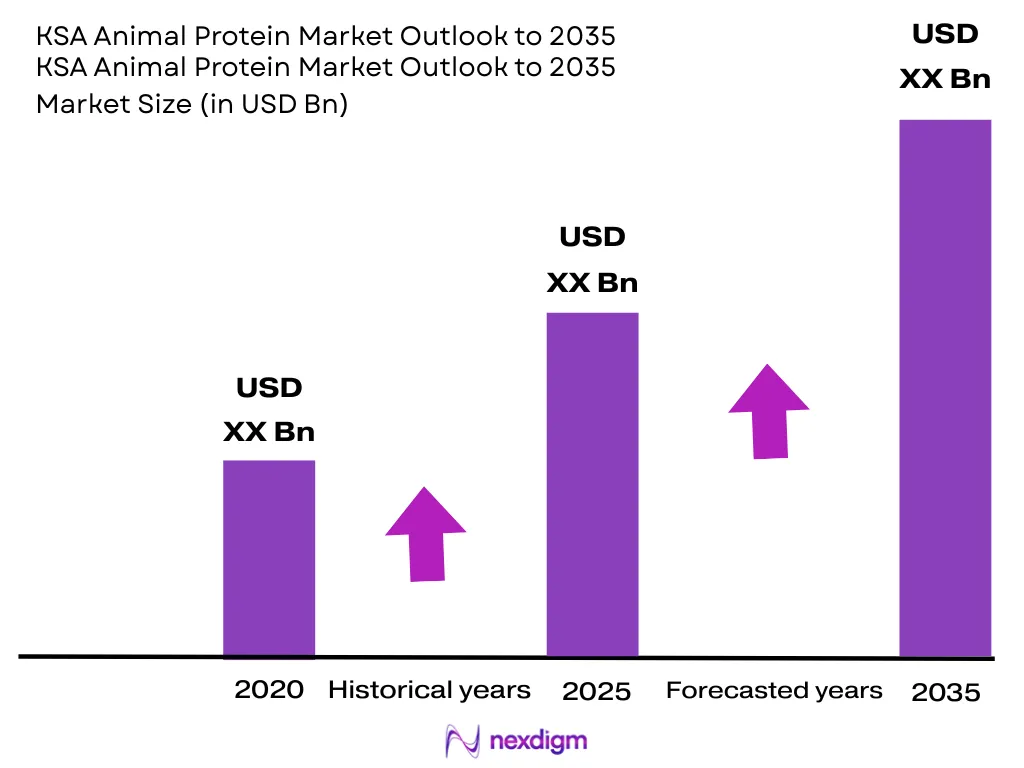
The KSA Animal Protein Market was valued at USD ~ Billion in 2024, based on historical domestic production, imports, consumption, and processing revenues across poultry, mutton, beef, fish, and egg products. Saudi Arabia consumed approximately 1.2 million metric tons of animal protein products during the latest reporting period, including around one million metric tons of poultry meat, in addition to significant volumes of mutton, lamb, and imported beef, according to statistics published by the Ministry of Environment, Water and Agriculture (MEWA), the Saudi Food and Drug Authority (SFDA), and the General Authority for Statistics (GASTAT). The market continues to be driven by a growing population, Vision 2030 food security targets, expanding HoReCa demand, government subsidy programs, and rising consumer preference for halal-certified protein products.
Market Segmentation
By Protein Type
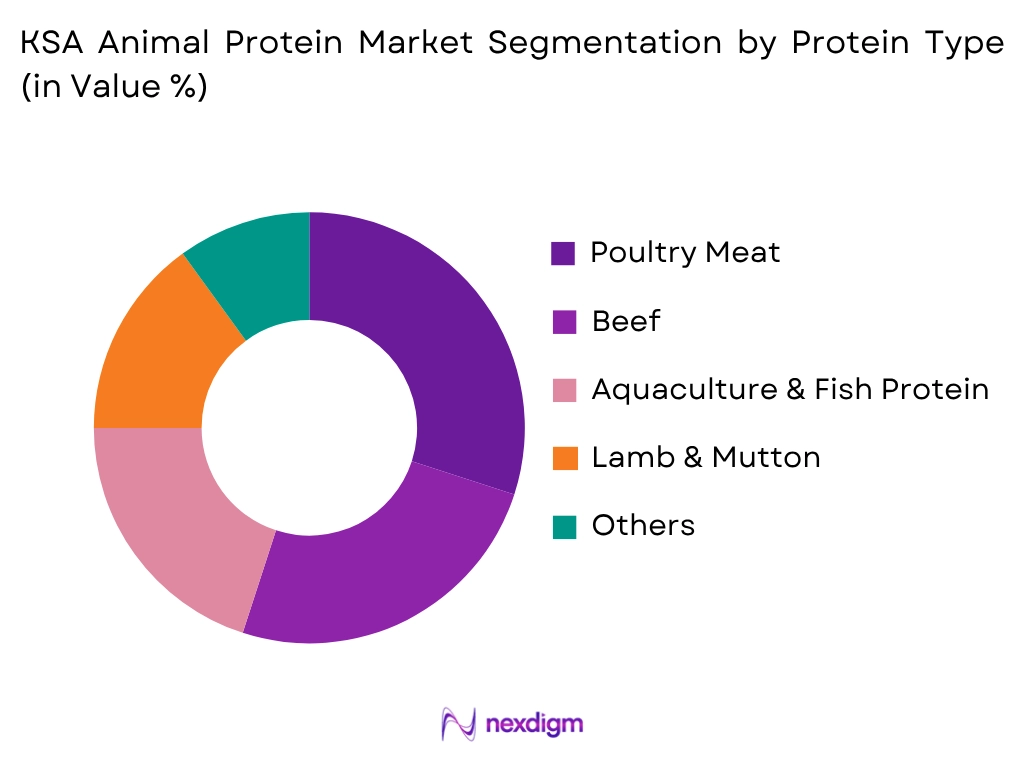
The KSA Animal Protein Market is segmented by protein type into Poultry Meat, Mutton & Lamb, Beef, Aquaculture & Fish Protein, Eggs, and Processed Animal Protein Products. Poultry meat accounts for the largest share of the market owing to its cost competitiveness, halal compliance, shorter production cycles, and strong domestic consumer preference. Saudi Arabia has significantly expanded domestic poultry production in alignment with Vision 2030 food security targets, achieving approximately 72% poultry self-sufficiency in 2024 with a government target of 90% by 2030. Companies such as Al-Watania Poultry, Almarai, and Tanmiah Food Company operate vertically integrated production systems covering hatchery, feed, farming, processing, and distribution operations. The poultry segment additionally benefits from investments in halal-certified processing, advanced cold chain infrastructure, and a growing array of value-added products including marinated chicken, nuggets, and ready-to-cook preparations, further reinforcing its dominant position across retail, foodservice, and institutional markets.
By Distribution Channel
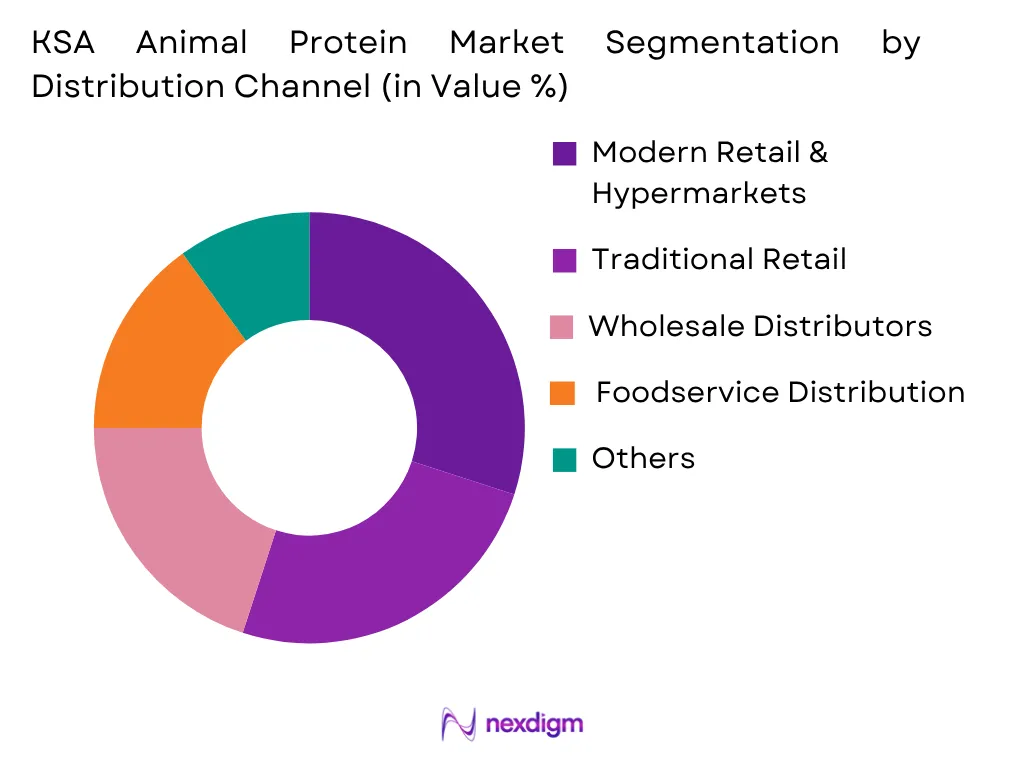
The KSA Animal Protein Market is segmented by distribution channel into Modern Retail, Traditional Retail, Wholesale Distributors, Foodservice Distribution, Import Markets, and Online Grocery & Direct Sales. Modern retail remains the dominant distribution channel due to the widespread presence of hypermarkets, supermarkets, and organized retail chains across Saudi Arabia’s metropolitan regions. Consumers increasingly prefer modern retail outlets for their greater product assortment, food safety standards, temperature-controlled storage, promotional pricing, and convenient shopping experiences. These retailers maintain long-term procurement agreements with leading poultry processors and import agents, ensuring consistent product availability and quality. The rapid expansion of cold chain logistics, premium packaged halal meat offerings, and growing e-commerce penetration have further strengthened the role of organized retail in serving urban households, institutional buyers, and the Kingdom’s expanding HoReCa sector.
Competitive Landscape
The KSA Animal Protein Market is characterized by the presence of several integrated domestic poultry producers alongside large importers, food processors, and diversified agricultural conglomerates. Companies compete on production scale, halal certification, processing technology, cold chain capabilities, product diversification, and distribution reach. Vertically integrated operations, efficient feed procurement, advanced slaughtering facilities, and government-supported investment programs provide competitive advantages to leading market participants. Halal processing certifications, investments in value-added meat products, and partnerships with international technology providers continue to differentiate major companies in both domestic and regional markets.
| Company | Establishment Year | Headquarters | Primary Protein Focus | Processing Facilities
|
Export Presence | Production Integration | Sustainability Programs | Value-Added Product Portfolio |
| Al-Watania Poultry | 1979 | ~ | ~ | ~ | ~ | ~ | ~ | ~ |
| Almarai Company | 1977 | ~ | ~ | ~ | ~ | ~ | ~ | ~ |
| Tanmiah Food Company | 1990 | ~ | ~ | ~ | ~ | ~ | ~ | ~ |
| Fakieh Poultry Farms | 1978 | ~ | ~ | ~ | ~ | ~ | ~ | ~ |
| ARASCO (Entaj) | 1987 | ~ | ~ | ~ | ~ | ~ | ~ | ~ |
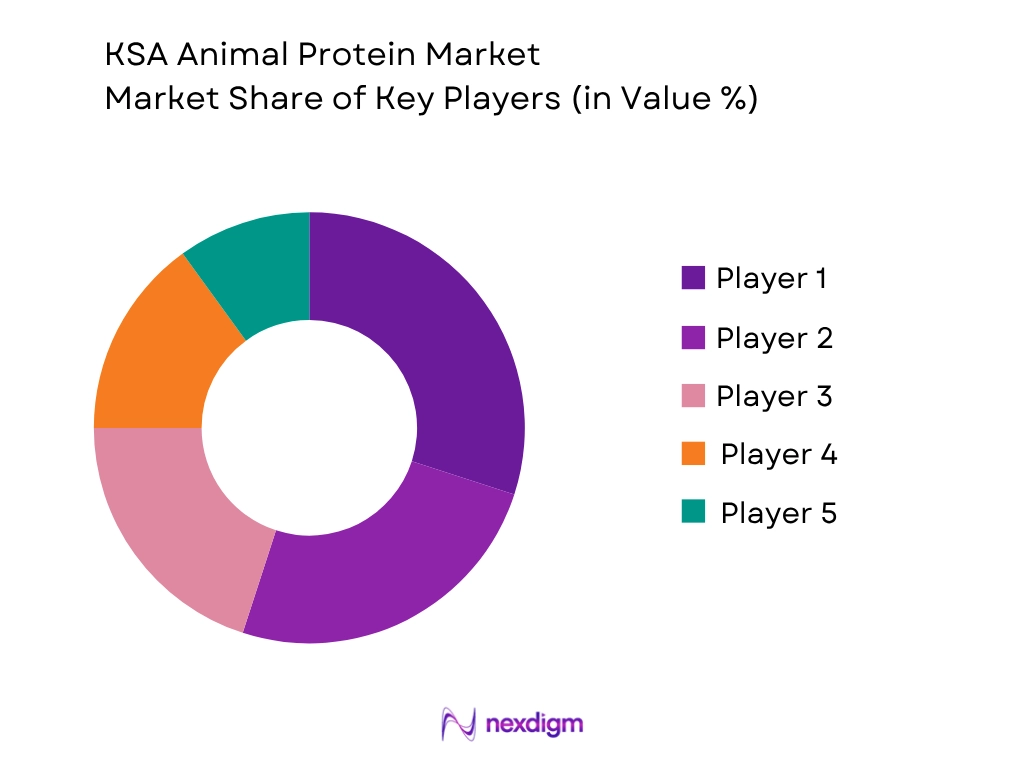
KSA Animal Protein Market Analysis
Growth Drivers
Vision 2030 Food Security Initiatives and Rising Domestic Protein Demand
Saudi Arabia’s commitment to food security under Vision 2030 continues to be a primary growth driver for the animal protein market. According to the Ministry of Environment, Water and Agriculture (MEWA), broiler chicken production reached approximately one million metric tons in 2024, reflecting robust domestic supply growth supported by government-backed capacity expansion programs. The General Authority for Statistics (GASTAT) reported that the Kingdom’s population exceeded 32 million in 2024, generating sustained demand for affordable halal protein products. The World Bank estimated Saudi Arabia’s GDP at approximately USD 1.1 trillion in 2024, reflecting strong macroeconomic foundations for agribusiness investment, while the International Monetary Fund (IMF) projected continued economic resilience underpinned by non-oil sector growth. The Agricultural Development Fund now finances up to 70% of qualified poultry infrastructure projects, spurring large-scale capacity expansions such as Balady Poultry’s SAR 1.1 billion program targeting daily slaughter of 500,000 birds. Government subsidies exceeding SAR 665 million support local producers, while the 2024 Buy Local campaign promotes domestic poultry consumption. Saudi Arabia achieved 72% poultry self-sufficiency in 2024, up from 70% in 2022, with egg production reaching 116% of domestic demand and a national target of 90% poultry self-sufficiency by 2030. Continued market development through investments in halal-certified slaughterhouses, refrigerated logistics, traceability systems, and integrated production infrastructure continues to strengthen the Kingdom’s domestic protein supply capabilities.
Expanding HoReCa Sector and Tourism-Driven Protein Consumption
Saudi Arabia’s rapidly expanding hospitality, restaurant, and catering sector represents a major structural demand driver for the animal protein market. According to the Ministry of Tourism, Vision 2030 has attracted more than 30 million international visitors annually, significantly boosting protein demand across hotels, quick-service restaurants, and large-scale catering operations. The Kingdom’s agricultural GDP reached a record SAR 114 billion (approximately USD 30.3 billion) in 2024, reflecting ecosystem-wide growth across food production and processing. The Hajj and Umrah pilgrimage seasons continue to generate substantial seasonal surges in animal protein demand, particularly for mutton, lamb, and poultry products consumed during religious festivals. According to MEWA, annual meat consumption in the Kingdom exceeds 1.2 million metric tons, with chicken and lamb leading demand across both domestic and institutional segments. The foodservice sector’s expansion has also accelerated demand for processed, portion-controlled, and ready-to-cook protein products, encouraging leading processors to diversify their product portfolios and invest in value-added production capabilities. Major partnerships such as Tanmiah Food Company’s supply agreement with McDonald’s Saudi Arabia in July 2025 demonstrate how institutional foodservice relationships are driving sustained volume growth and investment in local processing capacity.
Market Challenges
Feed Import Dependency and Input Cost Volatility
Saudi Arabia’s animal protein industry faces a significant structural challenge in its high dependence on imported feed ingredients, which accounts for approximately 90% of the country’s feed requirements. According to MEWA, Saudi Arabia imports substantial volumes of corn, soybean meal, and other feed raw materials from international markets, creating exposure to global commodity price volatility and supply chain disruptions. The Foreign Agricultural Service (FAS) projected corn imports to reach 4.5 million metric tons in 2024, reflecting the scale of the Kingdom’s feed import requirements. ARASCO, the largest animal feed processor in the Kingdom with an annual production capacity of approximately four million metric tons, relies on imported corn and palm kernel cake to manufacture livestock, poultry, and aquaculture feed. The high cost of imported feed ingredients, combined with equipment and vaccine imports, contributes to elevated poultry meat production costs compared to countries with domestic feed surpluses. The Saudi government has implemented import subsidies for 31 key feed ingredients, including corn gluten and distillers grains, to reduce producer costs, while companies such as Tanmiah Food Company are developing innovative local feed alternatives including Moringa tree cultivation to reduce import dependency over time.
Water Resource Constraints and Environmental Sustainability Challenges
Water scarcity represents one of the most critical long-term challenges for the KSA Animal Protein Market, given the Kingdom’s arid climate and limited freshwater resources. According to the World Bank, Saudi Arabia ranks among the most water-scarce countries globally, with per capita water availability well below international benchmarks, placing significant constraints on domestic livestock production and feed crop cultivation. The Ministry of Environment, Water and Agriculture continues to implement comprehensive water conservation programs and sustainable livestock production standards in alignment with Vision 2030 environmental objectives. Animal protein production, particularly cattle and sheep farming, requires substantial water consumption for hydration, sanitation, and feed crop irrigation, creating inherent tensions between production growth ambitions and resource sustainability goals. Leading producers are responding through investments in closed-cycle water systems, precision irrigation technologies, and alternative feed sourcing initiatives. Tanmiah Food Company’s One Million Trees Initiative, which had planted over 550,000 Moringa trees as of early 2025 using treated wastewater, exemplifies industry efforts to develop sustainable feed alternatives while addressing environmental concerns. Compliance with increasingly stringent environmental and water usage regulations remains essential for producers seeking to expand domestic livestock capacity within the Kingdom’s resource constraints.
Market Opportunities
Halal Protein Export Development and Premium Market Positioning
Growing international demand for halal-certified animal protein presents significant export opportunities for Saudi Arabian producers. The Ministry of Environment, Water and Agriculture continues expanding electronic certification systems, traceability initiatives, and international sanitary agreements that facilitate access to premium export destinations in the Muslim-majority markets of Southeast Asia, Africa, and Central Asia. Saudi Arabia’s status as the global centre of Islamic observance provides domestic producers with inherent halal credibility and brand recognition in international markets. Increasing demand from Asian, African, and Middle Eastern markets has accelerated investments in halal processing certification, digital traceability technologies, and cold chain export infrastructure. Al-Watania Poultry’s inauguration of the Middle East’s largest cooling plant in November 2024, with a capacity of 17,700 kW, and its integration of advanced automated processing technologies demonstrate the sector’s readiness for regional and international market expansion. The World Bank identifies sustainable agricultural production and food security improvements as important contributors to long-term rural economic development across the broader MENA region. As international buyers increasingly emphasize halal compliance, food safety, and responsible sourcing, Saudi producers with internationally certified production systems are well positioned to capture higher-value export opportunities within Muslim-majority consumer markets.
Aquaculture Expansion and Seafood Protein Diversification
The development of Saudi Arabia’s aquaculture sector offers a major complementary opportunity for the domestic animal protein market. According to MEWA, Saudi Arabia possesses extensive Red Sea and Arabian Gulf coastlines providing natural marine resources and aquaculture development potential. The National Aquaculture Group (NAQUA) continues to expand domestic seafood production capabilities, supporting protein diversification and reducing dependence on imported fish and seafood products. Health-conscious consumers are increasingly preferring omega-rich seafood products, supporting sustained demand growth for fish and aquaculture protein. Investments in the planned Middle East largest livestock city in Hafr Al Batin, incorporating feed mills, veterinary services, and processing plants powered entirely by renewable energy, illustrate the Kingdom’s commitment to creating integrated, sustainable protein production infrastructure. The IMF projects continued economic resilience for Saudi Arabia, supporting household consumption and industrial investment in aquaculture and food processing sectors. Increasing adoption of advanced aquaculture technologies, expanded cold chain distribution, and rising consumer health awareness further strengthen opportunities for diversified animal protein products. These developments allow domestic producers to expand profitability while addressing evolving consumer preferences for nutritional diversity, premium quality, and certified halal products.
Future Outlook
The KSA Animal Protein Market is expected to maintain strong long-term growth supported by Vision 2030 food security objectives, increasing domestic production capacity, and rising consumer demand for halal-certified protein products. Expanding domestic poultry self-sufficiency, investments in aquaculture, and growing HoReCa sector demand are anticipated to strengthen production volumes and processing revenues. Technological advancements in precision livestock farming, AI-powered production monitoring, and automated processing will improve operational efficiency while reducing water and feed consumption. Domestic consumption is also expected to benefit from rising disposable incomes, urbanization, and increasing demand for convenient processed and ready-to-cook meat products. Furthermore, improvements in halal traceability systems, environmental compliance, and cold chain infrastructure are likely to enhance Saudi Arabia’s competitiveness in regional export markets while supporting strong domestic demand for premium protein products.
Major Players
- Al-Watania Poultry
- Almarai Company
- Tanmiah Food Company
- Fakieh Poultry Farms
- ARASCO (Entaj)
- Sunbulah Group
- NADEC
- National Aquaculture Group (NAQUA)
- Halwani Bros
- Balady Poultry Trading Co.
- Radwa Food Co.
- Almunajem Foods
- Saudi Dairy & Foodstuff Company (SADAFCO)
- Americana Group
- Al Kabeer Frozen Foods
Key Target Audience
- Animal Protein Producers and Meat Processing Companies
- Livestock Producers and Integrated Farming Companies
- Food Processing and Packaged Food Manufacturers
- Retail Chains, Wholesale Distributors and Foodservice Operators
- Importers, Exporters and International Trading Companies
- Investments and Venture Capitalist Firms
- Government and Regulatory Bodies (Ministry of Environment, Water and Agriculture (MEWA), Saudi Food and Drug Authority (SFDA), General Authority for Statistics (GASTAT), Agricultural Development Fund (ADF))
- Cold Chain Logistics, Storage and Distribution Companies
Research Methodology
Step 1: Identification of Key Variables
The research process begins by identifying the complete ecosystem of the KSA Animal Protein Market, including livestock producers, feed suppliers, meat processors, importers, retailers, and regulatory agencies. Extensive secondary research is conducted using government publications, trade associations, customs statistics, company reports, and proprietary industry databases. This stage helps determine the major variables influencing production, consumption, trade, pricing, and investment trends across the market.
Step 2: Market Analysis and Construction
Historical market information is compiled and analyzed to estimate the overall market size using both top-down and bottom-up approaches. Domestic production volumes, import statistics, consumption data, processing revenues, livestock inventories, slaughter volumes, and pricing trends are evaluated to construct a comprehensive market model. Demand-side and supply-side assessments are performed to validate the consistency of market estimates across various industry participants.
Step 3: Hypothesis Validation and Expert Consultation
The preliminary market findings are validated through computer-assisted telephone interviews (CATIs) and structured discussions with executives from meat processing companies, poultry producers, importers, distributors, industry associations, and regulatory authorities. These consultations provide valuable insights regarding production capacity, utilization rates, investment priorities, pricing dynamics, and emerging market opportunities, ensuring that the assumptions used in the research accurately reflect current industry conditions.
Step 4: Research Synthesis and Final Output
The final stage integrates findings obtained from secondary research and primary interviews to develop a comprehensive market assessment. Market estimates are cross-verified using company financial reports, trade databases, production statistics, and industry publications. The resulting analysis provides detailed insights into market size, competitive positioning, segmentation, growth drivers, challenges, future opportunities, and strategic recommendations for stakeholders operating within the KSA Animal Protein Market.

- Executive Summary
- Research Methodology (Market Definitions and Assumptions, Abbreviations, Market Sizing Framework, Top-Down Analysis, Bottom-Up Analysis, Demand-Side Assessment, Supply-Side Assessment, Primary Industry Interviews, Trade Flow Validation, Data Triangulation, Forecasting Framework, Limitations and Future Conclusions)

- Definition and Scope
- Market Evolution and Industry Genesis
- Timeline of Major Industry Developments
- KSA Animal Protein Industry Ecosystem
- Supply Chain Analysis

- Growth Drivers (Rising Domestic Protein Demand, Vision 2030 Food Security Initiatives, Halal Protein Export Opportunities, Integrated Poultry Production Growth, Government Subsidies and Support Programs, Growing HoReCa and Foodservice Sector)
- Market Challenges (Feed Import Dependency, Water Resource Constraints, Livestock Disease Risks, Cold Chain Infrastructure Gaps, Reliance on Imported Red Meat, Seasonal Demand Volatility)
- Market Opportunities (Premium Halal Protein Products, Value-Added Meat Processing, Aquaculture Expansion, Alternative Protein Import Diversification, Smart Livestock Technologies, Branded Meat Programs)
- Market Trends (Halal Traceability Systems, Carbon-Neutral Poultry Initiatives, Animal Welfare Certification, Precision Livestock Farming, Protein Product Premiumization, Automation in Meat Processing)
- Government Regulations (SFDA Inspection Standards, SABER Traceability, Animal Welfare Regulations, Environmental Licensing, Import Certification, Sanitary & Phytosanitary Standards)
- Trade Policy Analysis (Import Agreements, Tariff Structure, Import Restrictions, Veterinary Protocols, Market Access Requirements)
- Feed Industry Assessment (Corn Import Dependency, Soybean Meal Utilization, Feed Conversion Efficiency, Feed Cost Structure)
- SWOT Analysis
- PESTLE Analysis
- Porter’s Five Forces Analysis
- Stakeholder Ecosystem
- Competition Ecosystem

- By Market Value (2020-2025)
- By Volume Consumption (2020-2025)
- By Average Selling Price (2020-2025)

- By Protein Type (In Value %)
Poultry Meat
Mutton & Lamb
Beef
Aquaculture & Fish Protein
Eggs
Processed Animal Protein Products - By Product Form (In Value %)
Fresh/Chilled
Frozen
Processed & Value-Added
Cooked & Ready-to-Eat
Marinated & Seasoned Products - By End User (In Value %)
Retail Consumers
Foodservice & HoReCa
Food Processing Industry
Institutional Buyers
Pilgrimage & Religious Events - By Distribution Channel (In Value %)
Modern Retail
Traditional Retail
Wholesale Distributors
Foodservice Distribution
Import Markets
Online Grocery & Direct Sales - By Production System (In Value %)
Conventional Production
Integrated Contract Farming
Feedlot Production
Import-Dependent Supply
Certified Organic Production - By Animal Protein Grade (In Value %)
Commodity Grade
Premium Grade
Halal Certified
Certified Sustainable
Kosher Certified - By Region (In Value %)
Riyadh Region
Makkah & Madinah Region
Eastern Province
Qassim Region
Other Regions

- Market Share of Major Players (By Value, Production Volume, Import Volume, Protein Category, Processing Capacity)
- Cross Comparison Parameters (Slaughter Capacity, Processing Capacity, Import Market Presence, Feed Integration Level, Cold Storage Capacity, Product Portfolio Diversity, Sustainability & Halal Certifications, Value-Added Product Portfolio)
- SWOT Analysis of Major Players
- Pricing Analysis (By Protein Category, Processing Level, Import vs Domestic Pricing)
- Detailed Profiles of Major Companies
Al-Watania Poultry
Almarai Company
Tanmiah Food Company
Fakieh Poultry Farms
ARASCO (Entaj)
Sunbulah Group
NADEC
National Aquaculture Group (NAQUA)
Halwani Bros
Balady Poultry Trading Co.
Radwa Food Co.
Almunajem Foods
Saudi Dairy & Foodstuff Company (SADAFCO)
Americana Group
Al Kabeer Frozen Foods

- Consumption Pattern Assessment (Per Capita Meat Consumption, Protein Preference, Meal Frequency, Household Penetration)
- Demographic Demand Analysis (Income Group, Age Group, Urban-Rural Split, Regional Preferences)
- Household Expenditure Analysis
- Protein Affordability Assessment
- Fresh vs Frozen Product Preference

- By Market Value (2026-2035)
- By Volume Consumption (2026-2035)
- By Average Selling Price (2026-2035)


 Request a Sample
 Ask for Customization
 Get a Quote
 Enquire Now