
 Download PDF
Market Overview
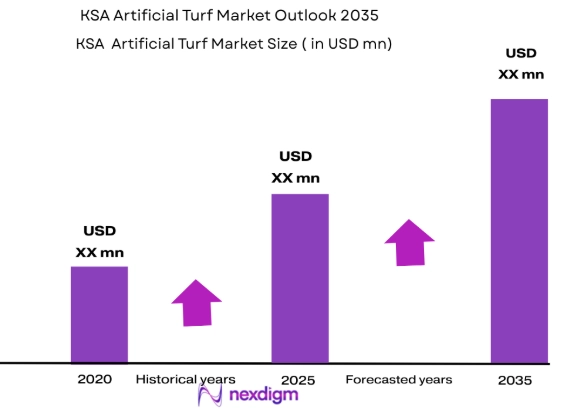
The KSA artificial turf market is valued at USD ~ million, driven by increasing demand for sustainable and low-maintenance landscaping solutions. Key growth factors include the rapid urbanization of Saudi cities, the government’s push towards eco-friendly urban development, and a rise in sports infrastructure investments. Furthermore, the country’s arid climate, which limits natural grass growth, has further propelled the adoption of artificial turf across both residential and commercial sectors. As urbanization continues, artificial turf is seen as a key solution for landscaping and sports facilities, contributing to the market’s growth.
Saudi Arabia, particularly cities such as Riyadh, Jeddah, and Dammam, dominates the artificial turf market. Riyadh’s rapid urban expansion and infrastructure development have spurred significant demand for artificial turf for landscaping and sports applications. Jeddah, with its growing tourism and hospitality sectors, has seen increased adoption of artificial turf in public spaces, while Dammam, as a key industrial hub, has driven demand for functional turf in commercial properties. These cities benefit from government support focused on sustainable development and urban planning, ensuring continued market dominance.
Market Segmentation
By Application
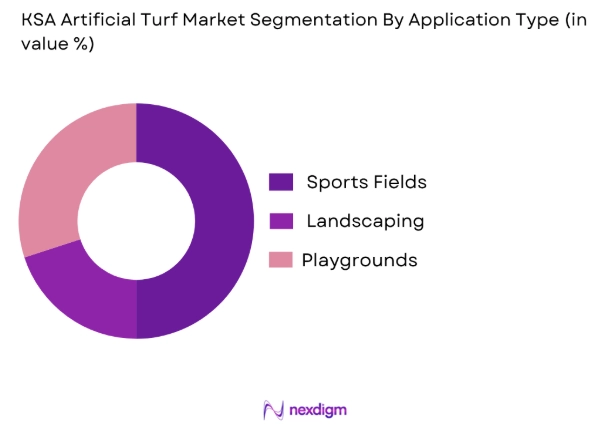
The KSA artificial turf market is segmented into sports fields, landscaping, playgrounds, pet areas, golf courses, and residential spaces. Among these, the sports field segment holds the largest market share. Artificial turf is increasingly preferred for sports fields due to its durability, minimal maintenance, and performance characteristics that replicate natural grass. The demand for artificial turf in football and rugby fields, in particular, has grown substantially due to the popularity of these sports in the country. Furthermore, the hosting of international sporting events, including the Saudi Pro League and other major football tournaments, has fueled demand for durable synthetic surfaces that can withstand heavy use.
By Turf Type
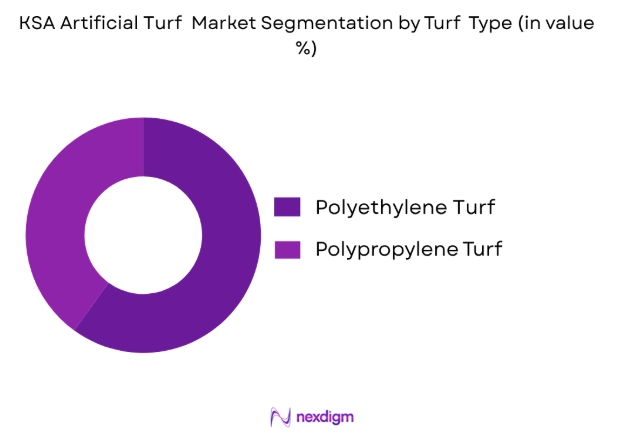
The KSA artificial turf market is segmented by turf type into polyethylene, polypropylene, nylon, and blended turf types. Among these, polyethylene turf holds the largest market share. Polyethylene is preferred in the region due to its superior durability, resistance to UV rays, and ability to withstand high temperatures, which is critical in the hot climate of Saudi Arabia. Polyethylene turf offers the right balance of comfort and performance for both sports fields and landscaping applications, making it the top choice for both commercial and residential projects.
Competitive Landscape
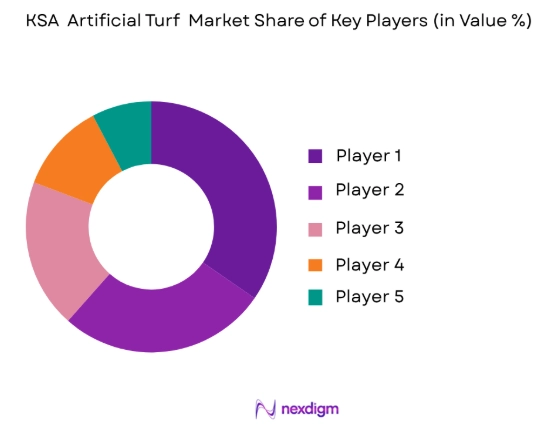
The KSA artificial turf market is highly competitive, with both local and international players vying for market share. Major players include FieldTurf, AstroTurf, and local manufacturers like Emirates Turf and Saudi Turf. These companies dominate due to their advanced manufacturing technologies, ability to meet local regulatory requirements, and strong distribution networks. Furthermore, as Saudi Arabia continues to invest in sports infrastructure and urban landscaping projects, these key players are expanding their presence and offerings to capitalize on the growing demand for artificial turf across the country. The competitive landscape is marked by collaborations between turf manufacturers and construction firms, along with a strong focus on innovation in turf performance and sustainability. Companies are continuously developing new products with enhanced durability and lower environmental impact, which further strengthens their competitive edge in the market.
| Company Name | Establishment Year | Headquarters | Product Portfolio | Market Reach | Customization Services | Technology Focus | Key Clients |
| FieldTurf | 1988 | Canada | ~ | ~ | ~ | ~ | ~ |
| AstroTurf | 1965 | USA | ~ | ~ | ~ | ~ | ~ |
| Emirates Turf | 2010 | UAE | ~ | ~ | ~ | ~ | ~ |
| Saudi Turf | 2015 | Saudi Arabia | ~ | ~ | ~ | ~ | ~ |
| TurfTech | 2012 | Saudi Arabia | ~ | ~ | ~ | ~ | ~ |
KSA Artificial Turf Market Analysis
Growth Drivers
Increasing Demand for Water-Efficient Landscaping Solutions
Saudi Arabia’s arid climate and ongoing water scarcity concerns have created a significant demand for water-efficient solutions like artificial turf. Traditional landscaping with natural grass requires substantial water resources, which are increasingly unsustainable in the region. Artificial turf, which requires little to no irrigation, is seen as a key solution for landscaping, particularly in residential, commercial, and public spaces. This growing awareness of water conservation has prompted both government and private entities to adopt artificial turf as part of their commitment to sustainable practices, aligning with Saudi Arabia’s Vision 2030, which emphasizes environmental responsibility and resource conservation.
Expansion of Sports and Recreational Facilities
The growing interest in sports and recreational activities in Saudi Arabia has driven an increased demand for artificial turf, particularly for sports fields. As the country invests heavily in sports infrastructure to host international events and promote healthy lifestyles, artificial turf has become the preferred choice due to its durability, low maintenance, and ability to withstand high usage. Football, rugby, and multi-purpose fields are the main beneficiaries of this trend, as artificial turf offers a consistent playing surface, even in extreme weather conditions. The government’s focus on expanding recreational facilities, along with the country’s growing sports culture, has bolstered the adoption of artificial turf across public and private venues.
Market Challenges
High Initial Installation Costs
One of the significant challenges in the Saudi Arabian artificial turf market is the high initial installation cost. While the long-term benefits of artificial turf—such as reduced maintenance and water savings—make it cost-effective, the upfront investment remains a barrier for many property owners. The cost of the turf material itself, installation, and specialized labor can make artificial turf projects expensive compared to natural grass alternatives. This is particularly a concern for small-scale residential buyers or businesses with tight budgets. Despite these costs, the long-term economic benefits are driving growing acceptance, especially among developers and public entities investing in large-scale infrastructure projects.
Competition from Natural Grass Landscaping
Despite the growing popularity of artificial turf, natural grass landscaping remains a strong competitor in Saudi Arabia, particularly for residential homes and small-scale landscaping projects. Some consumers prefer natural grass for its aesthetic appeal, and there are misconceptions regarding the durability and feel of artificial turf. Additionally, natural grass is perceived as more environmentally friendly by some, especially in terms of temperature regulation. However, as awareness of the environmental and economic benefits of artificial turf grows, it is expected that artificial turf will gradually overcome these challenges and become more widely accepted as a sustainable landscaping solution.
Opportunities
Growing Adoption in Landscaping for Residential and Commercial Spaces
The adoption of artificial turf for landscaping in both residential and commercial spaces presents significant growth opportunities for the market in Saudi Arabia. As the country experiences rapid urbanization, both homeowners and developers are increasingly turning to artificial turf for its low-maintenance, water-efficient, and aesthetic qualities. Landscaping projects in commercial buildings, hotels, office parks, and recreational areas are also driving the demand for synthetic grass. As the market becomes more familiar with the long-term benefits of artificial turf, this sector is expected to grow, providing opportunities for both local and international manufacturers and distributors to expand their reach.
Expansion of Sports Infrastructure and Stadiums
Saudi Arabia’s commitment to expanding its sports infrastructure, with several new stadiums and sports complexes in the pipeline, offers a tremendous opportunity for the artificial turf market. The country is investing heavily in sports events and facilities as part of its Vision 2030 initiative. Artificial turf, particularly in sports fields like football and rugby, is the ideal solution for high-traffic areas where natural grass would struggle to perform. With the government’s push for more international sporting events and an increased focus on sports tourism, the demand for artificial turf will continue to rise in these specialized sectors. This expansion creates a significant opportunity for manufacturers, suppliers, and installation contractors in the artificial turf industry.
Future Outlook
Over the next 5 years, the KSA artificial turf market is expected to experience significant growth, driven by continued investments in sports infrastructure, residential developments, and sustainable landscaping initiatives. The government’s focus on Vision 2030, which emphasizes sustainable urban development, will further boost demand for artificial turf as a solution for both functional and aesthetic outdoor spaces. Furthermore, advancements in turf technology, including improvements in material performance and eco-friendly alternatives, will continue to drive market innovation and expansion.
Major Players
- FieldTurf
- AstroTurf
- Emirates Turf
- Saudi Turf
- TurfTech
- SIS Pitches
- Sporturf
- Act Global
- Global Syn-Turf
- Perfect Turf
- Xtreme Turf
- GreenFields
- Artificial Grass UAE
- Synthetic Turf International
- GreenTech Turf
Key Target Audience
- Sports Facility Operators
- Government and Regulatory Bodies
- Commercial Developers
- Residential Builders
- Landscaping Companies
- Architects and Urban Planners
- Educational Institutions
- Investments and Venture Capitalist Firms
Research Methodology
Step 1: Identification of Key Variables
The initial phase involves identifying and mapping the critical variables influencing the KSA artificial turf market, including turf materials, end-user segments, applications, and distribution channels. This step is underpinned by a combination of desk research and expert consultations.
Step 2: Market Analysis and Construction
In this phase, historical market data will be compiled and analyzed, focusing on market penetration, revenue generation, and trends across the key application areas. This analysis will provide the foundation for growth projections and future market estimations.
Step 3: Hypothesis Validation and Expert Consultation
Market hypotheses and assumptions will be validated through interviews and consultations with industry experts, manufacturers, and key stakeholders. These discussions will provide real-world insights and validate the data.
Step 4: Research Synthesis and Final Output
The final phase involves synthesizing all research findings, including product trends, market demand, and consumer preferences. This will result in a comprehensive, data-backed report that reflects the true dynamics of the KSA artificial turf market.

- Executive Summary
- Research Methodology (Market Definitions and Assumptions, Abbreviations, Market Sizing Approach, Consolidated Research Approach, Understanding Market Potential Through In-Depth Industry Interviews, Primary Research Approach, Limitations and Future Conclusions)

- Definition and Scope
- Market Dynamics Overview
- Market Genesis
- Major Players and Market Timeline
- Business Cycle and Trends
- Supply Chain and Value Chain Analysis

- Growth Drivers
Increasing Demand for Water-Efficient Landscaping Solutions
Expansion of Sports and Recreational Facilities
Government Focus on Sustainable Urban Development
Rise in Residential Landscaping Projects
Increasing Commercial Adoption of Artificial Turf
Technological Advancements in Turf Manufacturing
Awareness of Environmental Benefits and Low Maintenance - Market Challenges
High Initial Installation Costs
Consumer Perceptions and Misconceptions about Artificial Turf
Limited Awareness of Maintenance Practices
Competition from Natural Grass Landscaping
Climate Sensitivity and Heat Management
Regulatory Compliance and Certification Standards
Dependence on Import Markets for Raw Materials - Opportunities
Growing Adoption in Landscaping for Residential and Commercial Spaces
Expansion of Sports Infrastructure and Stadiums
Partnerships with Municipalities for Public Space Enhancements
Technological Innovations in Artificial Turf Durability and Performance
Integration of Artificial Turf in Green Building Projects and Urban Parks
Government Incentives for Sustainable Landscaping Solutions - Key Trends
Shift Toward Eco-Friendly and Organic Turf Solutions
Growing Preference for Scented and Skin-Friendly Formulations
Innovation in Packaging (Portable, Refillable Bottles)
Increased Adoption in Public and Private Sectors
Rising Preference for Instant and Convenient Turf Solutions
Demand for Customization and Aesthetic Turf Designs - Government Regulations
Standards for Artificial Turf Manufacturing
Safety and Labeling Requirements
Impact of Regulations Post-COVID-19
Environmental and Sustainability Compliance - SWOT Analysis
- Porter’s Five Forces Analysis

- By Value, 2020–2025
- By Volume, 2020–2025
- By Average Price, 2020–2025

- By Application (In Value %)
Sports Fields
Landscaping
Playgrounds - By Turf Type (In Value %)
Polyethylene Turf
Polypropylene Turf - By End-User (In Value %)
Sports Facility Operators
Commercial Developers
Government and Municipalities
Residential Builders
Landscaping Companies
Educational Institutions
Real Estate Developers - By Distribution Channel (In Value %)
Direct Sales
Distributors and Dealers
Online Sales
Contractors and Installers
Retail Stores - By Region (In Value %)
Riyadh
Jeddah
Dammam
Mecca
Medina
Other Regions

- Market Share of Major Players by Value/Volume
- Market Share of Major Players by Product Type
- Cross Comparison Parameters (Company Overview, Business Strategies, Recent Developments, Strength, Weakness, Organizational Structure, Revenues, Revenues by Product Type, Number of Touchpoints, Distribution Channels, Number of Dealers and Distributors, Margins, Production Plant, Capacity, Unique Value Offering, and Others)
- SWOT Analysis of Major Players
- Pricing Analysis Based on Product Categories for Major Players
- Detailed Profiles of Major Companies
FieldTurf
AstroTurf
Turf Scotland
Emirates Turf
Dubai Artificial Grass
SIS Pitches
Sporturf
Artificial Grass UAE
Xtreme Turf
Perfect Turf
Act Global
Global Syn-Turf
GreenFields
Synthetic Turf International
GreenTech Turf

- Market Demand and Utilization
- Purchasing Power and Budget Allocations
- Regulatory and Compliance Requirements
- Needs, Desires, and Pain Point Analysis
- Decision-Making Process

- By Value, 2026–2035
- By Volume, 2026–2035
- By Average Price, 2026–2035


 Request a Sample
 Ask for Customization
 Get a Quote
 Enquire Now