
 Download PDF
Market Overview
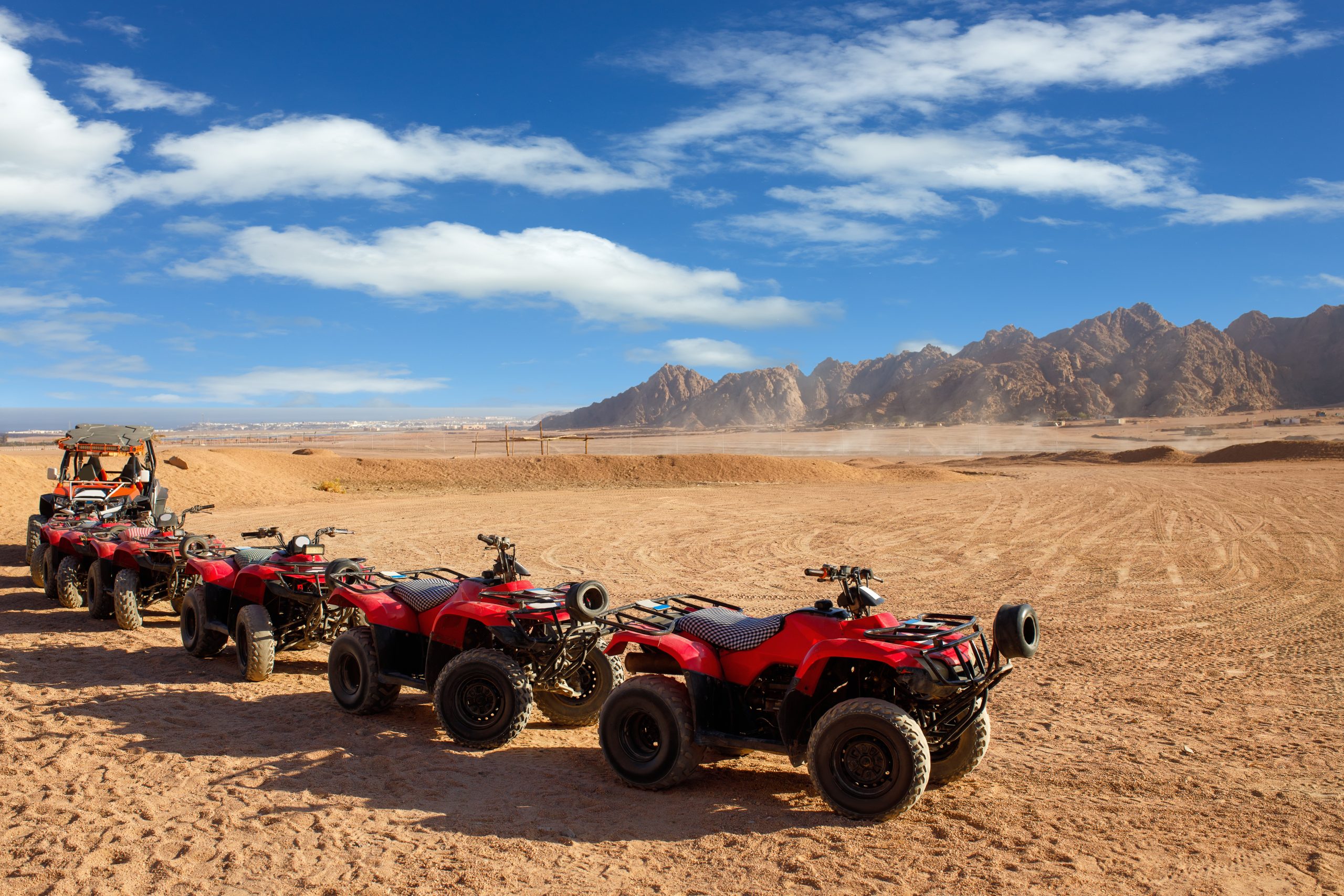
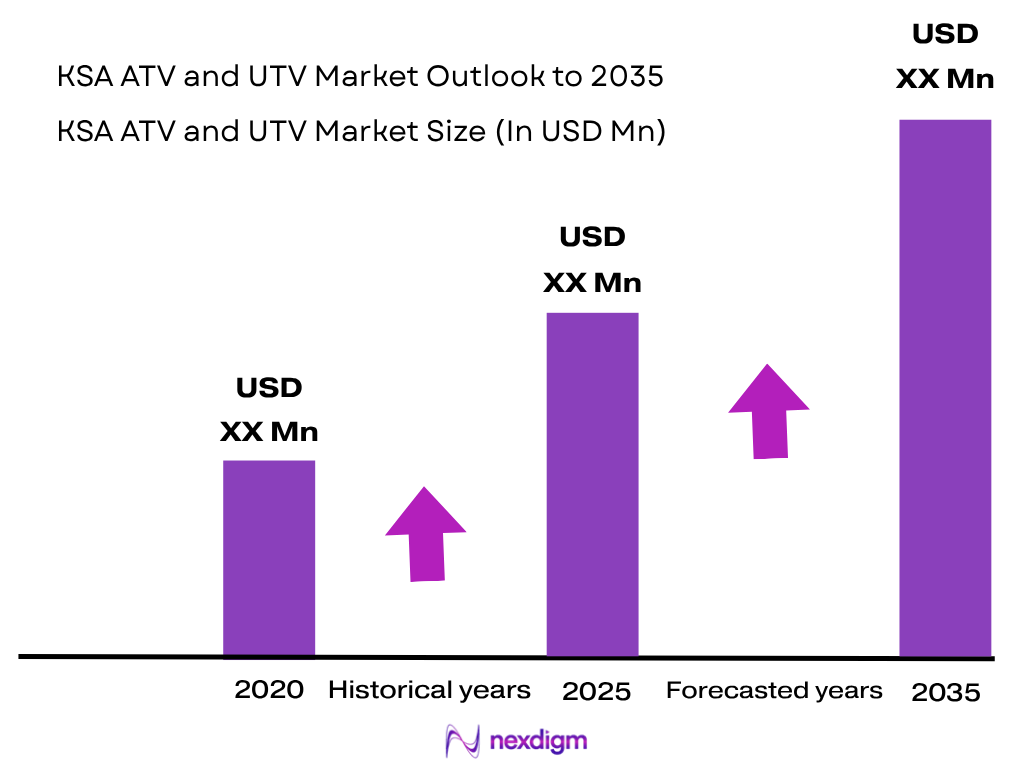
The KSA ATV and UTV market is valued at USD ~ million in 2024, supported by increasing demand from recreational desert activities, adventure tourism, agricultural operations, defence applications, and industrial mobility requirements. The market has benefited from Saudi Arabia’s focus on tourism diversification under Vision 2030, which has accelerated development of outdoor entertainment destinations and adventure-based experiences. The Saudi ATV ecosystem includes quad bikes, utility terrain vehicles, side-by-side vehicles, and electric off-road platforms serving recreational and commercial users. The KSA All-Terrain Vehicles market has been identified as being driven by increasing outdoor recreational participation and expanding utility applications across multiple industries.
The KSA ATV and UTV market is concentrated around Riyadh, Jeddah, Eastern Province, AlUla, Tabuk, and Asir due to their tourism infrastructure, desert landscapes, industrial activities, and commercial mobility requirements. Riyadh represents a major recreational hub due to nearby desert destinations such as Red Sand Dunes and Edge of the World experiences, while AlUla and Tabuk benefit from tourism development projects and adventure activities. Eastern Province demonstrates demand from oil and gas operations, industrial facilities, and desert mobility applications. Saudi Arabia’s extensive desert geography, including the Empty Quarter and diverse terrain zones, supports multiple off-road vehicle applications.
Market Segmentation
By Vehicle Type
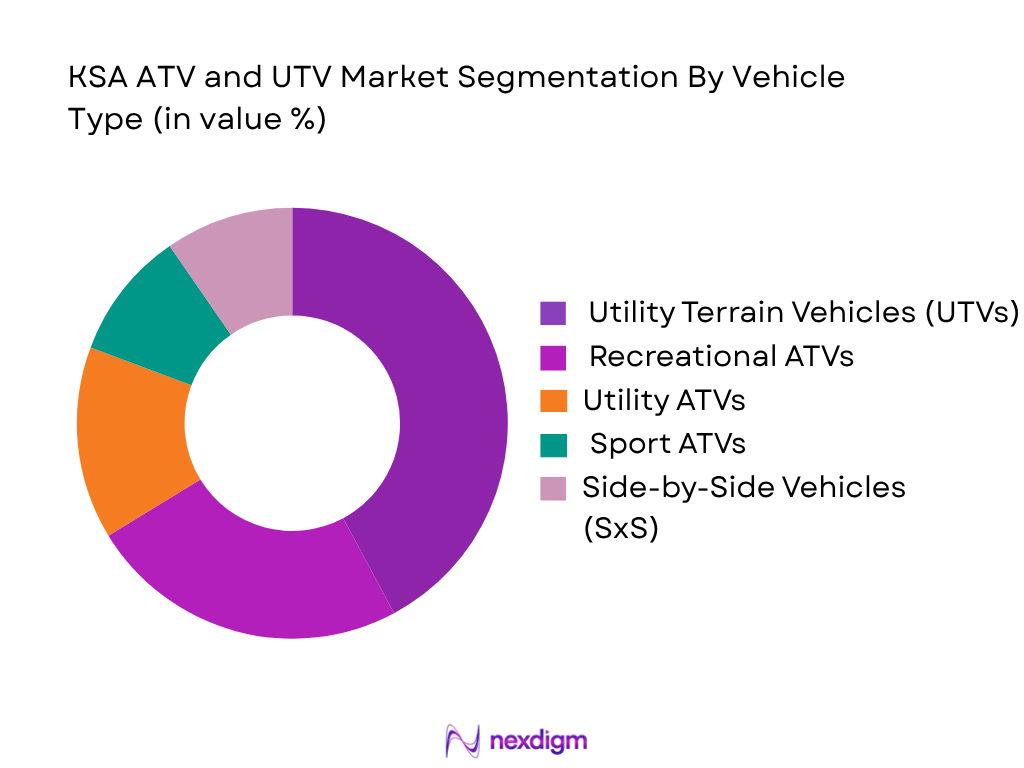
The KSA ATV and UTV market is segmented by vehicle type into Sport ATVs, Utility ATVs, Recreational ATVs, Utility Terrain Vehicles (UTVs), Side-by-Side Vehicles (SxS), and high-performance desert vehicles. Utility Terrain Vehicles (UTVs) account for the dominant segment due to their ability to support both recreational and commercial applications. UTVs provide higher passenger capacity, cargo transportation capability, improved safety features, and stronger suitability for desert tourism operators, agriculture users, construction companies, and industrial organizations. Demand for multi-purpose vehicles has increased as businesses seek platforms that combine transportation capability with off-road performance. The popularity of Polaris Ranger, Can-Am Defender, Yamaha Viking, and similar platforms reflects growing preference for utility-focused vehicles across Saudi Arabia.
By Application Type
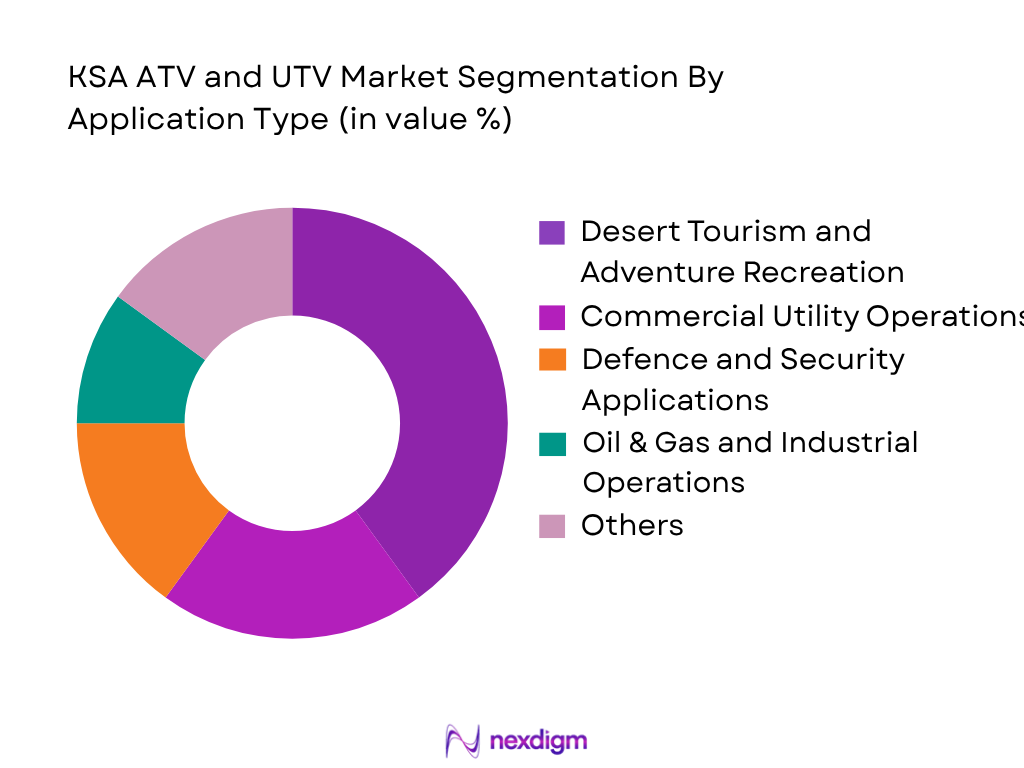
The KSA ATV and UTV market is segmented by application into recreational activities, desert tourism, agriculture, military and defence, industrial operations, construction, mining, and oil & gas applications. Recreational and adventure tourism applications represent the leading segment due to increasing consumer interest in desert experiences and development of entertainment destinations across Saudi Arabia. ATV and quad bike experiences are increasingly integrated into tourism packages in Riyadh, AlUla, Jeddah, and other destinations. Saudi Arabia’s tourism transformation strategy has encouraged growth of outdoor entertainment activities, creating demand for rental fleets and professionally managed adventure operations. Commercial applications also contribute significantly due to the need for compact mobility solutions across remote locations and challenging terrains.
Competitive Landscape
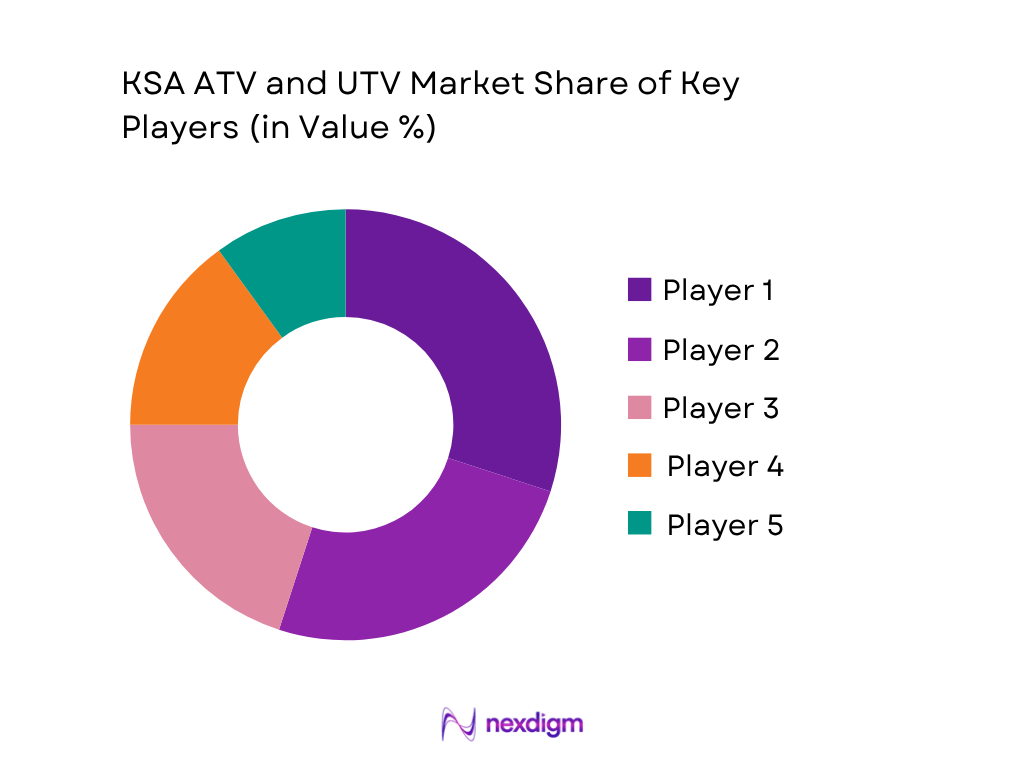
The KSA ATV and UTV market is dominated by international powersports manufacturers including Polaris, BRP (Can-Am), Honda, Yamaha, and Kawasaki. These companies maintain strong positions through extensive product portfolios covering recreational, utility, and performance-oriented off-road vehicles. Competition in Saudi Arabia is influenced by desert performance capability, drivetrain technology, vehicle durability, aftermarket availability, and dealer support. International brands benefit from established global recognition, while regional distributors support sales, maintenance, and customization requirements for recreational and commercial users.
| Company | Establishment Year | Headquarters | Major Products | Vehicle Categories | Desert Performance Capability | Distribution Presence | Utility Application Coverage | Technology Features |
| Polaris Inc. | 1954 | Minnesota, USA | ~ | ~ | ~ | ~ | ~ | ~ |
| BRP Inc. | 1942 | Quebec, Canada | ~ | ~ | ~ | ~ | ~ | ~ |
| Honda Motor Co. | 1948 | Tokyo, Japan | ~ | ~ | ~ | ~ | ~ | ~ |
| Yamaha Motor Co. | 1955 | Shizuoka, Japan | ~ | ~ | ~ | ~ | ~ | ~ |
| Kawasaki Heavy Industries | 1896 | Tokyo, Japan | ~ | ~ | ~ | ~ | ~ | ~ |
KSA ATV and UTV Market Analysis
Growth Drivers
Expansion of Saudi Adventure Tourism and Desert Recreation Ecosystem
The KSA ATV and UTV market is supported by the rapid expansion of adventure tourism, desert recreation, and outdoor entertainment activities across Saudi Arabia. The country’s tourism transformation initiatives are increasing demand for off-road experiences such as dune riding, desert safaris, and motorsport activities. The Ministry of Tourism reported that Saudi Arabia welcomed 106.2 million domestic and international tourists in 2023, while international tourist arrivals reached 27.4 million, highlighting the growing travel ecosystem supporting recreational mobility solutions. The World Bank recorded Saudi Arabia’s GDP at approximately USD 1.07 trillion, with GDP per capita reaching around USD 32,586, reflecting strong economic capacity supporting premium leisure activities and recreational vehicle adoption. Development of tourism destinations including AlUla, Qiddiya, the Red Sea destination, and NEOM is increasing demand for ATV and UTV fleets used in guided experiences and hospitality offerings. The General Entertainment Authority has expanded entertainment activities, while desert-based events and outdoor festivals continue to increase consumer exposure to off-road vehicles. These developments create opportunities for ATV and UTV manufacturers, rental operators, and experience providers to introduce advanced recreational mobility solutions across Saudi Arabia’s diverse desert and mountainous landscapes.
Increasing Industrial, Energy, and Remote Mobility Requirements
The KSA ATV and UTV market is benefiting from demand generated by industrial sectors requiring compact and durable transportation solutions across challenging terrains. Saudi Arabia’s economic structure includes extensive oil and gas operations, mining activities, infrastructure projects, and remote industrial facilities where conventional vehicles may face operational limitations. According to the World Bank, Saudi Arabia recorded 4.7 million square kilometres of land area, creating significant requirements for mobility solutions capable of operating across desert and remote environments. The country’s GDP reached approximately USD 1.07 trillion, supported by energy, infrastructure, construction, and industrial activities that require specialized transportation equipment. Saudi Arabia produced approximately 9 million barrels of crude oil per day in 2024, maintaining its position as a major global energy producer and supporting demand for utility vehicles in oilfield operations. UTVs and utility ATVs are increasingly used for inspection activities, workforce transportation, equipment movement, and security operations in remote areas. Government infrastructure investment, mining development, and industrial expansion under Vision 2030 continue to support demand for high-mobility vehicles with four-wheel-drive systems, cargo capability, and advanced safety features suitable for extreme operating conditions.
Market Challenges
High Import Dependency and Limited Domestic ATV/UTV Manufacturing Base
The KSA ATV and UTV market faces challenges due to significant dependence on imported vehicles, components, and specialized aftermarket products. Most premium ATV and UTV platforms available in Saudi Arabia are manufactured by international powersports companies and supplied through regional distributors. Limited domestic production capacity for recreational and utility off-road vehicles increases reliance on global supply chains, affecting availability, customization capabilities, and aftermarket development. Saudi Arabia’s manufacturing sector is expanding under Vision 2030, but the automotive ecosystem remains primarily focused on conventional vehicles, commercial vehicles, and emerging electric mobility rather than specialized off-road platforms. The World Bank reported that Saudi Arabia’s manufacturing value added contributed approximately USD 150 billion to economic output, demonstrating industrial development while highlighting opportunities for further sector diversification. The country imported goods valued at approximately USD 205 billion, reflecting strong dependence on international supply networks. ATV and UTV operators also face challenges related to replacement parts availability, specialized maintenance requirements, and technician expertise. Extreme desert conditions, including high temperatures and sand exposure, increase wear on engines, suspension components, and drivetrain systems, requiring efficient service networks and specialized aftermarket capabilities.
Regulatory Restrictions and Safety Management Requirements for Recreational Off-Road Usage
The KSA ATV and UTV market faces challenges related to operational regulations, safety requirements, and controlled usage environments for recreational off-road activities. While Saudi Arabia has significant potential for desert recreation, ATV and UTV usage requires structured management due to safety concerns, environmental considerations, and the need for designated riding zones. The Ministry of Interior and local authorities emphasize safety compliance for recreational activities involving motorized vehicles. Saudi Arabia’s population reached approximately 36.9 million people, according to World Bank data, creating increasing demand for organized recreational experiences while requiring proper safety frameworks. Tourism expansion has increased the number of adventure operators, making operator licensing, rider training, and vehicle maintenance standards increasingly important. The Kingdom’s large desert environment, including the Empty Quarter and extensive dune regions, creates opportunities but also requires responsible management to prevent environmental damage and accidents. Additionally, extreme climatic conditions, with summer temperatures frequently exceeding 45°C in several regions, increase operational stress on ATV and UTV systems. These factors require tourism operators, rental companies, and commercial users to invest in safety procedures, fleet maintenance, and appropriate vehicle specifications.
Market Opportunities
Growth of Mega Tourism Projects and Premium Off-Road Experience Businesses
The KSA ATV and UTV market presents opportunities through the development of large-scale tourism projects and premium adventure experiences aligned with Saudi Arabia’s Vision 2030 objectives. Projects such as NEOM, AlUla, Qiddiya, and the Red Sea destination are creating new entertainment and hospitality ecosystems requiring recreational mobility solutions. Saudi Arabia recorded 106.2 million tourists in 2023, demonstrating strong demand for travel and experience-based activities that support adventure vehicle applications. The tourism sector contributed approximately 11.5% of Saudi Arabia’s GDP in 2023, according to government tourism data, highlighting its increasing economic importance. Adventure operators, luxury resorts, and destination developers are increasingly incorporating desert activities, guided ATV tours, and off-road experiences into their offerings. Premium UTVs with passenger capacity, enhanced suspension systems, and advanced safety features are suitable for luxury tourism applications. The growth of desert camps, outdoor festivals, and recreational destinations creates opportunities for fleet operators and vehicle suppliers. Companies providing rental-based ATV experiences, customized vehicles, and managed adventure activities can benefit from increasing consumer interest in experiential tourism across Saudi Arabia’s diverse landscapes.
Expansion of Commercial Utility Applications Across Defence, Mining, Agriculture, and Energy Sectors
The KSA ATV and UTV market has significant opportunities from increasing adoption of utility-focused off-road vehicles across commercial and government applications. Saudi Arabia’s extensive geography and remote operational areas create demand for vehicles capable of transporting personnel, equipment, and supplies across difficult terrain. The Kingdom’s mining sector is expanding, with the Ministry of Industry and Mineral Resources reporting more than 2,000 mineral exploration licenses and mining-related permits, increasing demand for mobility solutions at remote sites. The agricultural sector also operates across large rural areas, with Saudi Arabia maintaining approximately 173,000 agricultural holdings, according to government agricultural statistics, creating applications for utility vehicles in farming and livestock operations. Defence and security organizations require high-mobility platforms for patrol, surveillance, and logistical support in desert environments. The country’s oil and gas infrastructure, supported by production capacity of approximately 9 million barrels of crude oil per day, creates additional demand for reliable transportation solutions across energy facilities. Advanced UTV platforms equipped with GPS systems, cargo configurations, and four-wheel-drive capabilities can address requirements across multiple industries, creating opportunities beyond recreational applications.
Future Outlook
Over the next decade, the KSA ATV and UTV market is expected to demonstrate steady expansion driven by Saudi Vision 2030 tourism initiatives, increasing desert adventure activities, development of mega tourism projects, and rising commercial adoption of utility off-road vehicles. Growth opportunities will emerge from adventure tourism fleets, defence mobility requirements, industrial applications, and electric off-road vehicle development. Increasing demand for advanced suspension systems, connected vehicle technologies, and customized off-road platforms will further influence market development.
Major Players
- Polaris Inc.
- Bombardier Recreational Products Inc. (BRP)
- Honda Motor Co., Ltd.
- Yamaha Motor Co., Ltd.
- Kawasaki Heavy Industries Ltd.
- Suzuki Motor Corporation
- Textron Inc. (Arctic Cat)
- CFMOTO
- Kubota Corporation
- Deere & Company (John Deere)
- Kwang Yang Motor Co. Ltd. (KYMCO)
- Hisun Motors Corporation
- Segway Powersports
- Mahindra Defence Systems
- BEML Limited
Key Target Audience
- Investments and Venture Capitalist Firms
- Government and Regulatory Bodies (Ministry of Transport and Logistics Services, Ministry of Interior, Saudi Standards Metrology and Quality Organization (SASO), Ministry of Defence, General Entertainment Authority, Ministry of Environment Water and Agriculture)
- Adventure Tourism Operators and Desert Safari Companies
- NEOM, Red Sea Global and Mega Tourism Project Developers
- Oil and Gas Companies and Energy Service Providers
- Defence, Border Security and Emergency Response Organizations
- Agriculture, Farming and Livestock Operators
- Construction, Mining and Infrastructure Development Companies
Research Methodology
Step 1: Identification of Key Variables
The initial phase involves developing a comprehensive ecosystem map covering all major stakeholders operating within the KSA ATV and UTV market, including global manufacturers, regional distributors, tourism operators, commercial users, government organizations, and aftermarket service providers. This stage includes extensive secondary research through government databases, import regulations, industry publications, tourism development reports, and off-road mobility information to identify key market variables such as vehicle categories, applications, powertrain systems, distribution channels, and regional demand patterns.
Step 2: Market Analysis and Construction
In this phase, historical and current market information related to the KSA ATV and UTV market is collected and analysed across recreational, commercial, industrial, and government applications. The assessment includes evaluation of vehicle adoption trends, tourism-driven demand, fleet deployment, supplier ecosystem, import dependency, and end-user requirements. Supply-side analysis examines manufacturers, distributors, dealerships, aftermarket providers, and technology developments, while demand-side assessment focuses on consumer behaviour and application-specific vehicle requirements.
Step 3: Hypothesis Validation and Expert Consultation
Market hypotheses are developed and validated through discussions with industry stakeholders including ATV and UTV distributors, tourism operators, fleet managers, commercial users, and off-road mobility specialists. These consultations provide insights into purchasing behaviour, operational challenges, preferred vehicle configurations, application suitability, and emerging opportunities. Expert inputs are used to validate assumptions related to market segmentation, competitive positioning, technology adoption, and future industry developments.
Step 4: Research Synthesis and Final Output
The final stage involves consolidating secondary research findings, stakeholder insights, and market analysis into a structured KSA ATV and UTV market assessment. Data triangulation is performed by comparing information from multiple sources to ensure consistency and reliability across market size analysis, segmentation, competitive landscape, consumer assessment, and future outlook. The final report provides strategic insights for manufacturers, investors, government entities, distributors, and commercial users operating within the Saudi off-road mobility ecosystem.

- Executive Summary
- Research Methodology (Market Definition and Scope, KSA ATV and UTV Vehicle Taxonomy, All-Terrain Vehicle Classification, Utility Terrain Vehicle Classification, Recreational Off-Road Vehicle Classification, Sports ATV Classification, Youth ATV Classification, Side-by-Side Vehicle Classification, Engine Displacement Mapping, Vehicle Configuration Assessment, Drive System Classification, Desert Terrain Application Mapping, Mountain Terrain Application Assessment, Sand Dune Mobility Classification)

- Definition and Scope
- KSA ATV and UTV Industry Evolution and Development of Desert Off-Road Mobility Ecosystem
- ATV and UTV Vehicle Architecture, Import, Assembly and Distribution Process
- KSA ATV and UTV Value Chain Analysis
- KSA ATV and UTV Supply Chain Analysis
- Engine, Transmission, Suspension, Differential, Drivetrain, Chassis, Safety System and Aftermarket Component Ecosystem Analysis
- Desert, Mountain and Extreme Terrain Suitability Assessment

- Growth Drivers (Expansion of Saudi Vision 2030 Tourism Projects, Increasing Desert Adventure Tourism Activities, Growth of NEOM and Red Sea Destination Development, Rising Demand for Recreational Off-Road Experiences, Increasing Adoption of Utility Off-Road Vehicles in Oil and Gas Operations)
- Market Challenges (High Import Dependency for Premium ATV and UTV Platforms, Extreme Desert Climate Impact on Vehicle Components, Limited Public Road Usage Applicability, High Acquisition and Maintenance Requirements, Limited Specialized Service Infrastructure Outside Major Cities, Safety Concerns in Recreational Off-Road Activities)
- Market Opportunities (Expansion of Desert Tourism Infrastructure Across Saudi Arabia, Growth of Luxury Adventure and Outdoor Recreation Segment, Electric ATV and UTV Development for Sustainable Mobility Applications, Mega Project Off-Road Fleet Requirements)
- Market Trends (Increasing Adoption of High-Performance Turbo UTVs, Growth of Side-by-Side Vehicle Popularity, Expansion of Desert Safari ATV Experiences, Integration of GPS Tracking and Vehicle Telematics, Rising Demand for Long-Travel Suspension Systems, Growth of Electric Off-Road Vehicles, Increasing Customization and Performance Modification Activities)
- Regulatory and Standards Landscape (Saudi Standards Metrology and Quality Organization (SASO) Vehicle Compliance Requirements, ZATCA Import Classification and Customs Framework, Ministry of Transport and Logistics Regulations, General Entertainment Authority Adventure Activity Guidelines)
- SWOT Analysis
- Porter’s Five Forces Analysis
- PESTLE Analysis
- Stakeholder Ecosystem
- Competition Ecosystem

- By Vehicle Type (In Value %)
Sport ATVs
Utility ATVs
Recreational ATVs
Youth ATVs
Racing ATVs
Agricultural Utility ATVs
Utility Terrain Vehicles (UTVs)
Side-by-Side Vehicles (SxS)
Sport Side-by-Side Vehicles
Recreational Utility Vehicles
Desert Performance Off-Road Vehicles
High Mobility Tactical Off-Road Vehicles - By Engine Capacity (In Value %)
Below 250cc ATVs
250cc–500cc ATVs
500cc–700cc ATVs
700cc–1,000cc ATVs
Above 1,000cc High-Performance UTVs
Turbocharged Off-Road Vehicles
High-Power Desert Racing Vehicles - By Application Type (In Value %)
Desert Tourism and Dune Adventure Activities
Adventure Parks and Off-Road Experience Centers
NEOM and Mega Tourism Project Mobility Applications
Agriculture and Farm Utility Operations
Livestock and Camel Farm Management Applications
Oil and Gas Field Mobility Applications
Mining and Quarry Operations
Construction and Infrastructure Site Transportation
Defence and Border Surveillance Applications
Security and Patrol Operations
Industrial Facility Transportation
Motorsport and Racing Events
Emergency Response and Disaster Management Applications - By Drive System Type (In Value %)
Two-Wheel Drive (2WD) ATV and UTV Vehicles
Four-Wheel Drive (4WD) Off-Road Vehicles
All-Wheel Drive (AWD) Systems
Selectable Drive Mode Systems
Differential Lock Equipped Vehicles
Electronic Traction Control Off-Road Platforms - By Sales Channel (In Value %)
OEM Authorized Dealers
Specialized ATV and UTV Dealerships
Powersports Vehicle Dealers
Adventure Tourism Operators
Rental and Experience Centers
Government and Defence Procurement
Corporate Fleet Procurement
Online Automotive and Powersports Platforms
Used ATV and UTV Dealers
Import-Based Distribution Channels - By Region (In Value %)
Riyadh
Makkah
Madinah
Eastern Province
Asir
Tabuk
AlUla Region
Northern Borders Region
Jazan
Qassim

- By Vehicle Type (In Value %)
Sport ATVs
Utility ATVs
Recreational ATVs
Youth ATVs
Racing ATVs
Agricultural Utility ATVs
Utility Terrain Vehicles (UTVs)
Side-by-Side Vehicles (SxS)
Sport Side-by-Side Vehicles
Recreational Utility Vehicles
Desert Performance Off-Road Vehicles
High Mobility Tactical Off-Road Vehicles - By Engine Capacity (In Value %)
Below 250cc ATVs
250cc–500cc ATVs
500cc–700cc ATVs
700cc–1,000cc ATVs
Above 1,000cc High-Performance UTVs
Turbocharged Off-Road Vehicles
High-Power Desert Racing Vehicles - By Application Type (In Value %)
Desert Tourism and Dune Adventure Activities
Adventure Parks and Off-Road Experience Centers
NEOM and Mega Tourism Project Mobility Applications
Agriculture and Farm Utility Operations
Livestock and Camel Farm Management Applications
Oil and Gas Field Mobility Applications
Mining and Quarry Operations
Construction and Infrastructure Site Transportation
Defence and Border Surveillance Applications
Security and Patrol Operations
Industrial Facility Transportation
Motorsport and Racing Events
Emergency Response and Disaster Management Applications - By Drive System Type (In Value %)
Two-Wheel Drive (2WD) ATV and UTV Vehicles
Four-Wheel Drive (4WD) Off-Road Vehicles
All-Wheel Drive (AWD) Systems
Selectable Drive Mode Systems
Differential Lock Equipped Vehicles
Electronic Traction Control Off-Road Platforms - By Sales Channel (In Value %)
OEM Authorized Dealers
Specialized ATV and UTV Dealerships
Powersports Vehicle Dealers
Adventure Tourism Operators
Rental and Experience Centers
Government and Defence Procurement
Corporate Fleet Procurement
Online Automotive and Powersports Platforms
Used ATV and UTV Dealers
Import-Based Distribution Channels - By Region (In Value %)
Riyadh
Makkah
Madinah
Eastern Province
Asir
Tabuk
AlUla Region
Northern Borders Region
Jazan
Qassim

- Market Share of Major Players (By Revenue, Unit Sales, ATV Segment, UTV Segment, Engine Capacity, Application Segment, Powertrain Type, Sales Channel, Regional Distribution Coverage)
- Cross Comparison Parameters (ATV and UTV Product Portfolio Breadth Across Recreational and Utility Segments, Engine Displacement Coverage Across Performance and Commercial Categories, 2WD/4WD/AWD Capability and Differential Lock Technology, Desert Sand Performance and Extreme Terrain Adaptability, Suspension Travel and Off-Road Handling Features, Dealer Network and After-Sales Service Coverage Across Saudi Arabia, Tourism Fleet and Commercial Application Penetration, Customization Accessories and Performance Upgrade Ecosystem)
- SWOT Analysis of Major Players
- Competitive Positioning Matrix
- Product and Technology Portfolio Benchmarking
- Pricing and Vehicle Category Benchmarking
- Detailed Profiles of Major Companies
Polaris Inc. – Sportsman ATVs, RZR Side-by-Side Vehicles and Ranger Utility Platforms
Bombardier Recreational Products Inc. (BRP) – Can-Am ATV, Maverick and Defender Side-by-Side Off-Road Platforms
Honda Motor Co., Ltd.
Yamaha Motor Co., Ltd.
Kawasaki Heavy Industries Ltd.
Suzuki Motor Corporation
Textron Inc.
CFMOTO
Kubota Corporation
Deere & Company
Kwang Yang Motor Co. Ltd.
Hisun Motors Corporation
Segway Powersports
Mahindra Defence Systems
BEML Limited

- End User Segmentation Assessment
- Individual Recreational Riders Analysis
- Desert Safari and Adventure Tourism Operator Analysis
- NEOM and Mega Tourism Project Experience Provider Analysis
- Luxury Resort and Hospitality Experience Provider Analysis
- Agriculture and Farm Operator Analysis
- Oil and Gas Industry User Analysis
- Mining and Industrial Operator Analysis
- Defence and Security Force Analysis
- Construction and Infrastructure Company Analysis
- Corporate Recreational Fleet User Analysis

- By Market Value (2026-2035)
- By ATV and UTV Unit Sales (2026-2035)
- By ATV Sales Volume (2026-2035)
- By UTV / Side-by-Side Vehicle Sales Volume (2026-2035)
- By Recreational Desert Off-Road Vehicle Sales (2026-2035)
- By Commercial Utility Off-Road Vehicle Sales (2026-2035)
- By Tourism Fleet ATV and UTV Deployment Volume (2026-2035)
- By Defence and Security Off-Road Vehicle Deployment Volume (2026-2035)


 Request a Sample
 Ask for Customization
 Get a Quote
 Enquire Now