
 Download PDF
 Download PDF
Market Overview
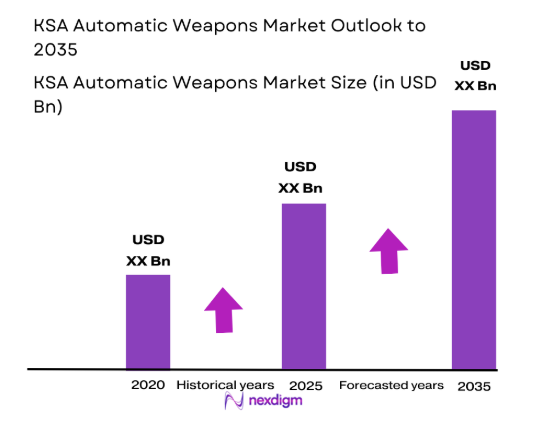
The automatic weapons market is driven by the increasing need for advanced weaponry in military and law enforcement sectors. Based on a recent historical assessment, the market is valued at approximately USD ~ billion in 2025. This growth is attributed to rising defense budgets, heightened geopolitical tensions, and technological advancements in firearms, particularly in the integration of smart and AI-based features. Modernization programs in various countries and continuous demand for upgraded weapon systems from security forces further contribute to this market expansion.
Countries like the United States, Russia, and China dominate the market, driven by their substantial military budgets and active involvement in defense modernization. The Middle East, particularly Saudi Arabia, is another key region experiencing rapid defense spending, influenced by security challenges and ongoing conflicts. These regions invest heavily in state-of-the-art automatic weapons to strengthen their armed forces, further solidifying their leadership in the market.
Market Segmentation
By Product Type
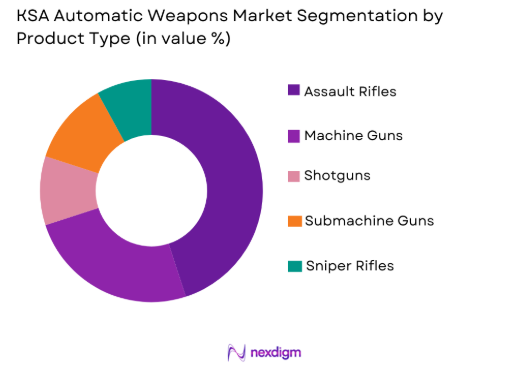
The automatic weapons market is segmented by product type into assault rifles, machine guns, shotguns, submachine guns, and sniper rifles. Recently, assault rifles dominate the market due to their widespread use in military operations and law enforcement agencies. These rifles are versatile, capable of handling a wide range of tactical scenarios, and are favored for their adaptability and firepower. Their affordability, availability, and reliable performance in combat make them the preferred choice across various global defense forces. Furthermore, their continuous innovation, including smart features and improved materials, boosts their market share, making them the dominant sub-segment in the automatic weapons market.
By Platform Type
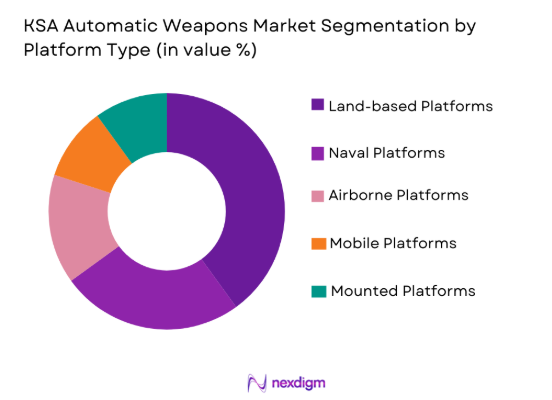
The market for automatic weapons is segmented by platform type into land-based platforms, naval platforms, airborne platforms, mobile platforms, and mounted platforms. The land-based platforms segment dominates the market due to the extensive use of automatic weapons in ground operations. These weapons are critical for infantry combat and vehicle-mounted defense systems, which are widely deployed across military forces. The versatility of land-based platforms, combined with the requirement for effective defense on the ground, results in the dominant market share of this segment. Additionally, the integration of automatic weapons in tactical military vehicles further strengthens the position of land platforms in the overall market.
Competitive Landscape
The competitive landscape of the automatic weapons market is highly concentrated, with a few key players dominating the market share. The market is influenced by major defense contractors who drive innovations in weapon systems, focusing on advanced technologies such as AI integration, enhanced targeting systems, and modular weaponry. These companies frequently engage in strategic mergers, acquisitions, and partnerships to strengthen their market presence and expand their product portfolios. They are also driving the development of smarter, more effective weapon systems tailored to modern defense needs.
| Company Name | Establishment Year | Headquarters | Technology Focus | Market Reach | Key Products | Revenue | Military Integration Focus |
| Lockheed Martin | 1912 | Bethesda, MD, USA | ~ | ~ | ~ | ~ | ~ |
| BAE Systems | 1999 | London, UK | ~ | ~ | ~ | ~ | ~ |
| Heckler & Koch | 1949 | Oberndorf, Germany | ~ | ~ | ~ | ~ | ~ |
| FN Herstal | 1889 | Liège, Belgium | ~ | ~ | ~ | ~ | ~ |
| IWI | 1936 | Ramat Hasharon, Israel | ~ | ~ | ~ | ~ | ~ |
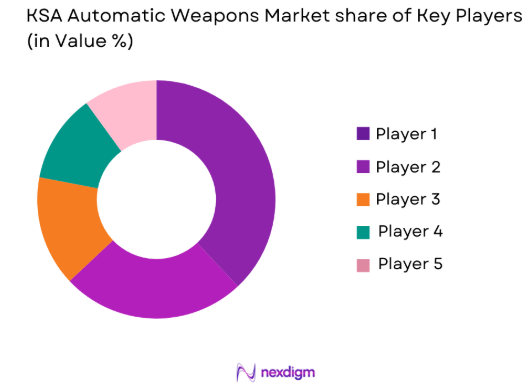
KSA Automatic Weapons Market Analysis
Growth Drivers
Increased Defense Budgets
The significant rise in global defense spending is one of the major growth drivers for the automatic weapons market. As countries face increased security threats, both domestic and international, many governments are prioritizing defense and military capabilities, including advanced weapon systems. This has been particularly evident in regions such as the Middle East, where rising tensions and ongoing conflicts drive up defense budgets. Additionally, nations like the United States, China, and Russia have consistently increased their defense expenditures, focusing on enhancing their armed forces with advanced automatic weapons systems. This increased spending is seen not only in traditional military operations but also in law enforcement agencies looking to upgrade their weapons systems. The need for modernization is driving a steady demand for high-tech automatic weapons that can perform under diverse operational conditions, making defense budgets a key growth driver in the market.
Technological Advancements in Weaponry
Another key growth driver is the continuous technological advancements in automatic weapons. Over the past few years, innovations such as smart weaponry, AI integration, and advanced targeting systems have revolutionized the performance of automatic weapons. These advancements allow for greater precision, higher fire rates, and enhanced adaptability in various combat situations. Manufacturers are increasingly incorporating digital technologies into weapon systems, making them smarter and more efficient. This trend is becoming a significant selling point for military and law enforcement agencies that need to operate in highly dynamic and uncertain environments. Moreover, the use of lightweight materials and modular designs, which allow for easier upgrades and customization, further boosts demand. As technology continues to evolve, the market for more advanced, multifunctional automatic weapons will expand, driven by the integration of these innovations into various platforms and defense systems.
Market Challenges
High Costs of Advanced Weapon Systems
One of the major challenges facing the automatic weapons market is the high costs associated with acquiring and maintaining advanced weapon systems. While the market is witnessing rapid growth, especially with the introduction of AI-driven and smart weapon systems, the financial burden posed by these advanced technologies limits the accessibility for some regions. The initial cost of purchasing advanced automatic weapons, coupled with the ongoing expenses for maintenance, spare parts, and training personnel, makes it difficult for many countries, particularly in developing regions, to adopt these systems. The long-term sustainability of investments in high-tech military systems is a constant concern, especially when it comes to countries facing budget constraints or economic challenges. Furthermore, the integration of cutting-edge technologies into weapons systems requires significant investment in R&D, which only a few major players can afford, further exacerbating this challenge.
Political Instability and Regional Conflicts
Political instability and regional conflicts present another significant challenge for the automatic weapons market. In politically unstable regions, governments may face difficulties in securing defense contracts or accessing advanced weaponry due to international arms embargos, trade restrictions, or political pressures. For instance, countries involved in ongoing conflicts may struggle to modernize their weapon systems or replenish their stocks, limiting their access to new automatic weapons technologies. Moreover, the global arms trade is often impacted by diplomatic tensions, which can disrupt the flow of weapons to regions that are in dire need of military upgrades. As the global political landscape remains volatile, the market may experience fluctuations in demand, as instability impacts procurement processes and weapon system development across various nations.
Opportunities
Emerging Markets and Defense Modernization
One of the most significant opportunities for the automatic weapons market lies in emerging markets and the defense modernization efforts underway in many developing nations. Countries in regions like Asia, Africa, and the Middle East are increasingly investing in their military forces, driven by concerns over national security and regional stability. As these countries modernize their armed forces, they are looking to acquire advanced automatic weapons systems to strengthen their defense capabilities. The growing interest in military modernization, supported by rising defense budgets, is creating a substantial market opportunity for automatic weapon manufacturers. Countries such as India, Saudi Arabia, and Turkey are leading the charge in terms of military upgrades, resulting in increased demand for high-performance automatic weapons. This trend is expected to continue, providing significant growth potential for the market.
Technological Integration for Law Enforcement and Security Firms
The growing demand for advanced weapon systems in law enforcement and private security firms presents another lucrative opportunity in the automatic weapons market. As urbanization increases, the need for sophisticated, high-performance weapons to manage complex security challenges also rises. Law enforcement agencies require automatic weapons that offer enhanced precision, reliability, and speed to ensure public safety. Similarly, private security companies are increasingly looking for high-tech weapons to safeguard high-value assets. The integration of AI, smart ammunition, and advanced targeting systems into weapons systems is becoming a priority for these sectors. This technological shift is expected to drive demand for modern, customizable, and effective automatic weapons that meet the specific needs of law enforcement and security firms, making this sector a promising opportunity for market growth.
Future Outlook
Over the next five years, the automatic weapons market is expected to grow steadily, driven by technological advancements, rising defense expenditures, and geopolitical factors. The integration of AI and smart technologies will continue to shape the development of new automatic weapons, improving their accuracy, adaptability, and efficiency in combat. Increasing defense budgets, particularly in emerging markets, will fuel demand for advanced weapon systems, while regulatory support will help drive the modernization of armed forces. The market will also benefit from the growing need for security solutions in law enforcement and private security sectors, as well as from continued innovation in weapons technologies.
Major Players
- Lockheed Martin
- BAE Systems
- Heckler & Koch
- FN Herstal
- IWI
- Rheinmetall AG
- Colt’s Manufacturing Company
- Smith & Wesson
- Beretta
- CZ Group
- SIG Sauer
- Northrop Grumman
- Thales Group
- General Dynamics
- Leonardo S.p.A.
Key Target Audience
- Investments and venture capitalist firms
- Government and regulatory bodies
- Military agencies
- Private security firms
- Law enforcement agencies
- Firearm manufacturers
- Defense contractors
- Armament suppliers
Research Methodology
Step 1: Identification of Key Variables
The first step involves identifying the critical variables that drive the market, such as technological trends, regional defense budgets, and security needs.
Step 2: Market Analysis and Construction
Data is collected from reliable sources to build an understanding of the current market structure, growth rate, and trends.
Step 3: Hypothesis Validation and Expert Consultation
Market assumptions are validated through expert interviews and analysis of industry reports to ensure accuracy.
Step 4: Research Synthesis and Final Output
All collected data is synthesized into a comprehensive market report, providing detailed insights for decision-making.

- Executive Summary
- Research Methodology (Definitions, Scope, Industry Assumptions, Market Sizing Approach, Primary & Secondary Research Framework, Data Collection & Verification Protocol, Analytic Models & Forecast Methodology, Limitations & Research Validity Checks)

- Market Definition and Scope
- Value Chain & Stakeholder Ecosystem
- Regulatory / Certification Landscape
- Sector Dynamics Affecting Demand
- Strategic Initiatives & Infrastructure Growth

- Growth Drivers
Increased Defense Budgets
Modernization of Armed Forces
Geopolitical Tensions
Technological Advancements in Weapon Systems
Growing Demand for Military Equipment in the Middle East - Market Challenges
High Costs of Advanced Weapon Systems
Import Restrictions and Trade Barriers
Political Instability in the Region
Weapon System Reliability and Maintenance Costs
Stringent Regulations on Firearm Sales - Market Opportunities
Technological Integration with AI and Robotics
Expansion of Military Exports
Rising Demand for Smart Weapons Systems - Trends
Advances in Modular Weapon Systems
Increased Focus on Precision and Accuracy
Integration of Electronic Components in Weapons
Rise of Non-lethal Automatic Weapons
Growing Role of Drones in Weaponry - Government Regulations & Defense Policy
Increased Regulatory Compliance for Weapon Sales
Strengthening National Defense Policies
Security and Export Controls on Weapon Systems

- By Market Value, 2020-2025
- By Installed Units, 2020-2025
- By Average System Price, 2020-2025
- By System Complexity Tier, 2020-2025

- By System Type (In Value%)
Assault Rifles
Machine Guns
Shotguns
Submachine Guns
Sniper Rifles - By Platform Type (In Value%)
Land-based Platforms
Naval Platforms
Airborne Platforms
Mobile Platforms
Mounted Platforms - By Fitment Type (In Value%)
Fixed Fitment
Portable Fitment
Vehicle-mounted Fitment
Naval Fitment
Aircraft Fitment - By End User Segment (In Value%)
Military
Law Enforcement
Paramilitary
Civilian
Security Contractors - By Procurement Channel (In Value%)
Direct Government Procurement
Through Defense Contractors
Private Security Firms
Online Platforms
Auctions & Military Surplus - By Material / Technology (in Value%)
Steel
Aluminum
Composite Materials
Smart Ammunition Systems
Laser Guidance Systems

- Market share snapshot of major players
- Cross Comparison Parameters (Technology Adoption, Cost Efficiency, Product Range, Customer Service, Government Compliance, Brand Strength, Market Presence, After-Sales Service, Regulatory Adherence, Innovation Rate)
- SWOT Analysis of Key Players
- Pricing & Procurement Analysis
- Porter’s Five Forces
- Key Players
Saudi Arabian Military Industries (SAMI)
General Dynamics
Northrop Grumman
BAE Systems
Lockheed Martin
Thales Group
Leonardo S.p.A.
Rheinmetall AG
KMW GmbH
FN Herstal
IWI (Israel Weapon Industries)
Heckler & Koch
Colt’s Manufacturing Company LLC
Steyr Mannlicher
CZ Group

- Growing Military Demand
- Increasing Demand from Law Enforcement Agencies
- Private Sector Weapon Procurement
- Surge in Demand for Weaponry in Conflict Zones

- Forecast Market Value, 2026-2035
- Forecast Installed Units, 2026-2035
- Price Forecast by System Tier, 2026-2035
- Future Demand by Platform, 2026-2035


 Request a Sample
 Ask for Customization
 Get a Quote
 Enquire Now