
 Download PDF
Market Overview
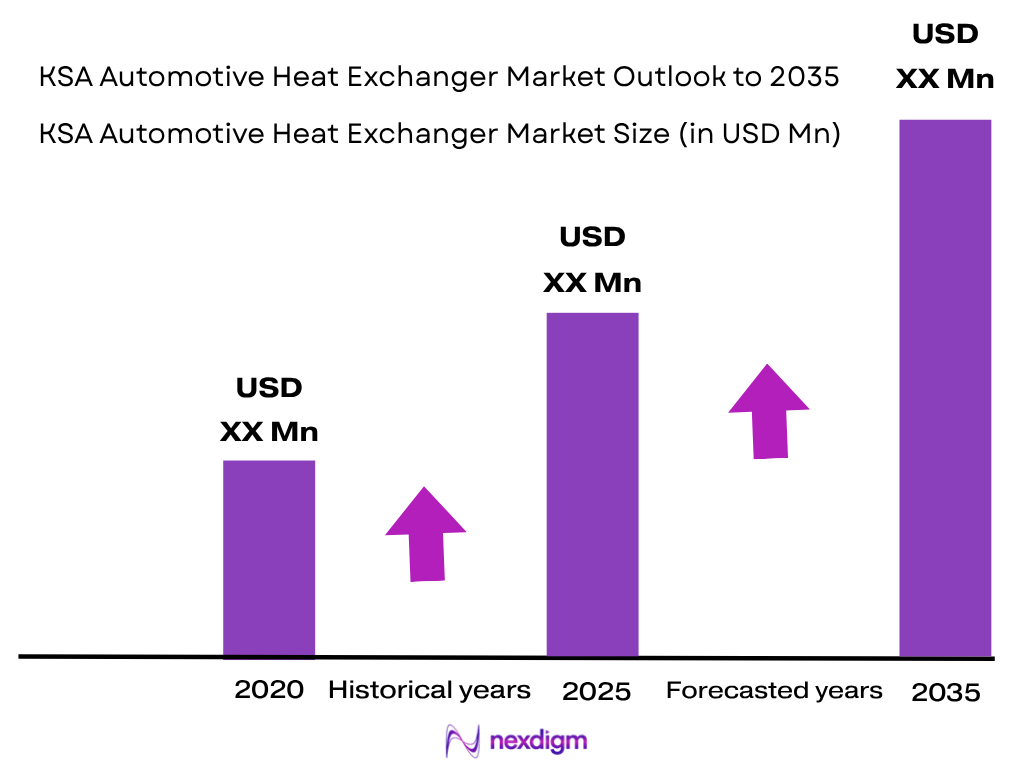
The KSA automotive heat exchanger market is valued at ~USD XX million in 2024, supported by the country’s expanding vehicle fleet, high imported vehicle volumes, extreme climatic conditions, and increasing adoption of advanced thermal management systems. Saudi Arabia has one of the largest automotive markets in the GCC, with millions of passenger cars and commercial vehicles requiring radiators, condensers, oil coolers, and HVAC heat exchangers. The transition toward electric mobility is creating additional demand for battery cooling and power electronics thermal management systems. Globally, automotive heat exchanger demand is increasingly influenced by EV adoption and advanced cooling requirements.
The automotive heat exchanger market in Saudi Arabia is concentrated around Riyadh, Jeddah, and the Eastern Province due to higher vehicle ownership, commercial activity, and automotive service infrastructure. Riyadh dominates because of its large population base, government fleet presence, and concentration of automotive dealerships and repair networks. Jeddah acts as a major automotive import and distribution hub due to its port infrastructure, while the Eastern Province benefits from industrial activity and commercial vehicle usage. Saudi Arabia’s automotive ecosystem is also supported by increasing domestic vehicle manufacturing initiatives, including EV production activities.
Market Segmentation
By Heat Exchanger Type
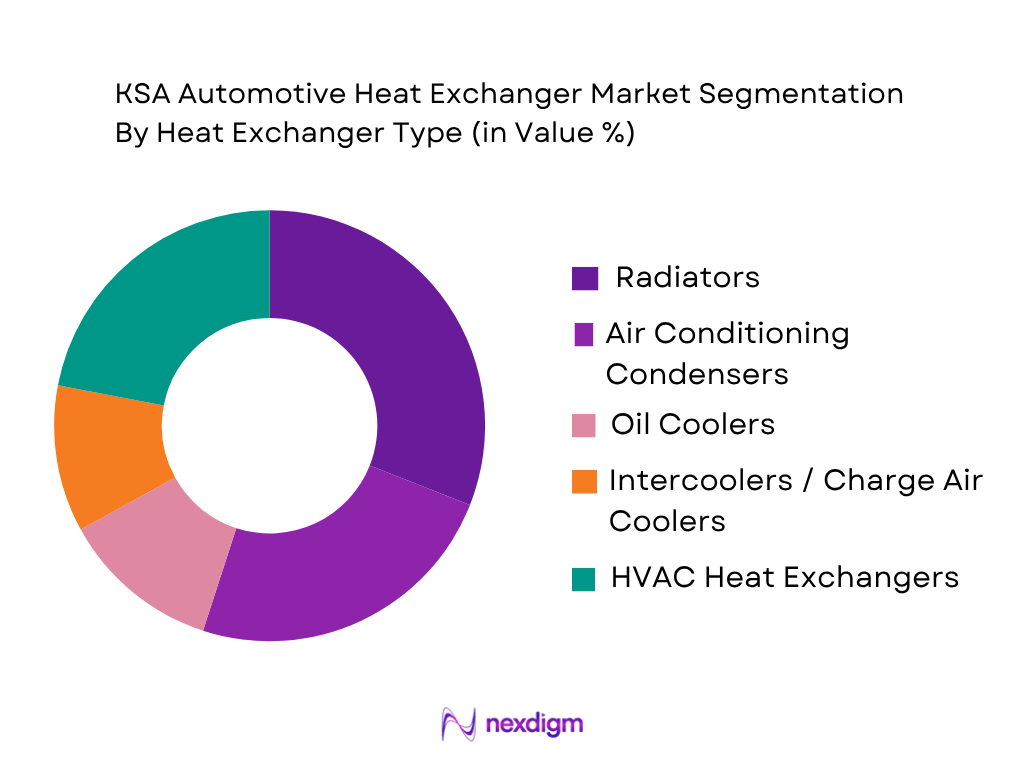
The KSA automotive heat exchanger market is segmented into radiators, air conditioning condensers, oil coolers, intercoolers, HVAC heat exchangers, EGR coolers, and battery cooling heat exchangers. Radiators represent the dominant segment due to their essential role in maintaining engine temperature in Saudi Arabia’s extreme heat conditions. The country’s high penetration of SUVs, pickup trucks, and internal combustion engine vehicles supports radiator demand because these vehicles require efficient cooling systems for desert operations. Air conditioning condensers also account for a significant share due to continuous usage of vehicle cooling systems throughout the year. However, battery cooling heat exchangers are emerging as a strategic segment due to increasing electric vehicle deployment and demand for advanced thermal management solutions. EV platforms require dedicated cooling systems for batteries, motors, and power electronics, increasing opportunities for specialized suppliers.
By Vehicle Type
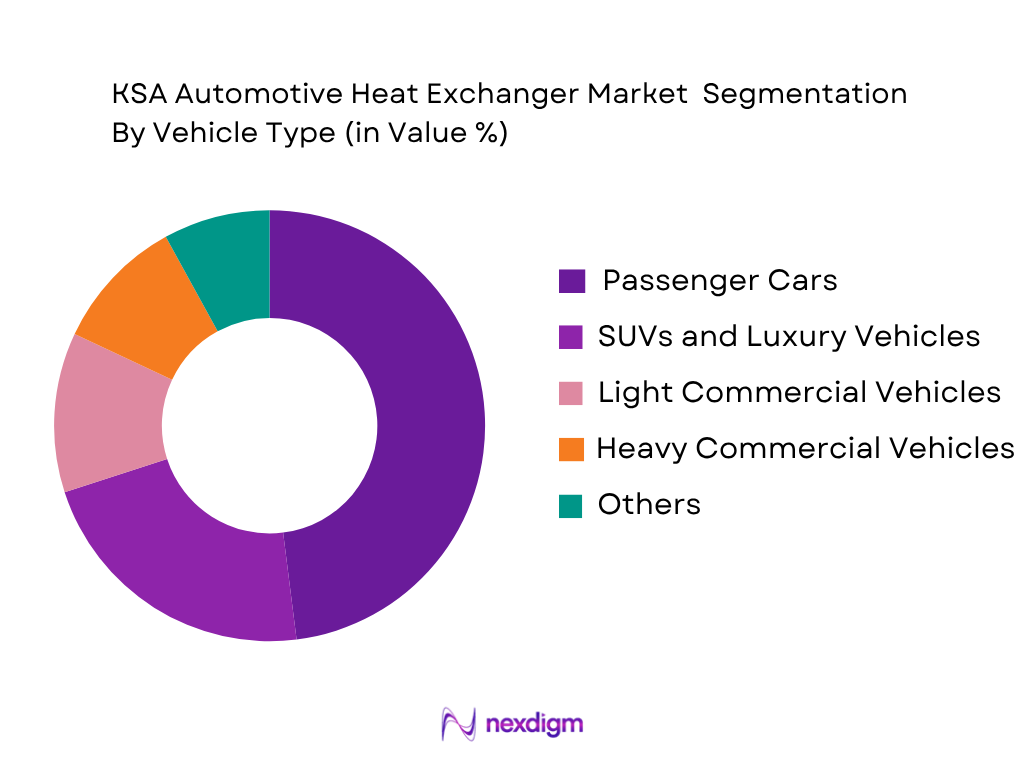
The KSA automotive heat exchanger market is segmented into passenger cars, SUVs and luxury vehicles, light commercial vehicles, heavy commercial vehicles, electric vehicles, and hybrid vehicles. Passenger cars dominate due to Saudi Arabia’s large personal vehicle ownership base and continuous demand for replacement cooling components through aftermarket channels. SUVs and luxury vehicles represent another important segment because Saudi consumers show strong preference for large vehicles requiring higher-capacity thermal management systems. Commercial vehicles including trucks and buses contribute significantly due to logistics, construction, and industrial transportation activities. Electric vehicles currently represent a smaller segment but are expected to gain importance as Saudi Arabia accelerates EV adoption under sustainability initiatives. EVs require specialized battery cooling systems, heat pumps, and integrated thermal modules, creating new opportunities beyond traditional engine cooling applications.
Competitive Landscape
The KSA automotive heat exchanger market is characterized by the presence of global thermal management suppliers, automotive component manufacturers, and regional aftermarket distributors. The market remains highly dependent on international suppliers due to limited domestic production capabilities for advanced heat exchanger technologies. Major global companies compete through product innovation, lightweight aluminium designs, EV thermal management solutions, OEM supply agreements, and aftermarket distribution networks. Companies with strong capabilities in battery cooling systems, integrated thermal modules, and high-efficiency HVAC systems are gaining strategic importance as Saudi Arabia accelerates vehicle electrification and automotive localization initiatives.
| Company | Establishment Year | Headquarters | Product Portfolio | OEM Partnerships | EV Thermal Management Capability | Manufacturing Footprint | R&D Capability | Aftermarket Presence |
| Denso Corporation | 1949 | Kariya, Japan | ~ | ~ | ~ | ~ | ~ | ~ |
| Valeo | 1923 | Paris, France | ~ | ~ | ~ | ~ | ~ | ~ |
| MAHLE GmbH | 1920 | Stuttgart, Germany | ~ | ~ | ~ | ~ | ~ | ~ |
| Modine Manufacturing Company | 1916 | Racine, USA | ~ | ~ | ~ | ~ | ~ | ~ |
| Hanon Systems | 1986 | Daejeon, South Korea | ~ | ~ | ~ | ~ | ~ | ~ |
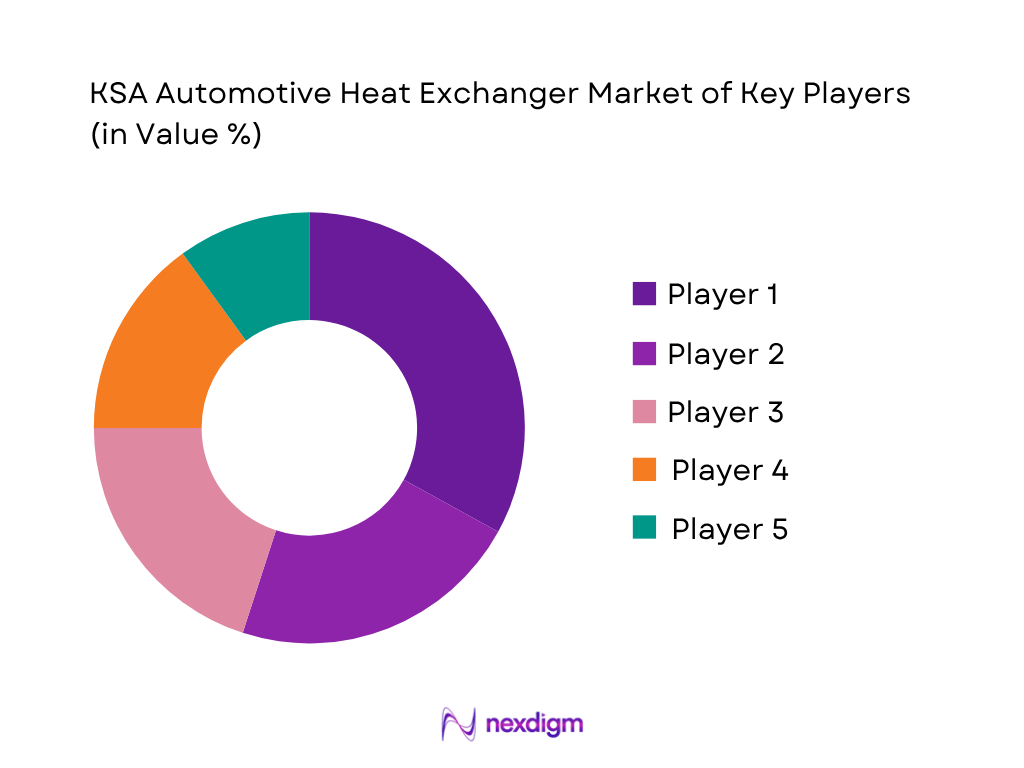
KSA Automotive Heat Exchanger Market Analysis
Growth Drivers
Increasing Vehicle Import Volume
The increasing inflow of imported vehicles into Saudi Arabia is supporting demand for automotive heat exchangers, as imported passenger cars, SUVs, and commercial vehicles require regular thermal system maintenance under harsh operating conditions. Saudi Arabia recorded approximately 1.1 million vehicle registrations in 2024, according to the General Authority for Statistics (GASTAT), reflecting continued expansion of the automotive ecosystem. The country also maintained strong trade activity, with total merchandise imports exceeding SAR 800 billion during the same period, according to government trade statistics. Imported vehicles from Japan, South Korea, Europe, and the United States generally require specialized cooling components such as radiators, condensers, intercoolers, and oil coolers. The World Bank reported that Saudi Arabia’s GDP remained above USD 1 trillion in 2024, supporting consumer purchasing power and vehicle ownership expansion. The growing vehicle population increases replacement demand for heat exchangers, especially due to high ambient temperatures that accelerate cooling system stress. Additionally, the presence of premium vehicle brands in cities such as Riyadh, Jeddah, and Dammam creates demand for advanced thermal management components with higher durability and performance requirements.
Electric Vehicle Adoption
The gradual adoption of electric vehicles in Saudi Arabia is creating demand for advanced thermal management solutions, including battery cooling heat exchangers, coolant modules, and integrated HVAC systems. Saudi Arabia’s Vision 2030 initiatives are supporting EV ecosystem development, with the Public Investment Fund investing in electric mobility projects and local vehicle manufacturing capabilities. The International Energy Agency reported global electric vehicle sales exceeded 17 million units in 2024, accelerating technology development that is influencing emerging markets such as Saudi Arabia. The country installed hundreds of public charging points by 2024 through national charging infrastructure programs, improving EV usability. Saudi Arabia’s electricity generation capacity exceeded 90 GW in 2024, supporting future electrified transportation requirements. EVs require more sophisticated thermal systems compared with conventional vehicles because battery packs, power electronics, and electric motors operate within narrow temperature ranges. As manufacturers introduce electric models from global brands into the Saudi market, demand is increasing for specialized aluminium heat exchangers, battery cooling plates, and thermal management modules designed for high-temperature environments.
Market Challenges
High Dependence on Imported Components
Saudi Arabia’s automotive heat exchanger supply chain remains highly dependent on imported components due to limited domestic manufacturing capacity for advanced thermal management systems. The country imports a significant share of automotive parts from Asia, Europe, and North America to support its expanding vehicle fleet. According to Saudi Arabia’s trade statistics, machinery and transport equipment remain among the largest import categories, with imports exceeding SAR 300 billion annually. The World Bank identified Saudi Arabia as a major importer of manufactured goods due to its diversified infrastructure and industrial requirements. Heat exchanger manufacturing requires specialized aluminium forming, brazing technology, precision engineering, and testing facilities that are currently concentrated among global suppliers. Imported radiators, condensers, EV cooling modules, and specialised components create exposure to international logistics disruptions and currency fluctuations. The challenge is further intensified by increasing demand for advanced EV thermal systems, where local manufacturing capabilities remain limited. Although Saudi Arabia is promoting industrial localization through programs such as the National Industrial Development and Logistics Program, developing a complete automotive thermal component ecosystem requires investment in technology transfer, supplier development, and skilled workforce creation.
Extreme Heat and Dust Exposure
Saudi Arabia’s extreme environmental conditions create significant challenges for automotive heat exchanger performance and durability. Vehicles operating in the Kingdom experience high ambient temperatures, desert dust exposure, and extended air-conditioning usage, increasing thermal stress on radiators, condensers, and HVAC heat exchangers. According to climate data from the Saudi National Centre for Meteorology, several regions regularly experience summer temperatures exceeding 45°C, particularly in inland areas. The World Bank reported that Saudi Arabia’s arid climate covers most of the country, creating demanding operating conditions for automotive systems. Dust accumulation can reduce airflow efficiency through cooling fins, increasing maintenance requirements and reducing component lifespan. Commercial fleets, including logistics vehicles and heavy-duty trucks, face additional thermal loads due to long-distance transportation operations. These conditions require heat exchangers with improved corrosion resistance, enhanced airflow design, and higher cooling efficiency. Manufacturers supplying the Saudi market must therefore develop components capable of maintaining performance under extreme climate conditions, increasing engineering requirements and testing complexity compared with moderate climate markets.
Market Opportunities
EV Battery Cooling Systems
The expansion of electric mobility in Saudi Arabia creates significant opportunities for suppliers specializing in EV battery cooling systems and advanced thermal management technologies. Electric vehicles require dedicated cooling solutions to maintain battery temperature, improve charging efficiency, and extend battery life. Saudi Arabia has been developing its EV ecosystem through government-backed initiatives, including the establishment of charging infrastructure and local EV manufacturing projects. The country’s electricity demand exceeded 300 TWh in 2024, according to national energy statistics, providing a strong foundation for future electrification. Global EV technology developments are increasing demand for liquid cooling systems, battery cooling plates, and integrated thermal modules. Saudi Arabia’s high-temperature environment makes efficient battery thermal management particularly important because elevated temperatures can accelerate battery degradation. Automotive suppliers with expertise in lightweight aluminium heat exchangers and compact cooling modules can benefit from partnerships with vehicle manufacturers entering the Saudi market. The opportunity extends beyond passenger vehicles to electric buses, commercial fleets, and industrial mobility applications requiring reliable thermal control systems.
Lightweight Aluminium Heat Exchangers
The increasing focus on vehicle efficiency and thermal performance is creating opportunities for lightweight aluminium heat exchanger adoption in Saudi Arabia’s automotive sector. Aluminium-based cooling components provide advantages including reduced vehicle weight, improved corrosion resistance, and enhanced heat transfer efficiency compared with traditional materials. Saudi Arabia produced more than 700,000 tonnes of aluminium annually through its industrial sector, supported by companies such as Ma’aden Aluminium, creating a domestic raw material advantage for future component localization. The Saudi industrial sector contributed significantly to economic diversification efforts under Vision 2030, with manufacturing development receiving increased investment. Lightweight thermal components are becoming increasingly important as automotive manufacturers transition toward hybrid and electric vehicles, where weight reduction directly influences efficiency and driving range. Suppliers capable of producing aluminium radiators, condensers, battery cooling plates, and integrated thermal modules can benefit from rising demand from OEMs and local assembly projects. The opportunity also aligns with Saudi Arabia’s localization objectives aimed at increasing domestic value creation within automotive supply chains.
Future Outlook
The KSA automotive heat exchanger market is expected to experience sustained development as vehicle electrification, automotive localization, and climate-driven cooling requirements reshape demand patterns. Increasing adoption of electric vehicles will shift market requirements from conventional engine cooling systems toward integrated thermal management solutions. Investments in domestic automotive manufacturing, rising commercial fleet activity, and aftermarket expansion will support demand for radiators, condensers, battery cooling systems, and advanced HVAC components.
Future growth will be influenced by lightweight aluminium heat exchangers, smart thermal management technologies, and locally developed automotive supply chains. Companies capable of supplying both conventional vehicle cooling components and EV thermal solutions are expected to gain competitive advantages in Saudi Arabia.
Major Players
- Denso Corporation
- Valeo
- MAHLE GmbH
- Hanon Systems
- Modine Manufacturing Company
- Bosch
- T.RAD Co., Ltd.
- Sanden Holdings Corporation
- Nissens Automotive
- Griffin Thermal Products
- BorgWarner
- Dana Incorporated
- Mahle Aftermarket
- Koyorad
- Calsonic Kansei
Key Target Audience
- Automotive OEMs and vehicle manufacturers operating in Saudi Arabia
- Automotive component manufacturers and thermal system suppliers
- Electric vehicle manufacturers and battery technology companies
- Automotive aftermarket distributors and spare parts companies
- Commercial fleet operators and transportation companies
- Investments and venture capitalist firms focused on automotive technology and mobility solutions
- Government and regulatory bodies (Saudi Ministry of Industry and Mineral Resources, Saudi Standards, Metrology and Quality Organization)
- Automotive manufacturing investors and localization program participants
Research Methodology
Step 1: Identification of Key Variables
The initial phase involves developing a comprehensive ecosystem map of the KSA automotive heat exchanger market, covering OEMs, component suppliers, aftermarket distributors, EV manufacturers, and regulatory stakeholders. Secondary research is conducted through automotive databases, government publications, trade statistics, and industry reports to identify market variables influencing demand and supply.
Step 2: Market Analysis and Construction
Historical automotive production, vehicle registration trends, import volumes, aftermarket demand, and component adoption patterns are analyzed to construct the market framework. The assessment includes evaluation of heat exchanger applications across passenger vehicles, commercial vehicles, and electric vehicles to determine market dynamics.
Step 3: Hypothesis Validation and Expert Consultation
Market assumptions are validated through discussions with automotive suppliers, thermal management specialists, distributors, and industry professionals. These consultations provide insights into supplier strategies, technology adoption, procurement practices, and future requirements for automotive cooling systems.
Step 4: Research Synthesis and Final Output
The final stage integrates primary and secondary findings to validate market estimates and industry trends. Direct insights from automotive manufacturers and component suppliers are used to assess product developments, EV thermal management adoption, competitive positioning, and future market opportunities.

- Executive Summary
- Research Methodology (Market Definitions and Assumptions, Heat Exchanger Ecosystem Mapping, Automotive Thermal Management Framework, Market Sizing Approach, Top-Down Analysis, Bottom-Up Analysis, OEM Demand Assessment, Aftermarket Demand Assessment, Supply-Side Assessment, Primary Industry Interviews, Data Triangulation, Forecasting Framework, Research Limitations and Future Considerations)

- Definition and Scope
- Automotive Heat Exchanger Market Evolution and Industry Development Timeline
- Saudi Automotive Industry Transformation and Thermal Management Ecosystem
- Automotive Heat Exchanger Value Chain Analysis
- Raw Material and Component Supply Chain Analysis
- OEM, Tier-1 Supplier and Aftermarket Ecosystem Mapping
- Vehicle Thermal Management System Overview
- Impact of Extreme Climate Conditions on Automotive Cooling Systems

- Growth Drivers (Increasing Vehicle Import Volume, Luxury Vehicle Demand Growth, Electric Vehicle Adoption, Extreme Climate Cooling Requirements, Commercial Fleet Expansion, Automotive Aftermarket Development)
- Market Challenges (High Dependence on Imported Components, Extreme Heat and Dust Exposure, Limited Domestic Manufacturing Capability, Raw Material Price Volatility, Advanced EV Thermal Technology Requirements, Supply Chain Dependency)
- Market Opportunities (EV Battery Cooling Systems, Advanced Thermal Management Modules, Electric Vehicle Infrastructure Growth, Lightweight Aluminium Heat Exchangers, Hybrid Vehicle Thermal Solutions, Local Automotive Component Manufacturing)
- Market Trends (Electric Vehicle Thermal Management Integration, Lightweight Aluminium Component Adoption, Advanced HVAC Cooling Systems, Smart Thermal Monitoring Systems, Localization of Automotive Components, Sustainable Vehicle Technologies)
- Government Initiatives and Regulations (Saudi Vision 2030 Automotive Industrial Development, National Industrial Development Program, Electric Vehicle Manufacturing Initiatives, Vehicle Emission Regulations, Local Content Development Requirements, Automotive Import Standards)
- SWOT Analysis
- Porter’s Five Forces Analysis
- PESTLE Analysis

- By Market Value (2020-2025)
- By Volume Consumption (2020-2025)
- By Vehicle Production and Import Volume (2020-2025)
- By Heat Exchanger Installation Volume (2020-2025)
- By OEM Supply and Replacement Demand (2020-2025)

- By Heat Exchanger Type (In Value %)
Radiators
Air Conditioning Condensers
Oil Coolers
Intercoolers / Charge Air Coolers
EGR Coolers
Battery Cooling Heat Exchangers
HVAC Heat Exchangers
Transmission Oil Coolers
Power Electronics Cooling Heat Exchangers - By Vehicle Type (In Value %)
Passenger Cars
SUVs and Luxury Vehicles
Light Commercial Vehicles
Heavy Commercial Vehicles
Buses
Electric Vehicles
Hybrid Vehicles - By Propulsion Type (In Value %)
Internal Combustion Engine Vehicles
Battery Electric Vehicles
Hybrid Electric Vehicles
Plug-in Hybrid Vehicles - By Material Type (In Value %)
Aluminium Heat Exchangers
Copper-Brass Heat Exchangers
Steel Heat Exchangers
Composite Heat Exchangers - By Sales Channel (In Value %)
OEM Supply
Authorized Service Centers
Independent Aftermarket
Fleet Maintenance Providers
Online Automotive Component Distribution - By Region (In Value %)
Riyadh
Jeddah
Eastern Province
Makkah
Madinah
Other Provinces

- Market Share of Major Players (By Technology Capability, OEM Presence, Product Portfolio Strength, Aftermarket Reach)
- Cross Comparison Parameters (Product Portfolio Breadth, Heat Exchanger Manufacturing Capability, OEM Partnership Network, EV Thermal Management Capability, Aluminium Brazing Technology, Manufacturing Footprint, R&D Capability, Aftermarket Distribution Strength)
- SWOT Analysis of Major Players
- Pricing and Product Category Analysis
- Detailed Profiles of Major Companies
Denso Corporation
MAHLE GmbH
Valeo
Hanon Systems
Modine Manufacturing Company
T.RAD Co., Ltd.
Sanden Holdings Corporation
Behr GmbH
Dana Incorporated
Nissens Automotive
Calsonic Kansei
Marelli
Mahindra & Mahindra Automotive
Saudi Arabian Automotive Manufacturing Companies
Valeo Thermal Systems

- Vehicle Ownership Pattern Assessment
- Automotive Maintenance Behavior Assessment
- Vehicle Segment Demand Analysis
- Climate Impact Assessment
- OEM and Fleet Buyer Requirements
- Aftermarket Purchase Decision Analysis

- By Market Value (2026-2035)
- By Volume Consumption (2026-2035)
- By Vehicle Production and Import Volume (2026-2035)
- By Heat Exchanger Installation Volume (2026-2035)
- By OEM Supply and Replacement Demand (2026-2035)


 Request a Sample
 Ask for Customization
 Get a Quote
 Enquire Now