
 Download PDF
Market Overview
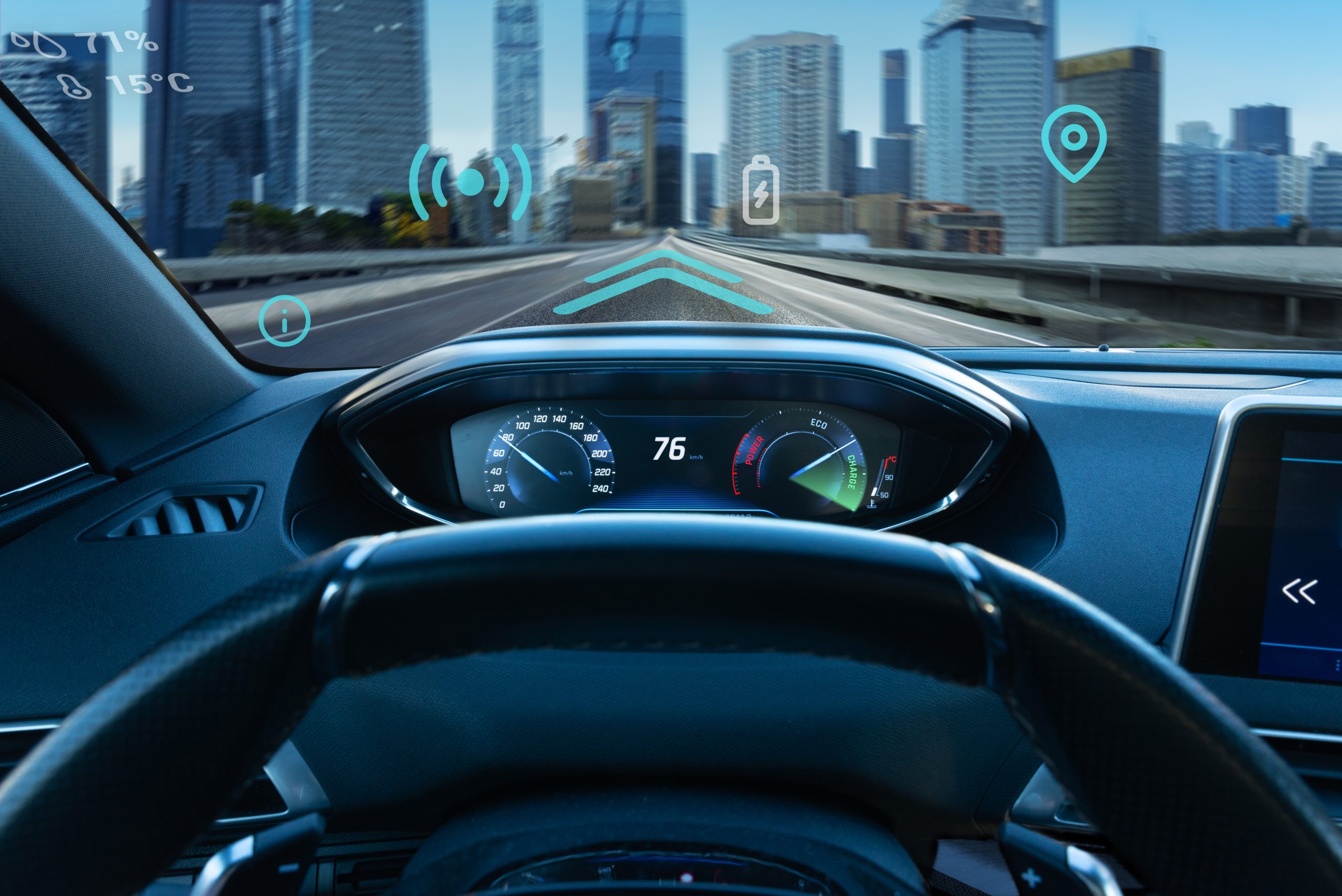
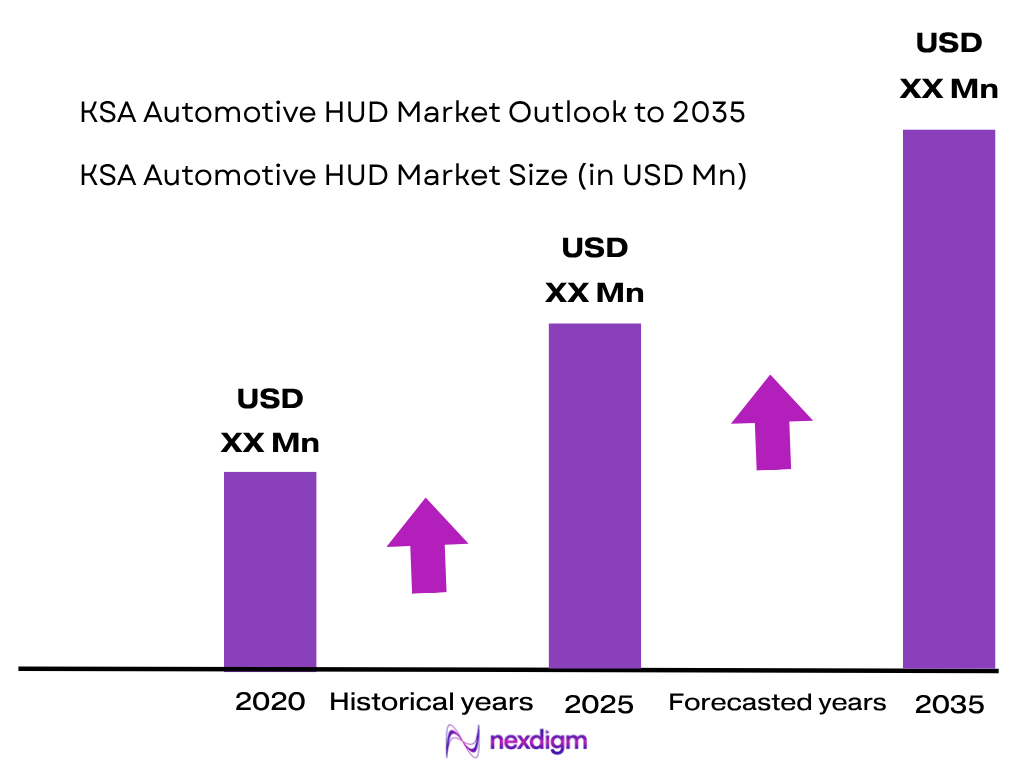
The KSA Automotive HUD Market was valued at approximately USD 104.47 million in 2024, supported by increasing integration of advanced cockpit technologies, premium vehicle adoption, and rising demand for driver assistance solutions. Automotive HUD systems project critical information such as navigation, speed, and ADAS alerts within the driver’s line of sight, improving driving convenience and reducing visual distraction. (Wikipedia) The market growth is driven by increasing OEM adoption of windshield HUD systems and augmented reality-based display technologies across premium vehicle models. The KSA Automotive HUD Market is primarily concentrated in Riyadh, Jeddah, and Dammam due to their strong automotive sales ecosystems, premium vehicle concentration, and advanced mobility infrastructure. Riyadh dominates as the capital and major commercial hub with extensive automotive dealership networks and technology adoption. Jeddah contributes through its position as a major commercial center and automotive retail market, while Dammam benefits from industrial development and logistics activity. (Ministry of Foreign Affairs) These cities represent key demand centers for advanced vehicle technologies, including HUD-enabled premium vehicles.
Market Segmentation
By HUD Technology Type
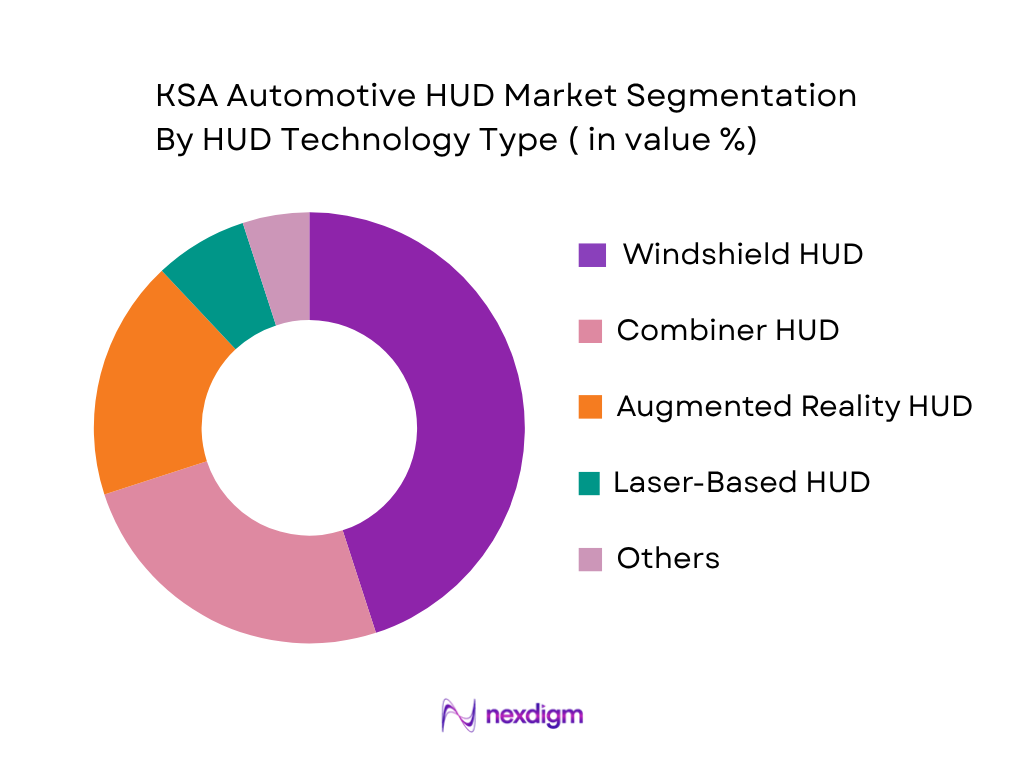
The KSA Automotive HUD Market is segmented by HUD technology type into Windshield HUD, Combiner HUD, Augmented Reality HUD (AR-HUD), Laser-Based HUD, and Digital Projection-Based HUD. Windshield HUD dominates due to its widespread integration in luxury vehicles and premium SUVs, offering larger display areas, improved visibility, and better integration with navigation and ADAS systems. Automotive manufacturers prefer windshield-based solutions because they provide a more immersive driving experience compared with smaller combiner systems. AR-HUD is emerging as a high-growth technology due to its ability to overlay navigation arrows, lane guidance, and safety warnings directly onto the road environment. However, higher costs and complex optical requirements limit its current adoption compared with conventional windshield HUD systems.
By Vehicle Type
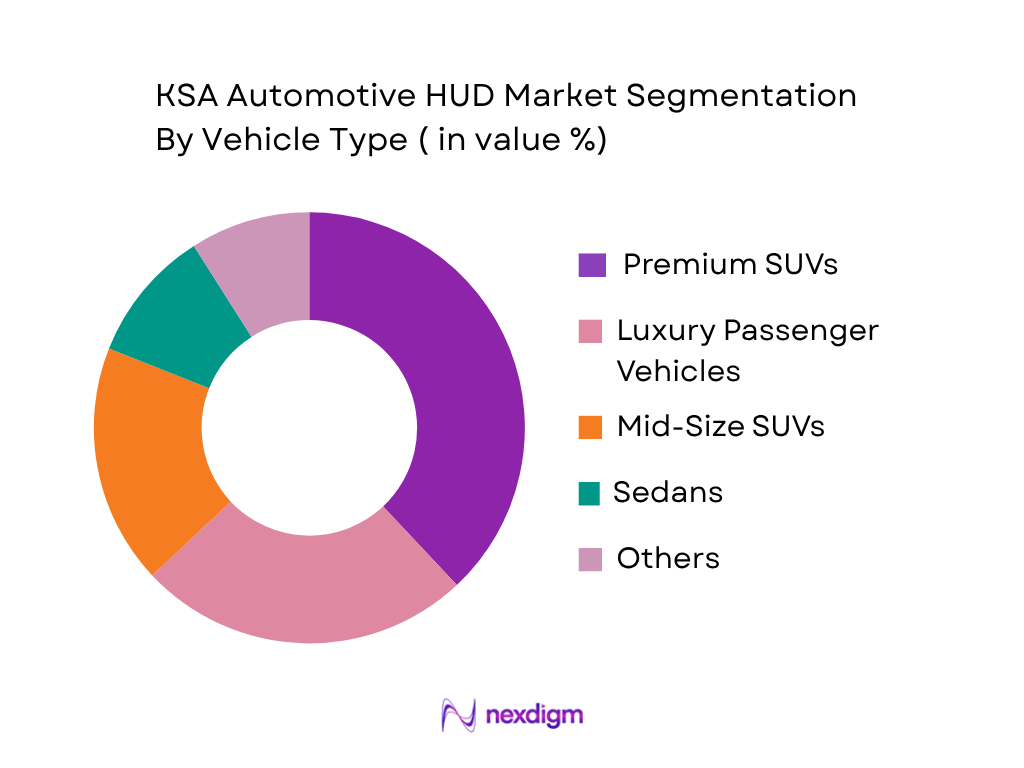
The KSA Automotive HUD Market is segmented by vehicle type into Premium SUVs, Luxury Passenger Vehicles, Mid-Size SUVs, Sedans, Sports Cars, Light Commercial Vehicles, and Heavy Commercial Vehicles. Premium SUVs account for the leading share due to Saudi Arabia’s strong preference for SUVs, high adoption of luxury vehicles, and increasing demand for advanced safety features. Premium SUV manufacturers frequently integrate HUD systems as part of technology packages to enhance vehicle differentiation. Luxury passenger vehicles also represent a significant segment due to higher consumer willingness to pay for advanced digital cockpit features. Commercial vehicle adoption remains limited but is expected to increase as fleet operators adopt connected vehicle technologies and driver monitoring systems.
Competitive Landscape
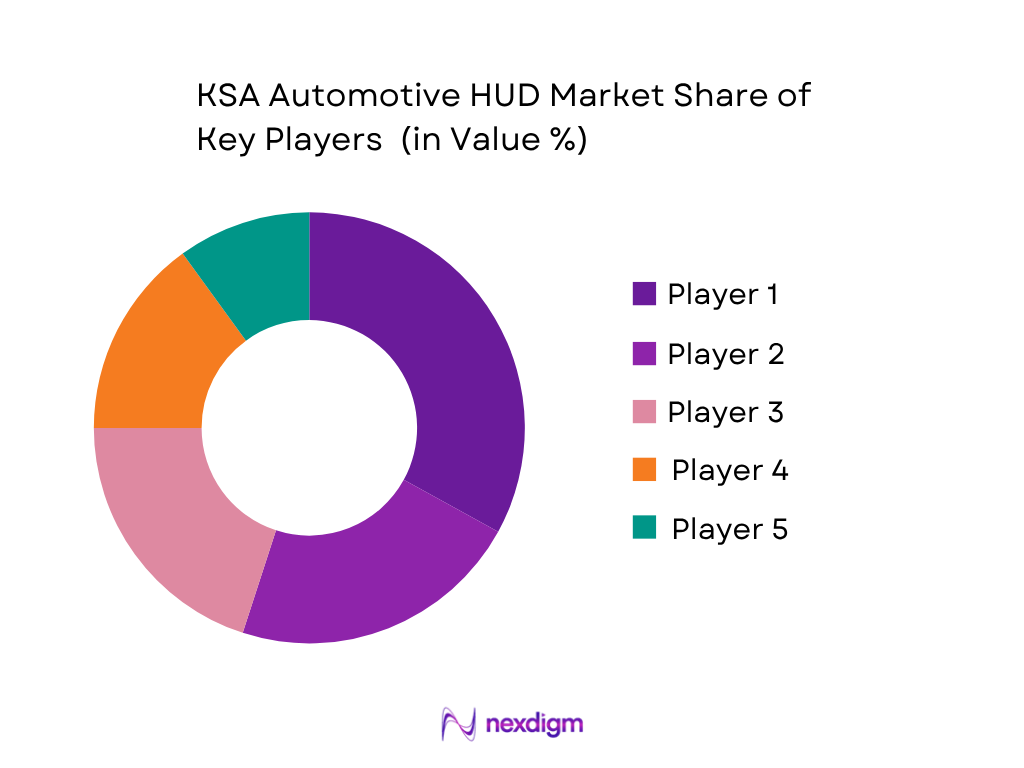
The KSA Automotive HUD Market is dominated by global automotive technology suppliers providing HUD modules, display systems, and digital cockpit solutions to international vehicle manufacturers. Competition is primarily based on AR-HUD development capabilities, optical performance, OEM partnerships, manufacturing capabilities, and integration with ADAS platforms. Leading suppliers are focusing on next-generation HUD solutions with larger fields of view, improved brightness, and software-driven personalization.
| Company | Establishment Year | Headquarters | HUD Technology | OEM Integration | Product Portfolio | Manufacturing Presence | Innovation Focus |
| Continental AG | 1871 | Hanover, Germany | ~ | ~ | ~ | ~ | ~ |
| Bosch Mobility | 1886 | Stuttgart, Germany | ~ | ~ | ~ | ~ | ~ |
| DENSO Corporation | 1949 | Kariya, Japan | ~ | ~ | ~ | ~ | ~ |
| Panasonic Automotive Systems | 2003 | Yokohama, Japan | ~ | ~ | ~ | ~ | ~ |
| Visteon Corporation | 2000 | Van Buren Township, USA | ~ | ~ | ~ | ~ | ~ |
KSA Automotive HUD Market Analysis
Growth Drivers
Rising Luxury Vehicle Sales and Growing Premium SUV Demand
Saudi Arabia’s automotive market is strongly influenced by demand for luxury vehicles and premium SUVs, which are the primary vehicle categories where advanced cockpit technologies such as automotive HUD systems are integrated. The Kingdom recorded 1.06 million new vehicle registrations in 2024, reflecting strong automotive demand supported by rising consumer spending and economic activity (General Authority for Statistics, Saudi Arabia). Premium SUVs remain highly relevant due to Saudi consumers’ preference for larger vehicles, with SUVs and crossover vehicles accounting for a significant share of passenger vehicle demand. According to the International Energy Agency (IEA), global SUV sales continued to expand, with SUVs representing more than 45 million units sold globally in 2024, increasing the focus of OEMs on integrating advanced safety and display technologies within these vehicle platforms. Saudi Arabia’s GDP reached approximately USD 1.08 trillion in 2024, according to the World Bank, supporting higher disposable income levels and demand for technologically advanced vehicles. The presence of premium automotive brands in cities such as Riyadh, Jeddah, and Dammam further accelerates adoption of HUD-enabled vehicles, as luxury vehicle buyers increasingly prioritize advanced driver assistance, digital displays, and connected cabin features.
Increasing ADAS Adoption and Connected Vehicle Expansion
The expansion of advanced driver assistance systems (ADAS) and connected vehicle technologies is a major factor supporting automotive HUD adoption in Saudi Arabia. HUD systems complement ADAS functionalities by displaying navigation guidance, collision alerts, lane departure warnings, and driving information directly within the driver’s field of vision. Saudi Arabia’s Vision 2030 mobility transformation initiatives are encouraging the adoption of intelligent transportation solutions and advanced automotive technologies. The Kingdom’s road infrastructure development has continued with government investment in smart mobility projects, while the Saudi Ministry of Transport and Logistic Services reported continued expansion of digital transportation initiatives across the country. Globally, the International Telecommunication Union (ITU) reported that Saudi Arabia had more than 36 million internet users in 2024, supporting the ecosystem required for connected vehicle services, cloud-based navigation, and vehicle-to-network communication. Additionally, the World Bank reported Saudi Arabia’s urban population exceeded 30 million people in 2024, increasing demand for efficient, technology-enabled transportation solutions in major metropolitan areas. As OEMs integrate ADAS systems into newer vehicle models, HUD technology becomes increasingly important as an interface between vehicle intelligence and driver decision-making.
Market Challenges
High HUD System Complexity and Limited Standardization Across OEM Platforms
The KSA Automotive HUD Market faces challenges due to the technological complexity involved in integrating HUD systems across different vehicle platforms. HUD deployment requires coordination between optical modules, display hardware, vehicle software, sensors, and ADAS platforms, creating integration difficulties for OEMs and suppliers. Saudi Arabia imports a significant proportion of automotive components, increasing dependency on global automotive supply networks. According to the United Nations Conference on Trade and Development (UNCTAD), global semiconductor and electronics supply chains remained highly concentrated in 2024, creating vulnerability for automotive technology suppliers dependent on advanced electronic components. Saudi Arabia’s industrial manufacturing contribution reached approximately USD 118 billion in 2024 according to the Ministry of Industry and Mineral Resources, highlighting ongoing industrial development but also indicating the need for further localization of advanced automotive electronics capabilities. Different OEMs use varying software architectures, display interfaces, and vehicle communication systems, limiting standardization of HUD solutions. This fragmentation increases engineering requirements for suppliers developing HUD products compatible with multiple vehicle models. As Saudi Arabia continues developing its automotive manufacturing ecosystem, improving local capabilities in automotive electronics and component integration will remain important for reducing technology dependency.
Semiconductor Supply Dependency and Aftermarket Calibration Challenges
The automotive HUD industry depends heavily on semiconductor components, optical technologies, and specialized electronic systems, creating supply chain risks for Saudi Arabia due to its reliance on imported automotive technology components. According to the World Semiconductor Trade Statistics (WSTS), global semiconductor demand remained significant in 2024, driven by automotive electronics, artificial intelligence applications, and connected devices. HUD systems require processors, display drivers, microcontrollers, and sensors that must operate with high reliability in Saudi Arabia’s environmental conditions, including high temperatures and intense sunlight exposure. The Saudi National Center for Environmental Compliance reported temperatures exceeding 45°C in several regions during summer periods, creating additional requirements for automotive electronics durability and thermal management. Aftermarket HUD installation also presents challenges because improper calibration can affect display alignment, visibility, and driver safety. The absence of standardized aftermarket installation procedures creates operational difficulties for accessory providers. Additionally, Saudi Arabia’s automotive aftermarket ecosystem is still developing compared with mature automotive markets, requiring specialized technical capabilities for accurate installation and maintenance of advanced HUD systems.
Market Opportunities
AR-HUD Deployment Growth and AI-Based Driver Assistance Displays
The increasing development of augmented reality HUD (AR-HUD) technology creates significant opportunities for the Saudi automotive ecosystem as vehicle manufacturers move toward intelligent cockpit solutions. AR-HUD systems combine real-time vehicle information with navigation and ADAS data to provide a more interactive driving experience. Saudi Arabia’s strong digital infrastructure supports the adoption of AI-driven automotive technologies. According to the Saudi Communications, Space and Technology Commission (CST), the Kingdom recorded internet penetration above 99 million active communications subscriptions in 2024, strengthening the digital ecosystem required for connected mobility solutions. The World Bank reported Saudi Arabia’s research and development expenditure reached approximately 1% of GDP in recent reporting periods, reflecting increasing national focus on technology innovation. AI-based driver assistance displays can support safer driving by presenting predictive alerts, navigation assistance, and vehicle information without requiring drivers to divert attention from the road. The expansion of smart city projects, including intelligent transportation systems in Riyadh and other urban centers, provides opportunities for integrating AR-HUD technology with connected infrastructure. As automotive manufacturers continue improving AI-powered safety systems, HUD platforms can become a critical interface connecting vehicle intelligence with human drivers.
Localization of Automotive Electronics Manufacturing and Electric Vehicle HUD Integration
Saudi Arabia’s focus on automotive industrial development and electric vehicle ecosystem expansion creates opportunities for localizing automotive electronics production and integrating HUD systems into next-generation vehicles. The Kingdom’s Ministry of Industry and Mineral Resources reported more than 11,000 industrial facilities operating in Saudi Arabia in 2024, demonstrating continued industrial diversification under Vision 2030. Government initiatives supporting automotive manufacturing and electric mobility are encouraging investments in vehicle assembly, component production, and technology infrastructure. The International Energy Agency reported global electric vehicle sales exceeded 17 million units in 2024, accelerating demand for advanced digital cockpit systems in electric vehicles. Electric vehicles require enhanced driver interfaces because of their reliance on software-based vehicle management, navigation systems, and connected features, creating opportunities for HUD integration. Saudi Arabia’s electric mobility initiatives, including domestic EV manufacturing projects, provide a pathway for incorporating HUD technologies into locally produced vehicles. Furthermore, commercial fleet operators in logistics, transportation, and smart mobility sectors can benefit from HUD-enabled systems that improve navigation efficiency and driver awareness, expanding adoption beyond luxury passenger vehicles.
Future Outlook
Over the forecast period, the KSA Automotive HUD Market is expected to grow at a CAGR of approximately 6.5% during 2026-2035. Growth will be supported by rising premium vehicle sales, increasing ADAS penetration, and expansion of connected vehicle technologies. The adoption of augmented reality HUD systems is expected to accelerate as automotive manufacturers focus on advanced driver interfaces and intelligent cockpit solutions.
Major Players
- Continental AG
- Bosch Mobility
- DENSO Corporation
- Panasonic Automotive Systems Co., Ltd.
- Visteon Corporation
- LG Display Co., Ltd.
- Samsung Display
- Nippon Seiki Co., Ltd.
- Yazaki Corporation
- Garmin Ltd.
- WayRay
- MicroVision, Inc.
- FUTURUS Technology Co., Ltd.
- HUDWAY
- HARMAN International
Key Target Audience
- Automotive OEM Manufacturers (Luxury Vehicle Manufacturers, Passenger Vehicle Manufacturers, Commercial Vehicle Manufacturers)
- Automotive Tier-1 Suppliers (HUD Module Manufacturers, ADAS Component Suppliers, Digital Cockpit Providers)
- Investments and Venture Capitalist Firms (Automotive Technology Investors, Mobility Venture Funds, Deep-Tech Investment Firms)
- Government and Regulatory Bodies (Saudi Ministry of Transport and Logistic Services, Saudi Standards, Metrology and Quality Organization, Public Investment Fund)
- Automotive Dealership Networks (Premium Automotive Retail Groups, Authorized Vehicle Dealers)
- Automotive Electronics Manufacturers (Display Producers, Semiconductor Companies, Optical Component Manufacturers)
- Connected Vehicle Technology Companies (Smart Mobility Platforms, Vehicle Software Providers)
- Fleet Operators (Commercial Transportation Companies, Logistics Fleet Owners, Corporate Vehicle Operators)
Research Methodology
Step 1: Identification of Key Variables
The initial stage involves developing an automotive HUD ecosystem framework covering OEM manufacturers, Tier-1 suppliers, technology providers, regulatory institutions, and end users. Secondary research sources, automotive databases, company reports, and industry publications are analyzed to identify critical variables influencing market growth, technology adoption, and vehicle integration.
Step 2: Market Analysis and Construction
This stage focuses on analyzing historical market data related to vehicle sales, premium segment penetration, HUD installation rates, supplier revenues, and technology pricing trends. A combination of top-down and bottom-up approaches is applied to estimate market size, segment contribution, and adoption patterns across vehicle categories.
Step 3: Hypothesis Validation and Expert Consultation
Market assumptions are validated through interviews with automotive OEM representatives, Tier-1 suppliers, dealership executives, and technology specialists. Expert discussions provide insights into procurement strategies, supplier relationships, pricing structures, and future HUD technology deployment.
Step 4: Research Synthesis and Final Output
The final phase combines quantitative and qualitative findings from multiple sources. Data triangulation is performed using supplier analysis, vehicle sales data, technology assessments, and expert opinions to ensure accurate representation of the KSA Automotive HUD Market landscape.

- Executive Summary
- Research Methodology (Market Definitions and Scope, Automotive HUD Classification Framework, Display Technology Taxonomy, Market Sizing Methodology, Top-Down Market Estimation, Bottom-Up Market Estimation, OEM Production Analysis, Vehicle Installation Rate Assessment, Demand-Side Analysis, Supply-Side Analysis, Primary Interviews with Automotive OEMs and Tier Suppliers, Secondary Research Framework, Data Validation and Triangulation, Forecasting Model, Assumptions and Limitations)

- Definition and Scope
- Automotive Head-Up Display (HUD) Technology Evolution and Industry Development
- Timeline
- Automotive HUD Adoption Ecosystem Analysis
- Automotive HUD Value Chain Analysis

- Growth Drivers (Rising Luxury Vehicle Sales, Increasing ADAS Adoption, Growing Premium SUV Demand, Government Smart Mobility Programs, Connected Vehicle Expansion, Consumer Preference for Advanced In-Cabin Technologies, OEM Feature Differentiation Strategies)
- Market Challenges (High HUD System Cost, Limited Standardization Across OEM Platforms, Semiconductor Supply Dependency, Installation Complexity, Consumer Awareness Gap, Aftermarket Calibration Challenges)
- Market Opportunities (AR-HUD Deployment Growth, Localization of Automotive Electronics Manufacturing, Electric Vehicle HUD Integration, Fleet and Commercial Vehicle Applications, AI-Based Driver Assistance Displays, Premium Vehicle Customization Market)
- Market Trends (AR Navigation Display Adoption, AI-Enhanced Driver Interfaces, Larger Field-of-View HUD Systems, Integration with ADAS Platforms, Personalized Driver Display Experiences, Digital Cockpit Convergence)
- Regulatory and Industry Standards (Saudi Vehicle Safety Regulations, ADAS Compliance Requirements, Automotive Lighting and Display Standards, Cybersecurity Requirements for Connected Vehicles, Data Privacy Regulations, Import Certification Requirements)
- SWOT Analysis
- Porter’s Five Forces Analysis
- PESTLE Analysis

- By Market Value (2020-2025)
- By Installed HUD Units (2020-2025)
- By Vehicle Installation Penetration Rate (2020-2025)
- By Average Selling Price (ASP) (2020-2025)
- By Vehicle Segment Contribution (2020-2025)
- By OEM Factory-Fitted HUD Revenue (2020-2025)
- By Aftermarket HUD Revenue (2020-2025)

- By HUD Technology Type (In Value %)
Combiner Head-Up Display (CHUD)
Windshield Head-Up Display (W-HUD)
Augmented Reality Head-Up Display (AR-HUD)
Laser-Based HUD Systems
Digital Projection-Based HUD Systems - By Display Technology (In Value %)
TFT-LCD Based HUD
DLP-Based HUD
OLED-Based HUD
MicroLED-Based HUD
LCOS-Based HUD
Waveguide Display Technology - By Vehicle Type (In Value %)
Passenger Cars
Luxury Passenger Vehicles
Premium SUVs
Mid-Size SUVs
Sedans
Sports Cars
Commercial Vehicles
Light Commercial Vehicles
Heavy Commercial Vehicles - By Vehicle Price Category (In Value %)
Mass Market Vehicles
Mid-Premium Vehicles
Premium Vehicles
Ultra-Luxury Vehicles - By Installation Type (In Value %)
Factory Installed OEM HUD Systems
Dealer Installed HUD Systems
Aftermarket HUD Solutions - By Application Functionality (In Value %)
Navigation Projection
ADAS Warning Display
Driver Information Display
Vehicle Performance Monitoring
Infotainment Integration
Connected Vehicle Information Display

- Market Share of Major Players
- Cross Comparison Parameters
- Competitive Benchmarking Matrix
- Pricing Analysis
- Detailed Profiles of Major Companies
Continental AG
DENSO Corporation
Panasonic Automotive Systems Co., Ltd.
HARMAN International
Bosch Mobility
Visteon Corporation
LG Display Co., Ltd.
Samsung Display
FUTURUS Technology Co., Ltd.
MicroVision, Inc.
Nippon Seiki Co., Ltd.
Yazaki Corporation
Garmin Ltd.
WayRay
HUDWAY

- Consumer Adoption Assessment
- Vehicle Owner Demographic Analysis
- Luxury Vehicle Consumer Behavior Analysis
- Purchase Decision Analysis
- Driver Experience Assessment
- Consumer Pain Point Analysis

- By Market Value (2026-2035)
- By Installed HUD Units (2026-2035)
- By Vehicle Installation Penetration Rate (2026-2035)
- By Average Selling Price (ASP) (2026-2035)
- By Vehicle Segment Contribution (2026-2035)
- By OEM Factory-Fitted HUD Revenue (2026-2035)
- By Aftermarket HUD Revenue (2026-2035)


 Request a Sample
 Ask for Customization
 Get a Quote
 Enquire Now