
 Download PDF
Market Overview
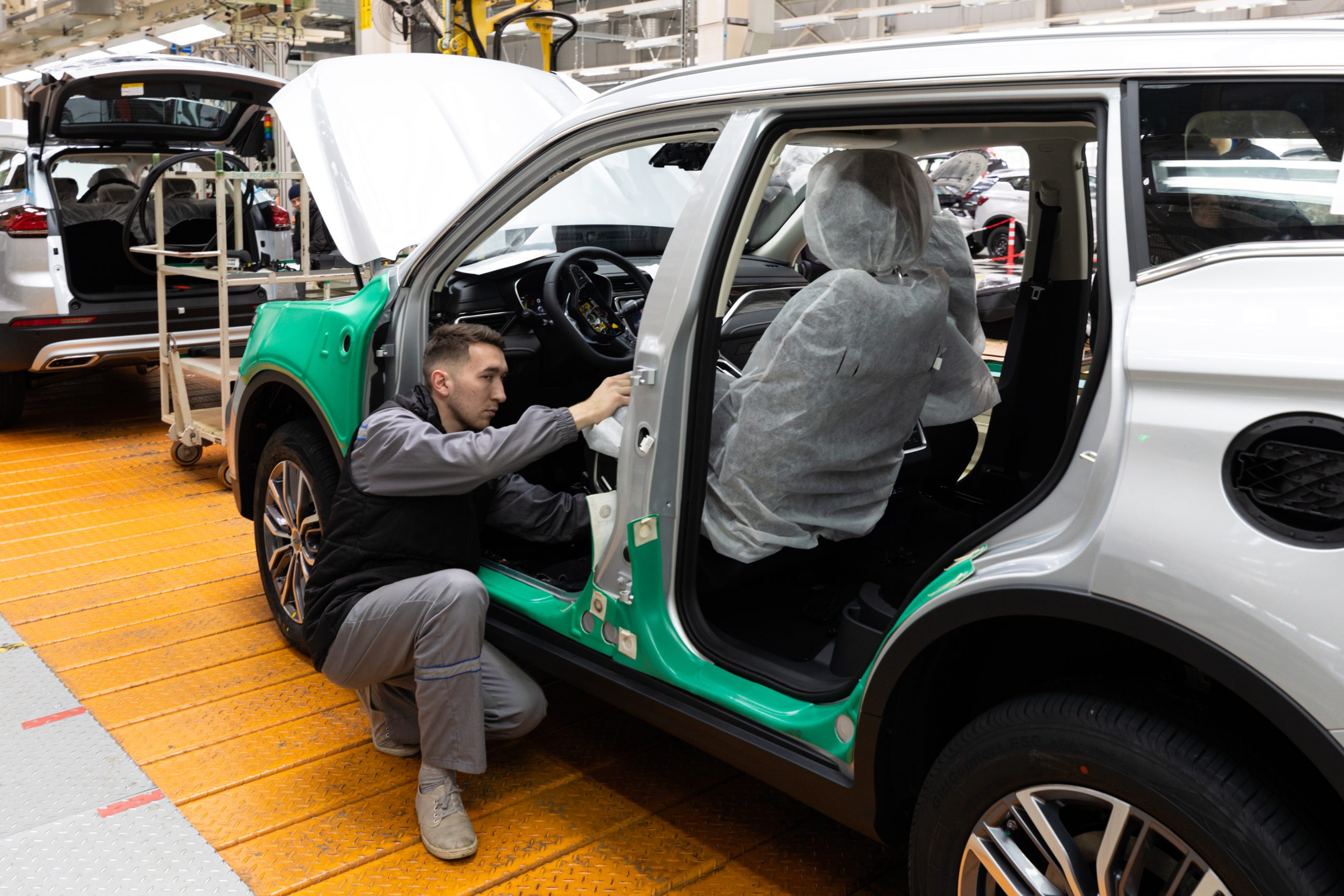
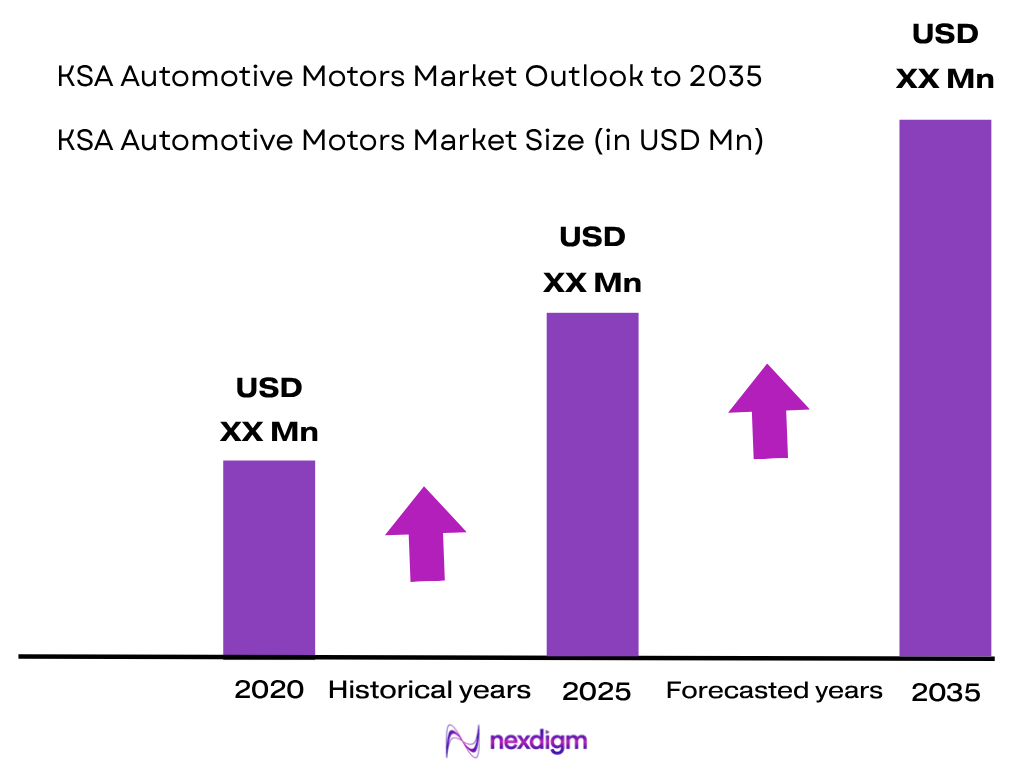
The KSA Automotive Motors Market is valued at approximately ~USD XX million, based on historical market assessment. Saudi Arabia’s registered and roadworthy vehicle base increased from 15.1 million vehicles to more than 15.8 million vehicles, while newly registered vehicles increased from 878,100 to 1,025,700 units. This expanding installed base drives OEM and replacement demand for starter, blower, cooling, window, wiper, seat, pump and steering motors, alongside emerging electric traction-motor requirements.
Riyadh, Jeddah-Makkah and the Eastern Region dominate KSA automotive-motor demand because they combine dense vehicle populations, dealerships, workshops, fleets and automotive-parts distribution. King Abdullah Economic City near Jeddah is emerging as the manufacturing centre through Lucid and Ceer. The national vehicle base moved from 15.1 million to more than 15.8 million vehicles, while Ceer awarded a SAR 5 billion contract for its manufacturing complex, strengthening western Saudi Arabia’s position in future traction-motor and e-drive demand.
Market Segmentation
By Motor Type
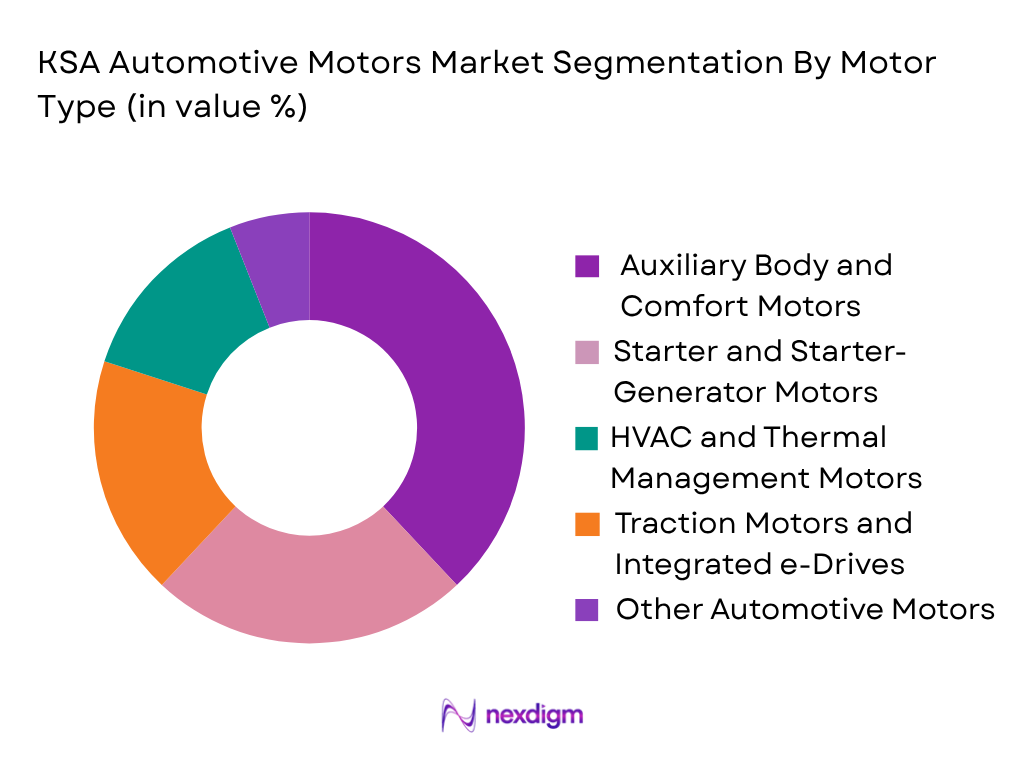
The KSA Automotive Motors Market is segmented into auxiliary motors, traction motors, starter and starter-generator motors, thermal-management motors, and other automotive motors. Auxiliary motors currently hold the dominant share because Saudi Arabia’s large installed base consists predominantly of vehicles requiring multiple electric motors for windows, seats, wipers, HVAC blowers, cooling systems, pumps, mirrors, doors and convenience functions. SUVs, premium vehicles and increasingly feature-rich passenger cars further raise motor content per vehicle. The Kingdom’s climatic environment also makes HVAC, cooling and thermal-management components particularly important for vehicle reliability and passenger comfort. Traction motors represent the most strategically important emerging category as local electric-vehicle manufacturing develops around KAEC. Ceer’s adoption of integrated electric drive systems combining a traction motor, inverter and reduction gear illustrates how the competitive structure will gradually shift from conventional low-voltage auxiliary motors toward high-voltage propulsion systems. Nevertheless, the existing vehicle parc ensures that auxiliary-motor replacement demand remains structurally important for distributors and workshops.
By Vehicle Type
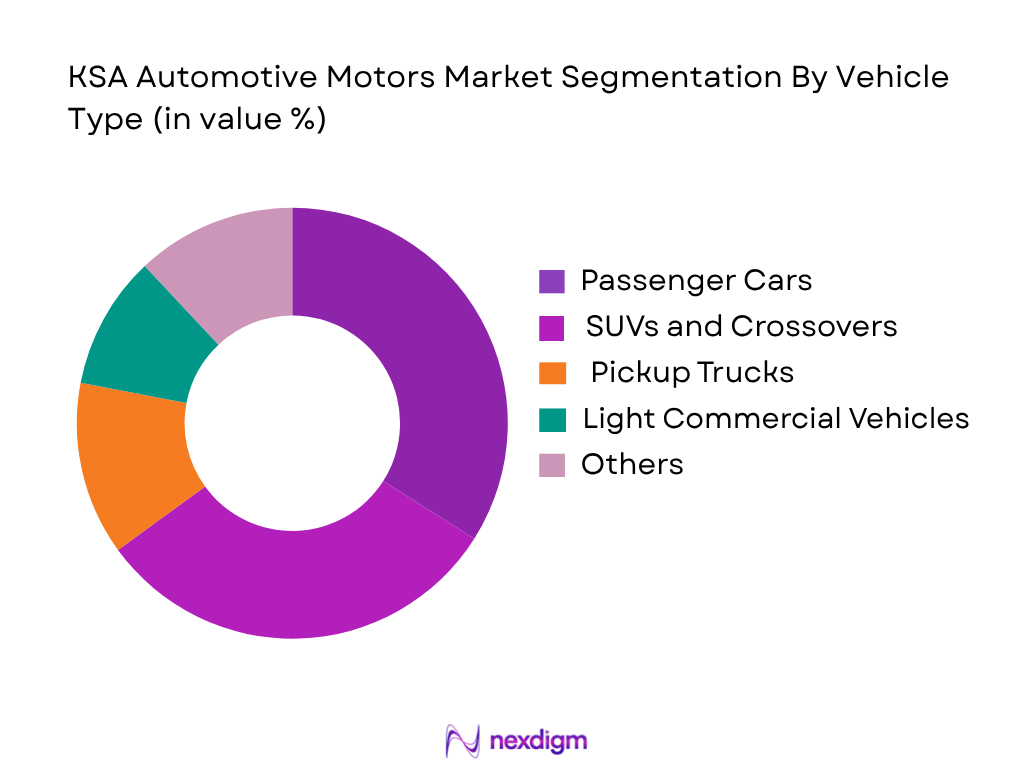
The KSA Automotive Motors Market is segmented into passenger cars, SUVs and crossovers, pickup trucks, light commercial vehicles, medium and heavy commercial vehicles, and other vehicles. Passenger cars and SUVs collectively dominate automotive-motor consumption because Saudi vehicle ownership is concentrated in personal transportation, while climatic conditions and consumer preferences support extensive use of electrically operated comfort systems. SUVs are particularly significant because larger and premium-equipped models can incorporate numerous motors across power seats, windows, HVAC blowers, cooling fans, pumps, tailgates, sunroofs and steering systems. Passenger vehicles will also become the primary entry point for high-voltage traction motors as Saudi Arabia develops domestic EV manufacturing. Ceer is developing electric sedans and SUVs, while Lucid’s KAEC facility establishes a local premium-electric-vehicle manufacturing base. Commercial vehicles remain important for starter, HVAC, cooling and heavy-duty auxiliary motors, but their motor content is generally concentrated more heavily around durability and vehicle-operation functions than passenger-comfort features.
Competitive Landscape
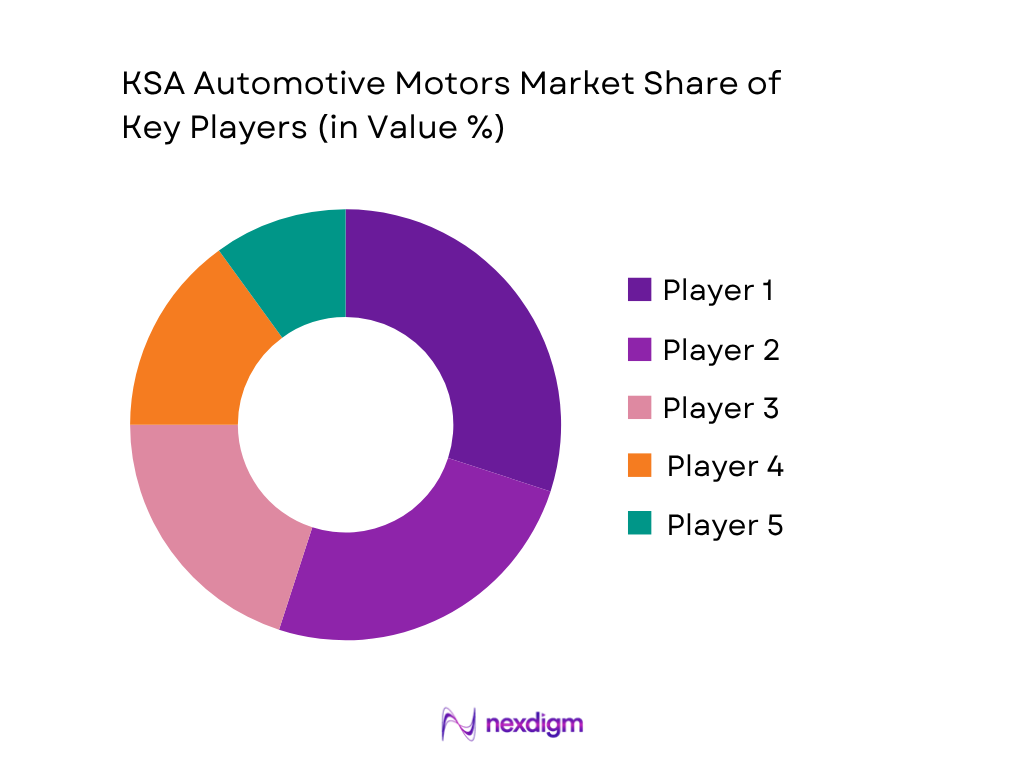
The KSA Automotive Motors Market combines global automotive-electrical suppliers, traction-motor manufacturers, powertrain specialists and emerging electric-drive technology providers. Bosch, DENSO and Valeo have broad exposure to conventional and electrified automotive systems, while BorgWarner and Nidec provide significant electrified-powertrain capabilities. Competition is evolving as Saudi vehicle manufacturing creates a direct OEM-sourcing layer. Ceer’s agreements with Hyundai Transys and Rimac demonstrate that integrated motor-inverter-reduction-gear technology will become increasingly relevant alongside conventional aftermarket motor supply.
| Major Player | Establishment Year | Headquarters | Core Motor Capability | Traction Motor / e-Drive Capability | Auxiliary Motor Coverage | Voltage Architecture | Vehicle Application Coverage | KSA Strategic Relevance |
| Robert Bosch GmbH | 1886 | Gerlingen, Germany | ~ | ~ | ~ | ~ | ~ | ~ |
| DENSO Corporation | 1949 | Kariya, Japan | ~ | ~ | ~ | ~ | ~ | ~ |
| Valeo SE | 1923 | Paris, France | ~ | ~ | ~ | ~ | ~ | ~ |
| BorgWarner Inc. | 1928 | Auburn Hills, USA | ~ | ~ | ~ | ~ | ~ | ~ |
| Nidec Corporation | 1973 | Kyoto, Japan | ~ | ~ | ~ | ~ | ~ | ~ |
KSA Automotive Motors Market Analysis
Growth Drivers
Expansion of the Saudi Vehicle Parc and New Vehicle Registrations
Saudi Arabia’s expanding vehicle population is directly increasing demand for starter motors, blower motors, radiator-fan motors, wiper motors, power-window motors, seat motors, electric pumps and other auxiliary automotive motors. The General Authority for Statistics recorded 15.8 million registered and roadworthy vehicles at the end of 2024, compared with 14.8 million vehicles in 2023. Newly registered vehicles reached 1,025,700 units in 2024, compared with 878,100 units in 2023, showing the substantial number of vehicles continuously entering the service and replacement ecosystem. Newly issued driving licences also reached 1,271,000 during 2024, while 1,204,000 licences were renewed, supporting sustained vehicle utilization. The large installed vehicle base is particularly important for motor suppliers because auxiliary motors face mechanical wear, electrical failure and thermal stress throughout vehicle life. Saudi Arabia’s 2024 nominal GDP stood at SAR 4,649 billion, equivalent to approximately USD 1,240 billion, according to the IMF. Nominal non-oil GDP reached SAR 3,511 billion, reinforcing the economic base supporting mobility, automotive servicing, replacement-parts distribution and expanding demand for automotive electrical systems across the Kingdom.
Local Automotive Manufacturing and Electric-Drive Localization
Saudi Arabia’s transition toward local vehicle manufacturing is creating a direct structural driver for traction motors, integrated electric-drive systems and automotive auxiliary motors that were historically associated mainly with imported finished vehicles. In 2024, Ceer awarded a SAR 5 billion construction contract for its electric-vehicle manufacturing complex in King Abdullah Economic City and separately signed an SAR 8.2 billion agreement for integrated electric-drive systems combining a motor, inverter and reduction gear. Ceer also concluded a high-performance electric-drive partnership during 2024, demonstrating rising demand for complete propulsion-motor systems rather than isolated components. In 2025, the King Salman Automotive Cluster brought together Ceer, Lucid, Hyundai and Pirelli within a concentrated manufacturing ecosystem. Saudi Arabia’s Vision 2030 Annual Report recorded Lucid’s existing Saudi facility at 5,000 vehicles per year capacity, while the Hyundai manufacturing project entered groundbreaking stage in 2025. The IMF reported Saudi nominal GDP of SAR 4,649 billion in 2024 and nominal non-oil GDP of SAR 3,511 billion. This manufacturing diversification creates increasing demand for motor housings, rotors, stators, windings, controllers, cooling systems and locally supported propulsion assemblies.
Market Challenges
High Dependence on Imported Vehicles, Electrical Equipment and Automotive Components
The KSA Automotive Motors Market remains exposed to imported electrical and automotive components because the domestic automotive supply chain is still developing relative to the Kingdom’s large operating vehicle base. The General Authority for Statistics reported 15.8 million registered and roadworthy vehicles in 2024 and 1,025,700 newly registered vehicles, creating extensive requirements for OEM and replacement electrical components. Saudi Arabia’s 2024 international trade data identified China, the United States, the United Arab Emirates, India, Germany, Japan, Italy, Egypt, Switzerland and South Korea among the Kingdom’s ten largest import origins. King Abdulaziz Sea Port in Dammam handled a significant portion of Saudi imports, illustrating the importance of international supply routes to domestic automotive distribution. GASTAT also reported that electrical machinery, equipment and parts were the largest import category in November 2024, while transport equipment and parts were the second-largest category. The IMF recorded Saudi Arabia’s 2024 nominal GDP at USD 1,240 billion and nominal non-oil GDP at SAR 3,511 billion. Until deeper localization develops, motor distributors and OEM suppliers remain dependent on overseas manufacturing, customs clearance, shipping availability and imported motor-control electronics.
Automotive Motor Skills and Technical Capability Requirements
The shift from conventional starter and auxiliary motors toward brushless systems, integrated electric drives and high-voltage propulsion creates a technical workforce challenge for Saudi Arabia’s emerging automotive-motor ecosystem. Modern electric-drive systems integrate motors, inverters and reduction gears, requiring capabilities in electronics, motor control, diagnostics, high-voltage safety, thermal management and precision manufacturing that extend beyond conventional automotive servicing. The Ministry of Human Resources and Social Development highlighted this broader skills requirement through national skills programmes in 2025. The National Skills Platform was designed to qualify more than 300,000 trainees across strategic sectors, while the second phase of the WAD training programme was structured around 3 million training opportunities after the first phase delivered more than 1 million opportunities. During the first half of 2025, Sectoral Skills Councils signed more than 12 cooperation agreements across different sectors to align workforce preparation with labour-market needs. Saudi Arabia’s IMF-reported 2024 nominal GDP reached SAR 4,649 billion, while nominal non-oil GDP reached SAR 3,511 billion. For automotive-motor manufacturers, localization therefore depends not only on factories but also on building specialists capable of testing, calibrating, maintaining and repairing increasingly complex electromechanical systems.
Market Opportunities
Localization of EV Traction Motors and Integrated Electric Drive Systems
Electric-drive localization represents a major future opportunity for the KSA Automotive Motors Market because the Kingdom already has current industrial commitments that establish an addressable base for motors, inverters, reduction gears and related components. Ceer signed a SAR 8.2 billion agreement in 2024 for integrated electric-drive systems combining the traction motor, inverter and reduction gear in a three-in-one architecture. During the same year, Ceer awarded a SAR 5 billion construction contract for its manufacturing complex in King Abdullah Economic City and established an additional partnership for high-performance electric-drive systems. In 2025, Ceer signed 11 agreements worth SAR 5.5 billion covering vehicle components and charging equipment, strengthening the local supply ecosystem surrounding future electric vehicles. King Salman Automotive Cluster now brings together Ceer, Lucid, Hyundai and Pirelli, providing a concentrated industrial location where motor and e-drive suppliers can establish assembly, engineering and technical-support capabilities. IMF data placed Saudi Arabia’s 2024 nominal GDP at USD 1,240 billion, with nominal non-oil GDP of SAR 3,511 billion. These current investments provide a concrete platform for future localization of traction motors, housings, cooling systems, controllers and power-electronic assemblies.
Expansion of Automotive Auxiliary Motor and Replacement Applications
Saudi Arabia’s large vehicle base creates a substantial future opportunity for suppliers of auxiliary automotive motors because every additional vehicle introduces multiple electromechanical applications that require servicing and eventual replacement. GASTAT recorded 15.8 million registered and roadworthy vehicles in 2024, while 1,025,700 vehicles received new registrations during the year. The Kingdom also issued 1,271,000 new driving licences and renewed 1,204,000 licences, reinforcing the scale of continuing vehicle utilization. These operating conditions support recurring demand for starter motors, HVAC blower motors, cooling-fan motors, power-window motors, wiper motors, electric water pumps, seat motors and electric steering applications. The opportunity is particularly relevant because Saudi vehicles operate under demanding climatic conditions where cabin cooling and engine, battery and electronics thermal-management systems are critical to everyday operation. Meanwhile, domestic vehicle assembly is expanding through the King Salman Automotive Cluster, adding an OEM channel alongside the existing aftermarket. The IMF reported Saudi Arabia’s 2024 nominal GDP at SAR 4,649 billion and nominal non-oil GDP at SAR 3,511 billion. This combination of a large installed parc and growing domestic assembly provides scope for future local production, remanufacturing and specialized distribution of automotive motors.
Future Outlook
The KSA Automotive Motors Market is projected to expand at approximately ~X.X% CAGR during 2026–2035. Future development will be shaped by the coexistence of a large conventional vehicle parc and an emerging locally manufactured electric-vehicle ecosystem. Demand will consequently develop through two parallel channels: replacement of auxiliary motors in existing vehicles and OEM demand for traction motors, integrated e-drives, thermal-management motors and electronically controlled auxiliary systems in newer vehicles.
Saudi Arabia’s automotive localization programme is particularly important because it moves the market from predominantly imported finished vehicles and replacement components toward domestic assembly and supplier localization. King Salman Automotive Cluster at KAEC brings together Ceer, Lucid and additional automotive projects, creating an industrial base capable of attracting Tier-1 electrical and drivetrain suppliers. Ceer’s supply strategy demonstrates this transition. Its electric vehicles will use Hyundai Transys integrated drive systems that combine the traction motor, inverter and reduction gear. Ceer has separately partnered with Rimac Technology for high-performance integrated electric drive systems. These arrangements create potential future localization opportunities around motor housings, shafts, cooling systems, connectors, power electronics and precision components.
Major Players
- Robert Bosch GmbH
- DENSO Corporation
- Valeo SE
- BorgWarner Inc.
- Nidec Corporation
- ZF Friedrichshafen AG
- Hyundai Transys Inc.
- Rimac Technology
- Mitsubishi Electric Corporation
- Hitachi Astemo Ltd.
- Mitsuba Corporation
- MAHLE GmbH
- Continental AG
- Aptiv PLC
- Brose Fahrzeugteile SE & Co. KG
Key Target Audience
- Automotive Electric Motor Manufacturers
- Passenger Vehicle and Electric Vehicle OEMs
- Automotive Tier-1 and Powertrain System Suppliers
- Automotive Parts Importers, Distributors and Aftermarket Networks
- Electric Drive, Power Electronics and Thermal Management Suppliers
- Automotive Manufacturing and Localization Investors
- Investments and Venture Capitalist Firms
- Government and Regulatory Bodies (Ministry of Industry and Mineral Resources, Ministry of Investment, Saudi Standards, Metrology and Quality Organization, Local Content and Government Procurement Authority, Saudi Industrial Development Fund, Royal Commission for Jubail and Yanbu)
Research Methodology
Step 1: Identification of Key Variables
The initial phase constructs the complete KSA Automotive Motors Market ecosystem covering vehicle OEMs, motor manufacturers, Tier-1 suppliers, component distributors, workshops, fleet operators and emerging EV manufacturers. Critical variables include motor type, vehicle category, propulsion architecture, voltage level, OEM fitment, aftermarket replacement requirements and localization status.
Step 2: Market Analysis and Construction
Historical demand is constructed using vehicle registrations, automotive imports, local assembly activity, replacement requirements and motor-level application mapping. The analysis separates OEM demand from aftermarket demand and distinguishes conventional auxiliary motors from high-voltage traction and integrated electric-drive systems.
Step 3: Hypothesis Validation and Expert Consultation
Market hypotheses are validated through structured discussions with automotive component suppliers, distributors, OEM ecosystem participants, workshops and powertrain specialists. The validation process focuses on procurement channels, replacement patterns, technology requirements, high-temperature performance, product availability and emerging EV drivetrain requirements.
Step 4: Research Synthesis and Final Output
The final stage triangulates vehicle-parc information, automotive manufacturing developments, motor application mapping, supplier capabilities and primary-market observations. Demand is evaluated across traction, starting, thermal-management, comfort and other auxiliary-motor categories to eliminate overlap between applications.

- Executive Summary
- Research Methodology (Market Definition and Scope, KSA Automotive Motor Taxonomy, Traction and Auxiliary Motor Classification, Vehicle Parc Assessment, New Vehicle Sales Assessment, OEM Production and Assembly Mapping, Automotive Motor Content Assessment, EV Powertrain Localization Assessment, Aftermarket Replacement Analysis, Import and Distribution Mapping, Motor Technology Assessment, Dealer and Service Network Assessment, Market Sizing Framework)

- Definition and Scope
- KSA Automotive Motors Industry Evolution and Technology Development
- Automotive Motor Manufacturing and Assembly Process
- Automotive Motor Value Chain Analysis
- KSA Automotive Motor Supply Chain Analysis
- Rotor, Stator, Magnet, Winding, Housing and Power Electronics Ecosystem Analysis
- KSA Automotive Manufacturing Footprint and Localization Assessment
- OEM Procurement, Distributor and Automotive Motor Service Framework

- Growth Drivers (Expansion of Local Vehicle Manufacturing, Development of King Salman Automotive Cluster, Growth of EV Assembly and Localization, Rising SUV and Premium Vehicle Parc, Increasing Motor Content per Vehicle, Expansion of Automotive Aftermarket, Localization of Electric Drive Systems, Growth of Thermal Management and Comfort Motor Applications)
- Market Challenges (Dependence on Imported Motor Components, Permanent Magnet Supply Exposure, Limited Domestic Motor Manufacturing Base, Automotive-Grade Qualification Requirements, High-Temperature Operating Conditions, EV Power Electronics Integration Complexity, Aftermarket Product Quality Variation, Skilled Motor Diagnostics and Repair Constraints)
- Market Opportunities (EV Traction Motor Localization, Integrated e-Drive Manufacturing, Auxiliary Motor Localization, 48V Starter-Generator Systems, Electric Thermal Management Motors, High-Performance EV Drive Systems, Remanufactured Starter Motors, Local Rotor-Stator and Motor Housing Production)
- Market Trends (Integrated Motor-Inverter-Reducer Systems, Permanent Magnet Traction Motors, 800V EV Architectures, Brushless Auxiliary Motors, Electric Cooling Pumps, Smart Thermal Management, Software-Controlled Motor Systems, Rising Motor Count per Premium Vehicle)
- Regulatory and Standards Landscape (Saudi Standards Metrology and Quality Organization Automotive Requirements, Gulf Conformity Requirements, Vehicle Type Approval, Electrical Safety Standards, Electromagnetic Compatibility Requirements, EV High-Voltage Safety, Automotive Product Conformity, Local Content and Industrial Localization Requirements)
- SWOT Analysis
- Porter’s Five Forces Analysis
- PESTLE Analysis
- Stakeholder Ecosystem
- Competition Ecosystem

- By Market Value (2020-2025)
- By Automotive Motor Unit Demand (2020-2025)
- By Traction Motor Demand Volume (2020-2025)
- By Auxiliary Motor Demand Volume (2020-2025)
- By OEM-Fitted Automotive Motor Volume (2020-2025)
- By Aftermarket Replacement Motor Volume (2020-2025)

- By Motor Type (In Value %)
Traction Motors
Starter Motors
Starter-Generator Motors
HVAC Blower Motors
Cooling Fan Motors
Power Window Motors
Wiper Motors
Power Seat Motors
Fuel Pump Motors
Water Pump Motors
Electric Power Steering Motors
Electric Compressor Motors
Door and Tailgate Motors
Other Auxiliary Automotive Motors - By Vehicle Type (In Value %)
Passenger Cars
SUVs and Crossovers
Pickup Trucks
Light Commercial Vehicles
Buses and Coaches
Medium and Heavy Commercial Vehicles
Luxury and Performance Vehicles
Electric Passenger Vehicles
Special Purpose Vehicles - By Propulsion Type (In Value %)
Internal Combustion Engine Vehicles
Mild Hybrid Electric Vehicles
Full Hybrid Electric Vehicles
Plug-In Hybrid Electric Vehicles
Battery Electric Vehicles
Fuel Cell Electric Vehicles
Range-Extended Electric Vehicles - By Motor Technology (In Value %)
Permanent Magnet Synchronous Motors
AC Induction Motors
Brushless DC Motors
Brushed DC Motors
Switched Reluctance Motors
Wound-Rotor Synchronous Motors
Axial Flux Motors
Integrated Electric Drive Motors
Other Automotive Motor Technologies - By Application Type (In Value %)
Vehicle Propulsion
Engine Starting and Start-Stop
Thermal Management
HVAC and Cabin Blower
Power Windows
Wipers and Washers
Electric Power Steering
Seat Adjustment
Fuel Delivery
Coolant Circulation
Electric Compressors
Door and Tailgate Automation
Battery Thermal Management
Other Body and Comfort Applications - By Sales Channel (In Value %)
OEM Direct Supply
Tier-1 System Integration
Authorized OEM Dealerships
Independent Automotive Parts Distributors
Automotive Workshops and Service Centres
Fleet Maintenance Networks
Online Automotive Parts Channels
Specialized Electrical Parts Distributors
EV Powertrain Integrators

- Market Share of Major Players (By Revenue, Unit Volume, Traction Motors, Auxiliary Motors, Vehicle Type, Propulsion Type, OEM Channel, Aftermarket Channel)
- Cross Comparison Parameters (Traction and Auxiliary Automotive Motor Portfolio Breadth, EV Motor-Inverter-Reducer Integration Capability, Saudi OEM and Automotive Manufacturing Supply Relationships, High-Temperature Thermal Performance and Desert-Duty Reliability, 12V-24V-48V and High-Voltage Architecture Coverage, Passenger-SUV-Commercial Vehicle Application Coverage, KSA Distribution-Aftermarket and Technical Service Network Strength, Saudi Localization and King Salman Automotive Cluster Readiness)
- SWOT Analysis of Major Players
- Competitive Positioning Matrix
- Product and Technology Portfolio Benchmarking
- Pricing and Distribution Network Benchmarking
- Market Entry Strategy Assessment
- Detailed Profiles of Major Companies
Robert Bosch GmbH
DENSO Corporation
Valeo SE
BorgWarner Inc.
Nidec Corporation
ZF Friedrichshafen AG
Hyundai Transys Inc.
Rimac Technology
Mitsubishi Electric Corporation
Hitachi Astemo Ltd.
Mitsuba Corporation
MAHLE GmbH
Continental AG
Aptiv PLC
Brose Fahrzeugteile SE & Co. KG

- Automotive Motor Buyer Segmentation
- OEM and Aftermarket Procurement Behaviour
- Supplier and Distributor Selection Criteria
- Automotive Motor Buyer Pain Points
- Motor Technology and Electrification Adoption Assessment
- Replacement and Repurchase Behaviour

- By Market Value (2026-2035)
- By Automotive Motor Unit Demand (2026-2035)
- By Traction Motor Demand Volume (2026-2035)
- By Auxiliary Motor Demand Volume (2026-2035)
- By OEM-Fitted Automotive Motor Volume (2026-2035)
- By Aftermarket Replacement Motor Volume (2026-2035)


 Request a Sample
 Ask for Customization
 Get a Quote
 Enquire Now