
 Download PDF
Market Overview
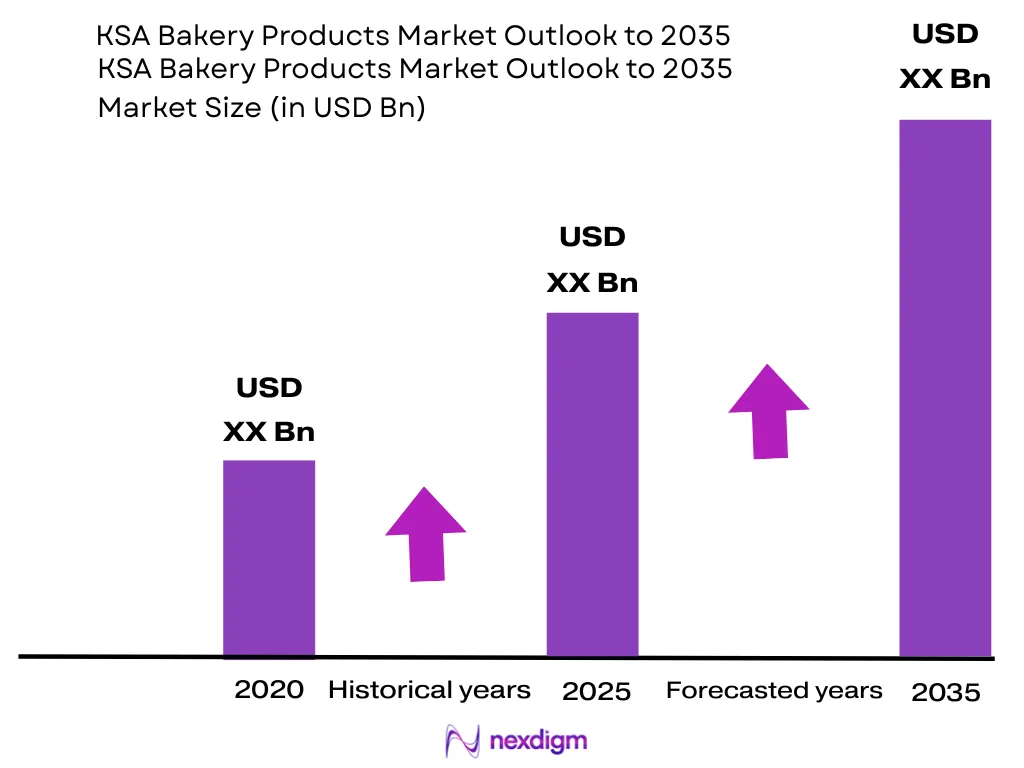
The KSA Bakery Products Market was valued at approximately USD ~ Billion in 2024, compared to USD ~ Billion in 2023, based on historical analysis of retail bakery sales, packaged baked goods consumption, foodservice bakery demand, and artisanal bakery revenues. The market is driven by Saudi Arabia’s population exceeding 36 million, rising urbanization, increasing female workforce participation, and strong demand for convenience foods. Expanding supermarket penetration, growth in café culture, tourism development initiatives, and increasing consumption of packaged bread, pastries, cakes, and frozen bakery products continue to strengthen overall market demand.
Market Segmentation
By Product Type
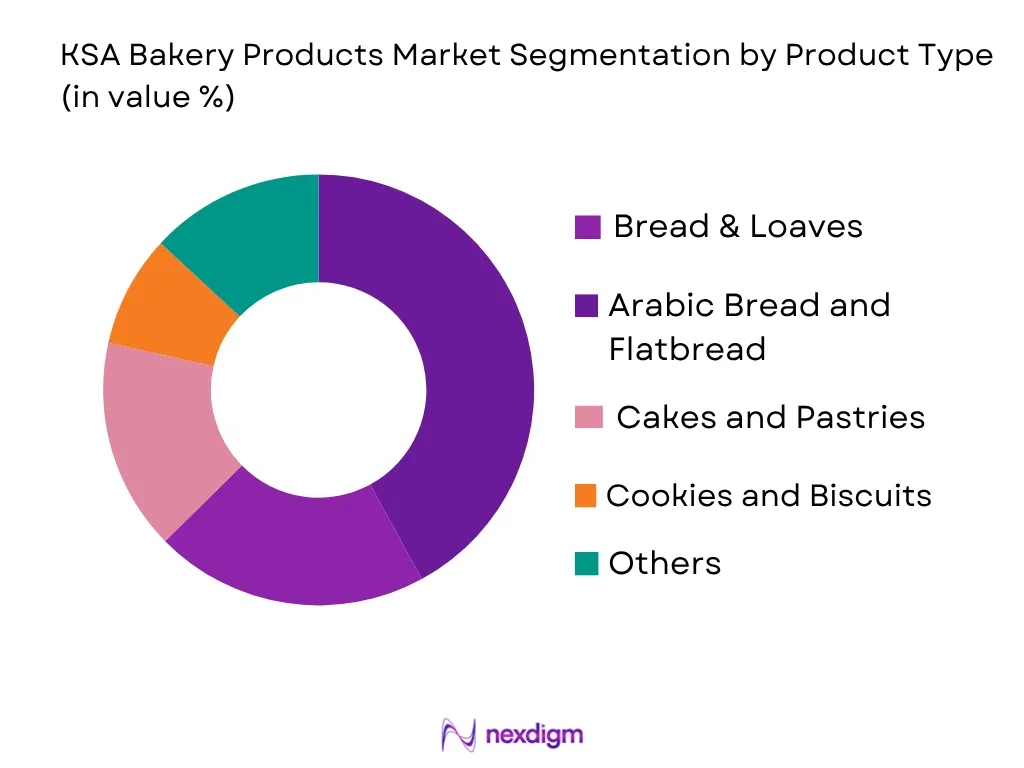
KSA Bakery Products Market is segmented by product type into bread and loaves, Arabic bread and flatbread, cakes and pastries, cookies and biscuits, croissants and viennoiserie, frozen bakery products, artisan bakery products, and bakery snacks. Recently, bread and loaves have maintained a dominant market share under this segmentation due to their role as staple food items consumed across households, foodservice establishments, and institutional catering channels. Bread remains a daily dietary component for a large proportion of consumers and benefits from widespread availability through supermarkets, convenience stores, traditional bakeries, and quick-service restaurants. Major manufacturers have expanded their offerings with whole wheat, multigrain, fortified, and premium variants to address changing consumer preferences. Additionally, strong demand from hotels, restaurants, and catering companies supports large-scale commercial consumption. The affordability, convenience, versatility, and high consumption frequency associated with bread products continue to reinforce their leadership position within the KSA bakery products market.
By Distribution Channel
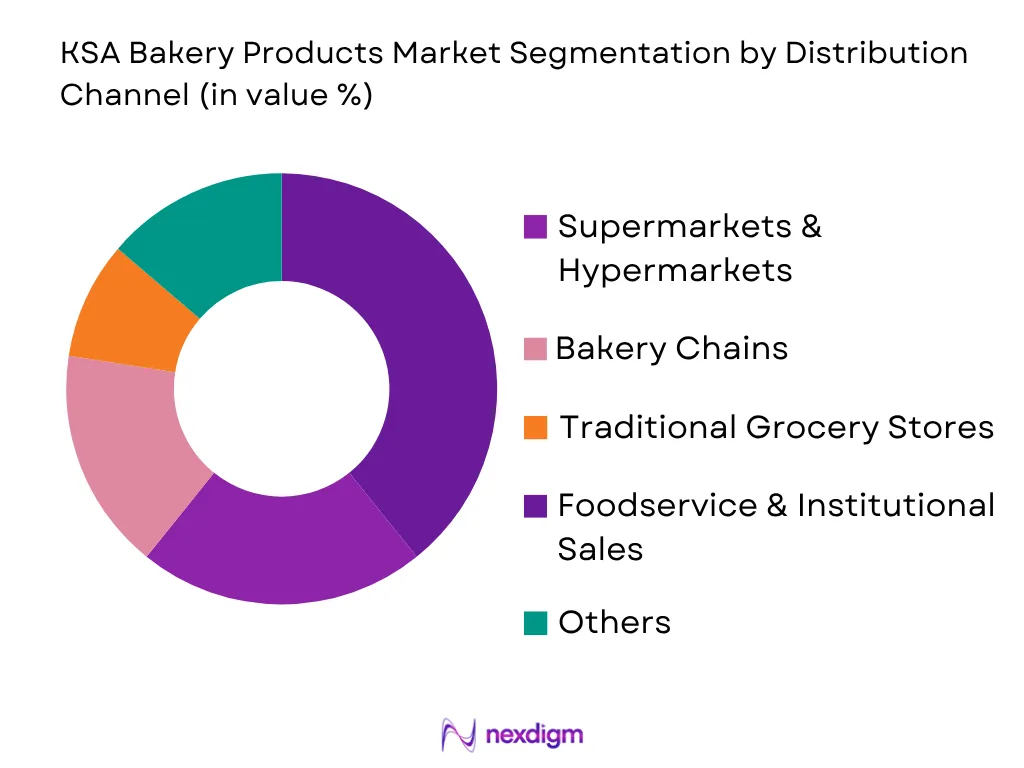
KSA Bakery Products Market is segmented by distribution channel into supermarkets and hypermarkets, convenience stores, bakery chains, independent bakeries, traditional grocery stores, online retail platforms, and foodservice & institutional sales. Recently, supermarkets and hypermarkets have dominated the market share under this segmentation due to their extensive product assortment, competitive pricing strategies, and widespread geographic presence. Consumers increasingly prefer one-stop shopping experiences where fresh bakery products, packaged baked goods, frozen bakery items, and premium imported products are available under one roof. Major retail operators have strengthened in-store bakery concepts and private-label offerings to attract consumers seeking convenience and freshness. The growth of organized retail infrastructure across major Saudi cities has further accelerated bakery product sales through these channels. Their ability to offer promotions, product variety, and easy accessibility continues to position supermarkets and hypermarkets as the leading distribution channel in the market.
Competitive Landscape
The KSA Bakery Products Market is characterized by the presence of established domestic manufacturers, regional bakery brands, and international food companies. Competition is driven by product innovation, production scale, distribution reach, product freshness, and brand recognition. Major companies focus on expanding their bakery portfolios, investing in automated production facilities, and strengthening relationships with modern retail channels. The market continues to witness increasing competition from premium bakery chains and international bakery concepts entering Saudi Arabia.
| Company | Establishment Year | Headquarters | Key Brands | Product Portfolio | Distribution Reach | Manufacturing Presence | Retail Penetration | Innovative Focus |
| Modern Food Industries | 1965 | ~ | ~ | ~ | ~ | ~ | ~ | ~ |
| Lusine | 1976 | ~ | ~ | ~ | ~ | ~ | ~ | ~ |
| Almarai Bakery Division | 1977 | ~ | ~ | ~ | ~ | ~ | ~ | ~ |
| Saudi Bakery Company | 1980 | ~ | ~ | ~ | ~ | ~ | ~ | ~ |
| SADAFCO | 1976 | ~ | ~ | ~ | ~ | ~ | ~ | ~ |
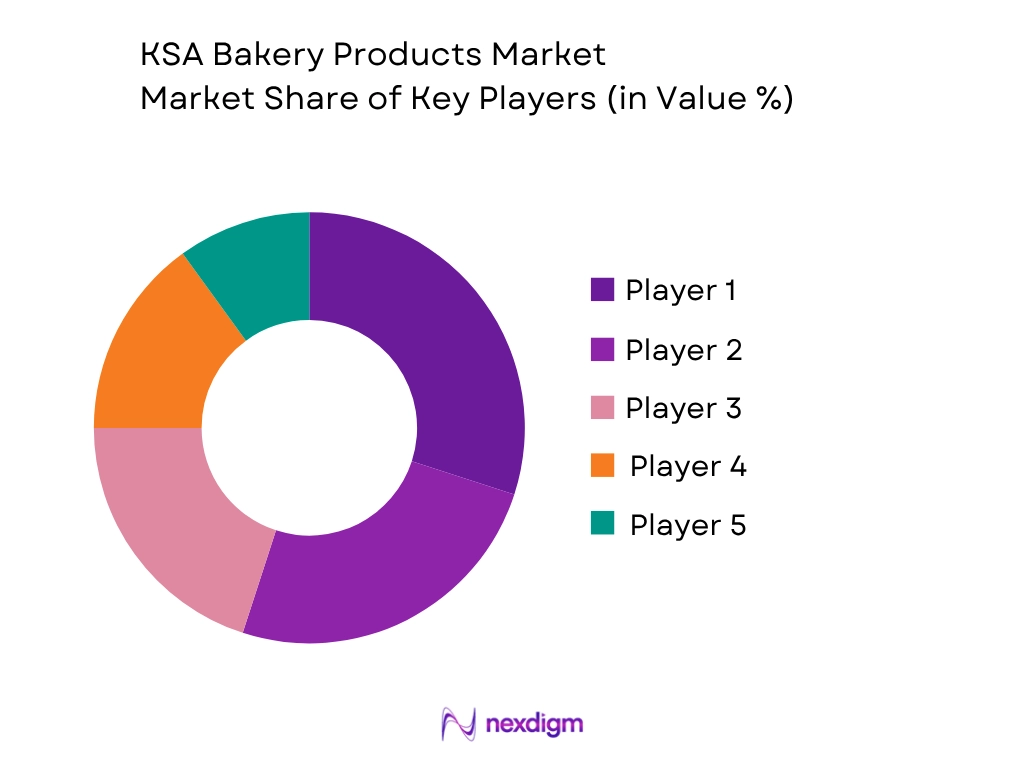
KSA Bakery Products Market Analysis
Growth Drivers
Urbanization
Saudi Arabia’s rapid urbanization continues to support bakery product consumption through greater access to modern retail channels, foodservice outlets, and convenience-based food purchasing patterns. The Kingdom’s total population reached 35.3 million people in 2024 according to official population estimates, while the urban population exceeded 30.0 million people, representing one of the largest urban consumer bases in the Middle East. Urban population growth reached 4.89 annually, reflecting the continued migration of residents toward major cities such as Riyadh, Jeddah, Dammam, and Makkah. Urban consumers typically exhibit higher demand for packaged bread, croissants, cakes, pastries, frozen bakery products, and ready-to-eat bakery snacks due to time-constrained lifestyles. Riyadh and Jeddah have witnessed substantial expansion in supermarket networks, convenience stores, café chains, and food delivery platforms, creating wider accessibility for bakery products. Additionally, Saudi Arabia’s GDP reached approximately USD 1.24 trillion in 2024, while GDP per capita exceeded USD 35,100, indicating stronger consumer purchasing power for both mass-market and premium bakery offerings. The combination of a growing urban population, increasing household incomes, and expanding retail infrastructure has strengthened demand for packaged and fresh bakery products across metropolitan areas. These demographic and economic conditions continue to create favorable demand fundamentals for bakery manufacturers, ingredient suppliers, and bakery chains operating across the Kingdom.
Expansion of Modern Retail and Food Consumption
The bakery products market in Saudi Arabia benefits significantly from the expansion of food retail, foodservice establishments, and increasing dependence on imported agricultural commodities required for bakery production. Saudi Arabia imports more than USD 20 billion worth of food and agricultural products annually, reflecting the scale of food consumption and processing activity within the Kingdom. Furthermore, total agricultural crop imports reached 18.76 million tons in 2024, with grains accounting for the largest portion of imports. Wheat consumption remained above 4.5 million tons, while wheat imports were projected at approximately 4.25 million tons, demonstrating the importance of bakery-related grain demand in the national food system. The Kingdom’s population of 35.3 million people and continuing growth in tourism, hospitality, and religious pilgrimage activities create substantial demand for bread, buns, pastries, biscuits, and baked snacks across hotels, restaurants, cafés, and institutional catering channels. Low inflation of approximately 1.7 in 2024 helped maintain consumer purchasing capacity for packaged food products. The increasing penetration of supermarkets, hypermarkets, online grocery platforms, and quick-commerce services has improved bakery product availability nationwide. These factors collectively reinforce bakery consumption and support long-term demand growth across retail and foodservice channels.
Market Challenges
Dependence on Imported Wheat and Raw Materials
A major challenge for the KSA bakery products market is its substantial dependence on imported wheat and grain supplies. Domestic wheat consumption exceeded 4.5 million tons, while imports were estimated at approximately 4.25 million tons, highlighting the reliance of bakery manufacturers on international supply chains. Although local wheat production increased to around 1.5 million tons, imported grain continues to account for the majority of bakery flour requirements. This dependence exposes bakery producers to global supply disruptions, logistics bottlenecks, shipping constraints, and fluctuations in grain availability from key exporting regions. Saudi Arabia also imported 18.76 million tons of agricultural crops in 2024, with grains representing the largest category. Bakery manufacturers must therefore manage inventory risks and procurement challenges associated with global commodity markets. The concentration of imports through major ports creates additional supply-chain vulnerabilities during periods of geopolitical uncertainty or transportation disruption. Since bread and bakery products remain staple food categories consumed daily across households and foodservice establishments, maintaining stable raw material supplies is critical. Consequently, the industry continues to face operational challenges related to ingredient sourcing, import dependency, and food security considerations despite ongoing government initiatives to strengthen domestic agricultural production.
Labor and Operational Efficiency Constraints
The bakery sector increasingly faces workforce and operational efficiency challenges as production facilities adopt more advanced manufacturing technologies. Saudi Arabia’s population reached 35.3 million, yet labor availability remains a concern across food manufacturing industries due to increasing automation requirements and the need for specialized technical skills. Modern bakery facilities utilize automated dough processing systems, packaging equipment, cold-chain storage systems, and quality-control technologies that require trained personnel for efficient operation. At the same time, foodservice expansion, tourism growth, and retail development are increasing competition for skilled labor across the hospitality and food industries. Urban population growth of nearly 4.9 annually has intensified demand for fresh bakery products, requiring manufacturers to maintain high production volumes while ensuring consistent product quality. Bakery operators must also comply with stringent food safety and quality standards, requiring ongoing workforce training and operational monitoring. The challenge becomes more pronounced for smaller independent bakeries that may lack resources for advanced automation investments or specialized workforce development programs. Consequently, maintaining productivity, operational efficiency, and product consistency while adapting to technological advancements remains a significant challenge for bakery manufacturers and retailers operating throughout Saudi Arabia.
Market Opportunities
Premium and Health-Oriented Bakery Product Innovation
The growing purchasing power of Saudi consumers presents substantial opportunities for premium and health-focused bakery products. Saudi Arabia’s GDP per capita exceeded USD 35,100 in 2024, while overall GDP surpassed USD 1.24 trillion, indicating a strong consumer spending environment. Rising awareness of nutrition, wellness, and dietary preferences has increased demand for whole-grain bread, high-fiber bakery products, protein-enriched snacks, low-sugar pastries, and fortified baked goods. The Kingdom’s highly urbanized population of more than 30 million urban residents has greater exposure to international food trends and premium bakery concepts through supermarkets, cafés, and digital food delivery platforms. Additionally, food imports exceeding USD 20 billion annually demonstrate strong consumer demand for diverse food products and premium offerings. International bakery brands entering Saudi Arabia are introducing artisanal breads, specialty pastries, and functional bakery products, encouraging domestic manufacturers to diversify their portfolios. As consumers increasingly seek convenience combined with health benefits, bakery companies have opportunities to expand value-added product categories that address evolving nutritional preferences while maintaining the taste and convenience characteristics that drive bakery consumption.
Growth of Modern Retail and Foodservice Networks
The expansion of modern retail and foodservice infrastructure across Saudi Arabia creates significant opportunities for bakery product manufacturers and distributors. Saudi Arabia’s urban population exceeded 30 million people in 2024, concentrated in major metropolitan areas where organized retail channels continue to expand. The Kingdom’s strong tourism development initiatives, religious pilgrimage traffic to Makkah and Madinah, and growing hospitality sector have increased demand for bakery products across hotels, cafés, restaurants, and catering operations. Food and agricultural imports exceeding USD 20 billion annually illustrate the scale of food consumption supported by these sectors. Online grocery shopping and food delivery platforms have also experienced rapid adoption, creating new routes to market for fresh and packaged bakery products. Supermarkets and hypermarkets increasingly allocate larger shelf space to packaged bread, pastries, frozen bakery products, and premium imported baked goods. Furthermore, a population exceeding 35 million people and ongoing urban expansion support long-term growth in convenience-oriented food purchasing behavior. These developments create substantial opportunities for bakery manufacturers to strengthen distribution networks, launch new product categories, and expand penetration across both retail and foodservice channels.
Future Outlook
The KSA Bakery Products Market is expected to witness strong growth over the forecast period, supported by increasing urbanization, rising disposable incomes, expanding tourism activity, and ongoing retail modernization. Consumer preferences are shifting toward premium, healthy, and convenient bakery offerings, creating opportunities for innovation across product categories. Investments in food manufacturing infrastructure, growth of organized retail, and expansion of international bakery brands are expected to further strengthen market development. Additionally, rising demand for frozen bakery products, functional bakery items, and premium artisanal offerings is likely to shape the future competitive landscape.
Major Players
- Modern Food Industries
- Lusine
- Almarai Bakery Division
- Saudi Bakery Company
- SADAFCO
- United Food Industries Corporation
- Western Bakeries Company
- Yamazaki Mazak Bakery Saudi Arabia
- Bateel Bakery
- Patchi KSA Bakery Division
- Bread Ahead Saudi Arabia
- Dunkin Saudi Arabia
- Kudu Bakery Division
- Paul Arabia
- Maison Samira Maatouk
Key Target Audience
- Bakery Product Manufacturers
- Bakery Chains and Café Operators
- Foodservice and Catering Companies
- Supermarket and Hypermarket Operators
- Food Ingredient and Flour Suppliers
- Frozen Food Distributors
- Investment and Venture Capitalist Firms
- Government and Regulatory Bodies (Saudi Food and Drug Authority, Ministry of Industry and Mineral Resources, Ministry of Commerce)
Research Methodology
Step 1: Identification of Key Variables
The initial phase involves developing an ecosystem map covering bakery manufacturers, flour suppliers, distributors, retailers, bakery chains, foodservice operators, and regulatory authorities within Saudi Arabia. Extensive secondary research is conducted to identify critical variables influencing bakery product demand, production, distribution, and consumption patterns.
Step 2: Market Analysis and Construction
Historical market information is collected and analyzed using a combination of industry databases, trade statistics, company reports, and government publications. Market revenues are evaluated across product categories, distribution channels, regions, and consumer segments. A combination of top-down and bottom-up methodologies is used to establish market estimates.
Step 3: Hypothesis Validation and Expert Consultation
Market assumptions and hypotheses are validated through structured interviews with bakery manufacturers, distributors, retail executives, ingredient suppliers, and foodservice operators. These consultations provide operational insights regarding consumption trends, competitive dynamics, supply chain developments, and emerging growth opportunities.
Step 4: Research Synthesis and Final Output
The final phase integrates findings from both primary and secondary research sources. Data triangulation techniques are applied to validate market estimates and segment-level analysis. The resulting report provides a comprehensive and reliable assessment of the KSA Bakery Products Market, including current market dynamics and future growth potential.

- Executive Summary
- Research Methodology (Market Definitions and Assumptions, Abbreviations, Market Sizing Approach, Top-Down Analysis, Bottom-Up Analysis, Demand-Side Assessment, Supply-Side Assessment, Primary Industry Interviews, Data Triangulation, Forecasting Framework, Limitations and Future Conclusions)

- Definition and Scope
- Market Evolution and Industry Genesis
- Timeline of Major Industry Developments
- Bakery Industry Value Chain Analysis
- Raw Material Supply Chain Analysis

- Growth Drivers (Rising Urban Population, Growing Demand for Convenience Foods, Expansion of Modern Retail, Increasing Tourism Footfall, Growth in Café Culture)
- Market Challenges (Dependence on Imported Wheat, Energy and Utility Cost Pressures, Shelf-Life Management Issues, Labor Availability Constraints, Intense Private Label Competition)
- Market Opportunities (Premium Artisan Bakery Expansion, Functional and Healthy Bakery Products, Frozen Ready-to-Bake Segment Growth, E-Commerce Bakery Retailing, HORECA Sector Expansion)
- Market Trends (Whole Grain Product Adoption, Clean Label Ingredients, Premiumization of Bakery Products, Protein-Enriched Bakery Launches, Plant-Based Bakery Innovations)
- Government Regulations (SFDA Food Safety Standards, Product Labeling Regulations, Wheat Flour Fortification Standards, Import Regulations, Packaging Compliance Requirements)
- SWOT Analysis
- PESTLE Analysis
- Porter’s Five Forces Analysis
- Stakeholder Ecosystem
- Competition Ecosystem
- Import and Export Trade Analysis

- By Market Value (2020-2025)
- By Volume Consumption (2020-2025)
- By Average Selling Price (2020-2025)

- By Product Type (In Value %)
Bread and Loaves
Arabic Bread and Flatbread
Burger Buns and Sandwich Bread
Cakes and Pastries
Cookies and Biscuits
Croissants and Viennoiserie
Donuts and Sweet Baked Goods
Frozen Bakery Products
Artisan and Specialty Bakery Products
Bakery Snacks - By Ingredient Type (In Value %)
Conventional Bakery Products
Whole Wheat Bakery Products
Multigrain Bakery Products
Gluten-Free Bakery Products
Organic Bakery Products
High-Fiber Bakery Products
Protein-Enriched Bakery Products
Sugar-Reduced Bakery Products - By Distribution Channel (In Value %)
Supermarkets and Hypermarkets
Convenience Stores
Independent Bakeries
Bakery Chains
Traditional Grocery Stores
Online Retail Platforms
Foodservice and Institutional Sales
Quick Commerce Platforms - By Region (In Value %)
Riyadh
Makkah
Eastern Province
Madinah
Asir
Qassim
Tabuk
Northern Borders - By Packaging Type (In Value %)
Flexible Packaging
Paper Bags and Wraps
Plastic Containers
Cartons and Boxes
Modified Atmosphere Packaging
Sustainable Packaging

- Market Share of Major Players (By Value, Volume, Product Type, Distribution Channel, Production Format)
- Cross Comparison Parameters (Product Portfolio Breadth, Bread SKU Count, Bread Production Capacity, Fresh Bread Distribution Reach, Route-to-Market Strength, Private Label Manufacturing Capability, Health-Oriented Bread Portfolio, New Product Launch Frequency)
- SWOT Analysis of Major Players
- Pricing Analysis by SKU and Product Category
- Detailed Profiles of Major Companies
Modern Food Industries
Lusine
Yamazaki Mazak Bakery Saudi Arabia
Saudi Bakery Company
Almarai Bakery Division
United Food Industries Corporation
SADAFCO
Western Bakeries Company
Bateel Bakery
Patchi KSA Bakery Division
Bread Ahead Saudi Arabia
Dunkin Saudi Arabia
Kudu Bakery Division
Paul Arabia
Maison Samira Maatouk

- Consumption Behavior Assessment
- Demographic Consumption Trends
- Household Bakery Spending Analysis
- Premium vs Mass Market Demand Analysis
- Traditional vs Modern Bakery Consumption
- Health and Nutrition Influence on Purchase Decisions
- Brand Loyalty and Switching Behavior
- Consumer Pain Point Assessment
- Product Attribute Preference Analysis
- Online vs Offline Purchase Behavior
- Consumer Decision-Making Process
- Tourism and Expatriate Consumption Impact

- By Market Value (2026-2035)
- By Volume Consumption (2026-2035)
- By Average Selling Price (2026-2035)


 Request a Sample
 Ask for Customization
 Get a Quote
 Enquire Now