

 Download PDF
Market Overview
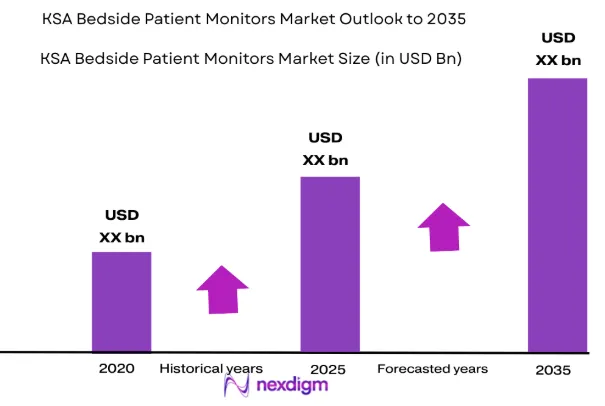
The KSA Bedside Patient Monitors market is valued at approximately USD ~ million based on a recent historical assessment. The market is driven by increasing healthcare investments, a growing demand for advanced patient monitoring technologies, and a shift toward patient-centric care. The region’s healthcare sector is experiencing substantial growth due to increasing healthcare infrastructure, the rise in the aging population, and the prevalence of chronic diseases. These factors contribute to the adoption of advanced bedside monitoring solutions across healthcare facilities.
Based on a recent historical assessment, major cities such as Riyadh and Jeddah are pivotal in the growth of the market due to their well-established healthcare systems and hospitals. The demand for bedside patient monitors is particularly high in these urban centers, driven by a concentration of advanced healthcare facilities, government healthcare initiatives, and a rising number of private healthcare investments. Additionally, these cities benefit from significant government support and health policies aimed at improving healthcare outcomes, further promoting market growth in these areas.
Market Segmentation
By Product Type
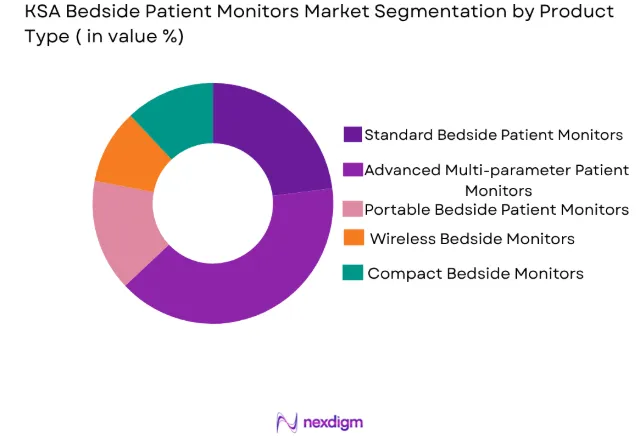
KSA Bedside Patient Monitors market is segmented by product type into standard bedside patient monitors, advanced multi-parameter patient monitors, portable bedside patient monitors, wireless bedside monitors, and compact bedside monitors. The advanced multi-parameter patient monitors sub-segment has a dominant market share due to the growing preference for devices that provide comprehensive patient data with real-time monitoring. These devices offer features such as heart rate, blood pressure, oxygen saturation, and temperature tracking, making them essential in critical care environments like ICU units, which further drives their demand.
By Platform Type
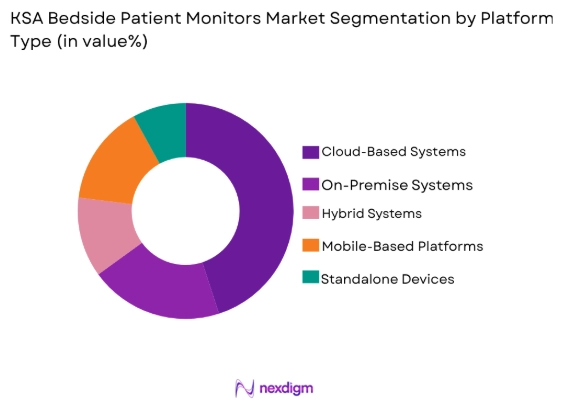
KSA Bedside Patient Monitors market is segmented by platform type into cloud-based systems, on-premise systems, hybrid systems, mobile-based platforms, and standalone devices. Cloud-based systems have emerged as the dominant sub-segment in the market, largely driven by the increasing demand for remote monitoring capabilities and the integration of IoT technologies in healthcare. These systems offer real-time access to patient data, enabling remote consultations and improved decision-making, which is essential for healthcare providers looking to enhance patient outcomes and operational efficiency.
Competitive Landscape
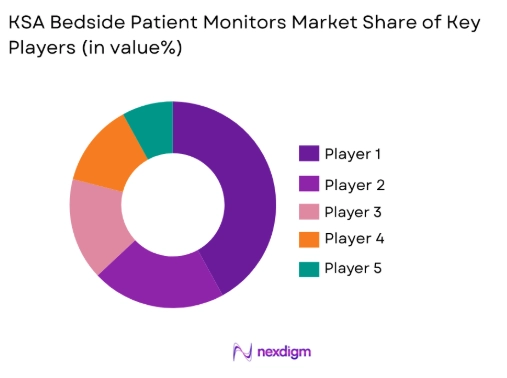
The KSA Bedside Patient Monitors market is characterized by a moderately consolidated competitive landscape with several global medical device manufacturers and select regional players. Major companies focus on innovation, product portfolio expansion, and strategic partnerships with healthcare providers to strengthen their regional presence. Competition is driven by technological differentiation, service offerings, and the ability to meet stringent regulatory requirements. Continuous investments in research and development, along with after‑sales support and training services, play a critical role in shaping competitive dynamics and influencing buyer preference within Saudi healthcare facilities.
| Company Name | Establishment Year | Headquarters | Technology Focus | Market Reach | Key Products | Revenue (approx.) | Integration or Service Support |
| Philips Healthcare | 1891 | Netherlands | ~ | ~ | ~ | ~ | ~ |
| GE Healthcare | 1994 (current form) | USA | ~ | ~ | ~ | ~ | ~ |
| Siemens Healthineers | 1847 | Germany | ~ | ~ | ~ | ~ | ~ |
| Medtronic | 1949 | Ireland | ~ | ~ | ~ | ~ | ~ |
| Nihon Kohden Corporation | 1951 | Japan | ~ | ~ | ~ | ~ | ~ |
KSA Bedside Patient Monitors Market Analysis
Growth Drivers
Technological Advancements
The rapid advancements in sensor technology and wireless communication are crucial drivers of growth in the KSA Bedside Patient Monitors market. The integration of Internet of Things (IoT) and Artificial Intelligence (AI) into monitoring systems is making it possible for healthcare providers to access real-time patient data remotely. These advancements enable continuous monitoring of patients, providing doctors and caregivers with instant alerts regarding a patient’s health status. As a result, healthcare providers can intervene more quickly in case of any critical changes in the patient’s condition, improving patient outcomes and reducing the likelihood of medical errors. Additionally, AI-based algorithms are capable of analyzing large volumes of data and predicting patient conditions, which further enhances the effectiveness of bedside monitoring systems. The ongoing shift towards digital health technologies in hospitals, healthcare centers, and home healthcare settings is accelerating the adoption of these systems. Furthermore, these technological advancements also allow for more cost-effective solutions by reducing the need for manual interventions and streamlining the workflow in healthcare facilities. As healthcare providers continue to leverage cutting-edge solutions to improve patient care, the widespread adoption of these technologies is expected to support the growth of the bedside patient monitors market in the coming years.
Government Healthcare Initiatives
Government initiatives aimed at modernizing healthcare infrastructure in Saudi Arabia are significantly contributing to market growth. As part of the Saudi Vision 2030 plan, the government has set ambitious objectives to improve the quality of healthcare services, increase access to healthcare, and incorporate digital health solutions into the healthcare system. These efforts include significant investments in healthcare facilities, the expansion of medical technology, and the modernization of healthcare services across the country. Policies that promote the adoption of advanced medical technologies and the increased number of healthcare facilities are accelerating the demand for bedside patient monitors. Additionally, the government has introduced several health initiatives to improve the overall health standards in the country, which is leading to a more widespread adoption of advanced patient monitoring systems in both public and private hospitals. Moreover, the government is working to enhance the digital health ecosystem by promoting the use of telemedicine and remote healthcare services, further pushing the demand for remote patient monitoring devices like bedside patient monitors. With the government’s continued support and spending on healthcare technologies, these efforts are expected to foster significant growth in the market and contribute to the long-term development of the KSA Bedside Patient Monitors market.
Market Challenges
High Equipment Costs
One of the primary challenges facing the KSA Bedside Patient Monitors market is the high initial cost of advanced monitoring systems. These systems, particularly multi-parameter monitors, are typically expensive due to their complex technology, high-quality sensors, and advanced features. The significant capital expenditure required to install and maintain these devices is a barrier for many healthcare facilities, especially in rural or underdeveloped regions where healthcare budgets are more constrained. Smaller healthcare facilities and those in remote areas often face difficulties in justifying such high investments in patient monitoring technology, which makes it challenging for manufacturers to reach untapped segments of the market. Moreover, the maintenance costs associated with these devices, including servicing, updates, and repairs, further add to the financial burden. Although these systems offer immense benefits in terms of improving patient care and hospital efficiency, the cost remains a significant obstacle to their widespread adoption, particularly among facilities that do not have the resources to make such large investments. Despite the government’s push to improve healthcare infrastructure, the high price point of bedside patient monitors limits their penetration in cost-sensitive markets, making it essential for manufacturers to explore ways to lower prices or offer more affordable alternatives to address this challenge.
Regulatory Hurdles and Compliance Requirements
Regulatory challenges in the healthcare industry, particularly related to the approval of new medical technologies, are a major obstacle for the KSA Bedside Patient Monitors market. In Saudi Arabia, medical devices are subject to stringent regulations set by the Saudi Food and Drug Authority (SFDA), which governs the safety and effectiveness of medical products. The lengthy approval processes and the need for products to meet local standards can delay the introduction of new bedside patient monitoring devices. The approval process often involves extensive testing and documentation, which can be both time-consuming and costly for manufacturers. Compliance with these regulations requires significant investment in research and development, which adds to the cost of manufacturing these systems and can hinder their market penetration. Additionally, the constantly evolving regulatory landscape poses a challenge for manufacturers, who must keep up with changing requirements to ensure that their products remain compliant. These regulatory hurdles not only slow down the market entry of innovative devices but also make it difficult for smaller players to compete with established companies that have the resources to navigate complex regulatory frameworks. As a result, regulatory challenges remain one of the key barriers to the widespread adoption of advanced bedside patient monitoring systems in Saudi Arabia.
Opportunities
Expanding Home Healthcare Market
The increasing preference for home-based healthcare, fueled by a growing aging population and the rising prevalence of chronic conditions, presents significant opportunities for the KSA Bedside Patient Monitors market. With the shift towards patient-centric care, healthcare systems are placing greater emphasis on providing services outside traditional hospital settings, enabling patients to receive treatment at home while maintaining access to advanced medical technologies. As chronic diseases such as diabetes, hypertension, and heart disease become more prevalent, there is a growing demand for portable and wireless bedside patient monitoring systems that can be used in home healthcare settings. These devices allow patients to be monitored remotely, ensuring continuous care while reducing the need for frequent hospital visits. Additionally, home healthcare services offer cost-saving benefits for both patients and healthcare providers, making it a preferred option for many individuals, particularly those with long-term health conditions. As the healthcare industry in Saudi Arabia evolves to meet the needs of an aging population, manufacturers of bedside patient monitors have an opportunity to tap into the home healthcare market by developing solutions tailored to the needs of home care patients, thus expanding their customer base and increasing product adoption.
Integration with Artificial Intelligence and IoT
The integration of AI and IoT technologies into bedside patient monitors is a significant opportunity for the market. AI-powered devices that analyze real-time data, predict patient outcomes, and alert healthcare providers of potential issues are becoming essential in critical care environments, such as intensive care units (ICUs) and emergency departments (EDs). These devices can automatically detect changes in patient vital signs and provide early warnings of critical events, allowing healthcare providers to intervene promptly and prevent complications. The integration of IoT connectivity further enhances the functionality of bedside patient monitors by enabling remote patient monitoring, which allows healthcare providers to track patient data in real-time, regardless of their location. This connectivity is particularly valuable in telemedicine and virtual care settings, where remote healthcare providers need access to patient data for diagnosis and treatment. These advancements can make bedside patient monitors more effective, efficient, and convenient, thereby driving the demand for advanced systems in healthcare facilities. As healthcare providers continue to embrace smart healthcare solutions, the integration of AI and IoT is expected to play a pivotal role in market growth by offering more intelligent, connected, and efficient patient monitoring solutions.
Future Outlook
The KSA Bedside Patient Monitors market is expected to experience steady growth over the next five years. Driven by advancements in technology, particularly the adoption of AI and IoT, the market will witness an increase in the demand for smart, connected monitoring systems. Regulatory support, coupled with ongoing infrastructure development, will encourage further adoption of advanced patient monitoring devices. Additionally, as home healthcare solutions gain traction, the market will see an increasing shift toward portable, wireless, and cost-effective monitoring solutions to meet the needs of an aging population and the growing burden of chronic diseases.
Major Players
- Philips Healthcare
- GE Healthcare
- Siemens Healthineers
- Medtronic
- Schiller AG
- Fujifilm Holdings Corporation
- Nihon Kohden Corporation
- Johnson & Johnson
- Honeywell Life Care Solutions
- Contec Medical Systems
- Mindray Medical International Limited
- Drägerwerk AG & Co. KGaA
- Getinge AB
- Baxter International Inc.
- Toshiba Medical Systems Corporation
Key Target Audience
- Investments and venture capitalist firms
- Government and regulatory bodies
- Healthcare providers and hospital administrators
- Medical device distributors
- Medical equipment purchasing managers
- Home healthcare agencies
- Health insurance companies
Research Methodology
Step 1: Identification of Key Variables
Identifying the key variables influencing market trends, demand, and technological advancements.
Step 2: Market Analysis and Construction
Collecting data from various sources to build a comprehensive market model that reflects the current and projected market scenario.
Step 3: Hypothesis Validation and Expert Consultation
Validating the assumptions and projections with industry experts and key stakeholders to ensure accuracy.
Step 4: Research Synthesis and Final Output
Synthesizing the gathered data and insights to produce a final report with actionable insights for stakeholders.

- Executive Summary
- Research Methodology (Definitions, Scope, Industry Assumptions, Market Sizing Approach, Primary & Secondary Research Framework, Data Collection & Verification Protocol, Analytic Models & Forecast Methodology, Limitations & Research Validity Checks)

- Market Definition and Scope
- Value Chain & Stakeholder Ecosystem
- Regulatory / Certification Landscape
- Sector Dynamics Affecting Demand
- Strategic Initiatives & Infrastructure Growth

- Growth Drivers
Increase in Hospital Infrastructure and Capacity
Technological Advancements in Monitoring Equipment
Aging Population and Rising Chronic Diseases - Market Challenges
High Equipment Costs
Regulatory Hurdles and Compliance Requirements
Limited Availability of Skilled Professionals - Market Opportunities
Expanding Home Healthcare Market
Integration with Artificial Intelligence and IoT
Growing Demand in Emerging and Remote Areas - Trends
Growth of Wearable Bedside Monitors
Rise of Telemedicine and Remote Monitoring - Government Regulations
- SWOT Analysis
- Porter’s Five Forces

- By Market Value, 2020-2025
- By Installed Units, 2020-2025
- By Average System Price, 2020-2025
- By System Complexity Tier, 2020-2025

- By System Type (In Value%)
Standard Bedside Patient Monitors
Advanced Multi-parameter Patient Monitors
Portable Bedside Patient Monitors
Wireless Bedside Monitors
Compact Bedside Monitors - By Platform Type (In Value%)
Cloud-Based Systems
On-Premise Systems
Hybrid Systems
Mobile-Based Platforms
Standalone Devices - By Fitment Type (In Value%)
Fixed Bedside Monitors
Mobile Bedside Monitors
Wall-mounted Bedside Monitors
Portable Bedside Monitors - By End User Segment (In Value%)
Hospitals
Home Healthcare
Ambulatory Surgical Centers

- Market Share Analysis
- Cross Comparison Parameters (Market Value, Installed Units, Average Price, System Tier Complexity, Platform Adoption, End-User Demand, Regional Demand)
- SWOT Analysis of Key Competitors
- Pricing & Procurement Analysis
- Key Players
Philips Healthcare
GE Healthcare
Siemens Healthineers
Medtronic
Schiller AG
Fujifilm Holdings Corporation
Nihon Kohden Corporation
Johnson & Johnson
Honeywell Life Care Solutions
Contec Medical Systems
Mindray Medical International Limited
Drägerwerk AG & Co. KGaA
Getinge AB
Baxter International Inc.
Toshiba Medical Systems Corporation

- Hospitals’ Demand for Advanced Monitoring Systems
- Growth of Home Healthcare Monitoring
- Adoption of Bedside Monitors in Ambulatory Centers
- Increase in Private Healthcare Investments

- Forecast Market Value, 2026-2035
- Forecast Installed Units, 2026-2035
- Price Forecast by System Tier, 2026-2035
- Future Demand by Platform, 2026-2035


 Request a Sample
 Ask for Customization
 Get a Quote
 Enquire Now