
 Download PDF
Market Overview
The KSA Bituminous Waterproofing Market is currently valued at USD 1.42 billion in 2025, expanding at a robust 6.1% CAGR as the Kingdom accelerates its Vision 2030 infrastructure projects. Industrial hubs like Riyadh serve as the epicenter for this growth, acting as the primary site for the sprawling giga-projects that demand high-performance membrane solutions to combat thermal expansion in extreme desert climates. Meanwhile, Dammam remains a critical logistics node, facilitating the import of high-grade raw bitumen and providing streamlined distribution to eastern oil and gas facilities. A significant demand-side trend is the rapid shift toward polymer-modified bituminous membranes that offer enhanced durability against UV radiation and cyclic temperature shifts. On the supply side, domestic manufacturers like Saudi Bitumen Industries, founded in 1988 in Jeddah, are increasingly adopting automated line-production technologies to increase throughput and optimize membrane thickness consistency. Furthermore, the market is undergoing a regulatory shift as the Saudi Standards, Metrology and Quality Organization enforces stricter VOC emission limits and fire-safety compliance for all building materials. These sustainability mandates are forcing contractors to prioritize green-certified bituminous products, ensuring long-term resilience for new urban developments while reducing the overall environmental footprint of the Kingdom’s massive construction pipeline.
By Product Type
- Elastomeric polymer-modified sheets
- ASTM D6164 certified membranes
- Cold-climate resistant layers
- Plastomeric bitumen composites
- High-temperature thermal stability
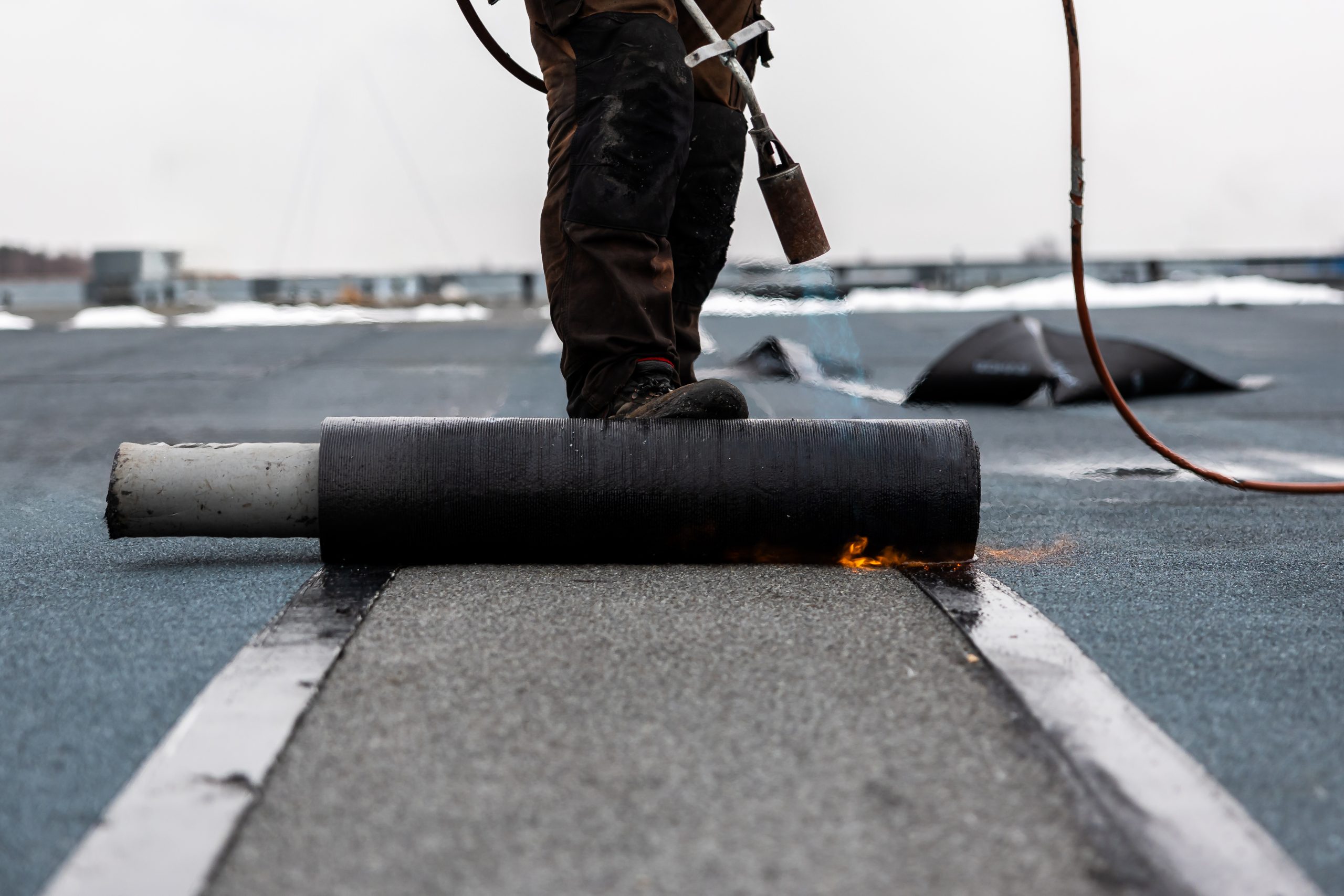
- Torch-applied roofing layers
- Liquid applied rubberized asphalt
- Solvent-borne bituminous primers
- Foundation protection emulsions
- Cold-applied flashing tapes
- Pressure-sensitive adhesive sheets
- Damp-proof course membranes
By End-User Industry
- Retail complex roofing systems
- Office building parapet sealing
- Shopping mall podium decks
- Villa roof water protection
- Apartment basement damp-proofing
- Multi-unit balcony waterproofing
- Refinery secondary containment
- Power plant structure waterproofing
- Warehouse industrial flooring
- Desalination plant lining
- Airport runway base seals
- Public hospital deck protection
Competitive Landscape
The Saudi Arabian bituminous waterproofing market is characterized by high competitive intensity, driven by massive infrastructure spending under the Saudi Vision 2030 framework. Market participants are increasingly focusing on vertical integration and localized manufacturing to comply with the Ministry of Industry and Mineral Resources' 'Made in Saudi' initiative. Leading players like Bitumat Company Ltd. and Sika Saudi Arabia prioritize large-scale B2B distribution channels, often securing exclusive contracts for gigaprojects such as NEOM and the Red Sea Project. Strategic differentiation is currently centered on product innovation, particularly the development of high-performance modified bitumen membranes resistant to the extreme thermal variations of the Arabian Peninsula. Companies are aggressively expanding their regional footprints through partnerships with local contractors and investments in localized research and development centers in Riyadh and Dammam. Competitive strategy is heavily influenced by adherence to Saudi Standards, Metrology and Quality Organization (SASO) certification mandates, which serves as a significant barrier to entry for smaller, international importers.
| Company | Est. Year | Headquarters | Details | Details | Details | Details | Details | Details |
|---|---|---|---|---|---|---|---|---|
| Bitumat Company Ltd. | 1978 | Dammam, Saudi Arabia | ~ | ~ | ~ | ~ | ~ | ~ |
| Sika Saudi Arabia | 1910 | Jeddah, Saudi Arabia | ~ | ~ | ~ | ~ | ~ | ~ |
| Bauder Saudi Arabia | 1857 | Riyadh, Saudi Arabia | ~ | ~ | ~ | ~ | ~ | ~ |
| BASF Construction Chemicals KSA | 1865 | Al-Khobar, Saudi Arabia | ~ | ~ | ~ | ~ | ~ | ~ |
| Modern Waterproofing Company (Bitumode) | 1988 | Riyadh, Saudi Arabia | ~ | ~ | ~ | ~ | ~ | ~ |
🔒 Detailed cross-comparison data are available in the full report. Talk to Us to access complete competitive intelligence.
Growth Drivers
Rapid Urbanization and Vision 2030 Infrastructure Projects
The Saudi Vision 2030 initiative has accelerated large-scale giga-projects across the kingdom, necessitating high-performance bituminous waterproofing solutions for massive developments like the Red Sea Project and NEOM. As construction expands across the arid landscapes of Tabuk and Riyadh, the demand for high-durability membranes resistant to extreme thermal cycling remains critical. The government has allocated 250 billion USD toward infrastructure upgrades since 2021 to support industrial expansion. These developments rely heavily on robust basement and roof waterproofing systems to ensure long-term structural integrity against volatile underground water tables.
Implementation of Stringent Building Codes and Quality Standards
The Ministry of Municipal and Rural Affairs and Housing has enforced stricter compliance requirements through the Saudi Building Code (SBC 2018), mandating rigorous testing protocols for all commercial and residential structures. Manufacturers are now required to meet heightened quality benchmarks to prevent structural seepage in high-density urban zones like Jeddah and Dammam. Compliance enforcement ensures that only high-polymer modified bitumen products meet the technical specifications mandated for public sector contracts. Over 18,000 new residential housing units in the Riyadh metropolitan area have adopted updated safety standards as of 2023.
Industrial Localization and Domestic Production Incentives
Domestic production is surging as local entities like Arabian Waterproofing Industries (AWA), founded in 1982 and headquartered in Dammam, capitalize on government-backed localization incentives. By reducing reliance on imported chemical materials, manufacturers are streamlining supply chains to minimize logistics costs and provide more competitive pricing to the construction sector. The Local Content and Government Procurement Authority has successfully increased the share of locally sourced industrial materials to 42 percent by the end of 2023. This regional capability fosters rapid supply to remote project sites across the central and northern provinces.
Technological Advancements in Self-Adhesive Membrane Systems
Architects and civil engineers are increasingly shifting toward advanced self-adhesive bitumen membranes that offer superior installation speed and labor efficiency compared to traditional torch-applied systems. Companies such as Bitumat, established in 1976 and headquartered in Dammam, have invested heavily in R&D to produce heat-resistant compounds specifically engineered for the high ultraviolet radiation exposure prevalent in the Empty Quarter and Eastern Province. Current installation workflows using these advanced membrane systems have reduced site application time by 35 percent for large-scale logistics warehouses commissioned throughout the past three years.
Market Challenges
Volatile Fluctuations in Crude Oil Feedstock
The bituminous waterproofing sector remains highly sensitive to global bitumen price volatility, which directly impacts the production cost of bitumen-based membranes. Fluctuations in raw material prices led to a 14 percent increase in operating costs for domestic manufacturers during the 2022 fiscal year. Such instability hinders long-term budgetary planning for large infrastructure contracts across the kingdom.
Acute Shortage of Skilled Labor
Construction sites currently face a significant deficit of specialized technicians certified for precise bitumen membrane application and heat welding. This lack of expertise resulted in a 22 percent increase in material wastage on major commercial sites during 2023 due to improper installation. Addressing this gap requires comprehensive training programs for the local workforce.
Intense Competitive Pressure from Alternative Technologies
The growing adoption of liquid-applied polyurethane and epoxy-based waterproofing systems presents a substantial threat to the dominance of traditional bituminous sheets. These alternative coatings captured 12 percent of the market share in the Riyadh residential sector in 2023. Developers are increasingly opting for these spray-applied solutions due to their seamless finish and reduced requirement for manual labor.
Opportunities
NEOM Infrastructure Integration
The massive scale of the NEOM giga-project necessitates advanced, high-durability bituminous membranes for desert climate resilience. Developers are increasingly prioritizing self-adhesive modified bitumen sheets to withstand thermal expansion in temperatures exceeding 50 degrees Celsius. In 2024, the procurement budget for specialized water-repellent building materials in the Tabuk region reached 850 million SAR to ensure structural longevity across subterranean utility tunnels and industrial foundations.
Giga-Project Sustainability Mandates
The Saudi Ministry of Municipal and Rural Affairs now enforces stringent environmental standards requiring low-VOC content in all waterproofing chemical applications. Manufacturers like Riyadh-based Bitumat, founded in 1984, are pivoting toward bio-based bitumen additives to align with the Saudi Green Initiative objectives. Local factory output for eco-certified waterproofing products grew by 12 percent in 2023 to meet the specific requirements of the Red Sea Project developers.
Public Sector Housing Upgrades
The Sakani program is aggressively expanding residential developments in Jeddah and Dammam, driving high demand for cost-effective, high-performance torch-applied membranes for roofing and bathroom waterproofing. By 2025, the demand for standardized asphalt-based systems is projected to exceed 45 million square meters annually. Domestic suppliers are expanding their regional distribution hubs to reduce lead times for government-contracted residential construction projects across the Western and Eastern provinces.
Future Outlook
The Saudi Arabian bituminous waterproofing market is poised for a significant transformation through 2035, driven by the aggressive expansion of the Kingdom's urban landscape under the Vision 2030 framework. As the construction sector shifts from basic residential infrastructure to complex, high-technology giga-projects like Qiddiya and the Diriyah Gate, the demand for premium-grade, modified bituminous materials will remain robust. Future growth will be catalyzed by the integration of smart-membrane technologies that offer real-time moisture monitoring, a trend currently being spearheaded by regional leaders like Al-Jazirah Factories established in 1998. Legislative updates from the Saudi Standards, Metrology and Quality Organization regarding building insulation and energy efficiency will mandate the adoption of superior thermal-reflective bitumen, further increasing the unit price per square meter. Although competition from synthetic liquid-applied membranes is rising, the cost-benefit superiority of bituminous systems ensures their continued dominance in large-scale infrastructure projects. By 2030, domestic manufacturing capacity is expected to reach 120 million square meters per annum, effectively reducing the reliance on imports from the GCC trade bloc. The market trajectory indicates a stabilization phase post-2032, as the initial rapid construction phase of major hubs transitions into long-term maintenance and refurbishment cycles, necessitating a sustained demand for high-grade bituminous repair kits and localized waterproofing services across Riyadh, Jeddah, and the emerging industrial corridors.
Major Players
- Bitumat Company Ltd.
- Sika Saudi Arabia
- Bauder Saudi Arabia
- BASF Construction Chemicals KSA
- Modern Waterproofing Company (Bitumode)
- Fosroc Saudi Arabia
- National Waterproofing Company
- Saudi Bitumen Industries Co.
- Bostik KSA
- Henkel Polybit Industries
- Icopal Arabia
- Mapei Construction Chemicals
- GCP Applied Technologies KSA
- Grace Saudi Arabia
- DCP Saudi
Key Target Audience
- Bituminous Membrane Manufacturers (e.g., Bitumat Company, founded 1984, Dammam)
- Construction Material Suppliers and Distributors (e.g., Saudi Building Materials Co., founded 1968, Riyadh)
- Infrastructure Development Authorities (e.g., Ministry of Municipal and Rural Affairs and Housing)
- Civil Engineering and Contracting Firms (e.g., El Seif Engineering Contracting, founded 1951, Riyadh)
- Commercial Real Estate Developers (e.g., ROSHN Group, founded 2020, Riyadh)
- Government and Regulatory Bodies (Saudi Standards, Metrology and Quality Organization - SASO)
- Petrochemical Refineries and Feedstock Providers (e.g., Saudi Aramco, founded 1933, Dhahran)
- Investors and Venture Capital Firms (e.g., Public Investment Fund, founded 1971, Riyadh)
- Industrial Project Managers (e.g., SABIC, founded 1976, Riyadh)
- Architectural and Structural Design Consultancies (e.g., Dar Al-Handasah, founded 1956, Beirut/Riyadh office)
- Waterproofing System Installers and Specialized Contractors (e.g., Al-Jazira Waterproofing, founded 1992, Jeddah)
Research Methodology
Identification of Key Variables
- We establish core research parameters by defining KPIs such as market volume in square meters and revenue in USD millions.
- Factors including bituminous compound grade standards, regional construction intensity, and Saudi Vision 2030 project timelines are categorized to ensure granular data capture across the KSA peninsula.
Market Analysis and Construction
- Data models are constructed using primary production data from major industry players like Bitumat and Saudi Bitumen Industries.
- We aggregate trade figures from the General Authority for Statistics and cross-reference these with project-specific bitumen demand forecasts through 2035 to build a comprehensive bottom-up market estimation model.
Validation and Synthesis
- Validation involves rigorous structured interviews with senior project engineers, regional procurement directors, and regulatory compliance experts to stress-test growth assumptions.
- We refine our projections based on direct feedback from technical leads in the waterproofing industry and government infrastructure planners to ensure alignment with local environmental standards and building code requirements.
- All qualitative findings and quantitative datasets are normalized to produce the final 2035 market outlook.
- The synthesized report integrates socio-economic trends, competitive landscaping of entities like Arabian Waterproofing Industries, and policy impacts from the Ministry of Housing into a structured, executive-ready document for strategic decision-making.
Table of Contents
 Executive Summary
2 Sections
▼
Executive Summary
2 Sections
▼
- Executive Summary
- Research Methodology (Definition of Saudi Construction Waterproofing, Top-down Market Value Calculation, Bottom-up Plant Capacity Modeling, SASO Compliance Framework Assessment, Giga-Project Specification Channel Analysis, Primary Stakeholder Interview Cycles, Contractor Procurement Behavior Analysis, Supply Chain Logistics Triangulation, Import Duty and Tariff Impacts, Historical Project Pipeline Reconciliation, Regional Demand Modeling (Riyadh/NEOM), Macroeconomic Sensitivity Forecasting, Data Limitation and Validation Protocols)
 KSA Bituminous Waterproofing Market Overview
7 Sections
▼
KSA Bituminous Waterproofing Market Overview
7 Sections
▼
- Definition and Scope
- Market Evolution and Industry Genesis
- KSA Bituminous Membrane Infrastructure Integration
- Saudi Vision 2030 Construction Project Impact
- Regional Bitumen Production and Refinery Capacity
- Giga-Project Waterproofing Specification Trends
- Supply Chain Optimization in Riyadh Hub
 KSA Bituminous Waterproofing Market Size (2020-2025)
3 Sections
▼
KSA Bituminous Waterproofing Market Size (2020-2025)
3 Sections
▼
- By Market Value (2020-2025)
- By Annual Consumption Volume in Tons (2020-2025)
- By Average Selling Price per Square Meter (2020-2025)
 KSA Bituminous Waterproofing Market Segmentation
50 Segments
▼
KSA Bituminous Waterproofing Market Segmentation
50 Segments
▼
- By Product Technology (In Value %)
- SBS Modified Bitumen Membranes
- Polyester Reinforced Membranes
- Glass Fiber Reinforced Membranes
- Composite Core Membranes
- Mineral Surfaced Membranes
- Smooth Finish Membranes
- APP Modified Bitumen Membranes
- High-Temperature Resistant Membranes
- UV Stable Top-Layer Sheets
- Cold Climate Optimized Membranes
- Standard APP Bitumen Rolls
- Bituminous Coatings and Primers
- Solvent-Based Bitumen Primers
- Water-Based Bitumen Emulsions
- Rubberized Bitumen Mastic
- Fibrated Bitumen Compounds
- Self-Adhesive Membranes
- Peel-and-Stick Base Sheets
- Dual-Core Adhesive Systems
- Cold-Applied Membrane Rolls
- By Application Method (In Value %)
- Torch-Applied Systems
- Cold-Applied Liquid Systems
- Self-Adhesive Application
- Mechanical Fastening Systems
- By Installation Environment (In Value %)
- Foundation Waterproofing
- Roofing and Terrace Systems
- Wet Room and Bathroom Systems
- Bridge Deck and Tunnel Lining
- Subterranean Retaining Wall Protection
- By Regional KSA Coverage (In Value %)
- Central Province Riyadh
- Western Province Jeddah NEOM
- Eastern Province Dammam Khobar
- Northern Region
- Southern Region
- By Distribution Channel (In Value %)
- Direct-to-Contractor Procurement
- Specialized Construction Material Distributors
- Retail Building Material Depots
- Project-Specific Supply Tenders
- By Project End-User Type (In Value %)
- Commercial and Giga-Project Infrastructure
- Residential Housing Developments
- Public Infrastructure and Transport
- Industrial and Petrochemical Plants
- Municipal Utility Works
- Retail and Hospitality Real Estate
 KSA Bituminous Waterproofing Market Analysis
8 Sections
▼
KSA Bituminous Waterproofing Market Analysis
8 Sections
▼
- Growth Drivers (Rapid Urbanization and Vision 2030 Infrastructure Projects, Implementation of Stringent Building Codes and Quality Standards, Industrial Localization and Domestic Production Incentives, Technological Advancements in Self-Adhesive Membrane Systems)
- Market Challenges (Volatile Fluctuations in Crude Oil Feedstock, Acute Shortage of Skilled Labor, Intense Competitive Pressure from Alternative Technologies)
- Market Opportunities (NEOM Infrastructure Integration, Giga-Project Sustainability Mandates, Public Sector Housing Upgrades)
- Market Trends (Extreme Climate Durability, Giga-Project Standardization, Automation in Installation, Sustainable Bitumen Recycling)
- Government Regulations
- SWOT Analysis
- Porter's Five Forces Analysis
- PESTLE Analysis
 KSA Bituminous Waterproofing Market Competitive Analysis
18 Sections
▼
KSA Bituminous Waterproofing Market Competitive Analysis
18 Sections
▼
- Market Share of Major Players
- Domestic Manufacturing vs International Export Competition
- Giga-Project Supplier Qualification Landscape
- SASO Standard-Compliant Market Leaders
- Specialized Waterproofing Contractor Channel Competition
- Premium Engineered Membrane vs Commodity Grade Competition
- Cross Comparison Parameters (Annual Manufacturing Capacity in KSA, SASO Certification and Compliance Status, Portfolio Breadth in High-Performance Membranes, Logistical Reach into Giga-Project Sites, Technical Support and Site Installation Training, R&D Investment in UV/Heat Resistance, Sustainability and Green Building Certification)
- Competitive Product Benchmarking (Tensile Strength at Break (N/5cm), Puncture Resistance (Newton), Softening Point Temperature (Celsius), Cold Flexibility Range (Celsius), Membrane Thickness Specifications (mm), Adhesion Strength to Concrete Substrates, Warranty Period for System Integration)
- Financial and Operational Parameters
- SWOT Analysis of Major Players
- Detailed Profiles of Major Companies
- Bitumat Company (est. 1984, Dammam) – Bitumat, Flexabit, Polybit
- BMT (Bituminous Materials Trading) – BMT Membranes, Gulf Bitumen
- Sika Saudi Arabia (est. 2005, Riyadh) – SikaBit, SikaShield
- Modern Waterproofing Company (Bitumode) – Bitumode, Modestick
- BASF Construction Solutions (Saudi Arabia) – MasterSeal, MasterProtect
- Saudi Bitumen Industries (SABIT) – Sabit Prime, Sabit Shield
- Henkel Polybit (est. 1994, Dammam) – Polybit, Polyshield
 KSA Bituminous Waterproofing Market End-User Analysis
7 Sections
▼
KSA Bituminous Waterproofing Market End-User Analysis
7 Sections
▼
- Average Annual Waterproofing Membrane Consumption
- Membrane Replacement Lifecycle in Saudi Climate
- Site-Specific Labor Intensity Requirements
- Usage Frequency per Square Meter in Foundations
- Preferred Specification Methods by Consulting Firms
- New-Build versus Remedial Project Penetration Rates
- Average Procurement Cycle Length for Giga-Projects
 KSA Bituminous Waterproofing Market Future Size (2026-2035)
3 Sections
▼
KSA Bituminous Waterproofing Market Future Size (2026-2035)
3 Sections
▼
- By Market Value (2026-2035)
- By Annual Consumption Volume in Tons (2026-2035)
- By Average Selling Price per Square Meter (2026-2035)
Frequently Asked Questions
The current market size is USD 1.42 billion in 2025, projected to reach USD 2.56 billion by 2035. This expansion represents a steady 6.1% CAGR from 2025 to 2035. The growth is fueled by massive infrastructure investment across the Kingdom of Saudi Arabia.
The core drivers include the execution of Vision 2030 projects such as NEOM in the Tabuk region and the Red Sea Project. Increased urbanization in cities like Riyadh and Jeddah necessitates advanced structural protection for high-rise developments. Government mandates for improved building quality standards under the Saudi Building Code reinforce demand for high-grade bituminous membranes.
Key industry participants include Bitumat Company Limited, founded in 1976 and headquartered in Dammam, and Saudi Bitumen Industries (SABIT), established in 1982 in Riyadh. Additionally, Bituplast, located in Jeddah, maintains a significant market presence. These firms dominate through localized production facilities and extensive distribution networks across the GCC.
The market faces supply chain volatility regarding raw bitumen availability and fluctuations in crude oil prices set by global energy markets. Skilled labor shortages in the construction sector often delay complex waterproofing installations. Stringent environmental regulations enforced by the Saudi General Authority for Meteorology and Environmental Protection require manufacturers to invest in cleaner, low-emission production technologies.
There is a noticeable shift toward the adoption of self-adhesive modified bitumen membranes that reduce application time and labor requirements. Sustainability initiatives are pushing manufacturers to develop bitumen-polymer blends with higher heat resistance to combat extreme desert temperatures. Digital integration, including the use of thermal imaging for quality control on construction sites, is becoming standard practice for large-scale giga-projects.


 Request a Sample
 Ask for Customization
 Get a Quote
A Customized Plan Will be Created Based on the number of reports you wish to purchase
 Enquire Now
