
 Download PDF
Market Overview
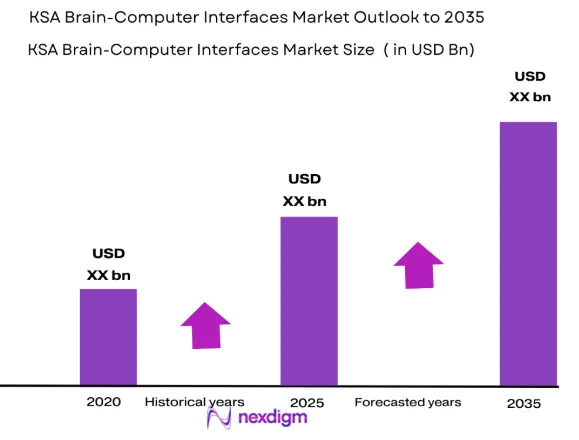
The KSA Brain-Computer Interfaces market demonstrates a rapidly emerging valuation, supported by increasing adoption of neurotechnology solutions across healthcare and defense sectors. Based on a recent historical assessment, the market size reached approximately USD ~ billion, driven by rising investments in advanced medical technologies, expansion of digital health infrastructure, and growing prevalence of neurological disorders. Strategic funding from public and private stakeholders, along with integration of artificial intelligence into neurodevices, has significantly accelerated commercialization and clinical adoption.
Riyadh and Jeddah dominate the KSA Brain-Computer Interfaces market due to their advanced healthcare ecosystems, concentration of specialized hospitals, and strong government-backed innovation programs. Riyadh benefits from national-level policy initiatives and funding mechanisms supporting neurotechnology research, while Jeddah leverages its established medical tourism infrastructure and international collaborations. Additionally, emerging development zones such as NEOM are fostering technological innovation, positioning these regions as central hubs for BCI deployment and clinical research advancement.
Market Segmentation
By System Type
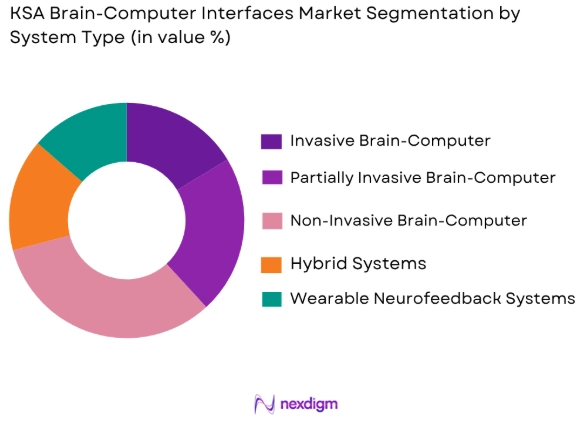
KSA Brain-Computer Interfaces market is segmented by product type into invasive brain-computer interfaces, partially invasive brain-computer interfaces, non-invasive brain-computer interfaces, hybrid systems, and wearable neurofeedback systems. Recently, non-invasive brain-computer interfaces has a dominant market share due to factors such as ease of use, lower risk profile, wider adoption in clinical and research settings, and cost-effectiveness. The increasing demand for wearable and portable neurotechnology devices in rehabilitation and consumer applications has further strengthened this segment’s position. Additionally, technological advancements in EEG-based systems and improved signal processing capabilities have enabled non-invasive solutions to achieve higher accuracy, making them more accessible and scalable across multiple end-user segments.
By End User
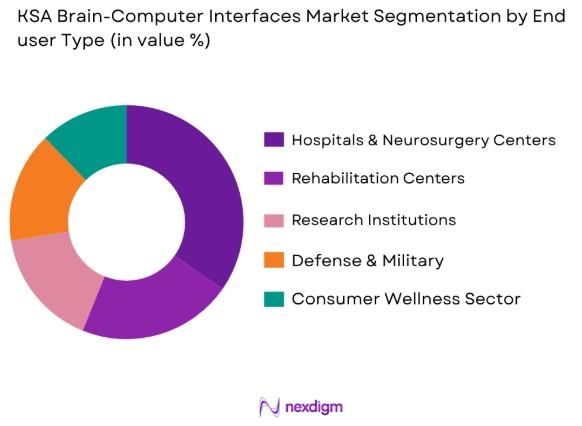
KSA Brain-Computer Interfaces market is segmented by product type into hospitals & neurosurgery centers, rehabilitation centers, research institutions, defense & military, and consumer wellness sector. Recently, hospitals & neurosurgery centers has a dominant market share due to factors such as increasing surgical applications, availability of specialized professionals, and integration of BCI systems in advanced treatment protocols. The growing burden of neurological conditions and the need for precision-based interventions have led hospitals to invest heavily in BCI technologies. Furthermore, strong government funding for healthcare modernization and the establishment of specialized neurocare units have reinforced the leadership of this segment within the national market landscape.
Competitive Landscape
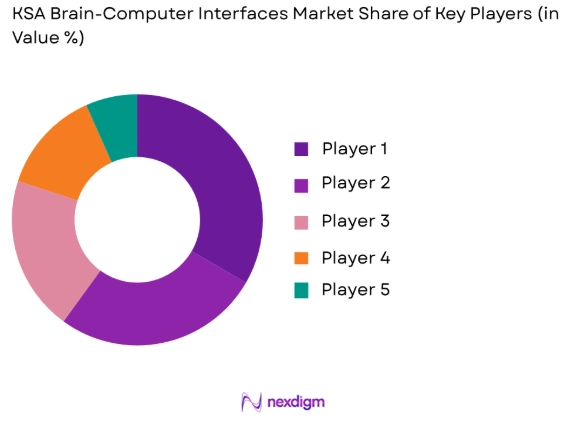
The KSA Brain-Computer Interfaces market is moderately consolidated, with global neurotechnology firms and specialized startups competing alongside regional distributors and healthcare integrators. Major players influence innovation through proprietary technologies, strategic partnerships, and clinical trials, while local entities focus on distribution and implementation. The competitive intensity is driven by advancements in AI integration, regulatory approvals, and investment in R&D, leading to continuous product innovation and differentiation.
| Company Name | Establishment Year | Headquarters | Technology Focus | Market Reach | Key Products | Revenue | Clinical Trial Presence |
| Neuralink Corporation | 2016 | USA | ~ | ~ | ~ | ~ | ~ |
| Blackrock Neurotech | 2008 | USA | ~ | ~ | ~ | ~ | ~ |
| Synchron Inc. | 2016 | USA | ~ | ~ | ~ | ~ | ~ |
| Kernel Inc. | 2016 | USA | ~ | ~ | ~ | ~ | ~ |
| Emotiv Inc. | 2011 | USA | ~ | ~ | ~ | ~ | ~ |
KSA Brain-Computer Interfaces Market Analysis
Growth Drivers
Government-Backed Digital Health and Neurotechnology Investments
The increasing allocation of financial resources by national authorities toward digital healthcare transformation is significantly accelerating the adoption of brain-computer interface technologies in Saudi Arabia. These investments are aligned with long-term economic diversification strategies that emphasize advanced technologies such as artificial intelligence, robotics, and neuroengineering. Public sector initiatives are facilitating the establishment of specialized neuroscience centers, funding clinical trials, and enabling partnerships between healthcare providers and global technology firms. The expansion of healthcare infrastructure is creating a favorable environment for the deployment of BCI systems in hospitals and rehabilitation facilities. Additionally, government-backed innovation hubs are supporting startups focused on neurotechnology, fostering local expertise and reducing reliance on imports. The availability of funding is also encouraging multinational companies to enter the market, increasing competition and technological advancement. Furthermore, integration of BCI technologies into national healthcare frameworks is improving accessibility for patients with neurological disorders. The alignment of regulatory frameworks with international standards is enhancing market confidence and attracting foreign direct investment. Overall, sustained governmental support is acting as a primary catalyst for market growth by enabling large-scale adoption and innovation.
Rising Prevalence of Neurological Disorders and Demand for Advanced Therapies
The growing incidence of neurological conditions such as stroke, epilepsy, and neurodegenerative diseases is driving demand for advanced diagnostic and therapeutic solutions, including brain-computer interfaces. This increasing disease burden is placing pressure on healthcare systems to adopt innovative technologies that can improve patient outcomes and reduce long-term care costs. BCIs offer significant potential in restoring motor functions, enabling communication for paralyzed patients, and enhancing rehabilitation processes. The demand for personalized and precision medicine is further contributing to the adoption of BCI systems, as these technologies allow for real-time monitoring and intervention. Healthcare providers are increasingly investing in neurotechnology to enhance treatment capabilities and differentiate their services. Additionally, rising awareness among patients and clinicians regarding the benefits of BCI solutions is supporting market expansion. The integration of artificial intelligence with BCI systems is improving accuracy and efficiency, making them more viable for widespread use. As the population ages and chronic conditions become more prevalent, the need for advanced neurotherapeutic solutions is expected to intensify. This trend is reinforcing the role of BCIs as a critical component of modern healthcare infrastructure.
Market Challenges
High Cost and Limited Accessibility of Advanced BCI Systems
The significant cost associated with the development, deployment, and maintenance of brain-computer interface technologies remains a major barrier to widespread adoption in Saudi Arabia. These systems require sophisticated hardware, specialized software, and highly skilled professionals, all of which contribute to elevated operational expenses. The high cost limits accessibility for smaller healthcare facilities and restricts usage primarily to well-funded institutions and research centers. Additionally, invasive BCI systems involve complex surgical procedures, further increasing overall treatment costs and limiting patient acceptance. The lack of reimbursement frameworks for such advanced technologies also poses a challenge, as patients may need to bear substantial out-of-pocket expenses. Furthermore, the import dependency on advanced components increases pricing volatility and supply chain risks. Limited economies of scale in the early stages of market development further exacerbate cost challenges. As a result, the adoption rate of BCI technologies remains constrained despite their potential benefits. Addressing cost-related barriers is essential for achieving broader market penetration and ensuring equitable access to these advanced solutions.
Ethical, Regulatory, and Data Privacy Concerns in Neural Technologies
The deployment of brain-computer interfaces raises complex ethical and regulatory issues that can hinder market growth and adoption. These concerns include data privacy, consent, and the potential misuse of neural data, which is highly sensitive and personal in nature. Regulatory frameworks governing neurotechnology are still evolving, creating uncertainty for manufacturers and healthcare providers. The lack of standardized guidelines for the development and use of BCI systems can lead to inconsistencies in quality and safety. Additionally, ethical considerations related to cognitive enhancement and human augmentation are generating debate among policymakers and the public. These concerns can slow down regulatory approvals and delay commercialization efforts. The integration of artificial intelligence with BCI systems further complicates the regulatory landscape, as it introduces additional layers of complexity in data handling and decision-making processes. Building trust among stakeholders is critical for overcoming these challenges and ensuring responsible adoption of neurotechnology. Addressing ethical and regulatory issues will require collaboration between governments, industry players, and research institutions.
Opportunities
Expansion of Non-Invasive and Wearable BCI Applications
The growing demand for non-invasive and wearable brain-computer interface solutions presents significant opportunities for market expansion in Saudi Arabia. These technologies offer a safer and more accessible alternative to invasive systems, making them suitable for a wider range of applications, including rehabilitation, gaming, and wellness. Advances in sensor technology and signal processing are improving the performance and reliability of non-invasive BCIs, enabling their use in real-world environments. The increasing popularity of wearable health devices is also driving consumer interest in neurotechnology solutions. Companies are investing in the development of user-friendly and portable BCI systems that can be integrated with smartphones and other digital platforms. This trend is creating new revenue streams and expanding the addressable market beyond traditional healthcare settings. Additionally, the adoption of non-invasive BCIs in educational and training applications is opening new avenues for growth. As technology continues to evolve, the potential applications of wearable BCIs are expected to expand further, driving innovation and market development.
Integration of BCI with Artificial Intelligence and Smart Infrastructure
The convergence of brain-computer interface technology with artificial intelligence and smart infrastructure is creating transformative opportunities in the Saudi market. AI-driven analytics are enhancing the ability of BCI systems to interpret complex neural signals, improving accuracy and responsiveness. This integration is enabling the development of advanced applications such as predictive healthcare, adaptive rehabilitation, and cognitive enhancement. Smart city initiatives and digital transformation programs are providing a supportive ecosystem for the deployment of BCI technologies. The incorporation of BCIs into connected healthcare systems is facilitating real-time data exchange and remote monitoring, improving patient care and operational efficiency. Additionally, partnerships between technology companies and healthcare providers are accelerating innovation and commercialization. The use of BCIs in defense and security applications is also gaining traction, driven by the need for enhanced human-machine interaction. As the integration of AI and BCI technologies continues to advance, it is expected to unlock new capabilities and drive significant market growth. This convergence represents a key opportunity for stakeholders to differentiate their offerings and capture value in the evolving neurotechnology landscape.
Future Outlook
The KSA Brain-Computer Interfaces market is expected to witness substantial growth over the next five years, driven by advancements in neurotechnology, increasing healthcare investments, and supportive regulatory frameworks. The integration of artificial intelligence and wearable technologies is likely to enhance product capabilities and expand application areas. Demand from healthcare, defense, and consumer sectors is anticipated to rise steadily. Additionally, ongoing innovation and infrastructure development will further strengthen market expansion.
Major Players
- Neuralink Corporation
- Blackrock Neurotech
- SynchronInc.
- Kernel Inc.
- EmotivInc.
- NeuroSkyInc
- OpenBCI
- Cognixion
- BrainCoInc.
- MindMaze SA
- NextMind (Snap Inc.)
- ANT Neuro
- g.tec medical engineering GmbH
- Compumedics Limited
- Advanced Brain Monitoring Inc.
Key Target Audience
- Healthcare Providers
- Medical Device Manufacturers
- DefenseOrganizations
- Investments and venture capitalist firms
- Government and regulatory bodies
- Technology Integrators
- RehabilitationCenters
- Private Hospitals
Research Methodology
Step 1: Identification of Key Variables
Key variables influencing the KSA Brain-Computer Interfaces market were identified through secondary research, including technology adoption rates, healthcare infrastructure, and investment trends. These variables were refined to ensure relevance and accuracy in market estimation.
Step 2: Market Analysis and Construction
The market was constructed using a combination of top-down and bottom-up approaches, integrating data from industry reports, company financials, and government publications. This ensured a comprehensive understanding of market dynamics and segmentation.
Step 3: Hypothesis Validation and Expert Consultation
Initial findings were validated through consultations with industry experts, including healthcare professionals and technology specialists. Feedback was incorporated to refine assumptions and enhance the reliability of the analysis.
Step 4: Research Synthesis and Final Output
All validated data and insights were synthesized into a structured report, ensuring consistency and accuracy. Final outputs were reviewed for coherence, completeness, and alignment with research objectives.

- Executive Summary
- Research Methodology (Definitions, Scope, Industry Assumptions, Market Sizing Approach, Primary & Secondary Research Framework, Data Collection & Verification Protocol, Analytic Models & Forecast Methodology, Limitations & Research Validity Checks)

- Market Definition and Scope
- Value Chain & Stakeholder Ecosystem
- Regulatory / Certification Landscape
- Sector Dynamics Affecting Demand
- Strategic Initiatives & Infrastructure Growth

- Growth Drivers
Increasing investments in neurotechnology and digital healthcare infrastructure
Rising prevalence of neurological disorders and demand for advanced treatment solutions
Government initiatives supporting AI and healthcare innovation in Saudi Arabia - Market Challenges
High cost and complexity of invasive BCI systems
Ethical concerns and data privacy issues related to neural data
Limited availability of skilled professionals and technical expertise - Market Opportunities
Expansion of BCI applications in rehabilitation and assistive technologies
Integration with AI, IoT, and smart healthcare ecosystems
Growing demand in defense and human augmentation programs - Trends
Shift toward non-invasive and wearable BCI technologies
Adoption of AI-driven neural signal processing
Increasing collaboration between healthcare providers and tech companies - Government Regulations
- SWOT Analysis of Key Competitors
- Porter’s Five Forces

- By Market Value, 2020-2025
- By Installed Units, 2020-2025
- By Average System Price, 2020-2025
- By System Complexity Tier, 2020-2025

- By System Type (In Value%)
Invasive Brain-Computer Interfaces
Partially Invasive Brain-Computer Interfaces
Non-Invasive Brain-Computer Interfaces
Hybrid Brain-Computer Systems
Wearable Neurofeedback Systems - By Platform Type (In Value%)
Hardware Platforms
Software & Analytics Platforms
Cloud-Based BCI Platforms
AI-Integrated Neuroprocessing Platforms
Mobile & Wearable BCI Platforms - By Fitment Type (In Value%)
Implantable Systems
External Wearable Devices
Head-Mounted Systems
Portable Handheld Systems
Clinical Stationary Systems - By End User Segment (In Value%)
Hospitals & Neurosurgery Centers
Rehabilitation Centers
Research & Academic Institutions
Defense & Military Organizations
Consumer Wellness & Gaming Sector - By Procurement Channel (In Value%)
Direct Institutional Procurement
Government Tenders & Contracts
Distributor & Channel Partners
Online Medical Equipment Platforms
Research Grants & Collaborative Funding

- Market Share Analysis
- Cross Comparison Parameters (Technology Capability, Product Portfolio Diversity, Regional Presence, R&D Investment, Strategic Partnerships, Signal Processing Accuracy, Interface Type Coverage, Software Integration, Real-time Performance, Device Usability, Regulatory Compliance, Market Presence, Clinical Application Range, Scalability, After-sales Support)
- SWOT Analysis of Key Competitors
- Pricing & Procurement Analysis
- Key Players
Neuralink Corporation
Blackrock Neurotech
Synchron Inc.
Kernel Inc.
Emotiv Inc.
NeuroSky Inc.
OpenBCI
Cognixion
BrainCo Inc.
MindMaze SA
NextMind (Snap Inc.)
ANT Neuro
g.tec medical engineering GmbH
Compumedics Limited
Advanced Brain Monitoring Inc.

- Hospitals adopting BCIs for advanced neurosurgical procedures
- Rehabilitation centers utilizing BCIs for motor recovery therapies
- Research institutions driving innovation and clinical trials
- Defense sector exploring cognitive enhancement applications

- By Market Value, 2026-2035
- By Installed Units, 2026-2035
- By Average System Price, 2026-2035
- By System Complexity Tier, 2026-2035


 Request a Sample
 Ask for Customization
 Get a Quote
 Enquire Now