

 Download PDF
 Download PDF
Market Overview
The KSA Bulletproof Vest market current size stands at around USD ~ million, supported by procurement volumes exceeding ~ units and active deployments near ~ units. Demand intensity reflects equipment refresh cycles of 3 and 5 years, with protection levels ranging across 2, 3, and 4 standards. Operational requirements emphasize weight reductions of 15 and 20 percent, while mission readiness metrics highlight utilization rates above 80 percent across frontline units.
Demand concentration is strongest in Riyadh, Eastern Province, and Western urban corridors, driven by dense security infrastructure and strategic asset protection needs. These regions benefit from mature defense ecosystems, centralized procurement authorities, and advanced testing facilities. Policy emphasis on localization, coupled with integrated military bases and industrial zones, reinforces supplier presence. Border-adjacent regions show rising adoption due to patrol intensity, while specialized units cluster near critical energy and transport infrastructure hubs.
Market Segmentation
By Product Type
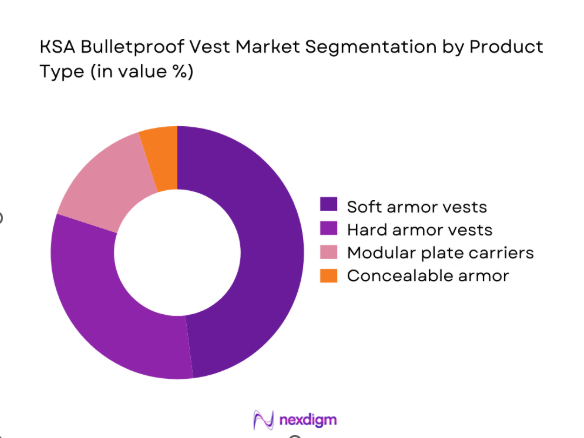
Soft armor vests dominate adoption due to flexibility, thermal comfort, and suitability for routine patrol and urban security operations. Usage intensity remains high among law enforcement and internal security units requiring extended wear durations. Hard armor and modular plate carrier systems follow, driven by tactical missions and elevated threat environments. Replacement cycles differ significantly, with soft armor averaging shorter service life. Procurement decisions prioritize adaptability, compatibility with existing gear, and compliance with national ballistic standards, reinforcing product differentiation across operational roles.
By End User
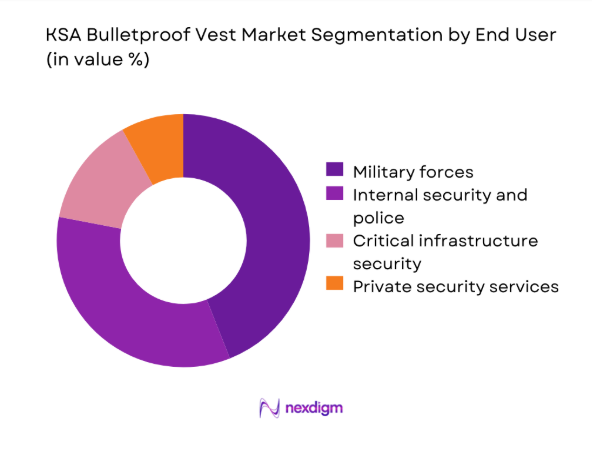
Defense forces represent the largest end-user segment, reflecting sustained modernization initiatives and structured replacement programs. Internal security agencies maintain consistent demand linked to urban policing and counterterror operations. Critical infrastructure operators increasingly procure armor for facility protection teams, influenced by risk mitigation frameworks. Private security adoption remains selective, focused on high-value assets. End-user preferences emphasize reliability, lifecycle support, and interoperability with communication and load-bearing systems, shaping procurement specifications and supplier qualification processes.
Competitive Landscape
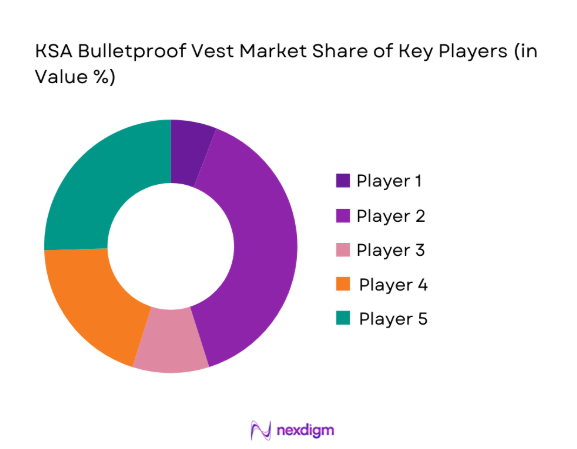
The competitive environment features a mix of global armor specialists and regionally anchored manufacturers aligned with localization objectives. Differentiation centers on material technology, certification readiness, and ability to meet government procurement protocols.
| Company Name | Establishment Year | Headquarters | Formulation Depth | Distribution Reach | Regulatory Readiness | Service Capability | Channel Strength | Pricing Flexibility |
| BAE Systems | 1999 | United Kingdom | ~ | ~ | ~ | ~ | ~ | ~ |
| DuPont | 1802 | United States | ~ | ~ | ~ | ~ | ~ | ~ |
| Honeywell International | 1906 | United States | ~ | ~ | ~ | ~ | ~ | ~ |
| Point Blank Enterprises | 1973 | United States | ~ | ~ | ~ | ~ | ~ | ~ |
| MKU Limited | 1985 | India | ~ | ~ | ~ | ~ | ~ | ~ |
KSA Bulletproof Vest Market Analysis
Growth Drivers
Rising defense and internal security spending in Saudi Arabia
Increased allocation cycles during 2024 and 2025 strengthened procurement continuity across defense and internal security institutions nationwide. Budget prioritization favored personal protection upgrades, reflecting heightened readiness benchmarks and evolving threat assessments across multiple operational theaters. Procurement frameworks emphasized lifecycle sustainment, driving repeat orders and structured replacement planning across military and policing units. Centralized purchasing improved volume consolidation, enabling standardized specifications and broader deployment consistency. Security modernization agendas reinforced integration of advanced protection solutions within broader equipment programs. Demand resilience persisted despite fiscal optimization, indicating strategic importance of force protection investments. Multi-year programs created predictable acquisition pipelines, stabilizing supplier engagement and production planning. Inter-agency coordination improved alignment between defense and homeland security equipment standards. Increased training intensity elevated wear rates, accelerating replacement demand across frontline personnel. Strategic spending alignment supported continuous capability enhancement without disruptive procurement gaps.
Modernization of soldier and law enforcement personal protection equipment
Equipment modernization initiatives accelerated adoption of next-generation armor designs during 2024 and 2025 across operational units. Programs emphasized ergonomic improvements, reducing fatigue and improving mobility during extended missions. Compatibility with communication and load-bearing systems became a central requirement within modernization roadmaps. Standardization efforts reduced fragmentation across legacy equipment inventories. Field feedback loops informed iterative upgrades, improving acceptance among end users. Modernization aligned with broader digitization and soldier system integration strategies. Procurement specifications increasingly referenced modularity and scalability attributes. Training curricula adapted to incorporate new protective equipment handling and maintenance. Modernization cycles supported incremental upgrades rather than disruptive overhauls. These initiatives collectively reinforced sustained demand momentum across procurement authorities.
Challenges
High cost of advanced ballistic materials and imported components
Advanced ballistic fibers and ceramic components continued to rely on international supply chains during 2024 and 2025. Import dependence exposed procurement budgets to currency and logistics variability. Limited local raw material availability constrained rapid cost optimization. Specialized manufacturing requirements restricted supplier diversification options. Long qualification timelines increased holding costs for approved materials. Inventory buffering became necessary to mitigate supply disruptions. Cost pressures influenced specification trade-offs between weight reduction and affordability. Smaller procurement batches reduced economies of scale benefits. Localization efforts progressed gradually, limiting immediate cost relief. These factors collectively pressured procurement efficiency and planning flexibility.
Stringent certification and testing requirements
Ballistic certification protocols imposed rigorous testing timelines across 2024 and 2025 procurement cycles. Compliance with national and international standards extended product qualification durations. Testing capacity constraints created scheduling bottlenecks for new designs. Documentation and audit requirements increased administrative workload for suppliers. Minor design modifications often triggered full revalidation processes. Certification costs added to overall program complexity. Delays impacted deployment schedules for newly configured units. Coordination between testing bodies and procurement agencies required continuous alignment. Smaller suppliers faced higher barriers to entry due to compliance intensity. These requirements reinforced quality assurance but constrained market agility.
Opportunities
Expansion of local manufacturing under Vision 2030 localization mandates
Localization mandates during 2024 and 2025 encouraged establishment of domestic assembly and manufacturing capabilities. Policy incentives supported technology transfer and joint ventures with global armor specialists. Local production reduced lead times and improved supply reliability. Workforce development programs strengthened technical manufacturing skills. Domestic facilities enabled faster customization for operational requirements. Localization improved alignment with government procurement preferences. Incremental indigenization reduced long-term import dependency risks. Proximity to end users enhanced after-sales support responsiveness. Local manufacturing supported strategic autonomy objectives. These dynamics positioned localization as a structural growth lever.
Adoption of lightweight composite and hybrid armor technologies
Technological advancements accelerated adoption of lightweight composite solutions during 2024 and 2025. Hybrid material architectures balanced protection levels with mobility requirements. Reduced weight improved endurance in high-temperature operating environments. Advances in material science enhanced multi-threat protection capabilities. Composite innovations supported modular armor configurations. End users reported improved comfort and operational efficiency. Technology adoption aligned with modernization objectives. Development cycles shortened through collaborative testing frameworks. Lightweight solutions expanded applicability across diverse mission profiles. These innovations created differentiation opportunities for technologically advanced suppliers.
Future Outlook
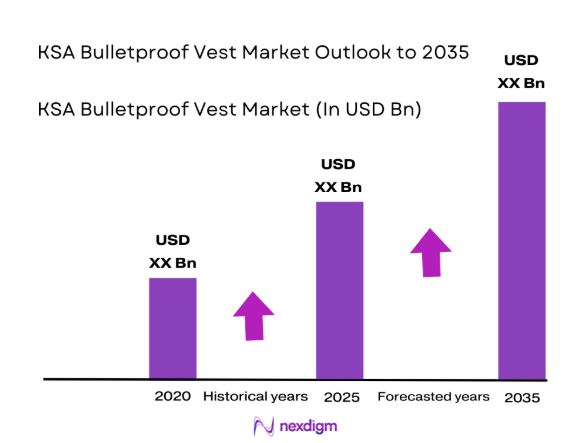
The KSA Bulletproof Vest market is expected to evolve steadily through 2035, supported by sustained security modernization priorities. Localization initiatives will deepen, enhancing domestic capabilities and supply resilience. Technological innovation will emphasize lighter, modular, and integrated protection systems. Procurement frameworks are likely to favor long-term partnerships and lifecycle support models.
Major Players
- BAE Systems
- DuPont
- Honeywell International
- 3M
- Point Blank Enterprises
- Safariland Group
- ArmorSource
- Survitec Group
- Avon Protection
- Rheinmetall Defence
- MKU Limited
- NP Aerospace
- CoorsTek Defense
- Teijin Aramid
- Saudi Arabian Military Industries
Key Target Audience
- Ministry of Defense Saudi Arabia
- Ministry of Interior Saudi Arabia
- Saudi Arabian Military Industries procurement units
- National Guard procurement departments
- Critical infrastructure security operators
- Private security service providers
- Defense equipment distributors and integrators
- Investments and venture capital firms focused on defense manufacturing
Research Methodology
Step 1: Identification of Key Variables
The study defined protection levels, end-user categories, and deployment contexts relevant to Saudi security forces. Emphasis was placed on operational usage patterns and replacement cycles. Regulatory and certification frameworks were incorporated to bound scope assumptions.
Step 2: Market Analysis and Construction
Segmentation structures were developed based on product type and end-user demand logic. Qualitative indicators from procurement cycles and modernization programs informed market structure development. Data normalization ensured consistency across segments.
Step 3: Hypothesis Validation and Expert Consultation
Insights were validated through structured discussions with procurement specialists and armor system integrators. Feedback focused on technology adoption, localization progress, and operational requirements. Assumptions were refined to reflect on-ground realities.
Step 4: Research Synthesis and Final Output
Findings were synthesized into a cohesive analytical narrative. Cross-verification ensured alignment between qualitative drivers and structural trends. The final output emphasizes decision-relevant insights and strategic clarity.

- Executive Summary
- Research Methodology (Market Definitions and scope aligned to NIJ ballistic protection standards and KSA defense procurement categories, Product taxonomy mapping across soft armor and hard armor vest configurations used by KSA forces, Bottom-up market sizing using unit procurement volumes from defense and internal security tenders, Revenue attribution by armor class pricing and contract-level ASP normalization, Primary interviews with KSA MoD, MISA-registered suppliers and certified armor integrators, Data triangulation across tender disclosures, customs imports and local manufacturing capacity, Assumptions covering threat level mix, replacement cycles and localization mandates)

- Definition and scope of ballistic protection vests in the KSA security and defense context
- Market evolution driven by internal security modernization and regional threat dynamics
- Usage patterns across military, law enforcement and critical infrastructure protection
- Industry ecosystem including raw material suppliers, armor panel manufacturers and vest integrators
- Supply chain structure with increasing local assembly and Vision 2030 localization focus
Regulatory and certification environment including NIJ standards and Saudi defense procurement rules

- Growth Drivers
Rising defense and internal security spending in Saudi Arabia
Modernization of soldier and law enforcement personal protection equipment
Regional geopolitical tensions and asymmetric threat environment
Vision 2030-driven localization of defense manufacturing
Increased focus on force survivability and mobility
Procurement programs for border and critical infrastructure security - Challenges
High cost of advanced ballistic materials and imported components
Stringent certification and testing requirements
Dependence on foreign technology for high-level armor
Lengthy government procurement and tender cycles
Weight and comfort trade-offs impacting user acceptance
Limited local raw material supply for ballistic fibers - Opportunities
Expansion of local manufacturing under Vision 2030 localization mandates
Adoption of lightweight composite and hybrid armor technologies
Growing demand from private security and infrastructure operators
Customization of armor solutions for desert and high-temperature environments
Strategic partnerships between global armor OEMs and Saudi firms
Lifecycle replacement demand from existing installed base - Trends
Shift toward modular and scalable vest systems
Increasing use of lightweight UHMWPE and advanced ceramic plates
Integration of armor with wearable soldier systems
Rising emphasis on ergonomics and heat management
Local assembly and partial indigenization of armor components
Preference for multi-threat protection capabilities - Government Regulations
SWOT Analysis
Stakeholder and Ecosystem Analysis
Porter’s Five Forces Analysis
Competition Intensity and Ecosystem Mapping

- By Value, 2020–2025
- By Volume, 2020–2025
- By Installed Base, 2020–2025
- By Average Selling Price, 2020–2025

- By Fleet Type (in Value %)
Military combat units
Internal security forces
Border and coastal security units
Critical infrastructure protection units
Private security fleets - By Application (in Value %)
Ballistic threat protection
Riot and civil disturbance control
Counter-terrorism operations
VIP and executive protection
Training and reserve stockpiles - By Technology Architecture (in Value %)
Soft armor vests
Hard armor plate carrier vests
Modular and scalable armor systems
Concealable armor solutions - By End-Use Industry (in Value %)
Defense
Homeland security and police
Oil and gas infrastructure security
Government facilities and public safety
Private security services - By Connectivity Type (in Value %)
Non-connected standalone armor
Integrated wearable systems with sensors
Body-worn system compatible armor - By Region (in Value %)
Central Region
Western Region
Eastern Region
Southern Region
Northern Region

- Market structure and competitive positioning
- Market share snapshot of major players
Cross Comparison Parameters (Ballistic protection level, Material technology, Weight and ergonomics, Localization and offset compliance, Pricing and contract flexibility, Certification and testing compliance, Production capacity and lead time, After-sales and lifecycle support) - SWOT Analysis of Key Players
- Pricing and Commercial Model Benchmarking
- Detailed Profiles of Major Companies
BAE Systems
DuPont
Honeywell International
3M
Point Blank Enterprises
Safariland Group
ArmorSource
Survitec Group
Avon Protection
Rheinmetall Defence
MKU Limited
NP Aerospace
CoorsTek Defense
Teijin Aramid
Saudi Arabian Military Industries

- Operational threat assessment and mission-specific demand drivers
- Government procurement, tenders and offset requirements
- Buying criteria including protection level, weight and compliance standards
- Budget allocation within defense and internal security programs
- Implementation challenges related to training and fitment
- After-sales support, warranty and replacement expectations

- By Value, 2026–2035
- By Volume, 2026–2035
- By Installed Base, 2026–2035
- By Average Selling Price, 2026–2035


 Request a Sample
 Ask for Customization
 Get a Quote
 Enquire Now