

 Download PDF
Market Overview
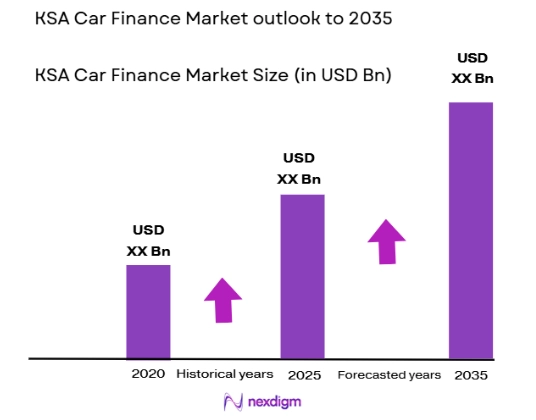
The KSA car finance market has experienced substantial growth, reaching a market size of USD ~ billion. The market is primarily driven by an increase in demand for personal vehicles, supported by favorable financial products and government policies promoting vehicle ownership. The rise in disposable income among consumers, along with a growing preference for flexible payment terms, has further fueled the demand. As financing options expand, more consumers are opting for accessible credit facilities to purchase vehicles, contributing to the overall market expansion.
Saudi Arabia dominates the car finance market due to its large population, rapid urbanization, and strong automotive sector. Key cities like Riyadh, Jeddah, and Dammam play a significant role in driving the demand, with higher vehicle ownership rates and increased access to financing services. Additionally, the government’s initiatives to diversify the economy and expand infrastructure contribute to the growing demand for automobiles. These factors combined position Saudi Arabia as the primary leader in the regional automotive financing landscape.
Market Segmentation
By Product Type
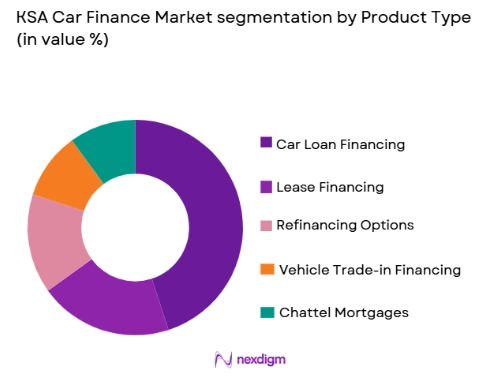
KSA car finance market is segmented by product type into car loan financing, lease financing, refinancing options, vehicle trade-in financing, and chattel mortgages. The dominant sub-segment, car loan financing, holds a major share of the market due to its wide availability and the affordability it offers to individuals seeking vehicle ownership. With a stable income and strong bank relationships, consumers prefer long-term car loans as they provide manageable monthly payments and access to a wider range of vehicles. Financial institutions offer a variety of attractive terms, further boosting demand for car loans.
By Platform Type
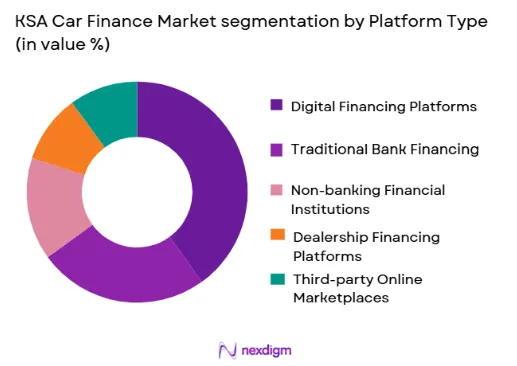
KSA car finance market is segmented by platform type into digital financing platforms, traditional bank financing, non-banking financial institutions, dealership financing platforms, and third-party online marketplaces. The digital financing platforms sub-segment has recently emerged as the dominant player in the market due to its ease of access, faster processing, and the growing adoption of online services by younger generations. The convenience of applying for car loans via mobile apps or websites has shifted customer preferences, making digital platforms the preferred choice for many car buyers.
Competitive Landscape
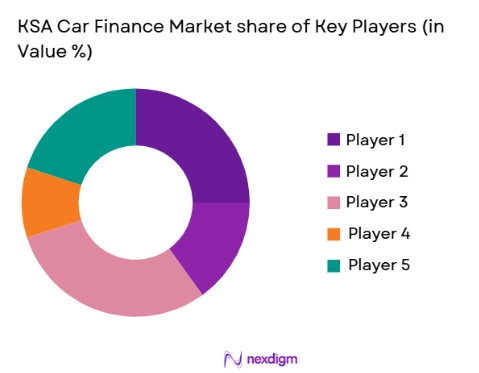
The competitive landscape of the KSA car finance market is evolving with both traditional financial institutions and fintech companies expanding their presence. The rise of digital platforms has led to increased competition, as both established banks and new fintech players aim to capture the attention of consumers seeking flexible financing solutions. Consolidation within the market is expected as more players partner with automakers and dealerships to offer competitive financing solutions, helping to meet the growing demand for vehicles.
| Company Name | Establishment Year | Headquarters | Technology Focus | Market Reach | Key Products | Revenue (USD) | Additional Parameter |
| Al Rajhi Bank | 1957 | Riyadh, Saudi Arabia | ~ | ~ | ~ | ~ | ~ |
| Samba Financial | 1980 | Riyadh, Saudi Arabia | ~ | ~ | ~ | ~ | ~ |
| National Commercial Bank | 1953 | Jeddah, Saudi Arabia | ~ | ~ | ~ | ~ | ~ |
| Alinma Bank | 2006 | Riyadh, Saudi Arabia | ~ | ~ | ~ | ~ | ~ |
| Riyad Bank | 1957 | Riyadh, Saudi Arabia | ~ | ~ | ~ | ~ | ~ |
KSA Car Finance Market Analysis
Growth Drivers
Government Initiatives for Car Ownership
The Saudi government’s initiatives to encourage vehicle ownership have significantly contributed to the growth of the car finance market. By providing subsidies and creating favorable policies, the government has made car loans more accessible, especially to the youth population. Additionally, financial institutions have aligned with these policies by introducing flexible financing options, including low-interest rates and extended repayment periods. This accessibility has increased the purchasing power of consumers, allowing them to buy vehicles more easily. Furthermore, the growing number of infrastructure projects and urban development plans has led to a rising demand for personal transportation, further accelerating the need for vehicle financing. As more government projects are initiated, this trend is expected to continue.
Shift Towards Digital Financing Solutions
The digital transformation of the financial sector has played a pivotal role in driving the growth of car finance in Saudi Arabia. With increasing mobile penetration and internet access, digital platforms have become the preferred method for obtaining car loans. Consumers now favor the convenience of applying for financing through digital channels, enabling faster approval and disbursement of loans. Additionally, fintech companies are leveraging technologies such as artificial intelligence and machine learning to streamline the loan approval process, reducing manual intervention and enhancing customer experiences. The integration of these technologies in car financing platforms allows financial institutions to offer more personalized solutions, further boosting the adoption of digital financing options. This transition is expected to be a major growth driver in the coming years.
Market Challenges
High Default Rates and Risk of Non-repayment
One of the primary challenges faced by the KSA car finance market is the risk of defaults and non-repayment by consumers. Despite the increasing availability of financing options, many borrowers struggle to meet their loan obligations, particularly in the face of economic instability or unexpected financial difficulties. Banks and other lending institutions face significant risks as the default rates rise, leading to increased costs associated with managing non-performing loans. To mitigate this, financial institutions must develop more effective risk management strategies and explore innovative credit scoring systems that account for a wider range of data. However, this remains a major challenge for the sector, especially as the car finance market continues to expand.
Limited Awareness of Alternative Financing Options
Another challenge in the KSA car finance market is the limited awareness of alternative financing options among consumers. While traditional car loan products are widely understood, alternative options such as lease financing or refinancing are not as well known. This lack of awareness hinders the ability of consumers to fully explore all available financing solutions. Financial institutions need to invest in consumer education and outreach efforts to promote these alternative options, helping potential borrowers make more informed decisions. Moreover, some consumers may not be fully aware of the benefits of digital financing platforms, preferring traditional methods that can be less efficient and more time-consuming. Overcoming this challenge requires strategic marketing and targeted campaigns to educate the public.
Opportunities
Expansion of Electric Vehicle Financing
As the global automotive industry shifts toward electric vehicles (EVs), Saudi Arabia is expected to see a similar transition in its car market. This shift presents a significant opportunity for car finance providers to offer specialized financing products for EVs. With increasing awareness of environmental issues and the introduction of government incentives for EV adoption, consumers are increasingly interested in making the switch to electric vehicles. Financial institutions can capitalize on this growing demand by developing tailored financing solutions that address the unique needs of EV buyers. By offering competitive interest rates and flexible repayment terms, car finance providers can position themselves as leaders in this emerging segment of the market. This opportunity is particularly appealing as the government’s focus on sustainability and green energy intensifies.
Growth of Car Subscription Services
Another opportunity in the KSA car finance market is the growth of car subscription services. These services allow consumers to pay a monthly fee for access to a vehicle, with the option to swap cars as needed. This model has gained traction in international markets and is now beginning to take root in Saudi Arabia. With the younger, tech-savvy generation preferring flexible ownership options, car subscription services provide an attractive alternative to traditional car buying or leasing. For financial institutions, this presents an opportunity to develop tailored financial products that support the subscription model. This innovation is likely to expand the market further, offering consumers an alternative means of accessing vehicles without the long-term commitment of traditional ownership.
Future Outlook
The future outlook for the KSA car finance market looks promising, with continued growth driven by a combination of digital transformation, government support, and changing consumer preferences. The increasing shift towards electric vehicles, along with the expansion of digital financing platforms, is expected to be a significant factor in shaping the market’s trajectory. Additionally, as the Saudi economy continues to diversify and urbanize, demand for personal vehicles will remain high, driving further growth in the sector. Financial institutions are likely to expand their offerings, focusing on innovative solutions to cater to the evolving needs of consumers.
Major Players
- Al Rajhi Bank
- Samba Financial
- National Commercial Bank
- Alinma Bank
- Riyad Bank
- Bank Albilad
- Saudi British Bank (SABB)
- Banque Saudi Fransi
- Arab National Bank
- Al Ahli Bank
- Jeddah Bank
- Saudi Investment Bank
- Al Jazeera Bank
- First Gulf Bank
- United Saudi Bank
Key Target Audience
- Investments and venture capitalist firms
- Government and regulatory bodies
- Automotive manufacturers and dealerships
- Car rental and leasing companies
- Fintech companies
- Banks and financial institutions
- Insurance companies
- Large fleet operators
Research Methodology
Step 1: Identification of Key Variables
We begin by identifying the primary drivers and constraints influencing the car finance market, including economic factors, consumer behavior, and regulatory changes.
Step 2: Market Analysis and Construction
Data is collected from multiple sources, including financial institutions, industry reports, and government publications, to build an accurate model of the market structure and dynamics.
Step 3: Hypothesis Validation and Expert Consultation
Expert opinions and industry insights are sought to validate the findings from market data, ensuring the accuracy and relevance of the research model.
Step 4: Research Synthesis and Final Output
The final research report is compiled, synthesizing all findings and providing actionable insights that help stakeholders make informed decisions.

- Executive Summary
- Research Methodology (Definitions, Scope, Industry Assumptions, Market Sizing Approach, Primary & Secondary Research Framework, Data Collection & Verification Protocol, Analytic Models & Forecast Methodology, Limitations & Research Validity Checks)

- Market Definition and Scope
- Value Chain & Stakeholder Ecosystem
- Regulatory / Certification Landscape
- Sector Dynamics Affecting Demand
- Strategic Initiatives & Infrastructure Growth

- Growth Drivers
Increase in Car Ownership Among Young Adults
Expansion of Digital Financing Platforms
Government Regulations Supporting Car Ownership
Development of Flexible Payment Plans
Integration of AI for Loan Processing - Market Challenges
High-Interest Rates Affecting Loan Affordability
Limited Awareness of Alternative Financing Options
Regulatory Hurdles in Financing Approval
Limited Digital Adoption in Rural Areas
Increased Risk of Default in Economic Downturn - Market Opportunities
Expansion of Electric Vehicle Financing
Partnerships Between Car Dealerships and Fintech Firms
Growth of Peer-to-Peer Lending Platforms - Trends
Rise in Digital Car Financing Platforms
Integration of AI and Machine Learning in Credit Scoring
Increasing Popularity of Subscription-Based Car Financing
Focus on Green and Electric Vehicle Financing
Shift Toward Contactless and Mobile Payments - Government Regulations & Defense Policy
Support for Green Car Financing Programs
Regulations on Loan Approval and Creditworthiness
Tax Incentives for Electric Vehicle Purchases - SWOT Analysis
- Stakeholder and Ecosystem Analysis
- Porter’s Five Forces Analysis
- Competition Intensity and Ecosystem Mapping

- By Market Value, 2020-2025
- By Installed Units, 2020-2025
- By Average System Price, 2020-2025
- By System Complexity Tier, 2020-2025

- By System Type (In Value%)
Car Loan Financing
Lease Financing
Refinancing Options
Vehicle Trade-in Financing
Chattel Mortgages - By Platform Type (In Value%)
Digital Financing Platforms
Traditional Bank Financing
Non-Banking Financial Institutions
Dealership Financing Platforms
Third-party Online Marketplaces - By Fitment Type (In Value%)
Fixed Rate Financing
Variable Rate Financing
Low-Interest Financing
Flexible Payment Options
Deferred Payment Plans - By EndUser Segment (In Value%)
Private Car Buyers
Fleet Operators
Car Dealerships
Leasing Companies
Car Rental Services - By Procurement Channel (In Value%)
Direct Bank Applications
Online Digital Platforms
Car Dealerships
Third-party Agents
Employer-sponsored Financing - By Material / Technology (In Value%)
Blockchain for Financing
Artificial Intelligence for Risk Assessment
Smart Contracts
Big Data for Market Trends
Mobile Payment Solutions

- Market structure and competitive positioning
- Market share snapshot of major players
- Cross Comparison Parameters (Interest Rates, Loan Terms, Digital Integration, Customer Service, Loan Approval Speed, Risk Assessment Models, Payment Flexibility, Online Presence, Brand Trust, Loan Accessibility)
- SWOT Analysis of Key Players
- Pricing & Procurement Analysis
- Key Players
Al Rajhi Bank
Samba Financial Group
National Commercial Bank (NCB)
Banque Saudi Fransi
Arab National Bank
Alinma Bank
Riyad Bank
Saudi Hollandi Bank
Al Bilad Bank
Saudi Investment Bank
Al Jazeera Bank
Abdul Latif Jameel Finance
Dallah Albaraka Group
STC Pay
Mobily Financial Services

- Private Car Buyers Seeking Affordable Loan Options
- Fleet Operators Looking for Flexible Financing
- Car Dealerships Expanding Financing Options for Customers
- Leasing Companies Adopting Innovative Payment Methods

- Forecast Market Value, 2026-2035
- Forecast Installed Units, 2026-2035
- Price Forecast by System Tier, 2026-2035
- Future Demand by Platform, 2026-2035


 Request a Sample
 Ask for Customization
 Get a Quote
 Enquire Now