

 Download PDF
 Download PDF
Market Overview
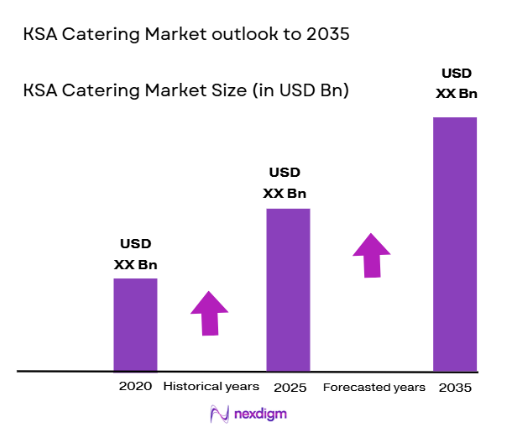
The KSA Catering market is expected to reach a substantial market size in 2024, driven by increasing demand for diverse catering solutions across various sectors such as corporate, healthcare, and education. The growing trend of outsourcing food services by organizations, coupled with a rise in event-based catering, contributes significantly to the market’s expansion. The market is expected to benefit from the growing population and urbanization, alongside the increase in private and government spending on dining services. Based on a recent historical assessment, the market is projected to be valued at approximately USD ~ billion by 2024.
In terms of dominant regions, cities like Riyadh, Jeddah, and Dammam play a major role due to their larger population densities and growing demand for diverse catering services. These cities boast a higher concentration of corporate offices, government institutions, healthcare facilities, and event venues, contributing to the higher catering service demand. The KSA government’s push for increased infrastructure development, along with rising disposable income and urbanization trends, further solidify the dominance of these cities in the catering market. These dynamics are expected to maintain the growth momentum within the market over the forecast period.
Market Segmentation
By Product Type
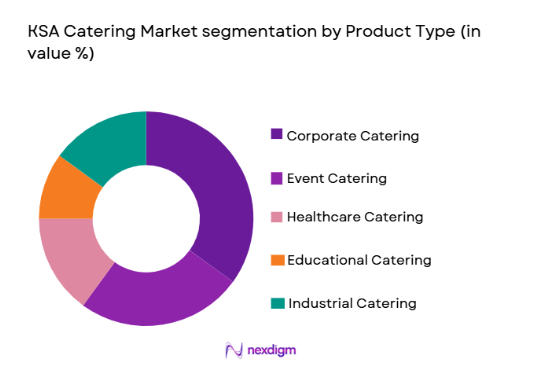
The KSA Catering market is segmented by product type into corporate catering, event catering, healthcare catering, educational catering, and industrial catering. Recently, corporate catering has a dominant market share due to factors such as the increasing demand from businesses for catering services in offices, seminars, conferences, and meetings. The presence of numerous multinational and local businesses in cities like Riyadh and Jeddah, alongside rising corporate events, has bolstered this segment’s growth. Additionally, a shift towards offering healthier and more diverse meal options has enhanced corporate catering’s attractiveness to a wide range of organizations.
By Platform Type
The KSA Catering market is segmented by platform type into online platforms, offline platforms, direct orders, contractual partnerships, and third-party vendors. Recently, online platforms have seen a significant rise in market share due to the convenience of digital ordering and the increased use of mobile applications for catering services. Businesses, especially in urban centers, prefer the flexibility and wide options offered by online platforms for event-based catering or daily corporate meals. The integration of AI and data analytics by online platforms to predict customer preferences has further driven the growth of this segment.

Competitive Landscape
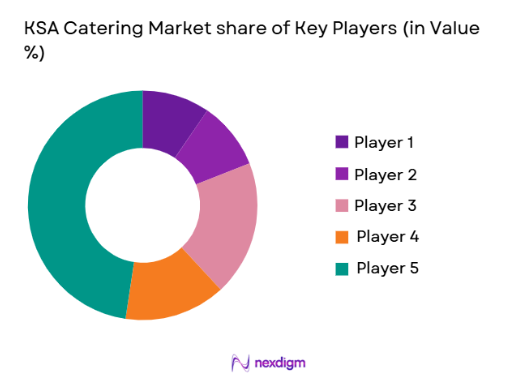
The competitive landscape of the KSA Catering market is marked by the presence of several large and medium-sized players, including both local and international catering providers. The market is experiencing consolidation, with major players expanding their market reach through strategic partnerships, acquisitions, and digital integration. This consolidation is driven by the growing demand for diverse catering services across sectors like healthcare, education, and corporate sectors, with leading companies constantly innovating to enhance their service offerings and customer satisfaction.
| Company Name | Establishment Year | Headquarters | Technology Focus | Market Reach | Key Products | Revenue (USD) | Additional Parameter |
| Almarai Catering | 1977 | Riyadh | ~ | ~ | ~ | ~ | ~ |
| Tamimi Markets | 1979 | Riyadh | ~ | ~ | ~ | ~ | ~ |
| Jumeirah Catering | 1997 | Dubai | ~ | ~ | ~ | ~ | ~ |
| Al Khorayef Group | 1976 | Riyadh | ~ | ~ | ~ | ~ | ~ |
| Sodexo | 1966 | Paris | ~ | ~ | ~ | ~ | ~ |
KSA Catering Market Analysis
Growth Drivers
Increased Demand for Health-Conscious Meals:
As consumer preferences shift towards healthier eating habits, catering services in Saudi Arabia are incorporating organic, gluten-free, and plant-based options in their offerings. This trend is being driven by the rising awareness of health and wellness, which is particularly prominent in the corporate sector, where employees are increasingly seeking nutritious and balanced meal options. This demand is further supported by the government’s health initiatives aimed at promoting healthier lifestyles across the population. The growing number of health-conscious individuals, particularly in urban areas like Riyadh, contributes to the expanding demand for catering services that offer such specialized meal options. This trend has prompted catering companies to partner with nutritionists and invest in sourcing high-quality, health-conscious ingredients. Moreover, the Saudi government’s focus on combating obesity and promoting wellness has encouraged the catering industry to align with these initiatives, ensuring that services offered meet regulatory health standards.
Rising Corporate Events and Conferences:
With the expanding corporate sector and an increase in business activities, the demand for catering services for corporate events, conferences, and meetings has surged. Saudi Arabia’s vision for economic diversification has led to an increase in business activities, which often require event management services, including catering. Large corporations are increasingly outsourcing catering to ensure that their events are managed efficiently and professionally. These events, ranging from small meetings to large-scale conferences, often feature a variety of food options to suit diverse tastes and dietary restrictions, driving demand for customized catering services. The influx of foreign investments and the establishment of international companies in Saudi Arabia further fuel this market segment. As business tourism grows in cities like Riyadh and Jeddah, catering companies are seizing the opportunity to expand their services for corporate clients and business travelers, which helps drive the growth of the market.
Market Challenges
Rising Operational Costs:
A significant challenge faced by catering companies in Saudi Arabia is the rising operational costs, including the prices of raw materials, transportation, and labor. This issue is particularly pressing as food prices fluctuate and suppliers demand higher prices for premium ingredients, which are increasingly demanded by the growing market for health-conscious meals. The cost of labor, especially skilled chefs and workers, continues to rise due to the competitive nature of the hospitality and foodservice industry in the region. Additionally, inflation and supply chain disruptions exacerbate these costs, making it more difficult for catering companies to maintain profitability while delivering high-quality services. As a result, companies are exploring ways to optimize operations through technological integration and supply chain management solutions to mitigate these challenges. However, the pressure on profit margins due to these increased costs remains a significant hurdle in the market’s development.
Regulatory Compliance and Licensing Issues:
The catering market in Saudi Arabia is governed by strict regulatory standards, particularly regarding food safety and hygiene. Catering companies must adhere to numerous health regulations set by the Saudi Food and Drug Authority (SFDA) and other local bodies. Obtaining the necessary licenses and certifications, maintaining food safety standards, and ensuring that employees are trained to meet these standards can be time-consuming and costly. Non-compliance with these regulations can result in hefty fines, service disruptions, or damage to a company’s reputation. Moreover, the regulatory environment is constantly evolving, making it challenging for catering businesses to keep up with new regulations and standards. This has led to an increase in compliance-related costs and operational delays, which could potentially hinder the growth of the market. Companies in the sector must stay proactive in navigating these regulations to avoid legal complications and maintain their operations smoothly.
Opportunities
Integration of Technology in Catering Services:
The integration of digital technology in the catering sector represents a significant opportunity for growth. Catering businesses are increasingly leveraging cloud-based systems, artificial intelligence (AI), and Internet of Things (IoT) to streamline operations and enhance customer experiences. These technologies allow catering companies to offer personalized meal options, better manage inventory, track customer preferences, and improve overall service efficiency. As digital platforms become more prevalent in Saudi Arabia, catering companies have the opportunity to expand their reach by providing online ordering systems, digital menus, and delivery options. Additionally, AI and machine learning can be utilized to predict demand trends and optimize production, ensuring that catering services are available when and where they are needed. The adoption of these technologies not only boosts efficiency but also opens new revenue streams for catering businesses, particularly as e-commerce continues to grow in the region.
Expansion into New Markets and Demographics:
With the growing diversification of Saudi Arabia’s economy and the rise of tourism and events, catering companies have ample opportunities to expand into new markets and demographics. One potential avenue for expansion is tapping into the increasing demand for catering services in the hospitality and entertainment sectors. With the government’s Vision 2030 plan, there is a significant focus on developing tourism and entertainment, which will increase the need for catering services at hotels, resorts, and entertainment venues. Catering companies can also focus on niche markets such as wedding catering, special events, and international cuisine, which are gaining popularity in Saudi Arabia. By catering to new demographics, such as expatriates and tourists, catering companies can diversify their client base and ensure steady demand for their services. The rising interest in luxury and bespoke experiences also provides an opportunity for catering businesses to offer premium services to high-end clientele.
Future Outlook
Over the next five years, the KSA Catering market is expected to experience robust growth driven by an increasing number of business events, demand for diverse meal options, and the integration of advanced technologies. The market is likely to benefit from the government’s push to diversify the economy and promote health-conscious eating habits. Rising disposable income and the increasing demand for customized catering solutions are expected to drive market demand. With continued infrastructure development and urbanization, the KSA Catering market is poised for expansion, particularly in large cities.
Major Players
- Almarai Catering
- Tamimi Markets
- Jumeirah Catering
- Al Khorayef Group
- Sodexo
- Saudi Aramco Catering Services
- Emirates Catering Services
- Delicious Catering
- Gulf Catering
- Swiss International Air Lines Catering
- Emirates Flight Catering
- Tunisian Catering Company
- Royal Catering
- Dabbagh Group
- Catering Services International
Key Target Audience
- Investments and venture capitalist firms
- Government and regulatory bodies
- Hospitality industry stakeholders
- Corporate event organizers
- Healthcare and educational institutions
- Foodservice equipment suppliers
- Catering service providers
- Non-governmental organizations (NGOs)
Research Methodology
Step 1: Identification of Key Variables
Understanding market dynamics, growth factors, and challenges specific to the KSA Catering market.
Step 2: Market Analysis and Construction
Data collection from primary and secondary sources to understand demand, supply, and market trends.
Step 3: Hypothesis Validation and Expert Consultation
Engaging industry experts and stakeholders to validate assumptions and forecasts.
Step 4: Research Synthesis and Final Output
Analyzing gathered data and producing a comprehensive market report with detailed insights.

- Executive Summary
- Research Methodology (Definitions, Scope, Industry Assumptions, Market Sizing Approach, Primary & Secondary Research Framework, Data Collection & Verification Protocol, Analytic Models & Forecast Methodology, Limitations & Research Validity Checks)

- Market Definition and Scope
- Value Chain & Stakeholder Ecosystem
- Regulatory / Certification Landscape
- Sector Dynamics Affecting Demand
- Strategic Initiatives & Infrastructure Growth

- Growth Drivers
Increasing Demand for Convenient Meal Solutions
Growing Trend of Corporate Catering Services
Expansion of Healthcare and Educational Institutions
Shift Towards Health-conscious and Sustainable Food Options
Increased Investment in Event and Wedding Catering - Market Challenges
Fluctuating Raw Material Prices
Regulatory Compliance and Health Standards
Lack of Skilled Labor in the Catering Industry
Intense Competition Among Catering Providers
Dependence on External Suppliers and Vendors - Market Opportunities
Adoption of Digital Platforms for Catering Services
Rising Demand for Customized and Themed Catering
Potential for International Expansion of Local Catering Services - Trends
Growth of Online Catering Platforms
Increase in Demand for Vegan and Organic Menus
Technological Advancements in Catering Equipment
Rising Popularity of Meal Subscription Services
Focus on Hygiene and Food Safety Standards - Government Regulations & Defense Policy
Regulations on Food Safety and Hygiene Standards
Government Initiatives to Promote Sustainable Catering
Import Restrictions on Food Products - SWOT Analysis
- Stakeholder and Ecosystem Analysis
- Porter’s Five Forces Analysis
- Competition Intensity and Ecosystem Mapping

- By Market Value, 2020-2025
- By Installed Units, 2020-2025
- By Average System Price, 2020-2025
- By System Complexity Tier, 2020-2025

- By System Type (In Value%)
Corporate Catering
Event Catering
Hospital Catering
Industrial Catering
Residential Catering - By Platform Type (In Value%)
Online Platforms
Offline Platforms
Direct Orders
Contractual Partnerships
Third-party Vendors - By Fitment Type (In Value%)
On-site Catering
Off-site Catering
Mobile Catering
Pre-packaged Catering
Full-service Catering - By EndUser Segment (In Value%)
Private Sector Organizations
Government Sector Organizations
Event Organizers
Healthcare Institutions
Educational Institutions - By Procurement Channel (In Value%)
Direct Procurement
Government Tenders
Corporate Partnerships
Online Bidding Platforms
Third-party Distributors - By Material / Technology (In Value%)
Sustainable Packaging
Automated Catering Equipment
Smart Kitchens
Energy-efficient Appliances
Organic Ingredients

- Market structure and competitive positioning
- Market share snapshot of major players
- CrossComparison Parameters (System Type, Platform Type, Procurement Channel, EndUser Segment, Fitment Type, Material/Technology, Regional Coverage, Pricing Strategy, Customer Satisfaction, Vendor Reputation)
- SWOT Analysis of Key Players
- Pricing & Procurement Analysis
- Key Players
Almarai Company
SADAFCO
Tamimi Markets
Al Khorayef Group
Al-Baik
Jumeirah Group
Riyadh Catering Company
Saudi Aramco Catering Services
Emirates Catering Services
Delicious Catering
Sodexo
Gulf Catering
Swiss International Air Lines Catering
Emirates Flight Catering
Tunisian Catering Company

- Private Sector’s Increased Budget for Employee Meals
- Government Organizations’ Demand for Large-Scale Catering
- Growth in Demand for Catering from Hospitals and Healthcare
- Educational Institutions Seeking Cost-Effective Catering Solutions

- Forecast Market Value, 2026-2035
- Forecast Installed Units, 2026-2035
- Price Forecast by System Tier, 2026-2035
- Future Demand by Platform, 2026-2035


 Request a Sample
 Ask for Customization
 Get a Quote
 Enquire Now