
 Download PDF
Market Overview
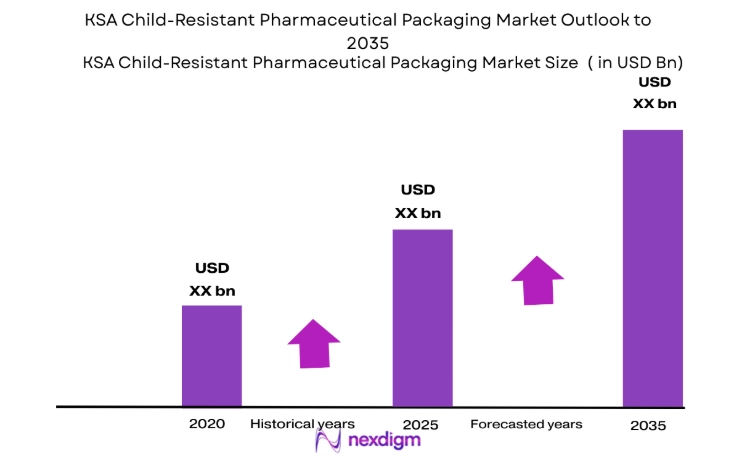
The KSA Child-Resistant Pharmaceutical Packaging Market is valued at USD ~ billion, driven by the increasing demand for packaging solutions that enhance child safety, driven by both regulatory standards and consumer preferences. Pharmaceutical companies and packaging manufacturers are responding to stricter government regulations concerning child safety, along with the growing need for packaging solutions that protect against accidental ingestion. The market growth is also fueled by the rising pharmaceutical production in KSA, along with expanding healthcare infrastructure that prioritizes patient safety.
Dominant cities like Riyadh, Jeddah, and Dammam are at the forefront of the market, owing to their roles as pharmaceutical hubs with well-established production and distribution networks. These cities benefit from high levels of healthcare investments and advanced logistics, which facilitate the adoption of child-resistant packaging. Furthermore, KSA’s position as a leading pharmaceutical consumer in the GCC contributes to the growth, with ongoing efforts to improve local manufacturing and supply chains aligned with international safety standards.
Market Segmentation
By Product Type:
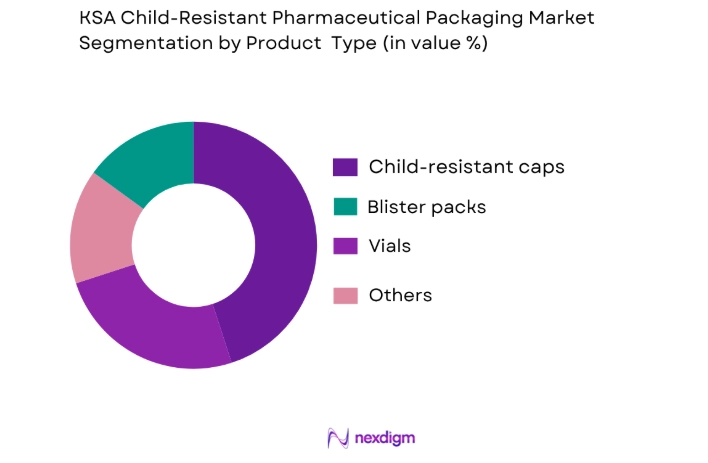
The KSA Child-Resistant Pharmaceutical Packaging market is segmented by product type into child-resistant caps, blister packs, vials, and other types. Child-resistant caps are dominating the market due to their widespread application in both over-the-counter and prescription medications. The growth of this sub-segment is largely due to the increased demand for simple yet effective packaging that complies with safety regulations. Pharmaceutical manufacturers are increasingly adopting child-resistant caps as part of their commitment to ensuring safe, secure, and user-friendly packaging solutions, particularly for pediatric medications and products intended for home use.
By End-User Segment:
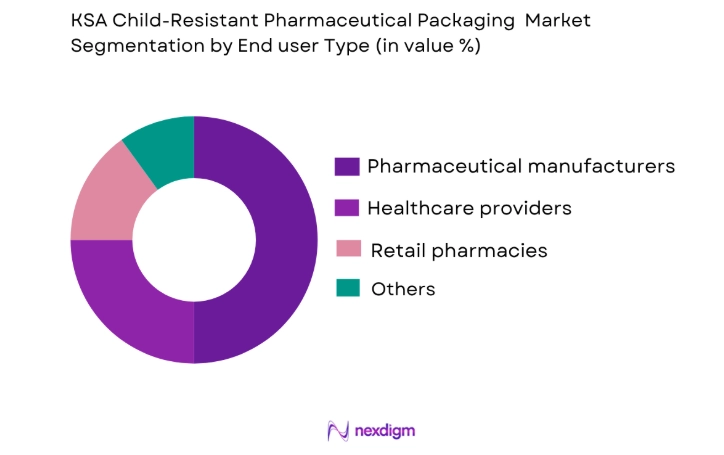
The market is also segmented by end-user segment, with pharmaceutical manufacturers, healthcare providers, and retail pharmacies being the major players. Pharmaceutical manufacturers hold a dominant share as they are the primary producers of child-resistant packaging solutions. These companies are heavily investing in the adoption of child-resistant solutions to meet both local and international regulatory standards. The increasing production of drugs for children and elderly patients with specific safety requirements has further pushed the growth of this sub-segment. Moreover, retail pharmacies and healthcare providers play an essential role in driving the demand for child-resistant packaging as they aim to ensure patient safety.
Competitive Landscape
The KSA Child-Resistant Pharmaceutical Packaging Market is moderately fragmented with the presence of both regional and international players. Major players like Amcor Limited and West Pharmaceutical Services dominate the market with their extensive product portfolios and strong supply chain capabilities. Increasing demand for advanced, eco-friendly packaging solutions is leading to market consolidation, where large players acquire smaller manufacturers to expand their market reach and technology offerings. The competitive landscape is further influenced by innovation, product differentiation, and the rising emphasis on compliance with government regulations.
| Company Name | Establishment Year | Headquarters | Technology Focus | Market Reach | Key Products | Revenue (USD) | Market-Specific Parameter |
| Amcor Limited | 1860 | Switzerland | ~ | ~ | ~ | ~ | ~ |
| West Pharmaceutical Services | 1923 | USA | ~ | ~ | ~ | ~ | ~ |
| Berry Global Inc. | 1967 | USA | ~ | ~ | ~ | ~ | ~ |
| Sonoco Products Company | 1899 | USA | ~ | ~ | ~ | ~ | ~ |
| Tekni-Plex Inc. | 1960 | USA | ~ | ~ | ~ | ~ | ~ |
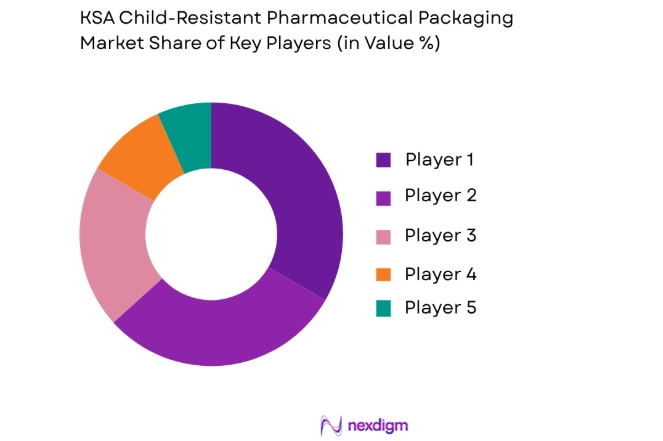
KSA Child-Resistant Pharmaceutical Packaging Market Analysis
Growth Drivers
Rising Healthcare Investment:
The growth of the KSA Child-Resistant Pharmaceutical Packaging Market is driven by substantial investments in the healthcare sector, which is focused on improving safety and regulatory compliance. With the increasing government spending on healthcare infrastructure, there is a growing emphasis on adopting advanced safety features in pharmaceutical packaging. These investments not only enable manufacturers to upgrade their packaging lines to meet regulatory standards but also support the expansion of the local pharmaceutical industry, leading to increased demand for child-resistant packaging solutions. The government’s focus on ensuring patient safety, especially in pediatric care, encourages manufacturers to invest in packaging innovations that minimize the risk of accidental ingestion. Additionally, healthcare providers and pharmacies are increasingly prioritizing the use of child-resistant solutions to protect vulnerable populations, further boosting demand. The expansion of healthcare infrastructure in cities like Riyadh, Jeddah, and Dammam accelerates the adoption of these solutions, with strong growth in both urban and rural areas.
Consumer Safety Awareness:
A significant factor driving the market’s growth is heightened awareness of consumer safety, particularly regarding children’s access to medications. As awareness around the dangers of improper drug storage increases, both consumers and regulators are placing greater emphasis on child-resistant packaging. In KSA, consumer advocacy for child safety has led to stricter regulations requiring pharmaceutical companies to use child-resistant packaging solutions for a wider range of products. Pharmaceutical companies are responding to these demands by developing more effective packaging systems to prevent accidental consumption by children. These efforts are supported by increased awareness campaigns, partnerships between regulatory bodies and pharmaceutical manufacturers, and stronger enforcement of safety standards. As the public becomes more conscious of the risks associated with unsecured medications, demand for child-resistant packaging continues to rise, further fueling the market’s growth. The adoption of new technologies in packaging also helps address consumer concerns regarding ease of use, with companies working on making child-resistant features more convenient for adults while maintaining safety.
Market Challenges
Regulatory Compliance Costs:
One of the key challenges faced by the KSA Child-Resistant Pharmaceutical Packaging Market is the high cost of regulatory compliance. With strict standards governing pharmaceutical packaging, manufacturers are under increasing pressure to invest in technologies that meet safety regulations. Compliance with local and international standards often requires significant investments in research and development, as well as testing and certification processes. These additional costs are especially burdensome for smaller companies or new market entrants who may struggle to afford the required upgrades to their packaging systems. Moreover, as regulations evolve and become more stringent, companies face the challenge of continuously updating their packaging solutions to remain compliant. This leads to a dynamic cost environment, where manufacturers must balance the need for safety with the financial implications of compliance. The ongoing investments in technology and infrastructure required to meet these evolving standards could inhibit growth, especially for smaller manufacturers with limited resources.
Supply Chain Disruptions:
Supply chain disruptions present another major challenge to the growth of the KSA Child-Resistant Pharmaceutical Packaging Market. These disruptions can stem from various factors, including global trade tensions, logistics bottlenecks, and shortages of raw materials needed for packaging production. The COVID-19 pandemic, for instance, significantly affected supply chains worldwide, causing delays in the availability of essential packaging components and raw materials. In KSA, this challenge is compounded by the reliance on imported packaging materials, which can be subject to tariffs and shipping delays. Moreover, the region’s reliance on global supply chains for manufacturing pharmaceutical packaging solutions can create vulnerabilities, particularly when disruptions occur in key manufacturing hubs. As the demand for child-resistant packaging solutions grows, these supply chain challenges could impact production timelines, result in higher costs, and disrupt market stability. Companies operating in the region must find ways to mitigate these risks, such as diversifying suppliers, investing in local manufacturing capabilities, and improving logistics networks.
Opportunities
Technological Advancements in Packaging:
One of the key opportunities in the KSA Child-Resistant Pharmaceutical Packaging Market lies in technological advancements in packaging design and materials. As manufacturers continue to innovate in response to increasing demand for more effective safety features, there is significant potential for the development of new, more efficient packaging solutions. Smart packaging, which incorporates technologies such as RFID tags and sensors, is becoming increasingly popular as it offers additional layers of safety, such as tracking and monitoring the use of medications. These innovations enhance the functionality of traditional child-resistant packaging while offering greater convenience and user experience for adults. In addition to enhancing safety, these advancements can also improve the sustainability of packaging materials, a key consideration as environmental regulations become more stringent. Manufacturers investing in these technological advancements have the potential to gain a competitive edge in the market by offering superior products that meet evolving consumer demands for safety and sustainability.
Growing Demand in Pediatric Medications:
As the pediatric pharmaceutical sector expands, the demand for child-resistant packaging solutions is expected to grow significantly. With increasing focus on children’s health and safety, regulatory bodies are placing greater emphasis on ensuring that medications for children are safely packaged. This trend is particularly noticeable in KSA, where the government is prioritizing healthcare improvements for children, including access to safe and secure medications. The growing prevalence of chronic diseases in children, such as asthma and diabetes, has led to a rise in the demand for pediatric medications, which further drives the need for child-resistant packaging. Pharmaceutical manufacturers are responding to this demand by developing packaging solutions that are specifically tailored for pediatric drugs, ensuring that they are both safe and easy to use. This creates significant opportunities for packaging companies to expand their product portfolios and cater to the growing pediatric market, with potential for both local and international growth.
Future Outlook
The KSA Gene Therapy Market is poised for steady growth, driven by technological advancements, government investment in healthcare, and the increasing prevalence of genetic disorders. Over the next five years, the market is expected to expand significantly, particularly in the areas of gene editing and viral vector-based therapies. With continued support from both the public and private sectors, technological developments will help reduce the costs of gene therapy treatments, making them more accessible to a broader patient base. As regulatory frameworks stabilize and healthcare infrastructure improves, the Kingdom will become a hub for gene therapy innovation in the Middle East.
Major Players
- Novartis
- Gilead Sciences
- Bluebird Bio
- Sangamo Therapeutics
- CRISPR Therapeutics
- Roche
- Bayer
- Celgene
- Bristol-Myers Squibb
- ThermoFisher Scientific
- Takeda Pharmaceutical
- Intellia Therapeutics
- Biogen
- Pfizer
- Merck
Key Target Audience
- Investments and venture capitalist firms
- Government and regulatory bodies
- Biopharmaceutical companies
- Hospitals and healthcare providers
- Biotechnology firms
- Research institutions
- Contract research organizations
- Healthcare technology providers
Research Methodology
Step 1: Identification of Key Variables
This step involves defining the critical factors driving the market and establishing boundaries for research, focusing on genetic disorders, healthcare infrastructure, and technological advancements in gene therapy.
Step 2: Market Analysis and Construction
Market data is gathered through primary and secondary sources, including interviews with industry experts, public reports, and clinical trial data. The market is then segmented based on product types and end users.
Step 3: Hypothesis Validation and Expert Consultation
The collected data is analyzed to formulate hypotheses on market growth, technological trends, and regulatory developments. Expert consultations help validate assumptions and refine projections.
Step 4: Research Synthesis and Final Output
The research is synthesized to produce a comprehensive market report, detailing trends, growth drivers, challenges, and opportunities in the KSA Gene Therapy Market. The final output includes validated market forecasts and strategic recommendations.

- Executive Summary
- Research Methodology (Definitions, Scope, Industry Assumptions, Market Sizing Approach, Primary & Secondary Research Framework, Data Collection & Verification Protocol, Analytic Models & Forecast Methodology, Limitations & Research Validity Checks)

- Market Definition and Scope
- Value Chain & Stakeholder Ecosystem
- Regulatory / Certification Landscape
- Sector Dynamics Affecting Demand

- Growth Drivers
Increasing Government Regulations for Child Safety
Rising Demand for Secure Packaging Solutions
Growth in Pharmaceutical Industry - Market Challenges
High Production Costs
Regulatory Compliance Complexity
Counterfeit Pharmaceutical Packaging Threat - Market Opportunities
Technological Advancements in Packaging Materials
Rising Demand for Sustainable Packaging Solutions
Collaborations with Third-Party Manufacturers - Trends
Growth in E-commerce Pharmaceutical Sales
Focus on Sustainability and Eco-Friendly Packaging
Integration of Smart Packaging Features - Government Regulations

- By Market Value, 2020-2025
- By Installed Units, 2020-2025
- By Average System Price, 2020-2025
- By System Complexity Tier, 2020-2025

- By System Type (In Value%)
Push-Down and Turn Caps
Snap-On Closures
Pressure-Sensitive Seals
Child-Resistant Vials
Tamper-Evident Packaging - By Platform Type (In Value%)
Plastic Packaging
Glass Packaging
Aluminum Packaging
Composite Materials
Other Platform Types - By Fitment Type (In Value%)
Pre-assembled Solutions
Modular Solutions
Hybrid Solutions
On-site Assembly Solutions
Integrated Solutions - By EndUser Segment (In Value%)
Pharmaceutical Manufacturers
Healthcare Providers
Retail Pharmacies
Hospitals & Clinics

- Market Share Analysis
- CrossComparison Parameters (Packaging Type, Material, EndUser Segment, Procurement Channel, Regulatory Compliance)
- SWOT Analysis of Key Competitors
- Pricing & Procurement Analysis
- Porter’s Five Forces
- Key Players
Amcor Limited
Berry Global Inc.
West Pharmaceutical Services Inc.
Alpla Werke Alwin Lehner GmbH & Co. KG
Klockner Pentaplast Group
Sonoco Products Company
Sealed Air Corporation
Comar LLC
AptarGroup, Inc.
Tekni-Plex Inc.
Gerresheimer AG
Mold-Tek Packaging Limited
SCHOTT AG
Plastipak Packaging, Inc.
Raumedic AG

- Pharmaceutical Manufacturers Seeking Compliance
- Retail Pharmacies’ Focus on Consumer Safety
- Healthcare Providers Looking for Efficient Solutions
- Government Agencies Enforcing Packaging Standards

- Forecast Market Value, 2026-2035
- Forecast Installed Units, 2026-2035
- Price Forecast by System Tier, 2026-2035
- Future Demand by Platform, 2026-2035


 Request a Sample
 Ask for Customization
 Get a Quote
 Enquire Now