
 Download PDF
Market Overview
The Saudi Arabia ice cream market, which directly drives demand for commercial ice cream freezers, is valued at approximately USD ~ million, based on retail and foodservice consumption of frozen desserts and ice cream products reflecting stable demand across retail and hospitality outlets. This valuation derives from established industry sources tracking edible frozen dessert sales in KSA. High ambient temperatures, combined with rising disposable incomes and expansion of modern trade including supermarkets and convenience channels, support continuous freezer usage. Saudi Arabia’s large expatriate population and young demographic contribute to frequent consumption of ice cream formats, increasing freezer placements for impulse and take‑home segments, especially in urban and high‑traffic retail environments like malls and petrol forecourts. The integration of modern retail formats, growing café and dessert parlor markets, and heightened tourism activity further amplify the requirement for reliable commercial freezer infrastructure across multiple channels.
Market Segmentation
By Freezer Type
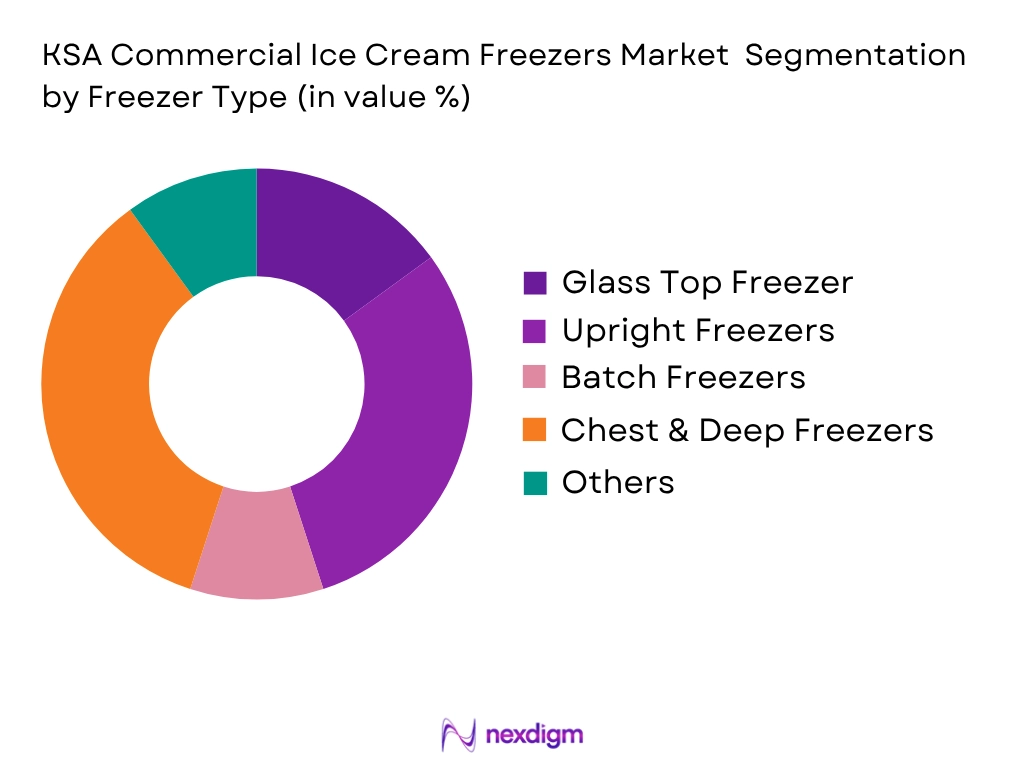
By freezer type, chest and deep freezers lead the commercial ice cream freezer market in Saudi Arabia with 35% of installed units in 2024. These units are widely adopted because they offer large bulk storage capacity and lower operation complexity, making them ideal for supermarkets, hypermarkets, convenience stores, and petrol forecourts where impulse and take‑home ice cream products need robust frozen storage. Their relatively straightforward design and cost‑efficient performance make them suitable for high‑volume retail environments that require consistent temperature maintenance to support extensive SKU assortments. Upright display freezers rank second with 30% share, favored in modern trade due to better product visibility, merchandising appeal, and ease of consumer access for impulse purchases. Glass top freezers also feature prominently in convenience retail for showcasing novelties. Soft‑serve and batch freezers serve the HoReCa segment, especially in cafés and dessert parlors where on‑site serving is integral, while walk‑in/freezer rooms cater to larger hospitality chains and seasonal inventory surges. This structural segmentation reflects how retail and foodservice channel needs shape freezer technology deployment.
By End User Channel
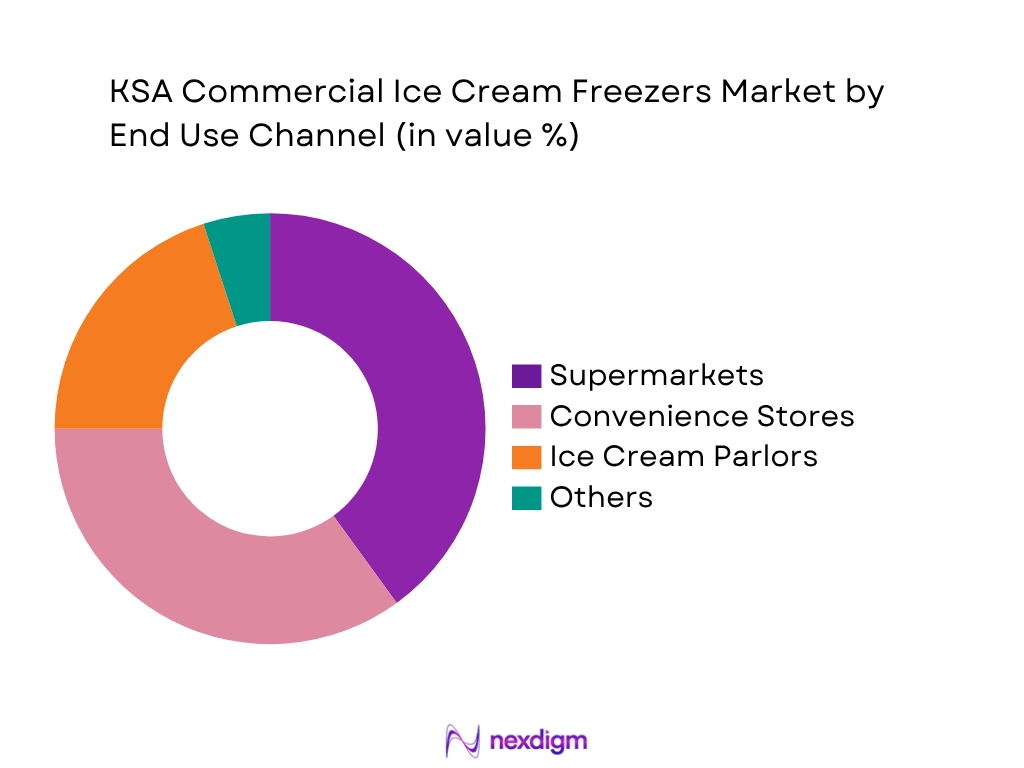
Under end‑user segmentation, supermarkets and hypermarkets dominate Saudi freezer demand with 40% share in 2024 due to their role as primary retail access points for ice cream and frozen dessert categories. Large retail chains such as Panda, Carrefour, and Lulu maintain extensive freezer cabinets to support wide assortments of local and imported ice cream brands, catering to both family take‑home and impulse purchase occasions. These formats leverage cold display infrastructure to maximize SKU visibility and turnover rates, especially in urban hubs like Riyadh and Jeddah. Convenience stores and petrol outlets follow with 25% share, responding to high mobility patterns among consumers who purchase frozen treats during travel or daily errands. The HoReCa segment (20%) comprises hotels, restaurants, and cafés where specialized soft‑serve and batch freezers support dessert menus and hospitality offerings. Ice cream parlors and specialty outlets, with 10% share, often deploy bespoke freezer solutions for unique offerings, while e‑commerce distribution channels, though smaller at 5%, are emerging as online grocery and delivery trends expand frozen goods reach.
Competitive Landscape
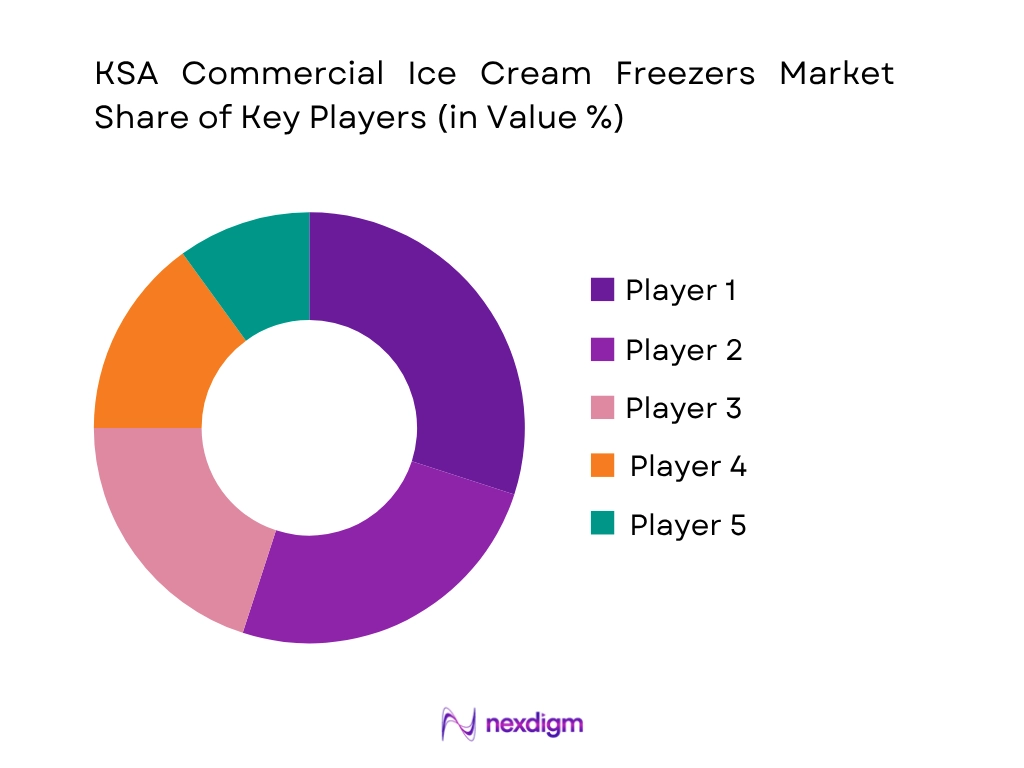
The KSA Commercial Ice Cream Freezers Market features a mix of global refrigeration OEMs and regional distributors supplying tailored solutions for Saudi retail and foodservice channels, influenced by energy efficiency needs, heat‑resilient designs, service infrastructure, and cold‑chain integration.
| Company | Establishment Year | Headquarters | Product Range Breadth | Cooling Technology | Energy Efficiency | Service Network | Regional Penetration |
| Hussmann | 1907 | USA | ~ | ~ | ~ | ~ | ~ |
| Electrolux Professional | 1919 | Sweden | ~ | ~ | ~ | ~ | ~ |
| True Manufacturing | 1945 | USA | ~ | ~ | ~ | ~ | ~ |
| AHT Cooling Systems | 1945 | Austria | ~ | ~ | ~ | ~ | ~ |
| Haier Commercial Refrigeration | 1984 | China | ~ | ~ | ~ | ~ | ~ |
KSA Commercial Ice Cream Freezers Market Outlook to 2035
Growth Drivers
Rising Population and Young Demographics Supporting Ice Cream Consumption
Saudi Arabia’s demographic profile significantly bolsters demand for frozen dessert categories that drive commercial ice cream freezers. According to the Saudi Population Estimates 2024 by the General Authority for Statistics, the total population grew from approximately 19.3 million Saudi citizens in 2023 to over 19.6 million in 2024, alongside about 15.7 million non‑Saudi residents, a large expatriate cohort enhancing urban consumption volumes across retail and foodservice corridors. Additionally, government data indicates that around 71% of the population is under the age of 35, with an average age of 26.6 years, reflecting a youthful consumer base with high discretionary spending and frequent out‑of‑home consumption occasions that include ice cream desserts. This demographic mix — young, urbanized, and with rising disposable income — aligns with increased visits to supermarkets, malls, cafés, and restaurants where commercial freezers are essential for impulse purchase and indulgence categories. This sustained footfall and consumption behavior in modern retail segments places continuous demand on commercial ice cream freezer infrastructure in urban centers such as Riyadh and Jeddah.
High Ice Cream Consumption Volume in the GCC and Saudi Arabia’s Contribution
The GCC ice cream consumption trend underscores strong structural demand for products requiring commercial refrigeration technology such as freezers. According to IndexBox data for the GCC, approximately 137,000 tons of ice cream were consumed in the GCC region in 2024, with Saudi Arabia accounting for around 31,000 tons of that total volume, making it one of the top consumption markets in the region alongside the UAE and Kuwait. Saudi Arabia also registered the largest growth rate in ice cream consumption among Gulf countries from 2013 to 2024, illustrating sustained and expanding demand for frozen desserts. This robust consumption pattern translates directly into demand for commercial ice cream freezers across retail and foodservice segments because such large volume usage must be supported by reliable cold‑chain infrastructure. The consistent flow of products from warehouses to supermarkets, convenience outlets, and HoReCa establishments requires commercial freezer stock and replacement cycles, which are driven by the scale of ice cream consumption. Moreover, Saudi Arabia’s hot ambient climate further influences year‑round usage of freezers, as residual demand remains stable even outside peak summer months.
Market Challenges
Import‑Driven Supply Chain and Cold‑Chain Infrastructure Gaps
A key structural challenge for the commercial ice cream freezer market in Saudi Arabia is linked to the broader cold‑chain logistics environment and reliance on imported frozen goods. According to GCC ice cream market data, 48,000 tons of ice cream were imported into the GCC in 2024, with Saudi Arabia representing the main importing country at 38,000 tons, indicating heavy dependence on external production and transport networks to fulfill domestic retail and foodservice demand. This import predominance places pressure on cold‑chain facilities from port entry to retail shelf, increasing the cost and complexity of maintaining consistent freezer inventory and reducing spoilage. The relative lag in cold‑chain infrastructure, particularly outside the core urban hubs, complicates product distribution and supports the challenge of ensuring uninterrupted freezer deployments at secondary and tertiary retail locations. Additionally, Saudi retail foods statistics show a broad food retail market exceeding USD 51 billion, with ongoing urbanization but persistent logistical bottlenecks that can affect freezer turnover and inventory availability. This dynamic means businesses must invest more in cold‑chain management, increasing operational complexity for both freezer suppliers and end‑users.
Retail Infrastructure Cost Pressures and Seasonality
Another market constraint stems from operational cost pressures within retail and foodservice chains, amplified by seasonal demand swings. While Saudi Arabia’s climate creates continuous baseline demand for frozen desserts, peak ice cream consumption remains concentrated in summer and festive seasons, requiring retailers to scale commercial freezer capacity during these high‑demand periods and manage under‑utilization during cooler months. Retail foods data indicate the Saudi food retail market exceeds USD 51 billion, signaling large volumes across grocery segments, but managing frozen inventory requires larger freezer footprints and higher energy usage. These seasonal and operational cost challenges are exacerbated by electricity and facility expenses, which retail and HoReCa buyers must absorb to maintain product quality and minimize shrinkage. In high‑temperature environments like Riyadh and Jeddah, energy demand for freezers remains elevated year‑round, representing significant overhead for store operators. Moreover, the fluctuating price environment for imported ingredients like dairy and frozen ingredients further impacts retailer margins, making budget allocation for freezer installations and maintenance more challenging without predictable demand smoothing.
Market Opportunities
Urban Retail Expansion and Modern Channel Growth
One of the most compelling opportunities for commercial ice cream freezers in Saudi Arabia lies in the expansion of modern retail infrastructure. The Saudi retail market, with a total market size of approximately USD 282.2 billion in 2024, is a broad foundational platform where frozen dessert categories flourish. As supermarkets, hypermarkets, and convenience store chains expand their footprint across both primary cities and emerging urban nodes, the need for diversified freezer solutions grows proportionally. These formats increasingly emphasize ready‑to‑eat and impulse dessert categories, with commercial ice cream freezers key to merchandising strategies that attract shoppers and increase basket value. Additionally, the rise of online grocery platforms and e‑commerce food delivery channels augments this opportunity, as last‑mile logistics now incorporate cold‑chain delivery services, further driving freezer installations in distribution centers and pickup points. Retail chains are modernizing store formats with enhanced refrigeration zones, and trend data indicate that specialty frozen dessert placements — including premium and artisanal products — are becoming differentiators for consumer capture. The breadth of retail growth across Riyadh, Jeddah, and the Eastern Province signals a scalable opportunity for freezer suppliers and service partners to capture incremental demand driven by broader retail modernization.
Youth‑Driven Consumption and Product Innovation
Saudi Arabia’s youthful demographic profile presents a significant market opportunity for diversified ice cream offerings that in turn require innovative refrigeration solutions. Government reports show that approximately 71 percent of the population is under 35 years old, reflecting a large base of consumers predisposed to experiential and indulgent food purchases, including premium and specialty desserts. This demographic not only consumes ice cream frequently but also drives trend adoption — such as plant‑based, low‑sugar, and novel flavor variants — necessitating freezer units that support distinct product temperature requirements, merchandising appeal, and rapid access formats. With rising digital engagement and social media influence, younger consumers increasingly seek on‑the‑go frozen treats available through convenience channels, food trucks, and experiential retail environments. These consumption patterns open opportunities for freezer OEMs and distributors to supply innovative solutions like smart temperature monitoring units, compact display freezers for impulse channels, and modular systems for multi‑brand environments. Moreover, Saudi Arabia’s strategic tourism expansion plans bring international visitors to urban leisure hubs where premium frozen dessert concepts are featured, further amplifying deployment of commercial freezers tuned to high‑traffic experiential retail spaces.
Future Outlook
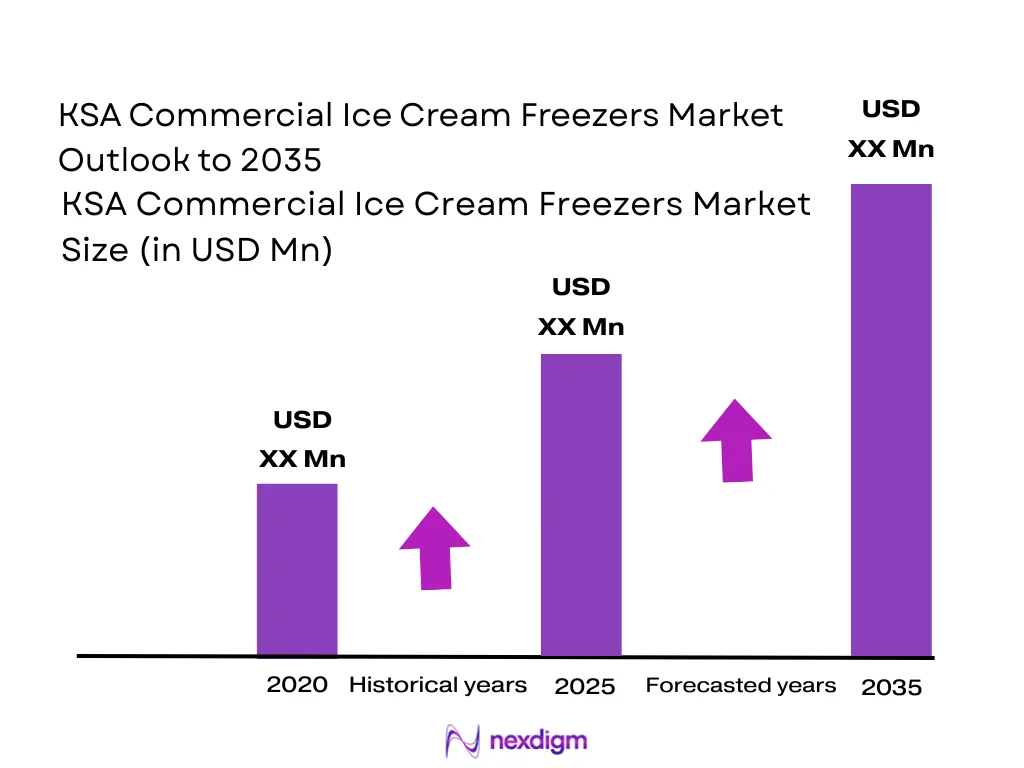
The KSA Commercial Ice Cream Freezers Market is expected to maintain steady expansion through 2035, propelled by continued urbanization, retail modernization, robust tourism growth, and consistent demand for ice cream and frozen desserts in both retail and foodservice channels. Structural drivers include the Kingdom’s retail market size, which reached approximately USD ~ billion reflecting broad consumption patterns that support ancillary categories such as frozen goods; retail channel expansion ensures freezer infrastructure proliferation. Saudi Arabia’s young population—about 71 % below age 35 with an average age of 26.6—stimulates demand for convenience and indulgence products like ice cream. The hospitality sector’s role in tourism and events further amplifies year‑round freezer requirement. Climate conditions characterized by long and hot summers increase reliance on chilled and frozen treats as refreshment options across diverse consumer settings. Technological adoption of energy‑efficient compressors and smart monitoring solutions will optimize operational costs for retail and foodservice buyers, enhancing freezer ROI and penetration across emerging secondary cities and urban nodes.
Major Players
- Hussmann
- Electrolux Professional
- True Manufacturing
- AHT Cooling Systems
- Haier Commercial Refrigeration
- TurboAir
- Tecfrigo
- Metalfrio Solutions
- Beverage Air
- Gram Commercial
- Summit Commercial
- Samsung Commercial Appliances
- LG Commercial Refrigeration
- Carrier Commercial Refrigeration
- Local Refrigeration Distributors & Integrators
Key Target Audience
- Retail Chain Procurement Heads
- Foodservice/HoReCa Facility Equipment Managers
- Quick Service Restaurant Infrastructure Leads
- Commercial Freezer OEM Product Strategy Teams
- Cold‑Chain & Logistics Investment Directors
- Investments and Venture Capitalist Firms
- Government and Regulatory Bodies
- Large Retail & Franchise Group Operators
Research Methodology
Step 1: Identification of Key Variables
The initial phase involved building an ecosystem map of key stakeholders including retail chains, foodservice operators, freezer OEMs, and logistics partners. Macro‐economic indicators, retail channel data, and consumption fundamentals were identified through authoritative secondary sources to define the core demand drivers.
Step 2: Market Analysis and Construction
Historical ice cream consumption values and Saudi retail expansion data were compiled to establish baseline demand. Freezer equipment adoption patterns were inferred from retail infrastructure growth, urban demographic spread, and channel configurations across hypermarkets, convenience stores, and HoReCa sectors.
Step 3: Hypothesis Validation and Expert Consultation
Market assumptions were validated through consultations with refrigeration distributors and procurement leads at major retail chains, providing operational perspectives on technology preferences, placement strategies, and service priorities in Saudi Arabia.
Step 4: Research Synthesis and Final Output
The final phase integrated quantitative data with qualitative insights, calibrating freezer deployment forecasts against broader retail market size metrics and demographic demand indicators. This ensured a comprehensive and validated analysis tailored for strategic decision‑making.

- Executive Summary
- Research Methodology (Market Definitions and Assumptions, Abbreviations, Market Sizing Framework, Data Source Hierarchy, Macro‑Economic Benchmarking Approach, Primary Research Methodology with Retail & HoReCa Stakeholders, Bottom‑Up & Top‑Down Integration, Constraints and Limitations)

- Definition and Scope
- Market Genesis and Climate Consumption Dynamics
- Ice Cream Consumption Influence on Freezer Demand
- Retail & Foodservice Expansion and Freezer Utilization
- Supply Chain & Cold‑Chain Logistics Integration

- Growth Drivers (Climatic conditions driving year‑round ice cream consumption, Expansion of modern retail and organized grocery chains, Rising tourism and hospitality expenditures fueling frozen dessert purchases)
- Market Challenges (High operational energy and maintenance cost environments, Cold‑chain infrastructure gaps outside urban centers, Dependency on imported refrigeration equipment)
- Market Opportunities (Urban commercial district expansion and retail modernization, Adoption of energy‑efficient and IoT enabled freezer technologies, Growth of delivery and quick commerce requiring reliable freezer capacity)
- Market Trends (Customized freezer configurations for premium outlets, Low‑GWP refrigerant transition and sustainability compliance, Integration of smart temperature control and predictive maintenance)
- Government Regulations & Standards (Food safety and halal compliance standards impacting equipment specs, Saudi energy performance and refrigerant usage guidelines)
- SWOT Analysis & Supply Chain Mapping
- Porter’s Five Forces Analysis
- Stakeholder Ecosystem

- Market Value (2020-2025)
- Freezer Equipment Revenue Base (2020-2025)
- Unit Shipments & Installed Base Estimates (2020-2025)

- By Freezer Type (In Value %)
Chest & Deep Freezers
Upright Display Freezers
Glass‑Top Display Freezers
Soft‑Serve & Batch Freezers
Walk‑In/Custom Freezer Systems - By End‑User Application (In Value %)
Supermarkets & Hypermarkets
Convenience Stores & Fuel Forecourts
Ice Cream Parlors & Gelaterias
Quick‑Service Restaurants & Café Chains - By Cooling Technology (In Value %)
Static/Direct Expansion
Remote Glycol Systems
Forced‑Air Ventilated
Intelligent/IoT‑Enabled Monitoring
Low‑GWP Refrigerant Platforms - By Sales Channel (In Value %)
OEM Direct Sales
Distributor & Dealer Networks
Refrigeration Project Integrators
Retail Procurement Platforms
Leasing & Service Contracts

- Cross‑Comparison Parameters (Company Overview, Product Portfolio Breadth, Refrigeration & Freezer Technology Stack, Energy Efficiency Ratings, Refrigerant Standards Compliance, Warranty & After‑Sales Coverage, Distribution Network Strength, Installed Base & Channel Penetration)
- Product Pricing & Feature Benchmarking
- Competitive SWOT Profiles
- Detailed Profiles of Major Companies
Hussmann (Commercial Freezer Solutions)
Electrolux Professional (Display & Upright Units)
True Manufacturing (Chest & Upright)
Haier Commercial Refrigeration
AHT Cooling Systems
Tecfrigo Refrigeration Systems
TurboAir Refrigeration
Metalfrio Solutions
Beverage Air Commercial Units
Gram Commercial Freezers
Summit Commercial Refrigeration
Samsung Commercial Appliance Division
LG Commercial Refrigeration
Carrier Commercial Refrigeration
Local Regional Refrigeration Integrators (Multi‑Brand)

- Retail Demand Profiling & SKU Assortment Planning
- Foodservice & Hospitality Purchaser Behavior
- Procurement Decision Criteria & Budget Allocations
- Needs, Preferences & Pain Point Analysis
- Purchasing & Replacement Cycles

- By Demand Forecast by Revenue & Units (2026-2035)
- By Freezer Category Deployment Growth (2026-2035)
- By End‑User Channel Adoption (2026-2035)


 Request a Sample
 Ask for Customization
 Get a Quote
 Enquire Now