
 Download PDF
Market Overview
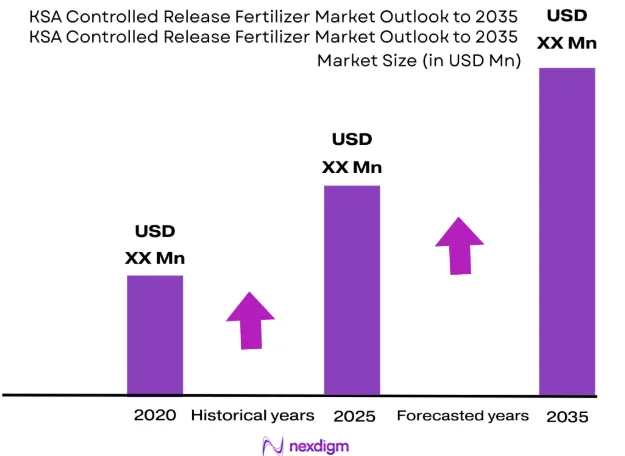
The KSA Controlled Release Fertilizer Market was valued at approximately USD ~ Million. The market is supported by Saudi Arabia’s expanding focus on agricultural productivity, food security, and water-efficient farming systems. According to the Ministry of Environment, Water and Agriculture, Saudi Arabia produced more than 12 million tonnes of agricultural products while greenhouse cultivation area and protected agriculture projects continued to expand. Additionally, Saudi Arabia possesses more than 1.6 million hectares of cultivated agricultural land, creating sustained demand for advanced fertilizers capable of improving nutrient-use efficiency under arid climatic conditions and limited water availability.
Market Segmentation
By Nutrient Type
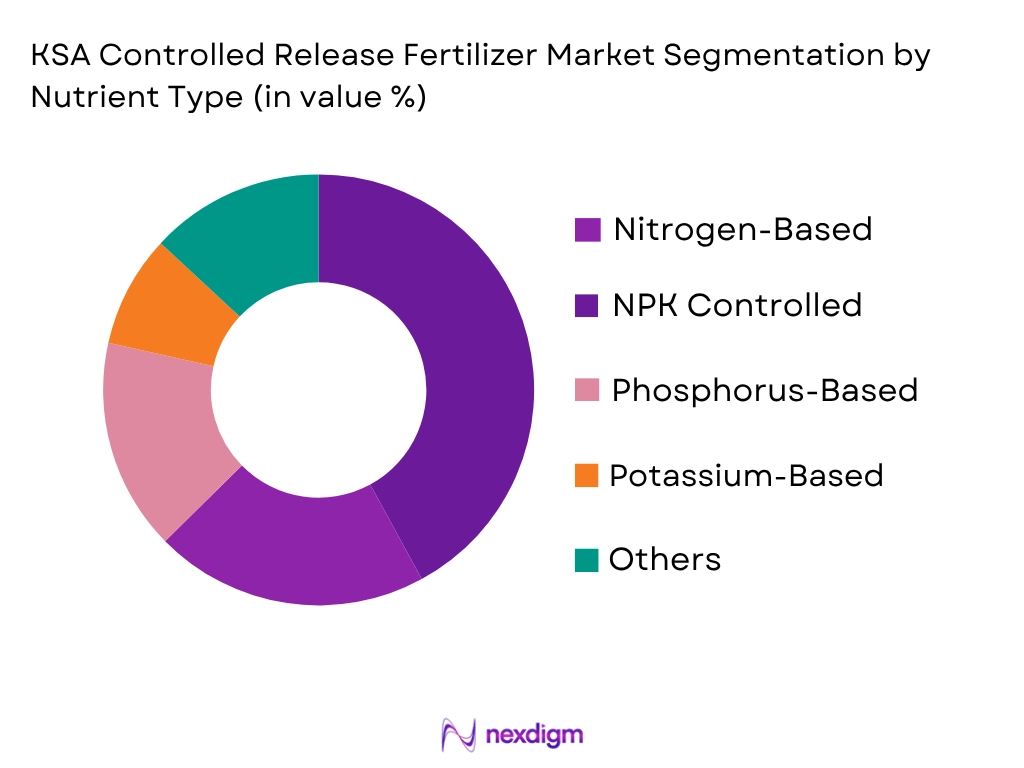
The KSA Controlled Release Fertilizer Market is segmented by nutrient type into nitrogen-based controlled release fertilizers, NPK controlled release fertilizers, phosphorus-based controlled release fertilizers, potassium-based controlled release fertilizers, micronutrient controlled release fertilizers, and secondary nutrient controlled release fertilizers. Recently, nitrogen-based controlled release fertilizers have emerged as the dominant segment within this category due to their critical role in supporting crop growth, chlorophyll development, and overall plant productivity across Saudi Arabia’s major agricultural sectors. Crops such as date palms, vegetables, fruits, cereals, and forage crops require significant nitrogen inputs throughout their growth cycles, making nitrogen the most widely consumed nutrient in the country. Controlled release nitrogen fertilizers are particularly valuable in Saudi Arabia’s arid environment because they minimize nitrogen losses caused by volatilization and improve nutrient-use efficiency under high-temperature conditions. Commercial farms increasingly prefer these products due to their compatibility with fertigation systems and precision irrigation practices. Furthermore, government initiatives promoting sustainable agriculture and efficient fertilizer utilization have encouraged adoption of enhanced-efficiency nitrogen fertilizers. Their ability to improve yields while reducing application frequency and nutrient wastage has established nitrogen-based controlled release fertilizers as the largest segment within the KSA controlled release fertilizer market.
By Crop Type
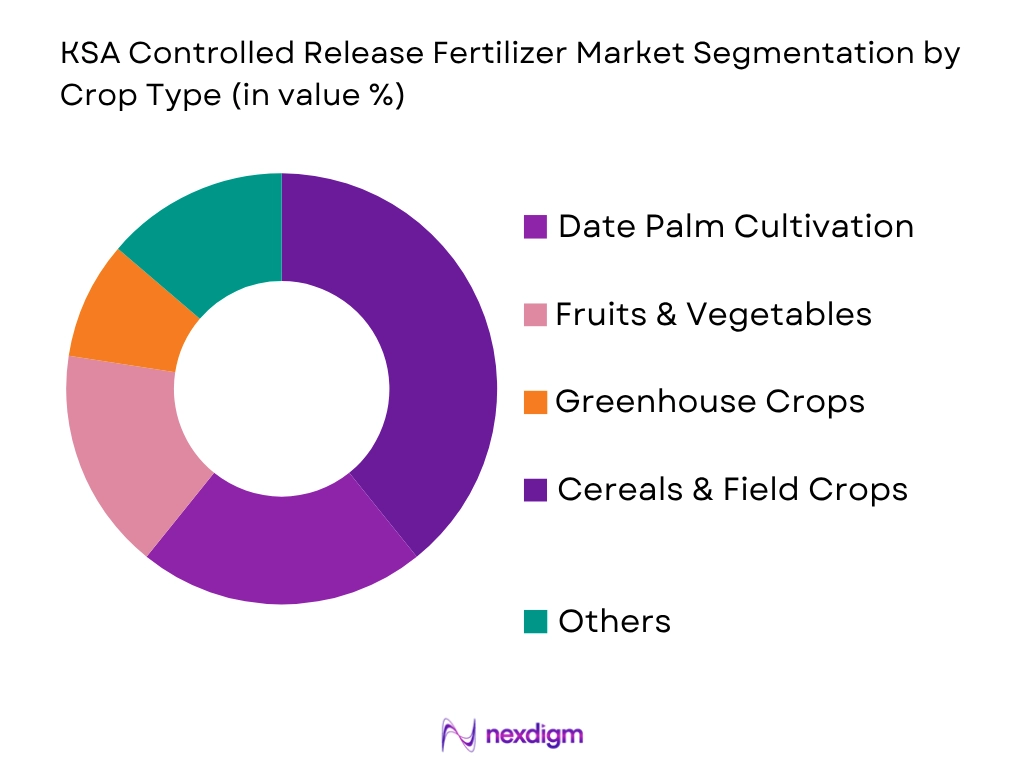
The KSA Controlled Release Fertilizer Market is segmented into date palm cultivation, fruits and vegetables, greenhouse crops, cereals and field crops, forage crops, ornamental plants and landscaping, hydroponic crops, and specialty horticultural crops. Recently, date palm cultivation has emerged as the dominant segment within the crop type category due to Saudi Arabia’s position as one of the world’s largest date producers. Date palms require consistent nutrient availability throughout long growing cycles, making controlled release fertilizers highly effective for maintaining productivity and fruit quality. These fertilizers minimize nutrient losses under desert conditions while improving nutrient uptake efficiency. Government initiatives supporting agricultural sustainability and export-oriented date production further strengthen demand. Commercial plantations increasingly adopt advanced nutrient management programs to improve yields and reduce fertilizer application frequency. As date cultivation remains deeply integrated into Saudi Arabia’s agricultural economy and food security objectives, the segment continues to account for the largest share of controlled release fertilizer consumption.
Competitive Landscape
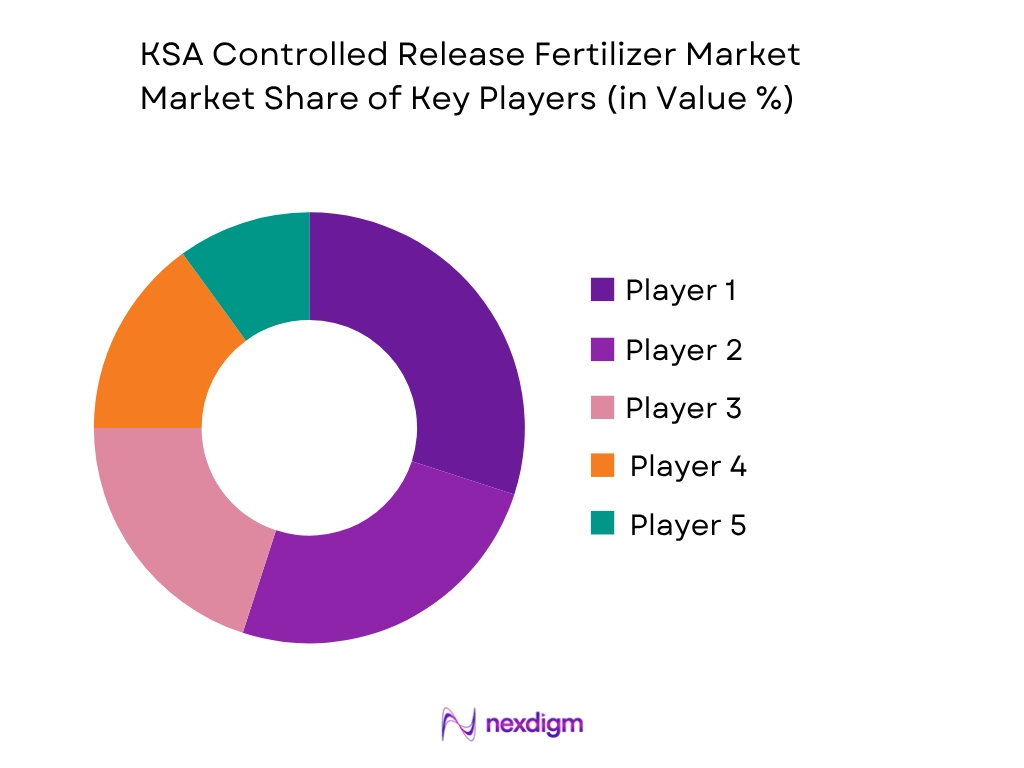
The KSA Controlled Release Fertilizer Market is moderately concentrated and includes both domestic fertilizer producers and international specialty fertilizer manufacturers. Competition is driven by technological innovation, nutrient-use efficiency, product performance under arid conditions, and compatibility with precision irrigation systems. Companies with strong agronomic support capabilities, greenhouse expertise, and advanced coating technologies maintain a competitive advantage in the Saudi market.
| Company | Establishment Year | Headquarters | Controlled Release Portfolio | Coating Technology Capability | Production Presence in KSA | Crop Focus | Distribution Strength | Sustainability Focus |
| Haifa Group | 1966 | ~ | ~ | ~ | ~ | ~ | ~ | ~ |
| SABIC Agri-Nutrients | 1965 | ~ | ~ | ~ | ~ | ~ | ~ | ~ |
| ICL Group | 1968 | ~ | ~ | ~ | ~ | ~ | ~ | ~ |
| Yara International | 1905 | ~ | ~ | ~ | ~ | ~ | ~ | ~ |
| COMPO Expert | 1976 | ~ | ~ | ~ | ~ | ~ | ~ | ~ |
KSA Controlled Release Fertilizer Market Analysis
Growth Drivers
Expansion of Date Palm Cultivation and High-Value Horticulture
Saudi Arabia’s position as one of the world’s largest date-producing countries continues to drive demand for controlled release fertilizers. According to the Ministry of Environment, Water and Agriculture, Saudi Arabia produces more than 1.9 million tonnes of dates annually and maintains over 37 million date palm trees across the Kingdom. Date palm cultivation is concentrated in regions such as Al-Qassim, Riyadh, Madinah, and Al-Ahsa, where growers increasingly utilize advanced nutrient management solutions to improve productivity and fruit quality. Controlled release fertilizers are particularly beneficial for perennial crops such as date palms because they provide gradual nutrient release over extended periods while minimizing nutrient losses under desert conditions. Furthermore, Saudi Arabia’s fruit and vegetable production exceeds 3.5 million tonnes annually, supported by expanding greenhouse cultivation and protected agriculture projects. These high-value crops require efficient nutrient delivery systems due to water scarcity and challenging soil conditions. As commercial farms continue adopting modern agricultural technologies and precision farming practices, demand for enhanced-efficiency fertilizers capable of improving nutrient-use efficiency remains strong. The expansion of date palm plantations and horticultural production therefore represents a significant growth driver for the KSA controlled release fertilizer market.
Government Focus on Food Security and Agricultural Modernization
Saudi Arabia’s commitment to strengthening domestic food production under Vision 2030 is accelerating adoption of advanced fertilizer technologies. According to official government statistics, Saudi Arabia possesses more than 1.6 million hectares of cultivated agricultural land, while the Kingdom’s population exceeds 38 million people, increasing the importance of local food production capabilities. The government continues to invest in agricultural modernization through programs promoting greenhouse farming, precision irrigation, and sustainable nutrient management. According to the World Bank, renewable freshwater availability remains below 100 cubic meters per capita annually, making efficient resource utilization critical for long-term agricultural sustainability. Controlled release fertilizers help farmers maximize crop yields while reducing nutrient losses and minimizing fertilizer application frequency. Additionally, the Saudi Agricultural Development Fund continues supporting investment in modern farming infrastructure and advanced cultivation technologies. Commercial growers are increasingly adopting controlled release fertilizers due to their compatibility with drip irrigation and fertigation systems widely used throughout the Kingdom. The combination of food security priorities, water conservation initiatives, and agricultural modernization programs continues to create favorable conditions for growth within the controlled release fertilizer market.
Market Challenges
Water Scarcity and Soil Salinity Constraints
One of the most significant challenges affecting the KSA controlled release fertilizer market is the country’s severe water scarcity and widespread soil salinity issues. According to the World Bank, Saudi Arabia remains among the most water-stressed countries globally, with renewable freshwater resources below 100 cubic meters per capita annually. Agricultural producers depend heavily on groundwater extraction and advanced irrigation systems to sustain crop production. At the same time, high evaporation rates and prolonged irrigation practices contribute to soil salinity across many farming regions. Saline soils reduce nutrient availability and limit crop productivity, requiring specialized nutrient management approaches. Although controlled release fertilizers improve nutrient-use efficiency, their effectiveness can vary depending on salinity levels, soil composition, and irrigation management practices. Large agricultural areas in central and eastern regions face ongoing challenges associated with soil degradation and water quality. Farmers often require additional agronomic expertise to optimize fertilizer performance under these conditions. The need for customized nutrient solutions and site-specific management practices increases operational complexity and may limit adoption among smaller farming operations. Consequently, water scarcity and salinity remain major challenges influencing market development.
Dependence on Imported Controlled Release Fertilizer Technologies
Despite Saudi Arabia’s strong fertilizer manufacturing base, the controlled release fertilizer segment remains dependent on imported specialty technologies, coating materials, and advanced nutrient formulations. Saudi Arabia is a major producer of conventional fertilizers through companies such as SABIC Agri-Nutrients and Ma’aden; however, many polymer-coated and specialty controlled release products continue to originate from international suppliers. According to IMF trade statistics, Saudi Arabia’s total imports exceed USD 200 billion annually, reflecting the importance of imported industrial and agricultural inputs across multiple sectors. Controlled release fertilizers often require specialized polymer coatings, nutrient-release technologies, and manufacturing processes that are not widely produced domestically. Supply chain disruptions, geopolitical tensions, and transportation bottlenecks can affect product availability and inventory management for distributors and agricultural retailers. Furthermore, growers may face limited access to certain specialized formulations designed for greenhouse crops, horticulture, and precision farming systems. As demand for advanced fertilizer products increases, ensuring reliable access to imported technologies and raw materials remains essential. This dependence on international suppliers continues to represent a strategic challenge for the long-term development of the KSA controlled release fertilizer market.
Market Opportunities
Rapid Expansion of Greenhouse Farming and Protected Agriculture
The continued expansion of greenhouse farming and protected agriculture presents a substantial opportunity for the KSA controlled release fertilizer market. According to the Ministry of Environment, Water and Agriculture, greenhouse cultivation continues to increase across major agricultural regions including Riyadh, Al-Qassim, Tabuk, and Al-Jouf. Saudi Arabia produces more than 700,000 tonnes of greenhouse vegetables annually, with tomatoes, cucumbers, peppers, and leafy vegetables accounting for a significant portion of output. Controlled release fertilizers are particularly well suited to greenhouse environments because they provide precise nutrient delivery and support efficient water utilization. Greenhouse operators increasingly prioritize technologies that improve yields while reducing resource consumption. Furthermore, protected agriculture aligns with Saudi Arabia’s long-term food security objectives by enabling year-round crop production under controlled conditions. Controlled release fertilizers help maximize productivity within these systems by reducing nutrient losses and minimizing labor requirements associated with repeated fertilizer applications. As investment in greenhouse infrastructure, smart farming technologies, and controlled-environment agriculture continues to grow, demand for advanced nutrient management products is expected to strengthen significantly. This ongoing transformation of Saudi agriculture creates substantial opportunities for manufacturers and suppliers operating in the controlled release fertilizer segment.
Growth of Precision Irrigation and Smart Agriculture Technologies
Saudi Arabia’s increasing adoption of precision irrigation systems and digital agriculture solutions creates favorable conditions for controlled release fertilizer adoption. According to official government agricultural development programs, drip irrigation has become one of the most widely implemented irrigation methods across commercial farming operations due to its ability to conserve water and improve crop productivity. Agriculture accounts for a substantial share of national water consumption, making efficient nutrient and water management a strategic priority. Controlled release fertilizers complement precision irrigation systems by synchronizing nutrient release with crop requirements, thereby improving nutrient uptake efficiency. Saudi Arabia has also expanded investments in agricultural technology, including remote sensing, automated irrigation controls, digital farm management systems, and climate-controlled cultivation facilities. Large-scale commercial farms increasingly integrate these technologies to optimize production and resource utilization. Additionally, Vision 2030 initiatives encourage adoption of sustainable agricultural practices capable of improving domestic food production while conserving natural resources. As smart agriculture technologies become more widespread throughout the Kingdom, the compatibility of controlled release fertilizers with precision farming systems positions the market to benefit from long-term technological advancement and agricultural modernization efforts.
Future Outlook
The KSA Controlled Release Fertilizer Market is expected to witness strong growth over the forecast period, supported by Vision 2030 initiatives focused on food security, sustainable agriculture, and water conservation. Increasing adoption of greenhouse farming, hydroponic cultivation, and precision irrigation systems will continue to drive demand for enhanced-efficiency fertilizers. Commercial farms are increasingly adopting advanced nutrient management solutions to improve productivity while reducing resource consumption. Furthermore, technological advancements in fertilizer coatings, biodegradable nutrient delivery systems, and digital agronomy services are expected to create new opportunities for market participants. Growing investment in protected agriculture and high-value horticultural production will remain key growth contributors.
Major Players
- SABIC Agri-Nutrients
- Ma’aden
- Fertiglobe
- Yara International
- ICL Group
- Haifa Group
- COMPO Expert
- Nutrien Ltd.
- EuroChem Group
- Koch Agronomic Services
- SQM
- OMEX Agriculture
- Desert Group
- Redox Industries
- Helena Agri-Enterprises
Key Target Audience
- Controlled Release Fertilizer Manufacturers
- Commercial Agricultural Farms
- Greenhouse Farming Operators
- Hydroponic and Vertical Farming Companies
- Agricultural Input Distributors and Dealers
- Investments and Venture Capitalist Firms
- Government and Regulatory Bodies (Ministry of Environment, Water and Agriculture, Saudi Food and Drug Authority, National Center for Vegetation Cover Development and Combating Desertification)
- Date Palm Producers and Horticulture Enterprises
Research Methodology
Step 1: Identification of Key Variables
The initial phase involves constructing an ecosystem map covering all stakeholders within the KSA Controlled Release Fertilizer Market. Extensive desk research is conducted using agricultural databases, government publications, trade statistics, company reports, and fertilizer industry resources. The objective is to identify critical variables affecting fertilizer demand, nutrient management practices, crop-specific adoption patterns, and market competitiveness.
Step 2: Market Analysis and Construction
This phase involves compiling and analyzing historical information related to agricultural production, fertilizer consumption, greenhouse cultivation, date palm production, and precision irrigation adoption. Demand-side and supply-side assessments are conducted to evaluate market penetration across different crop categories and farming systems. Revenue contribution and product utilization trends are also examined.
Step 3: Hypothesis Validation and Expert Consultation
Market assumptions are validated through detailed consultations with fertilizer manufacturers, distributors, agronomists, commercial farm operators, greenhouse managers, and agricultural technology providers. These interviews provide insights into product adoption, purchasing behavior, technology preferences, and future market opportunities. The findings are used to refine and validate market estimates.
Step 4: Research Synthesis and Final Output
The final stage integrates findings from primary and secondary research through data triangulation techniques. Direct engagement with market participants helps verify competitive dynamics, technology adoption trends, distribution structures, and growth opportunities. This process ensures a comprehensive and reliable assessment of the KSA Controlled Release Fertilizer Market.

- Executive Summary
- Research Methodology (Market Definitions and Assumptions, Abbreviations, Market Sizing Approach, Top-Down Analysis, Bottom-Up Analysis, Demand-Side Assessment, Supply-Side Assessment, Primary Industry Interviews, Agronomist Consultations, Distributor Interviews, Data Triangulation, Forecasting Framework, Limitations and Future Conclusions)

- Definition and Scope
- Market Evolution and Industry Genesis
- Timeline of Major Industry Developments
- Saudi Specialty Fertilizer Industry Ecosystem Overview
- Controlled Release Fertilizer Technology Landscape

- Growth Drivers (Vision 2030 Food Security Initiatives, Expansion of Greenhouse Agriculture, Growth in Date Palm Cultivation, Precision Irrigation Adoption, Water Conservation Requirements, Expansion of High-Value Horticulture, Sustainable Farming Programs, Controlled Environment Agriculture Investments)
- Market Challenges (Water Scarcity Constraints, Soil Salinity and Desert Conditions, Dependence on Imported Specialty Fertilizer Inputs, High Product Premium over Conventional Fertilizers, Limited Farmer Awareness of Enhanced Efficiency Fertilizers)
- Market Opportunities (Hydroponic Farming Expansion, Smart Agriculture Investments, Vertical Farming Development, Sustainable Landscape Management Projects, Bio-Based Coating Technologies, Agri-Tech Innovation Programs, Protected Cultivation Growth, Desert Agriculture Modernization)
- Market Trends (Precision Nutrient Management Adoption, Fertigation-Based Fertilization Growth, Greenhouse Farming Expansion, Smart Irrigation Integration, Water-Efficient Fertilization Practices, Specialty Crop Nutrition Programs, Biodegradable Coating Development, Digital Agronomy Solutions)
- Government Regulations (Ministry of Environment Water and Agriculture Fertilizer Regulations, Saudi Food Security Strategy Framework, Agricultural Input Registration Requirements, Water Conservation Policies, Sustainable Agriculture Programs, Environmental Compliance Standards)
- PESTLE Analysis
- SWOT Analysis
- Porter’s Five Forces Analysis
- Stakeholder Ecosystem
- Competition Ecosystem

- By Market Value (2020-2025)
- By Volume Consumption (2020-2025)
- By Average Selling Price (2020-2025)


- Market Share of Major Players (By Value, Volume, Nutrient Type, Crop Segment, Coating Technology, Distribution Channel)
- Cross Comparison Parameters (Product Portfolio Breadth, Controlled Release Technology Capability, Fertigation Compatibility, Greenhouse Crop Focus, Date Palm Nutrition Expertise, Distribution Network Reach Across KSA, Water Efficiency Performance, Agronomic Technical Support Strength)
- SWOT Analysis of Major Players
- Pricing Analysis by Nutrient Grade and Release Duration
- Detailed Profiles of Major Companies
SABIC Agri-Nutrients
Ma’aden
Fertiglobe
Yara International
ICL Group
Haifa Group
COMPO Expert
Nutrien Ltd.
EuroChem Group
Koch Agronomic Services
SQM
OMEX Agriculture
Desert Group
Redox Industries
Helena Agri-Enterprises

- Fertilizer Consumption and Utilization Assessment
- Farm Economics Assessment
- Farmer Purchasing Behaviour Analysis
- Controlled Environment Agriculture Adoption Analysis
- Water Conservation Adoption Assessment
- End User Pain Point Analysis
- Product Attribute Preference Analysis
- Purchase Decision-Making Framework
- Agronomist and Agricultural Technology Provider Influence Analysis

- By Market Value (2026-2035)
- By Volume Consumption (2026-2035)
- By Average Selling Price (2026-2035)


 Request a Sample
 Ask for Customization
 Get a Quote
 Enquire Now