
 Download PDF
Market Overview
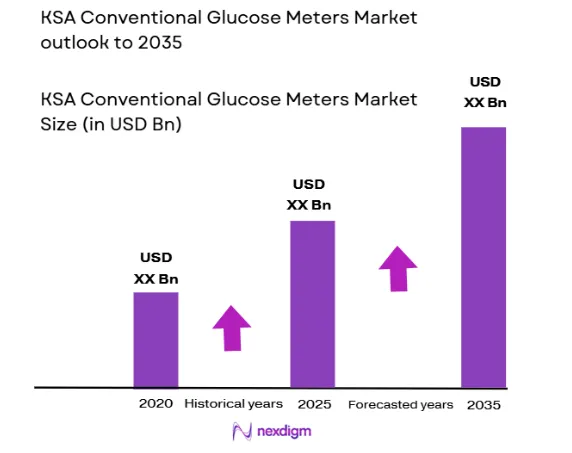
Based on a recent historical assessment, the KSA Conventional Glucose Meters Market has a market size of approximately USD ~ billion. The market has been primarily driven by the increasing prevalence of diabetes and the growing adoption of home-based healthcare devices. The demand for more accurate and efficient glucose monitoring systems has contributed to the growth of the market, especially as healthcare providers and patients seek solutions that offer convenience, precision, and cost-effectiveness. These factors, combined with the expansion of healthcare infrastructure, are expected to sustain market growth in the coming years.
The Kingdom of Saudi Arabia (KSA) has emerged as a dominant player in the conventional glucose meters market, particularly in cities like Riyadh, Jeddah, and Dammam. These cities are at the forefront due to their well-developed healthcare infrastructure, increasing number of healthcare facilities, and high diabetes prevalence rates. Additionally, KSA’s urbanization and governmental support for improving healthcare services contribute significantly to the demand for advanced medical devices, including glucose meters. The market in KSA benefits from strategic initiatives such as health awareness programs and the government’s commitment to enhancing diabetes care.
Market Segmentation
By System Type
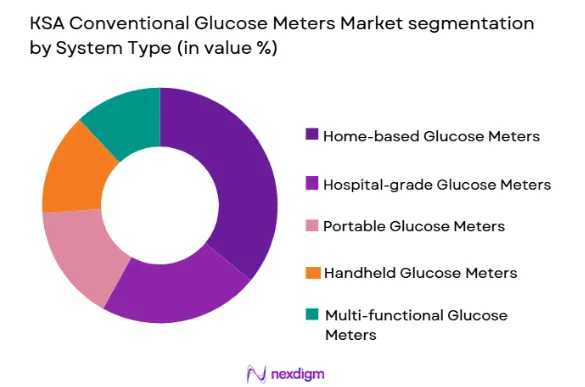
KSA Conventional Glucose Meters market is segmented by system type into home-based glucose meters, hospital-grade glucose meters, portable glucose meters, handheld glucose meters, and multi-functional glucose meters. Recently, home-based glucose meters have a dominant market share due to increasing patient preference for self-monitoring, rising diabetes prevalence, and the need for frequent daily glucose testing without clinical visits. The availability of cost-effective personal monitoring devices, combined with improved patient education regarding diabetes self-management, has significantly supported adoption. Additionally, government healthcare initiatives encouraging early diagnosis and routine monitoring have strengthened demand. Manufacturers are also focusing on user-friendly interfaces, compact designs, and quick testing features, further driving consumer adoption. Growing awareness regarding lifestyle diseases and the shift toward preventive healthcare are also contributing to the segment’s leadership. The convenience factor and accessibility through retail pharmacies continue to strengthen this segment’s overall market position.
By Platform Type
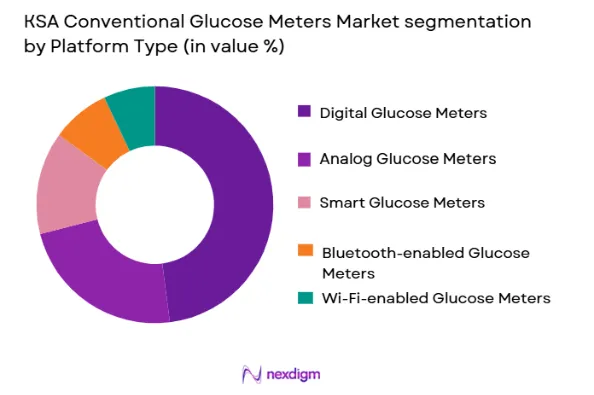
KSA Conventional Glucose Meters Market is segmented by platform type into digital glucose meters, analog glucose meters, smart glucose meters, Bluetooth-enabled glucose meters, and Wi-Fi-enabled glucose meters. Among these, digital glucose meters hold the dominant market share, as they are widely regarded for their precision, ease of use, and ability to provide quick and accurate readings. Their affordability compared to other types of glucose meters and the growing demand for user-friendly devices have made digital meters the most popular choice in KSA.
Competitive Landscape
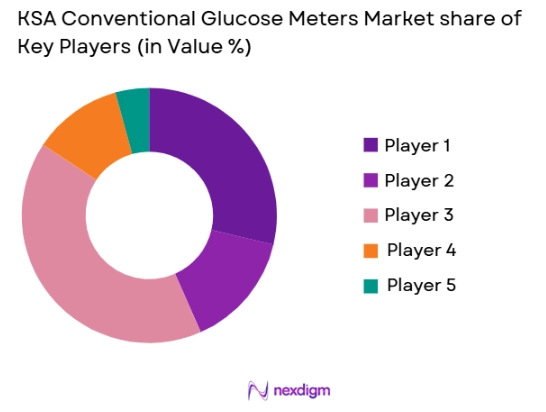
The KSA Conventional Glucose Meters Market is characterized by significant consolidation, with major players holding a strong market presence. The market is competitive, with companies offering a wide range of glucose meters that vary in price, features, and precision. Key players in the market are focusing on product innovation, strategic partnerships, and expanding their distribution networks to increase their market penetration. The influence of major players is expected to grow as demand for advanced glucose monitoring devices continues to rise. Leading companies are also investing in R&D to develop smart glucose meters with enhanced capabilities.
| Company Name | Establishment Year | Headquarters | Technology Focus | Market Reach | Key Products | Revenue (USD Billion) | Additional Market-Specific Parameter |
| Medtronic | 1949 | Ireland | ~ | ~ | ~ | ~ | ~ |
| Roche Diagnostics | 1896 | Switzerland | ~ | ~ | ~ | ~ | ~ |
| Abbott Laboratories | 1888 | USA | ~ | ~ | ~ | ~ | ~ |
| Bayer Healthcare | 1863 | Germany | ~ | ~ | ~ | ~ | ~ |
| LifeScan | 1981 | USA | ~ | ~ | ~ | ~ | ~ |
KSA Conventional Glucose Meters Market Analysis
Growth Drivers
Increasing Diabetes Prevalence
The rising prevalence of diabetes in KSA is a significant growth driver for the conventional glucose meters market. The Kingdom has one of the highest diabetes rates in the region, which has prompted an increased demand for glucose monitoring devices. The government and healthcare authorities in KSA have been actively addressing the growing concern by launching awareness campaigns and promoting diabetes management. As more individuals are diagnosed with diabetes, the demand for glucose meters is expected to rise steadily. Additionally, the growing middle class and their increasing access to healthcare have led to higher spending on medical devices, further driving market growth. The shift towards preventive care and early detection of diabetes also promotes the adoption of home-use glucose meters, as patients seek to manage their condition more effectively. With healthcare professionals emphasizing the importance of regular glucose monitoring, the demand for conventional glucose meters in KSA is poised to increase in the coming years.
Technological Advancements in Glucose Monitoring Devices
Technological advancements in glucose meter devices have been a key factor propelling market growth in KSA. Over the years, there has been a shift from traditional meters to digital and smart glucose meters, which offer enhanced features such as Bluetooth connectivity, mobile app integration, and real-time data analysis. These advancements have significantly improved the accuracy, ease of use, and convenience of glucose meters. Additionally, the development of non-invasive glucose meters is expected to revolutionize diabetes management, eliminating the need for finger-pricking and making glucose monitoring less painful for patients. The growing demand for precision and the increased desire for more user-friendly devices have led to greater investment in R&D by major manufacturers. These technological innovations are expected to continue driving market growth by meeting the evolving needs of both healthcare providers and patients in KSA.
Market Challenges
High Cost of Advanced Glucose Meters
One of the major challenges in the KSA Conventional Glucose Meters Market is the high cost associated with advanced glucose monitoring devices. Although there is a growing preference for smart and digital glucose meters, their higher price point compared to traditional meters makes them less accessible to certain segments of the population. This price barrier is especially prevalent in lower-income segments, which may limit the overall adoption rate of advanced devices. Moreover, the healthcare insurance coverage for these devices is limited, further discouraging patients from opting for more expensive meters. The cost of consumables such as test strips and lancets also adds to the financial burden for individuals, limiting the affordability of continuous glucose monitoring solutions. As a result, the higher costs associated with these devices present a significant challenge to the market’s growth potential, particularly in underdeveloped regions of KSA.
Regulatory Barriers and Approval Delays
Another challenge facing the KSA Conventional Glucose Meters Market is the regulatory hurdles involved in the approval process for new medical devices. The regulatory framework in KSA requires that all medical devices undergo rigorous testing and certification before being approved for market entry. This process can be time-consuming, leading to delays in the availability of new glucose meters in the market. Additionally, stringent regulations surrounding the marketing and distribution of medical devices make it difficult for new players to enter the market. The lack of standardization across different regions and the constantly evolving regulatory environment in KSA further complicates the approval process. These regulatory challenges often hinder the timely introduction of innovative products, limiting the market’s growth potential in the short term.
Opportunities
Expansion of Home Healthcare Services
The growing trend of home healthcare services in KSA presents a significant opportunity for the conventional glucose meters market. As more patients seek to manage their diabetes from the comfort of their homes, the demand for easy-to-use, cost-effective glucose meters is expected to increase. The expansion of home healthcare services, driven by both government and private sector investments, is helping create a robust market for home-use glucose monitoring devices. The increasing focus on patient-centric care, coupled with the convenience of at-home diabetes management, is likely to drive the demand for glucose meters in the residential healthcare sector. Furthermore, with the rising awareness of chronic diseases and preventive healthcare, more people are opting for home-based monitoring, which presents a lucrative growth opportunity for glucose meter manufacturers.
Government Support for Diabetes Management Programs
Another key opportunity for the KSA Conventional Glucose Meters Market lies in the government’s ongoing support for diabetes management programs. The Saudi Arabian government has been actively addressing the rising incidence of diabetes by implementing national programs aimed at improving disease awareness and management. This includes funding for public health campaigns, subsidies for diabetes treatment, and incentives for the local production of medical devices, including glucose meters. These initiatives are expected to increase the adoption of glucose meters across the country, especially in underserved areas where access to healthcare services is limited. Government backing for diabetes management solutions presents a favorable environment for market growth, as it encourages both local and international companies to invest in the KSA market.
Future Outlook
The KSA Conventional Glucose Meters Market is expected to experience robust growth over the next five years, driven by continued advancements in technology, increased healthcare spending, and rising consumer demand for better diabetes management solutions. The government’s ongoing commitment to improving diabetes care through regulatory support and public health initiatives will play a significant role in the market’s expansion. Technological developments, such as the integration of artificial intelligence (AI) and mobile health applications with glucose meters, are likely to enhance the functionality and accuracy of devices, creating a more seamless user experience. The demand for non-invasive glucose meters is also anticipated to rise, further boosting market growth. With increasing awareness about diabetes and the growing preference for home healthcare, the market is poised for substantial growth in the coming years.
Major Players
- Medtronic
- Roche Diagnostics
- Abbott Laboratories
- Bayer Healthcare
- LifeScan
- Nipro Corporation
- Ascensia Diabetes Care
- Arkray
- Dexcom
- Siemens Healthineers
- Sanofi
- Johnson & Johnson
- Beurer
- Omron Healthcare
- iHealth Labs
Key Target Audience
- Investments and venture capitalist firms
- Government and regulatory bodies
- Healthcare providers
- Diabetes care clinics
- Home healthcare service providers
- Pharmaceutical companies
- Medical device manufacturers
- E-commerce platforms
Research Methodology
Step 1: Identification of Key Variables
The first step involves identifying the critical variables that influence the market. This includes determining key factors such as market drivers, restraints, and emerging trends.
Step 2: Market Analysis and Construction
Next, a detailed analysis is performed to construct the market structure. This involves analyzing the data from both primary and secondary sources to map the current state and future trends.
Step 3: Hypothesis Validation and Expert Consultation
Following market analysis, hypotheses regarding the market’s future are validated through consultations with industry experts, stakeholders, and key opinion leaders to ensure data accuracy.
Step 4: Research Synthesis and Final Output
Finally, the research findings are synthesized into a comprehensive report, detailing market insights, trends, and forecasts to deliver the final output.

- Executive Summary
- Research Methodology (Definitions, Scope, Industry Assumptions, Market Sizing Approach, Primary & Secondary Research Framework, Data Collection & Verification Protocol, Analytic Models & Forecast Methodology, Limitations & Research Validity Checks)

- Market Definition and Scope
- Value Chain & Stakeholder Ecosystem
- Regulatory / Certification Landscape
- Sector Dynamics Affecting Demand
- Strategic Initiatives & Infrastructure Growth

- Growth Drivers
Rising prevalence of diabetes in KSA
Technological advancements in glucose meter accuracy
Increase in healthcare infrastructure investment
Growing adoption of home healthcare devices
Rising demand for non-invasive glucose monitoring systems - Market Challenges
High cost of advanced glucose meters
Regulatory hurdles for medical devices
Lack of awareness in rural areas
Need for continuous calibration
Increased competition from alternative monitoring devices - Market Opportunities
Emergence of smart glucose meters
Expanding healthcare infrastructure in KSA
Growth of e-commerce platforms for medical devices - Trends
Shift toward personalized healthcare solutions
Increased demand for integration with mobile apps
Rising popularity of continuous glucose monitoring systems
Adoption of wireless technology in glucose meters
Focus on minimizing patient discomfort during testing - Government Regulations & Defense Policy
Regulatory guidelines for medical device approval in KSA
Incentives for local manufacturing of medical devices
Government focus on enhancing diabetes care programs - SWOT Analysis
- Stakeholder and Ecosystem Analysis
- Porter’s Five Forces Analysis
- Competition Intensity and Ecosystem Mapping

- By Market Value, 2020-2025
- By Installed Units, 2020-2025
- By Average System Price, 2020-2025
- By System Complexity Tier, 2020-2025

- By System Type (In Value%)
Home-based Glucose Meters
Hospital-grade Glucose Meters
Portable Glucose Meters
Handheld Glucose Meters
Multi-functional Glucose Meters - By Platform Type (In Value%)
Digital Glucose Meters
Analog Glucose Meters
Smart Glucose Meters
Bluetooth-enabled Glucose Meters
Wi-Fi-enabled Glucose Meters - By Fitment Type (In Value%)
Wearable Glucose Meters
Non-wearable Glucose Meters
Embedded Glucose Meters
Portable Glucose Meters
Disposable Glucose Meters - By EndUser Segment (In Value%)
Hospitals
Clinics
Home Care
Laboratories
Fitness Centers - By Procurement Channel (In Value%)
Retail Pharmacies
Hospital Pharmacies
Online Retail
Direct Sales
Distributors - By Material / Technology (In Value%)
Electrochemical Technology
Photometric Technology
Thermometric Technology
Biochemical Technology
Infrared Technology

- Market structure and competitive positioning
- Market share snapshot of major players
- Cross Comparison Parameters (Price, Product Innovation, Market Share, Distribution Channels, Customer Support, Brand Recognition, R&D Investment, Global Reach, Regulatory Compliance, Manufacturing Capacity)
- SWOT Analysis of Key Players
- Pricing & Procurement Analysis
- Key Players
Medtronic
Roche Diagnostics
Abbott Laboratories
Bayer Healthcare
Johnson & Johnson
Lifescan
Dexcom
Siemens Healthineers
Nipro Corporation
Ascensia Diabetes Care
Arkray
F. Hoffmann-La Roche AG
Novo Nordisk
Sanofi
Beurer

- Increasing preference for home-based glucose monitoring
- Hospital adoption of advanced glucose meters
- Rising demand from fitness centers and gyms
- Growing importance of early diabetes detection in clinics

- Forecast Market Value, 2026-2035
- Forecast Installed Units, 2026-2035
- Price Forecast by System Tier, 2026-2035
- Future Demand by Platform, 2026-2035


 Request a Sample
 Ask for Customization
 Get a Quote
 Enquire Now