
 Download PDF
Market Overview
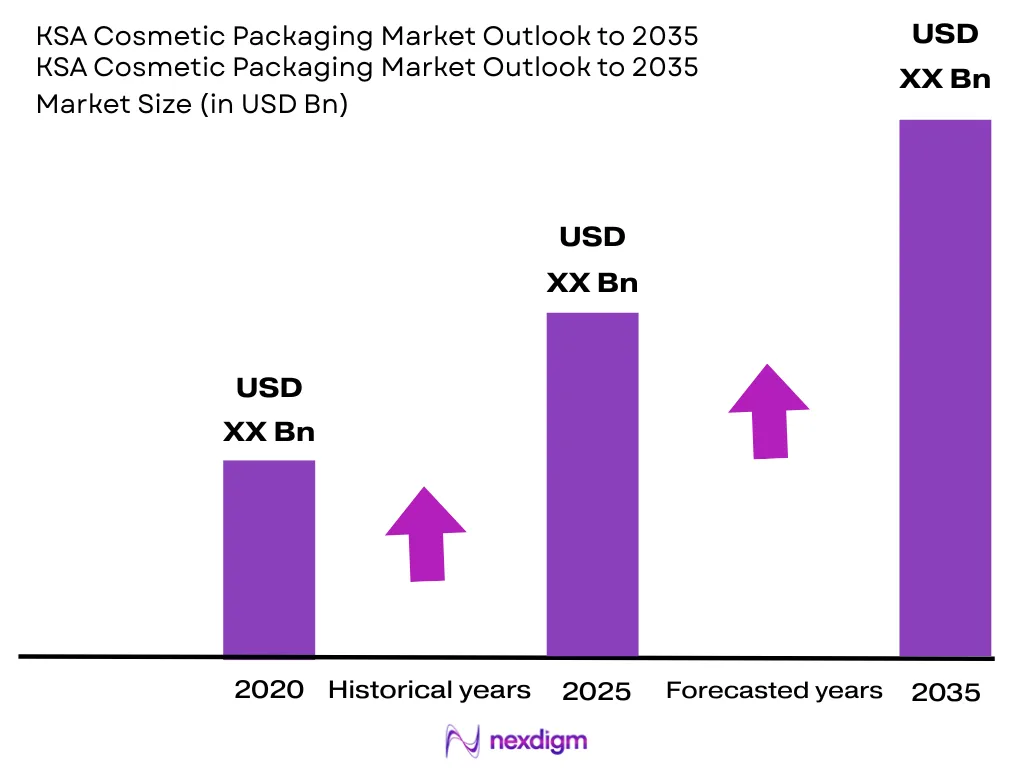
The KSA Cosmetic Packaging Market was valued at USD ~ Billion in 2024 and is anticipated to expand at a CAGR of ~% during 2026-2035, tracking the growth of Saudi Arabia’s broader cosmetics market, valued at approximately USD ~ billion and driven by increasing consumer awareness of personal grooming, e-commerce expansion, and rising preference for premium, organic, and halal-certified products. The market is distinguished by the Saudi Food and Drug Authority’s (SFDA) stringent halal certification requirements, which extend beyond ingredient sourcing to encompass manufacturing processes, supply-chain traceability, and packaging materials, creating a compliance burden that raises entry barriers for international brands unfamiliar with Islamic jurisprudence. The government-established Halal Products Development Company (HPDC), backed by the Public Investment Fund, continues to invest in localizing halal cosmetics production and strengthening the Kingdom’s position as a global center for halal products, directly shaping demand for halal-certified packaging materials and supply chains across the industry.
Market Segmentation
By Material Type
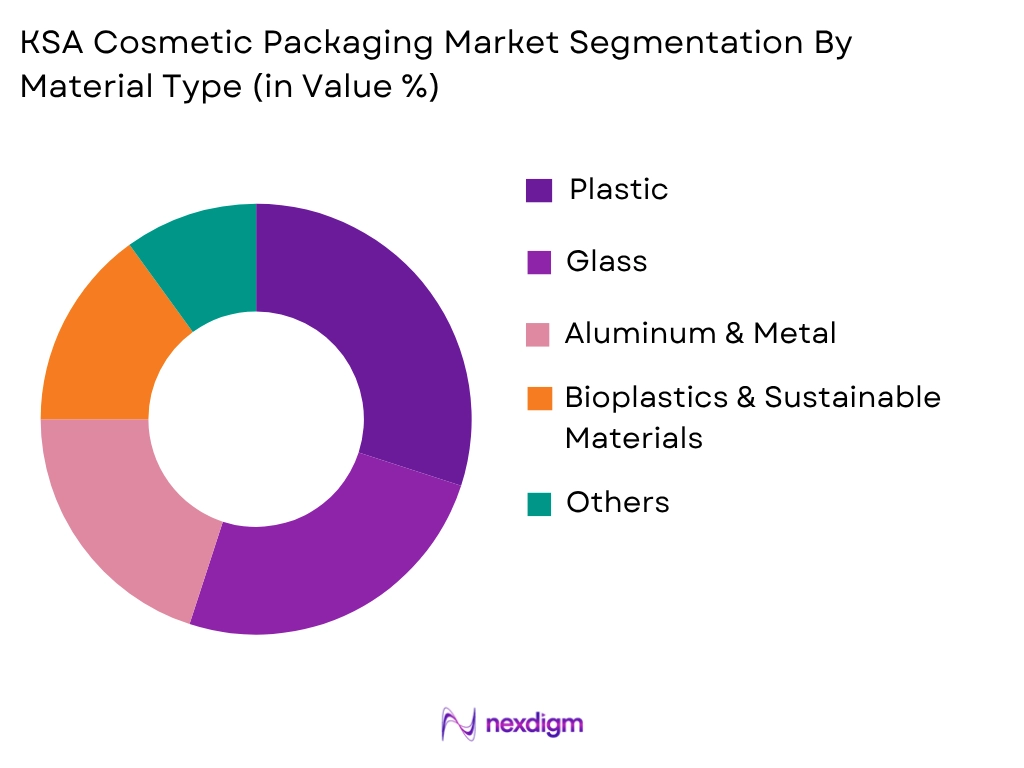
Plastic materials continue to hold a substantial share of the KSA Cosmetic Packaging Market, supported by their cost-effectiveness and compatibility with high-volume skincare and sun care packaging lines, a category that commanded approximately 43.75% of Saudi Arabia’s cosmetics revenue share in 2025 given heightened consumer consciousness toward skin protection against the Kingdom’s harsh climatic conditions. Glass retains an important role within premium fragrance and skincare categories, particularly as local heritage brands such as AÏZA leverage distinctive ingredients like AlUla Peregrina oil, featured in international fragrance collaborations, to signal authenticity within premium glass packaging formats. Halal-certified packaging components represent an increasingly distinct and fast-growing material consideration, as halal certification requirements extend beyond ingredients to encompass the packaging materials and manufacturing processes used in production, requiring converters to maintain verified supply chain traceability. Aluminum and metal packaging maintain a durable niche in premium compacts and grooming products, supported by Saudi Arabia’s expanding men’s grooming segment tied to Vision 2030’s broader lifestyle diversification agenda.
By Product Type
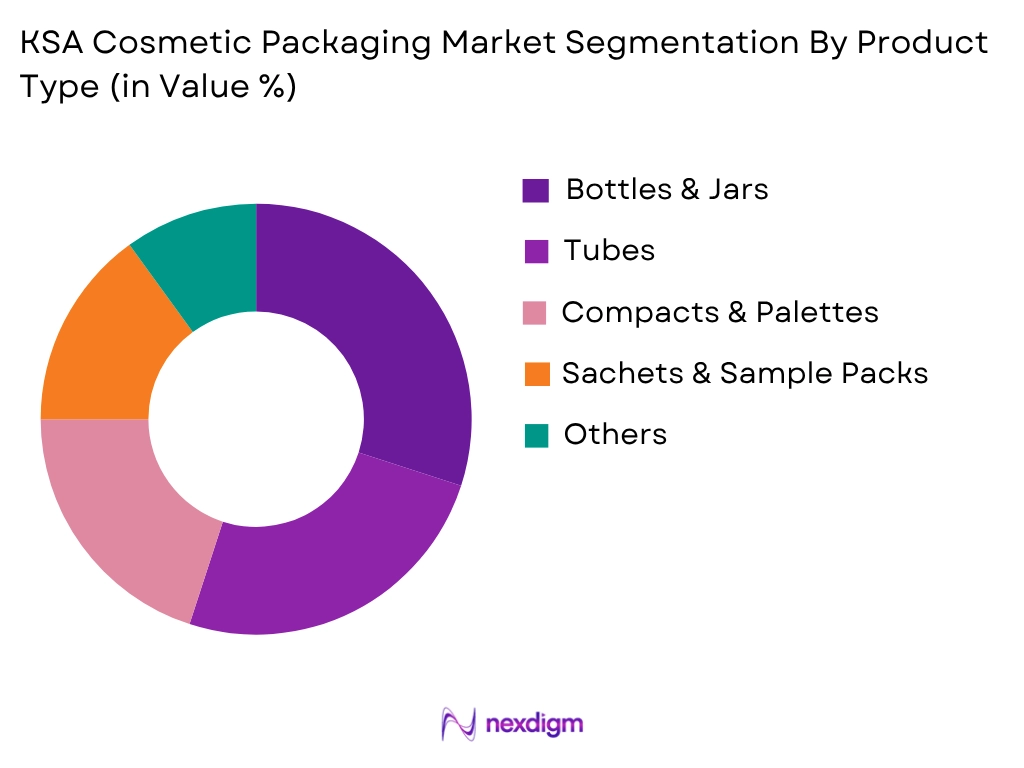
Bottles & Jars represent a leading product-type segment in the KSA Cosmetic Packaging Market, closely tied to the dominance of skin and sun care products, which commanded approximately 43.75% revenue share in 2025 driven by rising anti-aging and sun protection awareness across the Kingdom’s harsh desert climate. Premium skincare packaging continues to expand at a particularly strong pace, with premium skincare products growing at approximately 6.75% annually through 2030, driven by affluent, dermatologically-conscious consumers increasingly exposed to workplace-appropriate beauty routines amid rising female workforce participation, which reached approximately 36.2% of the national workforce in 2024. Compacts & Palettes and Pumps & Dispensers continue to grow alongside expanding makeup consumption and premium retail penetration, concentrated in Riyadh, Jeddah, and Dammam, which dominate the market as major urban retail hubs with high disposable incomes. Tubes and sachets maintain relevance across mass-market and value-oriented product tiers, particularly for brands seeking to extend reach beyond the Kingdom’s most affluent urban consumer segments.
Competitive Landscape
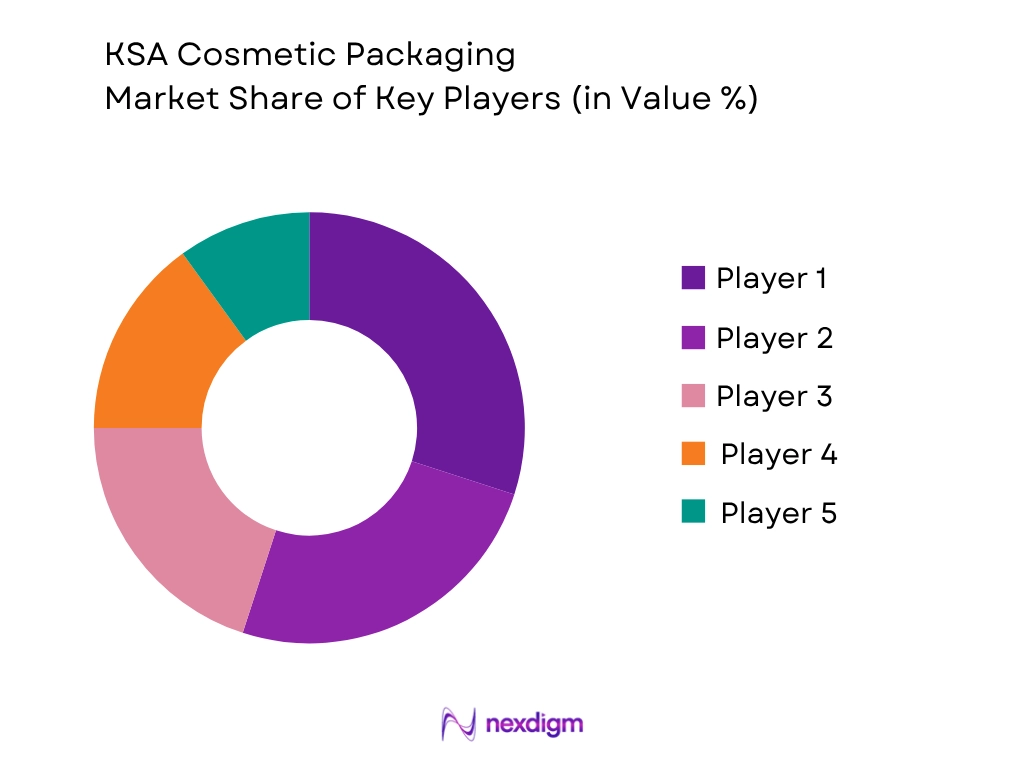
The KSA Cosmetic Packaging Market exhibits moderate competitive intensity, with established global packaging suppliers competing alongside a growing base of specialized converters capable of navigating the Kingdom’s distinctive halal certification requirements. Albéa, AptarGroup, and Gerresheimer maintain strong positions across tubes, dispensing systems, and glass packaging respectively, serving both multinational beauty brands operating in Saudi Arabia and the Kingdom’s growing base of local, halal-certified beauty brands. HCP Packaging and Quadpack continue to expand regional distribution capability to serve the Middle East’s premium and indie beauty segments, while specialized compliance and testing service providers, exemplified by SGS’s debut at Beautyworld Saudi Arabia in April 2025 offering cosmetics compliance solutions aligned with SFDA regulations, reflect the growing importance of dedicated regulatory and packaging compliance support as a distinct competitive service layer within the market. Converters that can demonstrate credible halal-certified supply chain traceability, spanning packaging materials and manufacturing processes rather than ingredients alone, are increasingly well positioned to win contracts with both multinational brands seeking market entry and the Kingdom’s expanding local beauty brand base.
| Company | Establishment Year | Headquarters | Primary Product Portfolio | Cosmetic Packaging Portfolio
|
Manufacturing Presence | Major End-Use Industries | Key Strategic Focus | Certifications & Compliance |
| Albéa SA | 2012 | ~ | ~ | ~ | ~ | ~ | ~ | ~ |
| AptarGroup, Inc. | 1992 | ~ | ~ | ~ | ~ | ~ | ~ | ~ |
| Gerresheimer AG | 1864 | ~ | ~ | ~ | ~ | ~ | ~ | ~ |
| HCP Packaging Co. Ltd. | 1998 | ~ | ~ | ~ | ~ | ~ | ~ | ~ |
| Quadpack Industries | 2003 | ~ | ~ | ~ | ~ | ~ | ~ | ~ |
KSA Cosmetic Packaging Market Analysis
Growth Drivers
Vision 2030 Halal Cosmetics Hub Positioning and HPDC Investment
The KSA cosmetic packaging market is experiencing sustained growth due to the Saudi government’s strategic positioning of the Kingdom as a global halal cosmetics center under Vision 2030. The Halal Products Development Company, established through the Public Investment Fund, continues to invest in localizing halal cosmetics production and attracting international brands seeking Shariah-compliant certification, directly shaping demand for halal-certified packaging materials and traceable supply chains. Because halal certification extends beyond ingredient sourcing to encompass manufacturing processes, supply-chain traceability, and packaging materials, the HPDC’s localization investments are creating structural demand for domestic and regional packaging converters capable of meeting these comprehensive compliance requirements. As Saudi Arabia continues to position itself as a global center for halal products rather than merely a consumption market, packaging suppliers that establish early halal-certified production capability within the Kingdom are increasingly well positioned to capture both domestic demand and potential export opportunities serving the broader global halal beauty market.
Rising Female Workforce Participation and Premium Skincare Demand
Saudi Arabia’s rapidly evolving labor market continues to reshape cosmetic packaging demand, with women comprising approximately 36.2% of the national workforce in 2024, up dramatically from previous decades, creating a substantial professional consumer base seeking workplace-appropriate skincare and premium beauty products. This demographic shift has directly driven demand for dermatological solutions, anti-aging treatments, and daily skincare routines, with premium skincare products growing at approximately 6.75% annually through 2030. Skin and sun care products commanded approximately 43.75% of Saudi Arabia’s cosmetics revenue share in 2025, reflecting heightened consumer consciousness toward skin protection against the Kingdom’s harsh climatic conditions alongside growing anti-aging awareness. As female workforce participation continues to expand alongside broader Vision 2030 lifestyle diversification initiatives, sustained demand growth for premium, well-packaged skincare and sun care products is expected to continue driving investment in higher-quality bottle, jar, and pump packaging formats across the Kingdom’s cosmetic packaging market.
Market Challenges
Halal Certification Complexity Extending to Packaging and Supply Chain
The KSA Cosmetic Packaging Market faces a distinctive and significant challenge in that halal certification requirements extend well beyond ingredient sourcing to encompass manufacturing processes, supply-chain traceability, and packaging materials themselves, raising substantial entry barriers for international brands and their packaging suppliers unfamiliar with Islamic jurisprudence. Multinational entrants must navigate certification timelines that can extend six to twelve months, creating significant planning and working capital challenges for packaging converters seeking to establish qualified supply relationships with brands entering the Saudi market. This certification complexity requires packaging suppliers to demonstrate verified traceability not only for the materials used in packaging components but also for the manufacturing processes and handling procedures throughout their supply chain, a requirement significantly more comprehensive than conventional cosmetic packaging compliance frameworks found in most other global markets. Converters lacking established halal certification infrastructure face a meaningful competitive disadvantage, as local brands such as AÏZA and other Saudi entrepreneurs increasingly compete effectively in premium segments where cultural authenticity and halal certification take precedence over traditional international brand heritage.
Evolving SFDA Conformity Assessment Requirements
The KSA Cosmetic Packaging Market continues to navigate an evolving and increasingly stringent regulatory framework administered by the Saudi Food and Drug Authority, which updated its cosmetics conformity assessment process in the fourth quarter of 2025, adding new layers of complexity to market entry for exporters and their packaging suppliers. The SFDA’s cosmetics conformity assessment programme, designed to protect businesses against fraud and ensure products are free of defects that could endanger consumer health and safety, requires continuous monitoring and adaptation from packaging suppliers seeking to maintain compliant relationships with brands operating in the Kingdom. Higher production costs associated with halal certification and evolving SFDA compliance requirements create pricing pressures throughout the value chain, disadvantaging smaller packaging converters without dedicated regulatory affairs resources relative to established players with robust quality systems and legal resources. This combination of halal certification complexity and continuously evolving conformity assessment requirements creates persistent operational uncertainty for packaging suppliers seeking to plan long-term capacity investments serving the Saudi market.
Market Opportunities
Growth in Halal-Certified Premium Packaging and Compliance Services
Growing demand for verified halal-certified packaging solutions creates substantial opportunity for converters capable of demonstrating comprehensive supply chain traceability spanning materials, manufacturing, and handling processes. SGS’s April 2025 debut at Beautyworld Saudi Arabia, offering cosmetics compliance solutions specifically aligned with SFDA regulations including product testing, labeling reviews, and certification support, illustrates the growing commercial opportunity in specialized compliance services supporting the packaging value chain. As the Halal Products Development Company continues its Public Investment Fund-backed mission to position Saudi Arabia as a global halal cosmetics center, packaging converters that establish early, credible halal-certified production capability are well positioned to serve not only the domestic Saudi market but potentially the broader global halal beauty market as international brands increasingly seek Shariah-compliant certification to access Muslim-majority consumer markets worldwide. Local heritage brands leveraging distinctive Saudi ingredients, exemplified by AÏZA’s use of AlUla Peregrina oil in international fragrance collaborations, further create opportunity for premium glass and specialty packaging suppliers capable of supporting authentic, culturally resonant brand positioning.
Riyadh-Centered Premium Retail Growth and Digital Transformation
Continued urban retail concentration in Riyadh, which represented approximately 37% of Saudi Arabia’s cosmetics market share in 2025 as part of the broader northern and central region, creates sustained opportunity for packaging suppliers serving the Kingdom’s premium beauty retail ecosystem. Riyadh, Jeddah, and Dammam continue to dominate the market as major retail hubs given their large urban populations and high disposable incomes, attracting both local and international brands and enhancing competitive variety in product offerings. Growing technology adoption within Saudi Arabia’s beauty retail sector, including augmented reality try-on experiences and AI-powered skin analysis tools, alongside internet penetration reaching approximately 95% of the population, is reshaping how packaging design and unboxing experiences factor into brand differentiation strategies. As digital-native and social-media-driven beauty brands continue to proliferate, supported by more than 75% of the Saudi population being active on social media, packaging suppliers capable of providing visually distinctive, premium, and shareable packaging designs are well positioned to capture growing demand from both established and emerging Saudi beauty brands.
Future Outlook
The KSA Cosmetic Packaging Market is expected to witness steady expansion over the forecast period, supported by continued Vision 2030-driven positioning of Saudi Arabia as a global halal cosmetics hub, rising female workforce participation sustaining premium skincare demand, and growing investment from the Halal Products Development Company in localized, halal-certified packaging supply chains. Continued evolution of SFDA conformity assessment requirements will further shape converter investment priorities, rewarding packaging suppliers capable of maintaining robust, continuously updated compliance infrastructure. The market is also likely to benefit from Saudi Arabia’s growing digital beauty retail ecosystem and the continued rise of local heritage brands seeking premium, culturally authentic packaging solutions to differentiate within an increasingly competitive domestic and regional beauty market.
Major Players
- Albéa SA
- AptarGroup, Inc.
- Gerresheimer AG
- HCP Packaging Co. Ltd.
- Quadpack Industries
- Amcor plc
- Silgan Holdings Inc.
- ALPLA Werke Alwin Lehner GmbH
- Berry Global, Inc.
- SGS SA
- Libo Cosmetics Co., Ltd.
- TriMas Corporation
- CCL Industries
- DS Smith plc
- Graham Packaging International
Key Target Audience
- Cosmetic Packaging Manufacturers
- International & Local Halal-Certified Beauty Brands
- Contract Manufacturing & Fill Partners
- Private Label Manufacturers
- Halal Certification & Compliance Service Providers
- Investment and Venture Capitalist Firms
- Government and Regulatory Bodies (Saudi Food and Drug Authority (SFDA), Halal Products Development Company (HPDC), Ministry of Investment)
- Raw Material Suppliers and Resin Producers
Research Methodology
Step 1: Identification of Key Variables
The research process begins with identifying the complete ecosystem of the KSA Cosmetic Packaging Market, including raw material suppliers, packaging converters, printing technology providers, beauty brand owners, retailers, and regulatory authorities. Extensive secondary research is conducted using company annual reports, government publications, trade associations, customs statistics, industry journals, and proprietary databases to determine the variables influencing market demand, pricing, production, consumption, and technological developments.
Step 2: Market Analysis and Construction
Historical market information is collected and analyzed to estimate market size, production volumes, import-export activity, application-wise demand, and pricing trends. A combination of top-down and bottom-up approaches is used to estimate market revenues and validate segment-level performance. Consumption patterns across skincare, haircare, makeup, and fragrance packaging are evaluated to establish an accurate representation of the industry.
Step 3: Hypothesis Validation and Expert Consultation
The preliminary findings are validated through Computer-Assisted Telephone Interviews (CATIs) and structured discussions with cosmetic packaging converters, procurement managers, distributors, packaging engineers, regulatory experts, and senior executives operating within the Saudi Arabian beauty and personal care industry. These interviews help verify market assumptions, competitive developments, technology adoption trends, pricing dynamics, and future investment opportunities while refining the overall market estimates.
Step 4: Research Synthesis and Final Output
The final stage integrates insights obtained from primary interviews with quantitative information collected through secondary sources. Data triangulation techniques are applied to reconcile differences between supply-side and demand-side estimates, ensuring robust market forecasting. The report is then reviewed through multiple quality assurance checkpoints to deliver a comprehensive analysis covering market size, segmentation, competitive landscape, future outlook, and strategic recommendations for industry stakeholders.

- Executive Summary
- Research Methodology (Market Definitions and Assumptions, Abbreviations, Market Sizing Approach, Top-Down Analysis, Bottom-Up Analysis, Demand-Side Assessment, Supply-Side Assessment, Primary Industry Interviews, Secondary Research Validation, Data Triangulation, Forecasting Framework, Limitations and Future Conclusions)

- Definition and Scope
- Market Evolution and Industry Genesis
- Timeline of Major Industry Developments
- Cosmetic Packaging Industry Value Chain Analysis
- Supply Chain Analysis

- Growth Drivers (Vision 2030 Halal Cosmetics Hub Positioning, HPDC-Backed Localization Investment, Rising Female Workforce Participation, Premium Skincare & Sun Care Demand Growth, Expanding E-Commerce & Digital Retail, Growth in Local Heritage Beauty Brands)
- Market Challenges (Halal Certification Complexity Extending to Packaging & Supply Chain, Evolving SFDA Conformity Assessment Requirements, Extended Certification Timelines for Multinationals, Higher Production Costs from Compliance, Counterfeit Product Prevalence, Import Dependency for Specialty Materials)
- Market Opportunities (Growth in Halal-Certified Premium Packaging Solutions, Specialized Compliance & Testing Service Expansion, Riyadh-Centered Premium Retail Growth, Local Heritage Brand Premiumization, Men’s Grooming Segment Expansion, Sustainable & Refillable Packaging Adoption)
- Market Trends (Growth in Halal-Certified Packaging Supply Chains, AR & AI-Enhanced Retail Experiences, Clean Beauty & Botanical Ingredient Packaging, Heritage Ingredient Brand Positioning, Digital-Native Brand Growth, Premiumization of Sun Care Packaging)
- Government Regulations (SFDA Cosmetics Law Compliance, SFDA Cosmetics Conformity Assessment Programme, Updated SFDA Conformity Assessment Requirements (Q4 2025), Halal Certification for Packaging & Manufacturing, GCC Guide for Control of Cosmetic Products, Import Labeling & Safety Requirements)
- Import and Export Analysis (Trade Volume, Major Import Sources, Export Destinations, HS Code Analysis, Trade Balance)
- Raw Material Availability Analysis (Imported PET & PP Resins, Imported Cosmetic-Grade Glass, Aluminum Sheet Stock, Paper & Paperboard Feedstocks, Halal-Certified Packaging Components)
- Technology Landscape (Injection & Blow Molding Technologies, Airless Pump & Dispensing Technologies, Halal Supply Chain Traceability Platforms, AR Try-On & AI Personalization Integration, Sustainable Material Processing Technologies)
- Sustainability Assessment (Recyclable & Refillable Packaging Adoption, Halal-Certified Sustainable Sourcing, Carbon Footprint Reduction, Brand-Led Sustainability Initiatives, Circular Economy Partnerships)
- PESTLE Analysis
- SWOT Analysis
- Porter’s Five Forces Analysis
- Stakeholder Ecosystem
- Competition Ecosystem

- By Market Value (2020-2025)
- By Volume Consumption (2020-2025)
- By Average Selling Price (2020-2025)

- By Material Type (In Value %)
Plastic (PET & PP)
Glass
Aluminum & Metal
Paper & Paperboard
Bioplastics & Sustainable Materials - By Product Type (In Value %)
Bottles & Jars
Tubes
Compacts & Palettes
Pumps & Dispensers
Caps & Closures
Sachets & Sample Packs - By Application (In Value %)
Skincare & Sun Care
Haircare
Makeup & Color Cosmetics
Fragrances
Men’s Grooming
Bath & Body - By End User (In Value %)
International & Multinational Beauty Brands
Local & Halal-Certified Saudi Brands
Contract Manufacturers
Private Label Manufacturers
Professional & Salon Channel - By Region (In Value %)
Riyadh Region
Makkah Region
Eastern Province
Madinah Region
Asir Region

- Market Share of Major Players (By Value, Volume, Material Type, Application, Product Category)
- Cross Comparison Parameters (Product Portfolio Breadth, Halal Certification Coverage, Regional Distribution Presence, Application Technical Support, Manufacturing Capacity, Regulatory Compliance & Certifications, Prestige Beauty Customer Base, Innovation & New Product Launch Frequency)
- SWOT Analysis of Major Players
- Pricing Analysis by Product Category and Format
- Production Capacity Analysis
- Manufacturing Footprint Analysis
- Distribution Network Analysis
- Innovation Benchmarking
- Detailed Profiles of Major Companies
Albéa SA
AptarGroup, Inc.
Gerresheimer AG
HCP Packaging Co. Ltd.
Quadpack Industries
Amcor plc
Silgan Holdings Inc.
ALPLA Werke Alwin Lehner GmbH
Berry Global, Inc.
SGS SA
Libo Cosmetics Co., Ltd.
TriMas Corporation
CCL Industries
DS Smith plc
Graham Packaging International

- Consumption Pattern Analysis (Brand Origin, Batch Size, Product Category Penetration, Urban Retail Concentration, Reformulation Activity)
- Purchasing Criteria (Halal Certification Status, Regulatory Compliance, Cost Efficiency, Design & Shelf Appeal, Recyclability, Lead Time)
- Procurement and Supplier Selection Analysis
- Halal-Certified Packaging Adoption Assessment
- Prestige vs Mass Market Packaging Demand
- Product Attribute Preference Analysis (Dispensing Precision, Tamper-Evidence, Print & Finish Quality, Recyclability, Halal Traceability, Unboxing Experience)
- Halal Compliance Influence on Packaging Investment
- Pain Point Analysis
- Decision-Making Process

- By Market Value (2026-2035)
- By Volume Consumption (2026-2035)
- By Average Selling Price (2026-2035)


 Request a Sample
 Ask for Customization
 Get a Quote
 Enquire Now