
 Download PDF
Market Overview
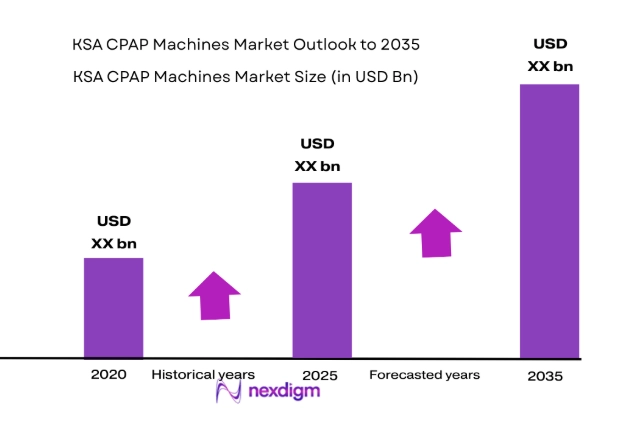
The KSA CPAP Machines Market has witnessed significant growth, driven by increasing incidences of sleep apnea and rising healthcare awareness. The market size for CPAP machines in KSA is estimated to be USD ~ million based on a recent historical assessment. This growth is fueled by both healthcare improvements and a rising middle-class population that prioritizes better health management. In addition, technological innovations such as portable and user-friendly devices have contributed to greater adoption across both urban and rural areas.
Saudi Arabia remains a dominant player in the region, driven by its well-established healthcare infrastructure and government initiatives to improve public health. Major cities like Riyadh, Jeddah, and Dammam are key contributors due to their high population density and modern healthcare facilities. These cities have seen a rise in sleep disorder diagnoses, leading to a higher demand for CPAP machines. The government’s investment in healthcare and the increasing number of specialized clinics and sleep centers further bolster the demand in these urban hubs.
Market Segmentation
By Product Type
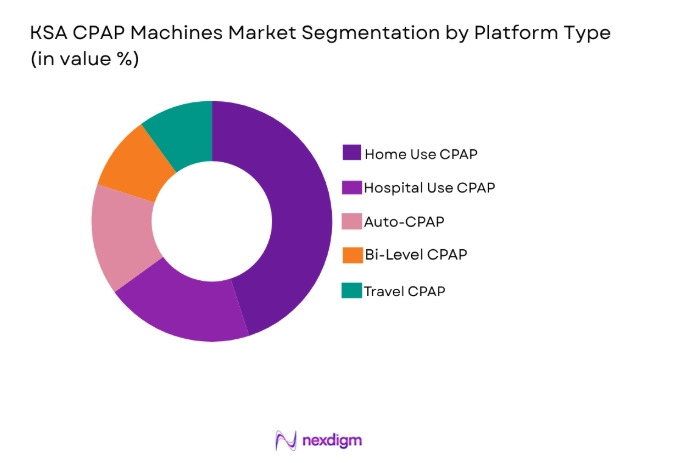
The KSA CPAP Machines market is segmented by product type into home use CPAP, hospital use CPAP, auto-CPAP, bi-level CPAP, and travel CPAP. Recently, the home use CPAP segment has shown the dominant market share due to increasing awareness of sleep disorders and the convenience of in-home treatment options. This growth is supported by the rise in disposable incomes and the convenience of remote healthcare services, making home use devices a preferred choice. The increasing availability of portable and easy-to-use CPAP machines has further propelled the market share of this sub-segment.
By Platform Type
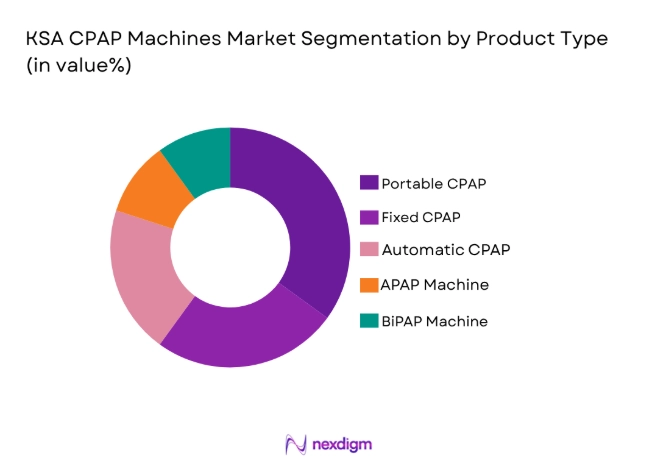
The KSA CPAP Machines market is also segmented by platform type into fixed CPAP, portable CPAP, automatic CPAP, APAP machine, and BiPAP machine. The portable CPAP segment holds the dominant market share, as consumers increasingly demand devices that offer both mobility and convenience. Factors such as the growing number of frequent travelers and the shift towards home healthcare services contribute to the popularity of portable CPAP devices. The increased availability of affordable, lightweight models has further fueled the demand for this sub-segment.
Competitive Landscape
The competitive landscape of the KSA CPAP Machines market is marked by the presence of both global and local players, with consolidation being a notable trend. Leading manufacturers are focusing on product innovation and strategic partnerships to maintain their market positions. These players are actively developing new technologies and expanding their product portfolios to cater to the diverse needs of end users. Increased competition is driving improvements in product quality, cost-effectiveness, and customer service.
| Company Name | Establishment Year | Headquarters | Technology Focus | Market Reach | Key Products | Revenue (USD) | Additional Parameter |
| ResMed | 1989 | San Diego, USA | |||||
| Philips Healthcare | 1891 | Amsterdam, NL | |||||
| Fisher & Paykel Healthcare | 1934 | Auckland, NZ | |||||
| Invacare | 1885 | Elyria, USA | |||||
| DeVilbiss Healthcare | 1888 | Somerset, USA |
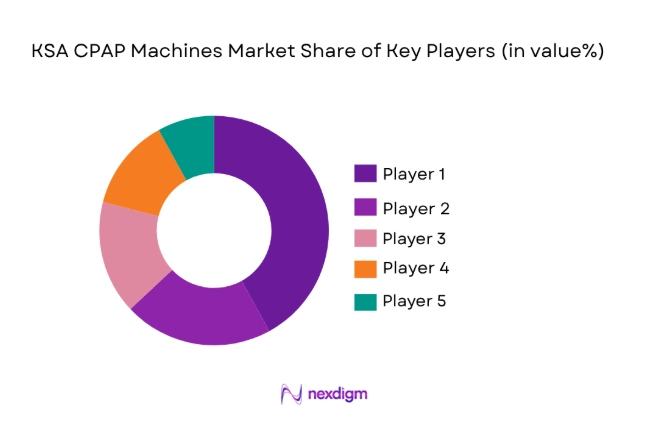
KSA CPAP Machines Market Analysis
Growth Drivers
Increasing Prevalence of Sleep Apnea
The increasing prevalence of sleep apnea is a major driver in the KSA CPAP Machines market. Sleep apnea, a condition characterized by repeated interruptions in breathing during sleep, has become more widely recognized as a significant health concern in Saudi Arabia. The rise in awareness of sleep disorders has encouraged more individuals to seek diagnosis and treatment, resulting in a marked increase in demand for CPAP machines. The growing health consciousness among the population, coupled with higher disposable incomes, has made these devices more accessible, especially as more people prioritize managing their overall well-being. As Saudi Arabia continues to modernize its healthcare systems, patients are increasingly opting for home care solutions, such as CPAP machines, as part of their treatment plan. This shift towards home-based treatments is driving demand for home-use CPAP machines. Furthermore, initiatives to increase access to sleep disorder care, particularly in urban areas, have further fueled market growth by encouraging more people to recognize the importance of early diagnosis and proper management of sleep apnea.
Technological Advancements in CPAP Devices
Technological advancements in CPAP devices have also been a key factor driving market growth in Saudi Arabia. The introduction of smarter, more efficient devices that offer personalized therapy has significantly improved both the user experience and the effectiveness of CPAP therapy. These modern devices are equipped with features such as mobile application integration, real-time data tracking, and advanced sensors that adjust air pressure automatically, improving therapy adherence. Noise reduction technologies have further enhanced patient comfort, making it easier for individuals to sleep soundly while undergoing treatment. The continued evolution of CPAP machines to include digital connectivity allows for remote monitoring, which enables healthcare providers to track patient progress and make necessary adjustments without the need for in-person visits. As a result, more patients are opting for these user-friendly and technologically advanced solutions. This trend is expected to continue, as technological innovation in CPAP machines enhances both their comfort and efficiency, thus contributing to greater adoption in the market.
Market Challenges
High Costs Associated with CPAP Machines
High costs associated with CPAP machines remain one of the most significant barriers to market growth in Saudi Arabia. Despite the increasing demand for CPAP devices, their high upfront costs continue to limit accessibility, especially for individuals in rural areas or those without comprehensive insurance coverage. While the overall cost of CPAP machines has decreased over the years due to technological advancements and economies of scale, the devices are still considered expensive for many consumers. Additionally, insurance coverage for CPAP devices is inconsistent, with many patients facing high out-of-pocket expenses or a lack of adequate reimbursement options. This affordability issue presents a major challenge for widespread adoption, particularly for those who might benefit most from CPAP therapy but cannot afford the initial investment. Even though more affordable models have been introduced to the market, the high costs remain a key barrier to market growth, particularly in lower-income segments of the population.
Lack of Awareness in Rural Regions
Lack of awareness about sleep apnea and the benefits of CPAP therapy in rural regions is another significant challenge facing the KSA CPAP Machines market. While urban areas like Riyadh, Jeddah, and Dammam benefit from advanced healthcare infrastructure and public health awareness campaigns, rural areas often lack access to specialized medical services and educational resources about sleep disorders. Many people living in these regions are not aware of the symptoms of sleep apnea or the importance of seeking treatment, leading to delays in diagnosis and therapy adoption. Additionally, rural patients may face difficulties accessing CPAP machines due to limited availability in local medical supply stores or clinics. This knowledge gap and access issue hinder the growth of the market in rural areas, where the demand for sleep apnea diagnosis and treatment is relatively lower. Expanding education and access in these regions could unlock significant growth potential for the market.
Opportunities
The Growing Elderly Population
The growing elderly population in Saudi Arabia presents a significant opportunity for the CPAP Machines market. As the country’s population continues to age, the incidence of sleep disorders, particularly sleep apnea, is expected to rise. Older adults are more susceptible to chronic health conditions, including respiratory issues that contribute to or exacerbate sleep apnea. As the prevalence of these conditions increases with age, the demand for CPAP devices is likely to grow. Additionally, as awareness of sleep apnea improves, older adults are more likely to seek treatment, including the use of CPAP machines to manage their condition. The elderly population is also more likely to seek home-based healthcare solutions, further driving the demand for CPAP machines that can be conveniently used in the home environment. This demographic shift creates a substantial opportunity for market expansion, as more elderly individuals look for ways to improve their quality of life through the management of sleep apnea.
Expansion of Telemedicine and Home Healthcare Services
The expansion of telemedicine and home healthcare services in Saudi Arabia presents a significant opportunity for the CPAP Machines market. As the government and healthcare sector continue to invest in digital health solutions, telemedicine is becoming an increasingly important way for patients to receive care remotely. This trend is particularly important for individuals using CPAP machines, as it allows for remote monitoring of therapy progress, adjustments to device settings, and consultations with healthcare providers without the need for in-person visits. Additionally, the convenience of home healthcare services allows patients to receive CPAP therapy and other medical treatments in the comfort of their homes. This shift towards home-based healthcare, combined with the convenience of telemedicine, is expected to increase demand for CPAP machines, especially as more patients opt for less invasive and more accessible forms of treatment. As a result, this growing trend of telemedicine and home healthcare services is an important factor driving the expansion of the CPAP Machines market.
Future Outlook
The future outlook for the KSA CPAP Machines market over the next five years is promising, with expected growth driven by technological advancements and increasing awareness of sleep apnea. Regulatory support and government initiatives are likely to play a key role in expanding the market, as Saudi Arabia continues to prioritize healthcare improvements. Technological developments, such as the integration of smart features in CPAP machines, are expected to drive adoption rates. In addition, the demand for home healthcare solutions will continue to rise, particularly among the aging population, further contributing to market growth.
Major Players
- ResMed
- Philips Healthcare
- Fisher & Paykel Healthcare
- Invacare
- DeVilbiss Healthcare
- Somnetics
- Apex Medical
- Breas Medical
- Drive DeVilbiss Healthcare
- Medtronic
- Nidek Medical Products
- Sleepnet Corporation
- Itamar Medical
- Shree Sai Healthcare
- CareFusion
Key Target Audience
- Investments and venture capitalist firms
- Government and regulatory bodies
- Healthcare providers
- Home care service providers
- Hospitals and sleep clinics
- Insurance companies
- Manufacturers of medical devices
Research Methodology
Step 1: Identification of Key Variables
Identify the key market variables and drivers that influence the CPAP machine market, including demand patterns, technological advancements, and regulatory factors.
Step 2: Market Analysis and Construction
Analyze and segment the market based on product types, platform types, and end users to build a comprehensive understanding of market dynamics.
Step 3: Hypothesis Validation and Expert Consultation
Validate hypotheses and gather insights from industry experts to ensure accuracy and reliability of market projections.
Step 4: Research Synthesis and Final Output
Synthesize all collected data and insights to produce a final market report, focusing on actionable trends and forecasts.

- Executive Summary
- Research Methodology (Definitions, Scope, Industry Assumptions, Market Sizing Approach, Primary & Secondary Research Framework, Data Collection & Verification Protocol, Analytic Models & Forecast Methodology, Limitations & Research Validity Checks)

- Market Definition and Scope
- Value Chain & Stakeholder Ecosystem
- Regulatory / Certification Landscape
- Sector Dynamics Affecting Demand
- Strategic Initiatives & Infrastructure Growth

- Growth Drivers
Increasing Incidence of Sleep Apnea
Rising Awareness of Sleep Disorders
Technological Advancements in CPAP Machines - Market Challenges
High Equipment Costs
Limited Awareness in Rural Areas
Reimbursement Challenges - Market Opportunities
Growing Geriatric Population
Increasing Demand for Home Healthcare
Emerging Markets in Rural KSA - Trends
Integration of Smart Technology in CPAP Machines
Expansion of Online Retail for CPAP Devices - Government Regulations
- SWOT Analysis
- Porter’s Five Forces

- By Market Value, 2020-2025
- By Installed Units, 2020-2025
- By Average System Price, 2020-2025
- By System Complexity Tier, 2020-2025

- By System Type (In Value%)
Home Use CPAP
Hospital Use CPAP
Auto-CPAP
Bi-Level CPAP
Travel CPAP - By Platform Type (In Value%)
Fixed CPAP
Portable CPAP
Automatic CPAP
APAP Machine
BiPAP Machine - By Fitment Type (In Value%)
Fixed Fitment CPAP
Portable Fitment CPAP
Integrated CPAP
Custom CPAP - By End User Segment (In Value%)
Hospitals and Clinics
Home Care
Sleep Centers

- Market Share Analysis
- Cross Comparison Parameters (System Type, Platform Type, Fitment Type, Market Share, Price Sensitivity, Competitive Landscape, Technological Advancements)
- SWOT Analysis of Key Competitors
- Pricing & Procurement Analysis
- Key Players
ResMed
Philips Healthcare
Fisher & Paykel Healthcare
Invacare
Carefusion
DeVilbiss Healthcare
Somnetics
Apex Medical
Breas Medical
Drive DeVilbiss Healthcare
Medtronic
Nidek Medical Products
Sleepnet Corporation
Itamar Medical
Shree Sai Healthcare

- Hospitals and Clinics Usage Trends
- Home Care Usage Trends
- Trends in Sleep Centers
- Demand from International Travelers

- Forecast Market Value, 2026-2035
- Forecast Installed Units, 2026-2035
- Price Forecast by System Tier, 2026-2035
- Future Demand by Platform, 2026-2035


 Request a Sample
 Ask for Customization
 Get a Quote
 Enquire Now