
 Download PDF
Market Overview
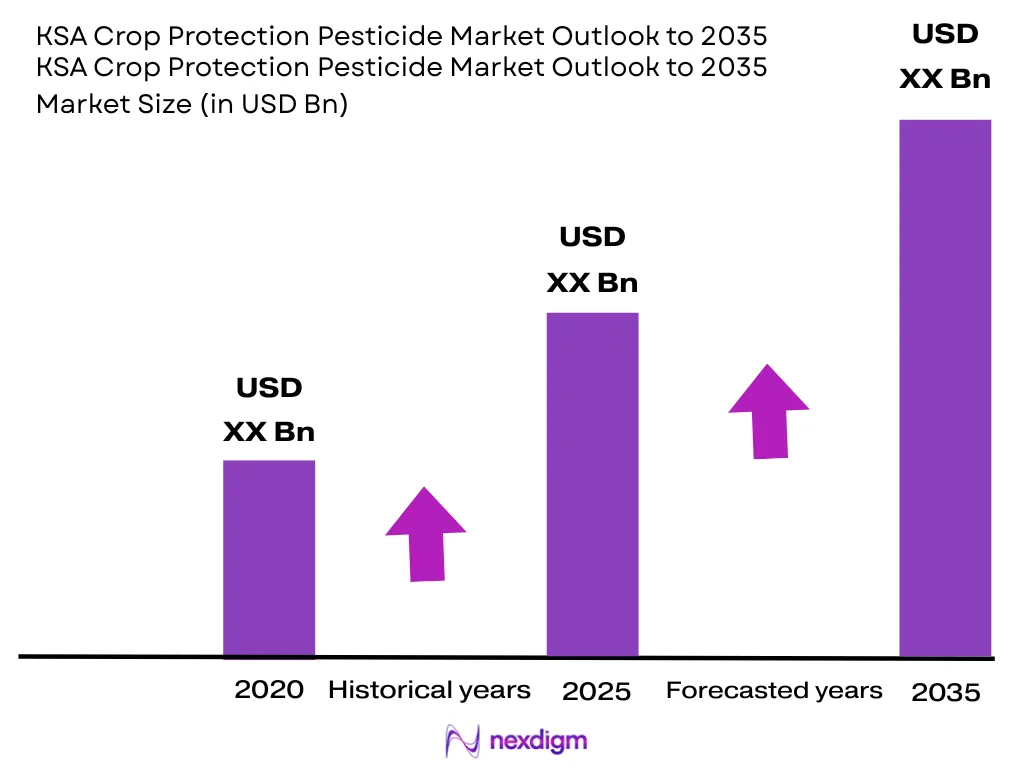
Kingdom of Saudi Arabia (KSA) Crop Protection Pesticides Market is valued at USD ~ Billion based on a comprehensive historical assessment of pesticide sales across agricultural production systems. The market is primarily driven by Saudi Arabia’s national food security agenda under Vision 2030, with wheat, date palm, and vegetable production forming the backbone of domestic agriculture, while total cultivated area continues to expand through government-supported irrigation and greenhouse farming programs, according to the Ministry of Environment, Water and Agriculture (MEWA) and the Saudi Food and Drug Authority (SFDA). The country’s arid and semi-arid climatic conditions, rising pest and locust pressure, increasing adoption of protected agriculture technologies, and growing demand for domestically produced food crops continue to stimulate pesticide consumption across major farming regions.
Market Segmentation
By Product Type
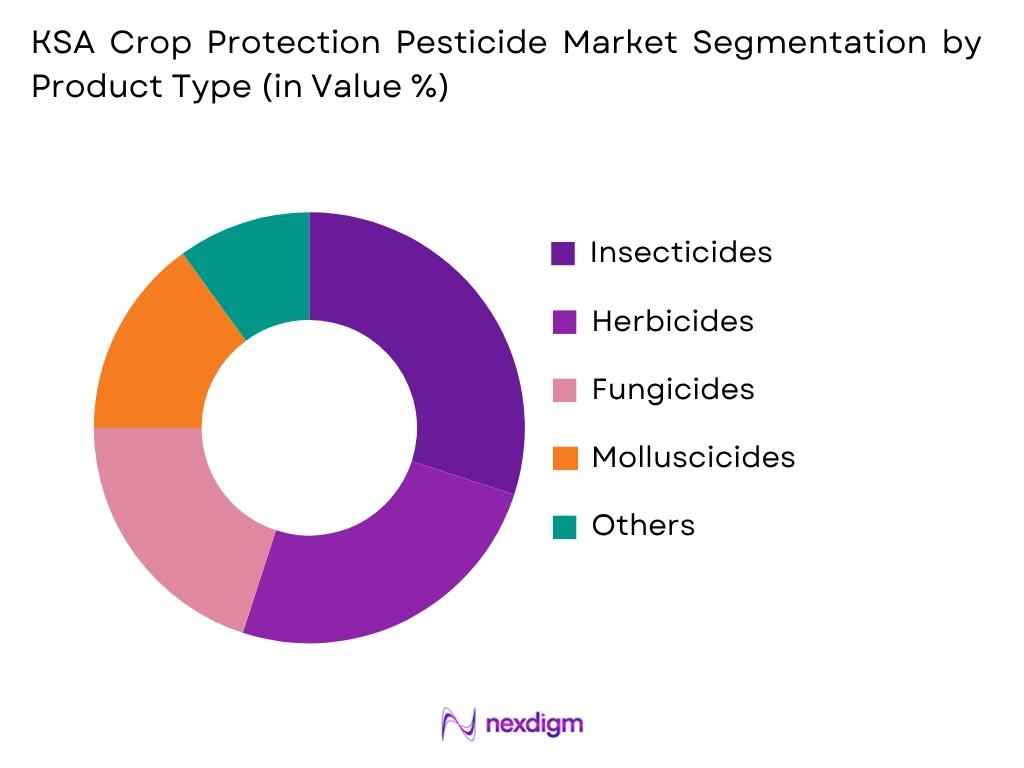
The insecticides segment dominates the KSA Crop Protection Pesticides Market due to the country’s high insect and locust pressure across date palm cultivation, vegetable farming, and field crop production. Saudi Arabia’s arid climate and significant date palm acreage create persistent challenges from red palm weevil, dubas bug, and scale insects, requiring intensive insecticide programs throughout the cultivation cycle. The country’s position in the Arabian Peninsula also makes it particularly susceptible to periodic desert locust swarms, necessitating large-scale organized insecticide treatment campaigns coordinated by the National Centre for Vegetation Cover Development. Greenhouse and protected agriculture expansion across Al-Qassim, Riyadh, and Al-Madinah regions further increases the demand for specialized insecticide formulations to manage whitefly, aphids, and spider mites. Continuous innovation in selective insecticides, resistance management programs, and improved formulation technologies has enabled growers to maximize productivity while meeting residue compliance requirements, reinforcing insecticides as the largest product category within the market.
By Crop Type
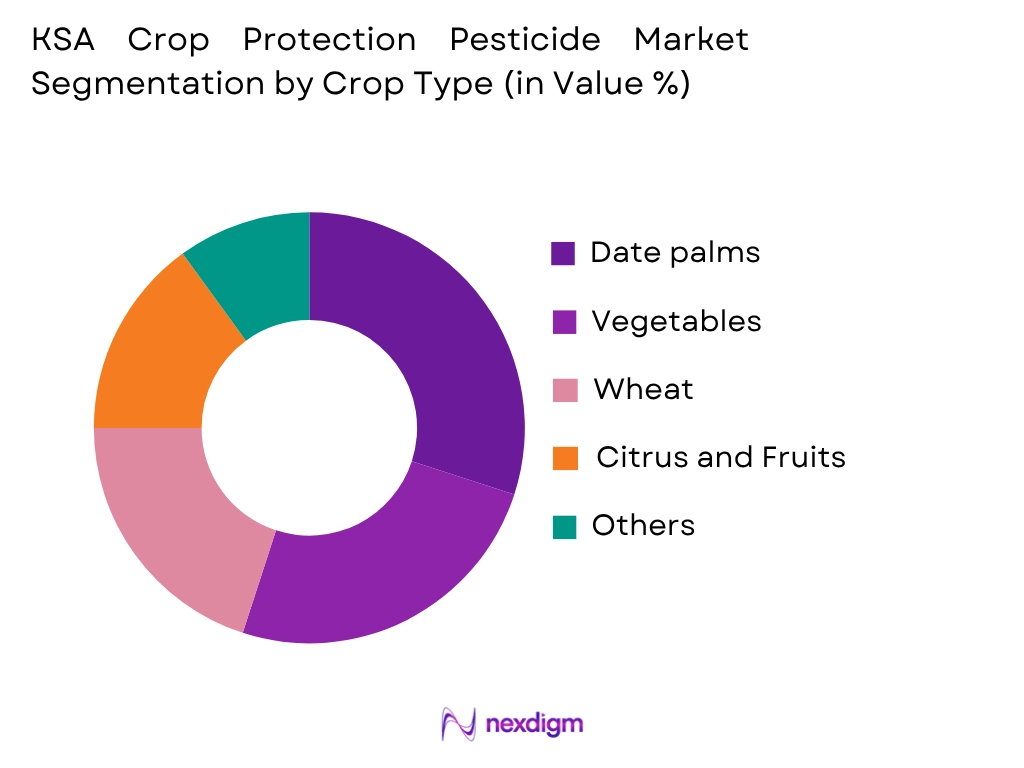
Date palms account for the largest share of pesticide consumption owing to Saudi Arabia’s position as one of the world’s leading date producers and exporters, with millions of productive palm trees requiring year-round integrated crop protection. Large commercial date farms and smallholder growers across Al-Qassim, Al-Madinah, Al-Ahsa, and Riyadh regions require comprehensive pest management against red palm weevil, lesser date moth, dubas bug, and various fungal diseases throughout the cultivation cycle. The red palm weevil remains the most destructive pest of date palms in the Kingdom, necessitating multiple insecticide applications combined with pheromone trapping and biological control measures each season. Export-oriented date production demands high-quality crop protection to maintain yield and meet international phytosanitary standards, particularly for premium varieties such as Medjool, Sukkari, and Ajwa. Continuous expansion of date palm cultivation under government food security programs, adoption of drip irrigation systems, and investments in precision agriculture technologies further strengthen date palm’s dominant position within the country’s pesticide market.
Competitive Landscape
The KSA Crop Protection Pesticides Market is characterized by a mix of multinational agrochemical companies operating through local distributors and importers, alongside government-affiliated agricultural enterprises. Leading multinational firms including Bayer Crop Science, Syngenta, BASF, ADAMA, and UPL maintain their market positions through extensive registered product portfolios, strong dealer networks, and technical support services tailored to Saudi Arabia’s unique arid-climate crop protection challenges. National entities such as ARASCO and SAPCO play a significant role in the supply chain through government partnerships and large-scale procurement. Competition increasingly focuses on integrated crop protection solutions for date palm, wheat, and vegetable production, precision agriculture technologies, sustainable formulations, and biological pesticides to address evolving regulatory requirements under MEWA and resistance management challenges.
| Company | Establishment Year | Headquarters | Product Portfolio | Biological Products
|
Manufacturing Presence | Major Crop Focus | Distribution Network | R&D Focus |
| Bayer Crop Science | 1863 | ~ | ~ | ~ | ~ | ~ | ~ | ~ |
| Syngenta | 2000 | ~ | ~ | ~ | ~ | ~ | ~ | ~ |
| ADAMA Agricultural Solutions | 1945 | ~ | ~ | ~ | ~ | ~ | ~ | ~ |
| ARASCO | 1981 | ~ | ~ | ~ | ~ | ~ | ~ | ~ |
| UPL Limited | 1969 | ~ | ~ | ~ | ~ | ~ | ~ | ~ |
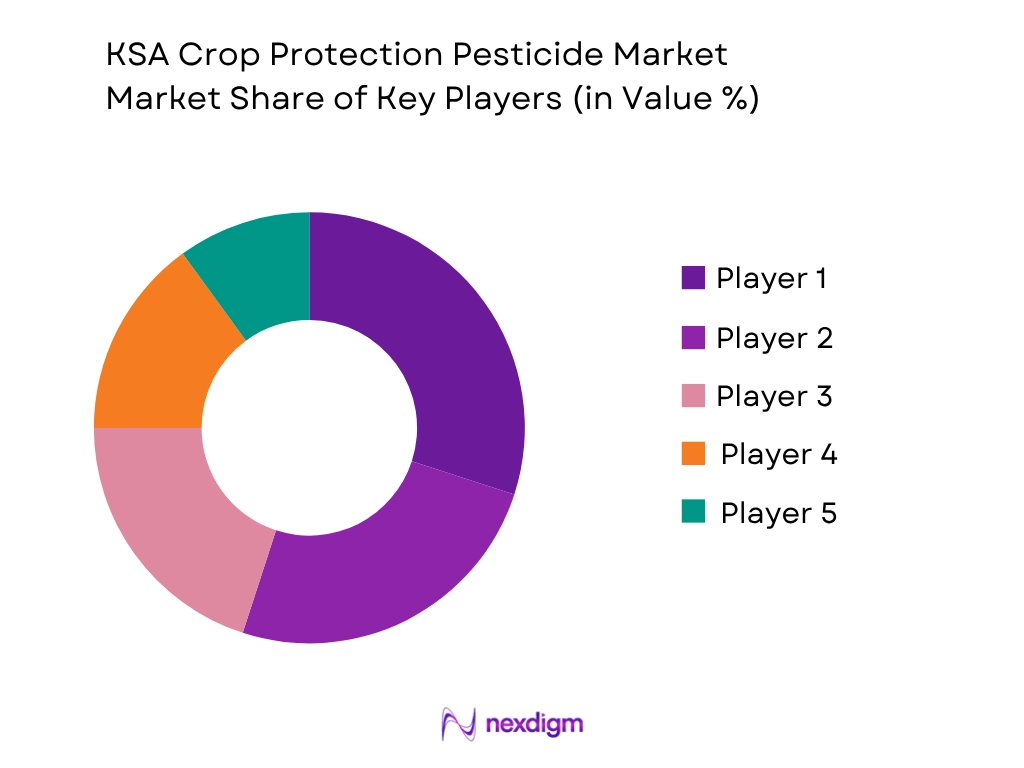
KSA Crop Protection Pesticide Market Analysis
Growth Drivers
Expansion of Food Security-Driven Crop Cultivation
Saudi Arabia’s national food security agenda under Vision 2030 remains the primary growth driver for the Crop Protection Pesticides Market, as the government continues to invest heavily in expanding agricultural output through subsidized irrigation, greenhouse farming programs, and advanced farming technology adoption. Wheat production is supported through government purchasing programs and strategic stockpiling initiatives, while vegetable and fruit cultivation has expanded significantly through the Ministry of Environment, Water and Agriculture’s domestic food production targets. Date palm production remains a cornerstone of Saudi agriculture, with the Kingdom producing over 1.5 million metric tonnes annually across millions of productive trees, representing a critical driver of pesticide demand. Protected agriculture under greenhouse and net-house conditions has expanded rapidly across Al-Qassim, Hail, and Riyadh provinces, requiring intensive crop protection programs for tomatoes, cucumbers, peppers, and leafy vegetables. High-value crops require multiple pesticide applications throughout the cultivation cycle to minimize production losses caused by insect infestations, fungal diseases, and weed pressure under intensive irrigation farming conditions. Continuous expansion of cultivated land through desalination-fed irrigation and aquifer-based water supply, combined with large-scale mechanized farming and government-backed agribusiness investments, continues to generate sustained demand for herbicides, fungicides, insecticides, and seed treatment products.
Rising Pest and Locust Pressure Across the Arabian Peninsula
Saudi Arabia’s geographic position within the Arabian Peninsula and its proximity to recurring desert locust breeding zones in the Horn of Africa and Yemen continue to drive significant pesticide demand for organized pest control operations. Desert locust upsurges periodically threaten agricultural production across the Kingdom’s western and southern regions, requiring large-scale aerial and ground-based insecticide applications coordinated by the National Centre for Vegetation Cover Development and the Ministry of Environment, Water and Agriculture. The red palm weevil remains a persistent and destructive threat to date palm cultivation across all major producing regions including Al-Ahsa, Al-Qassim, Al-Madinah, and Riyadh, necessitating intensive insecticide treatment regimes combined with pheromone trapping and systemic trunk injection programs. Whitefly, thrips, spider mites, and aphid infestations in greenhouse vegetable production continue to increase consumption of specialized insecticides and acaricides as protected agriculture rapidly expands. Rising ambient temperatures associated with regional climate change are further expanding the geographic range and seasonal duration of pest activity, increasing the frequency and intensity of pesticide applications required to protect crops across the Kingdom. These persistent biological threats, combined with the government’s commitment to protecting food production assets, continue to support sustained demand for a broad range of insecticides and integrated pest management products throughout Saudi Arabia’s agricultural sector.
Market Challenges
Extreme Climatic Conditions and Water Scarcity
Extreme arid climatic conditions and severe water scarcity represent fundamental challenges affecting the KSA Crop Protection Pesticides Market because harsh temperatures, low humidity, and limited annual rainfall constrain agricultural production areas and create unique pest management requirements distinct from other global markets. Saudi Arabia receives average annual rainfall of less than 100 millimeters across most agricultural regions, making virtually all commercial crop production dependent on groundwater extraction from non-renewable aquifers or expensive desalination-fed irrigation infrastructure. High ambient temperatures exceeding 45 degrees Celsius during summer months accelerate pesticide degradation, reduce residual activity of active ingredients, and shorten effective application windows, reducing product efficacy and increasing the frequency of pesticide applications required to maintain adequate crop protection. Water scarcity imposes strict limitations on the types of crops cultivated commercially, concentrating pesticide demand on date palms, wheat, and protected greenhouse vegetables rather than the broad-acre field crops that dominate pesticide markets in other agricultural economies. Dusty, sandy soil conditions common across major farming regions also complicate weed management and reduce the effectiveness of soil-applied herbicide products, creating formulation challenges for manufacturers seeking to optimize product performance under extreme desert farming conditions.
Regulatory and Import Compliance Requirements
The KSA Crop Protection Pesticides Market operates under a comprehensive regulatory framework administered by the Ministry of Environment, Water and Agriculture and the Saudi Food and Drug Authority, requiring registration, inspection, and continuous monitoring of all imported pesticide products before commercial distribution. Saudi Arabia imports the majority of its crop protection products due to limited domestic manufacturing capacity, making the market highly dependent on international supply chains and subject to import licensing requirements, port inspection delays, and documentation compliance obligations. Manufacturers seeking to register new active ingredients or formulations must complete extensive toxicological, environmental, and agronomic dossier submissions under MEWA guidelines, with registration timelines extending commercial availability by several years in some cases. Export-oriented horticultural production, including dates and fresh vegetables, requires strict compliance with Gulf Cooperation Council maximum residue limits as well as importing country standards in Europe and Asia, increasing the regulatory burden on producers and pesticide suppliers throughout the agricultural value chain. Growing emphasis on food safety and pesticide residue monitoring by the Saudi Food and Drug Authority is driving increased documentation requirements, mandatory stewardship programs, and investment in compliance infrastructure by pesticide distributors and commercial farming enterprises across the Kingdom.
Market Opportunities
Expansion of Biological Crop Protection Solutions
Growing emphasis on sustainable agricultural production under Vision 2030 and rising food safety awareness present substantial opportunities for biological crop protection products in Saudi Arabia. The Kingdom’s expanding date palm sector, greenhouse vegetable operations, and fruit cultivation systems create significant demand for microbial insecticides, biopesticides, and biological control agents that reduce chemical residue risks on export-quality produce. The red palm weevil management program is increasingly incorporating biological control methods including entomopathogenic nematodes and fungal bioinsecticides alongside conventional chemical treatments, creating a growing market for biological pest management solutions. High-value greenhouse vegetable producers across Al-Qassim, Riyadh, and Hail are progressively adopting predatory insects, biofungicides, and botanical insecticides within integrated pest management programs to comply with retailer and export market residue requirements. Continuous advances in biological formulation stability under high-temperature arid conditions, improved shelf life technologies, and microbial product performance further enhance commercial viability in Saudi Arabia’s unique climate. Government investment in agricultural research through King Abdulaziz City for Science and Technology and the National Agricultural Development Company creates additional opportunities for biological crop protection product development and commercialization aligned with the Kingdom’s food security and sustainability objectives.
Growth of Precision Agriculture and Smart Application Technologies
Saudi Arabia’s ambitious Vision 2030 agricultural modernization program provides considerable opportunities for precision crop protection technologies that improve pesticide efficiency while reducing water consumption, environmental impact, and input costs across the Kingdom’s resource-constrained farming systems. Government-supported smart farming initiatives and investments in agricultural technology are driving adoption of GPS-guided machinery, drone-assisted spraying, remote sensing platforms, satellite imagery, and digital farm management systems across commercial date palm, wheat, and greenhouse vegetable operations. Large date palm plantations and expansive wheat farms across Al-Qassim, Hail, and the Eastern Province are increasingly utilizing drone-based aerial spraying for red palm weevil treatment and foliar fungicide applications, significantly improving coverage efficiency while reducing labor and water usage. The National Agricultural Development Company and government-linked agribusiness enterprises are investing in variable-rate spraying systems, soil sensors, and AI-based pest prediction platforms to optimize pesticide application according to real-time field-specific pest pressure data. Digital agriculture adoption enables producers to reduce unnecessary pesticide applications while improving disease forecasting, locust early-warning systems, and insect monitoring across vast agricultural areas. The continued expansion of smart farming equipment, precision irrigation integration, artificial intelligence-based pest prediction, and government-sponsored digital agriculture platforms creates long-term opportunities for pesticide manufacturers to integrate crop protection products with advanced decision-support systems tailored to Saudi Arabia’s unique arid-climate agricultural conditions.
Future Outlook
The KSA Crop Protection Pesticides Market is expected to maintain steady growth over the forecast period due to continued government investment in food security programs, increasing adoption of precision farming technologies under Vision 2030, and rising demand for higher crop productivity across date palm, vegetable, and wheat cultivation systems. Sustainable agricultural practices, biological crop protection products, and digital pest management platforms are expected to reshape the competitive landscape. Regulatory modernization and technological innovation are anticipated to accelerate the introduction of advanced active ingredients and environmentally friendly formulations suited to Saudi Arabia’s arid climate. Furthermore, continued growth in protected agriculture, date palm cultivation, and greenhouse vegetable production, coupled with increasing investments in integrated pest management and drone-based spraying technologies, will support long-term market expansion across the Kingdom’s major agricultural regions.
Major Players
- Bayer Crop Science
- Syngenta
- BASF
- FMC Corporation
- UPL Limited
- ADAMA Agricultural Solutions
- Corteva Agriscience
- Nufarm
- Sumitomo Chemical
- National Agrochemical Company (SAPCO)
- Arabian Agricultural Services Company (ARASCO)
- Saudi Agro Chemicals and Pesticides Company
- Gulf Chemical and Industrial Oils Company
- Arysta LifeScience
- Rainbow Agro
Key Target Audience
- Crop Protection Product Manufacturers
- Agricultural Cooperatives and Farmer Associations
- Commercial Farming Enterprises and Agribusiness Groups
- Agrochemical Distributors and Retail Chains
- Biological Crop Protection Manufacturers
- Investments and Venture Capitalist Firms
- Government and Regulatory Bodies (MEWA, SFDA, National Centre for Vegetation Cover Development, NADEC)
- Precision Agriculture and AgTech Solution Providers
Research Methodology
Step 1: Identification of Key Variables
The initial phase involves constructing an ecosystem map covering pesticide manufacturers, active ingredient suppliers, distributors, agricultural cooperatives, commercial farms, government agencies, and export organizations within the KSA Crop Protection Pesticides Market. Extensive secondary research using public databases, company reports, agricultural statistics, and proprietary industry sources is undertaken to identify the variables influencing market performance.
Step 2: Market Analysis and Construction
Historical information relating to pesticide production, imports, exports, crop acreage, pesticide consumption, application intensity, pricing trends, and farmer purchasing behavior is compiled and analyzed. Market revenues are estimated through both supply-side production analysis and demand-side crop-wise pesticide consumption, ensuring comprehensive market sizing and segmentation.
Step 3: Hypothesis Validation and Expert Consultation
Market assumptions are validated through structured interviews with pesticide manufacturers, distributors, agricultural cooperatives, agronomists, regulatory experts, and large commercial farmers. Computer-assisted telephone interviews (CATIs) and executive discussions provide operational insights that strengthen the accuracy of market estimates and competitive assessments.
Step 4: Research Synthesis and Final Output
The final phase integrates insights from primary interviews with secondary research findings using bottom-up and top-down estimation techniques. Cross-validation ensures consistency across market segments, competitive analysis, pricing benchmarks, and future projections, resulting in a comprehensive and reliable assessment of the KSA Crop Protection Pesticides Market.

- Executive Summary
- Research Methodology (Market Definitions and Assumptions, Abbreviations, Market Sizing Approach, Top-Down Analysis, Bottom-Up Analysis, Demand-Side Assessment, Supply-Side Assessment, Primary Industry Interviews, Channel Partner Validation, Distributor-Level Assessment, Data Triangulation, Forecasting Framework, Limitations and Future Conclusions)

- Definition and Scope
- Market Evolution and Industry Genesis
- Timeline of Major Industry Developments
- KSA Crop Protection Industry Value Chain Analysis
- Crop Protection Pesticides Supply Chain Analysis

- Growth Drivers (Expansion of Wheat and Date Palm Cultivation, Rising Pest and Locust Pressure, Increasing Greenhouse and Protected Agriculture, Growth in Food Security Initiatives, Rising Demand for High Crop Productivity, Expansion of Precision Agriculture under Vision 2030, Adoption of Biological Crop Protection Solutions)
- Market Challenges (Counterfeit Agrochemicals, Active Ingredient Price Volatility, Extreme Climatic Conditions, Resistance Management Issues, Environmental Compliance Costs, Registration Delays for New Molecules)
- Market Opportunities (Bio-Based Crop Protection Products, Drone Spraying Services, Precision Agriculture Integration, Digital Pest Monitoring Platforms, Sustainable Integrated Pest Management, Premium Seed Treatment Solutions)
- Market Trends (Shift Towards Biologicals, Herbicide Resistance Management Programs, Tank Mix Optimization, Smart Spraying Technologies, Low-Dose High-Efficiency Molecules, Sustainable Formulation Technologies, AI-Based Pest Forecasting)
- Government Regulations (MEWA Registration Framework, Saudi Food and Drug Authority Guidelines, National Centre for Vegetation Cover Development, Maximum Residue Limits, Good Agricultural Practices Compliance, Integrated Pest Management Guidelines, Traceability Requirements)
- PESTLE Analysis
- SWOT Analysis
- Porter’s Five Forces Analysis
- Stakeholder Ecosystem
- Competition Ecosystem

- By Market Value (2020-2025)
- By Volume Consumption (2020-2025)
- By Average Selling Price (2020-2025)

- By Product Type (In Value %)
Herbicides
Insecticides
Fungicides
Seed Treatment Chemicals
Plant Growth Regulators
Biological Crop Protection Products
Nematicides
Molluscicides
Rodenticides
Adjuvants and Spray Additives - By Chemical Origin (In Value %)
Synthetic Crop Protection Products
Biological Crop Protection Products
Botanical Pesticides
Microbial Pesticides
Biochemical Pesticides
- By Active Ingredient Class (In Value %)
Glyphosate-Based Products
Glufosinate-Based Products
2,4-D Products
Atrazine Products
Pyrethroids
Neonicotinoids
Organophosphates
Triazoles
Strobilurins
SDHI Fungicides
Diamides
Copper-Based Products
Sulfonylureas - By Crop Type (In Value %)
Wheat
Dates (Palm)
Vegetables
Citrus and Fruits
Alfalfa (Fodder Crops)
Sorghum
Barley
Potatoes
Tomatoes
Melons and Cucurbits
Grapes
Greenhouse Crops - By Region (In Value %)
Riyadh Region
Al-Qassim Region
Eastern Province
Asir Region
Al-Madinah Region

- Market Share of Major Players (By Value, Volume, Product Type, Crop Type, Biological Products, Distribution Network)
- Cross Comparison Parameters (Registered Active Ingredients Portfolio, Biological Product Portfolio, Distribution Network Strength, Manufacturing Capacity in KSA, R&D Pipeline for New Molecules, Seed Treatment Portfolio Strength, Digital Agriculture & Precision Farming Solutions, Crop Coverage Across Major Saudi Arabian Crops)
- SWOT Analysis of Major Players
- Pricing Analysis by Active Ingredient, Formulation Type and Crop Segment
- Product Portfolio Benchmarking
- Detailed Profiles of Major Companies
Bayer Crop Science
Syngenta
BASF
FMC Corporation
UPL Limited
ADAMA Agricultural Solutions
Corteva Agriscience
Nufarm
Sumitomo Chemical
National Agrochemical Company (SAPCO)
Arabian Agricultural Services Company (ARASCO)
Saudi Agro Chemicals and Pesticides Company
Gulf Chemical and Industrial Oils Company
Arysta LifeScience
Rainbow Agro

- Crop Protection Product Consumption Analysis (Application Frequency, Seasonal Usage, Crop-Wise Consumption Intensity, Pest Pressure)
- Farmer Demographic Analysis (Farm Size, Commercial Orientation, Mechanization Level, Irrigated vs Greenhouse Farming)
- Input Spending Analysis
- Purchase Decision Parameters
- Brand Loyalty Assessment

- By Market Value (2026-2035)
- By Volume Consumption (2026-2035)
- By Average Selling Price (2026-2035)


 Request a Sample
 Ask for Customization
 Get a Quote
 Enquire Now