

 Download PDF
Market Overview
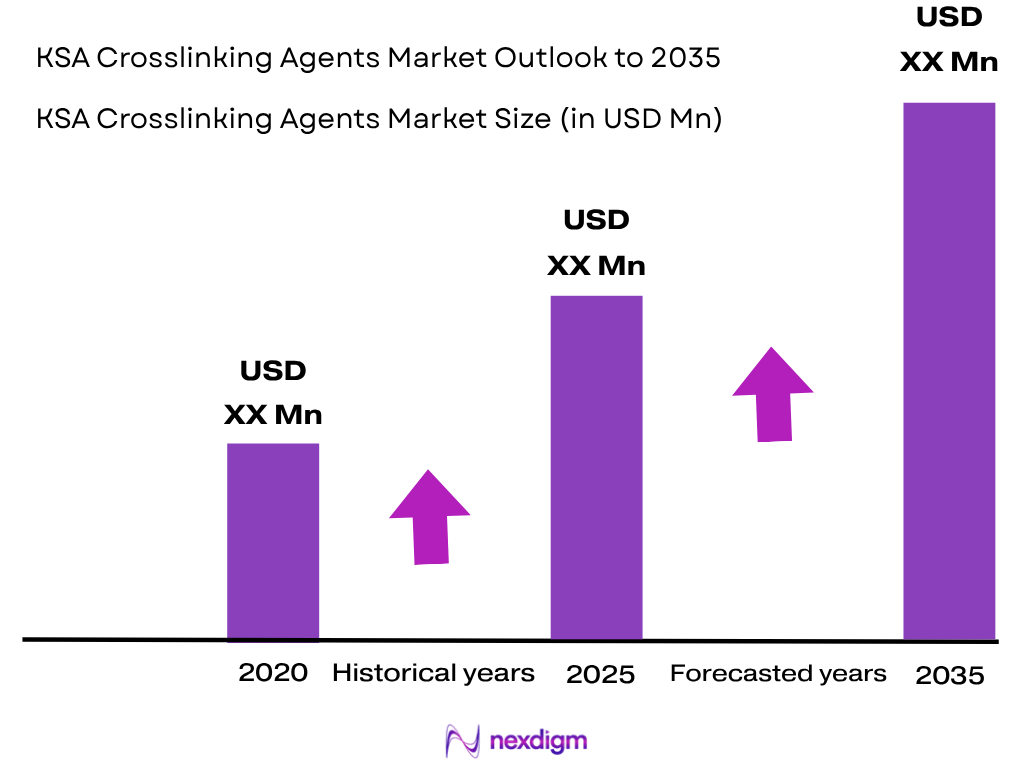
The KSA Crosslinking Agents Market is valued at ~USD XX billion, based on industry analysis, and is projected to register a forecasted CAGR of ~XX% during 2026-2035. The market is driven by increasing demand for high-performance polymer systems used in oil and gas protective coatings, petrochemical applications, construction materials, automotive coatings, adhesives, and industrial applications. Saudi Arabia’s large petrochemical ecosystem supports availability of polymer feedstocks and downstream chemical applications. Companies producing epoxy resins and petrochemical derivatives in the Kingdom support the broader specialty chemical value chain used in coatings and polymer industries.
The KSA Crosslinking Agents Market is concentrated across Riyadh, Eastern Province, Jubail, Dammam, and Jeddah due to their industrial infrastructure, petrochemical facilities, construction activities, and chemical distribution networks. The Eastern Province dominates industrial demand because of its concentration of oil and gas operations, petrochemical plants, and industrial manufacturing facilities. Jubail Industrial City represents a major chemical manufacturing hub, supporting downstream polymer and coating applications. Riyadh contributes through construction, infrastructure development, and industrial projects, while Jeddah supports construction, marine, and commercial applications.
Market Segmentation
By Chemistry Type
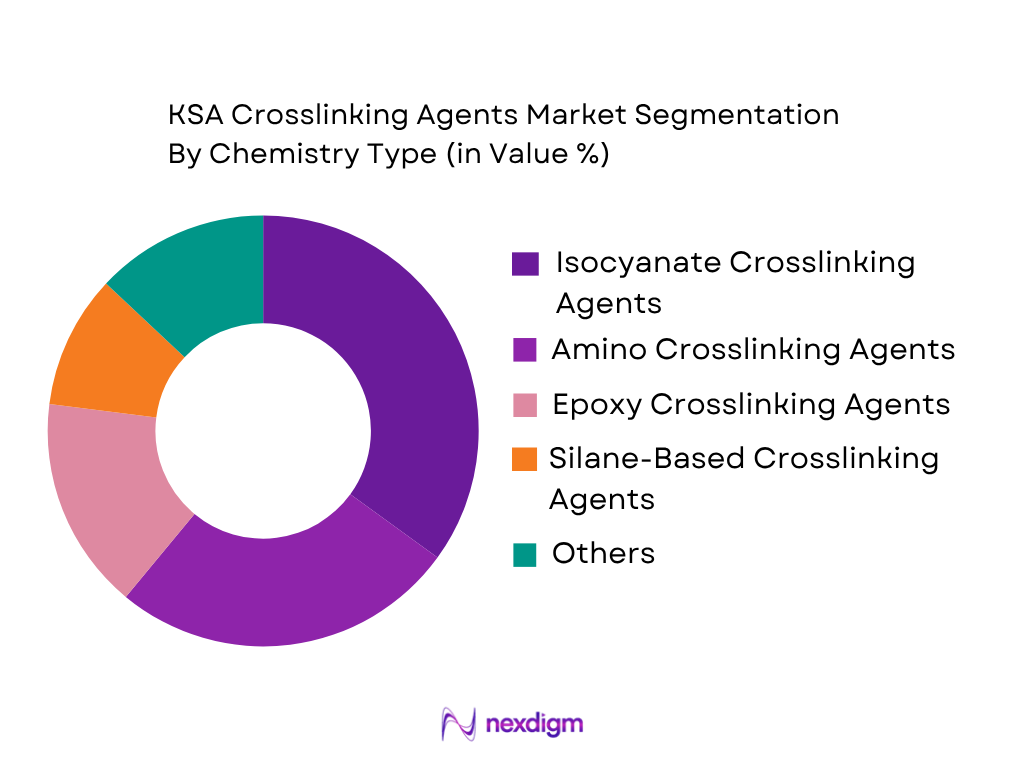
The KSA Crosslinking Agents Market is segmented by chemistry type into amino crosslinking agents, isocyanate crosslinking agents, epoxy crosslinking agents, silane-based crosslinking agents, carbodiimide crosslinkers, peroxide crosslinkers, and specialty crosslinking systems. Isocyanate crosslinking agents represent the leading chemistry segment due to their extensive usage in polyurethane coatings, industrial protective coatings, adhesives, and sealants. These systems provide high chemical resistance, flexibility, durability, and adhesion performance required for demanding industrial environments. Amino crosslinkers maintain significant adoption in automotive and architectural coatings because of their compatibility with acrylic and polyester resin systems. Epoxy-based crosslinking technologies are also important due to their application in corrosion-resistant coatings used across petrochemical and infrastructure projects.
By Application
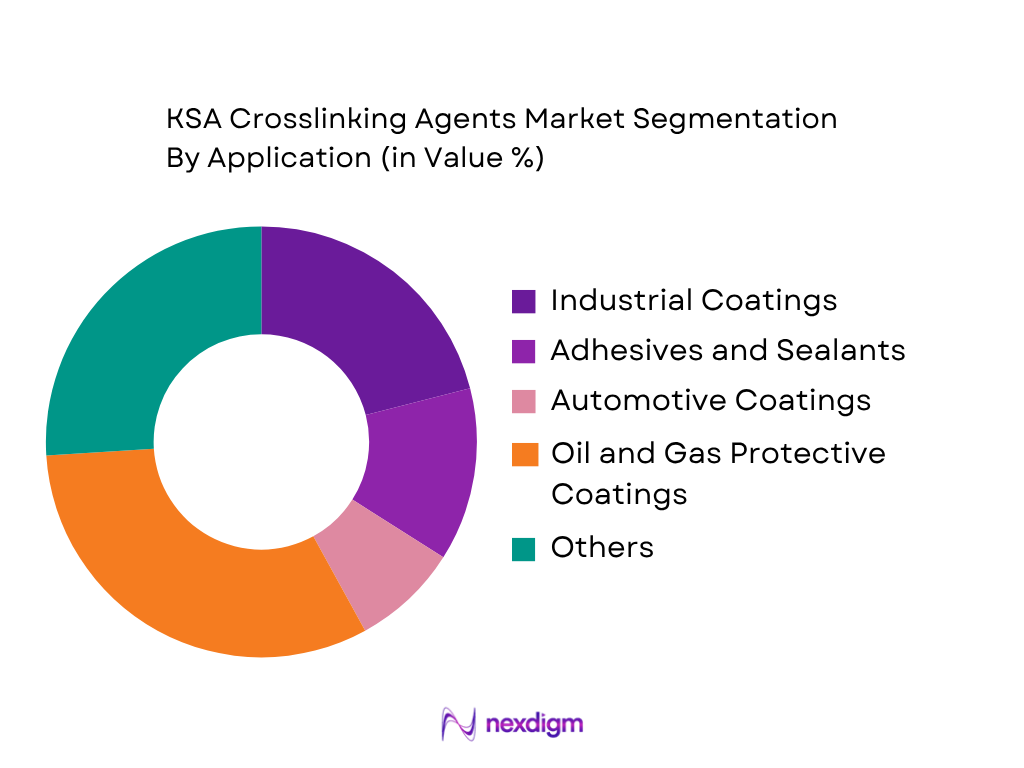
The KSA Crosslinking Agents Market is segmented by application into oil and gas protective coatings, petrochemical coatings, industrial coatings, construction coatings, automotive coatings, adhesives and sealants, elastomer products, plastic modification, composites, and specialty polymer applications. Oil and gas protective coatings represent the dominant application segment due to Saudi Arabia’s extensive energy infrastructure requiring corrosion protection, chemical resistance, and long-lasting coating performance. Crosslinking agents improve coating properties including hardness, adhesion, moisture resistance, and durability, making them essential for pipelines, storage tanks, processing facilities, and industrial equipment. Construction coatings represent another significant application due to continued infrastructure development and demand for durable building materials. Adhesives and sealants are gaining importance due to increasing use in construction, automotive, and industrial assembly applications.
Competitive Landscape
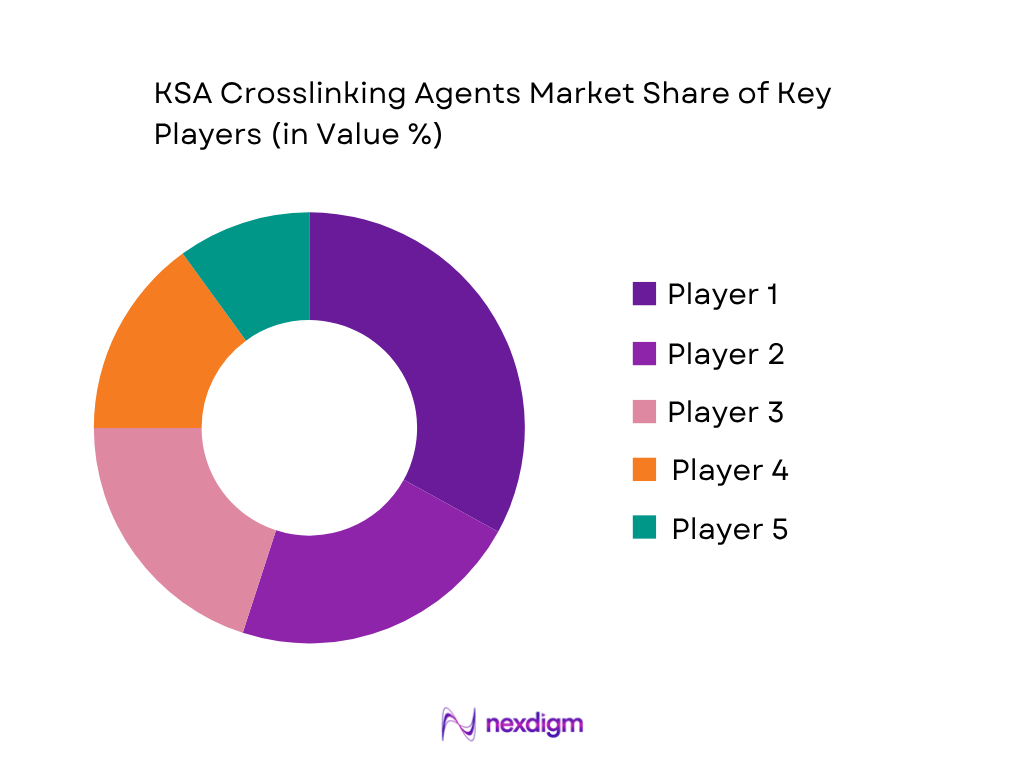
The KSA Crosslinking Agents Market is characterized by the presence of global specialty chemical manufacturers and regional chemical suppliers serving oil and gas, construction, coatings, and industrial customers. Competition is influenced by chemistry portfolio strength, technical support capabilities, import networks, application expertise, and ability to provide customized polymer solutions. Global companies maintain strong positions due to advanced crosslinking technologies, while Saudi chemical producers contribute through petrochemical integration and downstream chemical capabilities.
| Company | Establishment Year | Headquarters | Crosslinking Technologies | Primary Applications | KSA Market Presence | Manufacturing Capability | Sustainability Focus | Distribution Strength |
| BASF Saudi Arabia | 1865 | Germany | ~ | ~ | ~ | ~ | ~ | ~ |
| Covestro Middle East | 2015 | Germany | ~ | ~ | ~ | ~ | ~ | ~ |
| Evonik Saudi Arabia | 2007 | Germany | ~ | ~ | ~ | ~ | ~ | ~ |
| Huntsman | 1970 | USA | ~ | ~ | ~ | ~ | ~ | ~ |
| Allnex | 2013 | Netherlands | ~ | ~ | ~ | ~ | ~ | ~ |
KSA Crosslinking Agents Market Analysis
Growth Drivers
Expansion of Oil and Gas Protective Coating Applications and Growth of Petrochemical Industry
The expansion of Saudi Arabia’s oil and gas and petrochemical sectors is strengthening demand for crosslinking agents used in protective coatings, corrosion-resistant systems, and advanced polymer formulations. Crosslinking agents are critical in epoxy, polyurethane, and specialty coating systems applied on pipelines, storage tanks, processing equipment, offshore structures, and industrial facilities due to their ability to improve chemical resistance, adhesion, mechanical strength, and thermal durability. Saudi Arabia remains one of the largest global energy producers, with crude oil production capacity maintained around 12 million barrels per day in 2024, supporting a large installed base of energy assets requiring maintenance coatings and protective materials. The Kingdom’s petrochemical sector also continues expanding through integrated industrial cities such as Jubail and Yanbu, where polymer processing, coatings, and chemical manufacturing activities require high-performance materials. According to national economic data, manufacturing activities remained a major contributor to Saudi Arabia’s non-oil economy in 2024, supported by industrial diversification initiatives. Increasing operational requirements for corrosion protection, chemical resistance, and extended equipment lifecycle are driving adoption of advanced crosslinking technologies across energy and petrochemical applications.
Construction and Infrastructure Development and Increasing Industrial Manufacturing Activities
Construction expansion, infrastructure modernization, and industrial development in Saudi Arabia are creating increasing demand for crosslinking agents used in construction coatings, sealants, adhesives, and polymer-based materials. Crosslinking technologies enhance durability, weather resistance, moisture protection, and mechanical performance, making them essential for infrastructure projects, commercial buildings, industrial facilities, and transportation applications. Saudi Arabia’s construction activity continues to benefit from large-scale development programs, including urban expansion, industrial zones, transportation networks, and tourism-related infrastructure. The country’s population exceeded 36 million people in 2024, according to official demographic statistics, supporting continued demand for housing, commercial facilities, and public infrastructure. Industrial cities and economic zones are also increasing requirements for protective coatings and advanced polymer solutions. The Saudi industrial sector recorded continued expansion in 2024, supported by investments in manufacturing, logistics, and downstream industries. Increasing adoption of durable construction materials, high-performance coatings, and advanced adhesive systems is supporting demand for crosslinking agents across building materials, industrial applications, and polymer processing industries.
Market Challenges
Dependence on Imported Specialty Chemicals and Global Chemical Feedstock Price Volatility
The Saudi Arabia Crosslinking Agents Market faces challenges due to reliance on imported specialty chemical technologies and exposure to fluctuations in global chemical feedstock supply. While Saudi Arabia has significant petrochemical production capabilities, many advanced crosslinking agents, including specialty isocyanates, amino crosslinkers, carbodiimide systems, and silane-based solutions, require specialized manufacturing technologies that are concentrated among international chemical producers. The Kingdom imports several categories of specialty chemicals to support downstream industries such as coatings, adhesives, plastics, and industrial materials. Global chemical supply conditions remained uncertain during 2024 due to energy market fluctuations, transportation disruptions, and changing availability of raw materials. These factors can influence supply reliability for coating manufacturers and industrial users dependent on specialty formulations. Saudi Arabia’s chemical industry continues focusing on downstream diversification; however, advanced specialty chemical production remains more limited compared with basic petrochemical manufacturing. Companies operating in the crosslinking agents sector need efficient inventory management, diversified sourcing strategies, and stronger regional supply networks to reduce risks associated with international procurement and specialty chemical availability.
Environmental Compliance Requirements and Complex Chemical Formulation Requirements
Increasing environmental standards, chemical safety regulations, and demand for sustainable materials are creating challenges for crosslinking agent manufacturers and users in Saudi Arabia. Crosslinking agents are used in highly specialized polymer formulations where performance requirements must be balanced with environmental and safety considerations. Regulatory focus on emissions control, chemical handling, workplace safety, and sustainable industrial practices is encouraging companies to adopt improved formulation technologies. Saudi Arabia has strengthened environmental governance through national sustainability initiatives and regulatory frameworks focused on industrial emissions and responsible chemical management. Industrial facilities using coatings, adhesives, and polymer systems must comply with requirements related to storage, transportation, and safe handling of chemical materials. The Kingdom’s industrial sector continued expanding in 2024, increasing the need for effective chemical management practices across manufacturing facilities. Additionally, formulation complexity remains a challenge because crosslinking agents must be precisely matched with polymer systems to achieve required properties such as flexibility, durability, adhesion, and resistance performance. Manufacturers are required to invest in technical expertise and application support to meet evolving industrial requirements.
Market Opportunities
Development of Sustainable Crosslinking Agents and Growth of Low VOC Coating Technologies
Growing emphasis on sustainable industrial practices is creating opportunities for advanced crosslinking agents designed for low-VOC, water-based, and environmentally responsible coating systems in Saudi Arabia. Industries including construction, oil and gas, automotive, and manufacturing are increasingly adopting coating technologies that combine durability with improved environmental performance. Sustainable crosslinking technologies such as bio-based crosslinkers, low-emission polyurethane systems, and environmentally optimized polymer solutions can support industrial users seeking compliance with evolving sustainability requirements. Saudi Arabia’s sustainability initiatives under Vision 2030 are encouraging development of cleaner industrial processes and improved resource efficiency. The Kingdom’s renewable and industrial sustainability programs continue expanding, with environmental investments supporting demand for advanced material solutions. Saudi Arabia’s industrial production ecosystem included more than 10,000 manufacturing facilities in 2024, according to official industrial statistics, representing a broad customer base for sustainable coatings and polymer technologies. Increasing demand for low-emission materials in industrial coatings, construction applications, and protective systems creates opportunities for specialty chemical suppliers developing next-generation crosslinking technologies.
Renewable Energy Infrastructure Expansion and Advanced Composite Material Adoption
The expansion of renewable energy projects and increasing adoption of advanced composite materials are creating new opportunities for crosslinking agent applications in Saudi Arabia. Crosslinking agents play an important role in improving the strength, durability, thermal resistance, and environmental performance of composite resins, adhesives, and protective coatings used in renewable energy, transportation, industrial equipment, and advanced engineering applications. Saudi Arabia is investing heavily in renewable energy infrastructure as part of its energy diversification strategy, with solar projects requiring durable materials capable of operating under high temperatures, UV exposure, and demanding environmental conditions. The Kingdom’s renewable energy capacity reached approximately 2.7 GW of operational capacity in 2024, supported by large-scale solar developments and clean energy initiatives. Composite materials are increasingly used in lightweight structures, energy equipment, and industrial applications due to their high strength-to-weight characteristics. These developments create opportunities for crosslinking agent manufacturers supplying epoxy systems, polyurethane technologies, and specialty polymer solutions for renewable energy, aerospace-related materials, and advanced industrial applications.
Future Outlook
Over the next decade, the KSA Crosslinking Agents Market is expected to demonstrate steady growth driven by expansion of petrochemical activities, infrastructure development, industrial manufacturing, and demand for advanced protective coatings. The Kingdom’s industrial diversification initiatives are expected to support increased consumption of specialty chemical solutions. Growing adoption of sustainable coatings, low-VOC technologies, advanced composites, and high-performance adhesives will create additional opportunities for crosslinking agent suppliers.
Major Players
- BASF Saudi Arabia
- Covestro Middle East
- Evonik Saudi Arabia
- Huntsman International LLC
- Allnex
- Eastman Chemical Company
- Arkema Middle East
- Mitsubishi Chemical Group
- Momentive Performance Materials
- Hexion
- DIC Corporation
- Solvay Middle East
- LANXESS Middle East
- Wanhua Chemical Group
- Azelis Saudi Arabia
Key Target Audience
- Crosslinking Agent Manufacturers and Specialty Chemical Producers
- Oil and Gas Coating Suppliers
- Petrochemical Companies
- Paint and Coating Manufacturers
- Construction Chemical Manufacturers
- Adhesive and Sealant Producers
- Investments and Venture Capitalist Firms
- Government and Regulatory Bodies (Saudi Standards, Metrology and Quality Organization, Ministry of Environment Water and Agriculture, National Center for Environmental Compliance)
Research Methodology
Step 1: Identification of Key Variables
The initial phase involves developing an ecosystem map covering chemical suppliers, crosslinking agent producers, polymer manufacturers, coating formulators, distributors, and industrial users. Secondary research is conducted using industry databases, regulatory information, company disclosures, and chemical trade analysis to identify market variables affecting supply, demand, and technology adoption.
Step 2: Market Analysis and Construction
This phase includes compilation and analysis of market information related to crosslinking chemistry consumption, application penetration, and end-use industry requirements. The assessment evaluates amino, isocyanate, epoxy, silane, and specialty crosslinking systems across coatings, adhesives, polymers, and industrial applications.
Step 3: Hypothesis Validation and Expert Consultation
Market assumptions are validated through discussions with manufacturers, coating producers, chemical distributors, polymer processors, and industry participants. These consultations provide insights into product requirements, application trends, supply conditions, competitive developments, and future technology adoption.
Step 4: Research Synthesis and Final Output
The final stage involves validating collected information through primary interactions and cross-checking using bottom-up and top-down approaches. The findings are consolidated into a comprehensive market assessment covering segmentation, competitive landscape, growth drivers, challenges, opportunities, and strategic recommendations.

- Executive Summary
- Research Methodology (Market Definitions and Assumptions, Abbreviations, Market Sizing Approach, Top-Down Analysis, Bottom-Up Analysis, Demand-Side Assessment, Supply-Side Assessment, Primary Industry Interviews, Data Triangulation, Forecasting Framework, Crosslinking Chemistry Mapping, Polymer Compatibility Assessment, End-Use Industry Analysis, Specialty Chemical Import Assessment, Domestic Manufacturing Capability Evaluation, Regulatory Compliance Assessment, Limitations and Future Conclusions)

- Definition and Scope
- Market Evolution and Industry Genesis Timeline
- Crosslinking Agents Industry Value Chain Analysis
- Crosslinking Agents Supply Chain Analysis

- Growth Drivers (Expansion of Oil and Gas Protective Coating Applications, Growth of Petrochemical Industry, Construction and Infrastructure Development, Increasing Industrial Manufacturing Activities, Rising Demand for High Performance Coatings, Expansion of Automotive Refinishing Market, Growth of Adhesive and Sealant Applications, Increasing Composite Material Adoption)
- Market Challenges (Dependence on Imported Specialty Chemicals, Global Chemical Feedstock Price Volatility, Limited Domestic Specialty Chemical Manufacturing Capability, Environmental Compliance Requirements, Chemical Storage and Handling Regulations, Competition from Alternative Polymer Technologies, Complex Formulation Requirements)
- Market Opportunities (Development of Sustainable Crosslinking Agents, Growth of Low VOC Coating Technologies, Renewable Energy Infrastructure Expansion, Advanced Composite Material Adoption, High Performance Adhesive Applications, Aerospace Material Development, Sustainable Polymer Modification Solutions, Specialty Chemical Innovation)
- Market Trends (Adoption of Water-Based Crosslinking Systems, Sustainable Coating Technologies, Low VOC Polymer Solutions, Advanced Polyurethane Systems, High Performance Protective Coatings, Bio-Based Chemical Development, Smart Coating Technologies, Corrosion Resistant Polymer Applications)
- Government Regulations and Standards (Saudi Arabia National Center for Environmental Compliance Regulations, Saudi Standards Metrology and Quality Organization Requirements, Ministry of Environment Water and Agriculture Chemical Regulations, Industrial Safety Standards, Chemical Storage Requirements, Environmental Protection Guidelines, Workplace Safety Regulations)
- SWOT Analysis
- Porter’s Five Forces Analysis
- PESTLE Analysis
- Stakeholder Ecosystem
- Competition Ecosystem

- By Market Value (2020-2025)
- By Volume Consumption (2020-2025)
- By Crosslinking Agent Consumption Volume (2020-2025)
- By Protective Coating Consumption Volume (2020-2025)
- By Automotive Coating Consumption Volume (2020-2025)

- By Chemistry Type (In Value %)
Amino Crosslinking Agents
Melamine Formaldehyde Crosslinkers
Urea Formaldehyde Crosslinkers
Benzoguanamine Crosslinkers
Isocyanate Crosslinking Agents
Blocked Isocyanates
Aliphatic Isocyanates
Aromatic Isocyanates
Epoxy Crosslinking Agents
Silane-Based Crosslinking Agents
Carbodiimide Crosslinking Agents
Peroxide Crosslinking Agents
Other Specialty Crosslinking Agents - By Polymer System Compatibility (In Value %)
Polyurethane Polymer Systems
Acrylic Polymer Systems
Epoxy Resin Systems
Vinyl Polymer Systems
Silicone Polymer Systems
Rubber and Elastomer Systems
Thermosetting Polymer Systems - By Application (In Value %)
Oil and Gas Protective Coatings
Petrochemical Equipment Coatings
Industrial Protective Coatings
Automotive Coatings
Marine Coatings
Adhesives and Sealants
Plastic Compounding Applications
Elastomer Products
Composite Material Manufacturing - By End-Use Industry (In Value %)
Oil and Gas Industry
Petrochemical Industry
Construction and Infrastructure
Automotive and Transportation
Industrial Manufacturing
Paints and Coatings Industry
Adhesive and Sealant Manufacturing
Electrical and Electronics Industry
Aerospace and Defense
Consumer Goods Manufacturing - By Functionality (In Value %)
Corrosion Resistance Enhancement
Chemical Resistance Enhancement
Thermal Stability Improvement
Mechanical Strength Enhancement
Abrasion Resistance Improvement
Weatherability Enhancement
Moisture Resistance Improvement
Crosslink Density Optimization - By Form Type (In Value %)
Liquid Crosslinking Agents
Powder Crosslinking Agents
Solid Crosslinking Agents
Water-Based Crosslinking Systems
Solvent-Based Crosslinking Systems
Reactive Crosslinking Systems

- Market Share of Major Players (By KSA Revenue, Crosslinking Agent Sales Volume, Chemistry Type, Polymer Compatibility, Application Segment, End-Use Industry, Import Volume, Distribution Network Coverage)
- Cross Comparison Parameters (Crosslinking Chemistry Portfolio Breadth, Specialty Chemical Import Capability, Petrochemical Industry Exposure, Oil and Gas Coating Application Expertise, Polymer Compatibility Range, Technical Formulation Support Capability, Sustainable Crosslinking Technology Portfolio, KSA Distribution Network and Customer Service Coverage)
- SWOT Analysis of Major Players
- Competitive Positioning Matrix
- Detailed Profiles of Major Companies
BASF Saudi Arabia
Covestro Middle East
Evonik Saudi Arabia
Huntsman International LLC
Eastman Chemical Company
Arkema Middle East
Mitsubishi Chemical Group
Momentive Performance Materials
Hexion
DIC Corporation
Solvay Middle East
LANXESS Middle East
Wanhua Chemical Group
Azelis Saudi Arabia

- Oil and Gas Protective Coating Procurement Assessment
- Saudi Aramco Supply Chain Coating Requirement Analysis
- Petrochemical Industry Polymer Material Assessment
- Construction Developer Coating Requirement Analysis
- Industrial Equipment Coating Demand Analysis
- Automotive Refinishing Application Assessment
- Adhesive and Sealant Manufacturer Procurement Analysis

- By Market Value (2026-2035)
- By Volume Consumption (2026-2035)
- By Crosslinking Agent Consumption Volume (2026-2035)
- By Protective Coating Consumption Volume (2026-2035)
- By Automotive Coating Consumption Volume (2026-2035)


 Request a Sample
 Ask for Customization
 Get a Quote
 Enquire Now