
 Download PDF
Market Overview
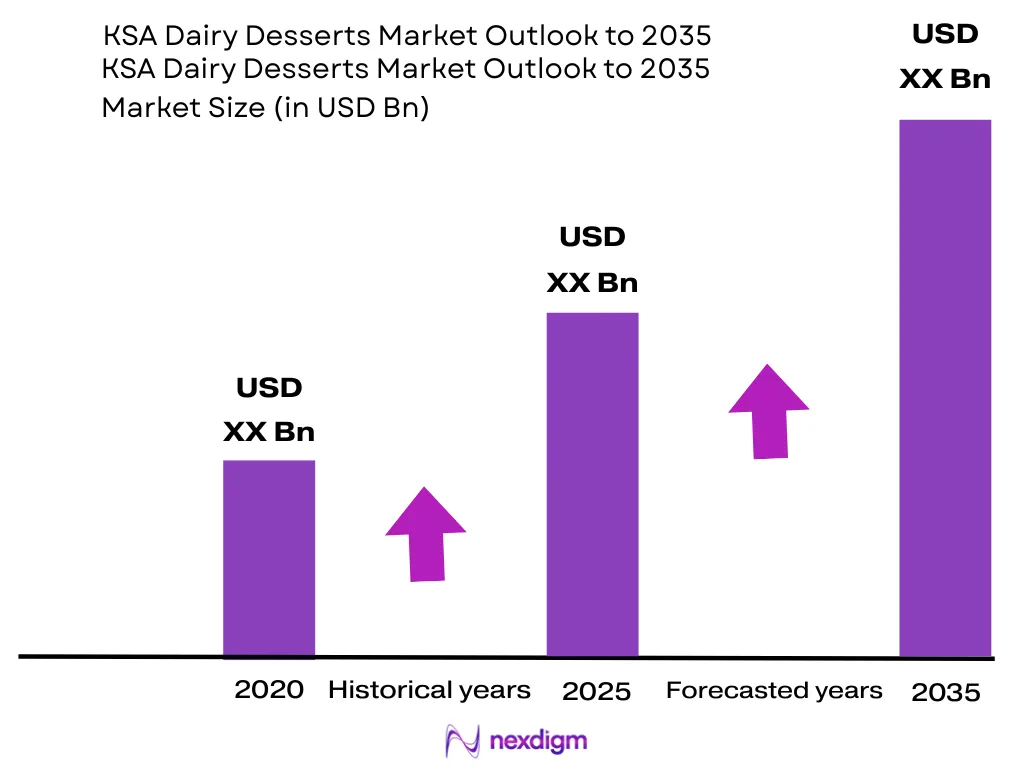
The KSA Dairy Desserts Market was valued at approximately USD ~ Billion in 2024 and is supported by the Kingdom’s expanding dairy sector, rising per capita dairy consumption, and increasing demand for convenient ready-to-eat chilled foods. According to the General Authority for Statistics (GASTAT), Saudi Arabia’s population exceeded 36 million in 2024 compared to 35 million in 2023, while household expenditure on food and beverages continued to increase. The market is further driven by strong penetration of modern retail formats, expansion of cold-chain infrastructure, rising female workforce participation, and growing consumer preference for premium dairy snacks, puddings, mousses, yogurt desserts, and functional dairy products.
Market Segmentation
By Product Type
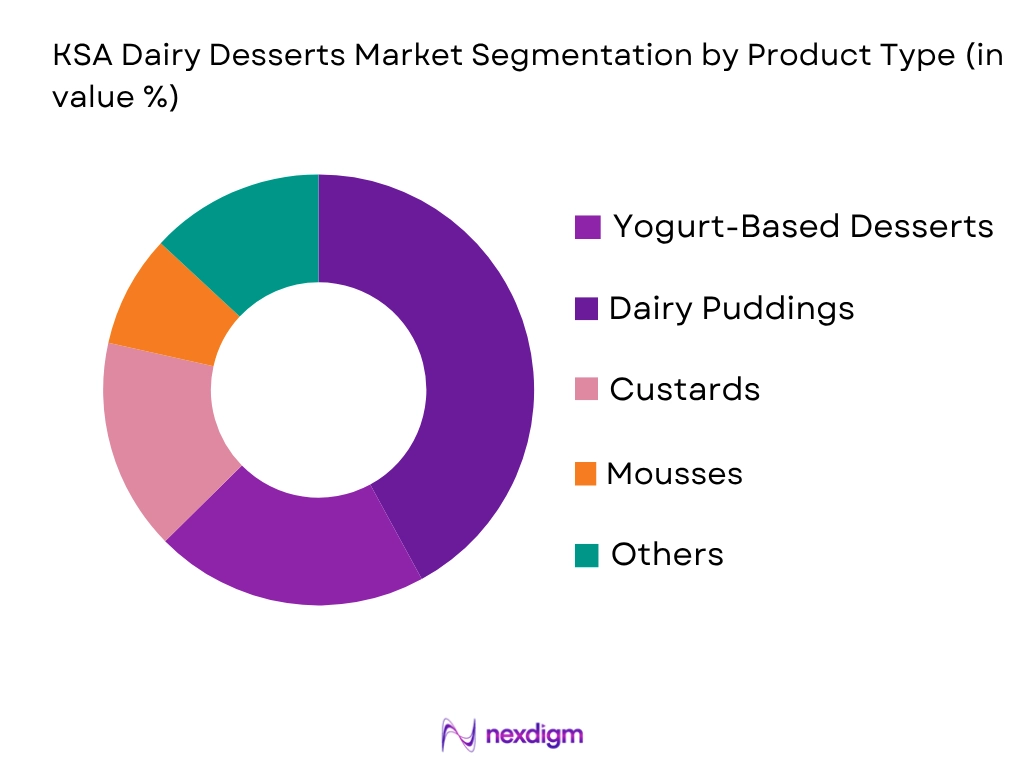
KSA Dairy Desserts Market is segmented by product type into yogurt-based desserts, dairy puddings, custards, mousses, flans, dairy gelatin desserts, cheesecake and specialty desserts, and functional dairy desserts. Recently, yogurt-based desserts have held the dominant market position due to their strong association with health, digestion, and everyday snacking habits among Saudi consumers. Major brands including Almarai, Al Safi Danone, Nadec, and Nestlé have significantly expanded their yogurt dessert portfolios, offering fruit-flavored, probiotic, protein-enriched, and low-sugar variants. The segment also benefits from widespread availability across supermarkets, convenience stores, and foodservice outlets. Growing awareness regarding gut health and nutritional benefits has strengthened consumer preference for yogurt desserts over traditional high-sugar confectionery. The segment further gains momentum from demand among children, working professionals, and health-conscious consumers seeking convenient dairy snacks.
By Distribution Channel
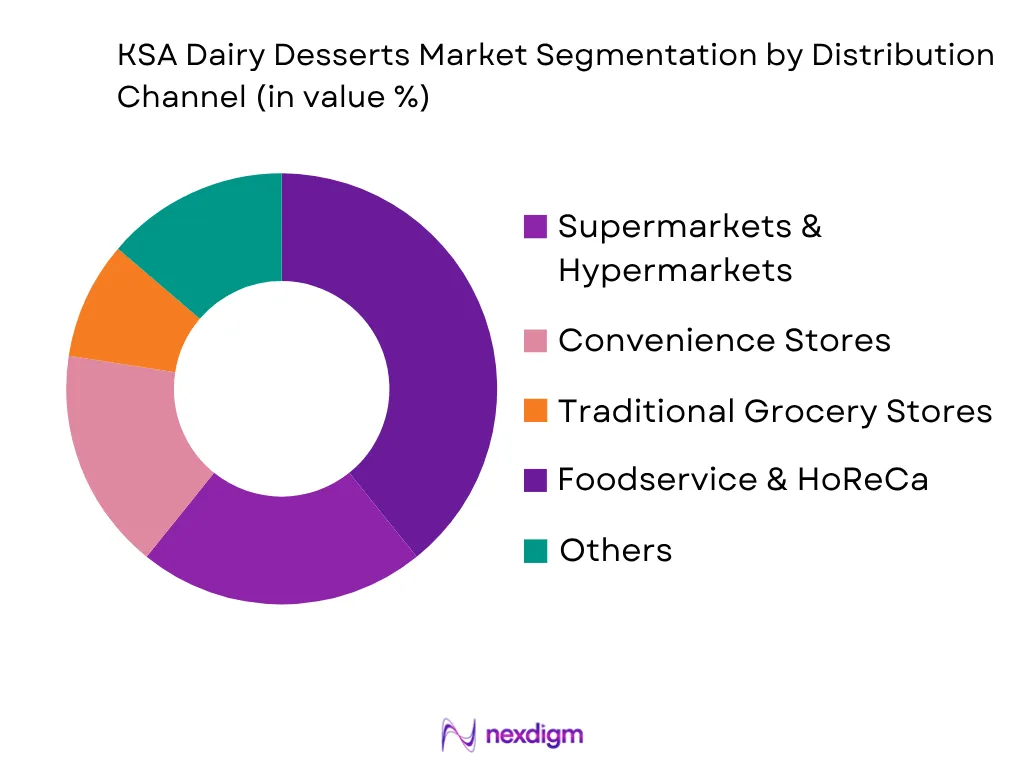
KSA Dairy Desserts Market is segmented by distribution channel into hypermarkets and supermarkets, convenience stores, traditional grocery stores, online grocery platforms, quick commerce platforms, specialty food retailers, and foodservice channels. Recently, hypermarkets and supermarkets have dominated the market owing to their extensive refrigeration infrastructure, broad product assortment, and ability to showcase premium and imported dairy desserts. Retail chains such as Panda, Carrefour, Lulu Hypermarket, Danube, and Tamimi Markets offer dedicated chilled dairy sections that drive category visibility. Consumers often prefer these outlets due to greater product variety, promotional offers, and availability of family-sized packaging. Additionally, premium dairy dessert brands rely heavily on modern retail shelves for product launches and consumer engagement. The continued expansion of organized retail across major Saudi cities further strengthens the channel’s leading position.
Competitive Landscape
The KSA Dairy Desserts Market is characterized by the presence of established regional dairy leaders and multinational food companies. Competition is primarily based on product innovation, flavor diversification, premium positioning, distribution reach, cold-chain capabilities, and brand recognition. Local dairy manufacturers maintain strong market positions due to their extensive retail networks and consumer trust, while international companies compete through premium and functional dairy dessert offerings.
| Company | Establishment Year | Headquarters | Manufacturing Facilities | Product Portfolio | Distribution Reach | Premium Products | Functional Products | Retail Presence |
| Almarai | 1977 | ~ | ~ | ~ | ~ | ~ | ~ | ~ |
| Al Safi Danone | 1979 | ~ | ~ | ~ | ~ | ~ | ~ | ~ |
| Nadec | 1981 | ~ | ~ | ~ | ~ | ~ | ~ | ~ |
| Nestlé Middle East | 1866 | ~ | ~ | ~ | ~ | ~ | ~ | ~ |
| Lactalis Group | 1933 | ~ | ~ | ~ | ~ | ~ | ~ | ~ |
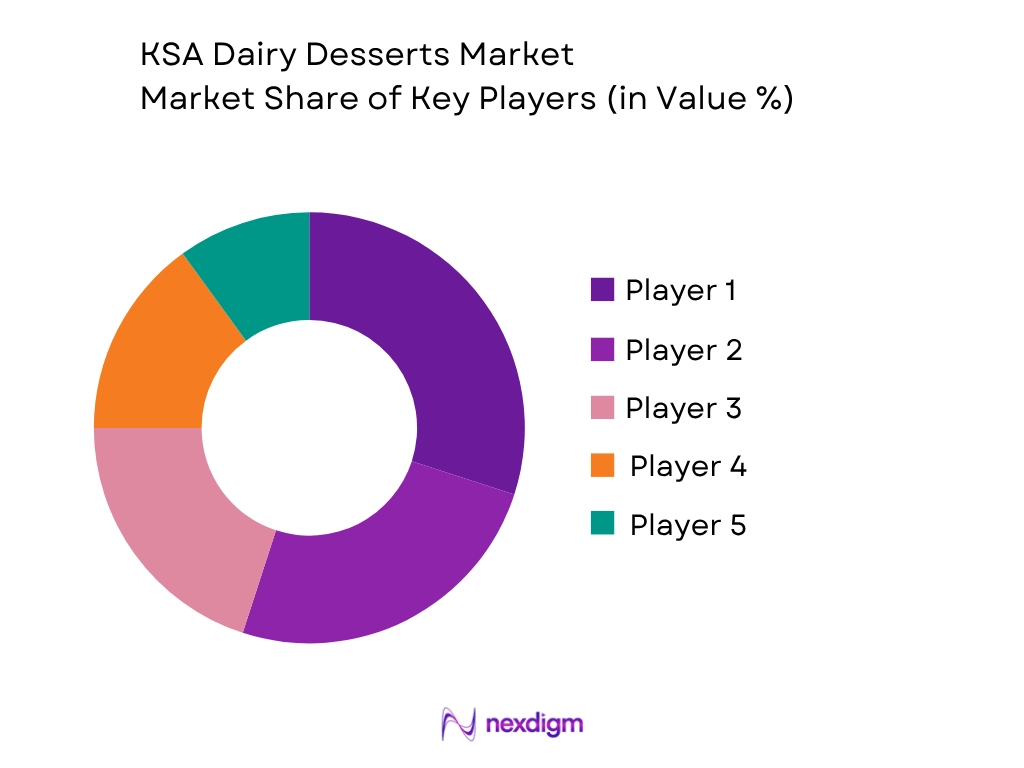
KSA Dairy Desserts Market Analysis
Growth Drivers
Rising Dairy Consumption and Strong Domestic Milk Production
The KSA Dairy Desserts Market is strongly supported by the Kingdom’s well-developed dairy sector and high dairy consumption levels. According to food security statistics, annual per capita milk availability reached 70.3 liters in 2024 compared to 70.19 liters in the previous year, indicating sustained consumer demand for dairy-based products. Saudi Arabia produced approximately 2.7 billion liters of raw milk through specialized dairy farms in 2024, supported by around 233,000 dairy cows. Riyadh alone contributed 1.6 billion liters, while the Eastern Province generated 1.1 billion liters, highlighting the availability of a large domestic raw material base for dairy dessert manufacturers. The Kingdom’s dairy ecosystem supports production of yogurt desserts, puddings, custards, mousses, and other chilled dairy products through integrated supply chains and advanced processing facilities. High domestic milk availability reduces dependence on imported raw milk and enables manufacturers to introduce premium and value-added dairy dessert products. The combination of strong milk production capacity, high dairy consumption, and extensive cold-chain infrastructure continues to create favorable conditions for dairy dessert manufacturers to expand product portfolios and improve retail penetration across the Kingdom.
Urban Population Growth and Expanding Food Expenditure
Rapid urbanization and increasing consumer spending continue to support demand for packaged dairy desserts in Saudi Arabia. The Kingdom’s population exceeds 36 million people, with major urban centers such as Riyadh, Jeddah, and Dammam acting as primary consumption hubs for chilled dairy products. Saudi households allocate significant spending toward food consumption, with annual consumer expenditure on food exceeding USD 2,453 per capita according to available consumer expenditure statistics. Rising disposable income levels and increasing participation in modern lifestyles have accelerated demand for convenient ready-to-eat dairy snacks. Organized retail expansion across supermarkets, hypermarkets, and convenience stores has further improved accessibility of dairy desserts. Urban consumers increasingly prefer single-serve dairy desserts, premium yogurt cups, and indulgent chilled snacks that fit busy lifestyles. In addition, Saudi Arabia’s food and beverage sector continues to benefit from Vision 2030 initiatives aimed at improving food security, strengthening domestic food production, and enhancing retail infrastructure. These developments create a favorable environment for sustained growth in dairy dessert consumption across metropolitan regions of the Kingdom.
Market Challenges
Dependence on Refrigerated Supply Chains and Product Shelf-Life Constraints
Dairy desserts are highly dependent on refrigerated storage and transportation, creating operational challenges across the value chain. Products such as puddings, mousses, yogurt desserts, and custards require continuous temperature-controlled logistics to maintain quality and food safety. Saudi Arabia’s climatic conditions, where summer temperatures frequently exceed 45°C in several regions, increase dependence on cold-chain infrastructure throughout production, warehousing, transportation, and retail operations. Although major cities possess advanced cold storage facilities, maintaining product quality across secondary cities and remote regions remains operationally demanding. Dairy products manufactured from approximately 2.7 billion liters of raw milk require extensive processing and distribution networks before reaching consumers. Product spoilage risks, inventory management complexities, and transportation requirements can impact operational efficiency. Furthermore, premium dairy desserts often contain fresh ingredients, fruit preparations, and probiotics that have shorter shelf lives compared to conventional packaged foods. These factors create logistical challenges for manufacturers seeking nationwide market penetration and expansion into less-developed retail regions of the Kingdom.
Competition from Traditional Desserts and Alternative Snack Categories
The KSA Dairy Desserts Market faces significant competition from deeply rooted traditional dessert categories and alternative snack products. Saudi consumers maintain strong preferences for traditional sweets including date-based desserts, Arabic puddings, kunafa, maamoul, and other locally inspired confectionery products. Agricultural statistics indicate that Saudi Arabia produced approximately 1.923 million tons of dates in 2024, ensuring widespread availability of date-based dessert alternatives throughout the country. Additionally, consumers have access to numerous snack categories including bakery products, chocolates, ice cream, and packaged confectionery. The strong cultural relevance of traditional desserts often limits substitution toward dairy-based dessert products, particularly among older consumer groups. Manufacturers must therefore invest heavily in product innovation, flavor localization, and premium positioning to attract consumers. The challenge is further intensified by increasing availability of imported dessert brands and premium international products within modern retail channels. Consequently, dairy dessert producers must continuously differentiate offerings through nutritional benefits, convenience, taste innovation, and functional ingredients to maintain consumer interest and market relevance.
Market Opportunities
Growing Demand for Functional, Protein-Enriched, and Health-Oriented Dairy Desserts
Consumer preferences in Saudi Arabia are increasingly shifting toward products that combine indulgence with nutritional benefits, creating significant opportunities for functional dairy desserts. The Kingdom’s high per capita milk consumption of more than 70 liters annually demonstrates strong consumer familiarity with dairy products. This provides a favorable foundation for introducing protein-enriched puddings, probiotic yogurt desserts, low-sugar custards, lactose-free mousses, and fortified dairy snacks. Rising health awareness has encouraged consumers to seek products offering digestive health support, protein supplementation, and reduced sugar content. Dairy manufacturers can leverage Saudi Arabia’s extensive domestic milk production capacity of 2.7 billion liters to develop innovative value-added dessert categories. Functional dairy desserts also align with broader wellness trends observed among younger consumers, fitness enthusiasts, and working professionals. Product innovation focused on clean-label ingredients, natural sweeteners, high-protein formulations, and digestive health benefits presents substantial opportunities for manufacturers to differentiate offerings and capture premium consumer segments within the dairy desserts category.
Expansion of Premium Dairy Desserts Through Modern Retail and Foodservice Channels
The continued expansion of organized retail, premium supermarkets, quick-commerce platforms, and foodservice establishments creates strong opportunities for dairy dessert manufacturers. Saudi Arabia possesses one of the region’s most advanced retail ecosystems, supported by large urban populations and sophisticated cold-chain networks. The Kingdom’s dairy industry has achieved substantial production capacity, including annual dairy output exceeding 2.7 billion liters of raw milk and dairy exports worth approximately USD 1.28 billion. These capabilities support the development of premium dairy dessert portfolios targeting affluent consumers. Manufacturers are increasingly introducing gourmet cheesecakes, layered dessert cups, premium mousses, and international-style dairy snacks through supermarkets and cafés. Foodservice operators, hotels, restaurants, and premium bakeries also represent important channels for dairy dessert consumption. Furthermore, increasing demand for convenience products among urban consumers creates opportunities for single-serve formats, grab-and-go desserts, and premium packaged dairy snacks. The combination of strong domestic dairy production, sophisticated retail infrastructure, and premium consumer demand positions the market for continued category expansion and product diversification.
Future Outlook
The KSA Dairy Desserts Market is expected to witness sustained growth during the forecast period with an estimated CAGR of ~ % between 2026 and 2035. Market expansion will be driven by increasing urbanization, premiumization of dairy consumption, growing health awareness, and rising demand for convenient ready-to-eat products. Manufacturers are expected to focus on protein-enriched formulations, probiotic desserts, reduced-sugar variants, and premium indulgent offerings. The expansion of quick commerce, e-grocery platforms, and advanced cold-chain infrastructure will further improve product accessibility. Product innovation incorporating local flavors such as dates, saffron, cardamom, and Arabic dessert inspirations is also expected to create new growth opportunities.
Major Players
- Almarai
- Al Safi Danone
- Nadec
- SADAFCO
- Nestlé Middle East
- Lactalis Saudi Arabia
- Arla Foods Middle East
- FrieslandCampina Middle East
- Al Rawabi Dairy
- Marmum Dairy
- Saputo Dairy Middle East
- Al Ain Farms
- National Food Industries (Luna)
- Danone Saudi Arabia
- Camelicious
Key Target Audience
- Dairy Dessert Manufacturers
- Dairy Ingredient Suppliers
- Cold Chain Logistics Providers
- Hypermarket & Supermarket Chains
- Foodservice & HoReCa Operators
- E-Grocery and Quick Commerce Platforms
- Investment and Venture Capitalist Firms
- Government and Regulatory Bodies (Saudi Food & Drug Authority (SFDA), Ministry of Environment, Water and Agriculture (MEWA), General Authority for Statistics (GASTAT))
Research Methodology
Step 1: Identification of Key Variables
The research process begins with mapping the complete KSA dairy desserts ecosystem. This includes dairy farms, processors, ingredient suppliers, packaging companies, distributors, retailers, and end consumers. Secondary research is conducted using government databases, company reports, industry publications, and trade statistics to identify critical market variables influencing demand and supply.
Step 2: Market Analysis and Construction
Historical market information is compiled and analyzed to establish market trends, consumption patterns, retail penetration, product diversification, and revenue generation. Market segmentation is developed through analysis of product categories, distribution channels, consumer demographics, and regional demand centers.
Step 3: Hypothesis Validation and Expert Consultation
Market assumptions and preliminary findings are validated through structured interviews with dairy processors, retailers, distributors, industry experts, and supply-chain stakeholders. These discussions provide practical insights regarding market dynamics, competitive positioning, consumer preferences, and operational challenges.
Step 4: Research Synthesis and Final Output
The final phase involves integrating primary and secondary findings through data triangulation. Market estimates, segmentation shares, competitive positioning, and future opportunities are refined and validated to produce a comprehensive assessment of the KSA Dairy Desserts Market.

- Executive Summary
- Research Methodology (Market Definitions and Assumptions, Abbreviations, Market Sizing Approach, Bottom-Up Analysis, Top-Down Validation, Primary Research Framework, Expert Interviews, Demand-Supply Assessment, Data Triangulation Model, Forecasting Methodology, Limitations and Future Conclusions)

- Definition and Scope
- Market Genesis and Evolution
- Timeline of Key Industry Developments
- KSA Dairy Industry Overview
- Dairy Desserts Consumption Lifecycle

- Growth Drivers (Rising Demand for Convenient Dairy Snacks, Increasing Premium Dairy Consumption, Expansion of Organized Retail, Growth in Youth Population, Rising Disposable Income and Urbanization)
- Market Challenges (Raw Milk Supply Dependence, Cold Chain Distribution Costs, Shelf-Life Management Issues, Competition from Traditional Arabic Desserts, Volatility in Dairy Ingredient Prices)
- Market Opportunities (Protein-Enriched Dairy Desserts, Functional and Probiotic Dessert Categories, Premium Gourmet Dessert Innovations, Quick Commerce Expansion, Date-Based and Local Flavor Development)
- Market Trends (High-Protein Dessert Launches, Premium Chilled Dessert Cups, Reduced Sugar Formulations, Clean Label Dairy Products, Lactose-Free Dessert Innovations)
- Government Regulations (SFDA Dairy Standards, Food Safety Regulations, Nutritional Labeling Requirements, Packaging Compliance Standards, Halal Certification Requirements, Cold Chain Compliance Regulations)
- SWOT Analysis
- Porter’s Five Forces Analysis
- PESTLE Analysis
- Stakeholder Ecosystem
- Competition Ecosystem

- By Market Value (2020-2025)
- By Volume Consumption (2020-2025)
- By Average Selling Price (2020-2025)


- Market Share of Major Players (By Value, Volume, Product Category, Distribution Channel, Premium Segment, Functional Segment )
- Cross Comparison Parameters (Product Portfolio Breadth, Dairy Dessert SKU Count, Production Capacity, Cold Chain Distribution Reach, Premium Product Presence, Functional/Probiotic Product Portfolio, Retail Shelf Presence, Innovation & New Product Launch Capability)
- SWOT Analysis of Major Players
- Pricing Analysis by SKU and Product Category
- Detailed Profiles of Major Companies
Almarai
Saudia Dairy & Foodstuff Company (SADAFCO)
Nadec
Al Safi Danone
Danone Saudi Arabia
Nestlé Middle East
Lactalis Saudi Arabia
Al Rawabi Dairy
Marmum Dairy
National Food Industries Co. (Luna)
FrieslandCampina Middle East
Arla Foods Middle East
Al Ain Farms
Emirates Industry for Camel Milk & Products (Camelicious)
Saputo Dairy Middle East

- Consumption Behavior Assessment (Frequency of Consumption, Snacking Habits, Dessert Occasions, Household Penetration)
- Demographic Consumption Trends (Age, Gender, Nationality Mix, Household Size)
- Purchasing Power Analysis
- Household Spending on Dairy Products
- Premium vs Mass Market Demand Analysis
- Brand Loyalty Assessment
- Health & Wellness Influence on Purchase Decisions
- Consumer Pain Point Analysis
- Consumer Satisfaction Parameters
- Purchase Decision-Making Process
- Online vs Offline Shopping Behavior

- By Market Value (2026-2035)
- By Volume Consumption (2026-2035)
- By Average Selling Price (2026-2035)


 Request a Sample
 Ask for Customization
 Get a Quote
 Enquire Now