
 Download PDF
Market Overview
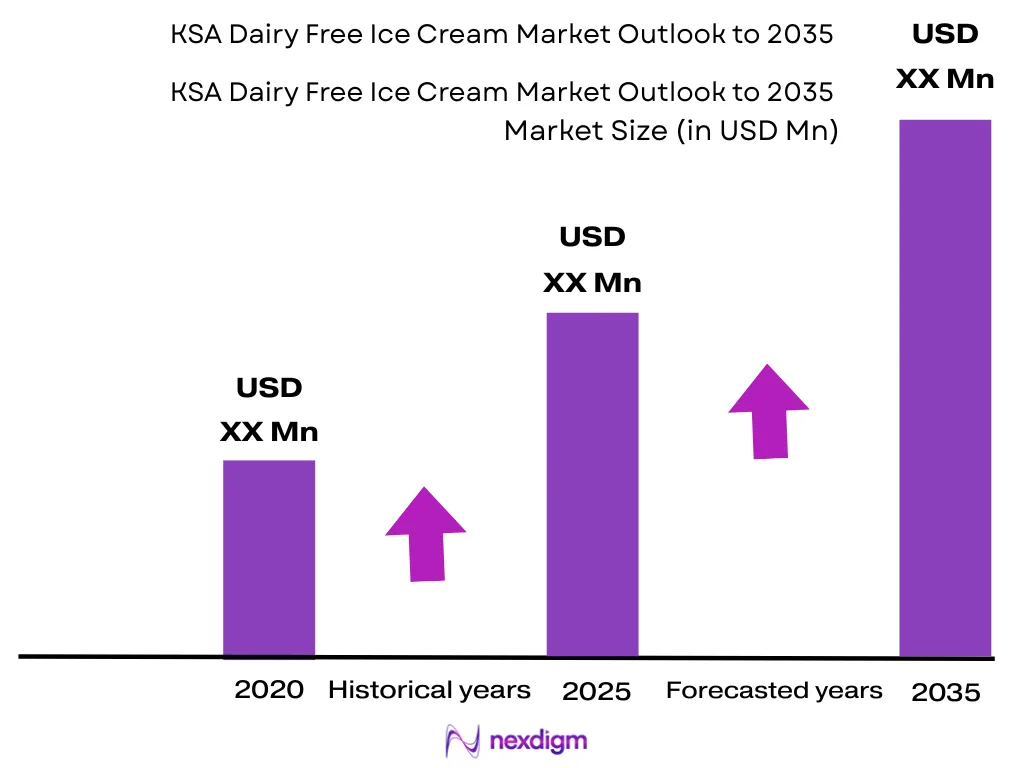
The KSA Dairy Free Ice Cream Market was valued at approximately USD ~ Million in 2024 and is expected to expand at a CAGR of ~X.X% during 2026-2035. Growth is supported by rising consumer interest in plant-based nutrition, increasing lactose intolerance awareness, and premium frozen dessert consumption. Saudi Arabia’s population exceeded 33 million in 2023 and reached around 34 million in 2024, while household expenditure on food and beverages continued to rise. The expansion of organized retail, growing availability of vegan products across supermarket chains, and increasing foodservice penetration have contributed to the adoption of dairy-free frozen desserts. Product innovation using oat, almond, coconut, and cashew milk bases has further accelerated category development.
Market Segmentation
By Base Ingredient Type
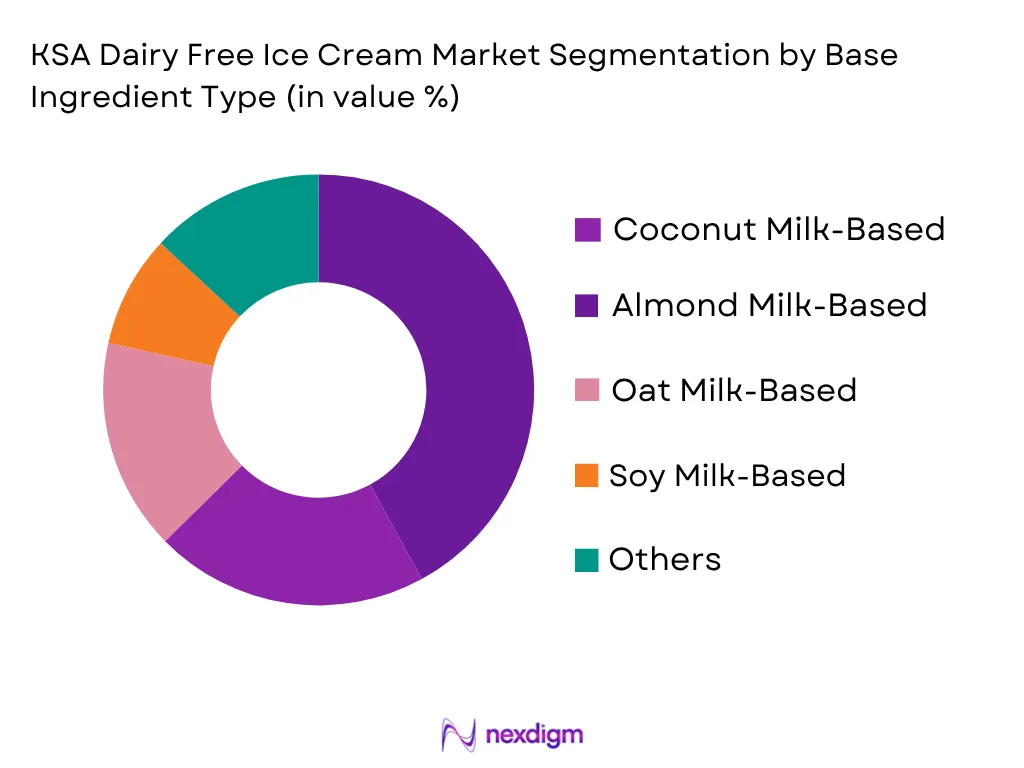
The market is segmented into coconut milk-based, almond milk-based, oat milk-based, soy milk-based, cashew milk-based, and other formulations. Coconut milk-based dairy-free ice cream currently dominates the market due to its creamy texture, superior mouthfeel, and ability to replicate traditional dairy ice cream characteristics. Manufacturers prefer coconut-based formulations because they offer excellent stability under high-temperature conditions and provide a rich sensory experience valued by consumers. International brands entering the Kingdom have predominantly launched coconut-based portfolios, increasing product visibility. Furthermore, coconut milk allows compatibility with premium flavor profiles such as chocolate, vanilla, caramel, pistachio, and date-based variants. The widespread availability of coconut-derived ingredients through established import channels has also contributed to segment leadership. As consumers seek indulgent yet dairy-free alternatives, coconut milk remains the preferred ingredient base across both retail and foodservice channels.
By Distribution Channel
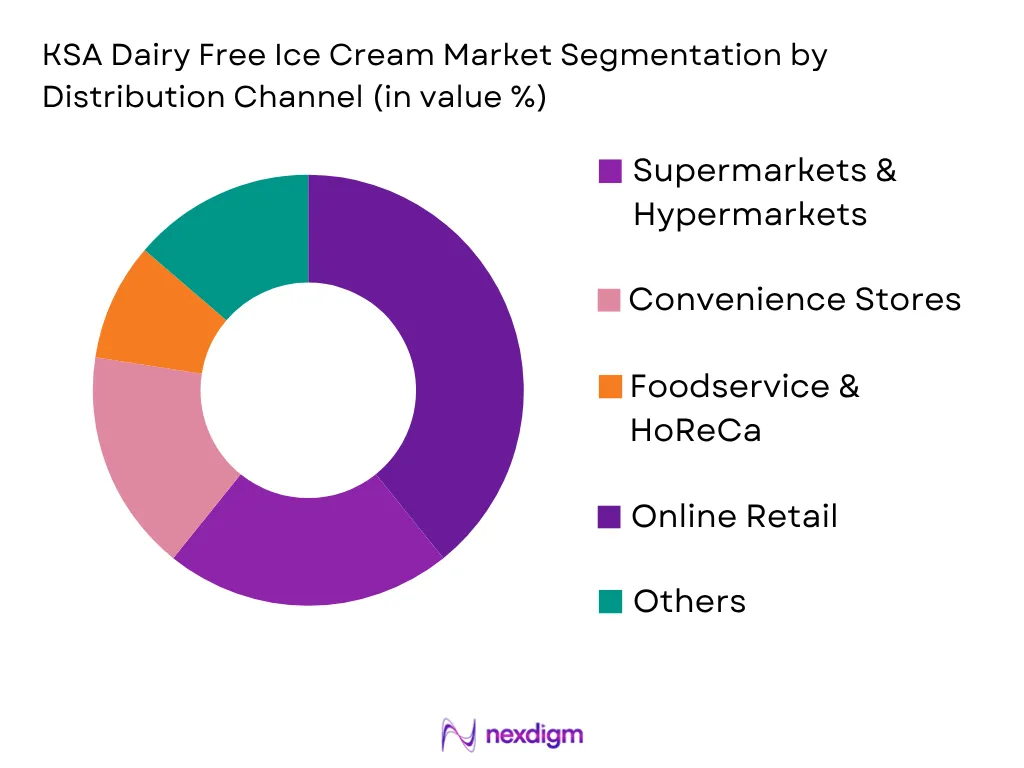
The market is segmented into hypermarkets and supermarkets, convenience stores, specialty health stores, online retail, foodservice & HoReCa, and others. Hypermarkets and supermarkets dominate the market due to extensive product visibility, large shelf space allocation, and strong consumer trust. Retail chains such as Carrefour, Panda, Danube, Lulu, and Tamimi have expanded their plant-based product offerings, creating greater accessibility for dairy-free frozen desserts. These stores enable consumers to compare multiple brands, flavors, and packaging formats in a single shopping trip. Promotional campaigns, premium frozen food sections, and dedicated health-food aisles have further strengthened category awareness. In addition, organized retail networks maintain advanced cold-chain infrastructure, ensuring product quality and reducing spoilage risks. The ability of supermarkets to stock both imported and locally distributed dairy-free ice cream brands has positioned this channel as the leading sales platform within the Kingdom.
Competitive Landscape
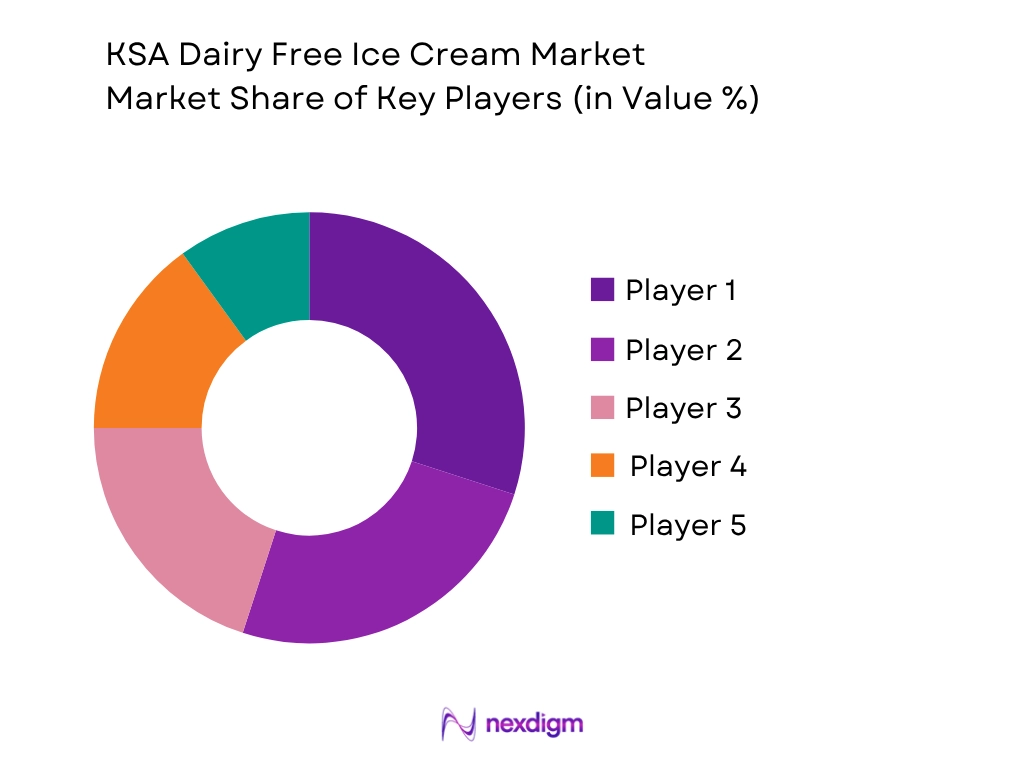
The KSA Dairy Free Ice Cream Market is moderately consolidated with the presence of international premium frozen dessert brands and emerging regional players. Global companies continue to dominate through extensive distribution agreements, strong brand equity, innovative plant-based formulations, and premium product positioning. The market is witnessing increasing competition in vegan, lactose-free, clean-label, and sugar-free categories, while partnerships with modern retail chains and foodservice operators remain critical competitive differentiators.
| Company | Establishment Year | Headquarters | Plant-Based Base Portfolio | Dairy-Free SKU Count | Distribution Reach | Premium Product Portfolio | Vegan Certification | Packaging Sustainability |
| House of Pops | 2018 | ~ | ~ | ~ | ~ | ~ | ~ | ~ |
| Magnum Vegan | 1989 | ~ | ~ | ~ | ~ | ~ | ~ | ~ |
| Ben & Jerry’s Non-Dairy | 1978 | ~ | ~ | ~ | ~ | ~ | ~ | ~ |
| Häagen-Dazs Non-Dairy | 1960 | ~ | ~ | ~ | ~ | ~ | ~ | ~ |
| Oatly | 1994 | ~ | ~ | ~ | ~ | ~ | ~ | ~ |
KSA Dairy Free Ice Cream Market Analysis
Growth Drivers
Rising Health Consciousness and Lactose Intolerance Awareness
Growing consumer awareness regarding lactose intolerance, digestive wellness, and healthier dietary choices is significantly supporting demand for dairy-free ice cream in Saudi Arabia. According to the World Bank, Saudi Arabia’s population exceeded 33.9 million in 2024, creating a large consumer base for specialized food categories. IMF estimates indicate Saudi Arabia’s GDP remained above USD 1 trillion in current prices, reflecting strong purchasing power and premium food consumption potential. The Kingdom’s urban population exceeded 28 million people, resulting in higher exposure to health-oriented food trends through modern retail and digital channels. Household expenditure on food and non-alcoholic beverages continues to rank among the largest consumer spending categories. The expansion of premium grocery chains, specialty health food stores, and online grocery platforms has increased accessibility of plant-based frozen desserts. Furthermore, rising participation in fitness activities and healthy lifestyle initiatives under Vision 2030 has strengthened consumer interest in products free from lactose and animal-derived ingredients. Dairy-free ice cream brands offering oat, almond, and coconut-based alternatives are benefiting from this shift toward wellness-focused consumption. The combination of rising disposable incomes, urban lifestyles, and growing awareness regarding dietary sensitivities continues to create favorable conditions for the expansion of dairy-free frozen dessert consumption across major Saudi cities.
Expansion of Modern Retail and Foodservice Infrastructure
The rapid development of organized retail and foodservice infrastructure is accelerating the penetration of dairy-free ice cream products across Saudi Arabia. According to the General Authority for Statistics, Saudi Arabia’s population surpassed 34 million people, while urban residents account for more than 28 million individuals. Riyadh, Jeddah, Dammam, and Makkah collectively represent major consumer markets with extensive supermarket, hypermarket, and convenience retail networks. Saudi Arabia received more than 100 million domestic and international tourists during recent reporting periods under Vision 2030 initiatives, increasing demand for premium and innovative food products. Modern retail chains such as Carrefour, Panda, Danube, Lulu, and Tamimi have expanded shelf space dedicated to plant-based food products, including dairy-free frozen desserts. Additionally, food delivery and quick-commerce platforms continue to increase frozen food accessibility across urban centers. IMF data indicates strong private consumption spending supported by a large middle-income population and high per-capita income levels. International foodservice chains, vegan cafés, premium dessert outlets, and hospitality operators are increasingly incorporating dairy-free options into their menus. This growing retail and foodservice ecosystem enables wider product availability, enhances consumer awareness, and supports category expansion throughout the Kingdom.
Market Challenges
Dependence on Imported Plant-Based Ingredients
One of the key challenges facing the KSA Dairy Free Ice Cream Market is the heavy dependence on imported plant-based ingredients used in production. Saudi Arabia’s climatic conditions limit domestic cultivation of ingredients such as oats, almonds, and coconuts that are commonly used in dairy-free frozen desserts. According to World Bank data, agriculture contributes only a small portion of the national economy compared with industrial and service sectors. The Kingdom imports substantial volumes of processed food ingredients and specialty food products to satisfy consumer demand. Saudi Arabia’s merchandise imports exceeded USD 200 billion in recent trade statistics, highlighting reliance on international supply chains. Any disruption in global logistics, agricultural production, or ingredient availability can impact manufacturing continuity and product assortment. Dairy-free ice cream producers must maintain consistent access to specialized ingredients that meet quality and regulatory standards. Furthermore, imported ingredients often require extended cold-chain logistics and specialized storage facilities before reaching manufacturing and retail channels. These supply-chain complexities increase operational risks and create challenges for maintaining product consistency. As demand for plant-based frozen desserts rises, ensuring stable ingredient sourcing remains a critical issue affecting category scalability and long-term market development.
Cold Chain and Distribution Infrastructure Requirements
Dairy-free ice cream products require advanced cold-chain infrastructure to preserve texture, flavor, and product quality throughout transportation and retail distribution. Saudi Arabia covers more than 2.1 million square kilometers, making nationwide frozen food distribution operationally complex. According to the General Authority for Statistics, a significant share of the population remains dispersed across multiple regions beyond major metropolitan areas. Maintaining uninterrupted frozen storage conditions across long transportation distances requires specialized logistics networks and refrigerated facilities. The growth of e-commerce grocery platforms has increased expectations for rapid frozen product delivery, further intensifying distribution requirements. Saudi Arabia’s logistics sector is expanding rapidly; however, frozen dessert products remain highly sensitive to temperature fluctuations during storage and transportation. Product spoilage risks are particularly relevant when serving secondary cities and remote regions where specialized cold-storage infrastructure may be less developed. Additionally, dairy-free ice cream manufacturers often offer premium formulations containing natural ingredients and clean-label components that require strict handling conditions. These operational complexities create barriers to expansion outside major urban centers and can limit market penetration among broader consumer groups despite increasing demand for plant-based frozen desserts.
Market Opportunities
Growth in Plant-Based and Vegan Food Consumption
The increasing adoption of plant-based food products presents a significant opportunity for the KSA Dairy Free Ice Cream Market. Saudi Arabia’s population exceeds 34 million people, while urban consumers continue to demonstrate growing interest in wellness-oriented and sustainable food choices. According to IMF economic indicators, strong household purchasing power and rising private consumption support premium food category expansion. Vision 2030 initiatives encouraging healthier lifestyles have contributed to greater awareness of alternative nutrition products. International food manufacturers and retailers are expanding plant-based product portfolios across the Kingdom, improving consumer exposure to dairy alternatives. Modern grocery chains continue introducing dedicated vegan and health-food sections, allowing greater visibility for dairy-free frozen desserts. Furthermore, younger consumers are increasingly seeking innovative products that align with ethical, environmental, and dietary preferences. The popularity of oat-based, almond-based, and coconut-based food products across beverage and snack categories provides a favorable foundation for dairy-free ice cream adoption. As plant-based consumption becomes more mainstream, manufacturers have opportunities to introduce localized flavors, premium formulations, and clean-label products designed specifically for Saudi consumers, supporting sustained category growth and broader market penetration.
Expansion Through Tourism, Hospitality, and Premium Foodservice Channels
Saudi Arabia’s rapidly expanding tourism and hospitality sector creates substantial opportunities for dairy-free ice cream manufacturers. National tourism initiatives have significantly increased visitor arrivals, with more than 100 million tourist trips recorded across domestic and international segments. Major projects including NEOM, Red Sea Global, Diriyah Gate, and Qiddiya are driving the development of hotels, restaurants, cafés, and entertainment venues throughout the Kingdom. The hospitality industry increasingly caters to international travelers who are familiar with vegan, lactose-free, and plant-based food options. Premium foodservice operators are therefore expanding menus to include dairy-free frozen desserts and specialty vegan offerings. Saudi Arabia’s service sector continues to attract substantial investment, supported by strong economic diversification efforts and high consumer spending levels. In addition, major urban centers such as Riyadh and Jeddah have experienced significant growth in premium dining concepts and international restaurant chains. Dairy-free ice cream manufacturers can leverage these developments by partnering with hotels, cafés, dessert chains, and catering providers. The increasing presence of premium foodservice establishments offers a scalable channel for brand visibility, consumer trial, and long-term adoption of plant-based frozen dessert products throughout the Kingdom.
Future Outlook
The KSA Dairy Free Ice Cream Market is expected to experience robust expansion over the forecast period driven by rising health consciousness, increasing vegan product adoption, and the continuous premiumization of frozen desserts. Growth in organized retail, foodservice modernization, and e-commerce grocery platforms will enhance product accessibility across the Kingdom. Product innovation focused on oat-based formulations, protein-enriched recipes, sugar-free variants, and clean-label ingredients is expected to support category development. Additionally, Vision 2030 initiatives encouraging healthier lifestyles and expanding tourism activity are likely to create favorable conditions for dairy-free frozen dessert consumption.
Major Players
- Ben & Jerry’s Non-Dairy
- Magnum Vegan
- Häagen-Dazs Non-Dairy
- Oatly Frozen Desserts
- House of Pops
- Alpro
- So Delicious Dairy Free
- Coconut Bliss
- Booja-Booja
- Halo Top Dairy Free
- Swedish Glace
- Van Leeuwen Non-Dairy
- Cado
- Baskin Robbins Non-Dairy Range
- London Dairy Plant-Based Range
Key Target Audience
- Dairy-Free Ice Cream Manufacturers
- Plant-Based Ingredient Suppliers
- Frozen Dessert Brand Owners
- Hypermarket and Supermarket Chains
- HoReCa Operators
- E-Commerce and Quick Commerce Platforms
- Investment and Venture Capitalist Firms
- Government and Regulatory Bodies (Saudi Food & Drug Authority, Ministry of Environment Water and Agriculture)
Research Methodology
Step 1: Identification of Key Variables
The initial phase involves developing an ecosystem map covering manufacturers, distributors, retailers, foodservice operators, ingredient suppliers, and regulatory bodies associated with the KSA Dairy Free Ice Cream Market. Extensive secondary research is conducted to identify critical market variables including product innovation, distribution trends, consumer preferences, and plant-based ingredient adoption.
Step 2: Market Analysis and Construction
Historical market data is compiled and analyzed to estimate market size, category penetration, retail sales performance, and consumption patterns. Demand-side and supply-side assessments are performed to evaluate market structure and understand revenue generation across product categories and distribution channels.
Step 3: Hypothesis Validation and Expert Consultation
Research assumptions are validated through interviews with manufacturers, distributors, retailers, foodservice operators, and industry specialists. These interactions provide operational insights regarding consumer demand, product innovation, pricing strategies, and competitive positioning within the market.
Step 4: Research Synthesis and Final Output
The final stage combines findings from secondary research and primary interviews. Data triangulation techniques are applied to validate market estimates, segmentation analysis, competitive benchmarking, and forecast assumptions, ensuring an accurate and comprehensive assessment of the KSA Dairy Free Ice Cream Market.

- Executive Summary
- Research Methodology (Market Definitions and Assumptions, Abbreviations, Market Sizing Approach, Top-Down Analysis, Bottom-Up Analysis, Demand-Side Assessment, Supply-Side Assessment, Retail Audit Analysis, Consumer Purchase Tracking, Primary Industry Interviews, Data Triangulation, Forecasting Framework, Limitations and Future Conclusions)

- Definition and Scope
- Market Evolution and Industry Genesis
- Timeline of Major Industry Developments
- Dairy-Free Frozen Dessert Ecosystem
- Value Chain Analysis

- Growth Drivers (Rising Health Consciousness, Increasing Lactose Intolerance Awareness, Expansion of Vegan Consumer Base, Growing Premium Food Consumption, Modern Retail Expansion, Rising Disposable Income)
- Market Challenges (Dependence on Imported Ingredients, Premium Product Pricing, Cold Chain Management Requirements, Limited Consumer Awareness Outside Metro Cities, Shelf-Life Management Constraints, Competition from Traditional Dairy Ice Cream)
- Market Opportunities (Plant-Based Product Innovation, Functional Frozen Dessert Development, Expansion Through E-Commerce Platforms, Growth in HoReCa Demand, Premium Dessert Consumption, Vision 2030 Lifestyle Transformation)
- Market Trends (Oat Milk-Based Innovation, Sugar-Free Frozen Desserts, Protein-Enriched Dairy-Free Ice Cream, Clean Label Formulations, Sustainable Packaging Adoption, Premium Gourmet Flavor Launches, Date-Based Flavor Innovation)
- Government Regulations (Saudi Food & Drug Authority Compliance, Product Labeling Standards, Halal Certification Requirements, Import Regulations, Food Safety Standards, Sustainability Compliance Requirements)
- Raw Material Analysis (Coconut Ingredient Imports, Almond Ingredient Procurement, Oat Ingredient Utilization, Plant Protein Sourcing, Natural Sweetener Trends, Premium Ingredient Adoption)
- Consumer Preference Mapping (Taste Preference, Texture Acceptance, Ingredient Transparency, Health Benefits, Sustainability Considerations)
- Supply-Demand Gap Assessment
- SWOT Analysis
- Porter’s Five Forces Analysis
- PESTLE Analysis
- Stakeholder Ecosystem
- Competition Ecosystem

- By Market Value (2020-2025)
- By Volume Consumption (2020-2025)
- By Average Selling Price (2020-2025)

- By Base Ingredient Type (In Value %)
Coconut Milk-Based Ice Cream
Almond Milk-Based Ice Cream
Oat Milk-Based Ice Cream
Soy Milk-Based Ice Cream
Cashew Milk-Based Ice Cream
Pea Protein-Based Ice Cream
Mixed Plant-Based Formulations
Other Plant-Based Bases - By Flavor Type (In Value %)
Chocolate
Vanilla
Date Flavor
Pistachio
Coffee Flavor
Fruit-Based Flavors
Nut-Based Premium Flavors
Limited Edition and Gourmet Flavors - By Distribution Channel (In Value %)
Hypermarkets and Supermarkets
Convenience Stores
Specialty Health Stores
Online Retail and Direct-to-Consumer
Quick Commerce Platforms
Foodservice and HoReCa
Ice Cream Parlors
Catering and Institutional Sales - By Region (In Value %)
Riyadh Region
Makkah Region
Eastern Province
Madinah Region
Asir Region
Other Regions - By Packaging Type (In Value %)
Tubs
Cups
Multipacks
Stick and Bar Packaging
Family Packs
Sustainable Packaging

- Market Share of Major Players (By Value, Volume, Product Format, Distribution Channel, Plant-Based Base Type)
- Market Concentration Analysis (International Brand Presence, Local Brand Strength, Private Label Penetration, Premium Segment Dominance)
- Cross Comparison Parameters (Plant-Based Base Portfolio, Dairy-Free SKU Count, Distribution Reach Across KSA, HoReCa Penetration, Vegan & Halal Certification Portfolio, Premium Product Penetration, Innovation & New Product Launch Frequency, Presence Across Modern Retail & E-Commerce Platforms)
- SWOT Analysis of Major Players
- Pricing Analysis by SKU, Pack Size and Product Category
- Detailed Profiles of Major Companies
House of Pops
Ben & Jerry’s Non-Dairy
Magnum Vegan
Häagen-Dazs Non-Dairy
Oatly Frozen Desserts
Alpro
So Delicious Dairy Free
Coconut Bliss
Booja-Booja
Halo Top Dairy Free
Swedish Glace
Van Leeuwen Non-Dairy
Cado
Baskin Robbins Non-Dairy Range
London Dairy Plant-Based Range

- Consumption Behavior Assessment (Purchase Frequency, Seasonal Consumption Patterns, Household Penetration, Consumption Occasions, Repeat Purchase Rates)
- Demographic Consumption Trends (Age Group, Income Segment, Nationality Mix, Urban-Rural Split, Family Size Analysis)
- Purchasing Power Analysis (Disposable Income, Premium Food Expenditure, Frozen Dessert Spending, Household Food Budget Allocation)
- Premium vs Mass Market Demand Analysis (Willingness to Pay, Premium Product Adoption, Trading-Up Behaviour, Value Proposition Assessment)
- Brand Loyalty Assessment (Repeat Purchase Behaviour, Brand Switching Trends, Retention Drivers, Trial Conversion Rates)

- By Market Value (2026-2035)
- By Volume Consumption (2026-2035)
- By Average Selling Price (2026-2035)


 Request a Sample
 Ask for Customization
 Get a Quote
 Enquire Now