

 Download PDF
Market Overview
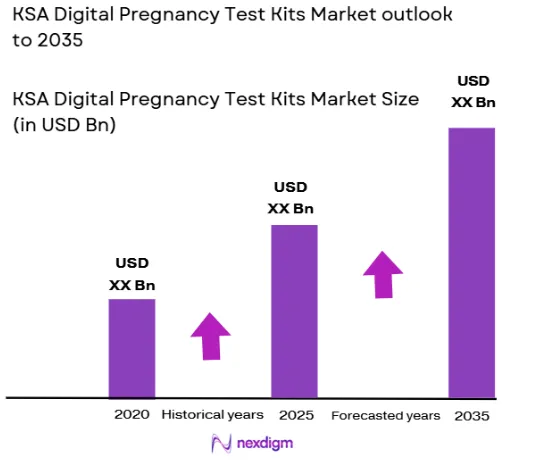
The KSA Digital Pregnancy Test Kits Market was valued at USD ~ billion based on a recent historical assessment, supported by data from healthcare device trade statistics, in-vitro diagnostic industry databases, and regional pharmaceutical sales disclosures. The market is primarily driven by rising adoption of home diagnostic devices, growing awareness of early pregnancy detection, increasing retail pharmacy penetration, and the expansion of over-the-counter medical device availability supported by regulatory modernization and growing healthcare digitization across Saudi Arabia’s consumer health ecosystem.
Riyadh, Jeddah, and Dammam dominate demand due to their dense healthcare infrastructure, strong retail pharmacy networks, and higher disposable household incomes supporting adoption of premium diagnostic products. These cities also benefit from better access to imported medical devices and digital health products through organized distribution networks. Urban population growth, increasing participation of women in the workforce, and expanding private healthcare providers continue to reinforce demand concentration in these metropolitan healthcare consumption hubs.
Market Segmentation
By System Type
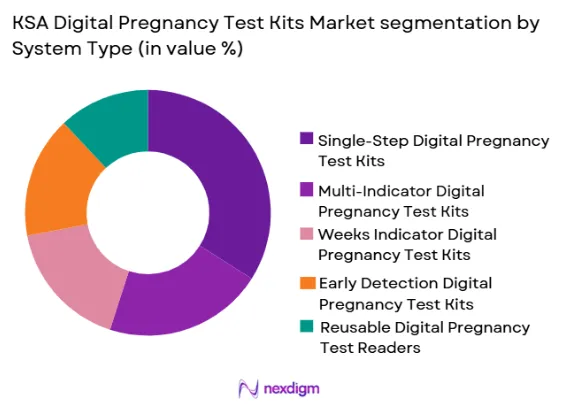
KSA Digital Pregnancy Test Kits Market market is segmented by system type into single-step digital pregnancy test kits, multi-indicator digital pregnancy test kits, weeks indicator digital pregnancy test kits, early detection digital pregnancy test kits, and reusable digital pregnancy test readers. Recently, single-step digital pregnancy test kits have a dominant market share due to strong consumer preference for simple home testing solutions, competitive pricing availability in pharmacies, high brand trust, and strong retail distribution. Their ease of use, minimal interpretation error due to digital display results, and rapid detection capability have also supported widespread use. In addition, leading diagnostic brands actively promote single-step kits due to higher sales volumes and consistent demand from first-time users. Consumer inclination toward quick decision making and privacy further strengthens this sub-segment. Increased availability through e-commerce healthcare platforms and pharmacy chains also continues to reinforce the category’s leadership position.
By Platform Type
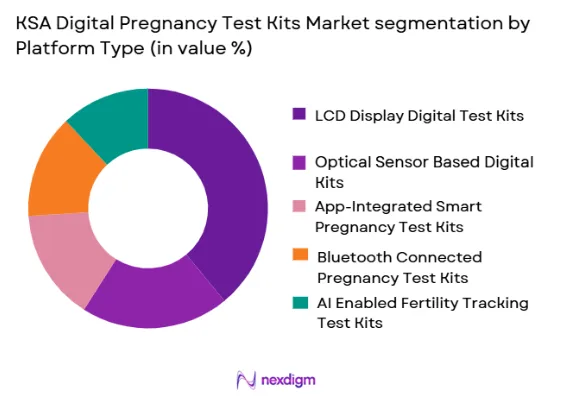
KSA Digital Pregnancy Test Kits Market market is segmented by platform type into LCD display digital test kits, Bluetooth connected pregnancy test kits, app-integrated smart pregnancy test kits, optical sensor based digital kits, and AI enabled fertility tracking test kits. Recently, LCD display digital test kits have a dominant market share due to their affordability, reliability, and widespread familiarity among consumers compared to newer smart platforms. Their dominance is also supported by easier regulatory approvals, lower technology complexity, and broader availability across retail pharmacies. Consumers also trust LCD display formats because they clearly show pregnant or not pregnant results, reducing ambiguity associated with line-based testing. Manufacturers also prioritize LCD based systems because they offer cost efficiency and strong margins compared to advanced connected platforms. While smart kits are gaining attention, price sensitivity and limited consumer awareness about connected fertility ecosystems continue to maintain LCD platform leadership.
Competitive Landscape
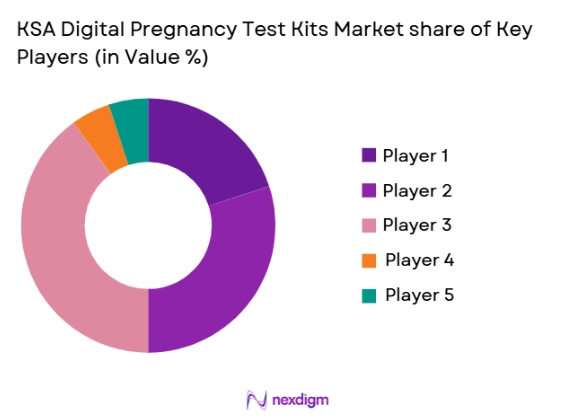
The KSA Digital Pregnancy Test Kits Market shows moderate consolidation with a few global diagnostic companies dominating through strong pharmacy distribution partnerships and regulatory approvals. Multinational in-vitro diagnostic firms maintain competitive advantages through brand trust, technological innovation, and product accuracy claims. Regional distributors also play an important role by ensuring regulatory compliance and supply chain continuity. Competition is largely driven by product accuracy, pricing, brand reliability, and retail accessibility, while innovation around smart connected testing is emerging as a differentiation strategy.
| Company Name | Establishment Year | Headquarters | Technology Focus | Market Reach | Key Products | Revenue | Digital Accuracy Level |
| Abbott Laboratories | 1888 | USA | ~ | ~ | ~ | ~ | ~ |
| F. Hoffmann-La Roche | 1896 | Switzerland | ~ | ~ | ~ | ~ | ~ |
| Procter & Gamble | 1837 | USA | ~ | ~ | ~ | ~ | ~ |
| QuidelOrtho | 1979 | USA | ~ | ~ | ~ | ~ | ~ |
| bioMérieux | 1963 | France | ~ | ~ | ~ | ~ | ~ |
KSA Digital Pregnancy Test Kits Market Analysis
Growth Drivers
Rising Demand for Home-Based Early Detection Diagnostic Devices
The increasing shift toward home healthcare solutions is significantly driving demand for digital pregnancy test kits in Saudi Arabia. Consumers increasingly prefer private, convenient diagnostic options that eliminate the need for clinical visits for preliminary confirmation. The availability of accurate digital tests with clear results has also reduced dependence on laboratory testing. Increasing digital health awareness through pharmacy campaigns and healthcare providers is also encouraging adoption. Retail pharmacy expansion across urban centers has made these products more accessible than before. E-commerce platforms offering discreet delivery have also improved purchasing comfort. The expanding female working population has further accelerated the need for quick and reliable testing options. Improvements in product sensitivity have enabled earlier detection, strengthening consumer trust. Healthcare modernization initiatives are also indirectly supporting home diagnostic adoption. Collectively, these factors continue to establish strong structural demand growth.
Expansion of Organized Retail Pharmacy and Online Medical Distribution Networks
The rapid expansion of organized pharmacy chains and licensed online healthcare retailers is creating stronger market penetration for digital pregnancy test kits. Large pharmacy retailers are increasing shelf space for self-diagnostic products as preventive healthcare awareness grows. Online pharmacies are also enabling wider geographic access beyond major cities. Pharmaceutical distribution reforms have improved supply reliability and product availability. Digital marketing by consumer health brands has also increased product visibility. Subscription healthcare platforms are introducing repeat purchase behavior. Regulatory improvements allowing OTC medical device sales have further enabled growth. Distribution partnerships between global manufacturers and regional suppliers are strengthening inventory management. The increasing role of quick commerce healthcare delivery is also reducing purchase barriers. Together these distribution improvements are significantly strengthening the market foundation.
Market Challenges
Price Sensitivity Compared to Conventional Strip-Based Pregnancy Tests
One of the key challenges affecting the digital pregnancy test kits market is the price gap compared to traditional strip pregnancy tests. Many consumers still opt for lower cost strip kits that provide basic detection functionality. Digital kits are often priced multiple times higher due to embedded electronics and display components. This pricing difference limits adoption among cost conscious consumers. Limited insurance reimbursement for OTC diagnostics also restricts premium product uptake. Price competition from generic strip manufacturers remains intense. Retailers often promote economical alternatives due to faster turnover. Consumer perception that digital tests are nonessential upgrades also affects conversion rates. Manufacturers must therefore justify higher prices through accuracy and convenience messaging. Without effective price optimization, this barrier may continue to slow premium category expansion.
Regulatory Compliance and Import Dependency for Advanced Diagnostic Electronics
The reliance on imported diagnostic electronics and biosensor components creates operational challenges for suppliers. Regulatory approval processes for medical diagnostic devices can also delay product launches. Import certification requirements increase compliance costs for suppliers entering the Saudi market. Currency fluctuations can affect procurement pricing for distributors. Dependence on international manufacturing also exposes the market to supply disruptions. Cold chain and storage requirements for some diagnostic components further complicate logistics. Smaller distributors often struggle with regulatory documentation requirements. Product registration timelines may affect innovation speed. Lack of local manufacturing ecosystems also increases cost pressures. Addressing these structural supply challenges remains critical for long term sustainability.
Opportunities
Integration of Smart Fertility Tracking Ecosystems with Digital Pregnancy Testing
The integration of pregnancy testing with digital fertility tracking platforms presents a significant growth opportunity. Manufacturers are increasingly developing connected diagnostic products that integrate with mobile applications. These systems can provide ovulation tracking, cycle monitoring, and pregnancy confirmation within one ecosystem. Digital health adoption in Saudi Arabia is supporting interest in such innovations. Consumers are also becoming more comfortable with app based health monitoring tools. Companies investing in localized Arabic language applications can strengthen user engagement. Subscription based reproductive health tracking services also provide recurring revenue potential. Retailers may also bundle such products with women’s health packages. Increasing smartphone penetration strengthens feasibility of this opportunity. Over time such integrated platforms could reshape the product value proposition.
Localization of Medical Device Manufacturing Under National Healthcare Industrial Programs
Saudi Arabia’s focus on healthcare localization under industrial diversification programs creates opportunities for regional manufacturing partnerships. Establishing local assembly or packaging operations can reduce import costs. Government incentives for medical technology investment may attract global diagnostic companies. Local manufacturing can also reduce regulatory approval timelines. Partnerships with regional pharmaceutical manufacturers could improve supply resilience. Technology transfer agreements could strengthen domestic diagnostic capabilities. Increased local participation could also improve price competitiveness. Healthcare industrial clusters may enable innovation ecosystems. Local production could also improve export potential to neighboring Gulf markets. These structural developments could significantly reshape supply dynamics.
Future Outlook
The KSA Digital Pregnancy Test Kits Market is expected to experience steady growth over the next five years supported by expanding home healthcare trends and increased awareness of early detection diagnostics. Technological improvements in biosensors and smart connectivity features are expected to improve product differentiation. Regulatory support for OTC diagnostic devices is also expected to strengthen product accessibility. Rising digital health adoption and growth of e-pharmacy platforms will further support demand. Increasing consumer focus on convenience and privacy will remain a core growth factor.
Major Players
- Abbott Laboratories
- F. Hoffmann-La Roche Diagnostics
- Procter & Gamble Health
- QuidelOrtho Corporation
- bioMérieux
- Siemens Healthineers
- Becton Dickinson and Company
- Cardinal Health
- Geratherm Medical AG
- Piramal Pharma Healthcare
- SPIMACO
- Gulf Medical Company
- Al Faisaliah Medical Systems
- Church & Dwight Co Inc
- Mankind Pharma
Key Target Audience
- Diagnostic device manufacturers
- Pharmaceutical distributors
- Retail pharmacy chains
- Online healthcare retailers
- Investments and venture capitalist firms
- Government and regulatory bodies
- Healthcare technology providers
- Consumer healthcare product companies
Research Methodology
Step 1: Identification of Key Variables
Primary variables including product demand, pharmacy sales volumes, import statistics, regulatory approvals, and consumer healthcare adoption indicators were identified. Secondary variables included pricing patterns, distribution density, and technology adoption trends. Market boundaries were defined based on OTC digital diagnostic product classifications. Demand drivers and supply variables were mapped to construct a realistic market structure. Validation variables included brand sales and device availability indicators.
Step 2: Market Analysis and Construction
Market sizing was constructed using diagnostic device import data, distributor sales estimates, and healthcare retail performance indicators. Segment shares were derived through product availability comparisons and pharmacy stocking patterns. Platform segmentation was constructed based on technology differentiation. Market value analysis was cross verified through financial disclosures and trade statistics. Data normalization techniques were applied to avoid duplication errors.
Step 3: Hypothesis Validation and Expert Consultation
Initial assumptions were validated through industry publications, distributor insights, and healthcare device specialists. Product demand behavior was validated through pharmacy stocking strategies. Technology adoption assumptions were reviewed through diagnostic innovation reports. Regulatory assumptions were aligned with Saudi device approval frameworks. Final validation involved triangulating supply and demand indicators.
Step 4: Research Synthesis and Final Output
All validated data points were consolidated into a structured market framework. Quantitative estimates were aligned with qualitative insights. Segment level analysis was refined to ensure internal consistency. Forecast assumptions were aligned with healthcare modernization indicators. The final report was structured to present strategic, competitive, and growth insights.

- Executive Summary
- Research Methodology (Definitions, Scope, Industry Assumptions, Market Sizing Approach, Primary & Secondary Research Framework, Data Collection & Verification Protocol, Analytic Models & Forecast Methodology, Limitations & Research Validity Checks)

- Market Definition and Scope
- Value Chain & Stakeholder Ecosystem
- Regulatory / Certification Landscape
- Sector Dynamics Affecting Demand
- Strategic Initiatives & Infrastructure Growth

- Growth Drivers
Increasing awareness of early pregnancy detection solutions
Rising preference for privacy driven home diagnostics
Growth of digital healthcare adoption in Saudi Arabia
Increasing female workforce participation driving demand
Improved accuracy compared to conventional strip tests - Market Challenges
Higher cost compared to traditional pregnancy test strips
Limited awareness in rural populations
Import dependency on advanced diagnostic electronics
Regulatory approval timelines for new digital devices
Price sensitivity among low income consumers - Market Opportunities
Expansion of smart connected fertility monitoring solutions
Localization of manufacturing under Saudi Vision programs
Growth of online pharmacy distribution channels - Trends
Integration with mobile fertility tracking applications
Demand for early detection kits with higher sensitivity
Shift toward eco-friendly disposable materials
Growth of OTC self diagnostic medical devices
Increasing branding around accuracy and convenience - Government Regulations & Defense Policy
Saudi FDA regulations for OTC diagnostic devices
Medical device import certification requirements
Quality compliance standards for in-vitro diagnostic kits - SWOT Analysis
- Stakeholder and Ecosystem Analysis
- Porter’s Five Forces Analysis
- Competition Intensity and Ecosystem Mapping

- By Market Value, 2020-2025
- By Installed Units, 2020-2025
- By Average System Price, 2020-2025
- By System Complexity Tier, 2020-2025

- By System Type (In Value%)
Single-Step Digital Pregnancy Test Kits
Multi-Indicator Digital Pregnancy Test Kits
Weeks Indicator Digital Pregnancy Test Kits
Early Detection Digital Pregnancy Test Kits
Reusable Digital Pregnancy Test Readers - By Platform Type (In Value%)
LCD Display Digital Test Kits
Bluetooth Connected Pregnancy Test Kits
App-Integrated Smart Pregnancy Test Kits
Optical Sensor Based Digital Kits
AI Enabled Fertility Tracking Test Kits - By Fitment Type (In Value%)
Disposable Cartridge Based Systems
Strip Integrated Digital Systems
Modular Reader Based Systems
Compact Handheld Digital Devices
Multi-Test Compatible Digital Readers - By End User Segment (In Value%)
Homecare Consumers
Hospitals & Maternity Clinics
Diagnostic Laboratories
Online Health Service Providers
Pharmacy Based Testing Services - By Procurement Channel (In Value%)
Retail Pharmacies
Hospital Procurement Contracts
E-commerce Healthcare Platforms
Distributor & Wholesale Medical Suppliers
Direct Manufacturer Supply Agreements - By Material / Technology (in Value %)
Lateral Flow Immunoassay Technology
Optical Biosensor Technology
Electrochemical Detection Technology
Microfluidic Test Platforms
hCG Hormone Digital Detection Technology

- Market structure and competitive positioning
- Market share snapshot of major players
- Cross Comparison Parameters (Product Accuracy Rate, Detection Time, Digital Display Quality, Connectivity Features, Product Pricing, Distribution Reach, Regulatory Certifications, Product Portfolio Depth, Brand Recognition, After Sales Support, Technology Integration, Manufacturing Presence, Innovation Pipeline, Retail Penetration, Online Availability)
- SWOT Analysis of Key Players
- Pricing & Procurement Analysis
- Key Players
Abbott Laboratories
F. Hoffmann-La Roche Diagnostics
QuidelOrtho Corporation
Church & Dwight Co., Inc.
Procter & Gamble Health
bioMérieux Diagnostics
Siemens Healthineers
Becton Dickinson and Company
Cardinal Health Diagnostics
Geratherm Medical AG
Piramal Pharma Healthcare
Al Hayat Pharmaceutical Industries
SPIMACO Healthcare
Gulf Medical Company
Al Faisaliah Medical Systems

- Home users dominate due to privacy and convenience factors
- Hospitals prefer high accuracy digital confirmation kits
- Online healthcare platforms driving repeat purchases
- Pharmacy chains influencing brand selection decisions

- Forecast Market Value, 2026-2035
- Forecast Installed Units, 2026-2035
- Price Forecast by System Tier, 2026-2035
- Future Demand by Platform, 2026-2035


 Request a Sample
 Ask for Customization
 Get a Quote
 Enquire Now