
 Download PDF
Market Overview
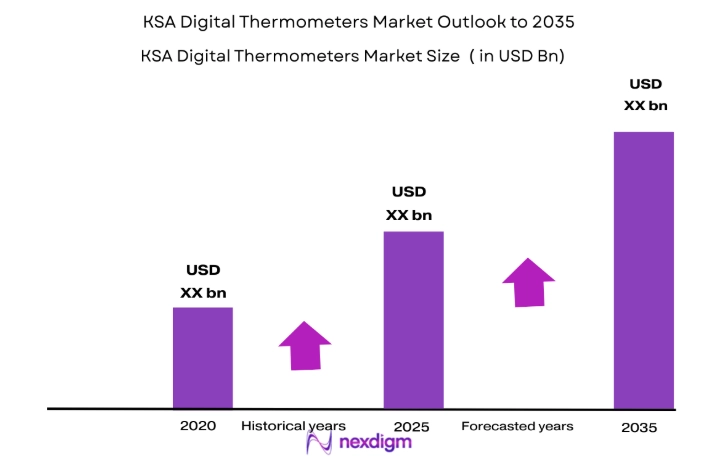
The market for digital thermometers in Saudi Arabia is currently valued at approximately USD ~ million, with a steady growth trajectory driven by technological advancements, healthcare sector demand, and increasing awareness of health monitoring. The growing healthcare infrastructure and demand for more accurate and efficient temperature measurement devices across various industries are the primary growth drivers. Innovations in digital thermometer technology, such as wireless and smart thermometers, are enhancing the market’s performance, making it a key segment in the healthcare technology space.
Saudi Arabia remains a dominant player in the market, with major cities such as Riyadh, Jeddah, and Dammam playing a crucial role in driving the demand for digital thermometers. Riyadh, being the capital and a hub for healthcare and technological advancements, sees high consumption of healthcare devices, including digital thermometers, in both public and private healthcare facilities. The growing awareness and preference for advanced, non-invasive temperature monitoring solutions are contributing to the high demand in these regions. Additionally, the government’s efforts to enhance the quality of healthcare services are further bolstering the market’s growth.
Market Segmentation
By Product Type:
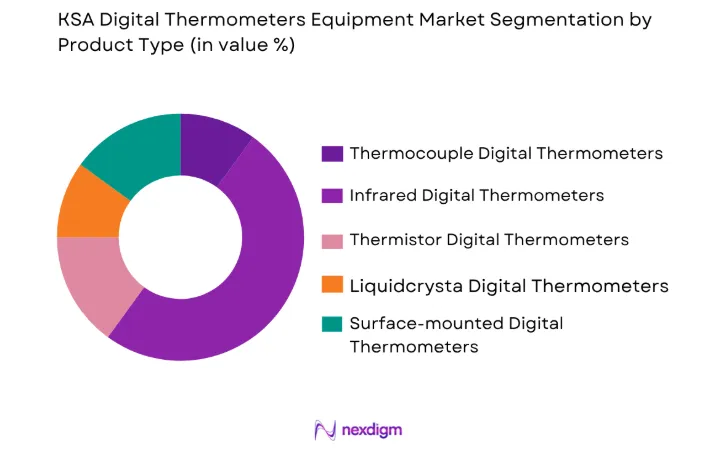
The digital thermometer market in Saudi Arabia is segmented by product type into thermocouple-based digital thermometers, infrared digital thermometers, thermistor-based digital thermometers, liquid crystal-based digital thermometers, and surface-mounted digital thermometers. Recently, infrared digital thermometers have dominated the market share due to their non-invasive nature, quick readings, and ability to measure temperature at a distance, which is especially important in healthcare settings. The increased demand for touchless and hygienic solutions, coupled with their growing use in both clinical and homecare environments, has made infrared thermometers a preferred choice among consumers and healthcare providers alike.
By Platform Type:
The market is segmented by platform type into standalone digital thermometers, Bluetooth-enabled digital thermometers, Wi-Fi-enabled digital thermometers, portable digital thermometers, and wearable digital thermometers. Standalone digital thermometers dominate the market share, mainly due to their ease of use, affordability, and reliability in both clinical and personal settings. These devices are often seen as the standard in most healthcare environments, where simple, accurate temperature measurement is essential. Their widespread availability and cost-effectiveness have made them a go-to choice for both medical professionals and consumers.

Competitive Landscape
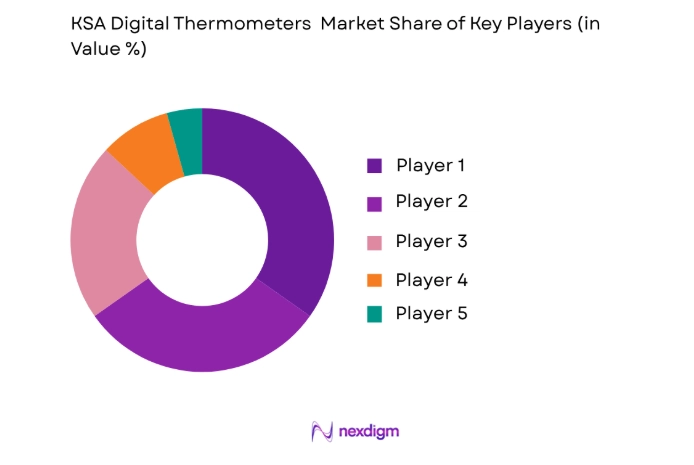
The competitive landscape of the Saudi Arabian digital thermometers market is marked by a mix of established players and new entrants, all striving for innovation and market dominance. Major players are focusing on enhancing product features such as wireless connectivity, accuracy, and ease of use to maintain a competitive edge. Consolidation trends are observed as some key companies seek mergers or acquisitions to expand their product portfolios and distribution networks. The presence of global companies like Philips Healthcare and Omron is strong, influencing the overall competitive dynamics.
| Company Name | Establishment Year | Headquarters | Technology Focus | Market Reach | Key Products | Revenue | R&D Investment |
| Philips Healthcare | 1891 | Amsterdam, Netherlands | ~ | ~ | ~ | ~ | ~ |
| Omron Healthcare | 1933 | Kyoto, Japan | ~ | ~ | ~ | ~ | ~ |
| Thermo Fisher Scientific | 1956 | Waltham, USA | ~ | ~ | ~ | ~ | ~ |
| GE Healthcare | 1892 | Chicago, USA | ~ | ~ | ~ | ~ | ~ |
| 3M Health Care | 1902 | St. Paul, USA | ~ | ~ | ~ | ~ | ~ |
KSA Digital Thermometers Equipment Market Analysis
Growth Drivers
Technological Advancements in Digital Thermometers:
The development of digital thermometers, particularly infrared and wireless models, is one of the main growth drivers for the market. The growing demand for non-contact, accurate, and fast temperature readings in various healthcare settings is pushing the adoption of infrared digital thermometers. These devices, which can provide results in just a few seconds without physical contact, are in high demand due to their hygienic properties, which reduce the risk of cross-contamination. In addition, the integration of Bluetooth and Wi-Fi capabilities into these thermometers has made them even more appealing, especially for remote monitoring in homes and hospitals. The growing healthcare infrastructure and government initiatives aimed at improving healthcare standards in Saudi Arabia are also driving the demand for these technologically advanced thermometers, especially in hospitals, clinics, and diagnostic centers. With an increasing focus on preventive healthcare and disease monitoring, digital thermometers are poised for even greater adoption, particularly in pediatric care, where non-invasive temperature measurement is critical.
Growth in Healthcare Infrastructure:
Another significant growth driver for the market is the rapid expansion of healthcare facilities and services in Saudi Arabia. The government’s Vision 2030 plan, which aims to modernize and enhance the country’s healthcare system, has been instrumental in boosting demand for medical equipment, including digital thermometers. Hospitals, clinics, and home healthcare services are increasingly relying on digital thermometers for accurate and quick temperature readings, particularly in critical care and emergency services. As more healthcare centers are built and existing ones are upgraded with modern equipment, the demand for digital thermometers continues to rise. Furthermore, the increase in chronic disease management and the need for continuous monitoring are also contributing to the market’s growth. The investment in healthcare infrastructure is not only driving demand from hospitals and clinics but also from healthcare providers in the private sector, who are adopting state-of-the-art technology to meet the growing needs of patients.
Market Challenges
High Cost of Advanced Digital Thermometers:
One of the key challenges facing the digital thermometer market in Saudi Arabia is the high cost associated with advanced thermometer models, such as infrared and Bluetooth-enabled devices. These devices, which offer enhanced accuracy, faster results, and additional features like wireless connectivity, often come with a high price tag. This cost can limit adoption, particularly in smaller healthcare facilities or in less economically developed regions. In addition, for individual consumers looking for a cost-effective solution, the high upfront cost of these advanced devices can be a deterrent. While the price of digital thermometers is expected to decrease over time as more players enter the market and economies of scale come into play, the current cost remains a significant barrier to widespread adoption. Healthcare facilities in rural areas or with tight budgets may find it challenging to invest in high-tech thermometers, even if they offer improved efficiency and accuracy. This price sensitivity is a critical factor that could limit the market’s overall growth in the short term.
Regulatory Barriers and Compliance Issues:
The digital thermometer market also faces challenges related to regulatory barriers and compliance with medical device standards. In Saudi Arabia, medical devices, including thermometers, must comply with the regulations set by the Saudi Food and Drug Authority (SFDA). These regulatory requirements can be stringent and time-consuming, delaying the entry of new products into the market. Manufacturers must ensure that their devices meet the safety and quality standards outlined by the SFDA, which may require additional testing, certification, and documentation. Furthermore, the cost of complying with these regulations can be high, especially for smaller companies that lack the resources to navigate the complex regulatory environment. While the SFDA is working to streamline the approval process, these compliance challenges can still pose significant hurdles for market entrants. Manufacturers may also face difficulties in understanding and adhering to the various certifications required in different regions, which can limit their ability to expand into international markets.
Opportunities
Increase in Demand for Home Healthcare Devices:
One of the most promising opportunities for the digital thermometer market in Saudi Arabia is the growing demand for home healthcare devices. With an aging population, increasing chronic disease prevalence, and the shift towards home-based care, there is a significant rise in consumer interest in health monitoring devices, including digital thermometers. Home healthcare solutions, which allow individuals to monitor their health and manage medical conditions at home, have become increasingly popular in Saudi Arabia, driven by the growing adoption of remote healthcare and telemedicine services. As people seek to manage their health outside of clinical settings, digital thermometers that offer ease of use and accuracy at home are becoming essential. The rise of health-conscious consumers, particularly in urban areas, is further pushing the demand for these devices. The expansion of home healthcare services, supported by government initiatives to improve patient care at home, presents a significant growth opportunity for the digital thermometer market. As the healthcare system evolves to cater to the needs of home-based care, digital thermometers will play a critical role in enabling patients and caregivers to monitor health conditions effectively.
Technological Integration with Wearables and IoT:
Another major opportunity lies in the integration of digital thermometers with wearable devices and the Internet of Things (IoT). The growing trend of smart healthcare devices, including wearables that monitor vital signs in real-time, presents an exciting opportunity for digital thermometers to be incorporated into these platforms. As more consumers embrace wearable devices like smartwatches, there is an increasing demand for thermometers that can integrate with these devices to provide continuous monitoring of body temperature. This integration allows for seamless tracking of health data and enables users to receive alerts when their temperature deviates from normal ranges. Additionally, the use of IoT technology allows for better data collection and analysis, which can contribute to more personalized healthcare. By incorporating digital thermometers into wearables and IoT platforms, manufacturers can tap into a rapidly growing market and cater to the increasing consumer preference for connected health devices that provide comprehensive monitoring.
Future Outlook
The future outlook for the Saudi Arabian digital thermometers market is promising, with significant growth expected in the coming years. Technological advancements, such as the integration of smart features, wireless connectivity, and the adoption of artificial intelligence, are expected to drive innovation in thermometer products. Additionally, the government’s focus on improving healthcare services and expanding healthcare infrastructure will continue to support demand. As the market evolves, digital thermometers will become increasingly integrated with home healthcare systems, offering convenience and accuracy to both consumers and healthcare professionals. Enhanced regulatory support will further ensure that high-quality, safe devices are introduced into the market, creating a favorable environment for continued market growth.
Major Players
- Philips Healthcare
- Omron Healthcare
- ThermoFisher Scientific
- GE Healthcare
- 3M Health Care
- Braun GmbH
- Schiller AG
- Welch Allyn (Hill-Rom)
- Carestream Health
- Becton Dickinson
- Honeywell International
- Medtronic
- Siemens Healthineers
- Bosch Healthcare Solutions
- Johnson & Johnson Medical
Key Target Audience
- Investments and venture capitalist firms
- Government and regulatory bodies
- Healthcare providers (hospitals, clinics, and healthcare facilities)
- Medical device manufacturers
- Distributors and retailers of healthcare products
- Pharmaceutical companies
- Home healthcare service providers
- Insurance companies
Research Methodology
Step 1: Identification of Key Variables
The first step involves identifying the key variables and parameters that influence the digital thermometer market, such as product types, technological innovations, regulatory requirements, and consumer preferences. This helps in framing the research model and setting clear objectives for the study.
Step 2: Market Analysis and Construction
In this phase, comprehensive data collection is performed from both primary and secondary sources, focusing on market size, segmentation, growth trends, and competitive dynamics. The data is analyzed to construct a detailed market landscape.
Step 3: Hypothesis Validation and Expert Consultation
To validate the findings and ensure accuracy, expert opinions from industry leaders, healthcare professionals, and market analysts are sought. This step helps in confirming the reliability of the data and refining the analysis.
Step 4: Research Synthesis and Final Output
Finally, the research findings are synthesized to form a cohesive report that provides actionable insights, forecasts, and recommendations for market participants. The output is reviewed for accuracy and consistency before final publication.

- Executive Summary
- Research Methodology (Definitions, Scope, Industry Assumptions, Market Sizing Approach, Primary & Secondary Research Framework, Data Collection & Verification Protocol, Analytic Models & Forecast Methodology, Limitations & Research Validity Checks)

- Market Definition and Scope
- Value Chain & Stakeholder Ecosystem
- Regulatory / Certification Landscape
- Sector Dynamics Affecting Demand

- Growth Drivers
Increasing Healthcare Sector Demand
Advancements in Thermometer Technology
Rising Health Awareness among Consumers - Market Challenges
High Product Costs for Advanced Systems
Regulatory Hurdles for New Products
Competition from Alternative Temperature Measurement Solutions - Market Opportunities
Rising Government Investments in Healthcare Infrastructure
Increasing Demand for Remote Health Monitoring
Expansion in Emerging Market Segments - Trends
Adoption of Smart and Connected Devices
Integration of AI in Temperature Measurement
Shift Towards Non-contact Measurement Solutions - Government Regulations

- By Market Value, 2020-2025
- By Installed Units, 2020-2025
- By Average System Price, 2020-2025
- By System Complexity Tier, 2020-2025

- By System Type (In Value%)
Thermocouple-based Digital Thermometers
Infrared Digital Thermometers
Thermistors-based Digital Thermometers
Liquid Crystal-based Digital Thermometers
Surface-mounted Digital Thermometers - By Platform Type (In Value%)
Standalone Digital Thermometers
Bluetooth-enabled Digital Thermometers
Wi-Fi-enabled Digital Thermometers
Portable Digital Thermometers
Wearable Digital Thermometers - By Fitment Type (In Value%)
Wall-mounted Digital Thermometers
Handheld Digital Thermometers
Pen-style Digital Thermometers
Integrated Digital Thermometers
Standalone Digital Thermometers - By EndUser Segment (In Value%)
Healthcare Providers (Hospitals, Clinics)
Pharmaceutical Industry
Consumer Electronics
Research Laboratories

- Market Share Analysis
- CrossComparison Parameters (Price, Technology Adoption, Market Share, Product Range, Distribution Network)
- SWOT Analysis of Key Competitors
- Pricing & Procurement Analysis
- Porter’s Five Forces
- Key Players
Philips Healthcare
Honeywell International
Omron Healthcare
Thermo Fisher Scientific
GE Healthcare
Siemens Healthineers
3M Health Care
Medtronic
Bosch Healthcare Solutions
Fisher & Paykel Healthcare
Braun GmbH
Schiller AG
Welch Allyn (Hill-Rom)
Carestream Health
Becton Dickinson

- Healthcare Providers’ Adoption Trends
- Pharmaceutical Applications of Digital Thermometers
- Consumer Preferences in Temperature Measurement
- Food & Beverage Industry Requirements

- Forecast Market Value, 2026-2035
- Forecast Installed Units, 2026-2035
- Price Forecast by System Tier, 2026-2035
- Future Demand by Platform, 2026-2035


 Request a Sample
 Ask for Customization
 Get a Quote
 Enquire Now