
 Download PDF
Market Overview
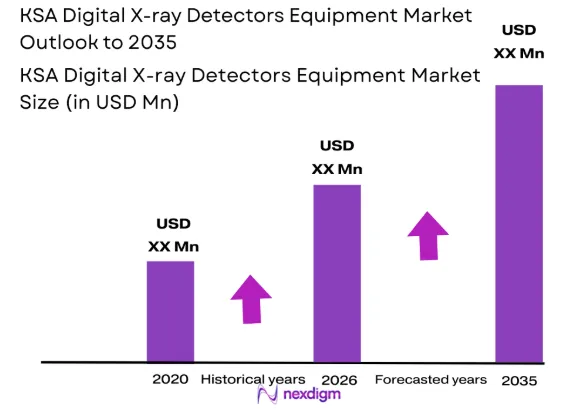
The KSA Digital X-ray Detectors Equipment market is expected to reach approximately USD ~ million based on a recent historical assessment. This growth is primarily driven by the increasing demand for advanced diagnostic imaging, supported by the rise in healthcare expenditure and improvements in technology. Additionally, the government’s focus on modernizing healthcare infrastructure and advancing medical technologies is contributing to this expansion, enhancing accessibility and quality of diagnostic services across the Kingdom of Saudi Arabia.
Dominant countries in this market include Saudi Arabia, as well as other Gulf Cooperation Council (GCC) nations, due to the substantial investments in healthcare infrastructure and a growing patient base. These regions are experiencing significant healthcare digitization, with hospitals and diagnostic centers rapidly adopting digital X-ray systems. The Kingdom’s ongoing efforts to diversify its economy through initiatives like Vision 2030 are reinforcing the growth of medical technology, making Saudi Arabia the leading hub for this market in the Middle East.
Market Segmentation
By Product Type
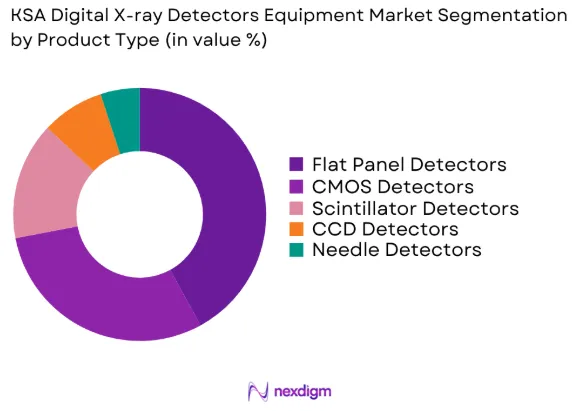
The KSA Digital X-ray Detectors Equipment market is segmented by product type into Flat Panel Detectors, CMOS Detectors, Scintillator Detectors, CCD Detectors, and Needle Detectors. Recently, Flat Panel Detectors have dominated the market due to their superior image quality, efficiency, and broader use across hospitals and diagnostic centers. These detectors offer faster processing and higher image resolution, making them a preferred choice in various clinical settings. Their integration with modern digital imaging systems and relatively lower maintenance costs have contributed to their widespread adoption, solidifying their dominance in the market.
By End-User Type
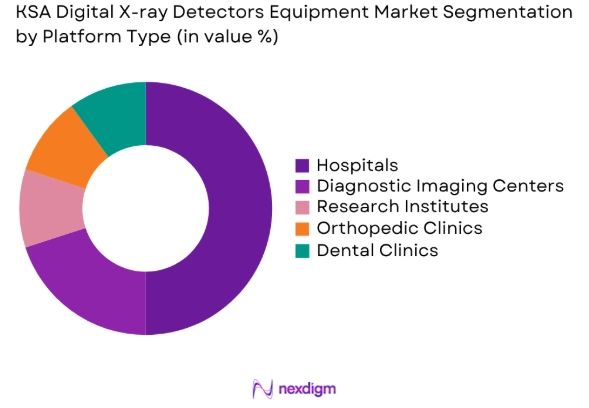
The KSA Digital X-ray Detectors Equipment market is segmented by end-user type into Hospitals, Diagnostic Imaging Centers, Research Institutes, Orthopedic Clinics, and Dental Clinics. Hospitals are the dominant segment, largely due to their capacity to invest in advanced imaging technologies and the large volume of patients requiring diagnostic imaging. With a continuous rise in the healthcare needs of the Saudi population, hospitals are heavily investing in modern diagnostic tools to improve patient care. The expanding hospital infrastructure, especially in urban centers, is propelling the demand for advanced digital X-ray detectors.
Competitive Landscape
The competitive landscape of the KSA Digital X-ray Detectors Equipment market is characterized by the presence of several global and regional players. These companies compete based on technological advancements, product differentiation, and partnerships with healthcare providers. The market is witnessing increasing consolidation as larger players acquire smaller firms with innovative technologies. Major companies are focusing on expanding their product portfolios to include portable and mobile X-ray solutions, responding to the growing demand for convenience and cost-efficiency in healthcare facilities.
| Company Name | Establishment Year | Headquarters | Technology Focus | Market Reach | Key Products | Revenue (USD) | Additional Parameter |
| Siemens Healthineers | 1847 | Germany | ~ | ~ | ~ | ~ | ~ |
| Philips Healthcare | 1891 | Netherlands | ~ | ~ | ~ | ~ | ~ |
| GE Healthcare | 1892 | USA | ~ | ~ | ~ | ~ | ~ |
| Fujifilm Holdings | 1934 | Japan | ~ | ~ | ~ | ~ | ~ |
| Canon Medical Systems | 1933 | Japan | ~ | ~ | ~ | ~ | ~ |
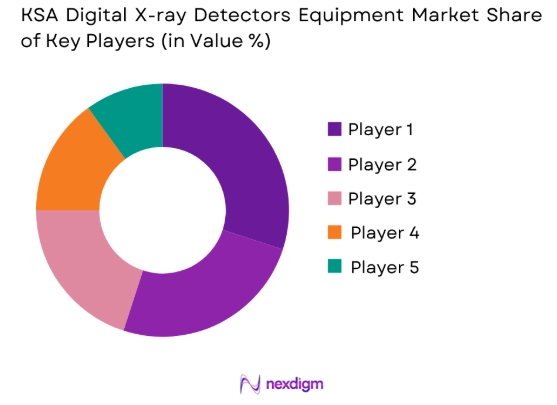
KSA Digital X-ray Detectors Equipment Market Analysis
Growth Drivers
Technological Advancements in Imaging Technology
Technological advancements in imaging technology have significantly boosted the growth of the KSA Digital X-ray Detectors Equipment market. With the adoption of advanced technologies like digital detectors, image processing software, and AI-powered analysis tools, the efficiency of X-ray machines has improved remarkably. These innovations enable faster diagnoses, better image clarity, and higher throughput in healthcare facilities. The increasing need for high-quality diagnostic imaging in both public and private healthcare sectors is fostering the growth of the market. Moreover, these technologies help reduce patient exposure to radiation, thus improving patient safety. The government’s push for healthcare digitization and the rapid adoption of AI in diagnostics further strengthens the adoption of modern digital X-ray technologies in Saudi Arabia.
Government Investments in Healthcare Infrastructure
The Saudi Arabian government’s strategic initiatives, particularly Vision 2030, significantly contribute to the growth of the digital X-ray detectors market. As part of its efforts to diversify the economy and enhance healthcare, the government is investing heavily in medical infrastructure. This includes the development of new hospitals, modernization of diagnostic centers, and expansion of rural healthcare facilities. These efforts are driving the demand for advanced diagnostic tools, such as digital X-ray systems. Furthermore, these investments are improving access to high-quality imaging technologies across the Kingdom, creating more opportunities for the widespread adoption of digital X-ray detectors in both urban and rural healthcare settings.
Market Challenges
High Initial Cost of Equipment
A significant challenge faced by the KSA Digital X-ray Detectors Equipment market is the high initial cost of acquiring digital X-ray systems. These systems require substantial upfront investment, which can be a barrier for smaller hospitals and clinics, particularly in rural areas. Despite the long-term cost-saving benefits of digital X-ray detectors, the initial price of equipment, along with installation and training costs, can be prohibitively expensive for some healthcare providers. This challenge is exacerbated by the economic conditions in certain regions, where healthcare budgets are constrained. As a result, there is a slow rate of adoption in some segments of the market, particularly among smaller healthcare facilities that are more sensitive to cost fluctuations.
Lack of Skilled Workforce
Another challenge in the KSA Digital X-ray Detectors Equipment market is the shortage of skilled personnel capable of operating advanced digital X-ray systems. Healthcare facilities require well-trained radiologists and technicians who can operate and maintain digital X-ray equipment. However, there is a scarcity of skilled professionals in some regions of Saudi Arabia, particularly in rural and remote areas. This shortage not only hinders the effective use of these advanced systems but also leads to delays in diagnoses and inefficiencies in patient care. While training programs are being developed, the current gap in qualified workers remains a significant barrier to the widespread adoption of digital X-ray detectors.
Opportunities
Rising Demand for Portable X-ray Systems
The demand for portable X-ray systems presents a significant opportunity in the KSA Digital X-ray Detectors Equipment market. These systems offer several advantages, including ease of use, mobility, and the ability to conduct imaging in remote locations, such as rural areas or emergency settings. The growing focus on patient-centric care, as well as the need for flexibility in diagnostic imaging, is driving the adoption of portable X-ray systems in Saudi Arabia. This trend is particularly important in rural healthcare centers, where access to stationary imaging equipment may be limited. As healthcare infrastructure expands across the Kingdom, the demand for portable solutions is expected to increase, providing a major growth opportunity for manufacturers of digital X-ray systems.
Integration of AI in Diagnostic Imaging
Another key opportunity in the KSA Digital X-ray Detectors Equipment market is the integration of artificial intelligence (AI) in diagnostic imaging. AI algorithms are being increasingly used to enhance the image quality, detect abnormalities, and assist radiologists in providing more accurate and efficient diagnoses. This integration is expected to reduce human error, increase throughput, and improve patient outcomes. Saudi Arabia’s government is actively promoting the use of AI in healthcare as part of its Vision 2030 initiative, which is likely to accelerate the adoption of AI-powered digital X-ray systems. Manufacturers who incorporate AI technologies into their X-ray detectors are well-positioned to capture the growing demand for enhanced diagnostic capabilities.
Future Outlook
The KSA Digital X-ray Detectors Equipment market is expected to experience significant growth over the next five years, driven by advancements in imaging technology, increased healthcare investments, and government initiatives supporting healthcare digitization. The demand for advanced diagnostic imaging solutions will continue to rise as healthcare infrastructure improves, particularly in rural areas. Additionally, technological innovations such as AI-powered X-ray systems and the growing adoption of portable solutions will play a major role in shaping the market’s future. With regulatory support and rising healthcare spending, the market is well-positioned for steady expansion.
Major Players
- Siemens Healthineers
- Philips Healthcare
- GE Healthcare
- Fujifilm Holdings
- Canon Medical Systems
- Shimadzu Corporation
- Carestream Health
- Konica Minolta
- Agfa-Gevaert Group
- Samsung Medison
- Hologic, Inc.
- Hitachi Medical Corporation
- Toshiba Medical Systems
- X-ray Technologies Ltd.
- General Electric Company
Key Target Audience
- Investments and venture capitalist firms
- Government and regulatory bodies
- Private hospitals and diagnostic centers
- Medical equipment distributors
- Radiology departments
- Health insurance companies
- Healthcare infrastructure developers
- Non-governmental healthcare organizations
Research Methodology
Step 1: Identification of Key Variables
Identify key factors affecting market dynamics, including technology trends, regulatory environment, and customer needs.
Step 2: Market Analysis and Construction
Conduct a detailed analysis of market segments, competition, and historical data to construct a market model.
Step 3: Hypothesis Validation and Expert Consultation
Validate market hypotheses through consultations with industry experts, stakeholders, and key players.
Step 4: Research Synthesis and Final Output
Synthesize research findings into actionable insights and finalize the market report.

- Executive Summary
- Research Methodology (Definitions, Scope, Industry Assumptions, Market Sizing Approach, Primary & Secondary Research Framework, Data Collection & Verification Protocol, Analytic Models & Forecast Methodology, Limitations & Research Validity Checks)

- Market Definition and Scope
- Value Chain & Stakeholder Ecosystem
- Regulatory / Certification Landscape
- Sector Dynamics Affecting Demand
- Strategic Initiatives & Infrastructure Growth

- Growth Drivers
Technological Advancements in Imaging Technology
Increase in Health Awareness and Diagnostic Needs
Government Healthcare Initiatives and Investments - Market Challenges
High Initial Cost of Equipment
Lack of Skilled Operators in Remote Areas
Stringent Regulatory Approvals and Compliance - Market Opportunities
Growing Demand for Portable X-ray Systems
Rising Adoption of AI in Diagnostic Imaging
Expansion of Healthcare Infrastructure in Rural Areas - Trends
Integration of Artificial Intelligence in X-ray Detection
Increased Focus on Patient-Centric Imaging Solutions
Shift Towards Eco-friendly and Sustainable Imaging Systems - Government Regulations
- SWOT Analysis of Key Competitors
- Porter’s Five Forces

- By Market Value, 2020-2025
- By Installed Units, 2020-2025
- By Average System Price, 2020-2025
- By System Complexity Tier, 2020-2025

- By System Type (In Value%)
Flat Panel Detectors
Charged Coupled Device (CCD) Detectors
CMOS Detectors
Scintillator Detectors
Needle Detectors - By Platform Type (In Value%)
Fixed Systems
Portable Systems
Mobile Systems
Hybrid Systems
Retrofit Systems - By Fitment Type (In Value%)
Retrofit Fitment
OEM Fitment
Aftermarket Fitment
Modular Fitment
Integrated Fitment - By End User Segment (In Value%)
Hospitals
Diagnostic Imaging Centers
Research Institutes
Orthopedic Clinics
Dental Clinics - By Procurement Channel (In Value%)
Direct Sales
Distributors
Online Sales
Government Contracts
Healthcare Equipment Leasing

- Market Share Analysis
- Cross Comparison Parameters (Price Sensitivity, Technological Integration, System Compatibility, Market Reach, Regulatory Compliance)
- SWOT Analysis of Key Competitors
- Pricing & Procurement Analysis
- Key Players
Siemens Healthineers
Philips Healthcare
GE Healthcare
Canon Medical Systems
Fujifilm Holdings
Shimadzu Corporation
Carestream Health
Konica Minolta
Agfa-Gevaert Group
Samsung Medison
Hologic, Inc.
Hitachi Medical Corporation
Toshiba Medical Systems
X-ray Technologies Ltd.
General Electric Company

- Hospitals in Urban Areas
- Private Diagnostic Centers
- Government Healthcare Facilities
- Mobile Imaging Services

- Forecast Market Value, 2026-2035
- Forecast Installed Units, 2026-2035
- Price Forecast by System Tier, 2026-2035
- Future Demand by Platform, 2026-2035


 Request a Sample
 Ask for Customization
 Get a Quote
 Enquire Now