
 Download PDF
Market Overview
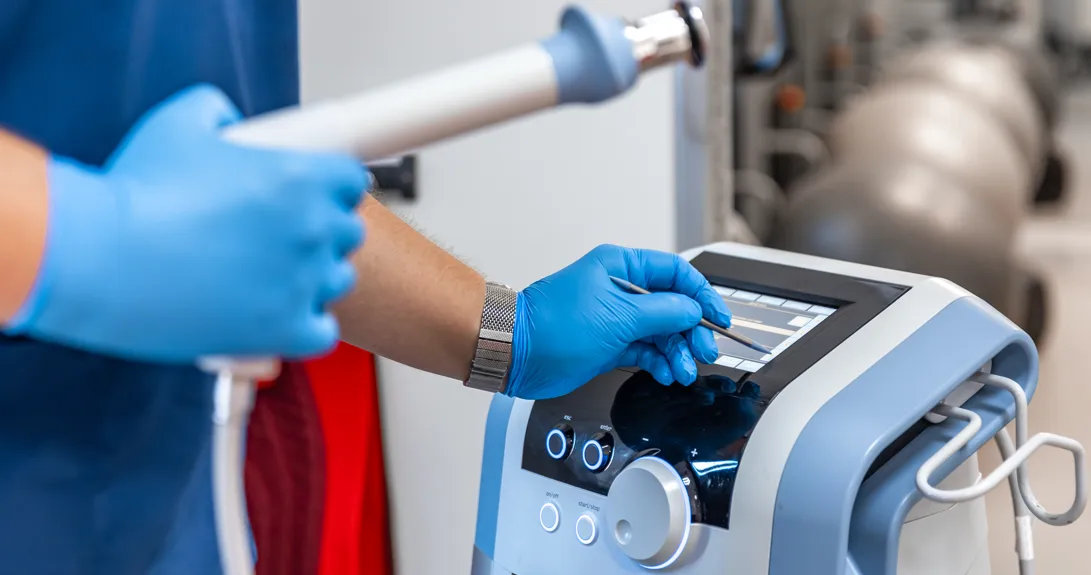
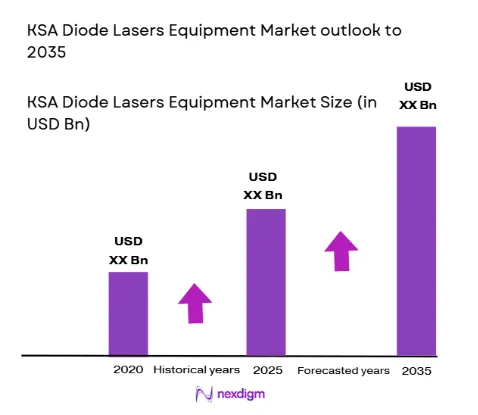
The KSA Diode Lasers Equipment market demonstrates steady expansion, with a recent historical assessment indicating a market size of approximately USD ~ billion. Growth is driven by increasing adoption of diode laser systems in medical aesthetics, industrial manufacturing, and telecommunications applications. Government-backed healthcare expansion and industrial diversification initiatives are accelerating equipment demand. Rising investments in advanced manufacturing technologies and laser-based precision systems further support the market’s scale and sustained capital inflows.
Riyadh, Jeddah, and Dammam dominate the KSA Diode Lasers Equipment market due to their concentration of healthcare facilities, industrial zones, and infrastructure projects. Riyadh leads with advanced hospitals and aesthetic clinics, while Jeddah benefits from strong medical tourism activity. Dammam’s industrial base supports adoption in manufacturing and oil-related applications. These cities attract high-value investments and technological deployments, supported by policy frameworks promoting local innovation and modernization.
Market Segmentation
By Product Type
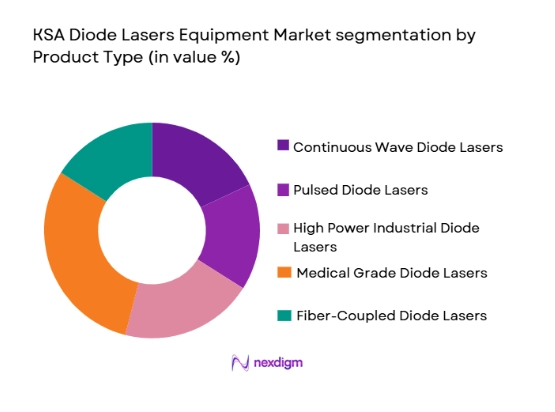
KSA Diode Lasers Equipment market is segmented by product type into continuous wave diode lasers, pulsed diode lasers, high power industrial diode lasers, medical grade diode lasers, and fiber-coupled diode lasers. Recently, medical grade diode lasers has a dominant market share due to increasing demand for aesthetic treatments and dermatological procedures across urban healthcare centers. The proliferation of cosmetic clinics and rising consumer preference for minimally invasive treatments have significantly strengthened this segment. Additionally, regulatory approvals and standardized clinical protocols have enhanced trust in medical-grade systems, while technological advancements such as multi-wavelength capabilities and improved safety features further support widespread adoption across healthcare providers.
By End User
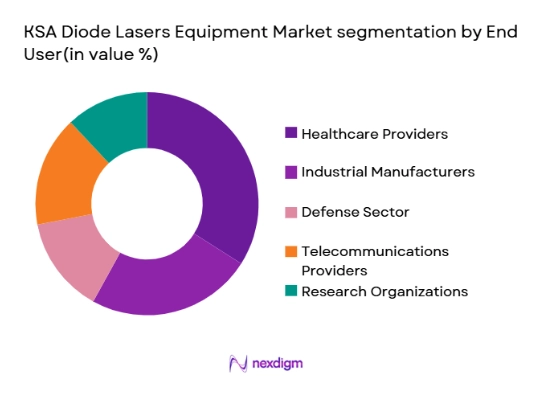
KSA Diode Lasers Equipment market is segmented by end user into healthcare providers, industrial manufacturers, defense sector, telecommunications providers, and research organizations. Recently, healthcare providers has a dominant market share due to strong demand for laser-based treatments in dermatology, dentistry, and cosmetic applications. Expansion of private healthcare infrastructure and rising disposable income levels contribute to higher patient volumes. Furthermore, increased awareness of advanced laser treatments and government support for healthcare modernization have enabled hospitals and clinics to invest in high-performance diode laser systems, reinforcing their leading position in the market.
Competitive Landscape
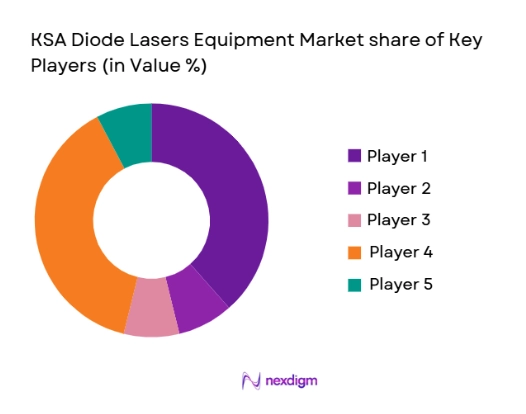
The KSA Diode Lasers Equipment market is moderately consolidated, with global photonics and laser technology companies dominating due to their advanced product portfolios and technological expertise. These players leverage strong distribution networks and partnerships with local healthcare and industrial entities. Competitive dynamics are shaped by innovation in high-efficiency diode systems, pricing strategies, and after-sales support. Regional players are gradually emerging through localization initiatives, but international firms maintain leadership through continuous R&D investments and brand credibility.
| Company Name | Establishment Year | Headquarters | Technology Focus | Market Reach | Key Products | Revenue | Application Focus |
| Coherent Corp | 1966 | USA | ~ | ~ | ~ | ~ | ~ |
| Lumentum Holdings Inc | 2015 | USA | ~ | ~ | ~ | ~ | ~ |
| IPG Photonics Corporation | 1990 | USA | ~ | ~ | ~ | ~ | ~ |
| TRUMPF Group | 1923 | Germany | ~ | ~ | ~ | ~ | ~ |
| Hamamatsu Photonics | 1953 | Japan | ~ | ~ | ~ | ~ | ~ |
KSA Diode Lasers Equipment Market Analysis
Growth Drivers
Healthcare Infrastructure Expansion and Aesthetic Procedure Demand:
The expansion of healthcare infrastructure across Saudi Arabia has significantly increased the adoption of diode laser equipment in medical applications. Hospitals and specialized clinics are increasingly integrating advanced laser technologies to offer precise, minimally invasive procedures. Rising disposable income and changing lifestyle preferences have boosted demand for cosmetic treatments, particularly in urban regions. Government initiatives focused on healthcare modernization have accelerated procurement of advanced medical devices. Diode lasers are widely used in dermatology, dentistry, and ophthalmology, further strengthening their market presence. The increasing prevalence of skin-related conditions and demand for non-surgical treatments has contributed to higher usage rates. Private healthcare providers are investing in high-end laser systems to attract premium clientele. Technological advancements such as improved wavelength precision and safety features enhance operational efficiency. Training programs and professional certifications are also supporting adoption among practitioners. These combined factors are driving sustained growth in the medical segment of the market.
Industrial Automation and Precision Manufacturing Growth:
The growing emphasis on industrial diversification and automation has driven demand for diode laser systems in manufacturing processes. Industries such as automotive, electronics, and metal fabrication are increasingly adopting laser-based technologies for cutting, welding, and engraving applications. The need for precision and efficiency in production lines has made diode lasers a preferred solution. Government-backed industrial initiatives are encouraging the adoption of advanced manufacturing technologies. Diode lasers offer advantages such as energy efficiency, compact design, and high reliability, making them suitable for various industrial applications. The expansion of smart factories and Industry 4.0 practices further supports integration of laser systems. Local manufacturers are also investing in upgrading their production capabilities with advanced equipment. Increased demand for high-quality finished products has driven adoption of laser-based solutions. Additionally, reduced maintenance requirements and operational costs make diode lasers economically attractive. These factors collectively contribute to strong growth in the industrial segment.
Market Challenges
High Capital Investment and Operational Costs:
The high initial cost of diode laser equipment remains a significant barrier to market expansion. Advanced systems require substantial investment, which can be challenging for small and medium-sized enterprises. Maintenance and servicing costs further add to the total cost of ownership. Healthcare providers, particularly smaller clinics, may face financial constraints in acquiring high-end laser systems. Import dependency for key components also contributes to elevated pricing structures. The lack of local manufacturing capabilities increases reliance on international suppliers. Currency fluctuations and supply chain disruptions can impact pricing stability. Additionally, training requirements for operating complex systems increase operational expenses. Financial limitations may delay technology adoption among certain end users. These factors collectively restrict widespread market penetration.
Limited Skilled Workforce and Technical Expertise:
The operation and maintenance of diode laser equipment require specialized skills and technical knowledge. The shortage of trained professionals in Saudi Arabia presents a challenge for efficient utilization of these systems. Healthcare practitioners require certification and training to safely perform laser-based procedures. Similarly, industrial operators need expertise in handling precision laser equipment. Limited availability of training programs can hinder workforce development. Companies often need to invest in training initiatives, increasing operational costs. Technical complexities associated with advanced laser systems may lead to inefficiencies if not properly managed. The lack of experienced personnel can also affect system performance and longevity. Additionally, safety concerns related to improper usage further emphasize the need for skilled operators. These challenges highlight the importance of workforce development in supporting market growth.
Opportunities
Localization of Laser Manufacturing and Technology Development:
The push toward localization and domestic manufacturing presents significant opportunities for the diode lasers equipment market. Government initiatives aimed at reducing import dependency are encouraging investment in local production facilities. Establishing manufacturing units within Saudi Arabia can lower costs and improve supply chain efficiency. Local production also enables customization of products to meet specific regional requirements. Collaboration between international companies and local firms can facilitate technology transfer and innovation. Research and development activities are expected to increase, leading to the development of advanced laser systems. The availability of locally manufactured components can reduce lead times and enhance market responsiveness. Incentives and subsidies provided by the government further support industrial growth. This trend is likely to attract new market entrants and foster competitive dynamics. Overall, localization efforts can significantly strengthen the domestic market ecosystem.
Expansion of Medical Tourism and Advanced Treatment Facilities:
The growing focus on medical tourism in Saudi Arabia creates new opportunities for diode laser equipment adoption. The country is investing heavily in world-class healthcare infrastructure to attract international patients. Advanced laser treatments are becoming a key offering in cosmetic and dermatological services. High-end clinics and hospitals are adopting cutting-edge technologies to enhance patient outcomes. Increased patient inflow drives demand for efficient and reliable laser systems. The integration of digital healthcare solutions further supports advanced treatment capabilities. International collaborations and partnerships are enhancing service quality. Additionally, rising awareness of aesthetic procedures among local populations contributes to market growth. Continuous innovation in laser technology enables the development of safer and more effective treatments. These factors collectively create a favorable environment for market expansion.
Future Outlook
The KSA Diode Lasers Equipment market is expected to witness sustained growth over the next five years driven by healthcare modernization and industrial diversification. Technological advancements such as AI-integrated laser systems and compact high-efficiency devices will enhance adoption. Regulatory support and localization initiatives are likely to strengthen domestic manufacturing capabilities. Increasing demand from medical aesthetics and precision manufacturing sectors will continue to fuel market expansion.
Major Players
- Coherent Corp
- Lumentum Holdings Inc
- IPG Photonics Corporation
- TRUMPF Group
- Hamamatsu Photonics
- Jenoptik AG
- nLIGHT Inc
- Fujikura Ltd
- II-VI Incorporated
- OSRAM Opto Semiconductors
- SemiNex Corporation
- Sheaumann Laser Inc
- Dilas Diode Laser
- Eagleyard Photonics
- BWT Beijing Ltd
Key Target Audience
- Healthcare equipment manufacturers
- Industrial manufacturing companies
- Defense contractors
- Telecommunications companies
- Private hospital chains
- Medical device distributors
- Investments and venture capitalist firms
- Government and regulatory bodies
Research Methodology
Step 1: Identification of Key Variables
Key variables influencing the market such as demand drivers, pricing trends, and technological developments are identified through secondary research and industry databases. These variables form the foundation of the analytical framework.
Step 2: Market Analysis and Construction
Data is analyzed using statistical models and validated frameworks to construct market size and segmentation. Both top-down and bottom-up approaches are applied to ensure accuracy and consistency.
Step 3: Hypothesis Validation and Expert Consultation
Findings are validated through consultations with industry experts, manufacturers, and distributors. Expert insights help refine assumptions and validate market trends.
Step 4: Research Synthesis and Final Output
All data points are synthesized into a structured report with actionable insights. Final outputs are reviewed for accuracy, consistency, and reliability before publication.

- Executive Summary
- Research Methodology (Definitions, Scope, Industry Assumptions, Market Sizing Approach, Primary & Secondary Research Framework, Data Collection & Verification Protocol, Analytic Models & Forecast Methodology, Limitations & Research Validity Checks)

- Market Definition and Scope
- Value Chain & Stakeholder Ecosystem
- Regulatory / Certification Landscape
- Sector Dynamics Affecting Demand
- Strategic Initiatives & Infrastructure Growth

- Growth Drivers
Rising demand for minimally invasive aesthetic procedures in Saudi Arabia
Expansion of advanced manufacturing and Industry 4.0 adoption
Government investments in healthcare infrastructure under Vision 2030
Increasing use of diode lasers in telecommunications and fiber optics
Growth in defense applications requiring precision laser systems - Market Challenges
High initial capital cost of advanced diode laser equipment
Dependence on imported semiconductor components
Technical complexity in system integration and maintenance
Limited availability of skilled laser technicians
Stringent regulatory approvals for medical-grade devices - Market Opportunities
Localization of semiconductor and photonics manufacturing
Expansion of medical tourism and cosmetic treatment centers
Adoption of laser systems in renewable energy and solar panel manufacturing - Trends
Shift toward compact and energy-efficient laser systems
Integration of AI and automation in laser-based manufacturing
Growing demand for multi-wavelength diode laser platforms
Increased adoption of portable and handheld medical laser devices
Emergence of smart diagnostics and laser-assisted treatment systems - Government Regulations & Defense Policy
Implementation of Saudi FDA regulations for medical laser devices
Localization policies encouraging domestic manufacturing of high-tech equipment
Defense procurement initiatives supporting laser-based technologies - SWOT Analysis
- Stakeholder and Ecosystem Analysis
- Porter’s Five Forces Analysis
- Competition Intensity and Ecosystem Mapping

- By Market Value, 2020-2025
- By Installed Units, 2020-2025
- By Average System Price, 2020-2025
- By System Complexity Tier, 2020-2025

- By System Type (In Value%)
Continuous Wave Diode Laser Systems
Pulsed Diode Laser Systems
High Power Industrial Diode Lasers
Medical Grade Diode Laser Systems
Fiber-Coupled Diode Laser Modules - By Platform Type (In Value%)
Standalone Laser Equipment
Integrated Manufacturing Systems
Portable Laser Devices
Robotic Laser Platforms
Handheld Clinical Laser Units - By Fitment Type (In Value%)
OEM Integrated Systems
Aftermarket Retrofits
Custom Engineered Installations
Modular Plug-and-Play Systems
Embedded Laser Assemblies - By EndUser Segment (In Value%)
Healthcare and Aesthetic Clinics
Industrial Manufacturing Facilities
Defense and Aerospace Sector
Telecommunications Providers
Research and Academic Institutions - By Procurement Channel (In Value%)
Direct Manufacturer Sales
Authorized Distributors
Government Tender Contracts
Online Industrial Marketplaces
System Integrator Partnerships - By Material / Technology (in Value %)
Gallium Arsenide Based Lasers
Indium Phosphide Diode Lasers
Quantum Well Laser Technology
High Brightness Laser Arrays
Fiber Coupled Semiconductor Lasers

- Market structure and competitive positioning
- Market share snapshot of major players
- CrossComparison Parameters (Product Portfolio Breadth, Technology Innovation Level, Regional Presence, Pricing Strategy, Manufacturing Capability, After-Sales Service Strength, Customization Capability, Regulatory Compliance, Distribution Network Strength, Strategic Partnerships)
- SWOT Analysis of Key Players
- Pricing & Procurement Analysis
- Key Players
Coherent Corp
Lumentum Holdings Inc
IPG Photonics Corporation
TRUMPF Laser Technology
Jenoptik AG
nLIGHT Inc
Hamamatsu Photonics K.K.
Osram Opto Semiconductors GmbH
Fujikura Ltd
II-VI Incorporated
Sheaumann Laser Inc
SemiNex Corporation
Dilas Diode Laser Inc
Eagleyard Photonics GmbH
BWT Beijing Ltd

- Healthcare sector dominates demand driven by dermatology and cosmetic procedures
- Industrial users focus on precision cutting, welding, and engraving applications
- Defense sector utilizes diode lasers for targeting, sensing, and communication
- Research institutions contribute to innovation and pilot-scale adoption

- Forecast Market Value, 2026-2035
- Forecast Installed Units, 2026-2035
- Price Forecast by System Tier, 2026-2035
- Future Demand by Platform, 2026-2035


 Request a Sample
 Ask for Customization
 Get a Quote
 Enquire Now