
 Download PDF
Market Overview
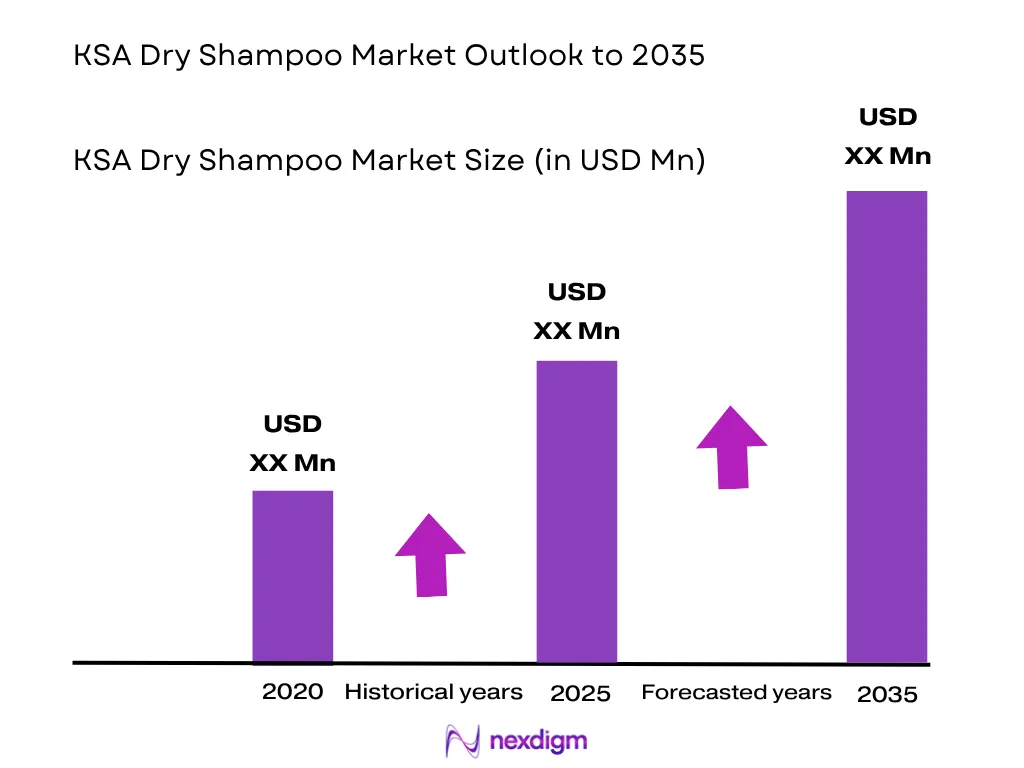
The KSA Dry Shampoo Market is valued at approximately USD ~ million in 2025, according to industry estimates from Deep Market Insights, reflecting established consumer adoption of waterless haircare solutions that absorb sebum and refresh hair without water. This growth is driven by increasing urban consumer demand for convenient grooming products, rising disposable incomes, and heightened awareness of personal grooming trends, particularly among young professionals and women in major metropolitan areas.
Key cities such as Riyadh, Jeddah, and Dammam dominate the dry shampoo market due to high population density, strong retail infrastructure, and elevated beauty and personal care consumption patterns. These urban centers host concentrated beauty retail networks, salons, and premium lifestyle stores that stock a broad range of global and local dry shampoo brands, thereby enhancing accessibility and adoption among trend‑sensitive consumers.
Market Segmentation
By Product Formulation
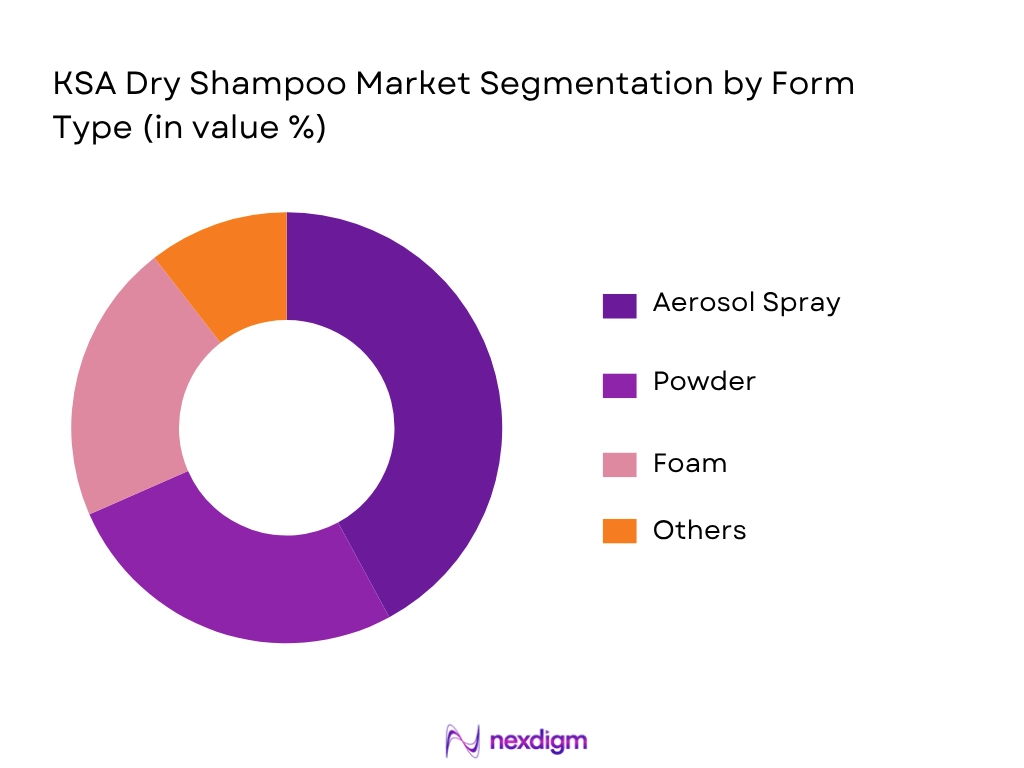
The dry shampoo market is segmented by product form into aerosol sprays, powder formats, foam/mousse types, and other emerging delivery formats. Among these, aerosol spray dry shampoos hold dominant share due to their ease of use, widespread brand availability, and strong consumer familiarity. Aerosols are typically preferred for quick application and are heavily marketed by major personal care brands in retail and online channels. Powder formats are gaining traction as a natural and propellant‑free alternative that appeals to environmentally conscious and ingredient‑focused buyers, but they still lag in overall value share due to limited shelf presence compared with traditional spray formats. Foam and other innovations remain niche but are expanding within salons and specialty segments due to unique application characteristics and targeted performance benefits.
By End‑User Group
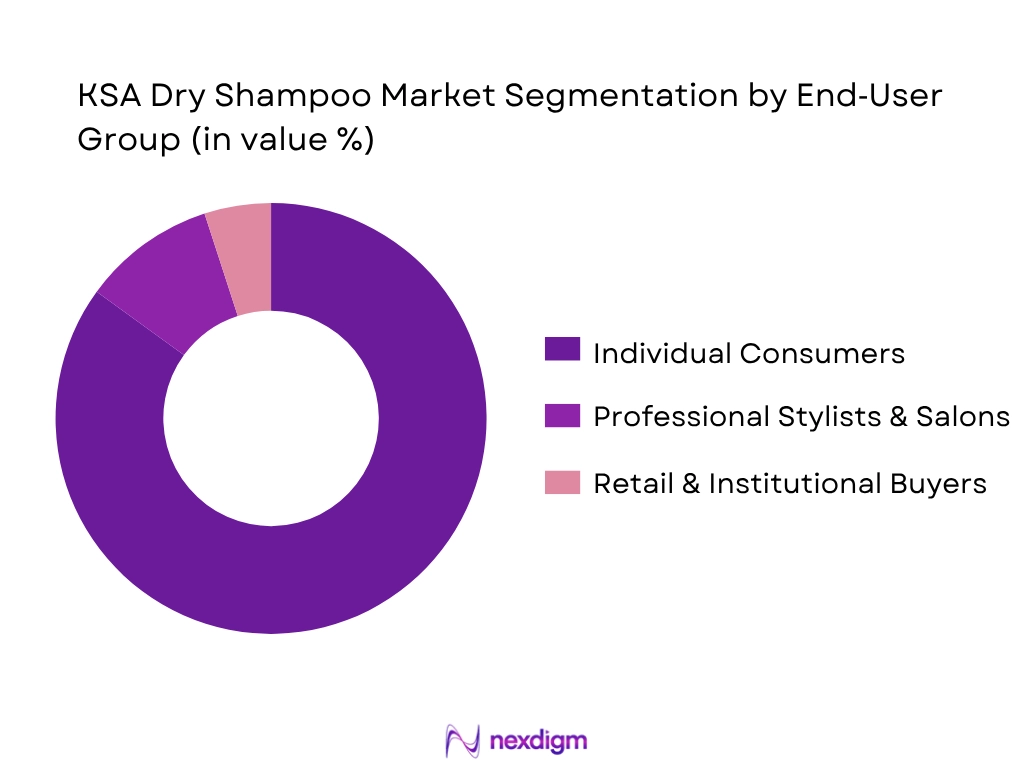
The segment is dominated by individual consumer adoption, driven by daily grooming routines, busy lifestyles, and demand for quick hair refreshment between washes. Individual consumers account for the largest share as dry shampoo becomes standardized in daily haircare kits, especially among urban women and working professionals. The salon and professional stylist segment contributes meaningfully by using dry shampoo for styling assistance and hair texturizing services, often recommending premium formulations to clients. Retail and institutional buyer segments remain smaller but provide valuable distribution reach through bulk purchases.
Competitive Landscape
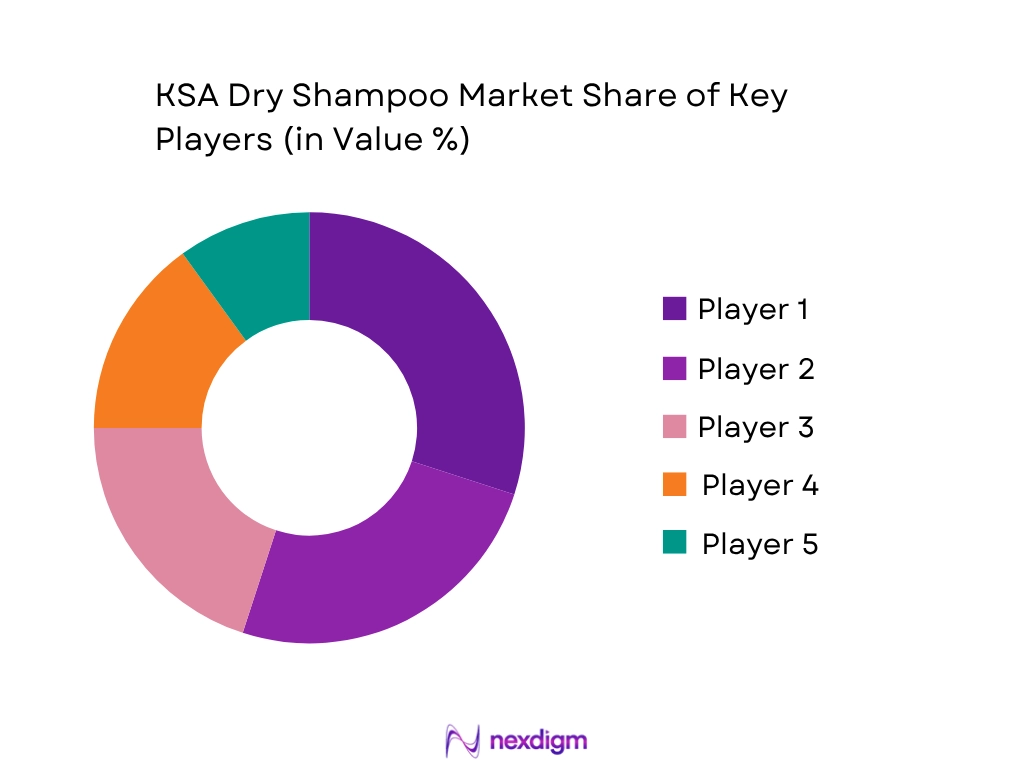
The competitive environment in the KSA dry shampoo market is moderately consolidated, with several global and regional players vying for share through product innovation, retail network expansion, and localized marketing activities. Established FMCG corporations leverage brand equity and distribution strength, while premium and specialty brands compete through technical formulation and salon collaborations. Key market participants include Procter & Gamble, Unilever Arabia, Henkel AG, L’Oréal KSA, and Beiersdorf AG, which dominate through diverse SKU portfolios, strong retail penetration, and widespread online marketplace presence. FMCG giants leverage broad brand recognition and pricing strategies across mass and premium segments, while premium brands focus on specialized formulations and salon distribution. International players also benefit from established supplier relations and localized marketing campaigns that resonate with KSA grooming preferences.
| Company | Est. Year | HQ | Key Parameter – SKU Variety | Retail Channel Presence | Distribution Reach | E‑Commerce Adoption | Formulation Diversity |
| Procter & Gamble (incl. Herbal Essences) | 1837 | USA | ~ | ~ | ~ | ~ | ~ |
| Unilever Arabia | 1929 | UK/Netherlands | ~ | ~ | ~ | ~ | ~ |
| Henkel AG & Co. | 1876 | Germany | ~ | ~ | ~ | ~ | ~ |
| L’Oréal KSA | 1909 | France | ~ | ~ | ~ | ~ | ~ |
| Beiersdorf AG | 1882 | Germany | ~ | ~ | ~ | ~ | ~ |
KSA Dry Shampoo Market Analysis
Growth Drivers
Climate & Oil Control
The Kingdom of Saudi Arabia experiences some of the highest average annual temperatures globally, with annual average temperatures recorded at 29.4°C for major regions such as Riyadh and Jeddah in recent climatological summaries from the Saudi National Center of Meteorology (NCM). This extreme heat contributes to increased scalp sebum production and oiliness, driving consumer interest in waterless haircare solutions that absorb oil without washing. Furthermore, humidity levels exceeding 60% in coastal cities like Jeddah create conditions where traditional shampooing may be impractical during the day, reinforcing demand for dry shampoo products that refresh hair between washes. According to the World Bank climate data, KSA’s arid and hyper‑arid zones cover over 80% of its land area, reinforcing persistent environmental conditions that accelerate scalp oil build‑up and necessitate convenient oil‑control products. This climatic context explains why dry shampoo formulations emphasizing oil absorption are relevant to consumer grooming habits in Saudi Arabia’s everyday lifestyle, beyond premium beauty trends. The link between elevated environmental heat/humidity and scalp oil accumulation provides a macro‑environmental justification for product demand that aligns with grooming behavior in the region.
Urban Lifestyles
Urbanization in Saudi Arabia has reached a high level, with 84.3% of the population living in urban areas as per World Bank population data for 2024. Large metropolitan centers such as Riyadh (8.5 million), Jeddah (4.9 million), and Dammam (1.5 million) are economic hubs where busy lifestyles and commuting patterns influence personal grooming behavior. The General Authority for Statistics (GASTAT) reports that daily travel times in urban centers often exceed 45 minutes, reinforcing the need for quick grooming solutions that fit modern routines, such as dry shampoo use during work commutes or inbetween social engagements. Additionally, Saudi Arabia’s female labor force participation rate rose to 37.5%, as per the International Labour Organization latest estimates, reflecting increased workforce integration that correlates with demand for convenient personal care products. Urban consumers typically have greater access to a variety of retail formats, including hypermarkets, specialty beauty stores, and e‑commerce platforms with mobile internet penetration exceeding 98% (Communications and Information Technology Commission KSA data), enabling discovery and purchase of dry shampoo products. These urban lifestyle patterns, supported by macroeconomic indicators, underscore why convenience‑oriented haircare is gaining traction in the KSA.
Market Challenges
Low Category Awareness
Despite increasing interest in innovative grooming products, awareness of dry shampoo as a distinct category remains limited among a sizeable portion of Saudi consumers. According to the Saudi General Authority for Statistics (Household Survey 2024), only 48% of households reported familiarity with ‘non‑water haircare products’ when polled about personal grooming practices, indicating that more than half of respondents still primarily associate haircare with traditional shampooing. This low category penetration contrasts with other grooming categories like deodorants, which have familiarity rates above 85% nationwide. Furthermore, literacy rates in Saudi Arabia exceed 97%, yet product category understanding appears unevenly distributed across demographic groups, with rural‑urban gaps in beauty product knowledge highlighted by the same household studies. In urban centers, exposure to international beauty trends via social media is greater, but outside these cores, dry shampoo remains a novel concept for many consumers. The General Authority for Statistics Consumer Expenditure Survey 2025 also shows that average monthly expenditure on “novel personal care aids” is materially lower than for established categories such as hair conditioners and styling gels, suggesting limited trial behavior. This disparity highlights a substantial market education task for brands, as consumer understanding directly impacts adoption rates.
Price Sensitivity
Saudi Arabian consumers exhibit marked price sensitivity in personal care purchases, especially outside the premium urban segments, as evidenced by data from GASTAT’s 2024 Consumer Price Index and Expenditure Report. The median monthly household expenditure on haircare products outside basic shampoos and conditioners is reported at approximately SAR 130 (USD 35), indicating restrained discretionary spending behavior on supplementary grooming items. Simultaneously, monthly per capita income statistics from the General Authority for Statistics indicate a broad income distribution, with bottom quartile incomes at SAR 4,200, underscoring that significant portions of the population prioritize essential goods. This underlying macroeconomic trend constrains the willingness to pay for non‑essential items such as dry shampoo, especially when positioned at price points above basic personal care products. Additionally, with inflation rates registered at 2.3% in 2024 by the Saudi Arabian Monetary Authority, consumers are cautious about discretionary purchases that do not fit established grooming routines. This price sensitivity challenge means that dry shampoo brands must carefully calibrate pricing, value messaging, and promotional strategies to align with consumer purchasing power across demographics.
Opportunities
Clean/Halal Formulations
There is growing consumer interest in personal care products that are both Halal‑compliant and formulated with recognizable, gentler ingredients. As per Euromonitor’s 2024 KSA consumer trends summary, demand for personal care goods emphasizing ingredient transparency has risen, with surveys showing 61% of respondents expressing preference for products labeled with natural ingredients and Halal certification. Saudi Arabia’s Ministry of Islamic Affairs confirms that Halal certification is a key purchasing factor for the majority of Muslim consumers, reinforcing opportunities for dry shampoo brands that align with cultural and religious norms. Coupled with this, data from the Communications and Information Technology Commission indicates that 98% of the population uses mobile internet, facilitating rapid dissemination of product education and ingredient claims. Clean formulations that highlight formulations free of sulfates, parabens, and silicones tap into broader health‑oriented consumer behaviors, which are increasingly documented in government consumer sentiment reports. Moreover, given KSA’s Vision 2030 emphasis on expanding local manufacturing of cosmetics and personal care products, aligned Halal and clean haircare offerings may benefit from supportive policy frameworks. This creates a strategic opening for dry shampoo brands that can credibly articulate safety, cultural compliance, and ingredient clarity to elevate adoption.
Arabic‑Labeled Premium SKUs
Arabic labeling and localized product communication present a significant opportunity to broaden dry shampoo adoption among diverse consumer demographics in the Kingdom. According to the General Authority for Statistics Language Use Survey 2024, Arabic is the primary language for 95% of household purchases and plays a critical role in comprehension of product benefits and usage instructions. Premium SKUs that incorporate clear Arabic labelling combined with English for international appeal—can reduce barriers to trial, especially among non‑English‑proficient consumers who constitute a large share of beauty product buyers outside expatriate circles. The Saudi Standards, Metrology and Quality Organization (SASO) mandates bilingual labeling for cosmetics, reinforcing the importance of localized communication to compliance and consumer trust. Furthermore, retail footfall data in major malls and beauty corridors show that products with localized packaging perform better in awareness campaigns and in‑store promotions, as reported by mall management authorities. With mobile internet penetration above 98%, localized digital campaigns tied to Arabic content can further accelerate engagement. These factors suggest that strategic emphasis on Arabic‑labeled premium dry shampoo products can attract broader consumer interest, reduce information friction, and support category growth.
Future Outlook
Over the next decade, the KSA Dry Shampoo Market is expected to sustain healthy growth, driven by continued urbanization, rising disposable incomes, and increasing consumer preference for time‑saving beauty products. Innovations in natural and eco‑friendly formulations, expanding e‑commerce penetration, and collaborations between brands and beauty influencers will further elevate adoption. The development of refillable packaging and premium functional variants tailored for specific hair types will also contribute to market depth and segmentation growth.
Major Players
- Procter & Gamble (Herbal Essences)
- Unilever Arabia
- Henkel AG & Co.
- L’Oréal KSA
- Beiersdorf AG
- Coty Inc. (Batiste)
- Revlon Middle East
- Shiseido Middle East
- Church & Dwight Co. (Batiste)
- Amway Arabia
- Sephora Saudi Arabia (Private Label)
- Living Proof
- Klorane (Pierre Fabre)
- Moroccanoil
- Avon Products
Key Target Audience
- Beauty & Personal Care Product Manufacturers
- Retail Chains & Beauty Specialty Stores
- E‑Commerce Platforms & Online Marketplaces
- Investments & Venture Capitalist Firms (Consumer Beauty Funds)
- Salon Chains & Professional Stylist Networks
- Importers & Distributors of Cosmetic Products
- Government & Regulatory Bodies (SFDA – Saudi Food & Drug Authority)
- Brand Licensing & Marketing Partners
Research Methodology
Step 1: Identification of Key Variables
The initial research phase mapped all stakeholders in the KSA dry shampoo market, including manufacturers, retailers, salons, and consumers. Secondary data from credible industry sources such as Ken Research and Deep Market Insights were collated to define core market variables, including value size, segmentation categories, and competitive dynamics. This step ensured a robust foundation for data integrity and market relevance.
Step 2: Market Analysis and Construction
Historical data on market revenues and volumes were compiled and analyzed to understand historical growth trends. Product segmentation and channel distribution data were evaluated to construct the value estimates for 2024. Consumer behavior metrics and import volume analysis were integrated to enrich market projections and validate formulation preferences.
Step 3: Hypothesis Validation and Expert Consultation
Key market hypotheses were tested via expert consultations and structured interviews with industry stakeholders, including distributors and salon professionals. These discussions validated drivers such as convenience demand and scale of adoption, ensuring that quantitative data aligned with qualitative market realities.
Step 4: Research Synthesis and Final Output
In the final phase, market insights were synthesized with competitive profiles and segmentation data. Forecast models were applied to project the CAGR over the 2026–2035 period based on historical growth trajectories and macroeconomic trends. Outputs were reviewed for consistency and presented with actionable insights for strategic readers.

- Executive Summary
- Research Methodology (Definitions & Scope for Dry Shampoo, Data Sources & Assumptions, Sampling Framework, Statistical Estimation Method, Forecasting Methodology, Primary Research Design – Retailers/Distributors/Consumers, Model Limitations & Confidence Intervals, Market Normalization Approach)

- Definition, Scope & Use Cases in KSA (Oil‑Control, Styling, Hygiene)
- Market Genesis & Evolution
- Product Innovation Timeline
- Industry Value Chain
- Retail Ecosystem & Omni‑Channel Overview

- Growth Drivers (Climate & Oil Control, Urban Lifestyles, Female Workforce, Premium Haircare, Social Media Influence, Male Grooming Awareness, E-Commerce Expansion)
- Market Challenges (Low Category Awareness, Price Sensitivity, VOC & Aerosol Compliance, Import Dependency, Residue Concerns, Limited Local Manufacturing, Grey-Market Products)
- Opportunities (Clean/Halal Formulations, Arabic-Labeled Premium SKUs, Salon Partnerships, Travel Packs, Pharmacy Positioning, Private Labels, Marketplace Discovery)
- Emerging Trends (Influencer Trials, Hair Type-Specific Variants, Starch-Based Formulas, Sustainable Aerosols, Fragrance Differentiation, Oil-Control + Volume, Salon-Grade Premiumization)
- Regulatory Environment (SFDA Notification, Labeling Compliance, Ingredient Safety, Aerosol/Flammability Rules, Halal Claims, E-Commerce Listing Compliance)
- Porter’s Five Forces Analysis (New Entrants, Supplier Power, Buyer Power, Substitutes, Rivalry)
- SWOT Analysis (Market Level) (Strengths: Convenience & Premium Demand; Weaknesses: Low Penetration & Awareness; Opportunities: Clean Beauty, Male Grooming, E-Commerce; Threats: Regulations, Price Competition, Counterfeits)
- Value Chain & Supply Chain Analysis (Raw Materials – Starches, Silica, Propellants, Botanicals; Import-Led Supply; Distribution via Beauty Hubs; Modern Trade, Pharmacy, Salon & Online Channels; Warehousing Riyadh/Jeddah/Dammam; SFDA Testing & Compliance)
- Pricing Dynamics & Margin Stack (ASP by Segment – Mass/Mid/Premium; Aerosol vs Powder Gap; Travel Pack Premium; Online Discounts & Bundles; Retailer Margins; Import & Compliance Pass-Through; Promotions During Ramadan, Eid & Beauty Campaigns)
- Consumer Purchase Behavior & Retail Analytics (Purchase Frequency, Trial Adoption, Basket Affinity with Styling Products, Non-Residue & Fragrance Preference, Online Review Influence, Female Urban Dominance, Male Grooming Growth, Channel Preference – Sephora, Nice One, Amazon, Noon, Pharmacies, Hypermarkets)

- By Value (2020-2025)
- By Volume (2020-2025)
- By Average Selling Price (2020-2025)

- By Product Formulation (In Value %)
Aerosol
Powder
Foam
Organic/Plant‑Based Formulas
Anti‑Dandruff Variants - By Consumer Gender (In Value %)
Female
Male
Unisex - By Distribution Channel (In Value %)
Modern Trade (Supermarkets/Hypermarkets)
Specialty Beauty Retail
Pharmacy & Drugstores
Online Retail (Marketplace & Brand eCommerce)
Traditional Trade - By Price Tier (In Value %)
Mass
Premium
Prestige - By End‑User Occasion (In Value %)
Daily/ Routine Use
Travel/ On‑the‑Go
Professional Salon Use
Event/ Styling Use

- Market Share Overview (Value & Volume Share – National vs International, Premium vs Mass Segments, Channel-Specific Shares – Modern Trade, Pharmacy, Online)
- Cross-Company Benchmarking Metrics (Company Overview, Strategy Type, SKU Breadth, Retail Footprint, eCommerce Presence, Pricing Architecture, Distribution Channels, Promotion Frequency, Consumer Ratings, Margin Profile)
- Dry Shampoo-Specific Parameters (Formulation Coverage – Aerosol/Powder/Foam, Natural/Active Ingredients %, Retail Diversification Index, SKU Price Band Allocation, New SKU Launch Frequency, Social Media & Influencer Activation, Sustainable Packaging Offering, City/Region Penetration Score)
- Competitive Positioning Matrix (Price vs Quality vs Distribution, Mass vs Premium vs Salon-Grade Positioning, Channel Strength)
- SKU Pricing Analysis (ASP Benchmarking by Segment & Channel, Aerosol vs Powder, Travel Pack Premiums, Online vs Offline Pricing Gaps, Promotional Impact)
- SWOT Profiles of Key Players (Strengths, Weaknesses, Opportunities, Threats per Brand, Focused on KSA Market Dynamics)
- Detailed Profiles of Major Companies
Procter & Gamble Arabia
Unilever Saudi Arabia
Henkel AG & Co.
L’Oréal KSA
Beiersdorf AG
Revlon Middle East
Batiste (Church & Dwight)
Lush Fresh Handmade Cosmetics
Rihanna Fenty Beauty (Dry Shampoo SKUs)
Sephora Collection
Moroccanoil
Sachajuan
Living Proof
Amway Saudi Arabia – Satinique
The Body Shop

- Usage Patterns & Penetration (Daily/Oil-Control Use, Travel/On-the-Go, Salon/Professional, Event/Styling, Seasonal/Climate-Driven Demand)
- Purchase Drivers (Convenience, Brand Trust, Price Sensitivity, Fragrance, Residue-Free, Hair Type Compatibility, Social Media Influence, Packaging Appeal)
- Retail & Channel Behavior (Modern Trade Preference, Specialty Beauty Stores, Pharmacy Purchases, Online Marketplace & Brand eCommerce, Hypermarket Promotions)
- Pain Points & Barriers (White Residue, Scalp Dryness, Limited Awareness of Variants, High Price of Premium SKUs, Inconsistent Product Availability)
- Decision-Making & Loyalty (Trial & Repeat Purchase Cycle, Brand Switching Tendencies, Influencer/Review-Led Adoption, Male Grooming Uptake, Female Urban Consumer Dominance, Bundle/Combo Purchase Affinity)
- Cross-Sell & Basket Affinity (Styling Sprays, Heat Protectants, Hair Serums, Shampoos, Conditioners, Hair Treatments)
- Consumer Segmentation Insights (Female Millennials & Gen Z, Working Professionals, Male Grooming Segment, Travel/Urban Professionals, Premium vs Mass Consumer Split)
- Digital & Social Influence (Instagram & TikTok Reviews, Beauty Influencer Campaigns, Online Ratings, Brand Engagement via E-Commerce Platforms, Mobile Shopping Behavior)

- By Value Forecast (2026-2035)
- By Volume Forecast (2026-2035)
- By Average Price Evolution(2026-2035)


 Request a Sample
 Ask for Customization
 Get a Quote
 Enquire Now