
 Download PDF
Market Overview
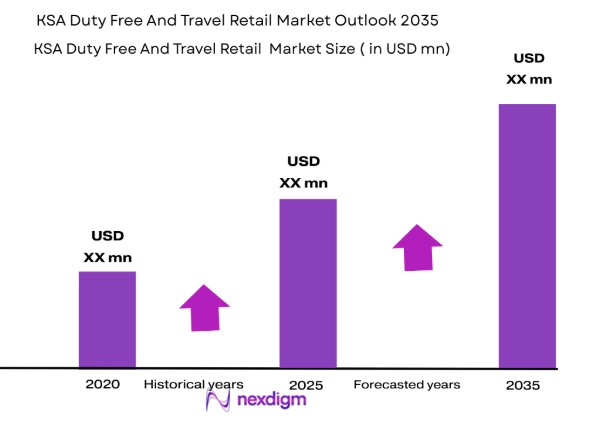
The Saudi Arabia Duty Free and Travel Retail market is valued at USD ~ million in 2024, based on retail sales at airports, airlines, and other travel retail points across the Kingdom’s expanding travel infrastructure. Growth in international tourism demand, religious pilgrimages such as Hajj and Umrah, and new visa policies have increased traveler footfall at key hubs like King Abdulaziz International Airport and King Khalid International Airport. Rising passenger volumes and demand for premium and luxury categories such as fragrances, cosmetics, and fashion contribute to higher per‑traveler spend, driving overall duty‑free retail performance.
Cities and regions that dominate the Saudi duty free and travel retail market include Jeddah, Riyadh, and Dammam, where major international and domestic airports capture the majority of inbound and outbound travelers. These hubs benefit from extensive retail space investment, strong airline connectivity, and high tourist inflows resulting from Vision 2030 tourism initiatives and expanding air traffic networks. Border crossings and port retail nodes also contribute by attracting regional traffic and enhancing overall retail penetration.
Market Segmentation
By Product Type
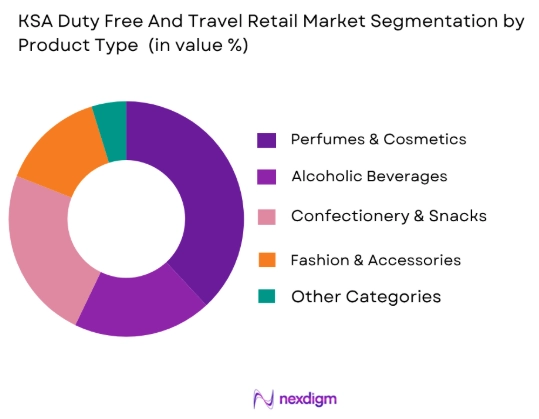
The market is also segmented by product type into Perfumes & Cosmetics, Wines & Spirits, Tobacco Products, Fashion & Accessories, Electronics & Gifts, and Food & Confectionery. In 2024, Perfumes & Cosmetics dominated the product segment due to strong demand from affluent travelers and high per‑transaction value associated with premium beauty and fragrance brands. Wines & spirits follow as high‑value categories driven by tourist spending and luxury preferences. Fashion & accessories and electronics appeal to niche segments, while other categories support diverse travel retail needs. Perfumes & cosmetics lead due to traveler preference for premium duty‑free beauty products and exclusive travel editions that are perceived as better value compared to domestic retail pricing.
By Distribution Channel
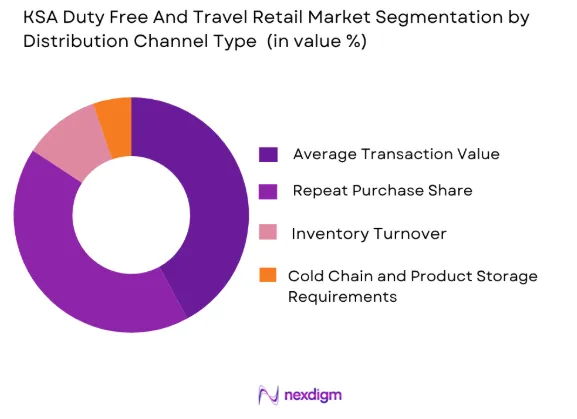
The KSA Duty Free and Travel Retail market is segmented by distribution channel into Airports, Airlines (onboard), Seaports & Cruise Retail, and Other Travel Retail Outlets. Airport duty free channels hold the dominant share of the market thanks to comprehensive retail footprints at international airports, extensive product assortments, and long passenger dwell times that support impulse purchases of premium and luxury products. Airlines and cruise retail provide supplementary opportunities through onboard retail but remain smaller in share due to limited space, offering convenience and niche travel essentials. Other travel retail outlets serve specific traveler segments and geographic corridors, enhancing overall retail accessibility. Airport duty free leads as the primary revenue generator due to high passenger volumes at key terminals and extensive premium brand offerings tailored for both international and domestic travelers, while supplementary channels provide additional access with narrower assortments.
Competitive Landscape
The Saudi Arabia Duty Free and Travel Retail market is competitive, with global travel retail operators, regional concession partners, and emerging national duty‑free entities vying for retail space and consumer attention. The competitive environment is shaped by Vision 2030 tourism reforms, expanding airport retail infrastructure, and prominent brand partnerships that elevate shopper experience and portfolio depth. Major players focus on expanding their presence across key airports, introducing experiential retail formats, integrating digital shopping solutions, and collaborating with premium international brands to attract high‑spending travelers. The emergence of a national duty free operator is reshaping the market by enhancing professional retail standards, broadening product assortments, and deepening localization, influencing competitive dynamics.
| Company | Establishment Year | Headquarters | Retail Footprint | Product Portfolio | Luxury Brand Partnerships | Digital Integration | Exclusive Travel SKUs | Shopper Experience |
| Gebr. Heinemann (JAH Arabia) | 1879 | Germany | ~ | ~ | ~ | ~ | ~ | ~ |
| Al Waha Duty Free | 2025 | Saudi Arabia | ~ | ~ | ~ | ~ | ~ | ~ |
| Lagardère Travel Retail | 1994 | France | ~ | ~ | ~ | ~ | ~ | ~ |
| Dufry AG | 1865 | Switzerland | ~ | ~ | ~ | ~ | ~ | ~ |
| DFS Group (LVMH) | 1960s | Hong Kong | ~ | ~ | ~ | ~ | ~ | ~ |
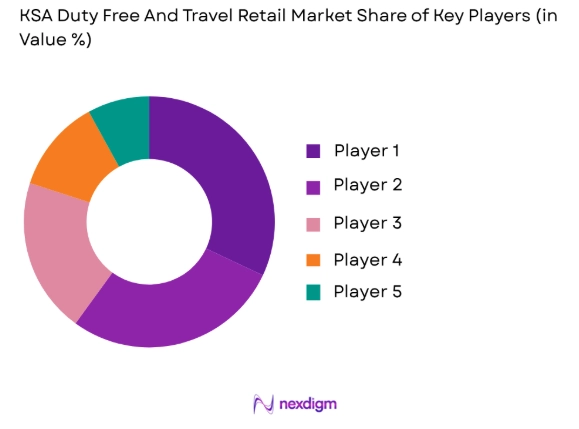
KSA Duty Free and Travel Retail Market Analysis
Growth Drivers
Rapid Expansion of Passenger Traffic (International & Domestic)
Saudi Arabia’s duty-free and travel retail market is experiencing rapid growth due to increasing passenger volumes at major airports such as King Abdulaziz International (Jeddah), King Khalid International (Riyadh), and King Fahd International (Dammam). Both international and domestic travel are expanding, driven by rising tourism, business travel, and government initiatives like Vision 2030, which promotes infrastructure development and tourism diversification. Higher passenger traffic directly increases demand for duty-free products, including luxury goods, cosmetics, electronics, and fragrances. Expansion of domestic flight networks and improved airport facilities encourage longer dwell times, boosting in-terminal retail spending and creating sustained revenue opportunities for duty-free operators across KSA.
Pilgrimage Travel Retail Demand (Hajj, Umrah)
Pilgrimage travel for Hajj and Umrah represents a unique and significant driver for Saudi duty-free retail. Millions of pilgrims travel annually to Mecca and Medina, creating high demand for travel-related products, religious items, souvenirs, and high-margin consumer goods. Seasonal peaks during Hajj and Umrah periods offer opportunities for duty-free retailers to maximize sales through targeted promotions and tailored product assortments. Retailers can leverage this steady influx of international visitors by curating culturally relevant products, premium brands, and convenience-oriented offerings. The combination of large-scale religious tourism and extended stay periods at airports and transit hubs ensures predictable footfall and strong revenue potential for operators.
Market Challenges
Regulatory and Licensing Complexity
Saudi Arabia’s duty-free sector is subject to complex regulatory and licensing requirements. Retailers must navigate multiple approvals from government authorities, adhere to strict customs procedures, and comply with varying local and regional regulations. The administrative burden increases operational costs and can delay product launch or replenishment. International brands must also ensure compliance with KSA-specific trade laws, import restrictions, and labeling requirements. Retailers need specialized expertise and robust operational processes to manage licensing and regulatory compliance effectively, or risk fines, delays, or disruption of sales at airports and seaports.
Competition from Domestic Retail and E-Commerce
The growth of domestic retail chains and e-commerce platforms in KSA poses a competitive challenge to duty-free operators. Online marketplaces and regional malls provide convenience, competitive pricing, and extensive product selections, reducing impulse purchases at airports and ports. Travelers increasingly compare prices and product availability before transit, impacting in-terminal sales. Duty-free operators must enhance the in-store shopping experience, adopt digital integration, and provide value-added services to remain competitive. Strategies such as mobile pre-ordering, loyalty programs, and click-and-collect solutions can help duty-free operators capture additional revenue while maintaining relevance in a digitally connected retail landscape.
Market Opportunities
Expansion of Experiential Retail Spaces
Experiential retail offers KSA duty-free operators opportunities to enhance traveler engagement and revenue. Airports can incorporate interactive brand activations, product sampling, exclusive launches, and immersive store layouts to attract premium travelers. Experiential approaches increase dwell time, drive higher spending in high-margin categories such as cosmetics, fragrances, fashion, and electronics, and strengthen brand loyalty. Large-scale pilgrimage events and international tourism initiatives provide occasions to host themed or seasonal experiences that appeal to diverse traveler segments. By integrating luxury and experiential elements, duty-free outlets can position themselves as destination retail hubs, increasing revenue potential while elevating the overall traveler experience.
Local and Regional Brand Integration
Promoting Saudi and regional brands at duty-free outlets provides differentiation and strengthens cultural appeal. Products such as dates, perfumes, traditional handicrafts, and luxury goods cater to international travelers seeking authentic regional experiences. Themed retail zones highlighting local heritage can enhance sales while supporting tourism promotion initiatives. Partnerships with local manufacturers, artisans, and tourism boards create cross-promotional opportunities, increasing visibility for regional products. Integrating local and regional brands also allows duty-free operators to diversify their offerings, appeal to cultural and high-value tourism segments, and drive higher-margin purchases, reinforcing KSA’s identity as a distinctive travel retail market.
Future Outlook
Over the next decade, the Saudi Arabia Duty Free and Travel Retail market is expected to demonstrate continued growth driven by increasing international and domestic travel, ongoing airport infrastructure expansion, and rising tourist spending. Strategic government initiatives under Vision 2030 aim to diversify the economy through tourism expansion, fueling demand for duty‑free retail and premium travel shopping experiences. Retailers will increasingly adopt digital platforms, pre‑order services, and personalized loyalty programs to enhance shopper engagement and conversion.
Major Players
- Dubai Duty Free (regional presence)
- Gebr. Heinemann / JAH Arabia International Duty‑Free
- Al Waha Duty Free Operating Co.
- Lagardère Travel Retail
- Dufry AG
- DFS Group
- King Power International
- Aer Rianta International
- Heinemann Group
- World Duty Free
- WH Smith Travel Retail
- Lotte Duty Free
- Duty Free Americas
- Nuance Group
Key Target Audience
- Airport Operators and Retail Concession Management Teams
- Duty Free and Travel Retail Operators
- Luxury Brand Owners and Distributors
- Investments and Venture Capitalist Firms
- Government and Regulatory Bodies
- Travel and Hospitality Revenue Strategists
- Airline Retail and Ancillary Revenue Teams
- Digital Retail and Omnichannel Solution Providers
Research Methodology
Step 1: Identification of Key Variables
The initial phase involves mapping the ecosystem of the Saudi Arabia Duty Free and Travel Retail market, identifying all major stakeholders, including airport operators, airline retail managers, concession holders, luxury brand distributors, and regulatory authorities. Secondary research from government publications, industry reports, airport traffic statistics, and trade data was used to define critical variables such as passenger volumes, retail footfall, product category demand, licensing requirements, and pricing trends that directly impact market growth.
Step 2: Market Analysis and Construction
Historical data for travel retail revenues, passenger traffic, and duty free sales across major airports and border outlets were collected. Bottom‑up modeling was applied to estimate market size, segment revenues by distribution channels (airport, airline, cruise, and border), and product types (perfumes, cosmetics, wines, fashion, and accessories). Statistical tools were employed to normalize data, adjust for seasonal variations, and derive accurate 2024 baseline figures.
Step 3: Hypothesis Validation and Expert Consultation
Market assumptions and preliminary findings were validated through structured interviews and surveys with key stakeholders, including airport retail managers, duty free operators, brand representatives, and industry analysts. These consultations provided insights on operational challenges, category growth trends, passenger behavior, and the impact of policy and tourism initiatives, which helped refine segmentation and forecast assumptions.
Step 4: Research Synthesis and Final Output
The final phase involved triangulating quantitative data, expert insights, and secondary sources to produce a comprehensive, validated market assessment. This included finalizing revenue estimates, market segmentation, competitive landscape, and growth projections. The consolidated findings were cross‑checked for consistency with industry benchmarks, airport traffic data, and historical retail performance to ensure reliability and actionable insights for stakeholders and investors.

- Executive Summary
- Research Methodology (Market Definitions and Assumptions, Abbreviations, Research Framework, Bottom-Up Market Estimation, Top-Down Validation, Airport and Border Retail Mapping, Duty-Free Trade Flow Analysis, Primary Interviews with Retailers, Operators, and Distributors, Forecasting Model, Limitations and Assumptions)

- Definition and Scope
- Evolution of Duty-Free and Travel Retail in KSA
- Industry Ecosystem and Stakeholder Mapping
- Supply Chain and Value Chain Analysis
- Retail Infrastructure and Airport/Border Concessions Landscape
- Import, Licensing, and Regulatory Flow

- Growth Drivers
Rapid Expansion of Passenger Traffic (International & Domestic)
Pilgrimage Travel Retail Demand (Hajj, Umrah)
Airport Infrastructure Development and Mega Projects
Rise of Premium and Luxury Spending
Digital Retail and Mobile Commerce Adoption - Market Challenges
Regulatory and Licensing Complexity
Import Tariffs and Compliance Costs
Competition from Domestic Retail and E-Commerce
Currency Fluctuation and Supply Chain Delays - Market Opportunities
Expansion of Experiential Retail Spaces
Local and Regional Brand Integration
Premium and High-Value Product Offerings
Loyalty Programs and Digital Engagement Platforms - Market Trends
Premiumization and Luxury Focus
Smart Retail Tech (IoT, Cashless Payments, AI Analytics)
Sustainability and Ethical Sourcing Initiatives
Integrated Duty Free + Tourism Experience Stores - Government Regulations Duty-Free Licensing and Compliance Regulations
Import and Customs Policy Framework
Product Category Restrictions and Local Standards
Vision 2030 Retail and Tourism Initiatives
Trade Agreements and Tariff Policies - Porter’s Five Forces Analysis
- PESTLE Analysis
- Pricing Analysis
- Competitive Ecosystem

- By Value, 2020–2025
- By Volume, 2020–2025
- By Product Category Revenue, 2020–2025
- By Average Transaction Value, 2020–2025

- By Product Category (in Value %)
Perfumes & Cosmetics
Alcoholic Beverages (Note: Regulatory constraints)
Tobacco Products and Vapes
Confectionery & Snacks
Fashion & Accessories
Electronics & Gadgets
Fragrances and Luxury Accessories
Other Categories - By Retail Channel (in Value %)
Airport Duty-Free Concessions
International and Domestic Border Posts
Seaports and Cruise Terminals
Online Duty-Free Platforms and Omnichannel Retail - By Consumer Type (in Value %)
International Travelers
Domestic Travelers
Pilgrimage (Hajj & Umrah) Segment
Business vs Leisure Segment - Average Transaction Value
Repeat Purchase Share
Inventory Turnover
Cold Chain and Storage Efficiency - By Geography (in Value %)
Riyadh Region and King Khalid International Airport
Jeddah Region and King Abdulaziz International Airport
Dammam/ Eastern Province and King Fahd International Airport
Other Regions

- Market Share Analysis of Major Retail Operators (Revenue and Footfall)
- Cross-Comparison Parameters (Company Overview, Retail Footprint, Product Portfolio, Licensing, Digital Capabilities, Value-Added Services, Sustainability Initiatives, Loyalty Programs, EBITDA Margins, Strategic Partnerships)
- SWOT Analysis of Major Players
- Pricing Analysis by Product Category and Channel
- Detailed Profiles of Major Companies
Dufry KSA Operations
Lagardère Travel Retail Middle East & North Africa
Alpha Flight Services
Saudi Duty Free
Alhokair Retail Partnership Group
Saudi Arabian Airlines (Saudia) Airport Retail Partnerships
Saudi Ground Services (SGS) Duty Free & Retail Services
DFS Group
Aelia Duty Free
Bateel Duty Free & Gourmet Retail
Galeries Lafayette Travel Retail
Hudson Group
M.H. Alshaya Co.
Amanat Holdings
Local and Regional Specialty Retail Consortiums

- Traveler Demographics and Spending Behavior
- Purchasing Patterns and Frequency
- Price Sensitivity and Brand Preferences
- Luxury Versus Value Retail Preferences
- Digital Consumer Engagement and Loyalty Behavior

- By Value, 2026–2035
- By Volume, 2026–2035
- By Product Category Revenue, 2026–2035
- By Average Transaction Value, 2026–2035


 Request a Sample
 Ask for Customization
 Get a Quote
 Enquire Now