
 Download PDF
Market Overview
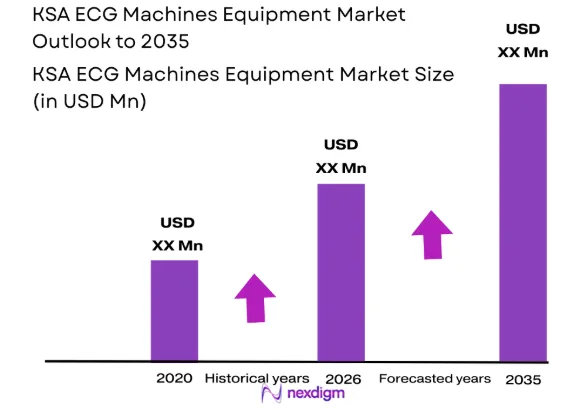
The ECG Machines Equipment market is experiencing significant growth, primarily driven by the rising demand for advanced cardiovascular diagnostic solutions. Based on a recent historical assessment, the market size for ECG machines equipment in the region stands at over USD ~ million. This growth is fueled by factors such as increased cardiovascular diseases, aging populations, and a rising focus on health monitoring. Additionally, technological advancements in ECG systems, such as wireless and portable devices, are also contributing to the market expansion. These innovations are making the systems more accessible and cost-effective for a broader range of healthcare settings.
The demand for ECG machines is primarily concentrated in urban centers with a robust healthcare infrastructure. Major cities in the Kingdom of Saudi Arabia, such as Riyadh, Jeddah, and Dammam, lead in terms of both demand and supply of these diagnostic devices. These regions have the most advanced healthcare facilities and attract a significant portion of healthcare investments, which are essential for the adoption of sophisticated medical technologies. Furthermore, the Saudi government’s focus on improving healthcare services and increasing awareness about cardiovascular health is accelerating market growth in these areas.
Market Segmentation
By Product Type
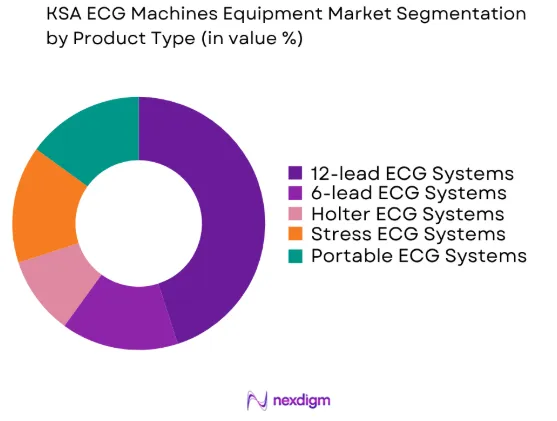
The KSA ECG machines equipment market is segmented by product type into 12-lead ECG systems, 6-lead ECG systems, Holter ECG systems, stress ECG systems, and portable ECG systems. Recently, 12-lead ECG systems have dominated the market share due to their widespread usage in hospitals and clinics for diagnosing a wide range of heart conditions. Their accuracy, ease of use, and the ability to monitor heart activity in real-time make them the preferred choice in critical healthcare settings, leading to increased demand for these systems.
By Platform Type
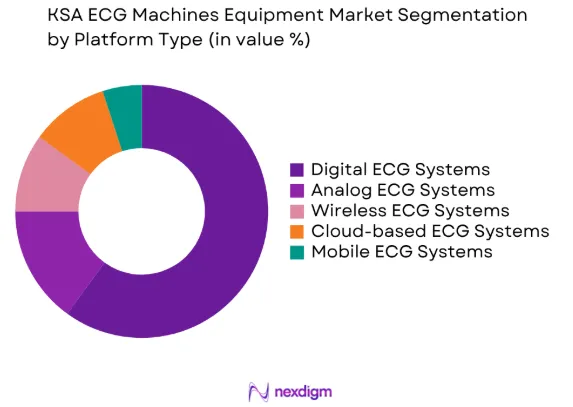
The KSA ECG machines equipment market is also segmented by platform type into analog ECG systems, digital ECG systems, wireless ECG systems, cloud-based ECG systems, and mobile ECG systems. Digital ECG systems are the dominant sub-segment due to their ability to provide higher accuracy, reliability, and ease of integration with hospital IT systems. This technological advancement, combined with improved affordability, has made digital ECG systems the most widely adopted in both small clinics and large healthcare facilities.
Competitive Landscape
The KSA ECG machines equipment market is moderately competitive, with major global players dominating the market, along with several regional companies expanding their presence. Consolidation is occurring as companies seek to enhance their product offerings, expand their geographical reach, and leverage technological advancements. The growing demand for more efficient, cost-effective, and technologically advanced ECG machines is leading to intense competition. This has prompted key players to invest heavily in R&D and explore strategic partnerships.
| Company Name | Establishment Year | Headquarters | Technology Focus | Market Reach | Key Products | Revenue (USD) | Market-Specific Parameter |
| Philips Healthcare | 1891 | Amsterdam, Netherlands | ~ | ~ | ~ | ~ | ~ |
| GE Healthcare | 1892 | Chicago, USA | ~ | ~ | ~ | ~ | ~ |
| Siemens Healthineers | 1847 | Erlangen, Germany | ~ | ~ | ~ | ~ | ~ |
| Medtronic | 1949 | Dublin, Ireland | ~ | ~ | ~ | ~ | ~ |
| Mindray Medical | 1991 | Shenzhen, China | ~ | ~ | ~ | ~ | ~ |
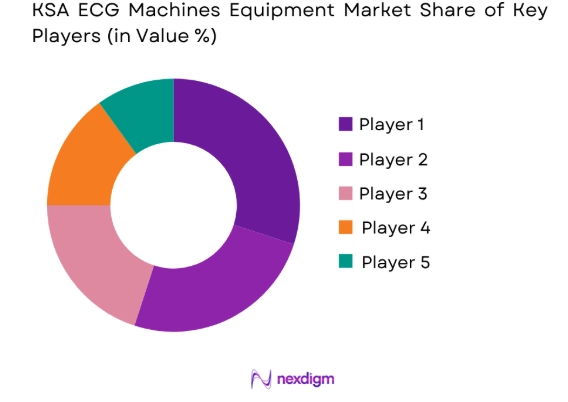
KSA ECG Machines Equipment Market Analysis
Growth Drivers
Technological Innovation
Technological innovation in ECG machines is one of the leading drivers for market growth. The adoption of digital ECG systems, which provide more accurate readings and allow easier data integration with other medical systems, is driving the demand for more advanced ECG devices. The development of wireless ECG systems, which can transmit data remotely to healthcare providers, is another technological advancement that enhances the market potential. These systems make it easier for patients to monitor their heart health from home, thus expanding the reach of ECG machines beyond hospitals and clinics. This innovation is expected to fuel further growth in both urban and rural healthcare systems.
Aging Population and Cardiovascular Diseases
The increasing prevalence of cardiovascular diseases, especially among aging populations, drives growth in the KSA ECG machines equipment market. As heart-related conditions rise, the demand for diagnostic tools like ECG machines grows. The aging population, both globally and within Saudi Arabia, faces a higher risk of heart issues, leading to greater usage of ECG machines for early diagnosis, routine check-ups, and emergencies. Additionally, Saudi Arabia’s government is focusing on improving public health, particularly through expanded cardiovascular screenings, which will create new opportunities for ECG machine manufacturers. These efforts to promote heart health are expected to accelerate the adoption of ECG devices across healthcare settings in the region.
Market Challenges
High Cost of Advanced Systems
One of the significant challenges facing the KSA ECG machines equipment market is the high cost of advanced ECG systems. Digital, wireless, and AI-powered ECG systems, while highly effective, come with significant costs, which may be prohibitive for smaller healthcare facilities or rural clinics. This high price point can limit the accessibility of state-of-the-art ECG machines, particularly in areas with constrained healthcare budgets. Additionally, ongoing maintenance and training costs associated with these advanced systems can add financial strain. While large hospitals and medical centers may be able to absorb these costs, smaller facilities are often hesitant to invest in cutting-edge ECG technology due to the associated financial burden.
Regulatory Hurdles and Market Entry Barriers
A key challenge in the KSA ECG machines equipment market is the stringent regulatory approval processes. The medical device market in Saudi Arabia is highly regulated, requiring manufacturers to meet rigorous safety and quality standards before entering the market. While these regulations are crucial for ensuring the safety and effectiveness of medical devices, they can delay the introduction of new ECG machines. Additionally, adhering to local regulatory requirements demands considerable time, effort, and resources. For international manufacturers, navigating these regulatory complexities can be particularly challenging, potentially hindering the timely expansion of ECG products in the region and affecting market entry strategies.
Opportunities
Expansion of Telemedicine
Telemedicine presents a significant growth opportunity for the KSA ECG machines equipment market. With the rise in remote consultations, there is an increasing demand for ECG machines that can transmit data to healthcare providers in real time. This trend is particularly prominent in rural and underserved areas where access to traditional healthcare facilities may be limited. The Saudi government’s push to expand telemedicine services, especially in remote areas, aligns with the growing demand for portable and wireless ECG systems. As telemedicine platforms become more integrated into healthcare infrastructure, there will be greater opportunities for ECG machine manufacturers to offer solutions that cater to this growing need.
Increased Healthcare Investments
Saudi Arabia’s Vision 2030 plan is driving significant investments in healthcare infrastructure, benefitting the ECG machines equipment market. The government’s focus on building and upgrading healthcare facilities is expected to boost the demand for diagnostic devices like ECG machines. These investments aim to enhance healthcare services nationwide, particularly in underserved areas. By modernizing hospitals and clinics to meet international standards, the demand for advanced ECG systems is set to increase. This creates a substantial opportunity for manufacturers and suppliers to expand their presence in the market, as the government’s healthcare modernization efforts continue to accelerate the adoption of innovative diagnostic technologies across the country.
Future Outlook
The future outlook for the KSA ECG machines equipment market looks positive, with continued growth driven by technological advancements, increasing healthcare investments, and a rising focus on preventive healthcare. Over the next five years, ECG machine adoption is expected to grow due to the increasing integration of AI and cloud-based technologies. Additionally, regulatory support and a more extensive healthcare infrastructure will contribute to the expansion of diagnostic services. Demand-side factors, such as the aging population and the prevalence of cardiovascular diseases, will continue to drive market growth. Overall, the market is positioned for steady growth, especially with the increasing push for digital health solutions.
Major Players
- Philips Healthcare
- GE Healthcare
- Siemens Healthineers
- Medtronic
- Mindray Medical
- Schiller AG
- Biotronik
- Welch Allyn
- Nihon Kohden
- Fukuda Denshi
- Spacelabs Healthcare
- DMS (Diagnostic Medical Systems)
- Mortara Instrument
- Abbott Laboratories
- Panasonic Healthcare
Key Target Audience
- Investment and venture capital firms
- Government and regulatory bodies
- Hospitals and healthcare providers
- Diagnostic and medical centers
- Private healthcare companies
- Healthcare distributors
- Insurance providers
- Medical equipment suppliers
Research Methodology
Step 1: Identification of Key Variables
Identify the key factors influencing the KSA ECG machines equipment market, such as technological trends, regulatory frameworks, and demand patterns.
Step 2: Market Analysis and Construction
Conduct a detailed analysis of market size, growth trends, and segmentation, using both primary and secondary research methods.
Step 3: Hypothesis Validation and Expert Consultation
Validate hypotheses with industry experts and key stakeholders to ensure the accuracy and relevance of the findings.
Step 4: Research Synthesis and Final Output
Synthesize the gathered data and insights to generate a comprehensive market report, which will be presented to stakeholders.

- Executive Summary
- Research Methodology (Definitions, Scope, Industry Assumptions, Market Sizing Approach, Primary & Secondary Research Framework, Data Collection & Verification Protocol, Analytic Models & Forecast Methodology, Limitations & Research Validity Checks)

- Market Definition and Scope
- Value Chain & Stakeholder Ecosystem
- Regulatory / Certification Landscape
- Sector Dynamics Affecting Demand
- Strategic Initiatives & Infrastructure Growth

- Growth Drivers
Increasing Prevalence of Cardiovascular Diseases
Rising Healthcare Infrastructure Investment
Government Support for Healthcare Innovation - Market Challenges
High Cost of Advanced ECG Systems
Lack of Skilled Personnel for ECG Interpretation
Data Privacy and Security Concerns - Market Opportunities
Adoption of Telemedicine and Remote Monitoring
Increasing Focus on Preventive Healthcare
Expanding Healthcare Access in Rural Areas - Trends
Integration of AI and Machine Learning in ECG Systems
Miniaturization of ECG Devices for Home Use
Advancements in Wireless ECG Technology - Government Regulations
- SWOT Analysis of Key Competitors
- Porter’s Five Forces

- By Market Value, 2020-2025
- By Installed Units, 2020-2025
- By Average System Price, 2020-2025
- By System Complexity Tier, 2020-2025

- By System Type (In Value%)
12-lead ECG Systems
6-lead ECG Systems
Holter ECG Systems
Stress ECG Systems
Portable ECG Systems - By Platform Type (In Value%)
Analog ECG Systems
Digital ECG Systems
Wireless ECG Systems
Cloud-Based ECG Systems
Mobile ECG Systems - By Fitment Type (In Value%)
Wall-mounted ECG Systems
Tabletop ECG Systems
Handheld ECG Systems
Patch ECG Systems
Implantable ECG Systems - By End User Segment (In Value%)
Hospitals
Cardiology Clinics
Homecare Settings
Ambulatory Surgical Centers
Research Institutes - By Procurement Channel (In Value%)
Direct Procurement from Manufacturers
Procurement through Distributors
Online Purchasing
Tendering and Government Procurement
Third-party Resellers

- Market Share Analysis
- Cross Comparison Parameters (Market Growth Rate, Competitive Intensity, Innovation Rate, Distribution Network, Customer Loyalty)
- SWOT Analysis of Key Competitors
- Pricing & Procurement Analysis
- Key Players
Philips Healthcare
GE Healthcare
Siemens Healthineers
Mindray Medical
Hill-Rom Holdings
Schiller AG
Biotronik
Welch Allyn
Medtronic
Nihon Kohden
Fukuda Denshi
Spacelabs Healthcare
DMS (Diagnostic Medical Systems)
Mortara Instrument
Abbott Laboratories

- Growth in hospital investments for cardiac care
- Increased adoption of homecare ECG devices
- Rising demand for specialized cardiology clinics
- Expanding use of ECG systems in ambulatory surgical centers

- Forecast Market Value, 2026-2035
- Forecast Installed Units, 2026-2035
- Price Forecast by System Tier, 2026-2035
- Future Demand by Platform, 2026-2035


 Request a Sample
 Ask for Customization
 Get a Quote
 Enquire Now