

 Download PDF
 Download PDF
Market Overview
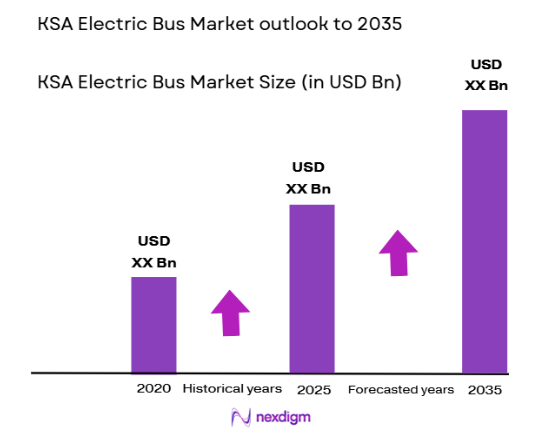
The KSA Electric Bus Market is experiencing significant growth, driven by increasing demand for sustainable transportation solutions. Based on a recent historical assessment, the market size is projected to reach approximately USD ~ billion. This growth is primarily fueled by government initiatives focused on reducing carbon emissions and the push toward adopting electric vehicles (EVs) to modernize the public transport sector. Furthermore, investments in electric bus infrastructure, including charging stations, are contributing to the market’s expansion, positioning the KSA as a leader in electric mobility in the region.
Saudi Arabia is at the forefront of the electric bus market in the Middle East, driven by the nation’s Vision 2030 initiative aimed at transforming its economy and promoting sustainable development. Key cities such as Riyadh and Jeddah are leading this transformation with large-scale investments in EV infrastructure and electric buses. These cities are benefiting from robust government support, including subsidies and green energy initiatives, which make them attractive locations for both public and private sector adoption of electric buses.
Market Segmentation
By Product Type
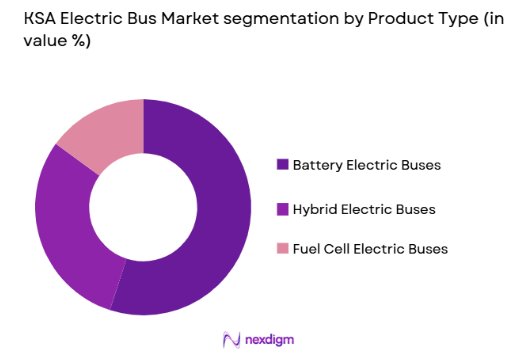
KSA Electric Bus Market is segmented by product type into battery electric buses, hybrid electric buses, and fuel cell electric buses. Recently, battery electric buses have a dominant market share due to their higher efficiency and lower operational costs compared to hybrid and fuel cell alternatives. The demand for battery electric buses is driven by improvements in battery technology, cost reductions, and the strong push for eco-friendly transport solutions.
By Platform Type
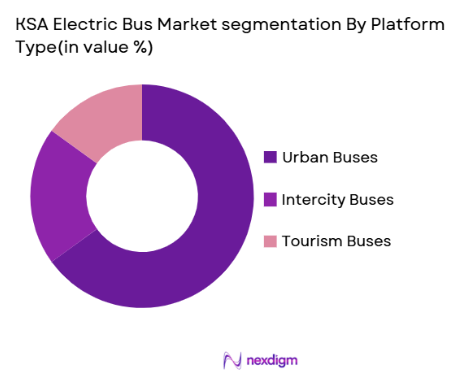
KSA Electric Bus Market is segmented by platform type into urban buses, intercity buses, and tourism buses. Urban buses have the largest share due to their frequent use in public transport networks and the increasing focus on sustainable urban mobility. Urban areas such as Riyadh and Jeddah are investing heavily in electric buses to meet environmental goals, with many new electric bus routes being developed in major city centers.
Competitive Landscape
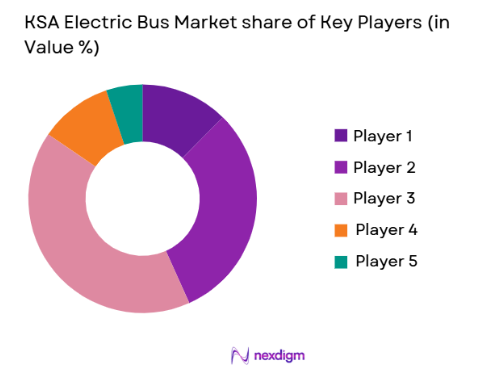
The KSA Electric Bus Market is witnessing consolidation as major global players partner with local entities to take advantage of the growing demand. The market is dominated by companies that have established manufacturing and operational capabilities in Saudi Arabia, contributing to both local production and the development of EV infrastructure. The influence of these major players is strong, as they are shaping the market’s technological evolution and offering innovative electric bus models and solutions for the region.
| Company Name | Establishment Year | Headquarters | Technology Focus | Market Reach | Key Products | Revenue (USD Billion) | Additional Parameter |
| Alstom | 1928 | France | ~ | ~ | ~ | ~ | ~ |
| BYD | 1995 | China | ~ | ~ | ~ | ~ | ~ |
| Volvo | 1927 | Sweden | ~ | ~ | ~ | ~ | ~ |
| New Flyer | 1930 | Canada | ~ | ~ | ~ | ~ | ~ |
| Proterra | 2004 | USA | ~ | ~ | ~ | ~ | ~ |
KSA Electric Bus Market Analysis
Growth Drivers
Government Initiatives
The government’s Vision 2035 program is a major driver of the KSA Electric Bus Market. Through this program, the government has made substantial investments in infrastructure and incentives for electric vehicle adoption. This includes subsidies for electric buses and grants for establishing charging stations in urban areas. The push to reduce carbon emissions is also contributing to the strong demand for sustainable transportation solutions, making electric buses a key component of the government’s efforts to diversify its economy and support sustainable development. With continued support from the public sector, the market for electric buses is expected to grow substantially, with government initiatives laying a solid foundation for long-term growth.
Technological Advancements
Technological advancements in battery systems, charging infrastructure, and electric drivetrains have also played a critical role in driving the growth of the electric bus market. As battery prices have decreased and their performance has improved, electric buses have become more cost-effective, both for public transport operators and private fleets. Additionally, innovations in charging technology, including fast-charging solutions and wireless charging systems, have made electric buses a viable alternative to traditional fossil fuel-powered buses. These advancements have not only made electric buses more affordable but have also improved their operational efficiency, further encouraging adoption across Saudi Arabia.
Market Challenges
High Initial Capital Investment
One of the significant challenges facing the KSA Electric Bus Market is the high initial capital required for electric buses. While the total cost of ownership is lower than traditional diesel buses, the upfront costs of electric buses and their charging infrastructure can be a major barrier for many public transport authorities and fleet operators. This challenge is compounded by the need for government subsidies or financial incentives to make the transition to electric buses financially feasible for operators. Without these financial incentives, many operators may continue to rely on cheaper, conventional buses despite the long-term environmental and economic benefits of electric buses.
Limited Charging Infrastructure
Another challenge is the limited availability of charging infrastructure across Saudi Arabia. While major cities like Riyadh and Jeddah are making strides in developing electric vehicle charging networks, the overall infrastructure required to support large fleets of electric buses is still underdeveloped. This lack of widespread charging stations makes it difficult for fleet operators to integrate electric buses into their operations, particularly for intercity routes where buses travel long distances. Expanding charging infrastructure is crucial to the market’s growth, but it requires significant investment in both hardware and logistics to ensure that electric buses are fully supported throughout their operational life.
Opportunities
Integration with Autonomous Technologies
One of the key opportunities for the KSA Electric Bus Market is the integration of autonomous driving technology into electric buses. With the global shift toward smart cities and autonomous vehicles, the integration of autonomous driving systems in electric buses presents a massive growth opportunity. Saudi Arabia has already begun to focus on smart city developments as part of its Vision 2035 initiative, which includes the introduction of self-driving vehicles in urban environments. Electric buses equipped with autonomous driving technology could reduce operational costs and improve safety, making them highly attractive for both public and private fleet operators. This opportunity is especially important in urban areas, where traffic congestion and the need for efficient, sustainable transportation solutions are pressing concerns.
Partnerships for Green Transportation Solutions
There is a significant opportunity for the KSA Electric Bus Market to expand through strategic partnerships between private sector players, international bus manufacturers, and local governments. These collaborations can help accelerate the deployment of electric buses and the necessary infrastructure, creating a more efficient ecosystem for sustainable transportation. Additionally, as private fleet operators look for ways to enhance their environmental sustainability and meet local regulatory requirements, they are increasingly turning to electric buses. Through these partnerships, the market can benefit from increased investments in electric bus fleets and charging infrastructure, leading to faster market penetration and wider adoption.
Future Outlook
The KSA Electric Bus Market is expected to continue its growth trajectory over the next five years, with increasing governmental and private sector investments supporting the shift towards sustainable urban mobility solutions. Key trends in the market include the rise of autonomous electric buses, advancements in battery and charging technologies, and continued regulatory support. With Saudi Arabia’s Vision 2030 driving infrastructure development and sustainability, the market is positioned to see strong growth in both demand and technological advancements, setting the stage for further adoption of electric buses across the region.
Major Players
- Alstom
- BYD
- Volvo
- New Flyer
- Proterra
- NFI Group
- Yutong
- Scania
- Tesla
- MAN SE
- King Long
- Hyundai Motor Company
- Solaris Bus & Coach
- Tata Motors
- Daimler
Key Target Audience
- Investments and venture capitalist firms
- Government and regulatory bodies
- Public transportation authorities
- Electric bus manufacturers
- Electric vehicle infrastructure providers
- Environmental organizations
- Fleet operators
- Automotive technology developers
Research Methodology
Step 1: Identification of Key Variables
The first step involves defining the key variables influencing the KSA Electric Bus Market, including market drivers, technological trends, and regulatory influences. These variables are critical for framing the scope of research and data collection.
Step 2: Market Analysis and Construction
In this step, the collected data is analyzed to construct a comprehensive understanding of the market’s current state, including historical trends and the factors driving growth. This analysis helps define the market segments and potential growth areas.
Step 3: Hypothesis Validation and Expert Consultation
Market hypotheses are tested and refined through consultations with industry experts, stakeholders, and key players in the electric vehicle sector. This ensures the validity of assumptions and adds credibility to the market analysis.
Step 4: Research Synthesis and Final Output
The final research synthesis compiles the analysis, expert feedback, and validated hypotheses into a cohesive report. This step results in a final output that outlines market trends, challenges, opportunities, and future forecasts.

- Executive Summary
- Research Methodology (Definitions, Scope, Industry Assumptions, Market Sizing Approach, Primary & Secondary Research Framework, Data Collection & Verification Protocol, Analytic Models & Forecast Methodology, Limitations & Research Validity Checks)

- Market Definition and Scope
- Value Chain & Stakeholder Ecosystem
- Regulatory / Certification Landscape
- Sector Dynamics Affecting Demand
- Strategic Initiatives & Infrastructure Growth

- Growth Drivers
Government investment in sustainable transport
Rising demand for eco-friendly public transport
Technological advancements in electric bus infrastructure
Supportive regulatory policies and incentives
Growth in urbanization and population density - Market Challenges
High initial investment costs
Limited charging infrastructure
Range anxiety among consumers
Battery lifecycle and disposal concerns
Technological interoperability issues - Market Opportunities
Expansion in hybrid and fuel cell electric buses
Strategic partnerships for infrastructure development
Demand for eco-friendly buses in public sector transport - Trends
Rise of autonomous electric buses
Integration of AI in electric bus operations
Increased focus on green transport solutions - Government Regulations & Defense Policy
Incentives for electric vehicle adoption
Regulations on emissions and environmental standards
Government-funded electric bus procurement programs - SWOT Analysis
- Stakeholder and Ecosystem Analysis
- Porter’s Five Forces Analysis
- Competition Intensity and Ecosystem Mapping

- By Market Value, 2020-2025
- By Installed Units, 2020-2025
- By Average System Price, 2020-2025
- By System Complexity Tier, 2020-2025

- By System Type (In Value%)
Battery Electric Buses
Hybrid Electric Buses
Plug-in Hybrid Electric Buses
Fuel Cell Electric Buses
Advanced Bus Control Systems - By Platform Type (In Value%)
Urban Buses
Intercity Buses
Tourist Buses
School Buses
Electric Bus Chargers - By Fitment Type (In Value%)
New-Build Buses
Retrofit Buses
Modular Buses
Integrated Bus Systems
Electric Bus Charging Infrastructure - By EndUser Segment (In Value%)
Government Transportation Authorities
Private Fleet Operators
Tourism and Leisure Sector
Public Transport Operators
Educational Institutions - By Procurement Channel (In Value%)
Direct Procurement
Government Tenders
Private Sector Procurement
Online Bidding Platforms
Third-party Distributors - By Material / Technology (in Value%)
Lithium-ion Batteries
Solid-State Batteries
Fuel Cells
Electric Drivetrains
Autonomous Driving Technology

- Market structure and competitive positioning
- Market share snapshot of major players
- Cross Comparison Parameters (Price, Market Share, Technology, System Type, End-User Segment, Procurement Channel, Innovation, Distribution Channels, Customer Satisfaction, Geographic Reach)
- SWOT Analysis of Key Players
- Pricing & Procurement Analysis
- Key Players
Alstom
BYD
New Flyer
Proterra
Volvo
Daimler
Yutong
Tesla
NFI Group
MAN SE
Scania
King Long
Tata Motors
Solaris Bus & Coach
Hyundai Motor Company

- Demand from public sector transport authorities
- Growth in private sector electric bus adoption
- Increased adoption by educational institutions
- Demand from the tourism and leisure sector

- Forecast Market Value, 2026-2035
- Forecast Installed Units, 2026-2035
- Price Forecast by System Tier, 2026-2035
- Future Demand by Platform, 2026-2035


 Request a Sample
 Ask for Customization
 Get a Quote
 Enquire Now