

 Download PDF
 Download PDF
Market Overview
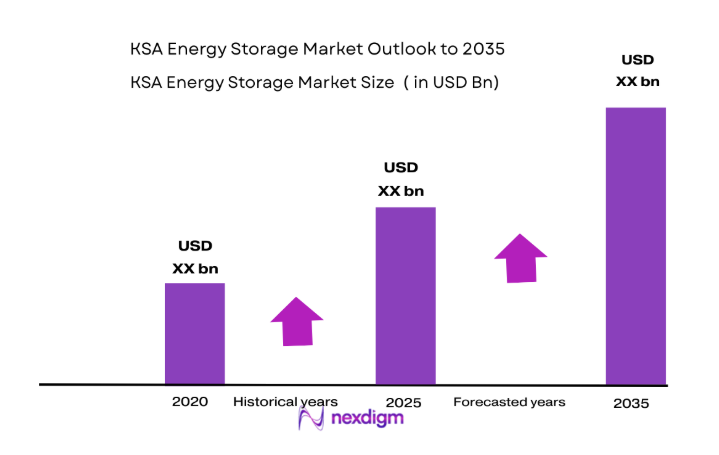
The KSA energy storage market is projected to witness significant growth in the coming years, driven by the increasing demand for energy storage solutions across various sectors. With a focus on renewable energy integration, grid stability, and cost reduction, the market size is estimated to be valued at approximately USD ~ billion based on a recent historical assessment. This growth is largely attributed to the country’s ambitious renewable energy targets and the growing adoption of energy storage technologies to support grid operations and reduce dependency on fossil fuels.
Saudi Arabia, especially cities like Riyadh and Jeddah, is expected to continue leading the energy storage market due to its strong investment in renewable energy infrastructure. The dominance of these cities can be attributed to the concentration of government-led renewable energy initiatives, significant infrastructure development, and strategic positioning for clean energy solutions. As the Kingdom aims to achieve its Vision 2030 goals, these regions are becoming key hubs for innovation in energy storage and sustainability practices.
Market Segmentation
By Product Type:
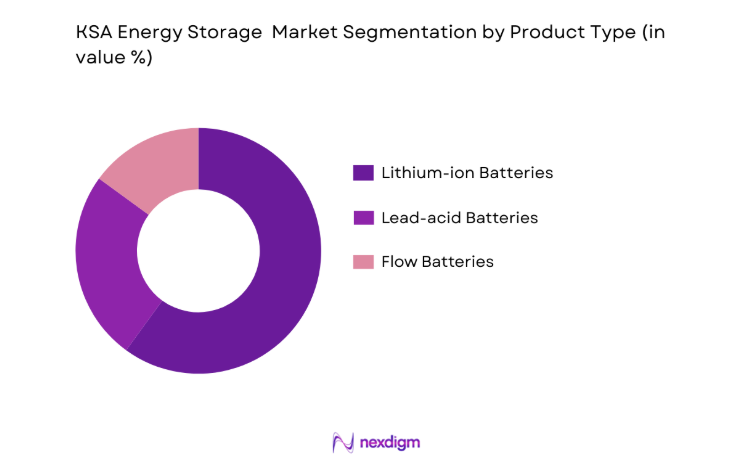
The KSA energy storage market is segmented by product type into lithium-ion batteries, lead-acid batteries, and flow batteries. Among these, lithium-ion batteries hold the dominant market share due to their higher efficiency, long life cycle, and decreasing costs. The demand for lithium-ion batteries is driven by their widespread application in both residential and commercial sectors, where they are increasingly used to store energy from renewable sources like solar power. Moreover, the technological advancements in lithium-ion battery systems and their ability to efficiently store large amounts of energy have made them the preferred choice for grid-scale energy storage solutions in Saudi Arabia. With the Saudi government’s push towards renewable energy integration, lithium-ion batteries are set to continue their dominance in the market.
By End-User Segment:
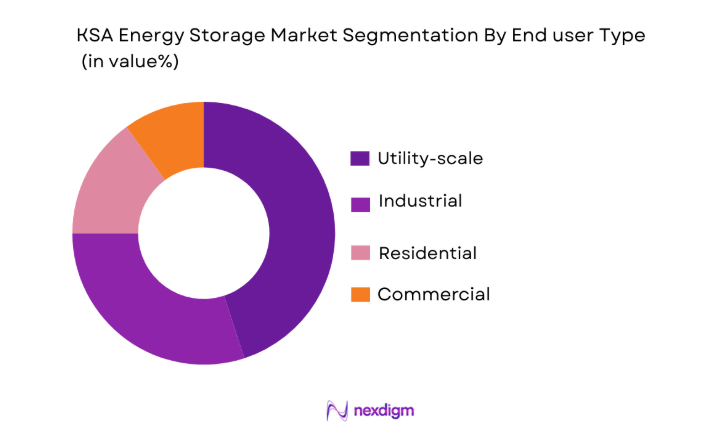
The KSA energy storage market is segmented by end-user into industrial, residential, commercial, and utility-scale sectors. Among these, the utility-scale sector commands the largest market share due to the significant investments in large-scale energy storage projects aimed at stabilizing the national grid. Saudi Arabia’s national utility companies are increasingly deploying energy storage solutions to integrate renewable energy sources such as solar and wind power, ensuring grid stability and reliable power supply. The government’s commitment to reducing its reliance on oil and boosting clean energy production has led to an upsurge in utility-scale energy storage projects, cementing its dominant position in the market.
Competitive Landscape
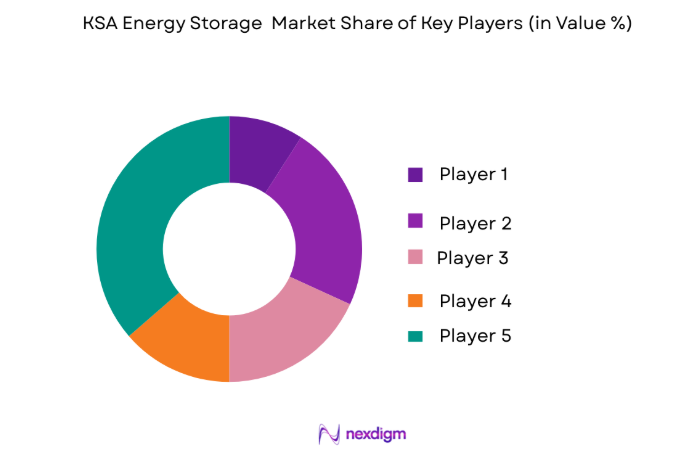
The KSA energy storage market is becoming increasingly competitive as both domestic and international players seek to capitalize on the growing demand for energy storage solutions. The market is witnessing consolidation as major players partner with government bodies and utilities to implement large-scale projects, with many companies focusing on technological innovations, cost reductions, and efficient integration of renewable energy. The market is also driven by strong policy support from the Saudi government, providing opportunities for players to expand their presence in the Kingdom.
| Company Name | Establishment Year | Headquarters | Technology Focus | Market Reach | Key Products | Revenue (USD) |
| ACWA Power | 2000 | Riyadh, Saudi Arabia | ~ | ~ | ~ | ~ |
| Schneider Electric | 1836 | Rueil-Malmaison, France | ~ | ~ | ~ | ~ |
| LG Chem | 1947 | Seoul, South Korea | ~ | ~ | ~ | ~ |
| Siemens Energy | 2020 | Munich, Germany | ~ | ~ | ~ | ~ |
| Tesla | 2003 | Palo Alto, USA | ~ | ~ | ~ | ~ |
KSA Energy Storage Market Analysis
Growth Drivers
Government Investments in Renewable Energy Projects:
Saudi Arabia’s Vision 2030 and its ambitious plans for energy diversification are major growth drivers for the energy storage market. The government is making substantial investments in renewable energy projects, particularly in solar power, which has driven the demand for storage solutions to stabilize the grid. As solar energy production fluctuates throughout the day, energy storage systems allow for efficient energy capture and storage during peak sunlight hours, ensuring a steady supply when solar generation is low. The government’s commitment to achieving 50% of its energy from renewable sources by 2030 has accelerated the adoption of energy storage technologies. This creates an expansive market for both utility-scale and residential energy storage solutions, providing a foundation for growth. Furthermore, Saudi Arabia’s investment in green hydrogen production, which is closely tied to renewable energy and storage, further supports the energy storage market’s expansion. Government incentives and funding for clean energy initiatives are expected to drive further technological advancements and bring down costs, making energy storage more accessible for various sectors.
Technological Advancements in Energy Storage Systems:
Another key driver of the KSA energy storage market is the continuous advancements in battery technology, particularly in lithium-ion and flow battery systems. Innovations in battery chemistry, efficiency, and lifecycle have improved the performance of energy storage systems, reducing costs and enhancing energy storage capacity. Saudi Arabia is leveraging these advancements to implement more efficient, large-scale energy storage solutions that support the integration of intermittent renewable energy sources like solar and wind into the national grid. The decreasing costs of energy storage systems and advancements in energy management systems have made it feasible to deploy energy storage solutions on a wider scale, particularly in utility-scale and residential applications. With advancements in grid integration technologies and smart grid systems, Saudi Arabia is well-positioned to implement cutting-edge storage solutions that maximize energy efficiency and contribute to its sustainability goals. The ongoing research and development in energy storage technologies, including solid-state batteries and hybrid systems, are expected to provide further growth opportunities in the coming years.
Market Challenges
High Initial Capital Investment:
One of the major challenges in the KSA energy storage market is the high upfront cost of installing energy storage systems, particularly for large-scale utility and industrial applications. While the long-term benefits of energy storage, such as cost savings and grid stabilization, are well established, the initial capital expenditure required for purchasing, installing, and maintaining energy storage systems remains a significant barrier for many potential customers. For residential and smaller-scale commercial applications, the cost of energy storage systems, particularly lithium-ion batteries, can be prohibitively high, hindering broader adoption. Despite government incentives and financing options, the high initial cost remains a deterrent for many sectors, especially in less urbanized areas where energy storage adoption has been slower. Although the cost of energy storage systems is decreasing over time, the high capital required for large-scale storage projects continues to pose challenges to widespread adoption.
Regulatory Hurdles and Market Barriers:
Another challenge faced by the KSA energy storage market is the regulatory framework surrounding energy storage projects, which can slow down the implementation of large-scale energy storage systems. Despite the government’s clear push for renewable energy adoption, regulatory and policy barriers, such as lengthy approval processes, grid integration challenges, and unclear standards for energy storage systems, can cause delays and increase costs. Furthermore, the lack of comprehensive market structures for the trade of stored energy and regulatory uncertainty regarding energy storage compensation models present challenges for investors and developers. While the Saudi government is making strides in developing supportive policies, the regulatory landscape for energy storage remains fragmented, and efforts are needed to create a more streamlined and efficient framework that encourages innovation and investment in the sector.
Opportunities
Expansion of Off-Grid and Remote Area Energy Storage Solutions:
Saudi Arabia’s vast rural areas and remote regions, which are not connected to the national grid, represent a significant opportunity for energy storage solutions. As the country continues to invest in energy infrastructure, off-grid solar power systems integrated with energy storage are emerging as a cost-effective solution for rural electrification. By combining renewable energy generation with energy storage, off-grid systems provide reliable, sustainable power to remote areas, reducing dependence on traditional, expensive diesel generators. These solutions also contribute to Saudi Arabia’s sustainability goals by reducing carbon emissions and improving energy access in underserved regions. The demand for off-grid energy storage systems in Saudi Arabia is expected to grow as the government pushes for greater rural electrification and as the costs of energy storage technologies continue to decrease.
Integration of Energy Storage with Electric Vehicles:
With the growing global interest in electric vehicles (EVs), there is a significant opportunity for energy storage technologies to be integrated with EV infrastructure in Saudi Arabia. As the Kingdom works to diversify its energy mix and reduce its carbon footprint, integrating energy storage solutions with EV charging stations and fleet management systems will play a key role in balancing electricity demand. Energy storage systems can store excess power during off-peak hours and release it during peak demand periods, reducing strain on the grid and promoting energy efficiency. Additionally, the deployment of energy storage systems in EV infrastructure can support the growth of the electric vehicle market by enhancing the reliability and capacity of charging stations. As the government invests in EV initiatives and the growth of electric vehicles continues, the integration of energy storage with EV infrastructure offers promising opportunities for both residential and commercial sectors.
Future Outlook
The KSA energy storage market is poised for steady growth in the next five years, with technological advancements, government support, and increasing demand for renewable energy storage driving the market forward. As Saudi Arabia continues to diversify its energy sources and integrate renewable energy into its grid, the need for reliable and cost-effective energy storage solutions will become more critical. Technological advancements in battery storage and energy management systems will contribute to a reduction in costs and an increase in efficiency, making energy storage more accessible to a broader range of consumers. The government’s Vision 2030 goals and renewable energy targets will continue to support the adoption of energy storage solutions, particularly in the utility and industrial sectors. Additionally, the increasing focus on rural electrification and off-grid energy storage solutions presents a significant opportunity for market expansion. As the Kingdom seeks to reduce its dependence on fossil fuels and enhance energy security, the energy storage market is expected to experience sustained growth.
Major Players
- ACWA Power
- Schneider Electric
- LG Chem
- Siemens Energy
- Tesla
- Envision Energy
- Vestas
- Huawei Technologies
- Fluence Energy
- ABB
- GE Renewable Energy
- First Solar
- Saft Batteries
- BYD Company
- SunPower
Key Target Audience
- Investments and venture capitalist firms
- Government and regulatory bodies
- Energy utilities
- Renewable energy developers
- Independent power producers
- Energy storage manufacturers
- Industrial and commercial energy consumers
- Large-scale residential consumers
Research Methodology
Step 1: Identification of Key Variables
The first step involves identifying the key variables that influence the KSA energy storage market, including technological advancements, government policies, market drivers, and challenges.
Step 2: Market Analysis and Construction
A comprehensive analysis is conducted to construct the market size, market segmentation, and identify key trends, with data sourced from both primary and secondary research.
Step 3: Hypothesis Validation and Expert Consultation
The market hypotheses are validated by consulting with industry experts, stakeholders, and conducting surveys to ensure that market dynamics are accurately captured.
Step 4: Research Synthesis and Final Output
The final output synthesizes all data and insights gathered, ensuring the accuracy of the market report and aligning it with industry standards and emerging trends.

- Executive Summary
- Research Methodology (Definitions, Scope, Industry Assumptions, Market Sizing Approach, Primary & Secondary Research Framework, Data Collection & Verification Protocol, Analytic Models & Forecast Methodology, Limitations & Research Validity Checks)

- Market Definition and Scope
- Value Chain & Stakeholder Ecosystem
- Regulatory / Certification Landscape
- Sector Dynamics Affecting Demand

- Growth Drivers
Government Initiatives and Incentives
Technological Advancements in Battery Storage
Increase in Renewable Energy Adoption - Market Challenges
High Initial Investment Costs
Limited Local Manufacturing Capabilities
Technological Limitations and Efficiency Concerns - Market Opportunities
Growing Demand for Grid Stabilization Solutions
Rural Electrification Projects
Advancements in Energy Management Systems - Trends
Rise in Battery Recycling Initiatives
Integration with Smart Grids
Shift Towards Modular and Scalable Systems - Government Regulations
- SWOT Analysis of Key Competitors

- By Market Value, 2020-2025
- By Installed Units, 2020-2025
- By Average System Price, 2020-2025
- By System Complexity Tier, 2020-2025

- By System Type (In Value%)
Lithium-ion Batteries
Lead-acid Batteries
Flow Batteries
Sodium-sulfur Batteries
Solid-state Batteries - By Platform Type (In Value%)
Grid-connected Energy Storage
Off-grid Energy Storage
Residential Energy Storage
Commercial Energy Storage
Utility-scale Energy Storage - By Fitment Type (In Value%)
On-premise Solutions
Cloud-based Solutions
Hybrid Solutions
Modular Solutions
Integrated Solutions - By EndUser Segment (In Value%)
Energy Utilities
Industrial Sector
Commercial Sector
Residential Sector

- Market Share Analysis
- CrossComparison Parameters (System Type, Platform Type, Procurement Channel, EndUser Segment, Fitment Type)
- SWOT Analysis of Key Competitors
- Pricing & Procurement Analysis
- Porter’s Five Forces
- Key Players
National Grid SA
ACWA Power
Al-Fanar
First Solar
JinkoSolar
Schneider Electric
Siemens AG
Samsung SDI
LG Chem
Tesla Inc.
ABB
General Electric
Vestas
Envision Energy
Huawei Technologies

- Demand for Energy Storage in Renewable Integration
- Government’s Role in Policy Making
- Industrial Sector’s Drive for Energy Efficiency
- Commercial Sector’s Focus on Cost Reduction

- Forecast Market Value, 2026-2035
- Forecast Installed Units, 2026-2035
- Price Forecast by System Tier, 2026-2035
- Future Demand by Platform, 2026-2035


 Request a Sample
 Ask for Customization
 Get a Quote
 Enquire Now