

 Download PDF
 Download PDF
Market Overview
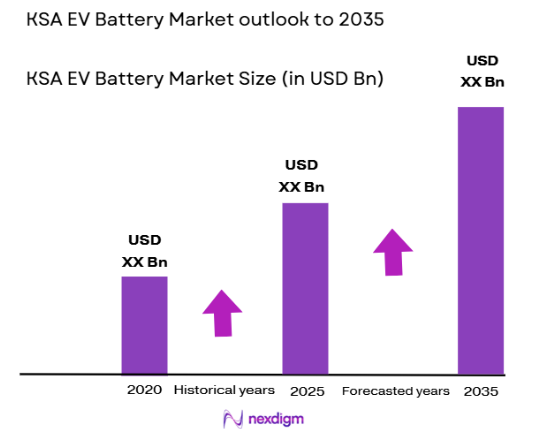
The KSA EV Battery market is expected to witness strong growth, driven by the rising demand for electric vehicles (EVs) in Saudi Arabia. This growth is primarily due to the government’s focus on sustainability and reducing carbon emissions, along with various incentives for EV adoption. As of a recent historical assessment, the market size is expected to be valued at USD ~ billion, with significant investments in EV infrastructure, battery technology, and charging stations. The market’s growth is supported by both local and international players seeking to capitalize on the expanding EV ecosystem in the region.
The market in Saudi Arabia is dominated by major cities such as Riyadh and Jeddah, which are at the forefront of EV adoption due to their robust infrastructure and government support. Riyadh, being the capital, plays a pivotal role in driving policies that promote clean energy, while Jeddah’s strategic location as a key economic hub enhances its importance in the EV supply chain. Additionally, these cities benefit from growing public awareness of environmental issues and a shift towards sustainable mobility solutions, making them key drivers of EV battery demand in the country.
Market Segmentation
By Product Type
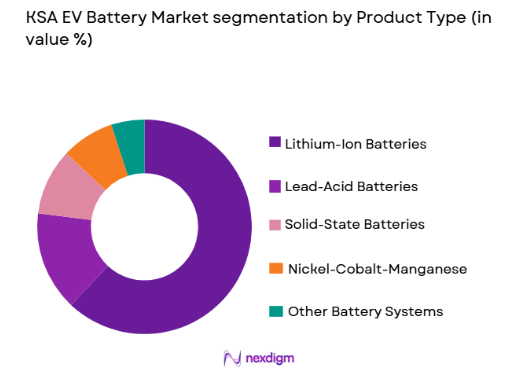
The KSA EV Battery market is segmented by product type into lithium-ion batteries, lead-acid batteries, solid-state batteries, nickel-cobalt-manganese (NCM) batteries, and other battery systems. Recently, lithium-ion batteries have a dominant market share due to factors such as superior performance, longer lifespan, and high energy density, which make them ideal for use in electric vehicles. The extensive research and development in lithium-ion technology have also led to reduced costs, making it more affordable for consumers and businesses alike. Furthermore, lithium-ion batteries have strong brand presence in the market, with established infrastructure for manufacturing and distribution, further solidifying their market dominance.
By Platform Type
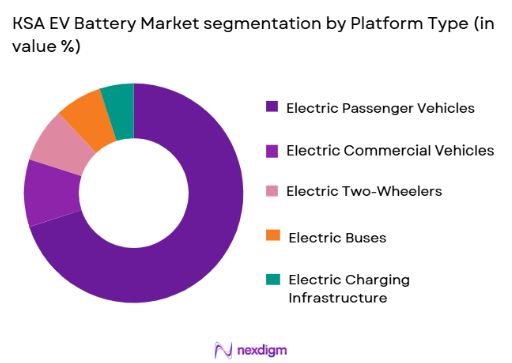
The KSA EV Battery market is segmented by platform type into electric passenger vehicles, electric commercial vehicles, electric two-wheelers, electric buses, and electric charging infrastructure. Recently, electric passenger vehicles have dominated the market share due to the increasing adoption of electric cars among consumers. Factors such as government incentives, environmental concerns, and a growing network of charging stations have led to a rise in consumer demand for EVs. The availability of a variety of affordable electric passenger vehicles with improved range and performance has also fueled this growth. Additionally, the growing interest in zero-emission mobility options is driving the adoption of electric vehicles in the country.
Competitive Landscape
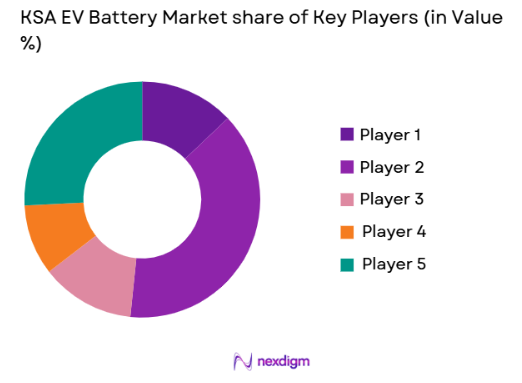
The KSA EV Battery market is highly competitive, with both local and international players vying for market share. The market is seeing significant consolidation, with major players investing heavily in battery technology, manufacturing plants, and infrastructure development to cater to the rising demand for electric vehicles. The influence of these players is critical in shaping the market dynamics, as they push for advancements in battery efficiency and cost reductions. Leading players are collaborating with governments to secure long-term contracts and develop an extensive charging network, further strengthening their market position.
| Company Name | Establishment Year | Headquarters | Technology Focus | Market Reach | Key Products | Revenue (USD billion) | Additional Parameter |
| LG Chem | 1947 | Seoul, South Korea | ~ | ~ | ~ | ~ | ~ |
| Panasonic Corporation | 1918 | Osaka, Japan | ~ | ~ | ~ | ~ | ~ |
| BYD Company | 1995 | Shenzhen, China | ~ | ~ | ~ | ~ | ~ |
| CATL | 2011 | Ningde, China | ~ | ~ | ~ | ~ | ~ |
| SK Innovation | 1962 | Seoul, South Korea | ~ | ~ | ~ | ~ | ~ |
KSA EV Battery Market Analysis
Growth Drivers
Government Support for Sustainable Mobility
The Saudi Arabian government’s strategic initiatives to diversify its economy and reduce dependence on fossil fuels have led to an increased focus on sustainable mobility. As part of its Vision 2030, the government is incentivizing electric vehicle adoption and providing subsidies for EV battery infrastructure. This includes the establishment of electric vehicle charging stations and supporting the local manufacturing of EV batteries. The government’s investment in clean energy technologies is expected to boost the demand for EV batteries in the long term. The favorable policy environment, along with ongoing government commitments to green energy, is encouraging local and international players to invest in the market, driving its growth further. With various stakeholders and government agencies working to enhance the EV ecosystem, the KSA EV battery market is set for significant growth in the coming years.
Technological Advancements in Battery Efficiency
Another significant growth driver in the KSA EV battery market is the continuous technological advancements in battery efficiency. Manufacturers are investing heavily in research and development to enhance battery energy density, improve charging times, and extend the battery lifespan. The adoption of lithium-ion technology in electric vehicles is one of the key contributors to market growth. Furthermore, advancements in solid-state batteries and other next-generation battery technologies offer promising alternatives for EVs, which could accelerate the transition towards electric mobility. With global demand for high-performance, cost-effective batteries increasing, KSA’s EV battery market stands to benefit from these advancements. The increasing efficiency of EV batteries also helps lower operational costs for consumers, making EV adoption more attractive, thus contributing to the market’s overall growth.
Market Challenges
High Upfront Cost of EV Batteries
One of the major challenges faced by the KSA EV battery market is the high upfront cost of EV batteries. While prices have been declining steadily over the past decade, they remain relatively high compared to traditional internal combustion engine (ICE) vehicles. The cost of raw materials such as lithium, cobalt, and nickel, which are essential for battery production, continues to rise, affecting the overall cost of batteries. As a result, consumers may find EVs less affordable despite the benefits of long-term cost savings. For many consumers, the initial cost of purchasing an electric vehicle with an EV battery remains a significant barrier to entry. While government subsidies and incentives are helping to alleviate some of these costs, the high upfront cost of EV batteries still poses a challenge for widespread EV adoption in Saudi Arabia.
Supply Chain Constraints and Raw Material Shortages
Another challenge facing the KSA EV battery market is supply chain constraints and raw material shortages. The increasing demand for electric vehicles, coupled with global supply chain disruptions, has led to a shortage of essential raw materials like lithium, cobalt, and nickel. This shortage has raised concerns over the ability to meet the growing demand for EV batteries, leading to price fluctuations and supply delays. Furthermore, geopolitical tensions and trade restrictions could exacerbate these issues, affecting the market’s ability to scale quickly. Despite efforts to localize the supply chain and increase production capacity, the KSA EV battery market must address these challenges to ensure a sustainable and cost-effective supply of EV batteries in the long term.
Opportunities
Battery Recycling and Reuse Technologies
With the growing demand for electric vehicles, one of the major opportunities in the KSA EV battery market lies in the development of battery recycling and reuse technologies. As EV batteries have a finite lifespan, efficient recycling and repurposing of used batteries can significantly reduce the cost of battery production and alleviate some of the supply chain challenges associated with raw material shortages. By investing in battery recycling infrastructure and technologies, Saudi Arabia can not only reduce its dependence on imported materials but also contribute to the global push for a circular economy in the EV sector. Additionally, the development of second-life applications for EV batteries, such as energy storage systems, can help create new business opportunities and further support the growth of the EV battery market in the region.
Partnerships Between Automakers and Battery Manufacturers
Another opportunity in the KSA EV battery market is the growing trend of partnerships between automakers and battery manufacturers. These collaborations allow for the sharing of technological expertise and resources to accelerate the development of more efficient and affordable batteries. Automakers in Saudi Arabia are increasingly working with battery manufacturers to develop batteries tailored to local conditions, improving performance and reducing costs. Moreover, these partnerships can also help overcome supply chain issues, as manufacturers can secure long-term contracts for raw materials and guarantee the availability of batteries. By fostering such collaborations, the KSA EV battery market can strengthen its position in the global EV ecosystem and boost local innovation.
Future Outlook
The KSA EV battery market is poised for strong growth, with increasing government support for sustainable mobility, advancements in battery technology, and the expansion of EV infrastructure. Technological innovations in battery efficiency, coupled with a growing push for environmental sustainability, will drive demand for electric vehicles and their batteries. Additionally, the KSA market is expected to see a rise in the number of local players entering the market, fostering competition and technological advancements. However, challenges related to supply chain disruptions, raw material shortages, and high upfront costs will need to be addressed for continued growth.
Major Players
- LG Chem
- Panasonic Corporation
- BYD Company
- CATL
- SK Innovation
- Samsung SDI
- Tesla
- ABB Group
- Siemens AG
- Bosch Group
- Johnson Controls
- AESC
- Toshiba Corporation
- Hitachi Chemical
- VARTA AG
Key Target Audience
- Investments and venture capitalist firms
- Government and regulatory bodies
- Automobile manufacturers
- Energy companies
- EV charging infrastructure developers
- Electric vehicle fleet operators
- Public transportation agencies
- Environmental organizations
Research Methodology
Step 1: Identification of Key Variables
This step involves identifying the critical variables and factors that drive the KSA EV battery market. These include government policies, technological advancements, consumer preferences, and raw material availability.
Step 2: Market Analysis and Construction
We collect data from various sources, including industry reports, company data, and market trends. This helps us build a comprehensive market model for the EV battery market in Saudi Arabia.
Step 3: Hypothesis Validation and Expert Consultation
This step involves validating our initial hypotheses with industry experts and stakeholders, ensuring that the data and market assumptions align with real-world insights.
Step 4: Research Synthesis and Final Output
After analyzing the data, we synthesize the findings into a final market report, providing clear and actionable insights into the KSA EV battery market, with a focus on future trends and opportunities.

- Executive Summary
- Research Methodology (Definitions, Scope, Industry Assumptions, Market Sizing Approach, Primary & Secondary Research Framework, Data Collection & Verification Protocol, Analytic Models & Forecast Methodology, Limitations & Research Validity Checks)

- Market Definition and Scope
- Value Chain & Stakeholder Ecosystem
- Regulatory / Certification Landscape
- Sector Dynamics Affecting Demand
- Strategic Initiatives & Infrastructure Growth

- Growth Drivers
Government incentives for EV adoption
Expansion of charging infrastructure
Technological advancements in battery efficiency
Environmental regulations and sustainability goals
Growing awareness and demand for EVs - Market Challenges
High upfront costs of EV batteries
Battery life and degradation issues
Limited availability of raw materials
Supply chain challenges
Consumer resistance to EV adoption - Market Opportunities
Advancements in battery recycling technology
Emerging demand for energy storage solutions
Growing partnerships between automakers and battery manufacturers - Trends
Increase in the number of charging stations
Shift towards battery leasing models
Growth in electric two-wheelers
Investment in solid-state battery technologies
Rising focus on battery safety and standards - Government Regulations & Defense Policy
Incentives for EV production
Emission reduction regulations
Support for local EV manufacturing - SWOT Analysis
- Stakeholder and Ecosystem Analysis
- Porter’s Five Forces Analysis
- Competition Intensity and Ecosystem Mapping

- By Market Value, 2020-2025
- By Installed Units, 2020-2025
- By Average System Price, 2020-2025
- By System Complexity Tier, 2020-2025

- By System Type (In Value%)
Lithium-Ion Batteries
Lead-Acid Batteries
Solid-State Batteries
Nickel-Cobalt-Manganese (NCM) Batteries
Other Battery Systems - By Platform Type (In Value%)
Electric Passenger Vehicles
Electric Commercial Vehicles
Electric Two-Wheelers
Electric Buses
Electric Charging Infrastructure - By Fitment Type (In Value%)
Original Equipment Manufacturer (OEM)
Aftermarket Solutions
Recycled Batteries
Modular Systems
Integrated Solutions - By EndUser Segment (In Value%)
Automobile Manufacturers
EV Charging Stations
Logistics and Transportation
Government & Public Sector
Consumer EV Owners - By Procurement Channel (In Value%)
Direct Procurement
Third-Party Suppliers
Government Tenders
OEM Partnerships
Distributor Networks - By Material / Technology (In Value%)
Lithium
Cobalt
Nickel
Graphite
Solid-State Technology

- Market structure and competitive positioning
- Market share snapshot of major players
- Cross Comparison Parameters (System Type, Platform Type, Procurement Channel, End User Segment, Fitment Type, Material/Technology, Price Sensitivity, Production Capacity, R&D Investment, Supply Chain Efficiency)
- SWOT Analysis of Key Players
- Pricing & Procurement Analysis
- Key Players
LG Chem
Samsung SDI
Panasonic Corporation
BYD Company
CATL
SK Innovation
AESC
Toshiba Corporation
Hitachi Chemical
Parker Hannifin Corporation
Fuji Electric
Saft Batteries
Mitsubishi Electric
VARTA AG
Guoxuan

- Increasing consumer shift towards electric vehicles
- Government-led initiatives to promote EV adoption
- Automaker investments in EV technology
- Growth in electric fleet operations

- Forecast Market Value, 2026-2035
- Forecast Installed Units, 2026-2035
- Price Forecast by System Tier, 2026-2035
- Future Demand by Platform, 2026-2035


 Request a Sample
 Ask for Customization
 Get a Quote
 Enquire Now