

 Download PDF
 Download PDF
Market Overview
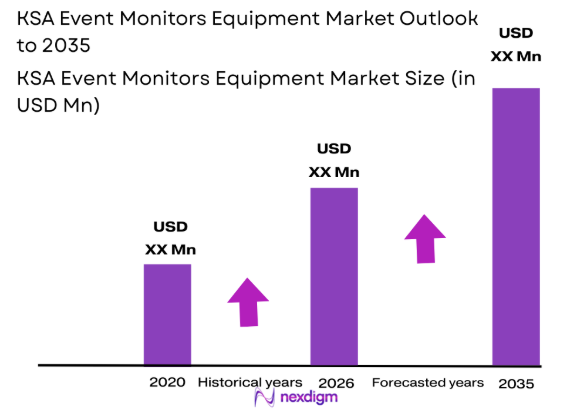
The KSA Event Monitors Equipment Market has experienced robust growth driven by increasing demand in sectors such as healthcare, sports, and government. In particular, the healthcare sector, with the rising adoption of remote patient monitoring, is a primary contributor to market growth. As of the latest assessment, the market size is projected at USD ~ million, fueled by advancements in wireless technologies and the need for real-time data analytics in critical environments.
Dominant regions within Saudi Arabia include major urban centers such as Riyadh, Jeddah, and Dammam, where the infrastructure for both healthcare and event management technologies is rapidly expanding. These cities benefit from significant investments in healthcare modernization and government-backed initiatives. Furthermore, the growing trend of smart city developments in these regions is promoting the integration of event monitoring systems in both public safety and healthcare applications.
Market Segmentation
By Product Type
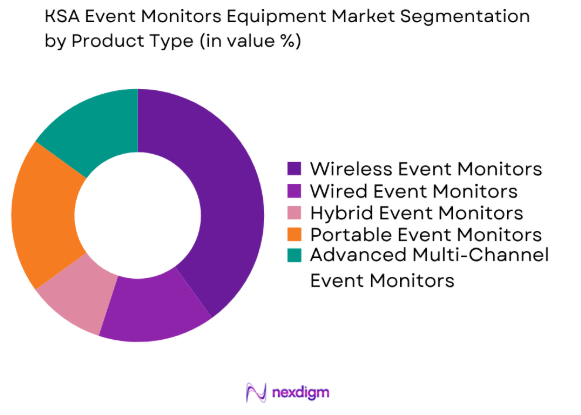
The KSA Event Monitors Equipment market is segmented by product type into wireless event monitors, wired event monitors, hybrid event monitors, portable event monitors, and advanced multi-channel event monitors. Recently, wireless event monitors have dominated the market share due to factors such as ease of installation, real-time data transmission, and growing demand for mobile health applications in both hospitals and personal settings.
By End-User Segment
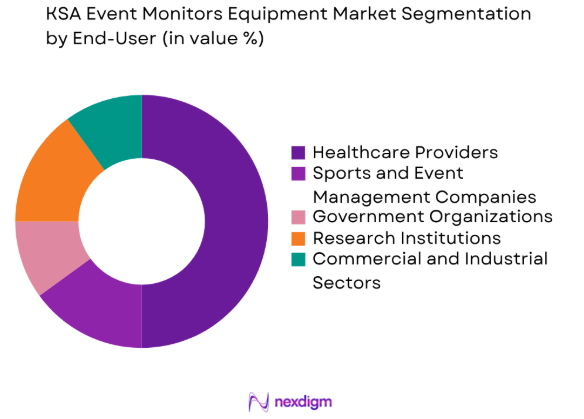
The KSA Event Monitors Equipment market is segmented by end-user into healthcare providers, sports and event management companies, government organizations, research institutions, and commercial sectors. Healthcare providers dominate the market due to increasing adoption of event monitoring devices for remote patient monitoring, diagnostics, and personalized care solutions.
Competitive Landscape
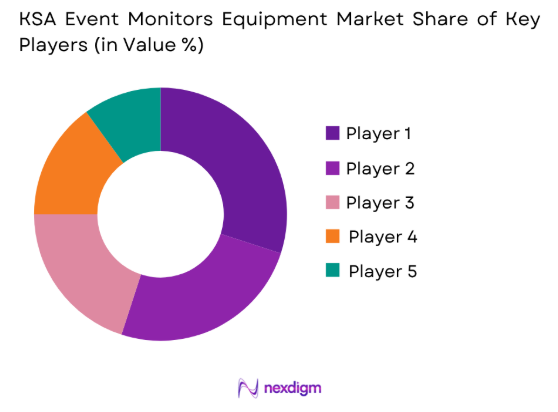
The competitive landscape of the KSA Event Monitors Equipment market is marked by the presence of both global and regional players. Consolidation in the market is occurring through strategic partnerships, mergers, and acquisitions, allowing companies to expand their market reach and enhance their technological capabilities. Major players in the market include medical device manufacturers, technology firms specializing in wireless communication, and regional distributors.
| Company Name | Establishment Year | Headquarters | Technology Focus | Market Reach | Key Products | Revenue (USD) | Additional Market-Specific Parameter |
| Medtronic | 1949 | Dublin, Ireland | ~ | ~ | ~ | ~ | ~ |
| Philips Healthcare | 1891 | Amsterdam, Netherlands | ~ | ~ | ~ | ~ | ~ |
| GE Healthcare | 1892 | Chicago, USA | ~ | ~ | ~ | ~ | ~ |
| Abbott Laboratories | 1888 | Chicago, USA | ~ | ~ | ~ | ~ | ~ |
| Biotronik | 1963 | Berlin, Germany | ~ | ~ | ~ | ~ | ~ |
KSA Event Monitors Equipment Market Analysis
Growth Drivers
Technological Advancements in Monitoring Systems
The growth of the KSA Event Monitors Equipment market is primarily driven by advancements in wireless and cloud-based systems, enabling real-time data transmission and improving patient monitoring efficiency in healthcare settings. The integration of artificial intelligence and machine learning enhances predictive analytics, leading to better decision-making. These technological innovations, coupled with the rising demand for remote patient care, are accelerating market expansion. Additionally, the healthcare sector’s shift towards telemedicine and remote health monitoring solutions is creating significant opportunities for growth. As the need for remote monitoring continues to grow, the adoption of advanced event monitoring systems is expected to increase across various sectors in Saudi Arabia.
Government Initiatives and Healthcare Expansion
Government-backed initiatives, particularly the Vision 2030 program, are fueling significant investments in Saudi Arabia’s healthcare infrastructure. This includes the development of smart healthcare systems, digital health monitoring solutions, and the integration of advanced event monitoring devices in hospitals and clinics. The Kingdom’s emphasis on enhancing public healthcare services and expanding remote patient care is driving the demand for event monitoring equipment. These efforts are not only benefiting the healthcare sector but are also promoting the adoption of event monitoring technology in other sectors, such as sports and government agencies. As a result, these initiatives are creating a broader market for event monitoring systems and fostering widespread technological integration across industries.
Market Challenges
High Initial Costs of Adoption
Despite the growing demand for event monitoring systems, the high initial cost remains a major barrier to widespread adoption, particularly in budget-limited environments like smaller healthcare facilities or government organizations. Advanced systems, such as multi-channel or wireless models, often require substantial capital investment for both equipment and infrastructure. This significant upfront cost can delay purchasing decisions, especially for organizations with limited financial resources, which hampers market growth. Additionally, ongoing maintenance and operational costs associated with these systems can further strain budgets and create financial concerns. As a result, many organizations hesitate to adopt event monitoring technology, delaying its full integration and preventing broader market expansion. Addressing these cost challenges is essential for unlocking greater adoption of these systems.
Integration with Existing Infrastructure
A significant challenge in the KSA Event Monitors Equipment market is the difficulty of integrating new monitoring systems with existing healthcare infrastructure, often outdated or incompatible with modern technologies. This issue is particularly prevalent in older hospitals and clinics, where legacy systems cannot support the advanced features of new event monitoring devices. Upgrading existing infrastructure to accommodate these systems can be both costly and complex, deterring many organizations from adopting the latest technologies. Additionally, the need for extensive training and technical support to ensure smooth integration adds to the challenge, further delaying the implementation of advanced event monitoring solutions. Overcoming these integration hurdles is essential for driving market growth and adoption.
Market Opportunities
Expansion of Telemedicine and Remote Patient Monitoring
The rise of telemedicine and remote patient monitoring offers a significant opportunity for the KSA Event Monitors Equipment market. As healthcare providers and patients increasingly adopt remote healthcare services, the demand for event monitoring systems that support these services continues to grow. Event monitors are essential for tracking patient vitals in real time, making them a critical component of telemedicine applications. Moreover, the growing use of mobile health applications is opening new avenues for innovation, allowing event monitor manufacturers to develop and expand their product offerings. This shift towards remote healthcare solutions is driving market growth, creating opportunities for manufacturers to meet the evolving demands of the healthcare sector.
Growth of Smart Cities and Infrastructure Development
The development of smart cities in Saudi Arabia presents a unique opportunity for integrating event monitoring systems into urban infrastructure. Initiatives like the King Abdullah Financial District (KAFD) and NEOM are driving demand for real-time event monitoring across public spaces, traffic management, and healthcare services. These smart cities are expected to adopt advanced monitoring solutions to enhance safety, health, and overall urban management. Event monitoring systems will be essential for providing real-time data and overseeing large-scale events, contributing to better city management. This presents a valuable opportunity for market players to expand their offerings and meet the growing demand for monitoring technologies in these innovative urban developments.
Future Outlook
The KSA Event Monitors Equipment market is poised for steady growth over the next five years, driven by continuous advancements in monitoring technologies and increasing adoption in healthcare and government sectors. The integration of AI, IoT, and cloud computing will further enhance the capabilities of event monitoring systems, making them more efficient and accessible. Moreover, with substantial government investments in healthcare and infrastructure projects, the demand for these systems is expected to rise, positioning the market for long-term growth.
Major Players
- Medtronic
- Philips Healthcare
- GE Healthcare
- Abbott Laboratories
- Biotronik
- Honeywell International
- Biotronik
- Boston Scientific
- Siemens Healthineers
- Smiths Medical
- Zoll Medical Corporation
- Nihon Kohden
- Cardiac Science
- Welch Allyn
- Mindray Medical
Key Target Audience
- Investments and venture capitalist firms
- Government and regulatory bodies
- Healthcare providers
- Event management companies
- Research and development institutions
- Military and defense organizations
- Technology integrators
- Commercial and industrial sectors
Research Methodology
Step 1: Identification of Key Variables
This step involves identifying the main market drivers, challenges, and opportunities that affect the KSA Event Monitors Equipment market. Key variables such as technological advancements, government policies, and economic factors are identified to understand their impact on market growth.
Step 2: Market Analysis and Construction
This step includes the collection of both primary and secondary data to analyze the market structure, size, and trends. Data is collected from reliable sources such as market reports, surveys, and expert consultations to build a comprehensive market model.
Step 3: Hypothesis Validation and Expert Consultation
Once the market model is constructed, hypotheses are tested by consulting with industry experts, stakeholders, and market participants to validate the assumptions and refine the analysis.
Step 4: Research Synthesis and Final Output
The final step involves synthesizing the data and insights gathered during the research process to prepare a final report. This includes the creation of market forecasts, segmentation analysis, and competitive landscape overview.

- Executive Summary
- Research Methodology (Definitions, Scope, Industry Assumptions, Market Sizing Approach, Primary & Secondary Research Framework, Data Collection & Verification Protocol, Analytic Models & Forecast Methodology, Limitations & Research Validity Checks)

- Market Definition and Scope
- Value Chain & Stakeholder Ecosystem
- Regulatory / Certification Landscape
- Sector Dynamics Affecting Demand
- Strategic Initiatives & Infrastructure Growth

- Growth Drivers
Technological Advancements in Monitoring Devices
Government Support for Healthcare Technology
Surging Demand for Remote Monitoring Solutions - Market Challenges
High Initial Investment Costs
Integration with Legacy Systems
Data Security and Privacy Concerns - Market Opportunities
Rising Adoption of Telemedicine
Increase in Sports and Fitness Applications
Government Initiatives in Smart Cities - Trends
AI-Powered Event Monitoring
Miniaturization of Event Monitoring Devices
Customization and Personalization in Healthcare Monitoring - Government Regulations
- SWOT Analysis of Key Competitors
- Porter’s Five Forces

- By Market Value, 2020-2025
- By Installed Units, 2020-2025
- By Average System Price, 2020-2025
- By System Complexity Tier, 2020-2025

- By System Type (In Value%)
Wireless Event Monitors
Wired Event Monitors
Hybrid Event Monitors
Advanced Multi-Channel Monitors
Single-Channel Event Monitors - By Platform Type (In Value%)
Cloud-Based Platforms
On-Premises Platforms
Hybrid Cloud-On-Premises Platforms
Mobile-Based Platforms
Remote Monitoring Platforms - By Fitment Type (In Value%)
Standalone Event Monitors
Integrated Event Monitors
Portable Event Monitors
Fixed Event Monitors
Wearable Event Monitors - By End User Segment (In Value%)
Healthcare Providers
Sports & Event Management Companies
Government & Military Organizations
Research Institutions
Commercial and Industrial Sectors - By Procurement Channel (In Value%)
Direct Sales
Online Retailers
Authorized Distributors
Resellers and Value-Added Dealers
Government Procurement Channels

- Market Share Analysis
- Cross Comparison Parameters (System Type, Platform Type, End-User Segment, Procurement Channel, Regional Distribution)
- SWOT Analysis of Key Competitors
- Pricing & Procurement Analysis
- Key Players
Medtronic
Philips Healthcare
GE Healthcare
Abbott Laboratories
Siemens Healthineers
Honeywell International
Biotronik
Boston Scientific
Johnson & Johnson
Smiths Medical
Welch Allyn
Nihon Kohden
Cardiac Science
Zoll Medical Corporation
Mindray Medical

- Healthcare Providers
- Sports and Fitness Organizations
- Military & Defense Agencies
- Government Bodies

- Forecast Market Value, 2026-2035
- Forecast Installed Units, 2026-2035
- Price Forecast by System Tier, 2026-2035
- Future Demand by Platform, 2026-2035


 Request a Sample
 Ask for Customization
 Get a Quote
 Enquire Now