
 Download PDF
Market Overview
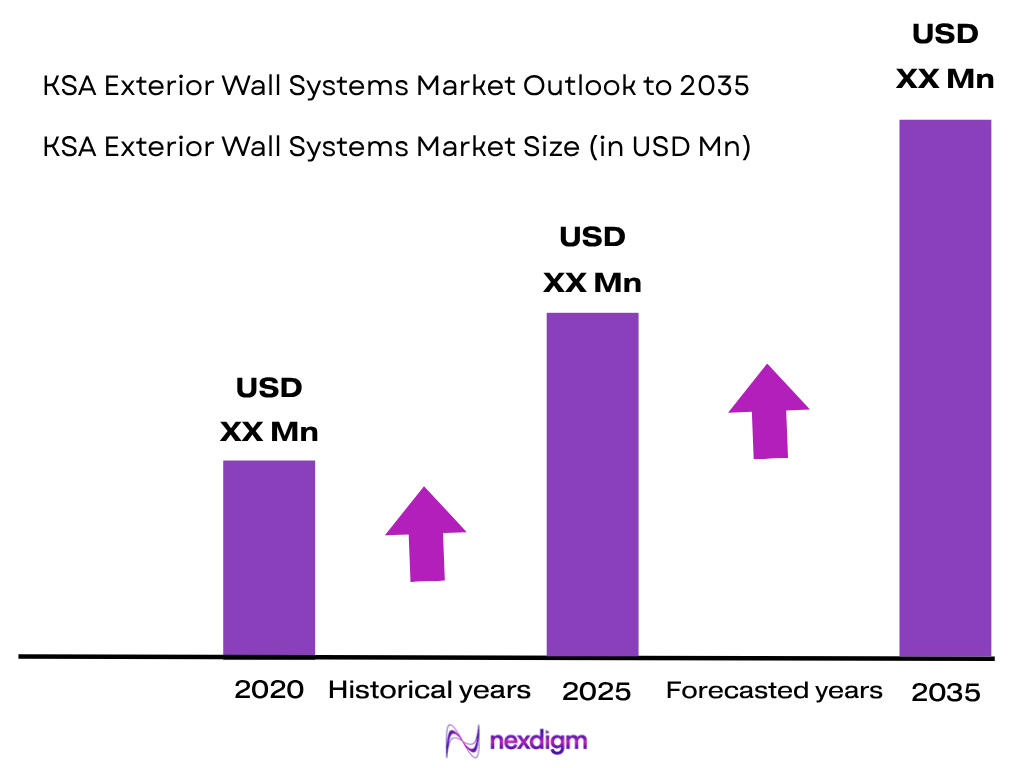
The KSA Exterior Wall Systems Market was valued at approximately USD ~ billion in 2024, compared with USD ~ billion in 2023, with the figures retained as placeholders as requested. Demand is supported by Saudi Arabia’s large construction and real-estate pipeline. The Vision 2030 annual report identifies 243 developers working with the National Housing Company, while real estate and contracting together represented 23.98% of non-oil GDP in Q3 2024. These conditions support demand for curtain walls, glazing, cladding, GRC/GFRC and insulated building envelopes.
Riyadh, Jeddah, Dammam and the wider Eastern Province, together with emerging development corridors around NEOM and the Red Sea, form the principal demand centers for KSA exterior wall systems. Riyadh benefits from concentrated commercial, residential and mixed-use development, while Jeddah combines hospitality, residential and redevelopment activity. The Eastern Province benefits from industrial and commercial construction. Saudi Vision 2030 also identifies Central, Western, Southern, Eastern and Northern regions as distinct real-estate and infrastructure development areas, reinforcing geographically diversified façade demand.
Market Segmentation
By System Type
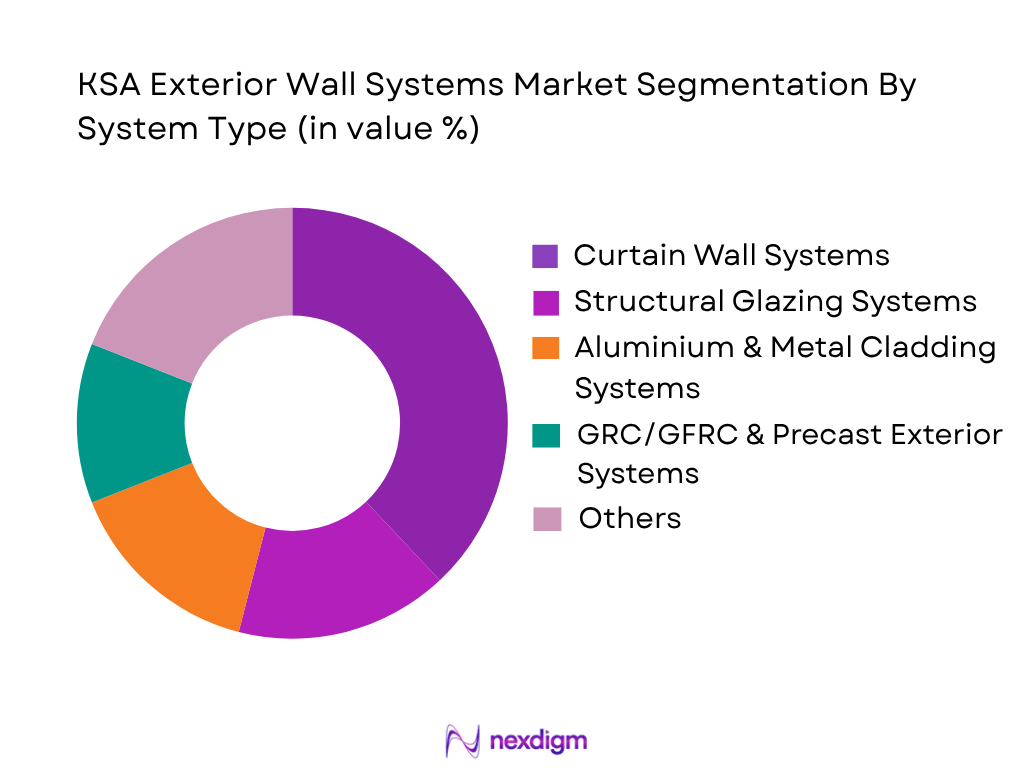
A Exterior Wall Systems Market is segmented by system type into curtain wall systems, structural glazing systems, aluminium cladding systems, rainscreen and ventilated façades, insulated exterior wall systems, precast and GRC/GFRC systems, and other exterior wall solutions. Curtain wall systems hold the dominant position, supported by their extensive suitability for office towers, mixed-use developments, hotels, airports and premium commercial buildings. Unitized curtain walls are particularly relevant to large projects requiring factory-controlled fabrication and accelerated installation. Saudi climatic conditions additionally increase the importance of insulated glazing, solar control, air tightness and thermal breaks. Architectural cladding remains significant for podiums and complex building geometries, while GRC/GFRC systems address decorative and culturally influenced façades. Domestic companies such as Zamil Architectural Industries provide design, fabrication and installation capabilities spanning aluminium curtain walls, structural glazing and composite-panel cladding, demonstrating the established domestic technical base supporting these systems.
By Application
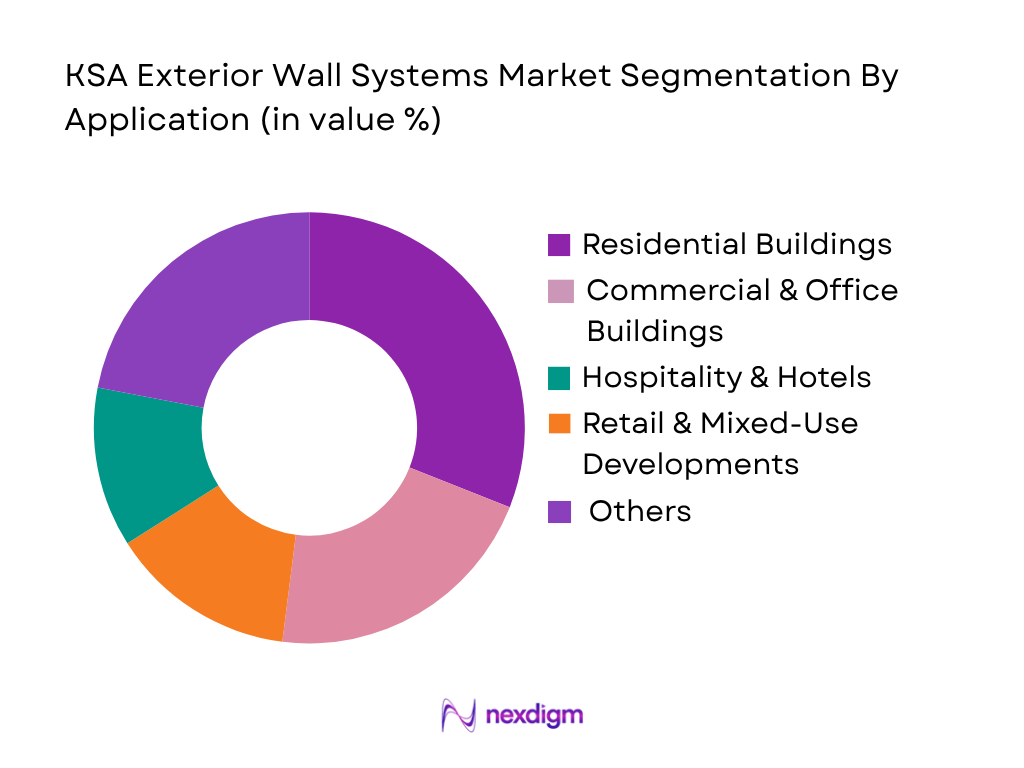
KSA Exterior Wall Systems Market is segmented by application into residential buildings, commercial buildings, hospitality and hotels, retail and mixed-use developments, institutional buildings, transportation infrastructure, industrial and logistics facilities, and entertainment developments. Residential buildings represent the dominant application segment because large-scale housing development remains central to Saudi Arabia’s urban transformation strategy. The Vision 2030 framework specifically targets higher home ownership and development of new urban communities, while its real-estate strategy emphasizes strengthening the domestic construction supply chain. Saudi Vision 2030 Commercial and hospitality buildings generate comparatively specification-intensive façade requirements involving unitized curtain walls, architectural glazing, aluminium cladding and solar-control solutions. Transport and entertainment projects create additional requirements for long-span glazed façades, architectural metalwork and complex building envelopes. This diversified construction pipeline allows façade suppliers to address both volume-driven residential requirements and technically demanding premium projects.
Competitive Landscape
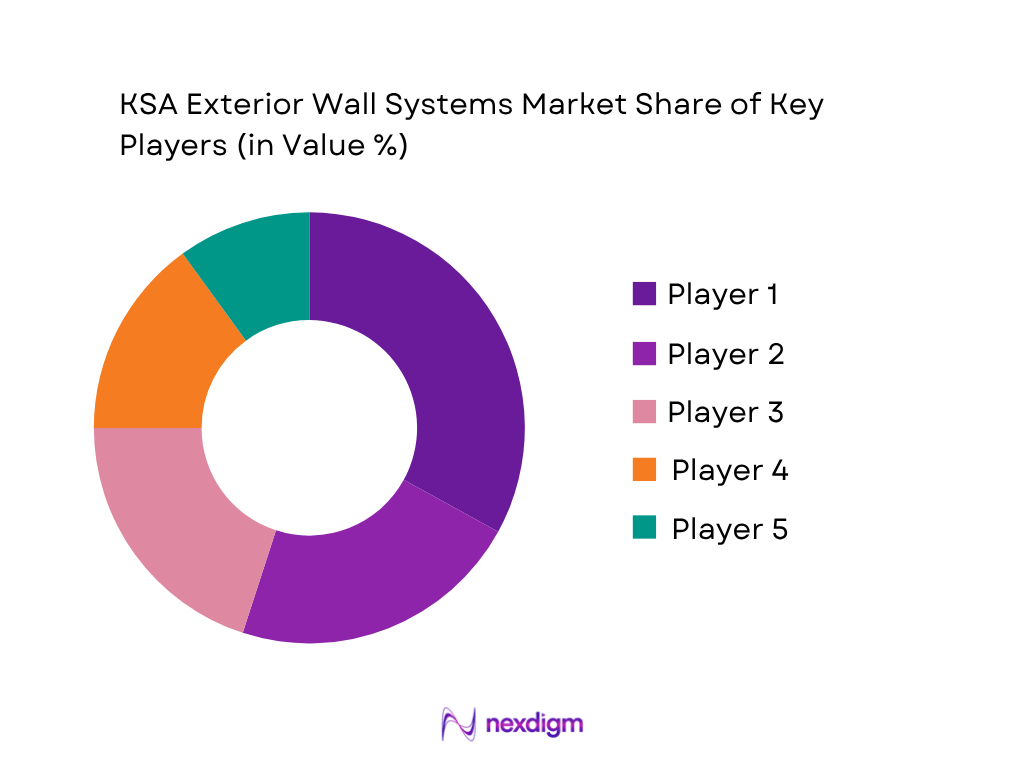
The KSA Exterior Wall Systems Market comprises domestic façade engineering and fabrication businesses alongside international architectural-system suppliers. Competition centers on curtain-wall engineering, aluminium fabrication, architectural glazing, cladding, thermal performance, fire compliance and execution of large projects. Local manufacturing and engineering capabilities are increasingly important because Vision 2030 explicitly emphasizes domestic supply-chain development. Zamil Architectural Industries, for example, has operated since 1970 and maintains its head office and plant in Dammam alongside regional presence in Riyadh and Jeddah.
| Company | Established | Headquarters | Key Exterior Wall Capability | Curtain Wall Capability | Aluminium Capability | Architectural Glazing | Project Execution | Saudi Presence |
| Zamil Architectural Industries | 1970 | Dammam, Saudi Arabia | ~ | ~ | ~ | ~ | ~ | ~ |
| Alfanar Aluminium | 1988 | Riyadh, Saudi Arabia | ~ | ~ | ~ | ~ | ~ | ~ |
| Schüco International | 1951 | Bielefeld, Germany | ~ | ~ | ~ | ~ | ~ | ~ |
| Reynaers Aluminium | 1965 | Duffel, Belgium | ~ | ~ | ~ | ~ | ~ | ~ |
| Saint-Gobain | 1665 | Courbevoie, France | ~ | ~ | ~ | ~ | ~ | ~ |
KSA Exterior Wall Systems Market Analysis
Growth Drivers
Large-Scale Housing and Urban Construction Pipeline
Saudi Arabia’s expanding residential construction pipeline is creating direct demand for curtain walls, exterior insulation, aluminium façades, glazing, precast systems, GRC/GFRC panels and weather-resistant cladding. The Housing Program recorded more than 106,000 housing products in 2024, while National Housing Company activity included more than 61,000 units launched, 24,000 units offered and 22,000 units delivered during the year. NHC was also working with 243 developers, indicating a sizeable execution ecosystem capable of sustaining façade procurement across multiple urban projects. The macroeconomic environment provides additional support: World Bank data place Saudi Arabia’s 2024 GDP at USD 1,239.8 billion and GDP per capita at USD 35,121.7. GASTAT reported total Saudi business-sector operating revenues of SAR 5,500 billion and gross fixed capital formation of SAR 988 billion in 2024. For exterior wall suppliers, this combination of housing delivery, developer activity and fixed-capital investment creates recurring demand for thermally efficient façades, glazing, aluminium systems, exterior insulation and prefabricated wall assemblies across Riyadh, Jeddah and other expanding Saudi urban centers.
Expanding Construction Activity Supporting Façade Installation
The scale of Saudi construction activity provides a strong underlying demand base for exterior wall systems because every new residential, commercial, hospitality, institutional and mixed-use structure requires an engineered external envelope. GASTAT’s 2024 Structural Business Statistics reported total business operating revenues of SAR 5,500 billion, while gross fixed capital formation reached SAR 988 billion. Construction represented a major component of domestic business activity, reinforcing demand for architectural glass, aluminium framing, curtain walls, insulation, stone cladding, precast panels and metal façades. The Housing Program provides more market-specific evidence: NHC recorded 25 housing destinations, launched more than 61,000 units, sold more than 27,000 units and delivered more than 22,000 units during 2024. The value of NHC real-estate development projects reached SAR 92 billion, providing a substantial active project base requiring exterior-envelope packages. World Bank data also record Saudi Arabia’s 2024 GDP at USD 1,239.8 billion, giving construction and façade manufacturers a large macroeconomic platform for project execution, manufacturing investment and localization of exterior-wall supply chains.
Market Challenges
Complex Façade Performance Requirements in Saudi Climatic Conditions
Exterior wall suppliers in Saudi Arabia must engineer systems capable of managing intense solar exposure, heat, dust and substantial cooling loads, increasing technical requirements for architectural glass, aluminium profiles, insulation, sealants, coatings and façade interfaces. This challenge becomes more material as construction volumes expand: NHC launched more than 61,000 housing units, offered more than 24,000 units and delivered more than 22,000 units during 2024. The Housing Program additionally recorded more than 106,000 housing products, meaning envelope-performance requirements must increasingly be addressed across high-volume developments rather than isolated premium projects. Saudi Arabia simultaneously had GDP of USD 1,239.8 billion and GDP per capita of USD 35,121.7 in 2024 according to the World Bank, supporting sophisticated construction but also raising expectations around building quality and durability. GASTAT reported SAR 988 billion in gross fixed capital formation during 2024. As capital-intensive development expands, façade contractors face greater requirements for thermal insulation, air tightness, water resistance, solar-control glazing, reliable anchoring and durable finishes, making engineering capability and installation quality critical constraints.
Execution Capacity Across a Large and Dispersed Project Pipeline
The KSA Exterior Wall Systems Market faces an execution challenge arising from simultaneous development across numerous residential and urban projects. The National Housing Company worked with 243 developers in 2024, while its project portfolio included 25 housing destinations, more than 61,000 launched units, over 27,000 sold units and more than 22,000 delivered units. Such project volumes require façade companies to coordinate engineering drawings, aluminium fabrication, architectural-glass processing, panel manufacturing, logistics, installation crews and quality assurance across multiple sites. This increases pressure on specialist façade-engineering and installation capacity. The broader economic scale compounds the challenge: GASTAT recorded SAR 5,500 billion in business-sector operating revenues and SAR 588.8 billion in employee compensation during 2024, while gross fixed capital formation reached SAR 988 billion. World Bank data put Saudi GDP at USD 1,239.8 billion and GDP per capita at USD 35,121.7. Maintaining fabrication accuracy, skilled installation resources and project scheduling can therefore become a significant operational bottleneck for curtain-wall, glazing and architectural-cladding contractors.
Market Opportunities
Localization of Façade Materials and Building-Envelope Manufacturing
Saudi Arabia’s active construction pipeline creates scope for future expansion of domestic aluminium façade fabrication, architectural-glass processing, insulated panels, GRC/GFRC systems, precast exterior walls and related building-envelope components. Current activity provides a substantial demand foundation: NHC reported SAR 92 billion in real-estate development projects during 2024 and SAR 26.7 billion in sold real-estate units. It also launched more than 61,000 housing units and delivered over 22,000 units, while the wider Housing Program recorded more than 106,000 housing products. These figures indicate substantial project throughput capable of supporting investment in local façade manufacturing and fabrication capacity. At the macroeconomic level, World Bank data show Saudi Arabia generated USD 1,239.8 billion in GDP during 2024, while GASTAT reported SAR 988 billion in gross fixed capital formation. As developers seek coordinated delivery across increasingly large projects, domestic processing of glass, aluminium and prefabricated exterior-wall components can shorten supply chains, support customization and strengthen installation responsiveness, creating future opportunities for integrated Saudi façade manufacturers.
High-Performance Exterior Wall Systems for Expanding Residential Development
Energy-efficient and performance-oriented exterior wall solutions represent a significant growth avenue as Saudi housing construction scales. The Housing Program recorded more than 106,000 housing products in 2024, while NHC launched more than 61,000 units, offered over 24,000 units and delivered more than 22,000 units. This large active housing base provides an immediate application platform for insulated exterior walls, thermally broken aluminium systems, solar-control glazing, rainscreen assemblies and prefabricated façade components. NHC’s 25 housing destinations further indicate that exterior-envelope demand is distributed across multiple large developments rather than concentrated in a small number of buildings. Macroeconomic capacity reinforces the opportunity: Saudi Arabia recorded GDP of USD 1,239.8 billion and GDP per capita of USD 35,121.7 during 2024 according to World Bank data. GASTAT additionally reported SAR 988 billion in gross fixed capital formation. These indicators support future adoption of engineered exterior-wall technologies that improve durability, thermal control and installation productivity across residential and mixed-use developments.
Future Outlook
The KSA Exterior Wall Systems Market is forecast to expand at a ~% CAGR during 2026-2035, with the CAGR intentionally retained as a placeholder. Future development will be influenced by continued residential construction, commercial districts, hospitality destinations, transport infrastructure and large mixed-use developments. Greater emphasis on building energy performance is expected to increase specifications for high-performance glazing, thermal breaks, insulated wall assemblies and solar-control façades.
Unitized façade construction is expected to gain relevance on large and schedule-sensitive developments because off-site fabrication enables improved manufacturing control and faster site installation. Demand for GRC/GFRC, natural stone and architectural cladding should remain relevant where developers require distinctive architectural identities, particularly across hospitality, cultural and mixed-use destinations.
Major Players
- Alfanar Aluminium
- Alusystems
- Alumaco
- Al Kuhaimi Metal Industries
- Al Babtain Metalogalva Solar
- Saudi American Glass Company
- Saudi Aluminium Industries Company
- Alumil Saudi Arabia
- Schüco International
- Reynaers Aluminium
- Technal
- Saint-Gobain
- Kingspan Insulated Panels
- Sika Saudi Arabia
Key Target Audience
- Exterior Wall and Façade System Manufacturers
- Aluminium, Architectural Glass and Cladding Manufacturers
- Façade Engineering, Fabrication and Installation Companies
- Real Estate Developers and Giga-Project Developers
- Main Contractors and EPC Companies
- Building Material Manufacturers and Distributors
- Investments and Venture Capitalist Firms
- Government and Regulatory Bodies (Ministry of Municipalities and Housing, Saudi Standards, Metrology and Quality Organization, Saudi Building Code National Committee)
Research Methodology
Step 1: Identification of Key Variables
The initial phase constructs the KSA Exterior Wall Systems Market ecosystem across aluminium suppliers, glass processors, insulation manufacturers, façade contractors, developers and construction companies. Secondary research identifies variables including installed façade area, building type, system specification, construction pipeline, domestic fabrication capacity and import dependence. These variables establish the analytical framework used for market sizing and segmentation.
Step 2: Market Analysis and Construction
Historical construction activity is evaluated alongside residential, commercial, hospitality, infrastructure and mixed-use project development. Bottom-up analysis assesses façade requirements across representative project categories, while top-down analysis examines construction and building-envelope activity. System-level demand for curtain walls, glazing, cladding, GRC/GFRC, insulated walls and rainscreens is subsequently reconciled to construct the overall market framework.
Step 3: Hypothesis Validation and Expert Consultation
Market hypotheses are validated through interviews with façade manufacturers, architectural-glass processors, aluminium fabricators, contractors, developers and building-envelope specialists. Consultations examine system selection, project specifications, fabrication capacity, procurement practices, installation requirements and competitive dynamics. Findings are used to validate assumptions and resolve discrepancies identified between supply-side and demand-side calculations.
Step 4: Research Synthesis and Final Output
The final stage triangulates project-level demand, supplier information, construction indicators and primary-industry feedback. Exterior wall system categories are analyzed across applications, materials, building heights and regions. The resulting dataset is reviewed for consistency before developing historical analysis, competitive positioning, market segmentation and the long-term KSA Exterior Wall Systems Market outlook.

- Executive Summary
- Research Methodology (Market Definitions and Assumptions, KSA Exterior Wall Systems Market Classification, Building-Envelope Scope, Facade System Mapping, Curtain Wall Assessment, Structural Glazing Assessment, Cladding System Assessment, Insulated Wall System Assessment, Exterior Insulation Assessment, Rainscreen Facade Assessment, Ventilated Facade Assessment, Aluminium Profile Assessment, Architectural Glass Assessment, ACP and Metal Composite Panel Assessment, Stone and Ceramic Cladding Assessment, GRC and GFRC Facade Assessment, Thermal Performance Assessment, Solar Control Assessment, Fire Performance Assessment, Wind-Load Assessment, Water-Tightness Assessment, Acoustic Performance Assessment, Supply-Side Assessment, Demand-Side Assessment, Top-Down Market Sizing, Bottom-Up Market Sizing, Primary Industry Interviews, Construction Project Pipeline Assessment, Data Triangulation, Forecasting Framework)

- Definition and Scope
- KSA Building-Envelope Industry Evolution and Development of Curtain Wall Systems, Structural Glazing, Unitized Facades, Stick Curtain Walls, Aluminium Cladding, ACP Cladding, Stone Cladding, Glass Facades, GRC and GFRC Facades, Rainscreen Systems, Insulated Wall Systems, Ventilated Facades, High-Performance Glazing, Solar-Shading Facades, Prefabricated Facade Systems, Sustainable Exterior Wall Technologies
- Exterior Wall Systems Value Chain Analysis
- Exterior Wall Systems Supply Chain Analysis
- Aluminium Extrusion Suppliers, Architectural Glass Manufacturers, ACP Manufacturers, GRC and GFRC Manufacturers, Insulation Material Suppliers, Sealant and Adhesive Suppliers, Steel and Structural Component Suppliers, Facade System Providers, Facade Engineering Companies, Facade Contractors, Fabrication Facilities, Installation Contractors, Main Contractors, Real Estate Developers, Architects, Consultants, Building Material Distributors, Building Testing and Certification Providers

- Growth Drivers (Vision 2030 Construction Programs, Giga-Project Development, High-Rise Residential Development, Commercial Real Estate Construction, Hospitality and Tourism Development, Infrastructure Expansion, Mixed-Use Development, Premium Architectural Facade Demand, Climate-Responsive Building Design, Energy-Efficient Building Requirements, Urban Redevelopment, Luxury Real Estate Development)
- Market Challenges (High Installation Complexity, Skilled Facade Installer Requirements, Extreme Heat Exposure, Sand and Dust Accumulation, Solar Radiation Exposure, Imported Material Dependency, Project Execution Delays, Fire-Safety Compliance Requirements, Facade Maintenance Requirements, Material and Component Supply Constraints)
- Market Opportunities (High-Performance Curtain Walls, Energy-Efficient Glazing, Unitized Facade Adoption, Sustainable Cladding Systems, Building Retrofit and Facade Renovation, Giga-Project Facade Development, Luxury Hospitality Projects, GRC and GFRC Architectural Facades, Green Building Materials, Solar-Control Facades, Ventilated Facade Systems, Smart Facade Technologies)
- Market Trends (Unitized Curtain Wall Adoption, High-Performance Low-E Glass, Thermally Broken Aluminium Systems, Sustainable Cladding Materials, GRC and GFRC Architectural Systems, Rainscreen Facades, Integrated Solar Shading, Prefabricated Facade Components, Digital Facade Engineering, BIM-Based Facade Coordination, Smart Building Envelopes, Lightweight Cladding, High-Durability Coatings)
- Government Regulations and Standards (Saudi Building Code, Saudi Energy Conservation Code, Saudi Fire Protection Code, SASO Building Material Standards, Saudi Green Building Requirements, Thermal Insulation Requirements, External Cladding Requirements, Fire and Life Safety Requirements, Glazing and Solar-Control Requirements, Wind-Load Requirements, Building Permit Requirements, Facade Material Testing and Certification Requirements)
- SWOT Analysis
- Porter’s Five Forces Analysis
- PESTLE Analysis
- Stakeholder Ecosystem
- Construction and Facade Project Ecosystem

- By Market Value (2020-2025)
- By Exterior Wall Systems Installation Area (2020-2025)
- By Curtain Wall Installation Area (2020-2025)
- By Cladding Installation Area (2020-2025)
- By Architectural Glass Installation Area (2020-2025)
- By Aluminium Facade Installation Volume (2020-2025)
- By GRC and GFRC Facade Installation Area (2020-2025)
- By Insulated Wall System Installation Area (2020-2025)
- By Residential Exterior Wall System Installation Area (2020-2025)
- By Commercial Exterior Wall System Installation Area (2020-2025)
- By Infrastructure Exterior Wall System Installation Area (2020-2025)
- By Average System Value per Square Meter (2020-2025)

- By System Type (In Value %)
Curtain Wall Systems
Unitized Curtain Walls
Stick Curtain Walls
Structural Glazing Systems
Semi-Unitized Facade Systems
Aluminium Cladding Systems
Aluminium Composite Panel Cladding
Metal Cladding Systems
Stone Cladding Systems
Rainscreen and Ventilated Facade Systems
Insulated Exterior Wall Systems
Precast and GRC Exterior Wall Systems - By Material Type (In Value %)
Aluminium
Architectural Glass
Aluminium Composite Panels
Steel
Natural Stone
Ceramic and Terracotta
GRC and GFRC
Insulation Materials
Concrete and Precast Materials
Other Facade Materials - By Application (In Value %)
Residential Buildings
Commercial Buildings
Hospitality and Hotels
Retail and Shopping Centres
Office Buildings
Healthcare Facilities
Educational Buildings
Industrial and Logistics Buildings
Airports and Transportation Infrastructure
Government and Institutional Buildings
Mixed-Use Developments
Entertainment and Cultural Developments - By Building Height (In Value %)
Low-Rise Buildings
Mid-Rise Buildings
High-Rise Buildings
Super High-Rise Buildings
Skyscrapers - By Region (In Value %)
Riyadh and Central Region
Jeddah and Western Region
Makkah
Madinah
Eastern Province
Tabuk and NEOM Region
Red Sea Coastal Region
Southern Saudi Arabia

- Market Share of Major Players (By KSA Revenue, Facade Project Value, Curtain Wall Installation Capacity, Aluminium Fabrication Capacity, Architectural Glass Processing Capacity, Cladding Portfolio, Unitized Facade Capability, GRC and GFRC Capability, High-Rise Project Portfolio, Regional Project Coverage, Green Building Capability, Facade Engineering Capability, Installation Capacity, Aftermarket and Maintenance Support)
- Cross Comparison Parameters (Curtain Wall System Portfolio Breadth, Unitized Facade Manufacturing Capability, Architectural Glass Processing Capability, Aluminium Fabrication Capacity, High-Performance Glazing Capability, Facade Engineering and Design Capability, Giga-Project and High-Rise Project Execution Capability, Green Building and Energy-Efficiency Compliance)
- SWOT Analysis of Major Players
- Competitive Positioning Matrix
- Exterior Wall Systems Technology and Performance Benchmarking
- Major Companies
Zamil Architectural Industries
Alfanar Aluminium
Alusystems
Alumaco
Al Kuhaimi Metal Industries
Al Babtain Metalogalva Solar
Saudi American Glass Company
Saudi Aluminium Industries Company
Alumil Saudi Arabia
Schüco International
Reynaers Aluminium
Technal
Saint-Gobain
Kingspan Insulated Panels
Sika Saudi Arabia

- Real Estate Developer Facade Requirement Assessment
- Main Contractor Procurement Assessment
- Facade Contractor Project Requirement Analysis
- Architect and Design Specification Assessment
- Commercial Building Envelope Requirement Assessment
- Residential High-Rise Facade Requirement Assessment
- Hospitality Facade Requirement Assessment
- Giga-Project Facade Requirement Assessment
- Infrastructure and Transportation Facade Assessment
- Industrial and Logistics Building Envelope Assessment
- Entertainment and Cultural Development Facade Assessment
- Facade Performance Requirement Assessment (Thermal Insulation, U-Value, Solar Heat Gain, Air Permeability, Water Tightness, Wind Resistance, Fire Performance, Acoustic Performance, Structural Load Resistance, Durability)

- By Market Value (2026-2035)
- By Exterior Wall Systems Installation Area (2026-2035)
- By Curtain Wall Installation Area (2026-2035)
- By Cladding Installation Area (2026-2035)
- By Architectural Glass Installation Area (2026-2035)
- By Aluminium Facade Installation Volume (2026-2035)
- By GRC and GFRC Facade Installation Area (2026-2035)
- By Insulated Wall System Installation Area (2026-2035)
- By Residential Exterior Wall System Installation Area (2026-2035)
- By Commercial Exterior Wall System Installation Area (2026-2035)
- By Infrastructure Exterior Wall System Installation Area (2026-2035)
- By High-Rise Building Facade Installation Area (2026-2035)
- By Green Building Facade Installation Area (2026-2035)
- By Giga-Project Exterior Wall System Installation Area (2026-2035)


 Request a Sample
 Ask for Customization
 Get a Quote
 Enquire Now