
 Download PDF
Market Overview
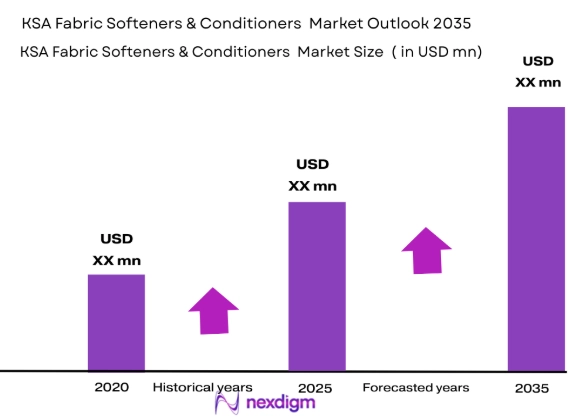
The KSA fabric softeners & conditioners market is valued at approximately USD ~ million in 2025, supported by rising urban population, increasing household consumption, and strong demand for premium laundry care products. Saudi Arabia’s population exceeds 36 million, with a growing middle-class segment driving demand for branded home care products. The country’s GDP surpasses USD 1 trillion, and consumer spending continues to rise due to economic diversification under Vision 2030. Additionally, the increasing penetration of automatic washing machines is supporting the adoption of fabric conditioners across households.
The market is concentrated in major cities such as Riyadh, Jeddah, and Dammam due to higher income levels, developed retail infrastructure, and dense population. Riyadh leads due to its large residential base and strong purchasing power. Jeddah benefits from its role as a commercial and tourism hub, particularly with religious visitors. Dammam contributes through industrial and residential demand. These regions serve as key consumption centers due to better accessibility to modern retail and e-commerce platforms.
Market Segmentation
By Product Type
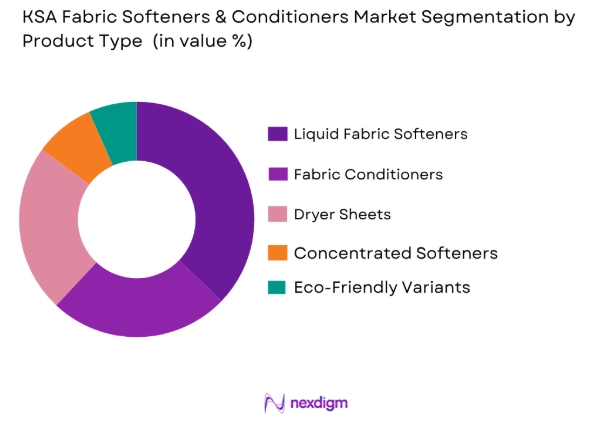
The KSA fabric softeners & conditioners market is segmented into liquid softeners, fabric conditioners, dryer sheets, concentrated variants, and eco-friendly products. Liquid fabric softeners dominate the market due to their widespread use in households and compatibility with modern washing machines. Consumers prefer liquid softeners for their ability to provide long-lasting fragrance and fabric softness. Additionally, commercial laundry services and hospitality businesses rely heavily on liquid variants for bulk usage. While concentrated and eco-friendly products are gaining popularity, liquid softeners remain dominant due to affordability and ease of use.
By Ingredient Type
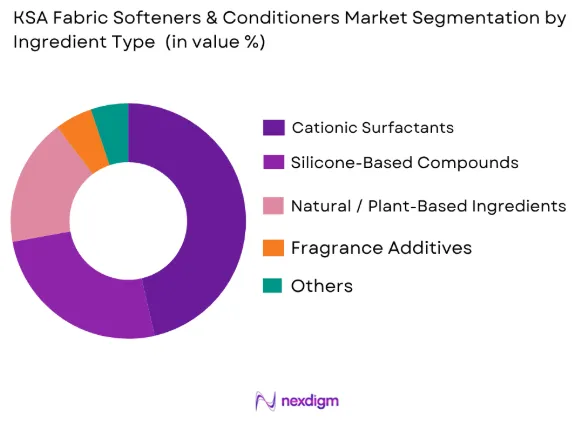
The market is segmented into cationic surfactants, silicone-based compounds, plant-based ingredients, fragrance enhancers, and others. Cationic surfactants dominate due to their efficiency in softening fabrics and reducing static electricity. However, there is a growing shift toward plant-based and skin-friendly ingredients as consumers become more conscious of product safety and environmental impact. Premium brands are focusing on developing formulations that meet both performance and sustainability requirements, especially in urban markets.
Competitive Landscape
The KSA fabric softeners & conditioners market is moderately competitive, with a mix of global brands and regional manufacturers. International players dominate due to strong brand recognition, advanced product formulations, and wide distribution networks. Regional companies and private labels are gaining traction by offering competitively priced alternatives tailored to local preferences.
| Company | Establishment Year | Headquarters | Product Focus | Distribution Network | Key Industries Served | Competitive Advantage |
| Procter & Gamble | 1837 | USA | ~ | ~ | ~ | ~ |
| Unilever | 1929 | UK/Netherlands | ~ | ~ | ~ | ~ |
| Henkel | 1876 | Germany | ~ | ~ | ~ | ~ |
| Savola Group | 1979 | Saudi Arabia | ~ | ~ | ~ | ~ |
| SC Johnson | 1886 | USA | ~ | ~ | ~ | ~ |
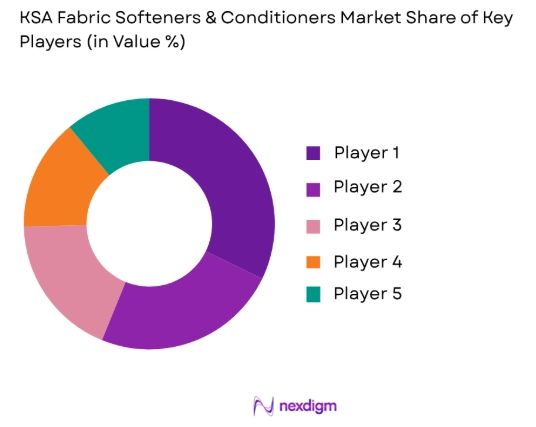
KSA Fabric Softeners & Conditioners Market Analysis
Growth Drivers
Increasing Demand from Hospitality and Religious Tourism
Saudi Arabia’s strong hospitality and religious tourism sector is a major growth driver for the fabric softeners and conditioners market. Millions of pilgrims travel annually for Hajj and Umrah, creating high demand for hotels, serviced apartments, guest houses, and commercial laundry services, especially in Mecca and Medina. These facilities require large volumes of laundry-care products to maintain clean, soft, and fresh-smelling linens, towels, uniforms, and guest garments. Fabric conditioners help improve fabric feel, reduce static, and enhance freshness, which supports guest satisfaction. As Saudi Arabia continues investing in tourism infrastructure and accommodation capacity, demand from institutional and commercial laundry users is expected to increase steadily.
Rising Urbanization and Household Consumption
Rising urbanization in Saudi Arabia is changing household laundry habits and increasing demand for branded fabric softeners and conditioners. Urban families are adopting modern washing machines, premium detergents, and value-added laundry-care products as part of regular home routines. Higher disposable income and improved living standards are also encouraging consumers to spend more on products that deliver softness, fragrance, and fabric protection. Younger households and working professionals often prefer convenient products that improve laundry results with minimal effort. As residential development expands across major cities such as Riyadh, Jeddah, and Dammam, household consumption of fabric conditioners is expected to grow. This supports both mass-market and premium product demand.
Market Challenges
Environmental and Regulatory Constraints
Environmental and regulatory constraints are becoming an important challenge for Saudi Arabia’s fabric softeners and conditioners market. Authorities and consumers are paying closer attention to product safety, chemical ingredients, wastewater impact, packaging waste, and labeling requirements. Manufacturers must ensure that formulations comply with local safety and environmental standards, which can increase testing, certification, reformulation, and compliance costs. Products containing strong synthetic fragrances, non-biodegradable chemicals, or excessive plastic packaging may face growing scrutiny. Companies also need to maintain consistent quality across imported and locally produced products. These requirements can be more difficult for smaller brands, as compliance investment may reduce profitability and slow product launches.
Price Sensitivity in Mid-Income Segments
Price sensitivity remains a key challenge in Saudi Arabia’s mid-income consumer segment. Although disposable income is rising, many households still compare prices carefully and prefer affordable, promotional, or private-label fabric conditioners. Laundry-care products are frequently purchased household items, so consumers often look for larger pack sizes, discounts, or multipurpose products that offer better value. This limits the ability of brands to increase prices, especially when raw material, fragrance, packaging, or logistics costs rise. Strong competition from low-cost brands further pressures margins and reduces brand loyalty. To succeed, companies must balance product quality, fragrance performance, and affordability while maintaining clear differentiation from cheaper alternatives.
Opportunities
Growth in Eco-Friendly and Halal Products
The growing preference for eco-friendly and halal-compliant household products creates a strong opportunity in Saudi Arabia’s fabric softeners and conditioners market. Consumers are becoming more aware of product ingredients, sustainability, skin safety, and ethical claims. Fabric conditioners made with biodegradable ingredients, reduced harsh chemicals, recyclable packaging, and halal-certified formulations can appeal to families, health-conscious buyers, and environmentally aware consumers. Halal positioning is especially relevant in Saudi Arabia, where compliance and trust can influence purchasing decisions. Brands that combine softness, long-lasting fragrance, safety, and sustainability can differentiate themselves from standard products. This opportunity supports premium pricing, stronger brand loyalty, and innovation in natural or sensitive-skin fabric conditioners.
Expansion of Online Retail Channels
The expansion of online retail channels is creating new growth opportunities for fabric softeners and conditioners in Saudi Arabia. E-commerce platforms allow consumers to compare brands, prices, pack sizes, fragrances, and product claims more easily than in traditional stores. Online channels also help brands reach younger consumers, busy households, and shoppers in areas with limited access to large supermarkets or hypermarkets. Digital promotions, subscription models, bundle offers, and customer reviews can increase repeat purchases and improve product visibility. Fabric conditioners are well suited for online sales because consumers often repurchase familiar products regularly. As digital shopping habits continue to grow, brands can strengthen sales through targeted online marketing.
Future Outlook
Over the next five years, the KSA fabric softeners & conditioners market is expected to grow steadily due to urbanization, rising disposable income, and expansion of the hospitality sector. Vision 2030 initiatives will continue to support economic diversification and consumer spending. The increasing preference for eco-friendly, premium, and fragrance-rich products will shape market trends. Growth in online retail and modern trade channels will further enhance accessibility and product availability across regions.
Major Players
- Procter & Gamble
- Unilever
- Henkel
- Reckitt Benckiser
- SC Johnson
- Church & Dwight
- Savola Group
- Al Jazeera Detergents Company
- Carrefour Private Label
- Panda Retail
Key Target Audience
- Household consumers
- Hospitality and hotel industry
- Commercial laundry service providers
- Retail and wholesale distributors
- E-commerce platforms
- Investors and private equity firms
- Government and regulatory authorities
Research Methodology
Step 1: Identification of Key Variables
Identifying key stakeholders including manufacturers, distributors, and end users using secondary research sources.
Step 2: Market Analysis and Construction
Analyzing consumption trends, retail sales, and industry data to build market estimates.
Step 3: Hypothesis Validation and Expert Consultation
Validating insights through interviews with industry experts and professionals.
Step 4: Research Synthesis and Final Output
Combining primary and secondary data to produce accurate and reliable market insights.

- Executive Summary
- Research Methodology (Market Definitions and Assumptions, Abbreviations, Market Sizing Approach, Consolidated Research Approach, Understanding Market Potential Through In-Depth Industry Interviews, Primary Research Approach, Limitations and Future Conclusions)

- Definition and Scope
- Market Dynamics Overview
- Market Genesis
- Major Players and Market Timeline
- Business Cycle and Trends
- Supply Chain and Value Chain Analysis

- Growth Drivers
Rising Urbanization and Changing Consumer Lifestyle
Increasing Demand from Hospitality and Religious Tourism
Growth in Modern Retail Infrastructure
Higher Disposable Income and Premium Product Adoption - Market Challenges
Environmental Concerns Regarding Chemical-Based Products
Price Competition from Private Label Brands
Dependence on Imported Raw Materials
Regulatory Compliance and Product Standards - Opportunities
Growing Demand for Halal-Certified and Eco-Friendly Products
Expansion in E-commerce and Digital Retail Channels
Increasing Use in Commercial Laundry Services
Innovation in Fragrance and Long-Lasting Fabric Care - Key Trends
Rising demand for premium and concentrated softeners
Shift toward sustainable and skin-friendly ingredients
Growth of fragrance-focused product innovation
Increasing penetration of online and subscription-based purchases
- Government Regulations
- SWOT Analysis
- Porter’s Five Forces

- By Value, 2020–2025
- By Volume, 2020–2025
- By Average Price, 2020–2025

- By Product Type (In Value %)
Liquid Fabric Softeners
Fabric Conditioners
Dryer Sheets
Concentrated Softeners
Eco-Friendly Variants - By Ingredient Type (In Value %)
Cationic Surfactants
Silicone-Based Compounds
Plant-Based Ingredients
Fragrance Enhancers
Others - By Application (In Value %)
Household
Hospitality Sector
Healthcare Facilities
Commercial Laundry Services - By Distribution Channel (In Value %)
Hypermarkets & Supermarkets
Convenience Stores
Online Platforms
Specialty Retail Stores
Direct Distribution - By Region (In Value %)
Riyadh
Jeddah
Dammam
Rest of KSA

- Market Share of Major Players by Value/Volume
- Market Share of Major Players by Product Type
- Cross Comparison Parameters (Company Overview, Business Strategies, Recent Developments, Strength, Weakness, Organizational Structure, Revenues, Revenues by Product Type, Distribution Channels, Dealer Network, Margins, Production Capacity, Unique Value Offering and Others)
- SWOT Analysis of Major Players
- Pricing Analysis Based on Product Categories for Major Players
- Detailed Profiles of Major Companies
Procter & Gamble (Downy)
Unilever (Comfort)
Henkel (Vernel)
Reckitt Benckiser
SC Johnson
Church & Dwight
Savola Group
Al Jazeera Detergents Company
Carrefour Private Label
Panda Retail Private Label

- Market Demand and Utilization
- Purchasing Power and Spending Behavior
- Regulatory and Compliance Requirements
- Needs, Preferences, and Pain Points
- Decision-Making Process

- By Value, 2026–2035
- By Volume, 2026–2035
- By Average Price, 2026–2035


 Request a Sample
 Ask for Customization
 Get a Quote
 Enquire Now