
 Download PDF
Market Overview
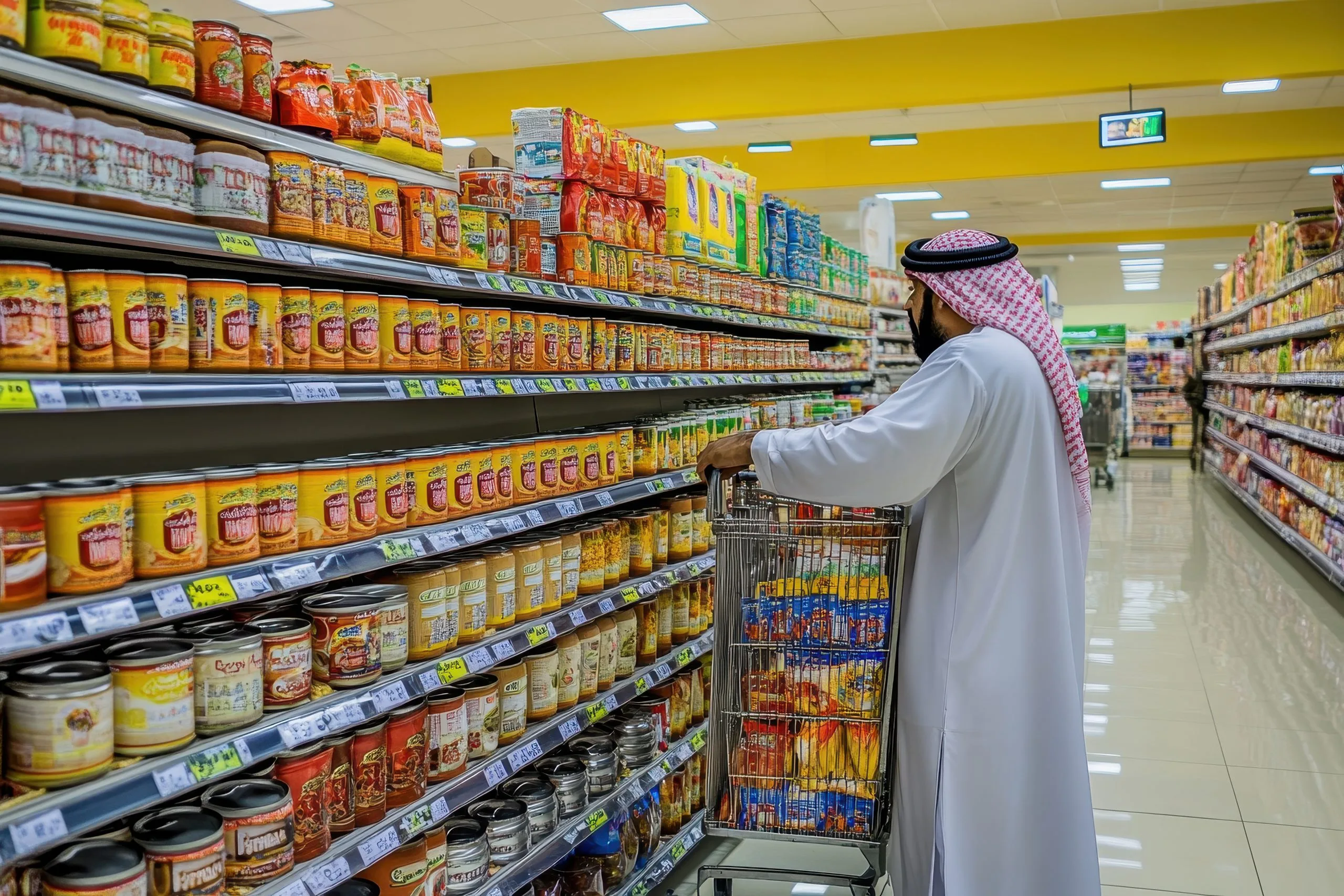
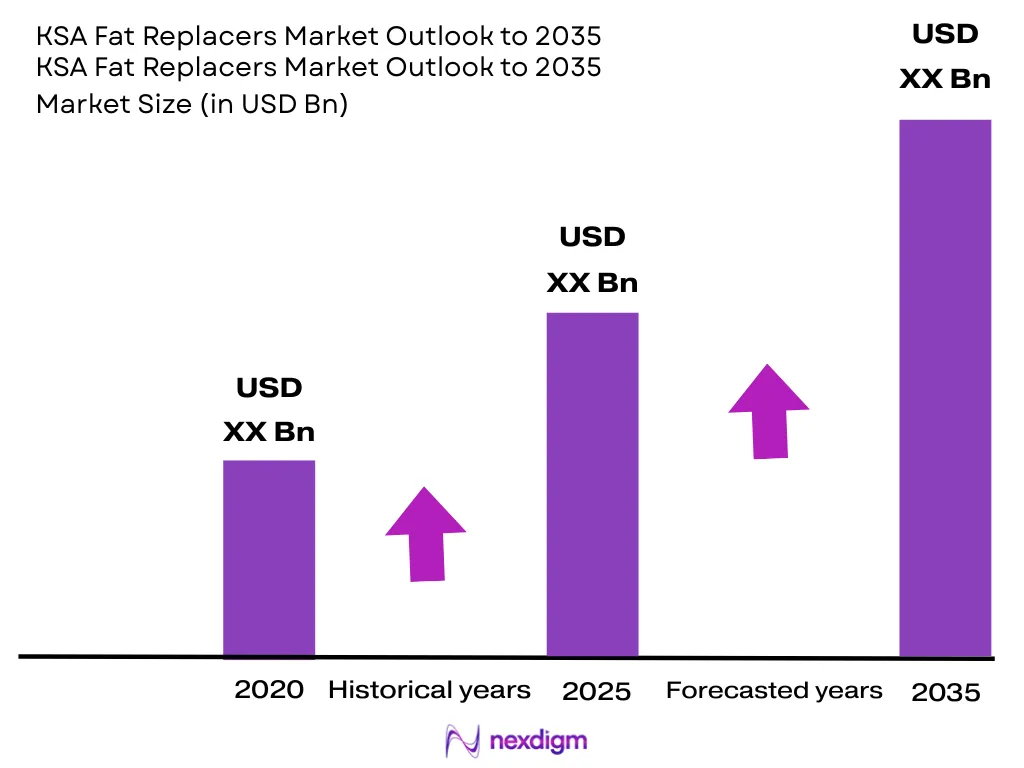
The KSA Fat Replacers Market was valued at approximately USD 60.3 million in 2024 and is projected to grow at a CAGR of approximately 5.2% through 2035, according to industry estimates. Saudi Arabia represents the largest fat replacers market in the Middle East and Africa region, accounting for approximately 28.3% of regional market value in 2024. The market is driven by Saudi Arabia’s high obesity prevalence, rising consumer health consciousness, the Saudi Food and Drug Authority’s (SFDA) trans-fat ban and nutritional labeling mandates, and growing demand for low-fat, halal-certified food products across bakery, dairy, and processed food applications. The global fat replacers market was valued at approximately USD 2.74 billion in 2024 and is projected to reach USD 5.31 billion by 2035, growing at a CAGR of approximately 6.2%, providing a favorable global demand backdrop for ingredient suppliers operating in the Kingdom. Market growth in Saudi Arabia is further supported by Vision 2030 health and wellness objectives, rapid expansion of the foodservice and HoReCa sector, and a progressive shift by domestic food manufacturers toward clean-label, functional ingredient reformulation in alignment with evolving SFDA nutritional standards.
Market Segmentation
By Source
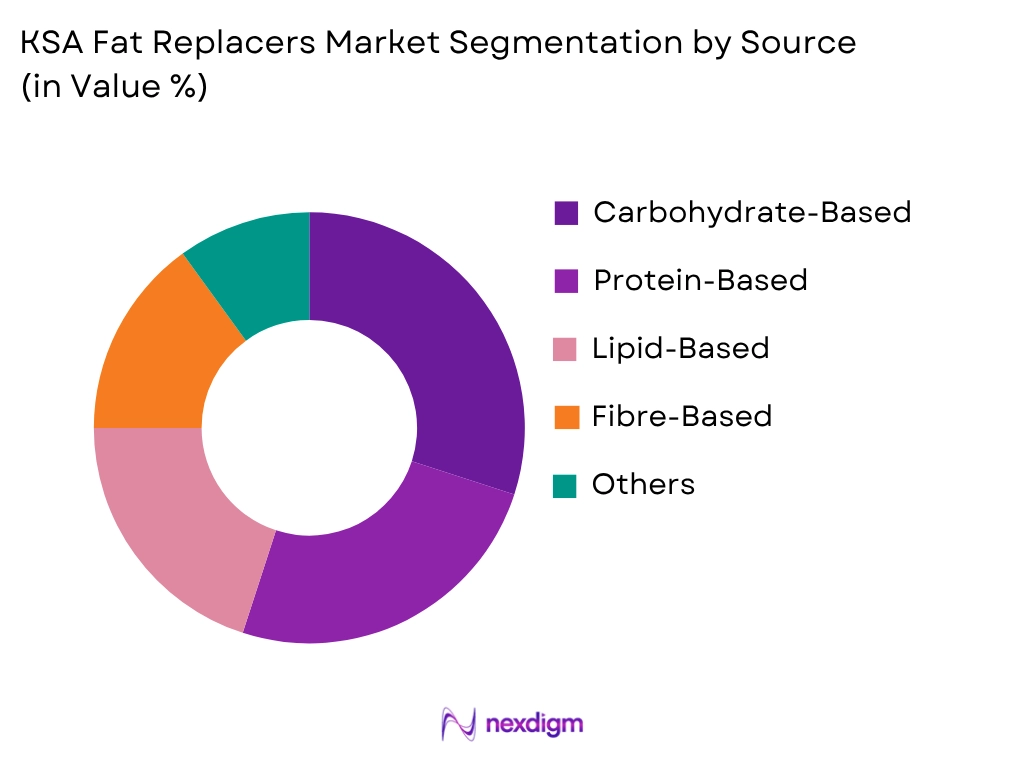
Carbohydrate-based fat replacers dominate the KSA fat replacers market, accounting for the largest share of demand in 2024 owing to their cost-effectiveness, wide halal acceptability, regulatory approval across SFDA-permitted food additives, and versatile functional performance across bakery, dairy, and convenience food applications. Carbohydrate-based additives including modified starches, guar gum, xanthan gum, inulin, pectin, and polydextrose provide effective bulk, texture, and moisture retention in food formulations, enabling manufacturers to reduce fat content while preserving the sensory experience expected by Saudi consumers. These ingredients are well established in the Kingdom’s food manufacturing sector, particularly among bakery producers and dairy processors reformulating products in response to SFDA nutritional labeling and trans-fat elimination requirements. Protein-based fat replacers, including whey protein concentrates, soy protein isolates, and pea protein systems, are the fastest-growing segment in the market, driven by increasing demand for high-protein, low-fat food formulations across dairy beverages, frozen desserts, and functional snack categories. Technological advances in microparticulation and enzymatic modification are progressively improving the mouthfeel and sensory performance of protein-based fat replacers, making them increasingly suitable for premium and functional food applications within the Kingdom.
By Application
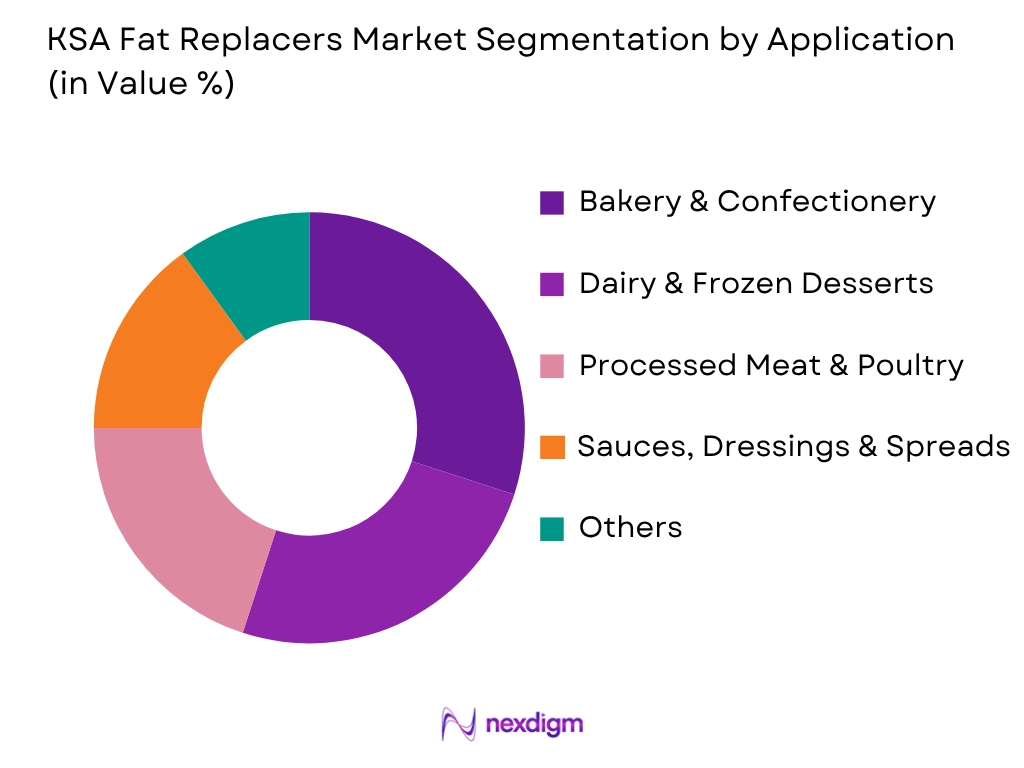
The bakery and confectionery sector accounts for the largest share of fat replacer demand in Saudi Arabia, reflecting the strength of the Kingdom’s domestic bakery manufacturing base and the broad consumer preference for baked goods, pastries, and confectionery products across retail, foodservice, and institutional channels. Bakery manufacturers are increasingly incorporating carbohydrate-based fat replacers including modified starches, dietary fibers, and hydrocolloids to produce reduced-fat cakes, pastries, biscuits, and bread products that comply with evolving SFDA nutritional standards while maintaining the taste, texture, and moisture retention expected by Saudi consumers. The dairy and frozen desserts segment represents the second-largest application area, driven by strong domestic dairy consumption, growing demand for low-fat yogurt and dairy beverages, and rising health consciousness among Saudi consumers. Protein-based fat replacers are particularly relevant in dairy reformulation, providing the creaminess and mouthfeel required in reduced-fat dairy applications. The processed meat and poultry segment is also expanding, supported by the Kingdom’s large domestic poultry processing industry and growing consumer preference for lower-fat protein products, while the convenience food and ready meal segment is experiencing increasing reformulation pressure from SFDA nutritional guidelines and rising health awareness among urban Saudi consumers.
Competitive Landscape
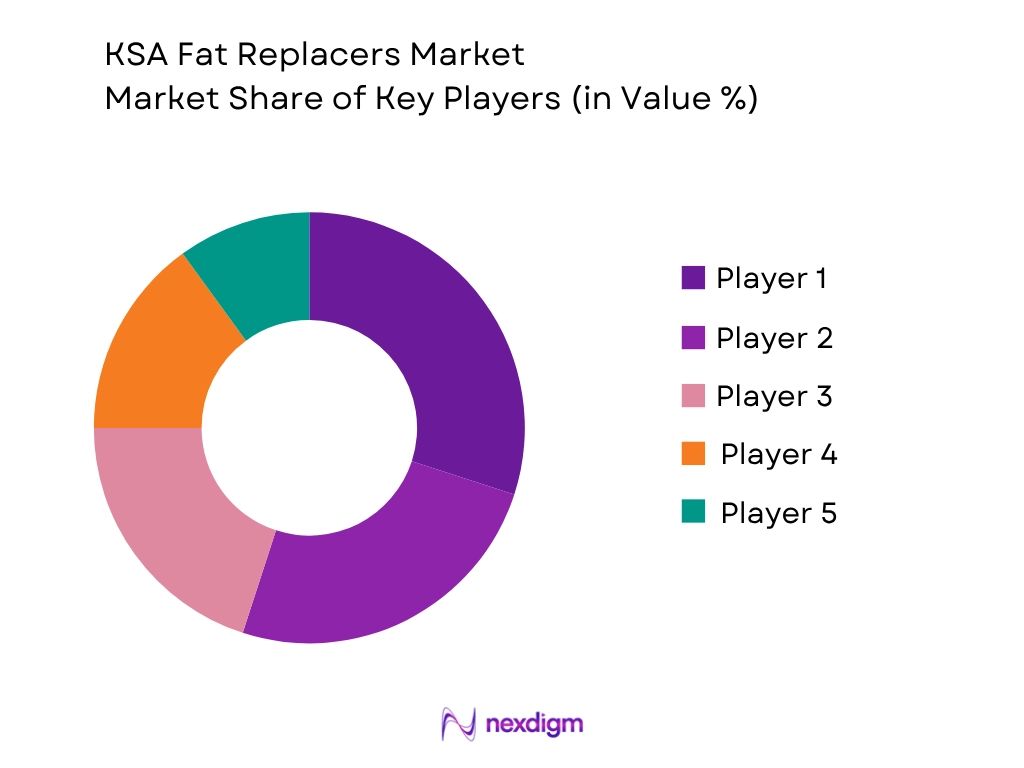
The KSA Fat Replacers Market is dominated by multinational specialty ingredient companies that supply food manufacturers in the Kingdom through regional distribution networks, ingredient trading partners, and direct technical sales operations. Global leaders including Cargill, ADM, Ingredion, Tate & Lyle, and Kerry Group collectively account for the majority of fat replacer ingredient supply to Saudi food processors, competing on product breadth, halal certification, technical application support, and clean-label positioning. Suppliers differentiate through the depth of their carbohydrate, protein, and lipid-based portfolios, their ability to provide customized fat replacer systems tailored to halal food manufacturing requirements, and their technical expertise in supporting domestic food manufacturers through reformulation programs targeting SFDA nutritional compliance.
| Company | Establishment Year | Headquarters | Primary Fat Replacer Portfolio | Key Application Industries
|
Manufacturing Presence | R&D Capability | Distribution Network | Clean Label Solutions |
| Cargill Incorporated | 1865 | ~ | ~ | ~ | ~ | ~ | ~ | ~ |
| Archer Daniels Midland (ADM) | 1902 | ~ | ~ | ~ | ~ | ~ | ~ | ~ |
| Ingredion Incorporated | 1906 | ~ | ~ | ~ | ~ | ~ | ~ | ~ |
| Tate & Lyle PLC | 1859 | ~ | ~ | ~ | ~ | ~ | ~ | ~ |
| Kerry KSA | 1972 | ~ | ~ | ~ | ~ | ~ | ~ | ~ |
KSA Confectionary Market Analysis
Growth Drivers
Rising Obesity Prevalence and SFDA Regulatory Mandates
Saudi Arabia’s high and rising rates of obesity, diabetes, and cardiovascular disease represent the most fundamental structural growth driver for the fat replacers market. Approximately 36% of Saudi adults are classified as obese, and the Kingdom has one of the highest per-capita rates of type 2 diabetes in the world, generating significant public health pressure on both government and food manufacturers to reduce dietary fat and calorie intake across the food supply. The Saudi Food and Drug Authority has implemented a comprehensive trans-fat elimination mandate requiring food manufacturers to remove industrially produced trans-fats from their product formulations, directly stimulating demand for functional fat replacer ingredients that can maintain product texture, mouthfeel, and shelf stability without relying on partially hydrogenated oils. According to the IMARC Group, the Saudi Arabia food additives market, within which fat replacers are a key sub-segment, reached USD 580.99 million in 2024 and is projected to grow at a CAGR of 4.63% through 2033, reflecting the broader expansion of functional ingredient demand across the Kingdom. The National Health Strategy 2030, aligned with Vision 2030, has established measurable targets for reducing obesity and diet-related non-communicable disease prevalence, creating policy-driven incentives for food manufacturers to accelerate the adoption of healthier ingredient systems including fat replacers. Increasing nutritional labeling transparency requirements from the SFDA are further compelling domestic food processors to reformulate products with lower saturated fat, total fat, and calorie content, directly increasing demand for carbohydrate-based, protein-based, and lipid-based fat replacer solutions across the Kingdom.
Expanding Processed Food Sector and Vision 2030 Food Manufacturing Investments
The rapid expansion of Saudi Arabia’s domestic processed food manufacturing sector under Vision 2030 investment programs is creating significant new demand for fat replacer ingredients across bakery, dairy, and convenience food categories. Saudi Arabia’s food and beverage manufacturing sector is experiencing accelerated investment driven by the Kingdom’s food security objectives, with NEOM and other giga-projects establishing new food production infrastructure utilizing functional and sustainable ingredient systems. The KSA food service market was valued at approximately USD 28.53 billion in 2024 and is expected to reach USD 55.25 billion by 2032, growing at a CAGR of 8.61%, driven by rising HoReCa sector expansion and increasing demand for reformulated, reduced-fat foodservice products. Saudi Arabia’s excise tax framework, which applies 50% levies on soft drinks and 100% on energy drinks, has encouraged food and beverage manufacturers to reformulate products with improved nutritional profiles, creating indirect demand for fat replacer and clean-label ingredient systems. According to the Saudi Arabia Food And Beverage Market analysis, the SFDA’s trans-fat ban is driving reformulations across carbonated drinks, baked goods, and ready-to-eat meals, as local manufacturers seek compliant ingredient alternatives that preserve product taste and texture. The growing consumer preference for clean-label ingredients, with more than 70% of surveyed consumers globally expressing preference for recognizable ingredient names, is also shaping procurement decisions among Saudi food manufacturers seeking to align with international labeling transparency standards.
Market Challenges
Import Dependency and Halal Certification Complexity for Novel Ingredients
Saudi Arabia currently lacks a significant domestic fat replacer manufacturing base, making the market entirely dependent on imported specialty ingredients sourced primarily from multinational suppliers in North America, Europe, and Southeast Asia. This import dependency creates exposure to global commodity price volatility, currency fluctuation, and supply chain disruptions that can affect the availability and cost of key fat replacer ingredients. The halal certification of novel or chemically modified fat replacer ingredients presents an additional layer of complexity for both suppliers and domestic food manufacturers, as certain protein-based fat replacers derived from animal sources, enzyme-modified ingredients, or synthetic lipid structures require careful assessment against SFDA halal food standards before they can be incorporated into compliant food products marketed in the Kingdom. Halal certification processes involving international bodies and the SFDA can extend product approval timelines significantly, slowing the pace of reformulation and new product introduction for domestic manufacturers seeking to adopt advanced fat replacer technologies. Import logistics, customs clearance procedures, and cold chain requirements for certain liquid fat replacer systems further add to procurement complexity and cost, limiting adoption rates particularly among smaller and medium-sized food manufacturers in the Kingdom that lack the scale and resources to establish long-term supply agreements with multinational ingredient companies.
Consumer Taste Expectations and Price Sensitivity in Mass Market Segments
Saudi consumers maintain strong taste and texture preferences for full-fat food products, particularly in traditional categories such as dairy, bakery, and cooked meat preparations that are culturally embedded in daily dietary routines. The sensory performance of fat-reduced products incorporating fat replacer systems must meet high consumer expectations for mouthfeel, creaminess, and flavor release across categories including yogurt, cheese, pastries, and biscuits, as any perceived quality compromise risks consumer rejection and brand damage in Saudi retail markets. While health consciousness is growing, particularly among younger urban consumers in Riyadh, Jeddah, and the Eastern Province, a significant share of the Saudi consumer base in traditional and value market segments remains primarily price-sensitive rather than health-motivated in its purchasing decisions, limiting the adoption of premium fat-reduced product formulations that carry higher ingredient costs. The additional cost of specialty fat replacer ingredients relative to commodity fats and oils used in conventional food manufacturing can dent the profitability of reformulation programs for manufacturers in cost-competitive categories, requiring careful financial modeling of reformulation cost versus health-positioning pricing premium opportunities in the Kingdom’s diverse consumer market.
Market Opportunities
Plant-Based and Clean-Label Fat Replacer Innovation
The accelerating global shift toward plant-based and clean-label ingredient systems is creating significant commercial opportunities for fat replacer suppliers capable of offering naturally derived, halal-certified solutions that meet SFDA nutritional standards. Plant-based fat replacers, including starches, dietary fibers, oat beta-glucan, inulin, pea protein, and soy protein isolates, accounted for approximately 67.3% of global fat replacer market share in 2024, growing at a CAGR of 6.5%, reflecting strong international demand trends that are progressively influencing formulation practices among Saudi food manufacturers. Saudi Arabia’s food manufacturing sector is increasingly responding to consumer demand for products with recognizable, natural ingredient lists, creating a market environment that favors carbohydrate-based and protein-based fat replacers derived from plant sources over synthetic or chemically modified alternatives. The SFDA’s focus on nutritional transparency and sugar and fat reduction further supports manufacturer investment in plant-based fat replacer systems that simultaneously improve nutritional profiles and clean-label positioning. Ingredient suppliers investing in halal-certified, plant-derived fat replacer portfolios specifically tailored to bakery, dairy, and convenience food applications within the Kingdom are therefore well positioned to capture growing procurement demand from domestic food manufacturers committed to health-conscious product reformulation and alignment with Vision 2030 national health objectives.
Protein-Based Fat Replacer Growth and Functional Food Integration
Saudi Arabia’s growing health and wellness food segment presents a compelling opportunity for protein-based fat replacer technologies, particularly as consumer demand increases for high-protein, low-fat dairy beverages, functional snacks, and reduced-calorie ready meals. Protein-based fat replacers are the fastest-growing segment globally, projected to grow at a CAGR of 7.2% through 2030, driven by demand for plant-based and high-protein food formulations that deliver creaminess and mouthfeel without the caloric density of traditional dietary fats. The Saudi functional foods market is expanding alongside rising consumer awareness of the relationship between dietary choices and chronic disease risk, creating demand for ingredients that simultaneously deliver fat reduction and nutritional enrichment. Multifunctional fat replacer systems capable of delivering texture, emulsification, and moisture retention in a single formulation are gaining traction among industrial food manufacturers seeking to streamline reformulation complexity. Advanced protein-based fat replacers using microparticulation technology, which creates micro-sized protein particles that mimic the lubricity and creaminess of fat droplets in dairy and frozen dessert applications, are particularly relevant for Saudi dairy processors seeking to develop low-fat yogurt, frozen dessert, and dairy beverage products that meet SFDA nutritional guidelines while satisfying the sensory expectations of Saudi consumers.
Future Outlook
The KSA Fat Replacers Market is expected to experience sustained growth through the 2035 forecast period, supported by the SFDA’s regulatory reform agenda, growing domestic food manufacturer investment in nutritional reformulation, and rising consumer demand for halal-certified, low-fat, and clean-label food products. Continued expansion of the bakery, dairy, and convenience food processing sectors will reinforce demand for carbohydrate-based and protein-based fat replacer systems. Innovation in multifunctional ingredient platforms, AI-driven formulation optimization, and plant-based fat replacer development is expected to progressively improve the performance and cost efficiency of fat replacer systems available to Saudi food manufacturers. Alignment between national health strategy targets under Vision 2030 and food industry reformulation programs will further accelerate fat replacer adoption across the Kingdom’s food processing sector through 2035.
Major Players
- Cargill Incorporated
- Archer Daniels Midland Company (ADM)
- Ingredion Incorporated
- Tate & Lyle PLC
- Kerry Group PLC
- DuPont Nutrition & Biosciences (IFF)
- DSM-Firmenich
- Corbion N.V.
- BENEO GmbH
- CP Kelco (Anadolu Group)
- Wilmar International Ltd.
- AAK AB
- FrieslandCampina Ingredients
- Olam International
- Ashland Global Holdings
Key Target Audience
- Food & Beverage Manufacturers and Ingredient Procurement Teams
- Bakery, Dairy, and Processed Food Producers
- Specialty Food Ingredient Distributors and Traders
- Functional Food and Nutraceutical Companies
- Foodservice Operators and HoReCa Chains
- Packaging and Formulation Technology Suppliers
- Investments and Venture Capitalist Firms
- Government and Regulatory Bodies (Saudi Food and Drug Authority (SFDA), Ministry of Commerce, General Authority for Statistics (GASTAT), Saudi Standards, Metrology and Quality Organization (SASO))
Research Methodology
Step 1: Identification of Key Variables
The research begins by identifying the major stakeholders across the KSA fat replacers value chain, including specialty ingredient manufacturers, distributors, food processing companies, regulatory agencies, and end-user sectors. Extensive secondary research is conducted using SFDA regulatory publications, Ministry of Commerce trade statistics, industry association reports, company data, and proprietary ingredient market databases to establish the key variables influencing demand, pricing, and competitive dynamics within the market.
Step 2: Market Analysis and Construction
Historical market information is compiled and analyzed to estimate the overall fat replacers market size by type, source, form, application, and end user. Ingredient import statistics, food processing sector growth data, regulatory compliance trends, and consumer health behavior research are integrated using both bottom-up and top-down market sizing approaches to ensure comprehensive coverage of all demand-generating segments within the Kingdom.
Step 3: Hypothesis Validation and Expert Consultation
Preliminary market estimates are validated through Computer Assisted Telephone Interviews (CATIs) and structured discussions with ingredient procurement managers, food technologists, regulatory affairs specialists, distributor executives, and food industry associations operating within Saudi Arabia. These consultations provide critical insights into reformulation trends, ingredient adoption rates, halal certification requirements, and the competitive dynamics among multinational and regional ingredient suppliers.
Step 4: Research Synthesis and Final Output
The final stage integrates primary research findings with secondary data to develop a comprehensive market assessment covering market size, segmentation, regulatory landscape, competitive positioning, consumer and end-user demand analysis, and future growth opportunities. Multiple validation techniques including data triangulation and cross-verification against SFDA, trade ministry, and industry association data sources are employed to ensure the accuracy and credibility of the final market report.

- Executive Summary
- Research Methodology (Market Definitions and Assumptions, Abbreviations, Market Taxonomy, Market Sizing Approach, Top-Down Analysis, Bottom-Up Analysis, Demand-Side Assessment, Supply-Side Assessment, Primary Industry Interviews, Secondary Research Validation, Data Triangulation, Forecasting Framework, Limitations and Future Conclusions)

- Definition and Scope
- Market Evolution and Industry Genesis
- Timeline of Major Industry Developments
- Fat Replacer Industry Value Chain Analysis
- Supply Chain Analysis

- Growth Drivers (Rising Obesity and Lifestyle Disease Prevalence, SFDA Trans-Fat Ban and Nutritional Labeling Regulations, Growing Demand for Low-Fat Halal-Certified Food Products, Expanding Processed Food and Bakery Sector, Vision 2030 Health and Wellness Initiatives, Rising Demand for Functional and Clean-Label Ingredients, Increasing Foodservice and HoReCa Reformulation, Growing Awareness of Cardiovascular Health Risks)
- Market Challenges (Limited Domestic Ingredient Manufacturing, High Import Dependency for Specialty Ingredients, Consumer Taste and Texture Expectations, Halal Certification Complexity for Novel Ingredients, Regulatory Compliance Costs, Low Consumer Awareness of Fat Replacer Ingredients, Price Sensitivity in Mass Market Segments)
- Market Opportunities (Sugar and Fat Dual Reformulation Programs, Plant-Based Fat Replacer Innovation, Functional Food Integration, Protein-Based Fat Replacer Growth, Clean-Label Reformulation, Halal-Certified Functional Ingredient Development, Digital Ingredient Sourcing Platforms, Foodservice Product Reformulation)
- Market Trends (Clean-Label Fat Replacers, Multifunctional Ingredient Systems, Microparticulated Protein-Based Replacers, Plant-Based and Vegan-Friendly Solutions, Fiber-Enriched Formulations, Low-Calorie Dairy Reformulation, Reduced-Fat Snack Innovation, AI-Driven Formulation Optimization)
- Government Regulations (SFDA Nutrition Labeling Standards, Trans-Fat Elimination Mandate, Saturated Fat Reduction Guidelines, Food Additive Approval Framework, Halal Food Regulations, Import Certification Requirements, Sugar and Fat Tax Policies, Functional Food Regulatory Framework)
- SFDA Regulatory Framework Analysis (Trans-Fat Ban Implementation, Nutritional Disclosure Requirements, Food Additive Permitted Lists, Novel Food Ingredient Approvals, Halal Compliance Framework for Imported Ingredients)
- Obesity and Lifestyle Disease Impact Analysis (Obesity Prevalence in KSA, Cardiovascular Disease Burden, Diabetes Incidence, Government Health Expenditure, National Health Strategy 2030 Targets)
- Food Processing Industry Assessment (Bakery Sector Growth, Dairy Processing Expansion, Processed Meat Industry, Convenience Food Manufacturing, Snack Food Production)
- Ingredient Import Analysis (Import Volumes by Type, Key Sourcing Countries, Import Price Trends, Tariff Structure, Logistics and Cold Chain Considerations)
- Halal Certification Analysis (Certification Bodies Operating in KSA, Halal Compliance Requirements for Fat Replacers, Animal-Derived Ingredient Restrictions, Certification Costs and Timelines)
- SWOT Analysis
- Porter’s Five Forces Analysis
- PESTLE Analysis
- Stakeholder Ecosystem
- Competition Ecosystem

- By Market Value (2020-2025)
- By Volume Consumption (2020-2025)
- By Average Selling Price (2020-2025)

- By Source (In Value %)
Carbohydrate-Based Fat Replacers
Modified Starches
Polydextrose
Protein-Based Fat Replacers
Whey Protein Concentrates & Isolates
Lipid-Based Fat Replacers - By Application (In Value %)
Bakery & Confectionery
Dairy & Frozen Desserts
Processed Meat & Poultry
Sauces, Dressings & Spreads
Convenience Foods & Ready Meals
Beverages
Snacks
Functional Foods - By End User (In Value %)
Food & Beverage Manufacturers
Bakery Producers
Dairy Processors
Meat Processors
Foodservice & HoReCa
Retail Consumers - By Distribution Channel (In Value %)
Direct Sales to Food Manufacturers
Ingredient Distributors & Traders
Specialty Ingredient Suppliers
Online B2B Platforms - By Region (In Value %)
Riyadh Region
Makkah & Jeddah Region
Eastern Province
Madinah Region
Other Regions

- Market Share Analysis (By Value, Volume, Type, Application, Distribution Channel)
- Cross Comparison Parameters (Product Portfolio Breadth, Carbohydrate-Based Solutions, Protein-Based Solutions, Lipid-Based Solutions, Halal Certification Portfolio, Plant-Based Offering, Technical Application Support, Regional Distribution Network, Clean-Label Positioning)
- SWOT Analysis of Major Players
- Pricing Analysis (By Type, By Form, By Application, By Pack Size)
- Detailed Profiles of Major Companies
Cargill Incorporated
Archer Daniels Midland Company (ADM)
Ingredion Incorporated
Tate & Lyle PLC
Kerry Group PLC
DuPont Nutrition & Biosciences (IFF)
DSM-Firmenich
Corbion N.V.
BENEO GmbH
CP Kelco (Anadolu Group)
Wilmar International Ltd.
AAK AB
FrieslandCampina Ingredients
Olam International
Ashland Global Holdings

- Food Manufacturer Demand Analysis (Bakery, Dairy, Meat, Snacks, Convenience Foods)
- Reformulation Frequency Analysis (By Product Category, By Regulatory Driver, By Health Positioning)
- Fat Replacer Adoption Rate by Food Category
- Clean-Label vs Functional Ingredient Preference Analysis
- Halal Ingredient Compliance Analysis

- By Market Value (2026-2035)
- By Volume Consumption (2026-2035)
- By Average Selling Price (2026-2035)


 Request a Sample
 Ask for Customization
 Get a Quote
 Enquire Now