
 Download PDF
Market Overview
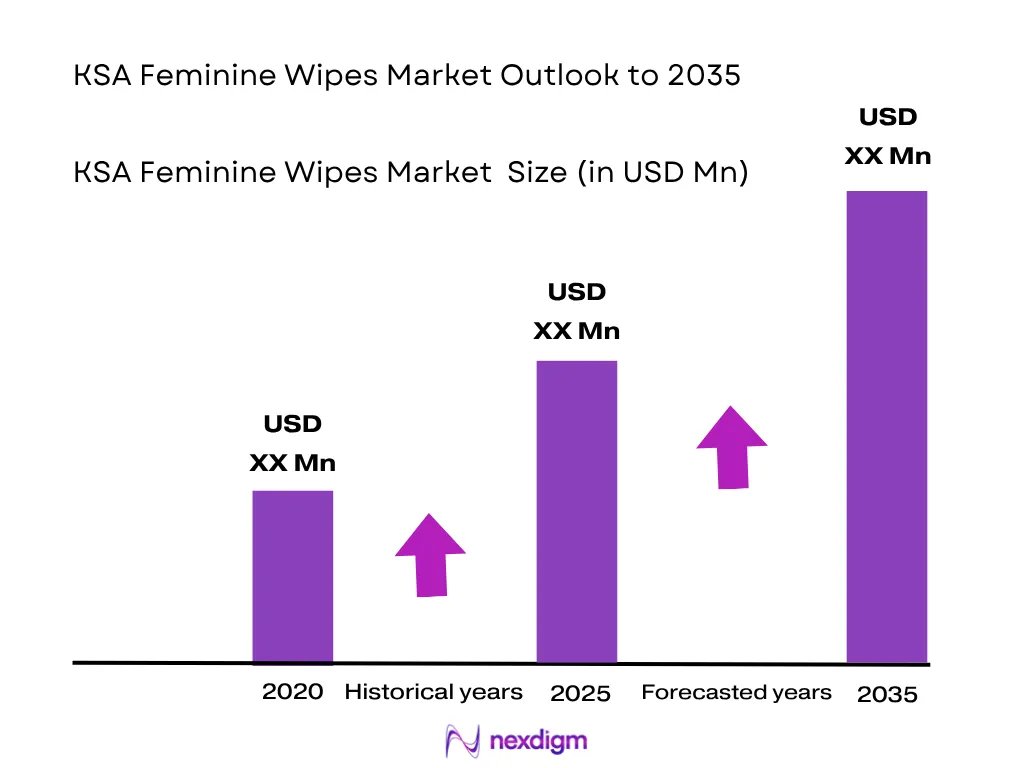
The KSA feminine hygiene market, encompassing products like sanitary pads, tampons, pantyliners, menstrual cups and intimate wipes, is a well‑established consumer goods category. According to Nexdigm Research, the broader Saudi feminine hygiene market was valued at approximately USD ~ million, driven by rising women’s health awareness, urbanization, expanding retail distribution, and increased participation of women in the workforce. Wipes are a growing subsegment within this hygiene category, supported by hygiene consciousness and demand for convenience‑oriented intimate care solutions.
Within the Middle East & Africa region, the feminine wipes market generated revenue of USD ~ million in 2025, with Saudi Arabia accounting for a significant portion due to its larger economy, higher per‑capita disposable incomes, and more mature retail infrastructure compared to neighboring markets. Saudi urban centers like Riyadh, Jeddah and Dammam dominate consumption owing to greater awareness levels, widespread modern retail presence, and stronger e‑commerce penetration.
Market Segmentation
By Product Type
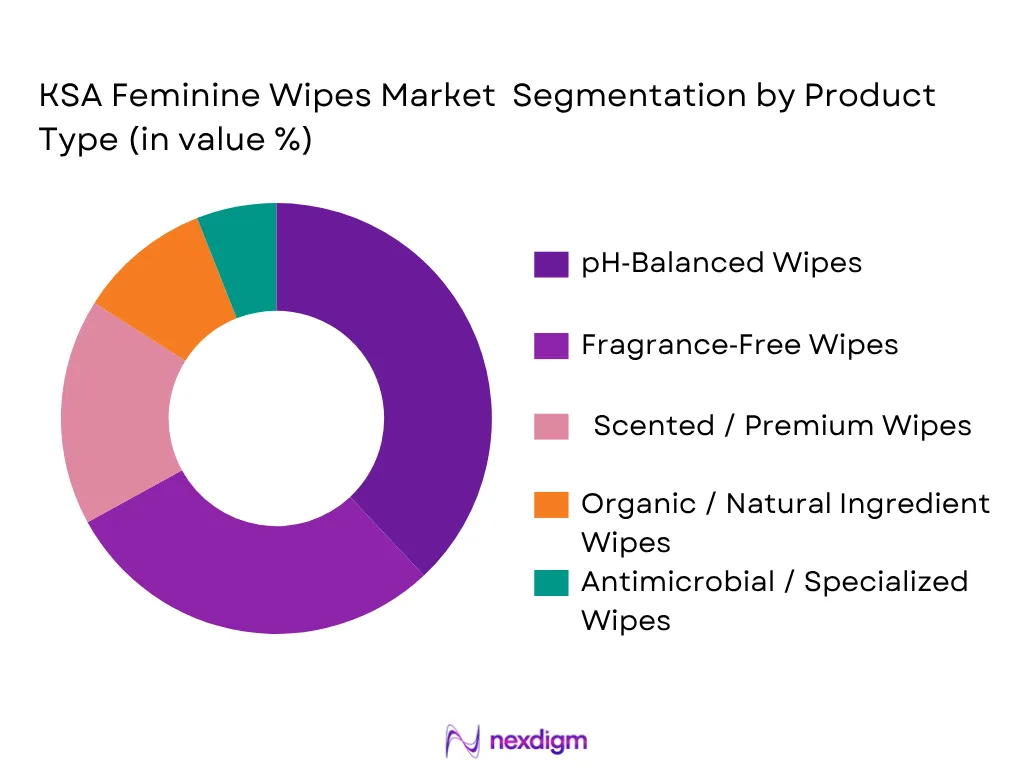
The pH‑balanced intimate wipes segment holds the largest share in the KSA feminine wipes market due to heightened consumer awareness regarding intimate hygiene and sensitivity issues. Women increasingly seek products that support natural skin balance and reduce irritation risk, especially in hot climates where hygiene discomfort is common. pH‑balanced formats are also widely recommended by healthcare professionals and positioned strongly by major brands in pharmacies and modern retail channels. Fragrance‑free varieties follow, supported by demand from sensitive skin consumers, expatriate populations accustomed to unscented formulations, and dermatological endorsements. Scented and premium wipes attract a smaller but growing share as lifestyle and gifting use cases expand. Higher‑end organic options are emerging but constrained by price sensitivity and limited availability in mass retail. Antimicrobial variants remain niche, often adopted for specific medical or travel use cases.
By Distribution Channel
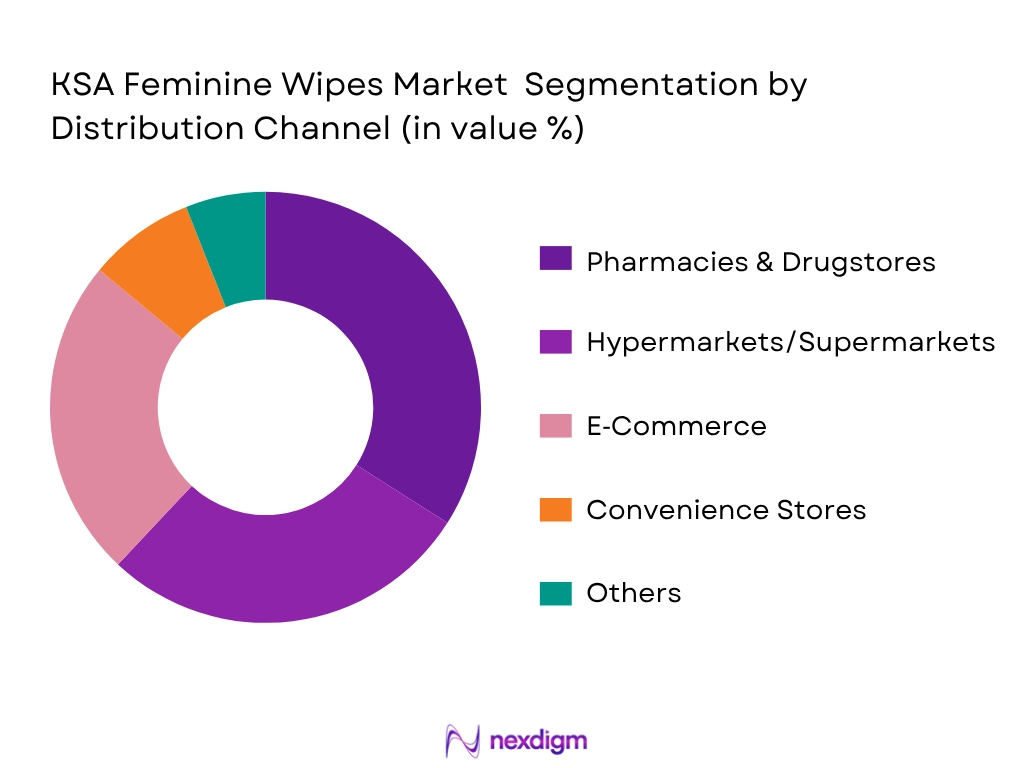
Pharmacies and drugstores dominate feminine wipes distribution in KSA due to consumer trust in healthcare retail formats for intimate care products and higher footfall for personal hygiene purchases. Women often prefer buying hygiene wipes from pharmacies where product safety, quality assurance and professional guidance play a pivotal role in purchase decisions. Modern trade channels, including hypermarkets and supermarkets, are the next largest due to extensive shelf presence, promotional activity, and product variety across price bands. E‑commerce is rapidly growing; privacy, home delivery, subscription models, and discrete packaging attract digital‑native consumers, especially in major urban markets. Convenience stores and traditional retail outlets contribute smaller shares, largely catering to immediate or impulse purchases.
Competitive Landscape
The KSA feminine wipes market is diversified, with multinational personal care companies and regional hygiene brands competing across retail and digital channels. Competition is shaped by brand trust, distribution breadth, product claims (e.g., dermatological testing, pH balance), pricing, and channel partnerships. Major players invest in product innovation, retail visibility, and digital consumer engagement to capture recurring purchase demand. Although the category is less consolidated than core sanitary products, brand credibility and pharmacy channel penetration remain critical competitive factors.
| Company | Est. Year | Headquarters | Product Portfolio Breadth | Retail Distribution Strength | E‑Commerce Presence | Premium Product Offerings | Distribution Partnerships | Brand Awareness Index |
| Procter & Gamble | 1837 | Cincinnati, USA | ~ | ~ | ~ | ~ | ~ | ~ |
| Kimberly‑Clark | 1872 | Texas, USA | ~ | ~ | ~ | ~ | ~ | ~ |
| Unicharm | 1961 | Tokyo, Japan | ~ | ~ | ~ | ~ | ~ | ~ |
| Essity | 1929 | Stockholm, Sweden | ~ | ~ | ~ | ~ | ~ | ~ |
| Regional OEM / Private Label | – | Saudi Arabia / GCC | ~ | ~ | ~ | ~ | ~ | ~ |
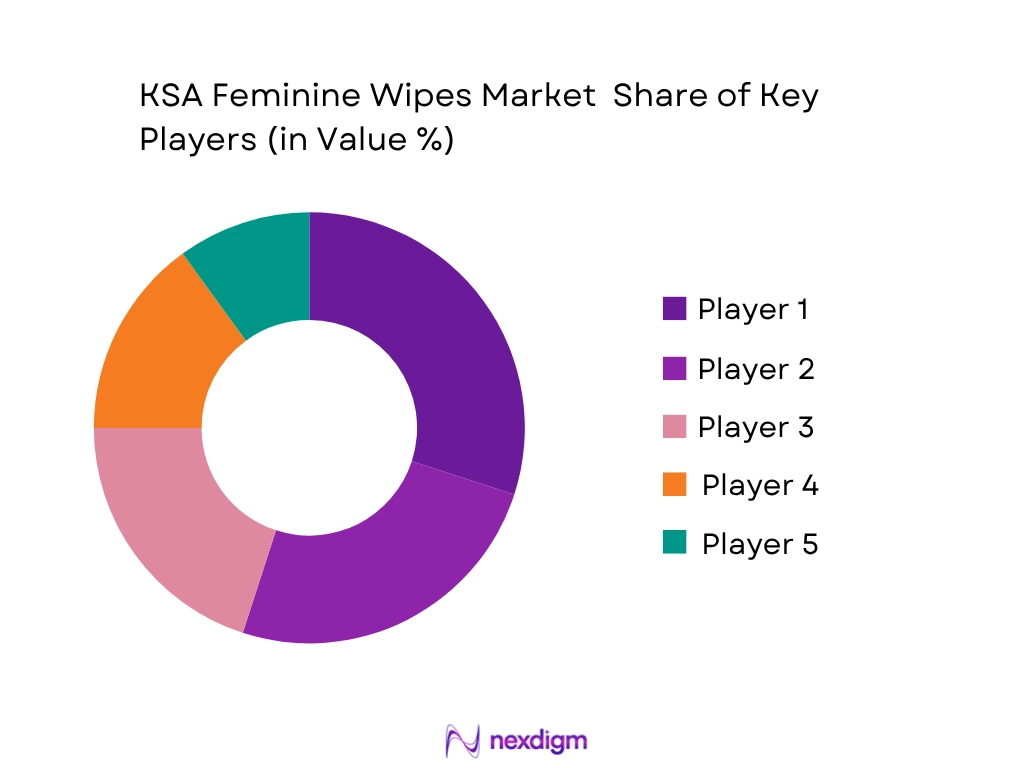
KSA Feminine Wipes Market Analysis
Growth Drivers
Rising Health & Personal Hygiene Awareness
In Saudi Arabia, broad public access to health information is changing consumer behavior related to personal hygiene products, including feminine wipes. Internet penetration in the Kingdom stands at nearly 100% of the population, meaning virtually all residents use digital platforms to access information on health and hygiene practices. This ubiquity of online access enables women to learn and compare hygiene products, increasing familiarity with specialized intimate care solutions like feminine wipes and strengthening demand. Internet penetration data from the World Bank confirms this digital connectivity trend in the Saudi population, which is a key facilitator for broader health information dissemination and consumer education. Additionally, Saudi Arabia’s population, approximately 35,300,280 people in 2024 — includes a significant female segment whose health priorities increasingly incorporate preventive hygiene measures. National sanitation data shows that around 84% of the population uses safely managed sanitation services, which reflects broad societal prioritization of hygiene standards. Investments and policies that reinforce awareness of personal care and hygiene norms contribute to consumer receptivity towards specialized products like feminine wipes, bridging the gap between traditional hygiene and newer intimate care items in retail and online channels.
Increasing Disposable Income & Women’s Workforce Participation
Saudi Arabia’s macroeconomic indicators show sustained income levels that support consumer expenditure on personal care items, including feminine wipes. According to World Bank data, the country’s GDP per capita in 2024 was approximately USD 35,057 in current dollars, reflecting high average income compared to global norms. This high per‑capita income increases discretionary spending power among households, enabling purchases of personal hygiene products beyond basic necessities. At the same time, female workforce participation, an important contributor to household income and independent purchasing decisions is rising. The World Bank reports that the female labor force participation rate in Saudi Arabia was about 34.41% in 2024, showing gradual improvements in economic activity among women. This rise in participation contributes to household income diversity and financial autonomy among female consumers, which in turn supports discretionary spending on intimate care and hygiene products. Moreover, strong internet usage (almost universal connectivity) supports digitally influenced purchase behaviors, with high mobile and online engagement enabling women to discover and buy personal care products through social media, e‑commerce sites, and digital advertising channels. These combined socioeconomic trends underpin evolving consumption patterns and heighten demand for convenient, quality feminine hygiene solutions.
Market Restraints
Perceived Necessity vs. Discretionary Spend
In the Saudi consumer landscape, personal care expenditure is closely tied to perceptions of necessity. Although average incomes are high, as indicated by a GDP per capita of approximately USD 35,057 in 2024, discretionary products like feminine wipes may still be viewed as non‑essential compared to staple hygiene goods or core household needs. This perception can temper demand growth, particularly among segments of the population conservative in discretionary spending. Cultural norms and long‑standing habits around basic personal care also play a role. While internet usage and digital connectivity are nearly universal (99‑100% usage), converting awareness into regular repeat purchase behavior depends on shifts in traditional hygiene routines. Even with pervasive online access to product information, many consumers may prioritize essentials like bathing products and basic soap over specialised intimate wipes. This dynamic can limit overall market penetration rates, especially among older demographics or conservative consumer groups that tend to maintain traditional cleansing habits. Additionally, with female labor force participation rising but still moderate at around 34.41%, disposable income may be more constrained in certain households where dual incomes are not yet the norm. Combined with the relatively high cost of branded intimate care products, this can result in slower adoption rates among value‑conscious buyers who regard such products as discretionary rather than core hygiene necessities.
Regulatory/Labeling Requirements
Stringent regulatory frameworks around personal care products in Saudi Arabia can pose compliance challenges for products like feminine wipes. The Saudi Food & Drug Authority (SFDA) governs product registration, labeling, ingredient disclosure, and safety protocols for hygiene and personal care goods. Compliance with these requirements can increase time‑to‑market and operational costs for both local and international manufacturers entering the Saudi feminine wipes sector, potentially slowing product launches or restricting smaller producers. Regulatory complexity also arises from the requirement to align with Gulf Cooperation Council (GCC) standards for personal care products, which can necessitate additional documentation, testing, and certification. Navigating these multi‑layered compliance requirements requires substantial administrative investment, which small and mid‑sized producers may find burdensome relative to potential market returns. Delays or failures to meet these standards can lead to product holds, rejections, or mandatory reformulations, which limit availability and consumer choice in the feminine wipes segment.
Market Opportunities
Product Innovation
Saudi Arabia’s high digital connectivity and evolving consumer preferences create a fertile environment for differentiated feminine hygiene products. With nearly 100% of the population using the internet, digital platforms serve as primary awareness and product discovery channels, allowing brands to educate consumers on benefits of innovations such as pH‑balanced formulations, biodegradable wipes, natural ingredient products, and dermatologically tested variants. Moreover, a significant part of the female population actively participates in economic activity, indicating growing independent purchasing power and a shift toward informed, quality‑oriented buying behavior. This behavioral shift enhances receptivity to premium or specialized hygiene products beyond basic alternatives, provided products are marketed with clear value propositions. E‑commerce penetration driven by near universal internet access also supports product innovation uptake, as consumers can directly order niche or differentiated products that may not be widely stocked in traditional retail formats. Digital platforms empower smaller innovators or imported niche brands to overcome physical distribution limitations by accessing broader consumer segments online. Advertising and influencer marketing on integrated social channels further accelerates awareness of innovative offerings, facilitating faster market adoption of advanced formulations tailored to consumer needs within the UAE and broader Gulf region.
Private Label Opportunity for Retail Chains
Saudi Arabia’s robust retail modernization presents an opportunity for private label expansion in the feminine wipes category. Large retail chains and pharmacy groups benefit from extensive consumer footfall driven by a population of over 35.3 million residents, supporting scale economies that make private label investments viable. Larger retail operators can leverage this scale to introduce cost‑competitive private label feminine wipes that meet local quality standards and cater to price‑sensitive consumers. These private label offerings can capitalize on near‑universal internet connectivity to promote products directly to existing loyalty program members and online shoppers, reducing customer acquisition costs and enabling efficient direct marketing. Retailers with strong digital platforms can also bundle private label wipes with other hygiene products, incentivizing trial and repeat purchases. Furthermore, with female labor force participation around 34.41%, dual‑income or financially independent households are more likely to consider private label alternatives as a value‑driven option, especially if quality aligns closely with branded offerings. Private label strategies also allow retailers to manage pricing, packaging and positioning in ways that respond rapidly to consumer feedback, optimizing assortment based on transaction data and consumer preferences gathered from both physical and online channels.
Future Outlook
Over the next decade, the KSA feminine wipes market is expected to register sustained growth. This will be driven by broader personal care adoption, rising health and hygiene awareness, expanding modern retail networks and increasing online purchasing behavior. Continued innovation in formulation (e.g., biodegradable, dermatologically tested, and sensitive skin variants) will support differentiation and higher value‑per‑unit sales. As women’s participation in the workforce increases and urban lifestyles become more dominant, discreet and convenient intimate care products will maintain strong demand. Partnerships between brands and pharmacy chains, along with targeted digital marketing, will further deepen consumer engagement and repeat purchases.
Major Players
- Procter & Gamble
- Kimberly‑Clark
- Unicharm
- Essity
- Local/GCC OEM & Private Label Producers
- Unilever (Personal Care Wipes Division)
- Nice & Lovely (Regional Brand Lines)
- Dove / Personal Care Brands (Intimate Wipes Extensions)
- Lactacyd (Intimate Hygiene Brand)
- Evax (Personal Care Brand Variants)
- Whisper (P&G Brand)
- Kotex (Kimberly‑Clark Brand)
- Libresse (Essity Brand)
- Ontex (Hygiene Brand)
- Regional Pharmacy Chain Private Labels
Key Target Audience
- Retail Chains & Modern Trade Buyers
- International Personal Care Brands’ Category Heads
- FMCG Distribution & Wholesale Buyers
- Retail Pharmacy Chain Procurement Teams
- Investments and Venture Capitalist Firms (Consumer Goods / Personal Care Funds)
- Brand & Portfolio Strategy Teams in Personal Care Companies
- Government and Regulatory Bodies (Saudi Food & Drug Authority – SFDA)
- Retail Digital Commerce Platforms (Category Leads)
Research Methodology
Step 1: Definition of Key Market Variables
Construct an ecosystem map of the Saudi feminine wipes market, defining product scopes, key distribution channels, consumer segments, pricing bands, and regulatory parameters. This involves desk research using credible secondary sources, industry reports, trade data and retail analytics.
Step 2: Market Analysis and Data Compilation
Aggregate historical data on sales revenue, unit volumes, channel shares and pricing trends. Analyze data from retail scanner information, import statistics, trade databases and e‑commerce analytics to establish baseline valuation and segment performance.
Step 3: Expert Interactions and Validation
Conduct interviews and CATI consultations with industry participants including brand managers, category buyers, pharmacy procurement leads and distributors to validate assumptions, refine segment definitions and verify competitive positioning.
Step 4: Forecasting and Final Output Synthesis
Integrate quantitative data and qualitative insights into forecasting models to estimate future growth (e.g., CAGR for 2026‑2035). Validate projections through cross‑reference with global feminine wipes growth drivers, demographic trends, retail expansion patterns, and consumer behavior indicators.

- Executive Summary
- Research Methodology (Market Definitions and Product Taxonomy, Sampling Frame for KSA Consumer Base, Market Sizing Approach – Value/Volume/Units, Demand Forecasting Models, Data Normalization Techniques, Primary and Secondary Research Protocol, Assumptions and Limitations, Data Quality Controls)

- Market Definition and Scope
- Market Genesis and Adoption Curve
- Regulatory Framework and Compliance Standards – SFDA & GCC Guidelines
- Cultural and Behavioral Influence on Adoption
- Market Value Chain and Channel Dynamics
- Trade Landscape – Import/Export Duties, Local Content Policies

- Growth Drivers (Rising Health & Personal Hygiene Awareness, Increasing Disposable Income & Women’s Workforce Participation, Expansion of Modern Retail Footprint & Online Penetration, Influence of Social Media & Beauty/Wellness Influencers)
- Market Restraints (Cultural Sensitivities and Conservative Consumption Patterns, Perceived Necessity vs. Discretionary Spend, Regulatory/Labeling Requirements)
- Market Opportunities (Product Innovation – Skin Health & Dermatologically Tested Lines, Private Label Opportunity for Retail Chains, Expansion into Medical/Clinical Hygiene Segments)
- Emerging Trends (Eco‑friendly / Biodegradable Wipes, Subscription E‑Commerce Models, Brand Collaboration with Healthcare Influencers)
- Regulatory Environment (Saudi Food & Drug Authority (SFDA) Product Registration, Import, Labeling and Safety Standards, Compliance Requirements – pH, Biodegradability Claims)
- Porter’s Five Forces
- Value Chain and Supply Chain Analysis (Raw Material Sourcing – Nonwoven Fabrics & Cleansing Agents, Domestic vs Imported Ingredients, Manufacturing Nodes, Logistics Hubs, Wholesale & Retail Distribution, Quality Assurance & Testing)

- By Revenue (2020-2025)
- By Volume Sold (2020-2025)
- By Sell‑Through Rates (2020-2025)
- By Average Retail Selling Price 2020-2025

- By Product Formulation Category ( In Value %)
Fragrance‑Free
Fragranced / Scented
Organic / Natural Ingredients
Antibacterial / pH‑Balanced
Sensitive Skin Formula - By Consumer Age Group (In Value %)
Teens & Young Adults
Adults
Mature / Silver Consumer Segment
University / College Students
Working Professionals - By Distribution Channel (In Value %)
Modern Trade (Hypermarkets & Supermarkets)
E‑Commerce (Direct‑to‑Consumer & Marketplaces)
Pharmacies & Healthcare Retail
Specialty Beauty Retail
Traditional Retail Outlets - By Price Tier (In Value %)
Premium
Mid‑Tier
Value / Economy - By Packaging Format ( In Value %)
Travel Packs
Family/ Bulk Packs
Single‑Use Sachets
Refill Packs

- Competitive Landscape and Market Concentration (top-player dominance, market fragmentation, emerging brand pressure, portfolio breadth across fragrance-free, scented, pH-balanced, organic/natural, and medicated/functional wipes)
- Market Share of Major Players by Value and Volume (overall market share, product-type-wise share, channel-wise share – offline vs e-commerce, branded vs private-label wipes)
- Cross‑Comparison Parameters (Company Overview, Product Portfolio Depth (Formulation Diversity), Brand Equity / Consumer Awareness Index, Distribution Channel Reach (Modern + E‑Commerce), Retail Shelf Metrics (Number of SKUs & PLUs), Pricing Strategy & Price Band Positioning, Marketing & Promotional Spend, Innovation Index (Patents/Unique Claims), Quality Certifications & Compliance, Production Capacity & Local Sourcing, Turnover Growth Rate, Retailer & Pharmacy Penetration, Customer Loyalty Metrics (Repeat Purchase Rate), Packaging and Sustainability Initiatives)
- SKU Pricing and Pack Architecture Analysis (ASP by product type, promotional depth, assortment ladder, SKU size normalization, bundle/multipack offerings, travel-pack vs daily-use packs)
- SWOT Analysis (strengths, weaknesses, opportunities, threats of major competitors)
- Manufacturing Footprint and Capacity Analysis (owned manufacturing units, third-party/contract manufacturing mix, fill-finish capability, domestic vs import split, batch/limited-edition flexibility)
- Certifications, Claims, and Innovation Benchmarking (eco-certifications, Halal and safety claims, functional claims verification, new-launch cadence, signature/hero product innovation, natural/organic ingredient focus)
- Competitor Profiles (15 Mandatory Major Players)
Procter & Gamble (Always)
Kimberly‑Clark (Cottonelle/Personal Care)
Unilever
Nice & Lovely
Saafe / Saafe Care
Nivea
Johnson & Johnson
Lactacyd
Evax
Saba
Always Discreet
Local OEM Private Label Manufacturers
Farmasi
Dabur Personal Care
Pigeon

- Buyer Cohort Profiling (age, gender, income level, lifestyle orientation, health-consciousness, urban vs suburban residence, maternity/post-natal status, active lifestyle)
- Purchase Drivers and Barriers (brand reputation, price sensitivity, ingredient transparency, pH balance & sensitivity perception, availability in preferred channels, cultural acceptance, eco-friendly/biodegradable preference)
- Shopper Journey and Decision Funnel (awareness channels, social media & influencer recommendations, trial triggers, product reviews & ratings, purchase friction points, repurchase motivators, subscription service adoption)
- Channel Behavior Analysis (discovery channels, purchase channels – online vs offline, replenishment frequency, basket mission – daily hygiene vs on-the-go, cross-category bundling with sanitary pads or intimate care products)
- E-Commerce, DTC, and Social Commerce Analysis (traffic sources, customer acquisition cost (CAC), conversion rates, subscription service uptake, repeat purchase rate, AR/VR or interactive product demos engagement)
- Basket Composition and Repurchase Economics (cross-sell & upsell rates, attach rate per hygiene category, replenishment cycles, bundle adoption, seasonal SKU preference – e.g., travel packs during holidays)
- Retailer and Influencer/Health Expert Influence (shelf curation, influencer endorsements, gynecologist or health expert recommendations, stylist/personal shopper inputs for premium/luxury buyers, campaign or event-driven purchase triggers)

- By Revenue (2026-2025)
- By Volume Sold (2026-2025)
- By Sell‑Through Rates (2026-2025)
- By Average Retail Selling Price (2026-2035)


 Request a Sample
 Ask for Customization
 Get a Quote
 Enquire Now