

 Download PDF
 Download PDF
Market Overview
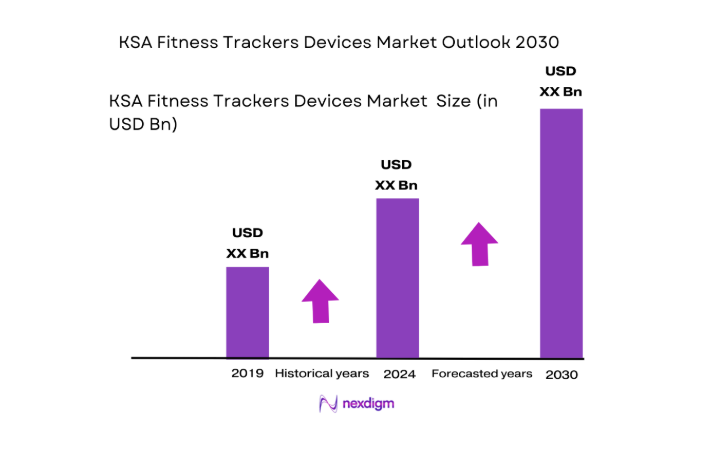
The fitness tracker market in Saudi Arabia is valued at USD ~ in 2025, with a projected market size of USD ~ in 2025. This growth is fueled by increasing health awareness among Saudi consumers, advancements in wearable technology, and the government’s push toward promoting a healthier lifestyle through initiatives like Vision 2030. With the rising popularity of fitness-conscious millennials and the expanding adoption of smartwatches and health tracking devices, demand for fitness trackers is set to grow consistently in the coming years.
The market for fitness trackers in Saudi Arabia is primarily driven by cities like Riyadh, Jeddah, and Dammam, which account for a significant share of consumer demand. These cities are home to large urban populations with high disposable incomes and a growing focus on health and fitness. Riyadh, the capital, leads the market due to its concentration of tech-savvy consumers and fitness enthusiasts, alongside high penetration of smartphone and wearable technologies. Jeddah, a coastal city with a vibrant expatriate community, also drives growth due to its diverse consumer base and increasing adoption of fitness-related products.
Market Segmentation
By Product Type
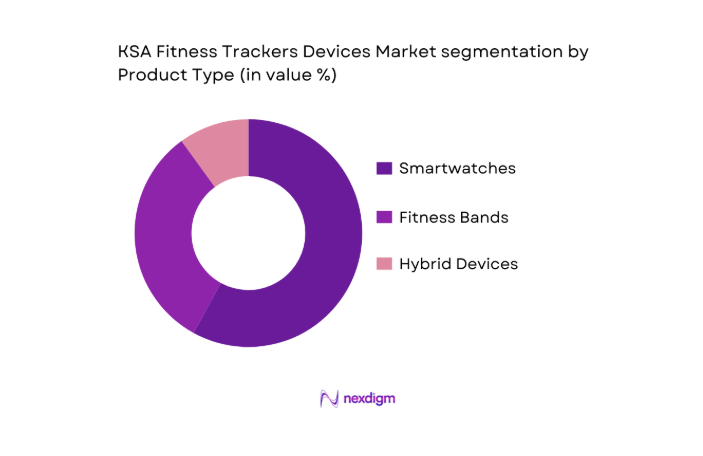
The Saudi fitness tracker market is segmented by product type into smartwatches, fitness bands, and hybrid devices. Smartwatches dominate the market in 2024 due to their multifunctionality, integrating fitness tracking, notifications, and lifestyle features. This category is particularly popular among tech-savvy young adults and professionals who value the convenience of having all-in-one devices. Major brands such as Apple, Samsung, and Garmin have expanded their market share in this segment by offering products that go beyond fitness tracking to include features like NFC payments, health monitoring, and stress management.
By Application
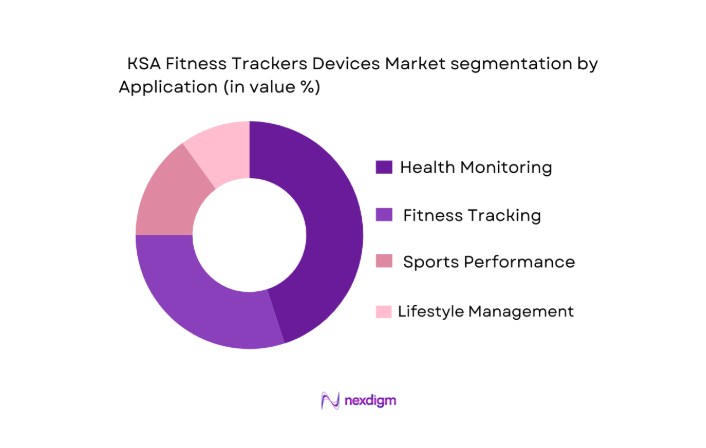
The fitness tracker market in Saudi Arabia is also segmented by application into health monitoring, fitness tracking, sports performance analytics, and lifestyle management. Health monitoring applications are projected to dominate the market share in 2024, driven by an increased focus on chronic disease management and preventive healthcare. The popularity of heart rate monitors, sleep trackers, and blood oxygen sensors is increasing among consumers seeking to manage their well-being. Additionally, the integration of AI-driven insights into wearables has made health monitoring devices more accurate and attractive to consumers.
Competitive Landscape
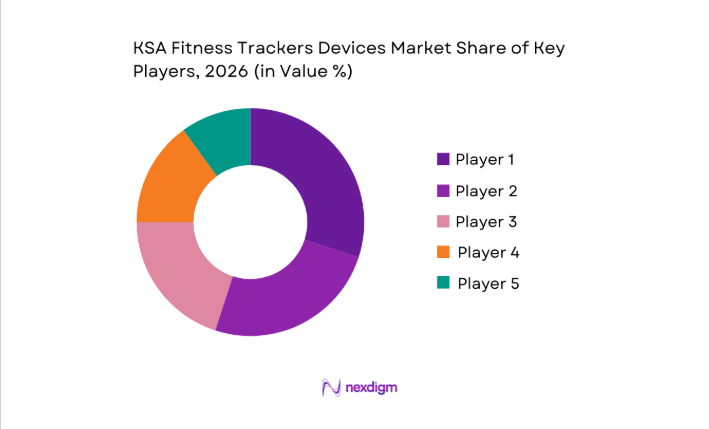
The Saudi fitness tracker market is competitive, with both international and local players vying for market share. Dominant global brands such as Apple, Samsung, and Garmin lead the market due to their established brand presence, extensive product ranges, and strong distribution networks. Local players, including companies like Al-Jazira and others, are focusing on offering region-specific solutions that cater to local consumer preferences, such as Arabic-language interfaces and compatibility with regional healthcare services.
| Company | Establishment Year | Headquarters | Revenue (2024) | Product Range | Market Focus | Distribution Channels |
| Apple | 1976 | United States | ~ | ~ | ~ | ~ |
| Samsung | 1938 | South Korea | ~ | ~ | ~ | ~ |
| Garmin | 1989 | United States | ~ | ~ | ~ | ~ |
| Al-Jazira Oil & Gas | 1981 | Saudi Arabia | ~ | ~ | ~ | ~ |
| Huawei | 1987 | China | ~ | ~ | ~ | ~ |
KSA Fitness Tracker Market Analytics
Growth Drivers
Rising Health & Wellness Focus
The focus on health and wellness in Saudi Arabia has been growing significantly, especially in light of the rising prevalence of lifestyle diseases such as diabetes and cardiovascular conditions. According to the Saudi Ministry of Health, around ~ people in the country were diagnosed with diabetes in 2022, and nearly 40% of adults are obese. This has driven demand for products like fitness trackers, which help in monitoring vital health parameters. In 2023, the government launched the “Healthy Saudis 2030” program, aiming to reduce the prevalence of lifestyle diseases through preventive measures, further pushing the adoption of wearable health tech. The growing awareness around chronic diseases is expected to further fuel the fitness tracker market, with consumers increasingly using such devices for early detection and monitoring.
Increasing Digital Health Penetration
Digital health technology is experiencing rapid penetration in Saudi Arabia. According to the International Telecommunication Union (ITU), the country has an internet penetration rate of 99%, and mobile phone penetration exceeds ~. This high mobile usage, coupled with the growing adoption of IoT (Internet of Things), is paving the way for fitness trackers and other digital health devices. In addition, 2023 saw a record number of ~ people in Saudi Arabia using mobile health applications. These trends create an ecosystem where wearable fitness trackers can seamlessly integrate with smartphones and cloud platforms for real-time data sharing and health monitoring. With the government’s push for smart cities and increased IoT infrastructure, fitness trackers stand to benefit from this digital revolution.
Market Challenges
Price Sensitivity & High ASP Barriers
Despite the growing demand for fitness trackers, price sensitivity remains a key barrier to wider adoption, particularly in middle-income groups. The average selling price (ASP) of fitness trackers in Saudi Arabia can range from USD ~ to USD ~, depending on the brand and feature set. With Saudi Arabia’s inflation rate at 2.3% in 2023, household budgets have become more cautious, especially for non-essential items like wearables. As a result, many consumers are deterred by the higher costs associated with premium products, leading to slower adoption rates in price-sensitive segments.
Data Privacy & Regulatory Compliance Risks
With the rising use of health-tracking devices comes increased concern over data privacy and the protection of personal health information. According to the Saudi Data and Artificial Intelligence Authority (SDAIA), Saudi Arabia’s data protection regulations, introduced in 2022, impose strict compliance measures for companies that collect and manage personal health data. This has created challenges for fitness tracker manufacturers, especially foreign ones, in ensuring that their products meet local privacy standards. The lack of a universally accepted data security framework in wearable tech also poses risks for both consumers and companies, leading to slower adoption among privacy-conscious users.
Market Opportunities
Corporate & Insurance‑Linked Fitness Programs
Corporate wellness programs and health insurance companies are increasingly integrating fitness trackers into their offerings. Currently, around 60% of large Saudi corporations offer employee wellness programs that promote the use of fitness trackers for health monitoring. These programs often link fitness tracking to health insurance discounts, encouraging employees to adopt healthier lifestyles. The Saudi insurance sector is evolving, with policies such as those offered by Bupa Arabia, which reward clients with reduced premiums for maintaining healthy activities. This growing integration of fitness trackers into corporate wellness schemes presents a significant market opportunity for wearable health tech.
AI‑Enabled Predictive Health Insights
AI and machine learning technologies are increasingly being integrated into fitness trackers, allowing for predictive health insights such as early warnings for health conditions like hypertension or diabetes. In Saudi Arabia, nearly ~ of consumers are using AI-enabled fitness products to track their health metrics, according to a 2024 report by the Saudi Arabian Health Authority. As AI algorithms evolve, fitness trackers are expected to provide more personalized and accurate health predictions, encouraging more consumers to adopt these devices for preventive healthcare.
Future Outlook
Over the next few years, the Saudi fitness tracker market is poised for significant growth. Driven by the government’s Vision 2030 health initiatives, technological advancements in wearable devices, and a growing consumer focus on health and wellness, the market is expected to expand rapidly. The adoption of AI-based health monitoring systems, real-time biometrics, and advanced sensor technologies will further fuel the demand for fitness trackers. Moreover, Saudi Arabia’s young, tech-savvy population and the increasing availability of affordable devices will contribute to the market’s growth trajectory.
Major Players
- Apple
- Samsung Electronics
- Garmin Ltd.
- Huawei Technologies
- Fitbit
- Xiaomi
- Honor
- Amazfit
- Withings
- Oppo
- Realme
- Noise
- Polar
- Suunto
- Fossil Group
Key Target Audience
- Government Agencies
- Investments and Venture Capitalist Firms
- Healthcare Providers
- Tech Distributors and Retailers
- Sports and Fitness Institutions
- Insurance Companies
- Consumer Electronics Manufacturers
- Corporate Wellness Program Managers
Research Methodology
Step 1: Identification of Key Variables
In this phase, the research identifies the critical variables shaping the KSA fitness tracker market. Through desk research, secondary data from reliable sources such as industry reports and government publications will be gathered to identify factors such as market size, consumer behavior, and product trends.
Step 2: Market Analysis and Construction
Here, we will analyze historical data on product sales, consumer adoption, and technological advancements within the fitness tracker segment. This involves studying market penetration across various demographics and evaluating the relationship between lifestyle trends and product uptake.
Step 3: Hypothesis Validation and Expert Consultation
Market hypotheses will be tested through interviews with key industry experts, manufacturers, and retailers. These consultations will provide insights into current market dynamics, competitive strategies, and emerging opportunities in the fitness tracker sector.
Step 4: Research Synthesis and Final Output
In this phase, the research team will compile the findings from expert consultations and secondary data analysis to create a comprehensive report. This will involve cross-referencing the collected data to ensure that all market insights are accurate, actionable, and validated.

- Executive Summary
- Research Methodology (Market Definitions & Scope, Abbreviations & Terminology, Research Design, Data Sources, Demand Side Modelling, Supply Side Modelling, Forecasting Technique, Limitations & Assumptions)

- Definition & Scope of Fitness Trackers
- Market Genesis & Evolution in Saudi Arabia
- Key Technology Enablers
- Value Chain Analysis

- Growth Drivers
Rising Health & Wellness Focus
Increasing Digital Health Penetration
Growing Disposable
Income & Tech Spending - Market Challenges
Price Sensitivity & High ASP Barriers
Data Privacy & Regulatory Compliance Risks
Fragmented Consumer Awareness Outside Urban Centers - Opportunities
Corporate & Insurance‑Linked Fitness Programs
AI‑Enabled Predictive Health Insights
Local OEM / ODM Partnerships - Trends
Real‑Time Biometrics & Continuous Monitoring
Integration with Telehealth Platforms - Government Regulations
- Porter 5 forces

- Market Size by Revenue, 2019-2025
- Unit Shipments & Installed Base, 2019-2025
- Average Selling Price, 2019-2025

- By Product Type (In Value %)
Smartwatches
Smart Bands & Activity Trackers
Smart Clothing & Enabled Apparel
Clip‑on Fitness Monitors
Hybrid Devices - By Application (In Value %)
Step & Activity Monitoring
Heart Rate and Bio‑Signal Tracking
Sleep & Stress Management
Sports & Performance Analytics
Clinical & Preventive Health Monitoring - By Distribution Channel (In Value %)
Online
Offline Retail
Telecom / Mobile Operator Bundles - By End User (In Value %)
Individual Consumers
Fitness Enthusiasts & Athletes
Corporate Wellness Programs
Clinics & Preventive Health Providers
- By Price Tier (In Value %)
Premium
Mid‑Tier Fitness Bands
Entry Level / Value Segment

- Market Share
Cross‑Comparison Parameters (Revenue Share, Unit Shipments, Product Range, Retail Presence & Channel Penetration, R&D Investment & Feature Innovation, Wearable OS Compatibility & Ecosystem Integration, Battery Life Performance Benchmark, Consumer Satisfaction & Return Rates) - SWOT of Key Players
- Pricing SKU Benchmarking
- Detailed Company Profiles
Apple Inc.
Samsung Electronics
Huawei Technologies
Garmin Ltd.
Fitbit (Google)
Xiaomi
Honor
Amazfit / Zepp Health
Polar
Suunto
Withings
Oppo
Realme
Noise
Fossil Group

- Adoption & Utilization Patterns by Demographics
- Price Sensitivity & Willingness to Pay
- Feature Prioritization
- Purchase Decision Triggers

- Forecast by Revenue, 2026-2030
- Forecast by Unit Shipments, 2026-2030
- ASP & Strategic Price Movement, 2026-2030


 Request a Sample
 Ask for Customization
 Get a Quote
 Enquire Now