

 Download PDF
Market Overview
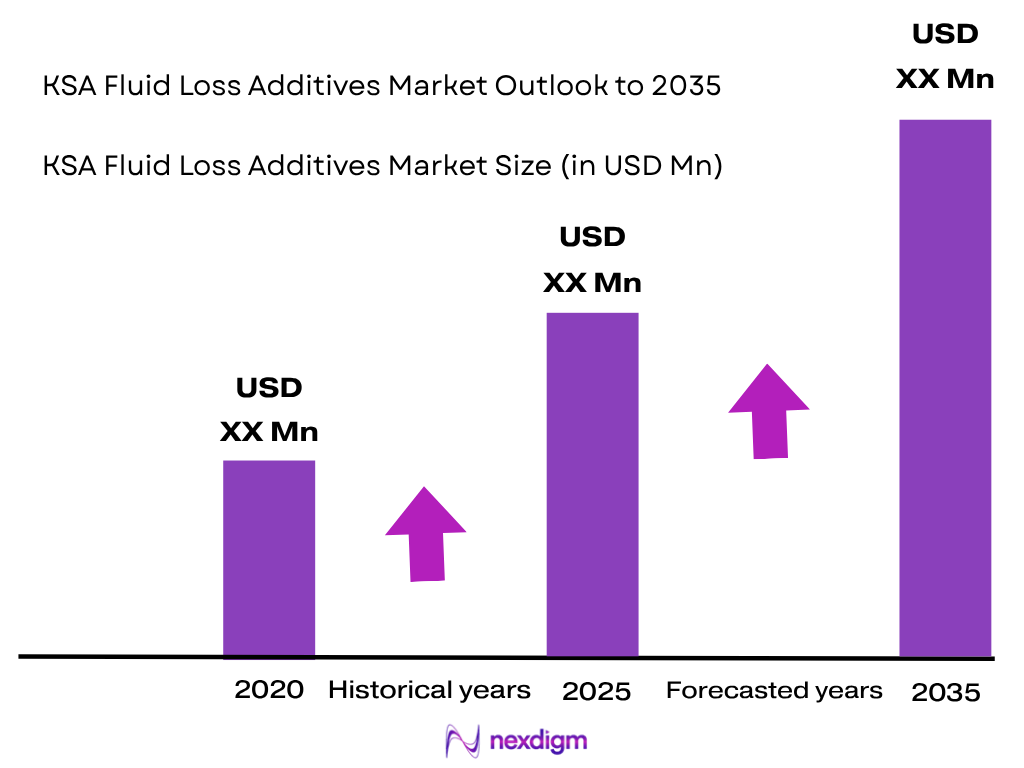
The KSA Fluid Loss Additives Market is valued at approximately ~USD XX million, supported by expanding gas drilling, unconventional well construction and sustained cementing activity. Aramco’s total gas production increased from 10,672 million standard cubic feet per day to 10,833 million standard cubic feet per day, while upstream capital expenditure increased from USD 32.945 billion to USD 39.236 billion. These operating levels support demand for drilling-fluid and cement-slurry filtration-control chemistries.
The Eastern Province, including Dhahran, Dammam, Al-Ahsa and the Jafurah Basin, dominates KSA Fluid Loss Additives Market demand because Saudi Arabia’s principal oil, conventional gas and unconventional gas operations are concentrated there. Jafurah resources were revised to 229 trillion standard cubic feet of raw gas and 75 billion stock-tank barrels of condensate, after an additional 15 trillion standard cubic feet of gas and 2 billion barrels of condensate were booked as proven reserves, reinforcing drilling-fluid and cementing demand.
Market Segmentation
By Application
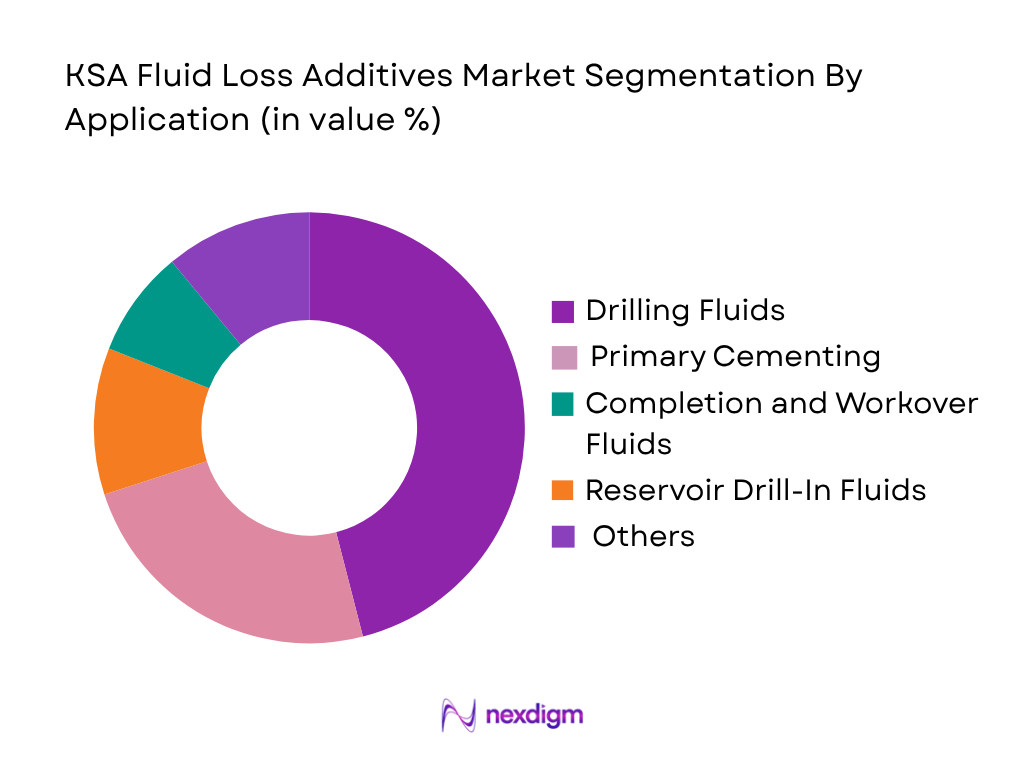
The KSA Fluid Loss Additives Market is segmented into drilling fluids, primary cementing, remedial cementing, completion fluids, workover fluids, drill-in fluids and reservoir drill-in fluids. Drilling fluids represent the dominant modeled sub-segment because every new well requires continuous filtration control while drilling through multiple formations, particularly in long horizontal intervals, high-temperature zones and unconventional gas reservoirs. Fluid-loss additives help create thin, low-permeability filter cakes that reduce filtrate invasion, stabilize the wellbore and protect reservoir productivity. Demand is especially relevant to Jafurah, North Arabia and South Ghawar, where unconventional programs involve extended laterals and technically demanding fluid systems. Aramco awarded 23 additional unconventional gas rig contracts and 2 directional drilling contracts as part of its gas expansion program, illustrating the intensity of drilling activity supporting additive consumption. Drilling fluids also require more frequent treatment and property adjustment than cementing systems because they circulate throughout well construction, giving filtration-control polymers a recurring consumption role.
By Chemical Type
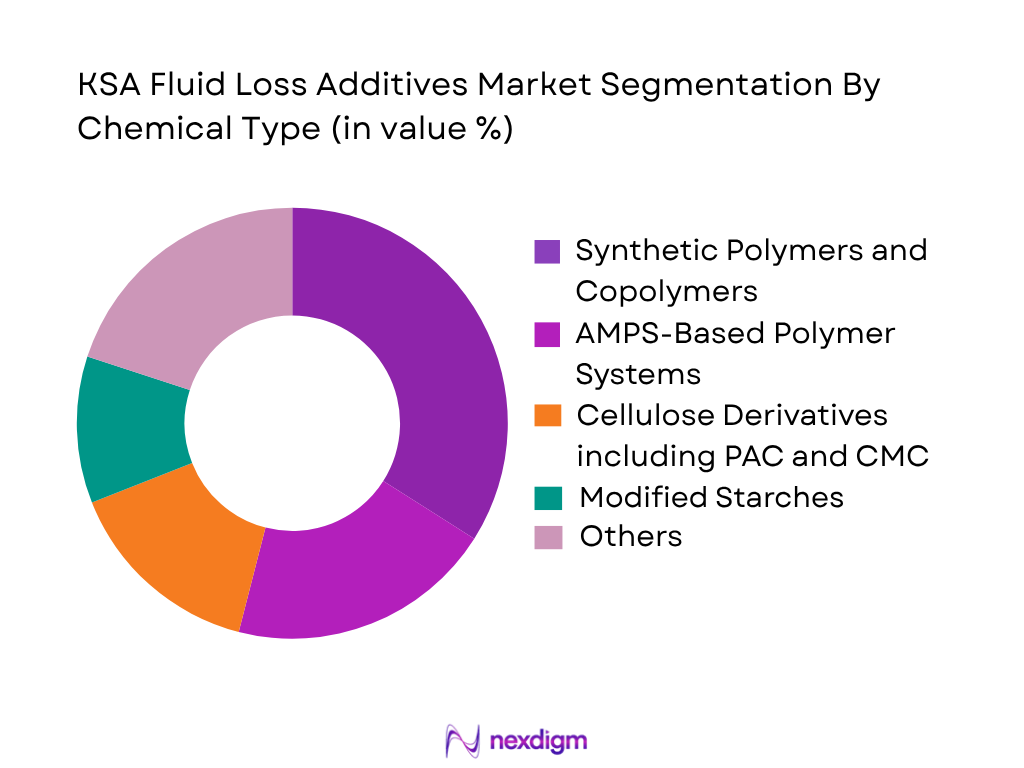
The KSA Fluid Loss Additives Market is segmented into synthetic polymers, AMPS-based polymers, polyacrylamide systems, cellulose derivatives, PAC, CMC, modified starches, lignite-based additives, latex systems, crosslinked polymers and specialty formulations. Synthetic polymers represent the dominant modeled sub-segment because Saudi wells increasingly require fluid-loss control under high temperature, salinity, calcium contamination and prolonged downhole exposure. AMPS-containing and acrylamide-based copolymers are particularly relevant where conventional starch or cellulose chemistry loses effectiveness at elevated temperature. These products can be engineered for both water-based drilling fluids and cement slurries and can maintain filtration control while interacting with dispersants, retarders and weighting agents. Aramco’s strategic gas program includes unconventional drilling, deep gas development and directional wells, all of which place stronger performance demands on fluid chemistry. Newpark’s regional technical capabilities include HTHP filtration equipment rated to 550°F, demonstrating the type of thermal-performance testing required for Gulf-region drilling-fluid formulations.
Competitive Landscape
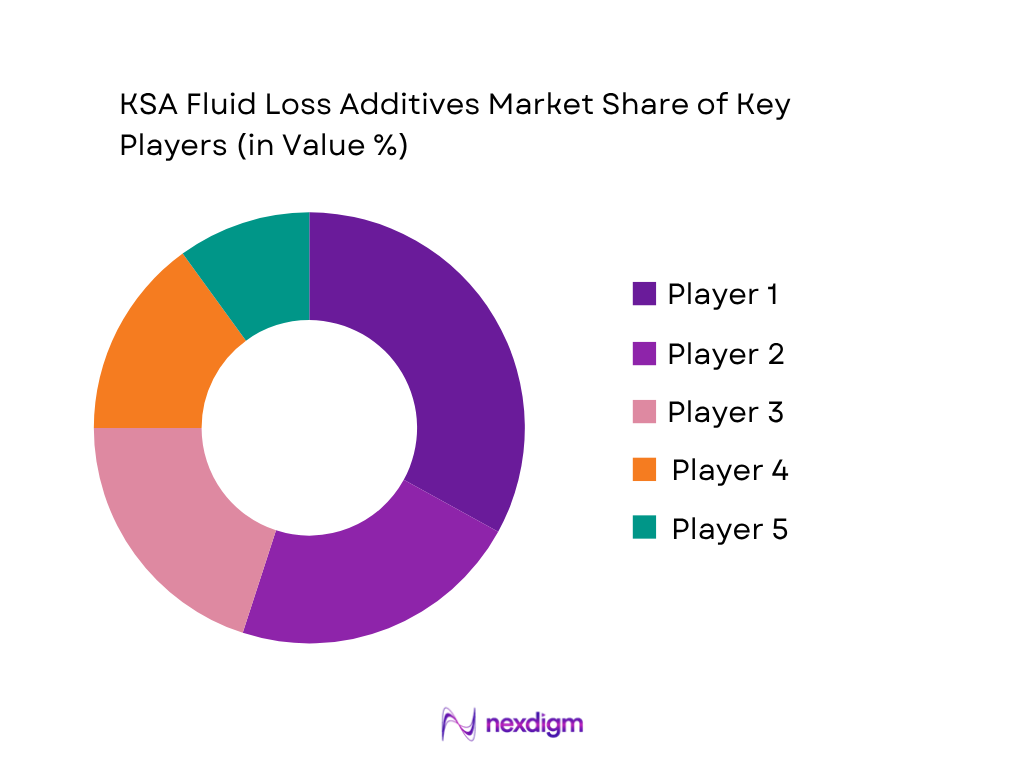
The KSA Fluid Loss Additives Market is dominated by global oilfield-service companies with established drilling-fluid, cementing and well-construction capabilities, supported by regional specialty-chemical suppliers and locally based formulation companies. Halliburton, SLB, Baker Hughes, Weatherford and Newpark compete through polymer chemistry, HPHT performance, reservoir protection, Saudi Aramco qualification, local laboratory support, rig-site technical service and increasingly localized manufacturing. Competitive differentiation is strongest in unconventional gas, deep gas, directional drilling and complex cementing applications.
| Major Player | Establishment Year | Headquarters | Fluid Loss Additive / Fluid System Capability | HPHT & High-Salinity Capability | Drilling / Cementing Coverage | Saudi Arabia Presence | Local Technical & Laboratory Support | Unconventional / Reservoir Application Capability |
| Halliburton | 1919 | Houston, USA | ~ | ~ | ~ | ~ | ~ | ~ |
| SLB | 1926 | Houston, USA | ~ | ~ | ~ | ~ | ~ | ~ |
| Baker Hughes | 1907 | Houston, USA | ~ | ~ | ~ | ~ | ~ | ~ |
| Weatherford | 1941 | Houston, USA | ~ | ~ | ~ | ~ | ~ | ~ |
| Newpark Resources | 1932 | The Woodlands, USA | ~ | ~ | ~ | ~ | ~ | ~ |
KSA Fluid Loss Additives Market Analysis
Growth Drivers
Jafurah Unconventional Gas Development and Rising Complex-Well Drilling Activity
Saudi Arabia’s unconventional gas expansion is strengthening demand for fluid loss additives because horizontal wells, directional sections and prolonged drilling intervals require stable filtration control across drilling fluids, reservoir drill-in fluids and cement slurries. Saudi Aramco reported in 2024 that Jafurah contains 229 trillion standard cubic feet of raw gas and 75 billion stock-tank barrels of condensate, following the addition of 15 trillion standard cubic feet of proven raw-gas reserves and 2 billion barrels of condensate reserves. Aramco also awarded 23 additional unconventional gas rig contracts worth USD 2.4 billion, 2 directional drilling contracts worth USD 612 million, and 13 Jafurah well tie-in contracts worth USD 1.63 billion. These programs increase consumption of synthetic polymers, PAC, AMPS-based additives and other filtration-control chemistries designed for long circulation periods, reservoir protection and stable filter-cake formation. Aramco’s upstream capital expenditure reached USD 39.236 billion in 2024, compared with USD 32.945 billion previously, reflecting intensified gas-development activity. The IMF reported Saudi Arabia’s 2024 nominal GDP at USD 1.2398 trillion and SAR 4.649 trillion, providing a strong macroeconomic base for sustained technically intensive upstream operations.
Gas Production Expansion and Higher Well-Construction Intensity
Increasing gas production and investment in Saudi Arabia’s upstream system are creating structural demand for fluid loss additives used during drilling, cementing and completion operations. Saudi Aramco reported total gas production of 10,833 million standard cubic feet per day in 2024, compared with 10,672 million standard cubic feet per day previously, while upstream capital expenditure reached USD 39.236 billion. Gas-development intensity is also demonstrated by approximately USD 12.4 billion of contracts awarded for phase two of Jafurah and USD 8.8 billion of contracts for phase three of the Master Gas System expansion. Complex gas wells require filtration-control products that can maintain rheological compatibility, minimize filtrate invasion, control cement-slurry dehydration and preserve formation permeability. Directional and unconventional wells further increase exposure time and contact between fluids and permeable formations, raising the importance of thin, low-permeability filter cakes. Saudi Arabia’s broader economic capacity supports continued upstream development: the IMF recorded nominal GDP of USD 1.2398 trillion and nominal non-oil GDP of SAR 3.511 trillion in 2024. These upstream and macroeconomic indicators support continuing demand for temperature-stable and contamination-resistant fluid loss chemistry across Saudi drilling programs.
Market Challenges
Harsh Unconventional Reservoir Conditions Increasing Fluid Chemistry Complexity
Saudi Arabia’s unconventional development creates a technical challenge for fluid loss additive suppliers because formulations must retain filtration-control capability across long well sections, high dissolved-solids environments, elevated temperature exposure and complex reservoir conditions. Jafurah alone contains 229 trillion standard cubic feet of raw gas and 75 billion stock-tank barrels of condensate, making it an exceptionally large unconventional development where well construction occurs thousands of meters underground. Aramco’s award of 23 unconventional gas rig contracts and 2 directional drilling contracts in 2024 demonstrates the scale at which fluids must perform reliably across technically demanding wells. Conventional cellulose, starch or low-temperature polymer systems can lose effectiveness when thermal degradation, calcium interaction or salt contamination alters polymer hydration and filter-cake properties, requiring more sophisticated AMPS-based and synthetic copolymer systems. These additives must also remain compatible with shale inhibitors, weighting materials, lubricants, retarders and dispersants without destabilizing rheology. The challenge is amplified by high-cost drilling programs where fluid failure can interrupt well construction. IMF data place Saudi Arabia’s 2024 GDP at USD 1.2398 trillion, while crude production averaged about 9.0 million barrels per day, illustrating the scale of upstream operations dependent on reliable specialty oilfield chemistry.
Saudi Aramco Qualification and Localization Requirements Raising Entry Barriers
Supplier qualification and localization requirements create a significant market-entry challenge for fluid loss additive manufacturers because technical performance alone is insufficient without registration, industrial licensing, quality consistency, local-content alignment and dependable in-Kingdom supply. Saudi Aramco requires suppliers to complete registration and qualification processes, while Saudi-based manufacturers must provide documentation including a Commercial Registration certificate, Industrial License, Zakat certificate, VAT certificate, GOSI certificate and Civil Defense license. In 2024, Aramco’s iktva program reached 67 points of local content performance and contributed USD 37.1 billion to Saudi GDP. Aramco also entered into 145 corporate purchase agreements worth more than USD 17.52 billion, while iktva had enabled 350 new local manufacturers and 47 products to be manufactured in-Kingdom for the first time, including drilling chemicals. Separately, Aramco signed 40 corporate procurement agreements worth USD 6 billion in February 2024. These requirements favor established suppliers with local manufacturing, warehousing, laboratory testing and field-support capability, creating barriers for import-only entrants. The IMF recorded Saudi Arabia’s 2024 nominal GDP at USD 1.2398 trillion, reinforcing the scale and strategic importance of localization within the Kingdom’s industrial economy.
Market Opportunities
High-Performance Fluid Loss Additives for Jafurah and Directional Gas Wells
Jafurah creates a major future growth opportunity for suppliers of high-temperature, salt-tolerant and reservoir-protective fluid loss additives because current development activity already demonstrates sustained demand for complex well-construction chemistry. Saudi Aramco reported 229 trillion standard cubic feet of raw-gas resources and 75 billion stock-tank barrels of condensate at Jafurah in 2024. During the same period, the company awarded 23 unconventional gas rig contracts valued at USD 2.4 billion, 2 directional drilling contracts worth USD 612 million, and 13 well tie-in contracts valued at USD 1.63 billion. Phase-two Jafurah development contracts were approximately USD 12.4 billion, showing the scale of active infrastructure and drilling investment supporting the field. These current activities create opportunities for AMPS-based polymers, high-temperature synthetic copolymers, reservoir drill-in additives and cement fluid loss systems capable of delivering stable filtration behavior during extended circulation and directional drilling. Aramco’s upstream capital expenditure reached USD 39.236 billion in 2024, further supporting advanced well-construction demand. IMF data recorded Saudi GDP at USD 1.2398 trillion and non-oil GDP at SAR 3.511 trillion, providing strong macroeconomic capacity for continued energy-sector technology deployment.
Local Manufacturing and IKTVA-Aligned Specialty Chemical Production
Localization provides a strong future growth opportunity for fluid loss additive manufacturers that can establish polymer synthesis, chemical blending, formulation laboratories and field-support infrastructure inside Saudi Arabia. Aramco reported that its iktva program reached 67 points of local-content performance in 2024 and contributed USD 37.1 billion to Saudi GDP during the year. The program had enabled 350 new local manufacturers and introduced 47 products manufactured domestically for the first time, explicitly including drilling chemicals. Aramco also entered into 145 corporate purchase agreements valued at more than USD 17.52 billion during 2024, while a separate procurement initiative signed 40 agreements worth USD 6 billion with suppliers in the Kingdom. These current indicators demonstrate that locally produced fluid loss polymers, cement additives and drilling chemicals can benefit from procurement proximity, faster inventory replenishment, field-specific formulation and reduced exposure to overseas supply disruptions. Localization also creates scope for technology licensing and partnerships between global polymer specialists and Saudi manufacturers. The IMF recorded Saudi Arabia’s 2024 nominal GDP at USD 1.2398 trillion and nominal non-oil GDP at SAR 3.511 trillion, supporting continued industrial diversification and domestic specialty-chemical manufacturing.
Future Outlook
The KSA Fluid Loss Additives Market is expected to expand at approximately ~X.X% CAGR during 2026–2035, driven primarily by unconventional gas development, higher-complexity well construction, greater directional drilling intensity and continued localization of oilfield chemicals. Demand is expected to shift steadily toward higher-performance synthetic polymers capable of maintaining filtration control under elevated temperature, salinity and calcium contamination.
Jafurah will be central to this outlook. Aramco identifies Jafurah as Saudi Arabia’s largest unconventional gas field, containing 229 trillion standard cubic feet of raw gas and 75 billion stock-tank barrels of condensate. The scale of this resource base requires sustained drilling, cementing and completion activity, particularly across horizontal wells where filtration control is critical to wellbore stability and formation protection.
Major Players
- Halliburton
- SLB
- Baker Hughes
- Weatherford
- Newpark Resources
- Saudi Multichem Company
- Modern National Chemicals / MNCHEM
- Energy Industry Equipment Factory
- OilField Production Chemical Factory
- OPT Oilfield Services
- Meta Solutions / MetaSol
- Al Moghera
- KRON Oilfield Service Company
- Clariant
- SNF
Key Target Audience
- Fluid Loss Additive Manufacturers
- Drilling Fluid and Cementing Chemical Manufacturers
- Oilfield Service and Well Construction Companies
- Upstream Oil and Gas Operators
- Drilling Contractors and Integrated Well Services Providers
- Saudi Oilfield Chemical Manufacturers and Local Distributors
- Investments and Venture Capitalist Firms
- Government and Regulatory Bodies (Ministry of Energy, Ministry of Industry and Mineral Resources, Saudi Standards, Metrology and Quality Organization, Saudi Aramco Supplier Development and IKTVA Authorities)
Research Methodology
Step 1: Identification of Key Variables
The initial phase involves constructing an ecosystem map covering fluid-loss additive manufacturers, polymer suppliers, drilling-fluid companies, cementing service providers, upstream operators and local Saudi chemical manufacturers. Secondary research identifies critical variables including rig activity, well type, temperature, salinity, drilling-fluid system, cement volume, additive dosage, local manufacturing and Aramco qualification requirements.
Step 2: Market Analysis and Construction
Historical market demand is developed through top-down and bottom-up techniques. Top-down analysis evaluates Saudi drilling activity, gas-development programs, upstream capital expenditure and well-construction intensity, while bottom-up analysis models fluid-loss additive consumption per well according to mud volume, cement slurry requirements, well depth, lateral length, additive concentration and application type.
Step 3: Hypothesis Validation and Expert Consultation
Market hypotheses are validated through CATI interviews and direct discussions with drilling-fluid engineers, cementing specialists, oilfield chemical suppliers, laboratory personnel, procurement teams and field-service providers. These interactions validate polymer selection, HPHT requirements, salt tolerance, product qualification, local inventory requirements, reservoir-protection practices and differences between conventional and unconventional well applications.
Step 4: Research Synthesis and Final Output
The final phase triangulates operator disclosures, drilling-program data, supplier portfolios, primary interviews and macroeconomic indicators. Top-down market estimates are reconciled with bottom-up chemical-consumption models across drilling fluids, cementing and completion applications. The resulting analysis evaluates application mix, chemistry mix, competitive positioning, localization potential, unconventional gas exposure and long-term demand for high-performance filtration-control additives.

- Executive Summary
- Research Methodology (Market Definitions and Assumptions, Fluid Loss Additive Market Boundary, Drilling Fluid Additive Classification, Cementing Fluid Loss Additive Classification, Completion Fluid Loss Control Assessment, Water-Based Mud Assessment, Oil-Based Mud Assessment, Synthetic-Based Mud Assessment, Cement Slurry Assessment, Polymer Chemistry Mapping, Cellulosic Additive Assessment, Synthetic Polymer Assessment, High-Temperature Fluid Loss Additive Assessment, HPHT Well Assessment, Conventional Oil Well Assessment, Unconventional Gas Well Assessment, Offshore Well Assessment, Onshore Well Assessment, Well Depth Mapping, Mud System Mapping, API Fluid Loss Performance Mapping, HTHP Filtration Performance Assessment, Salt and Calcium Tolerance Assessment, Thermal Stability Assessment, Compatibility Assessment, Top-Down Market Sizing, Bottom-Up Market Sizing, Demand-Side Assessment, Supply-Side Assessment, Saudi Aramco Procurement Mapping, IKTVA Localization Assessment, Primary Industry Interviews, Drilling Program Assessment, Data Triangulation, Forecasting Framework)

- Definition and Scope
- Evolution of Fluid Loss Control Chemistry in Saudi Arabia, Development of Conventional Oil Drilling, Deep Gas Drilling, HPHT Wells, Horizontal Wells, Extended-Reach Drilling, Unconventional Gas Development, Jafurah Shale Gas, Offshore Drilling, Cementing Chemistry, Completion Fluids, Reservoir-Protective Fluid Systems, Fluid Loss Additives Industry Value Chain, Fluid Loss Additives Supply Chain
- Base Chemical Suppliers, Polymer Manufacturers, Cellulose Derivative Suppliers, Specialty Chemical Manufacturers, Oilfield Chemical Blenders, Drilling Fluid Service Companies, Cementing Service Companies, Local Chemical Manufacturers, Saudi Aramco-Approved Vendors, IKTVA Suppliers, Warehousing and Bulk Storage Providers, Drilling Contractors, Oilfield Service Companies, Well Construction Contractors, Upstream Operators, Testing Laboratories

- Growth Drivers (Jafurah Unconventional Gas Development, Expansion of Gas Drilling Activity, Additional Unconventional Gas Rig Deployment, Horizontal and Extended-Reach Drilling, HPHT Well Construction, Offshore Field Development, Cementing Activity, Reservoir Protection Requirements, Wellbore Stability Requirements, Local Oilfield Chemical Manufacturing)
- Market Challenges (Severe HPHT Conditions, High Salinity and Calcium Contamination, Polymer Thermal Degradation, Additive Compatibility Constraints, Formation Damage Risk, Variable Carbonate Formation Characteristics, Saudi Aramco Qualification Requirements, Raw Material Import Dependence, Field Performance Consistency, Long Product Approval Cycles)
- Market Opportunities (Jafurah Shale Gas Wells, High-Temperature Synthetic Polymers, Low-Dosage High-Efficiency Additives, Salt-Tolerant Fluid Loss Polymers, Locally Manufactured Cementing Additives, Reservoir Drill-In Fluids, Offshore Fluid Loss Control, Environmentally Improved Polymer Systems, Customized Saudi Reservoir Formulations, IKTVA-Based Chemical Localization)
- Market Trends (AMPS-Based Polymer Adoption, High-Thermal-Stability Chemistry, Multifunctional Fluid Loss Additives, Low-Solids Drilling Fluids, Reservoir-Friendly Additives, Nanomaterial-Assisted Filtration Control, Locally Formulated Oilfield Chemicals, Automated Mud Property Monitoring, High-Salinity-Tolerant Polymers, Customized Cementing Chemistry)
- Government Regulations and Standards (Saudi Aramco Material Qualification Requirements, Saudi Aramco Engineering Standards, IKTVA Local Content Framework, Ministry of Energy Requirements, Ministry of Industry and Mineral Resources Industrial Licensing, SASO Chemical Compliance, Environmental Compliance Requirements)
- SWOT Analysis
- Porter’s Five Forces Analysis
- PESTLE Analysis
- Stakeholder Ecosystem
- Oilfield Chemical and Well Construction Ecosystem

- By Market Value (2020-2025)
- By Fluid Loss Additive Consumption Volume (2020-2025)
- By Drilling Fluid Loss Additive Consumption (2020-2025)
- By Cementing Fluid Loss Additive Consumption (2020-2025)
- By Completion and Workover Fluid Loss Additive Consumption (2020-2025)
- By Water-Based Mud Fluid Loss Additive Consumption (2020-2025)
- By Oil-Based and Synthetic-Based Mud Fluid Loss Additive Consumption (2020-2025)
- By Conventional Oil Well Consumption (2020-2025)
- By Gas Well Consumption (2020-2025)
- By Unconventional Well Consumption (2020-2025)
- By Onshore Well Consumption (2020-2025)
- By Offshore Well Consumption (2020-2025)
- By Locally Manufactured Fluid Loss Additive Consumption (2020-2025)
- By Imported Fluid Loss Additive Consumption (2020-2025)

- By Application (In Value %)
Drilling Fluids
Primary Cementing
Remedial Cementing
Completion Fluids
Workover Fluids
Drill-In Fluids
Reservoir Drill-In Fluids
Spacer and Pre-Flush Systems
Lost-Fluid and Wellbore-Sealing Systems - By Chemical Type (In Value %)
Synthetic Polymers
Polyacrylamide-Based Additives
AMPS-Based Polymers
Acrylate and Acrylamide Copolymers
Cellulose Derivatives
PAC-Based Fluid Loss Additives
CMC-Based Fluid Loss Additives
Starch-Based Additives
Modified Starches
Lignite-Based Additives
Gilsonite and Asphaltic Additives
Latex-Based Cement Additives
Crosslinked Polymer Systems
Nanomaterial-Enhanced Fluid Loss Additives
Other Specialty Polymer Chemistries - By Fluid System (In Value %)
Freshwater-Based Mud
Saltwater-Based Mud
KCl Polymer Mud
High-Salinity Brine Systems
Calcium-Based Mud Systems
Oil-Based Mud
Invert Emulsion Mud
Synthetic-Based Mud
Cement Slurry Systems
Completion Brines
Reservoir Drill-In Fluids - By Well Type (In Value %)
Conventional Oil Wells
Conventional Gas Wells
Unconventional Gas Wells
Shale Gas Wells
Horizontal Wells
Directional Wells
Extended-Reach Wells
Deep Wells
HPHT Wells
Development Wells
Exploration and Appraisal Wells
Workover and Intervention Wells - By Region (In Value %)
Eastern Province
Dhahran
Dammam
Jubail
Al-Ahsa
Jafurah Basin
South Ghawar
North Arabia
Rub’ al Khali
Arabian Gulf Offshore Fields
Red Sea Exploration Areas
Other Saudi Arabia

- Market Share of Major Players (By KSA Revenue, Fluid Loss Additive Volume, Drilling Application, Cementing Application, Water-Based Mud Application, Oil-Based Mud Application, Unconventional Gas Application, HPHT Application, Local Manufacturing, Saudi Aramco-Approved Portfolio, Field Technical Support, Eastern Province Presence, Local Laboratory Capability, IKTVA Alignment)
- Cross Comparison Parameters (Drilling and Cementing Fluid Loss Additive Portfolio Breadth, HPHT Thermal Stability Capability, High-Salinity and Calcium-Tolerance Capability, Saudi Aramco Qualification and Field Acceptance, In-Kingdom Manufacturing and IKTVA Capability, Unconventional Gas and Jafurah Application Capability, Local Laboratory and Formulation Support, Rig-Site Technical Service and Supply Reliability)
- SWOT Analysis of Major Players
- Competitive Positioning Matrix
- Fluid Loss Additive Chemistry Benchmarking
- Major Companies
Halliburton
SLB
Baker Hughes
Weatherford
Newpark Resources
Saudi Multichem Company
Modern National Chemicals / MNCHEM
Energy Industry Equipment Factory
OilField Production Chemical Factory
OPT Oilfield Services
Meta Solutions / MetaSol
Al Moghera
KRON Oilfield Service Company
Clariant
SNF

- Upstream Operator Requirement Assessment
- Drilling Fluid Service Company Requirement Assessment
- Cementing Service Company Requirement Assessment
- Drilling Contractor Requirement Assessment
- Well Construction Contractor Requirement Assessment
- Saudi Aramco-Approved Vendor Requirement Assessment
- IKTVA Procurement Influence Assessment
- Laboratory Qualification Requirement Assessment
- Field Trial Requirement Assessment
- Product Consistency Requirement Assessment
- Technical Support Requirement Assessment
- Inventory Availability Requirement Assessment
- Emergency Supply Requirement Assessment
- Long-Term Contract Requirement Assessment

- By Market Value (2026-2035)
- By Fluid Loss Additive Consumption Volume (2026-2035)
- By Drilling Fluid Loss Additive Consumption (2026-2035)
- By Cementing Fluid Loss Additive Consumption (2026-2035)
- By Completion and Workover Fluid Loss Additive Consumption (2026-2035)
- By Water-Based Mud Fluid Loss Additive Consumption (2026-2035)
- By Oil-Based and Synthetic-Based Mud Fluid Loss Additive Consumption (2026-2035)
- By Conventional Oil Well Consumption (2026-2035)
- By Gas Well Consumption (2026-2035)
- By Unconventional Well Consumption (2026-2035)
- By Onshore Well Consumption (2026-2035)
- By Offshore Well Consumption (2026-2035)
- By Locally Manufactured Fluid Loss Additive Consumption (2026-2035)
- By Imported Fluid Loss Additive Consumption (2026-2035)


 Request a Sample
 Ask for Customization
 Get a Quote
 Enquire Now