
 Download PDF
Market Overview
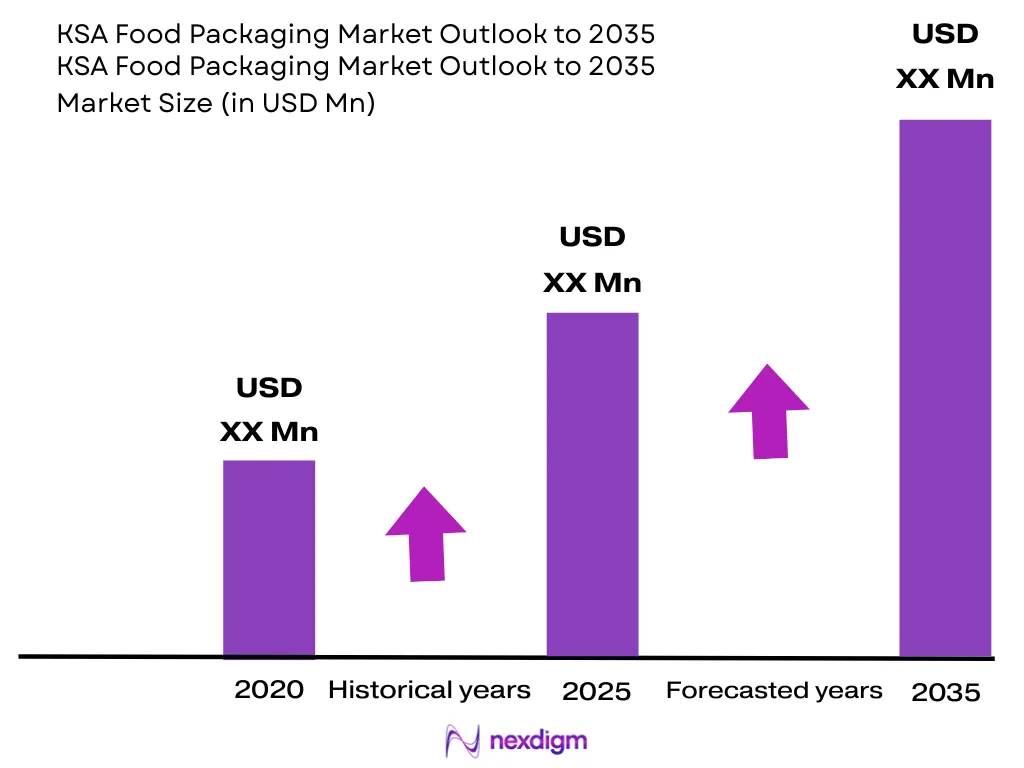
The KSA Food Packaging Market was valued at USD ~ Million in 2024 and is anticipated to expand at a CAGR of ~ % during 2026–2035. The market is primarily driven by rising demand for convenience and ready-to-eat foods, rapid urban population growth, and the Kingdom’s Vision 2030 program supporting economic diversification and food security. According to IMARC Group, the Saudi Arabia food packaging market reached approximately USD ~ million to USD ~ million in 2024-2025, with the country recognized as the fastest-growing regional market in the Middle East and Africa. Industry reports indicate that as of November 2024, approximately 92.3 percent of KSA residents live in urban areas, sustaining consistent demand for packaged, ready-to-eat, and convenience food formats across bakery, dairy, meat and seafood, beverages, and fresh produce applications.
Market Segmentation
By Packaging Type
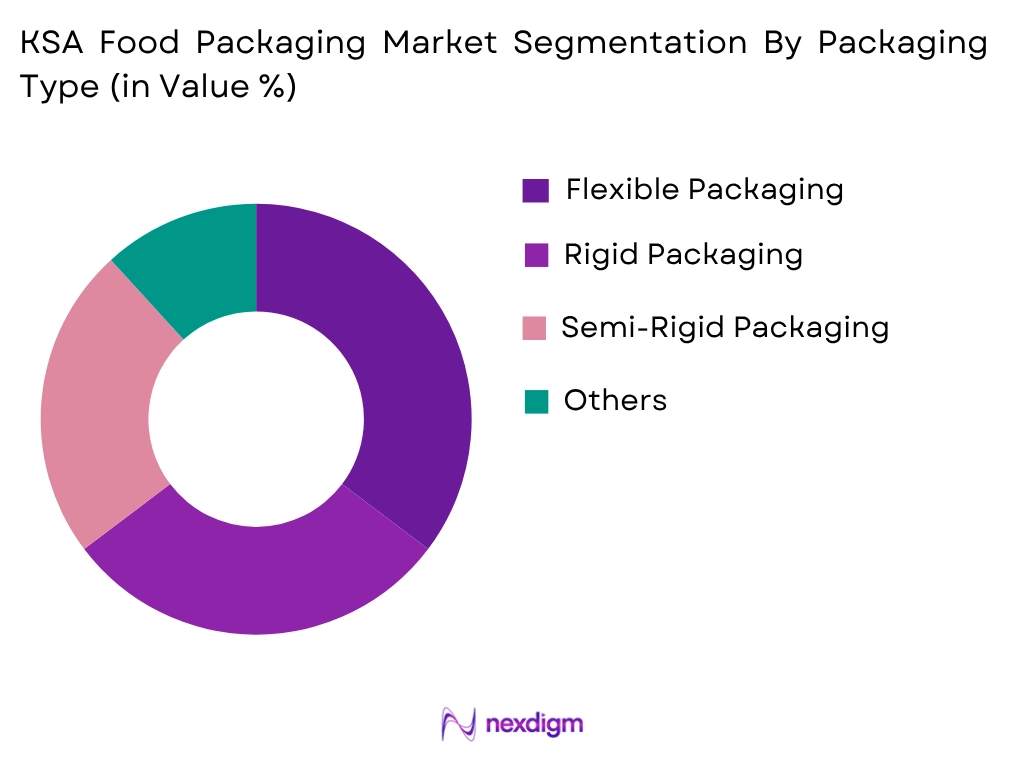
Among these, Flexible Packaging holds the largest share of the KSA Food Packaging Market, accounting for approximately 44.44 percent of total revenue in 2025 according to Horizon Databook, owing to its lightweight structure, cost efficiency, and suitability for snacks, ready-to-eat meals, and beverages. Flexible plastic also dominates the fresh food packaging segment due to its affordability and compatibility with poultry, meat, dairy, and produce packaging applications. At the same time, sustainable and circular packaging formats are gaining momentum following SABIC’s April 2024 rollout of the Kingdom’s first circular packaging project under its TRUCIRCLE program, in which FONTE introduced bread bags made with SABIC’s certified circular polyethylene, manufactured by Napco National using food-contact certified circular LLDPE resin grades. This milestone reflects a broader industry shift toward recycled and bio-based plastic formats as manufacturers respond to SASO’s Technical Regulation for Oxo-Biodegradable Plastics, which became fully enforceable in 2024.
By Application
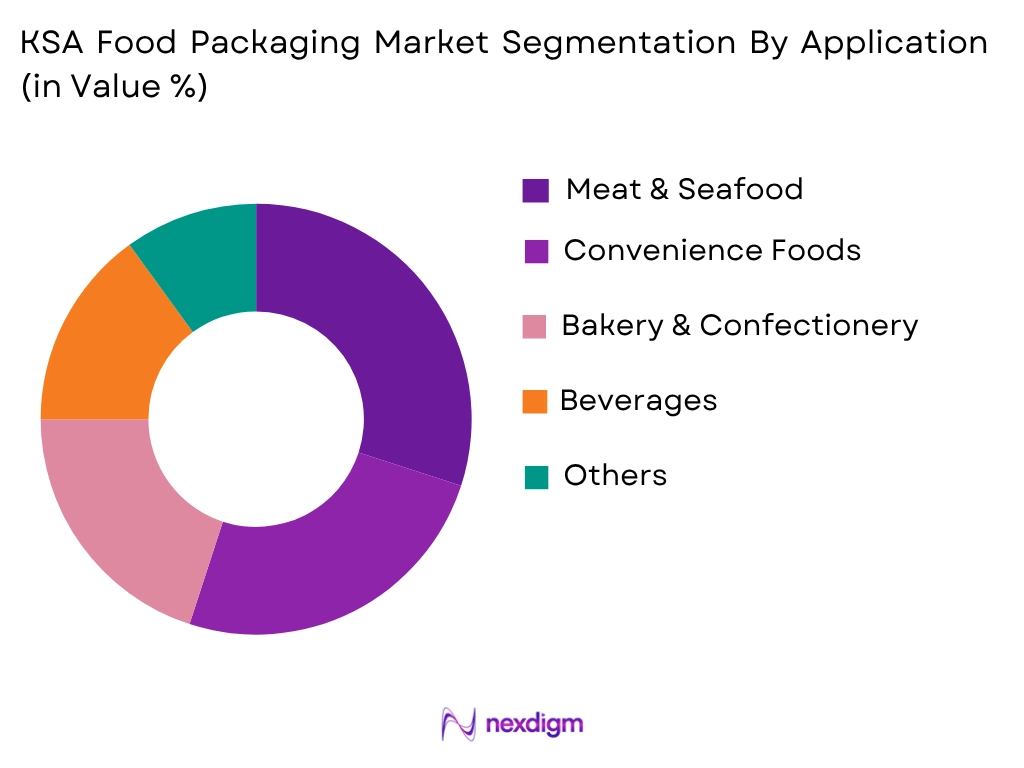
The Meat & Seafood segment holds a leading share, driven by high per capita meat consumption in Saudi Arabia and the requirement for hygienic, leak-proof packaging formats. Saudi Arabia’s fishery and marine product exports increased 35.5 percent to 48 thousand tons in 2022, while imports of fishery and marine products rose from 236 thousand tons in 2021 to 266 thousand tons in 2022, reflecting strong trade activity that sustains demand for protective packaging across cold chain and export logistics. Convenience and ready-to-eat food packaging is also expanding rapidly, with household takeaway frequency rising to 3.2 meals per week in 2024, nearly double the 2020 level, while quick-service outlets and delivery-only brands processed more than 200 million digital orders in 2024. Religious tourism creates pronounced seasonal demand spikes, as caterers in Mecca and Medina purchase an estimated 20 to 30 million disposable packaging items during Hajj alone.
Competitive Landscape
The KSA Food Packaging Market is moderately consolidated, with domestic manufacturers, regional GCC converters, and multinational packaging companies competing across plastic, paper, and aseptic carton formats. Competition is primarily based on feedstock integration, regulatory compliance, sustainability credentials, pricing, and the ability to serve both the domestic retail market and export demand across the GCC region. Companies located near SABIC’s resin production facilities benefit from shorter lead times and improved margin insulation during price spikes, while niche biopolymer converters continue to win tenders that stipulate zero-waste criteria. Strategic investments, including Hotpack Global’s planned SAR 1 billion (USD 270 million) mega packaging plant announced in 2023, and Tetra Pak’s October 2024 ‘Made, consumed and recycled in Saudi Arabia’ campaign reinforcing its role as a regional manufacturing hub, illustrate the scale of capital investment flowing into the Kingdom’s food packaging industry.
| Company | Establishment Year | Headquarters | Primary Product Portfolio | Food Packaging Portfolio
|
Manufacturing Presence | Major End-Use Industries | Key Strategic Focus | Certifications & Compliance |
| Napco National | 1990 | ~ | ~ | ~ | ~ | ~ | ~ | ~ |
| Tetra Pak Saudi Arabia | 1985 | ~ | ~ | ~ | ~ | ~ | ~ | ~ |
| SABIC | 1976 | ~ | ~ | ~ | ~ | ~ | ~ | ~ |
| Hotpack Packaging Industries | 1988 | ~ | ~ | ~ | ~ | ~ | ~ | ~ |
| Saudi Modern Packaging Co. Ltd. | 1998 | ~ | ~ | ~ | ~ | ~ | ~ | ~ |
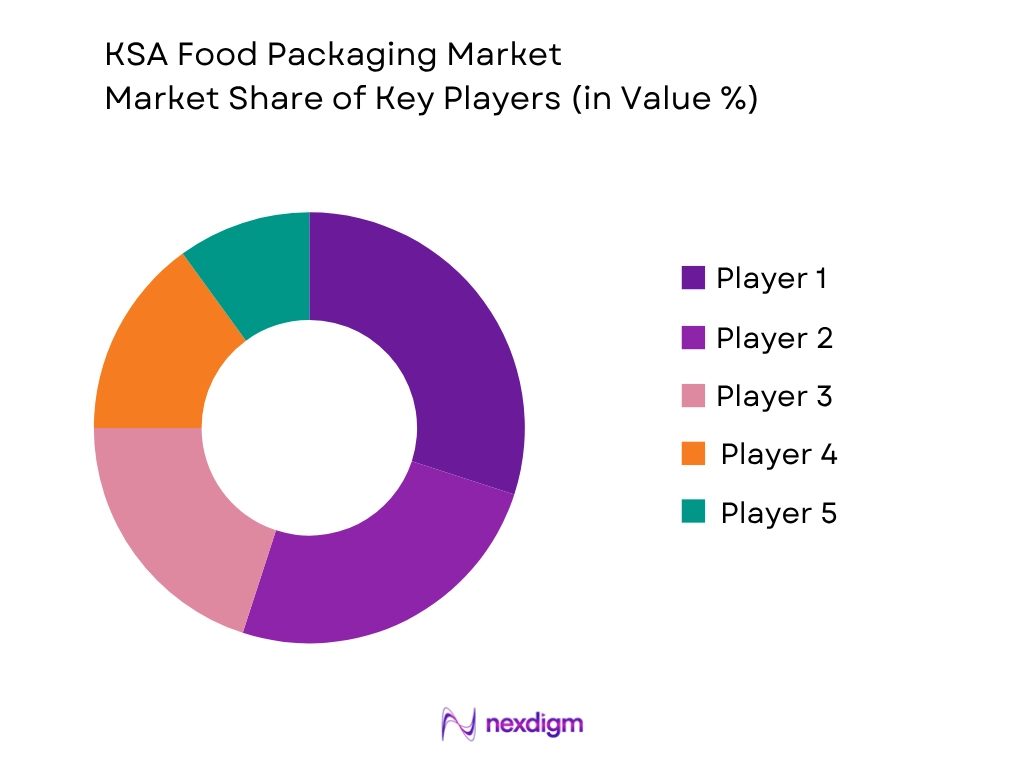
KSA Food Packaging Market Analysis
Growth Drivers
Growing Demand for Convenience Foods and E-Commerce Delivery
The KSA food packaging market is experiencing sustained growth due to increasing preference for convenience and ready-to-eat foods alongside rapid growth of e-commerce food delivery. According to Ken Research, Saudi Arabia’s convenience food market is projected to reach approximately SAR 25 billion, reflecting a 20 percent increase in ready-to-eat meal consumption driven by a growing urban population projected to reach 40 million. The e-commerce food delivery sector is expected to grow to approximately SAR 12 billion, up from SAR 8 billion previously, a 50 percent increase attributed to rising smartphone and internet penetration, with more than 97 percent of the population using mobile devices. This combination of expanding urban population, rising disposable income, and growing digital food ordering infrastructure continues to stimulate demand for durable, tamper-evident, and freshness-preserving food packaging formats across the Kingdom.
Vision 2030 Economic Diversification and Food Processing Expansion
The Saudi government’s Vision 2030 program, focused on diversifying the economy and supporting non-oil sectors including food and beverage manufacturing, remains a major driver for food packaging consumption. More than 600 food processing manufacturing units are set to become operational in the Kingdom in the coming years, expanding the requirement for diverse food packaging solutions across bakery, dairy, beverages, and confectionery applications. Major multinational food companies continue to invest heavily in domestic production capacity, including Nestle’s planned USD 2 billion investment in infant-nutrition and instant coffee manufacturing facilities and Arla Foods’ expansion of ready-to-drink production lines. Rising tourism under Vision 2030, with visitor numbers climbing from 100 million in 2024 toward a 150 million target by 2030, further amplifies demand for on-the-go food packaging across the Kingdom’s rapidly expanding hospitality and foodservice sectors.
Market Challenges
Heavy Dependence on Imported Food and Packaging Raw Materials
Despite strong domestic petrochemical production capacity, the KSA food packaging market remains vulnerable to its broader dependence on imported food and agricultural products, which constrains the domestic raw material base available for food processing and packaging. Saudi Arabia’s food and agricultural product imports from the United States alone reached USD 1.46 billion in 2023, including corn, tree nuts, and dairy products, reflecting the Kingdom’s limited agricultural landscape and reliance on imports to meet domestic food demand. This import dependency creates periodic shortages of raw materials for both food processors and packaging manufacturers, particularly for specialty barrier films and paperboard grades not produced domestically. These factors collectively increase production planning complexity and cost exposure for companies operating within the KSA food packaging industry.
Regulatory Compliance Complexity and Rising Raw Material Costs
The Kingdom’s evolving regulatory framework for sustainable packaging presents a significant compliance challenge for food packaging manufacturers. SASO’s Technical Regulation for Oxo-Biodegradable Plastics, which became fully enforceable in 2024, requires every polyethylene or polypropylene film under 250 microns to incorporate oxo-biodegradable additives and display certification logos, triggering plant-fiber substitution in secondary packaging and requiring converters to secure compliance certification quickly to avoid retailer penalties. Multinational quick-service restaurant chains are voluntarily expanding compliance requirements to primary packaging items, paying a 20 to 30 percent premium for bagasse clamshells to maintain global sustainability scorecards. In addition, the cost of raw materials in Saudi Arabia’s food packaging industry has increased due to global supply chain disruptions and rising oil prices, pressuring manufacturers to maintain profit margins while ensuring product quality and regulatory compliance.
Market Opportunities
Rising Investment in Circular and Recycled Plastic Packaging
The Kingdom’s petrochemical manufacturing base and government sustainability commitments create significant opportunities for investment in circular and recycled plastic packaging solutions. SABIC’s TRUCIRCLE program, which achieved its first commercial circular packaging rollout in April 2024 through a partnership with Napco National and FONTE, demonstrates the commercial viability of certified circular polyethylene for food-contact applications manufactured domestically. New entrants such as Emirates Biotech, with its Embio PLA series, are targeting displacement of Asian bioplastic imports and loosening price premiums on compostable grades. Detpak’s 2024 introduction of AS 5810-certified sugarcane clamshells further illustrates growing demand for premium sustainable formats among upscale foodservice and coffee chains. Players located adjacent to SABIC’s resin production facilities are positioned to capture significant advantages in lead times and cost stability as circular plastic adoption accelerates across the Kingdom.
Expansion of Foodservice Disposable Packaging and Religious Tourism Demand
Saudi Arabia’s expanding tourism sector, anchored by Vision 2030’s target of 150 million annual visitors by 2030, creates substantial opportunities for foodservice disposable packaging manufacturers. The domestic coffee sector alone expanded to USD 1.2 billion in 2024 and continues compounding at 8 to 10 percent annually, with Starbucks planning to surpass 400 Saudi stores by 2030 and specialty roasters rolling out 15 to 20 new cafes each year, with each site consuming significant volumes of disposable cups and packaging. Religious tourism to Mecca and Medina creates pronounced seasonal demand spikes, with caterers purchasing an estimated 20 to 30 million disposable items during Hajj alone. Resorts along the Red Sea coast operate under mandatory plastic-free charters, driving large-volume orders for compostable bowls and paper-based wraps, creating favorable conditions for manufacturers investing in sustainable foodservice packaging capacity.
Future Outlook
The KSA Food Packaging Market is expected to witness sustained expansion over the forecast period, supported by continued growth in convenience and ready-to-eat food consumption, expanding e-commerce and food delivery channels, and increasing regulatory and consumer pressure to adopt recyclable and sustainable packaging materials. Continued investment in circular plastics, modified atmosphere packaging, and compostable foodservice formats will further accelerate innovation across the industry. The market is also likely to benefit from the Kingdom’s role as a regional petrochemical and manufacturing hub under Vision 2030, enabling greater integration between domestic resin production and value-added food packaging manufacturing capable of serving both the domestic market and the wider GCC export region.
Major Players
- Napco National
- Tetra Pak Saudi Arabia
- SABIC
- Hotpack Packaging Industries
- Saudi Modern Packaging Co. Ltd.
- Packaging Products Company
- SAPIN
- LAMINA
- Al Sharq Flexible Packaging Factory
- National Packaging Products
- Amcor plc
- Ball Corporation
- SAQR Pack Company
- Falcon Pack Industry LLC
- Emirates National Factory for Plastic Industries LLC
Key Target Audience
- Food Packaging Manufacturers
- Food & Beverage Processing Companies
- Foodservice Operators and Quick-Service Restaurants
- Retail and Modern Trade Chains
- E-Commerce and Online Grocery Delivery Companies
- Investment and Venture Capitalist Firms
- Government and Regulatory Bodies (Saudi Standards, Metrology and Quality Organization (SASO), Saudi Food and Drug Authority (SFDA), National Center for Waste Management (MWAN))
- Packaging Material Suppliers and Industrial Raw Material Distributors
Research Methodology
Step 1: Identification of Key Variables
The research process begins with identifying the complete ecosystem of the KSA Food Packaging Market, including raw material and resin suppliers, packaging converters and manufacturers, food and beverage processors, retailers, foodservice operators, and regulatory authorities. Extensive secondary research is conducted using company annual reports, government publications, trade associations, customs statistics, industry journals, and proprietary databases to determine the variables influencing market demand, pricing, production, consumption, and technological developments.
Step 2: Market Analysis and Construction
Historical market information is collected and analyzed to estimate market size, production volumes, import-export activity, application-wise demand, and pricing trends. A combination of top-down and bottom-up approaches is used to estimate market revenues and validate segment-level performance. Consumption patterns across bakery, dairy, beverages, meat and seafood, and fresh produce are evaluated to establish an accurate representation of the industry.
Step 3: Hypothesis Validation and Expert Consultation
The preliminary findings are validated through Computer-Assisted Telephone Interviews (CATIs) and structured discussions with packaging manufacturers, procurement managers, converters, food technologists, regulatory experts, and senior executives operating within the KSA food packaging industry. These interviews help verify market assumptions, competitive developments, technology adoption trends, pricing dynamics, and future investment opportunities while refining the overall market estimates.
Step 4: Research Synthesis and Final Output
The final stage integrates insights obtained from primary interviews with quantitative information collected through secondary sources. Data triangulation techniques are applied to reconcile differences between supply-side and demand-side estimates, ensuring robust market forecasting. The report is then reviewed through multiple quality assurance checkpoints to deliver a comprehensive analysis covering market size, segmentation, competitive landscape, future outlook, and strategic recommendations for industry stakeholders.

- Executive Summary
- Research Methodology (Market Definitions and Assumptions, Abbreviations, Market Sizing Approach, Top-Down Analysis, Bottom-Up Analysis, Demand-Side Assessment, Supply-Side Assessment, Primary Industry Interviews, Secondary Research Validation, Data Triangulation, Forecasting Framework, Limitations and Future Conclusions)

- Definition and Scope
- Market Evolution and Industry Genesis
- Timeline of Major Industry Developments
- Food Packaging Industry Value Chain Analysis
- Supply Chain Analysis

- Growth Drivers (Rising Demand for Convenience and Ready-to-Eat Foods, Growth of E-Commerce and Online Grocery Delivery, Rapid Urban Population Growth, Vision 2030 Economic Diversification, Expanding Food Processing Industry, Rising Tourism and Religious Pilgrimage Demand)
- Market Challenges (Heavy Dependence on Imported Food and Packaging Raw Materials, Volatility in Petrochemical and Resin Prices, Regulatory Compliance Complexity Under SASO Standards, Limited Domestic Recycling Infrastructure, High Cost of Sustainable Packaging Alternatives, Competition from Regional GCC Manufacturers)
- Market Opportunities (Investment in Circular and Recycled Plastic Packaging, Growth in Modified Atmosphere and Smart Packaging, Expansion of Foodservice Disposable Packaging, Domestic Manufacturing Capacity Expansion Under Vision 2030, Export-Oriented Packaging Manufacturing for GCC Markets, Compostable and Bagasse-Based Packaging Adoption)
- Market Trends (Shift Toward Oxo-Biodegradable and Circular Plastics, Rising Adoption of Mono-Material Recyclable Packaging, Growth in Modified Atmosphere Packaging for Fresh Foods, Expansion of Aseptic Carton Manufacturing, Smart and Tamper-Evident Packaging Adoption, Industry Consolidation Through Investment)
- Government Regulations (Saudi Standards, Metrology and Quality Organization (SASO) Technical Regulations, Saudi Food and Drug Authority (SFDA) Food Contact Material Requirements, Oxo-Biodegradable Plastics Regulation, Vision 2030 Sustainability Initiatives, National Center for Waste Management (MWAN) Plastic Reduction Targets, Import Compliance and Labelling Requirements)
- Import and Export Analysis (Trade Volume, Major Import Sources, Export Destinations, HS Code Analysis, Trade Balance)
- Raw Material Availability Analysis (Plastic Resins and Petrochemical Feedstocks, Virgin and Recycled Paperboard, Aluminum, Glass, Bio-Based Materials)
- Technology Landscape (Modified Atmosphere Packaging, Circular and Recycled Plastic Technologies, Aseptic Carton Technology, Smart and Intelligent Packaging, Oxo-Biodegradable Additive Systems)
- Sustainability Assessment (Recyclability and Compostability, Post-Consumer Recycled Content, Carbon Footprint Reduction, Plastic Waste Reduction, Circular Economy Integration)
- PESTLE Analysis
- SWOT Analysis
- Porter’s Five Forces Analysis
- Stakeholder Ecosystem
- Competition Ecosystem

- By Market Value (2020-2025)
- By Volume Consumption (2020-2025)
- By Average Selling Price (2020-2025)

- By Material (In Value %)
Plastic Packaging
Paper & Paperboard Packaging
Metal Packaging
Glass Packaging
Sustainable & Biodegradable Packaging - By Packaging Type (In Value %)
Flexible Packaging
Rigid Packaging
Semi-Rigid Packaging - By Product Type (In Value %)
Bottles & Jars
Pouches & Bags
Trays & Clamshells
Cups
Cans & Drums
Boxes & Cartons - By Food Application (In Value %)
Bakery & Confectionery
Dairy Products
Meat & Seafood
Convenience Foods
Fruits & Vegetables
Sauces & Dressings
Beverages - By Region (In Value %)
Central Region (Riyadh)
Western Region (Jeddah, Mecca, Medina)
Eastern Region (Dammam, Khobar)
Southern Region

- Market Share of Major Players (By Value, Volume, Material Type, Application Industry, Product Category)
- Cross Comparison Parameters (Material Portfolio Breadth, Sustainable Packaging Portfolio, Barrier Performance Capability, Application Technical Support Capability, Manufacturing Capacity, Regulatory Compliance & Certifications, Food & Beverage Customer Base, Innovation & New Product Launch Frequency)
- SWOT Analysis of Major Players
- Pricing Analysis by Product Category and SKU
- Production Capacity Analysis
- Manufacturing Footprint Analysis
- Distribution Network Analysis
- Innovation Benchmarking
- Detailed Profiles of Major Companies
Napco National
Tetra Pak Saudi Arabia
SABIC
Hotpack Packaging Industries
Saudi Modern Packaging Co. Ltd.
Packaging Products Company
SAPIN
LAMINA
Al Sharq Flexible Packaging Factory
National Packaging Products
Amcor plc
Ball Corporation
SAQR Pack Company
Falcon Pack Industry LLC
Emirates National Factory for Plastic Industries LLC

- Consumption Pattern Analysis (Industrial Usage, Batch Size, Product Category Penetration, Seasonal Demand, Reformulation Activity)
- Purchasing Criteria (Barrier Performance, Cost Efficiency, Recyclability, Shelf-Life Extension, Regulatory Compliance, Print and Brand Presentation)
- Procurement and Supplier Selection Analysis
- Sustainable Packaging Adoption Assessment
- Premium vs Conventional Packaging Demand
- Product Attribute Preference Analysis (Barrier Properties, Resealability, Portion Control, Recyclability, Print Quality, Shelf Appeal)
- Consumer Sustainability Influence on Packaging Design
- Pain Point Analysis
- Decision-Making Process

- By Market Value (2026-2035)
- By Volume Consumption (2026-2035)
- By Average Selling Price (2026-2035)


 Request a Sample
 Ask for Customization
 Get a Quote
 Enquire Now