
 Download PDF
Market Overview
The KSA Foodservice Market is supported by rapid urbanization, increasing tourism activity, rising disposable income, and the expansion of organized restaurant chains across the Kingdom. The market generated approximately USD ~ billion in revenue, supported by more than 95,000 licensed foodservice establishments operating across quick service restaurants, cafés, cloud kitchens, and full-service dining formats. Online food delivery transactions exceeded 290 million annual orders through digital delivery applications, reflecting increasing consumer preference for convenience-oriented dining solutions. Expansion of entertainment infrastructure, shopping malls, mixed-use developments, and hospitality projects under Vision 2030 continues to accelerate demand for organized foodservice outlets across major urban centers.
Riyadh, Jeddah, Makkah, and Madinah dominate the KSA Foodservice Market due to high population concentration, tourism inflows, strong commercial infrastructure, and rising consumer spending on dining experiences. Riyadh remains the largest hub for international restaurant operators, premium café chains, and cloud kitchen investments because of increasing corporate activity and a large young consumer base. Jeddah benefits from tourism, port-driven commerce, and cosmopolitan dining culture, while Makkah and Madinah generate substantial demand from millions of religious pilgrims visiting annually. Eastern Province cities continue to witness strong growth due to industrial activity, expatriate populations, and expansion of organized retail and hospitality infrastructure.
Market Segmentation
By Foodservice Type
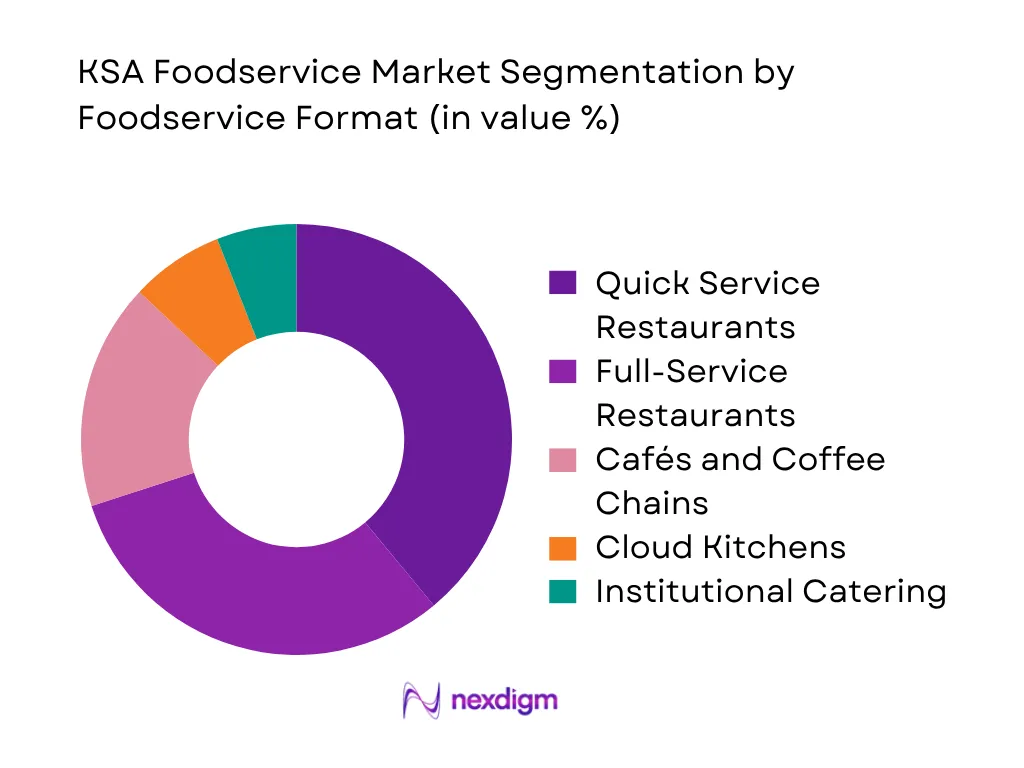
The KSA Foodservice Market is segmented by foodservice type into quick service restaurants, full-service restaurants, cafés and coffee chains, cloud kitchens, institutional catering, bakery and dessert chains, and fast casual restaurants. Quick service restaurants dominate the KSA Foodservice Market because of their affordability, widespread accessibility, strong delivery integration, and growing drive-thru infrastructure. Urban consumers increasingly prefer convenient and fast dining solutions due to busy work schedules and evolving lifestyles. Expansion of shopping malls, highway outlets, entertainment districts, and delivery-only kitchen models has strengthened penetration of quick service formats across major Saudi cities. Additionally, younger demographics and late-night dining culture continue to support high transaction frequency within this segment.
By Service Model
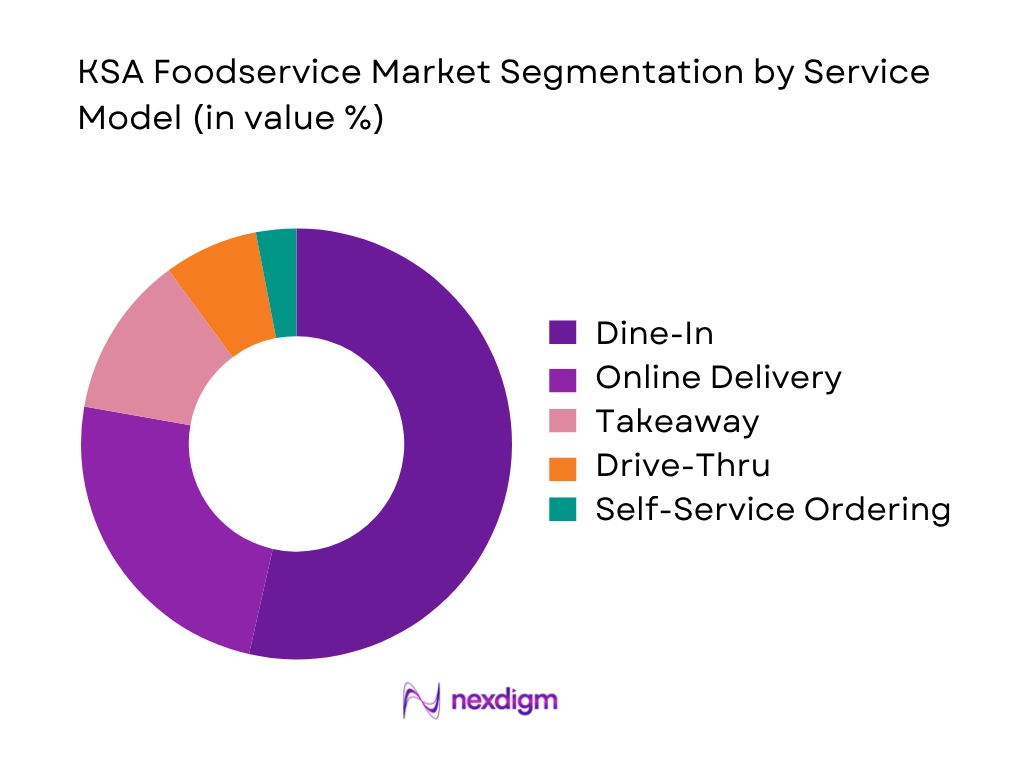
The KSA Foodservice Market is segmented by service model into dine-in, online delivery, takeaway, drive-thru, and self-service ordering. Dine-in dominates the market because dining outside the home is strongly associated with social gatherings, family-oriented culture, and experiential consumption patterns within Saudi Arabia. Consumers increasingly prefer premium dining experiences, specialty cafés, and themed restaurants located in shopping malls, mixed-use developments, and entertainment districts. Expansion of tourism and hospitality infrastructure has further accelerated dine-in demand across Riyadh, Jeddah, Makkah, and Madinah. Although online delivery platforms are witnessing strong adoption, dine-in continues to dominate because of higher average order values, group dining behavior, and increasing investments in restaurant ambience and customer engagement technologies.
Competitive Landscape
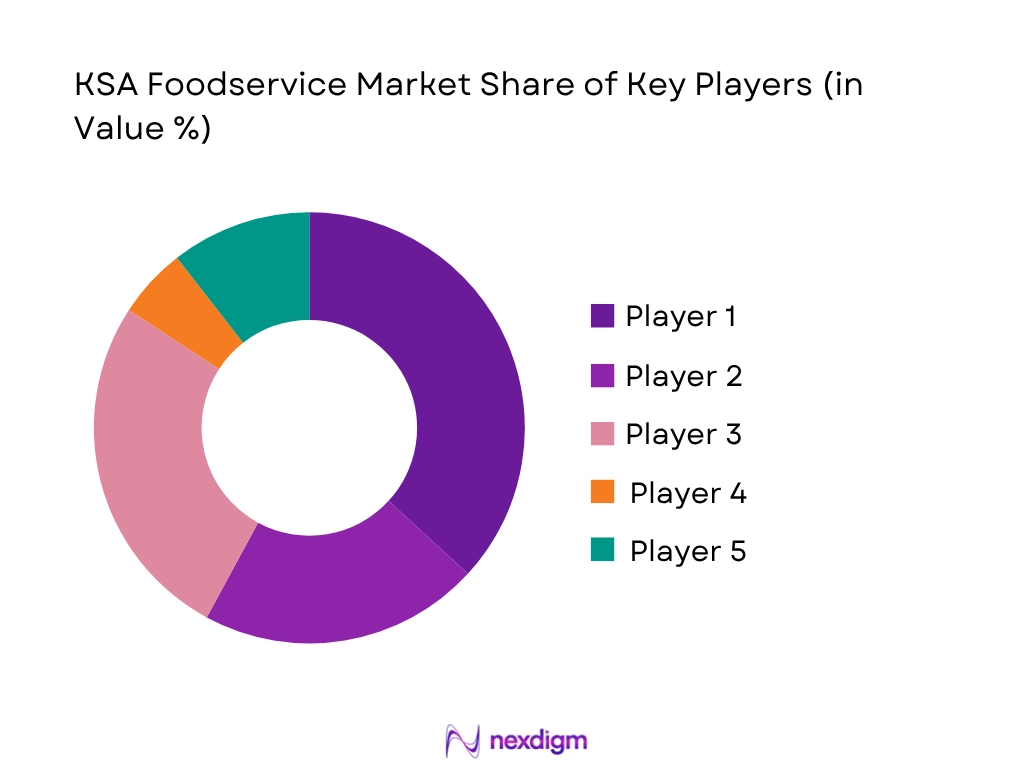
The KSA Foodservice Market is moderately consolidated, with major operators focusing on outlet expansion, digital ordering integration, menu localization, and premium dining experiences to strengthen market positioning. Organized restaurant chains continue expanding through franchise partnerships, delivery-focused kitchen formats, and investments in loyalty applications and drive-thru infrastructure. The competitive environment is also witnessing increasing participation from specialty café operators, fast casual brands, and cloud kitchen companies targeting urban consumers and tourism-driven demand centers.
| Company | Establishment Year | Headquarters | Foodservice Focus | Outlet Presence | Delivery Integration | Franchise Model | Cuisine Strength | Digital Loyalty Programs |
| Americana Restaurants | 1964 | UAE | ~ | ~ | ~ | ~ | ~ | ~ |
| AlBaik | 1974 | Jeddah, Saudi Arabia | ~ | ~ | ~ | ~ | ~ | ~ |
| Herfy Food Services | 1981 | Riyadh, Saudi Arabia | ~ | ~ | ~ | ~ | ~ | ~ |
| Shawarmer | 1999 | Riyadh, Saudi Arabia | ~ | ~ | ~ | ~ | ~ | ~ |
| Barn’s Coffee | 1992 | Jeddah, Saudi Arabia | ~ | ~ | ~ | ~ | ~ | ~ |
KSA Foodservice Market Analysis
Growth Drivers
Expansion of Religious and Leisure Tourism
Saudi Arabia’s tourism expansion has become one of the strongest demand generators for the foodservice industry. The Kingdom recorded nearly 116 million domestic and international tourists, including 29.7 million inbound visitors and 86.2 million domestic tourists. Religious tourism remains a major contributor, with more than 18.5 million Hajj and Umrah pilgrims visiting Makkah and Madinah. These visitors significantly increase demand for quick service restaurants, cafés, catering operators, hotel dining, and premium restaurant formats across religious and commercial hubs. Tourism spending reached SAR 284 billion, while international visitor spending exceeded SAR 168 billion, creating substantial demand for organized foodservice outlets, airport dining, catering services, and delivery kitchens. Expansion of entertainment districts, shopping malls, and hospitality projects under Vision 2030 continues to strengthen restaurant footfall and dining frequency across major urban centers.
Growth of Non-Oil Economy and Urban Consumer Spending
The growth of Saudi Arabia’s non-oil economy has directly strengthened the KSA Foodservice Market through increased household spending, urban infrastructure expansion, and higher commercial activity. Non-oil activities expanded by 4.7%, while wholesale and retail trade, restaurants, and hotels contributed 12.3% to national economic activity. Saudi Arabia’s GDP reached SAR 4.5 trillion, with non-oil sectors accounting for more than 53% of the economy. Riyadh attracted regional headquarters of over 675 international companies, increasing demand for corporate dining, café chains, and premium business district restaurants. Large-scale projects including NEOM, Diriyah Gate, Red Sea Project, and Qiddiya are accelerating mixed-use commercial infrastructure development and creating sustained demand for organized foodservice operators across Saudi Arabia.
Market Challenges
High Dependency on Imported Food Ingredients
Saudi Arabia’s foodservice market remains highly dependent on imported food ingredients, exposing restaurant operators to supply chain disruptions and commodity price fluctuations. The Kingdom imports a substantial portion of processed food products, grains, dairy items, meat products, and specialty ingredients due to agricultural limitations. Rising geopolitical tensions and Red Sea shipping disruptions have increased logistics complexity for restaurant operators dependent on imported raw materials. Delivery delays and longer procurement lead times continue to create operational pressure for quick service restaurants, cafés, and hotel dining operators. Specialty dining and café formats are particularly vulnerable because of reliance on imported gourmet ingredients, beverages, and seafood products.
Rising Labor Costs and Saudization Compliance
Implementation of Saudization policies and workforce localization reforms has increased operational costs for restaurant operators across Saudi Arabia. Foodservice businesses are required to increase participation of Saudi nationals within the workforce, resulting in higher payroll expenses, recruitment costs, and employee training investments. Rapid expansion of hospitality, entertainment, and tourism infrastructure has intensified competition for chefs, restaurant managers, and skilled service personnel. Restaurant operators are increasingly investing in automation technologies, self-service kiosks, and digital ordering systems to offset labor-related operational pressure. Peak tourism and pilgrimage seasons further increase workforce demand across Makkah, Madinah, Riyadh, and Jeddah.
Market Opportunities
Expansion of Entertainment and Mega Projects
Large-scale tourism and entertainment developments are creating significant opportunities for restaurant operators, café chains, and foodservice investors. Infrastructure projects including NEOM, Diriyah Gate, Red Sea Global, and Qiddiya are accelerating development of hotels, retail centers, entertainment districts, and mixed-use communities requiring integrated dining ecosystems. Riyadh continues to emerge as a regional tourism and business hub with increasing corporate activity and commercial expansion. Religious tourism projects in Makkah and Madinah are also expanding hospitality and dining infrastructure to accommodate rising pilgrim volumes. These developments create substantial opportunities for premium dining, specialty coffee chains, cloud kitchens, and international franchise operators.
Rapid Expansion of Digital Ordering and Cloud Kitchens
Saudi Arabia’s digital economy expansion is creating strong opportunities for delivery platforms, cloud kitchens, and technology-enabled restaurant models. Urban consumers increasingly prefer app-based ordering, digital payments, and loyalty-driven foodservice platforms across Riyadh, Jeddah, and Eastern Province cities. Delivery-focused dining models are gaining traction because of convenience-oriented lifestyles, rising smartphone penetration, and increasing participation of women in the workforce. Restaurant operators are investing in AI-enabled kitchen systems, self-order kiosks, and integrated delivery infrastructure to improve operational efficiency and customer retention. Cloud kitchens present scalable low-capital expansion opportunities across densely populated urban centers with high online ordering activity.
Future Outlook
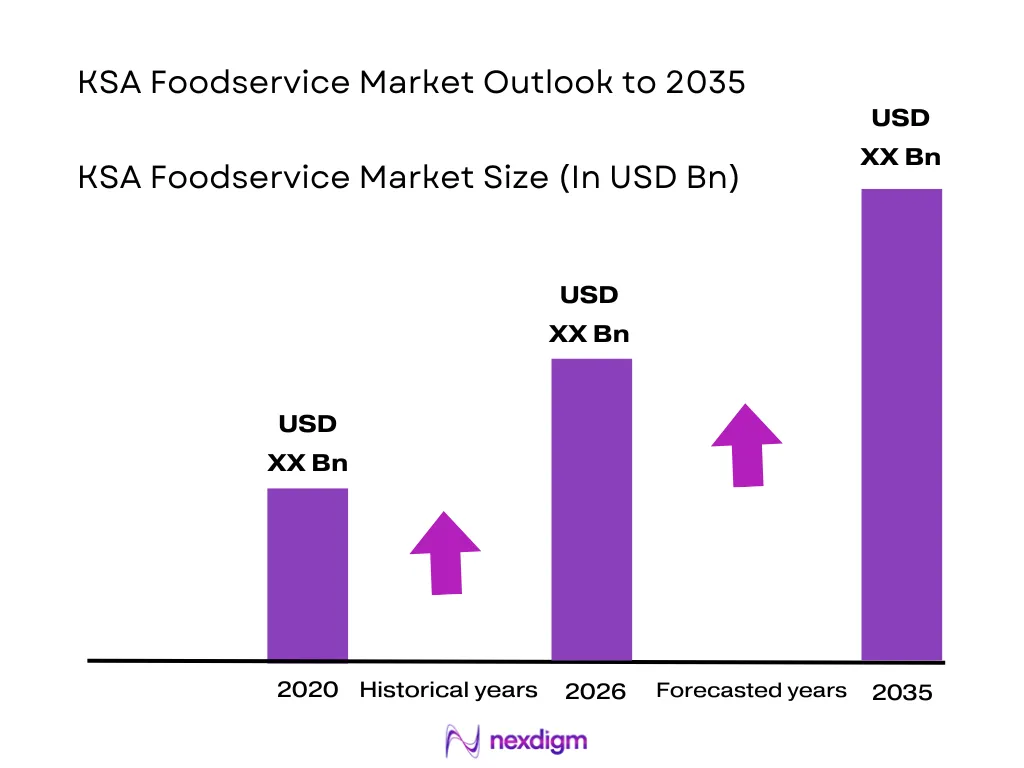
The KSA Foodservice Market is expected to witness substantial expansion over the coming years due to increasing tourism activity, rising urban consumer spending, and strong government investments in hospitality and entertainment infrastructure. Growing adoption of digital ordering platforms, cloud kitchens, and loyalty-driven dining applications is expected to strengthen organized foodservice penetration across the Kingdom. Restaurant operators are expected to focus heavily on experiential dining concepts, premium café culture, healthy menu offerings, and AI-enabled operational systems to improve customer engagement and efficiency. Expansion of mixed-use commercial developments, religious tourism infrastructure, and entertainment destinations is likely to generate long-term opportunities for domestic and international foodservice brands. Increasing investments in smart kitchens, sustainable packaging, and delivery optimization technologies are also expected to support long-term market growth across Saudi Arabia.
Major Players
- Americana Restaurants
- Herfy Food Services
- AlBaik
- Shawarmer
- Kudu
- Barn’s Coffee
- Half Million
- Maestro Pizza
- McDonald’s Saudi Arabia
- Burger King Saudi Arabia
- Pizza Hut Saudi Arabia
- Starbucks Saudi Arabia
- Domino’s Pizza Saudi Arabia
- Papa John’s Saudi Arabia
- Tamimi Markets Foodservice Division
Key Target Audience
- Restaurant Chain Operators
- Cloud Kitchen and Delivery-Only Operators
- Food Delivery Platform Companies
- Commercial Kitchen Equipment Manufacturers
- Hospitality and Tourism Developers
- Investments and Venture Capitalist Firms
- Government and Regulatory Bodies
- Food and Beverage Ingredient Suppliers and Distributors
Research Methodology
Step 1: Identification of Key Variables
The initial stage involved identifying critical variables influencing the KSA Foodservice Market, including tourism activity, consumer dining behavior, food delivery penetration, outlet expansion, and restaurant spending patterns. Extensive secondary research was conducted using government publications, trade databases, hospitality reports, and industry intelligence platforms to understand the overall ecosystem and operational value chain structure.
Step 2: Market Analysis and Construction
Historical market analysis was conducted using restaurant transaction data, tourism statistics, delivery order volumes, and outlet expansion trends across Saudi Arabia. Market revenue estimations were derived through bottom-up calculations based on service formats, cuisine categories, and regional demand analysis across major urban centers and tourism destinations.
Step 3: Hypothesis Validation and Expert Consultation
The preliminary market findings were validated through interviews with restaurant operators, delivery platform executives, franchise managers, café chains, and hospitality stakeholders. These consultations provided operational insights regarding pricing strategies, delivery integration, consumer preferences, profitability structures, and expansion plans within the Saudi foodservice industry.
Step 4: Research Synthesis and Final Output
The final phase involved consolidating qualitative and quantitative findings to produce a comprehensive market assessment. Cross-validation was conducted using trade statistics, hospitality indicators, tourism data, and operational benchmarks to ensure consistency and reliability of market estimates, segmentation analysis, and long-term growth projections for the KSA Foodservice Market.

- Executive Summary
- Research Methodology (Market Definitions and Assumptions, Abbreviations, Forecasting Framework, Bottom-Up Market Estimation, Top-Down Validation, Consumer Spending Analysis, Restaurant Footfall Mapping, Delivery Platform Assessment, Primary Interviews with Restaurant Operators and Aggregators, Demand-Supply Gap Analysis, Forecast Modeling Techniques, Limitations and Assumptions)

- Definition and Scope
- Evolution of Foodservice Consumption in Saudi Arabia
- Foodservice Ecosystem and Stakeholder Mapping
- Tourism and Hospitality Integration Analysis
- Supply Chain and Value Chain Analysis

- Growth Drivers
Expansion of Religious and Leisure Tourism
Growth of Non-Oil Economy and Urban Spending
Rapid Expansion of Food Delivery Platforms
Increasing Youth Population and Dining-Out Culture
Growth of Shopping Mall and Entertainment Infrastructure - Market Challenges
High Dependency on Imported Food Ingredients
Rising Labor Costs and Saudization Compliance
Margin Pressure from Delivery Aggregators
Supply Chain and Logistics Volatility - Market Opportunities
Expansion of Entertainment and Mega Projects
Growth of Cloud Kitchens and Delivery-Only Brands
Increasing Demand for Healthy and Functional Dining
Expansion of Premium Café and Specialty Coffee Culture - Market Trends
Rise of Specialty Coffee Chains
Expansion of AI-Enabled Restaurant Operations
Growth of Late-Night Dining Culture
Sustainable Packaging Adoption
Digital Loyalty and Subscription Programs
Premium Casual Dining Expansion - Government Regulations
SFDA Food Safety Standards
Municipality Licensing Requirements
Saudization Workforce Policies
VAT Regulations for Restaurants
Halal Certification Compliance - Porter’s Five Forces Analysis
- Pricing Analysis
- Stakeholder Ecosystem Analysis
- Competition Ecosystem
Herfy Food Services
AlBaik
Shawarmer
Kudu
Barn’s Coffee
Half Million
Maestro Pizza
McDonald’s Saudi Arabia
Burger King Saudi Arabia
Pizza Hut Saudi Arabia
Starbucks Saudi Arabia
Domino’s Pizza Saudi Arabia
Papa John’s Saudi Arabia
Tamimi Markets Foodservice Division

- By Revenue, 2020-2025
- By Transaction Volume, 2020-2025
- By Number of Foodservice Outlets, 2020-2025
- By Average Order Value, 2020-2025
- By Online Delivery Contribution, 2020-2025

- By Foodservice Type (in Value %)
Outlet Density
Average Ticket Size
Delivery Penetration
Table Turnover Rate
Consumer Footfall - By Cuisine Type (in Value %)
Consumer Preference Index
Menu Penetration
Repeat Purchase Frequency
Premium Dining Adoption - By Service Model (in Value %)
Order Fulfillment Time
Delivery Contribution
Takeaway Utilization
Dine-In Frequency - By Ownership Structure (in Value %)
Franchise Penetration
Brand Standardization
Capital Investment Intensity
Operational Scalability - By Ordering Platform (in Value %)
Monthly Active Users
Order Frequency
Commission Structure
Customer Retention - By Consumer Demographics (in Value %)
Per Capita Dining Spend
Dining-Out Frequency
Digital Ordering Adoption
Group Dining Incidence - By Location Type (in Value %)
Footfall Density
Tourism Traffic
Rental Occupancy Cost
Delivery Radius Efficiency - By Region (in Value %)
Riyadh
Jeddah
Makkah and Madinah
Eastern Province
Northern and Southern Regions

- Market Share Analysis of Major Players on the Basis of Revenue, Outlets, and Delivery Orders
- Cross Comparison Parameters (Company Overview, Restaurant Portfolio Breadth, Cuisine Specialization, Outlet Presence, Delivery Integration, Franchise Expansion Strategy, Kitchen Utilization Efficiency, Digital Loyalty Programs, Procurement Capabilities, Average Order Value, Drive-Thru Presence, Operational Scalability, Pricing Positioning, Innovation Pipeline, EBITDA Margins, Strategic Partnerships)
- Competitive Benchmarking Matrix
- SWOT Analysis of Major Players
- Pricing Analysis by Cuisine Type and Service Format
- Detailed Profiles of Major Companies

- Dining Frequency and Occasion Mapping
- Consumer Spending and Basket Analysis
- Digital Ordering and Loyalty Behavior
- Purchase Decision Parameters
- Health and Wellness Consumption Preferences
- Convenience and Delivery Preference Mapping

- By Revenue, 2026-2035
- By Transaction Volume, 2026-2035
- By Number of Outlets, 2026-2035
- By Average Order Value, 2026-2035
- By Online Delivery Contribution, 2026-2035


 Request a Sample
 Ask for Customization
 Get a Quote
 Enquire Now