

 Download PDF
 Download PDF
Market Overview
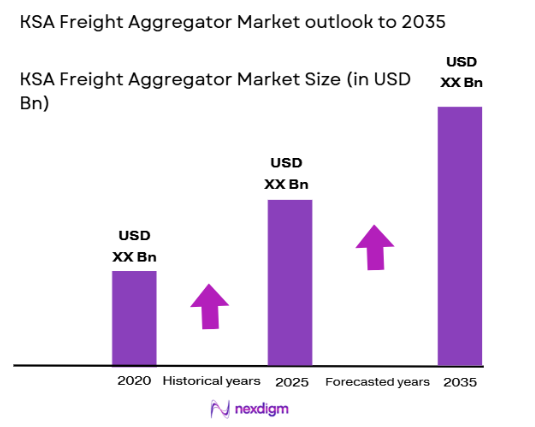
Based on a recent historical assessment, the KSA Freight Aggregator market is valued at approximately USD ~ billion. This market is driven by the rapid growth in e-commerce, demand for supply chain efficiency, and government initiatives to boost infrastructure. The increasing adoption of digital logistics platforms and the expansion of e-commerce in the region are key drivers of this market. Additionally, the government’s vision to transform the logistics sector, including investments in transportation infrastructure, plays a critical role in supporting the market’s growth.
Key cities driving the KSA Freight Aggregator market include Riyadh, Jeddah, and Dammam. Riyadh, as the capital city, holds a significant share due to its strategic location as a logistics hub and the presence of major transport companies. Jeddah’s proximity to key ports, including the Jeddah Islamic Port, enhances its role in the market. Dammam, being the gateway to the Eastern Province, further strengthens the market’s position. These cities benefit from government-backed initiatives aimed at improving port facilities, road networks, and customs processes.
Market Segmentation
By Product Type:
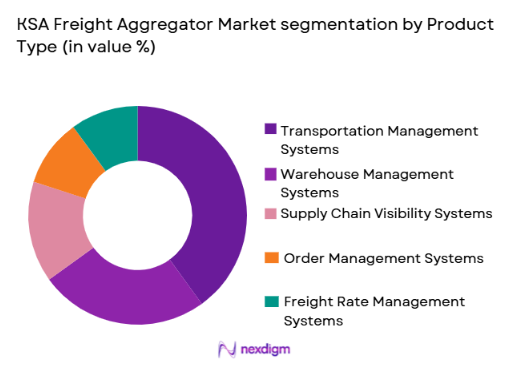
KSA Freight Aggregator market is segmented by product type into transportation management systems, warehouse management systems, supply chain visibility systems, order management systems, and freight rate management systems. Recently, transportation management systems (TMS) have a dominant market share due to the growing need for logistics optimization, improved route planning, and fuel cost management. This segment is particularly driven by the surge in demand for digital freight solutions that streamline operations, minimize delays, and enhance overall efficiency. Transportation management systems are also crucial in adapting to dynamic fuel price fluctuations and shifting customer demands.
By Platform Type:
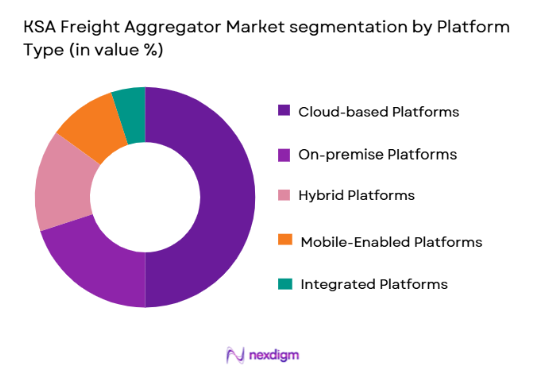
KSA Freight Aggregator market is segmented by platform type into cloud-based platforms, on-premise platforms, hybrid platforms, mobile-based platforms, and integrated platforms. Recently, cloud-based platforms have dominated the market share due to their scalability, ease of integration, and cost-effectiveness. Cloud solutions offer flexibility and remote access, which has become crucial as logistics companies seek to expand their operations without investing heavily in physical infrastructure. Cloud platforms also enable real-time tracking, better data analytics, and enhanced collaboration across the supply chain.
Competitive Landscape
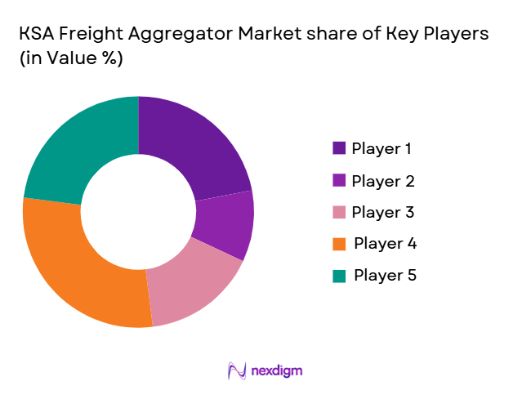
The competitive landscape of the KSA Freight Aggregator market is dominated by a mix of well-established logistics giants and newer technology-driven startups. These companies are increasingly consolidating their positions by investing in advanced technologies, such as AI, IoT, and blockchain, to offer more efficient and transparent freight solutions. The market also experiences a rise in strategic partnerships between local and international players to expand market reach and enhance service offerings.
| Company Name | Establishment Year | Headquarters | Technology Focus | Market Reach | Key Products | Revenue (USD) | Additional Parameter |
| Aramex | 1982 | Dubai, UAE | ~ | ~ | ~ | ~ | ~ |
| Zajil Express | 1991 | Riyadh, KSA | ~ | ~ | ~ | ~ | ~ |
| DHL | 1969 | Bonn, Germany | ~ | ~ | ~ | ~ | ~ |
| Naqel Express | 2005 | Riyadh, KSA | ~ | ~ | ~ | ~ | ~ |
| FedEx | 1971 | Memphis, USA | ~ | ~ | ~ | ~ | ~ |
KSA Freight Aggregator Market Analysis
Growth Drivers
Expansion of E-commerce:
The significant growth of e-commerce in KSA has been one of the key drivers of the freight aggregator market. With more businesses moving online and consumers preferring to shop digitally, the demand for faster and more reliable logistics services has increased. This surge in e-commerce leads to a higher volume of freight traffic and the need for more optimized freight management systems, thereby expanding the scope for freight aggregators. The growth in e-commerce platforms has created an urgent need for logistics providers to enhance their efficiency in managing complex supply chains, from warehousing to last-mile delivery. Freight aggregators are central to meeting these demands by offering cost-effective and scalable solutions to handle the growing volumes of goods being transported. As a result, companies in the freight aggregation space have capitalized on this trend, introducing advanced technology-driven solutions to cater to the growing e-commerce logistics needs.
Government Infrastructure Investments:
The KSA government has been investing heavily in transportation and logistics infrastructure under its Vision 2030 plan. These investments have a direct impact on the freight aggregation market by improving the overall logistics ecosystem. The development of ports, airports, and road networks enhances the ease and efficiency of transporting goods, making it a critical factor driving market growth. Moreover, the government’s push towards creating a more integrated and digital logistics sector has spurred innovation in freight aggregation services. With better infrastructure, freight aggregators can provide more reliable services, reduce transit times, and cut operational costs, thus benefiting both businesses and consumers. The government’s support for digital technologies, such as AI and blockchain, is further accelerating the adoption of innovative freight solutions in the region. These factors combined are expected to drive the freight aggregation market’s growth for the foreseeable future.
Market Challenges
Regulatory and Compliance Issues:
One of the biggest challenges facing the KSA Freight Aggregator market is the evolving regulatory environment. The logistics industry in the region is subject to a variety of local and international regulations, such as customs procedures, safety standards, and environmental requirements. Freight aggregators often face difficulties in staying compliant with these complex rules, which can lead to delays, increased operational costs, and legal risks. The lack of uniform regulations across different countries in the GCC region further complicates matters, creating barriers to smooth cross-border operations. Freight aggregators must continuously adapt to these regulations and ensure that they meet all compliance standards to avoid penalties and disruptions. Additionally, the changing nature of regulations, such as stricter emissions controls or data protection laws, adds uncertainty and complexity to the market, making it harder for companies to plan and execute their business strategies effectively.
Technological Integration and Interoperability:
Another significant challenge is the integration of new technologies with existing legacy systems. Freight aggregators are increasingly adopting digital solutions such as AI, machine learning, and blockchain to enhance service delivery, but these technologies often need to be integrated with older systems, which can be a complex and costly process. Many companies struggle with technological interoperability, leading to inefficiencies, data silos, and missed opportunities for automation. Furthermore, not all players in the market have the necessary resources or expertise to fully embrace these innovations, leaving them vulnerable to competition from more technologically advanced firms. The high upfront investment required for adopting cutting-edge technologies, coupled with the challenges of system integration, creates significant barriers for smaller players in the freight aggregation market. This lack of technological readiness and integration can hinder the growth potential of these companies and prevent them from fully capitalizing on the opportunities presented by digital transformation.
Opportunities
Smart and Autonomous Freight Solutions:
The increasing interest in smart logistics and autonomous freight solutions presents a significant opportunity for the KSA Freight Aggregator market. Smart logistics, driven by IoT, AI, and automation, enables better route optimization, real-time tracking, and improved decision-making. Autonomous vehicles, drones, and robotics are revolutionizing the way goods are transported, making the supply chain faster and more efficient. Freight aggregators can leverage these technologies to offer innovative solutions that not only improve operational efficiency but also reduce human intervention and error. The rising demand for faster delivery times, along with the focus on sustainability, is further fueling the growth of smart and autonomous freight solutions. By incorporating these technologies, companies can stay ahead of the competition and meet the growing needs of the e-commerce sector, which is demanding faster and more reliable delivery services. As the market continues to evolve, embracing autonomous solutions will be key to sustaining growth and improving customer satisfaction.
Expansion into Emerging Markets:
As the KSA Freight Aggregator market matures, there is a growing opportunity to expand into emerging markets in the Middle East and Africa. Many of these markets are witnessing rapid urbanization, growing trade volumes, and an increasing demand for logistics solutions, especially in industries such as e-commerce and manufacturing. Freight aggregators can tap into these markets by offering cost-effective solutions and leveraging their expertise in supply chain management. Expanding into these regions presents a strategic opportunity for KSA-based companies to diversify their revenue streams and reduce their dependence on the domestic market. Additionally, the rise of e-commerce and the demand for faster, more reliable logistics solutions in these regions creates an attractive environment for freight aggregators to establish a strong foothold. By partnering with local players or investing in infrastructure, companies can effectively scale their operations and capture new market share in these high-growth areas.
Future Outlook
The KSA Freight Aggregator market is expected to experience robust growth over the next five years, driven by ongoing investments in infrastructure, the rise of e-commerce, and the adoption of smart logistics solutions. Technological advancements such as AI, IoT, and autonomous vehicles are set to revolutionize the sector, offering enhanced efficiency and reducing operational costs. Regulatory support, coupled with demand-side factors such as improved supply chain requirements, will further fuel market expansion. The future of the market is likely to be shaped by increasing competition, technological innovation, and growing demand for faster and more transparent delivery services, positioning the KSA Freight Aggregator market for long-term success.
Major Players
- Aramex
- Zajil Express
- DHL
- Naqel Express
- FedEx
- UPS
- Saudi Post
- Al-Faisal Group
- LogiPoint
- TCS Express
- Al Harbi Transport
- Shree Maruti Express
- Gulf Warehousing Company
- Schneider Electric
- Hala Supply Chain Solutions
Key Target Audience
- Investments and venture capitalist firms
- Government and regulatory bodies
- Retailers
- E-commerce companies
- Third-party logistics providers
- Manufacturers
- Transportation companies
- Distribution networks
Research Methodology
Step 1: Identification of Key Variables
Identification of critical market drivers, challenges, opportunities, and trends that influence the KSA Freight Aggregator market.
Step 2: Market Analysis and Construction
Conducting detailed research to develop market segmentation, competition analysis, and growth forecasts.
Step 3: Hypothesis Validation and Expert Consultation
Consulting with industry experts, stakeholders, and market leaders to validate hypotheses and insights.
Step 4: Research Synthesis and Final Output
Compiling and synthesizing the research findings into a cohesive, comprehensive market report for strategic decision-making.

- Executive Summary
- Research Methodology (Definitions, Scope, Industry Assumptions, Market Sizing Approach, Primary & Secondary Research Framework, Data Collection & Verification Protocol, Analytic Models & Forecast Methodology, Limitations & Research Validity Checks)

- Market Definition and Scope
- Value Chain & Stakeholder Ecosystem
- Regulatory / Certification Landscape
- Sector Dynamics Affecting Demand
- Strategic Initiatives & Infrastructure Growth

- Growth Drivers
Increased E-commerce Activity
Rising Demand for Supply Chain Optimization
Government Investments in Infrastructure Development
Technological Advancements in Logistics
Increasing Need for Efficient Freight Management - Market Challenges
High Operational Costs
Regulatory Compliance Issues
Integration with Legacy Systems
Lack of Standardization
Security and Data Privacy Concerns - Market Opportunities
Expanding E-commerce Sector
Partnerships with Logistics Companies
Government Support for Smart City Projects - Trends
Adoption of Automation in Freight Management
Increase in Real-time Freight Tracking
Shift Towards Sustainable Freight Solutions
Integration of IoT for Fleet Management
Rise in Demand for Blockchain in Logistics - Government Regulations & Defense Policy
Regulatory Requirements for Freight Aggregators
Government Policies on Transportation
Security Regulations for Data in Freight - SWOT Analysis
- Stakeholder and Ecosystem Analysis
- Porter’s Five Forces Analysis
- Competition Intensity and Ecosystem Mapping

- By Market Value, 2020-2025
- By Installed Units, 2020-2025
- By Average System Price, 2020-2025
- By System Complexity Tier, 2020-2025

- By System Type (In Value%)
Transportation Management Systems
Warehouse Management Systems
Supply Chain Visibility Systems
Order Management Systems
Freight Rate Management Systems - By Platform Type (In Value%)
Cloud-based Platforms
On-premise Platforms
Hybrid Platforms
Mobile-based Platforms
Integrated Platforms - By Fitment Type (In Value%)
On-premise Solutions
Cloud-based Solutions
Modular Solutions
Integrated Solutions
Hybrid Solutions - By EndUser Segment (In Value%)
Retailers
E-commerce Companies
Third-Party Logistics Providers
Manufacturers
Transportation Companies - By Procurement Channel (In Value%)
Direct Procurement
Online Bidding Platforms
Government Tenders
Third-party Distributors
Private Sector Procurement - By Material / Technology (in Value%)
Artificial Intelligence & Machine Learning
Internet of Things (IoT)
Blockchain Technology
Big Data Analytics
Automation Technologies

- Market structure and competitive positioning
- Market share snapshot of major players
- CrossComparison Parameters (System Type, Platform Type, Procurement Channel, EndUser Segment, Fitment Type, Material/Technology, Geographic Reach, Pricing Strategy, Customer Service, Technological Advancements)
- SWOT Analysis of Key Players
- Pricing & Procurement Analysis
- Key Players
Aramex
Saudi Post
Al-Faisal Group
Awtad Logistics
Zajil Express
Naqel Express
DHL
FedEx
UPS
TCS Express
LogiPoint
Al Harbi Transport
Saudi Logistics Association
Gulf Warehousing Company
Shree Maruti Express

- E-commerce Companies’ Adoption of Freight Aggregators
- Retailers Focus on Logistics Efficiency
- Transportation Companies’ Investment in Automation
- Manufacturers Seeking Supply Chain Optimization

- Forecast Market Value, 2026-2035
- Forecast Installed Units, 2026-2035
- Price Forecast by System Tier, 2026-2035
- Future Demand by Platform, 2026-2035


 Request a Sample
 Ask for Customization
 Get a Quote
 Enquire Now