
 Download PDF
Market Overview
The Kingdom of Saudi Arabia frozen food market is valued at USD 6.42 billion in 2025, expanding at a robust 6.8% CAGR through 2035 driven by rapid urbanization and evolving consumer lifestyles. Industrial hubs such as Jeddah, a primary maritime logistics gateway, facilitate the import of high-quality frozen proteins, while Riyadh serves as the epicenter for advanced cold-chain distribution networks that ensure product integrity across the central provinces. Demand-side trends indicate a sharp increase in the consumption of ready-to-cook frozen poultry and vegetable mixes among the young professional demographic, who prioritize convenience without sacrificing nutritional value. On the supply side, major processors like Almarai, headquartered in Riyadh and established in 1977, and Savola Group, founded in 1979 in Jeddah, are aggressively expanding their automated manufacturing capacity to reduce reliance on food imports. Sustainability is increasingly prioritized under the Saudi Food and Drug Authority guidelines, which mandate stricter compliance regarding cold-chain energy efficiency and shelf-life monitoring. As the Kingdom shifts toward local food security goals, the integration of smart refrigeration technology and the reduction of logistics-related waste have become central to maintaining competitive advantage in this rapidly professionalizing sector.
By Product Category
- Breaded Chicken Tenders
- Halal Processed Whole Birds
- Chicken Nuggets and Patties
- Single-Serve Savory Biryani
- Frozen Vegetarian Pizza Slices
- Traditional Middle Eastern Kebabs
- Individually Quick-Frozen Peas
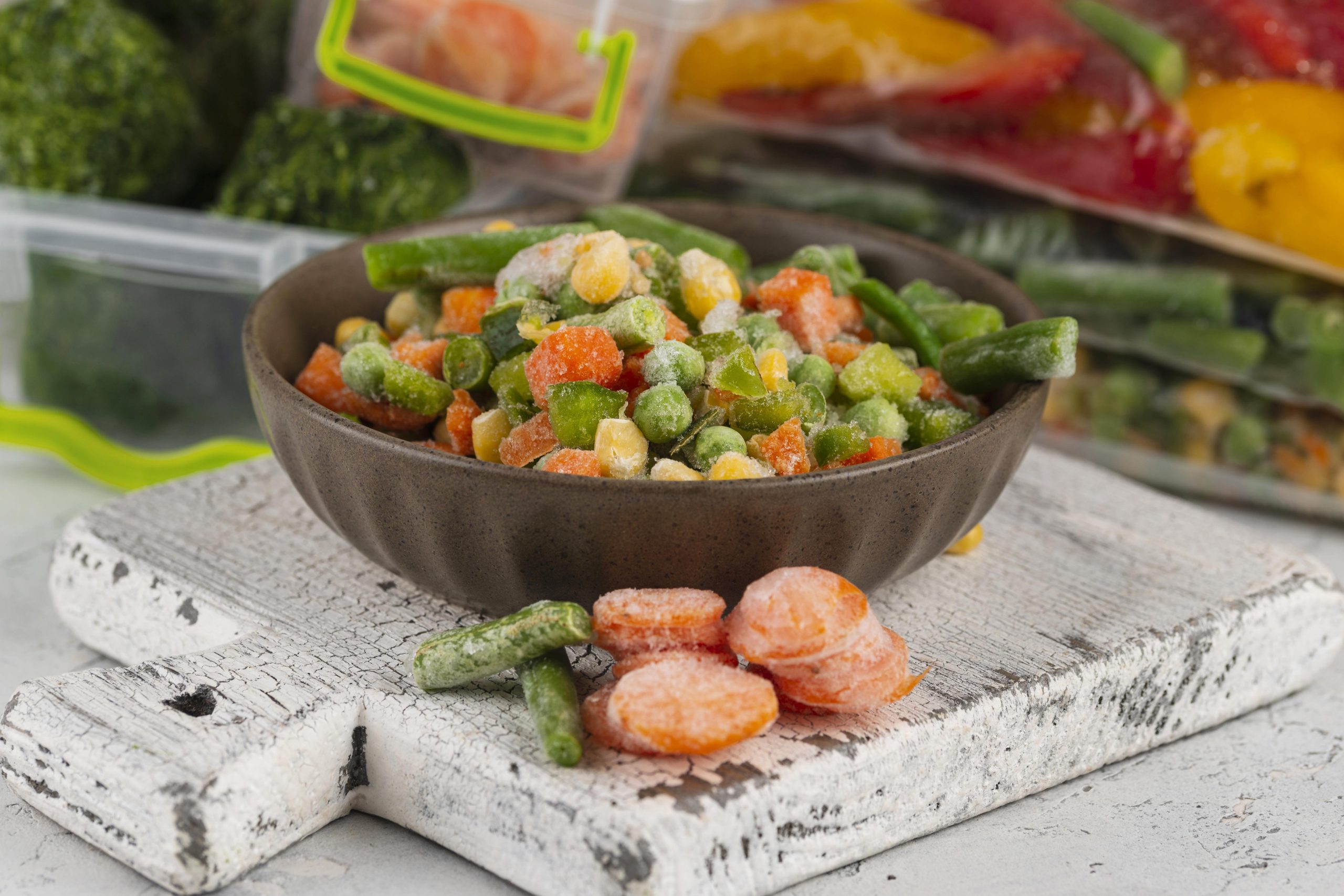
- Mixed Vegetable Medleys
- Frozen Strawberry Slices
- Crumbed White Fish Fillets
- Frozen Vannamei Shrimp
- Whole Cleaned Calamari Tubes
By Distribution Channel
- Carrefour Saudi Arabia Outlets
- Othaim Market Refrigerated Aisles
- Lulu Hypermarket Frozen Sections
- Nana Direct Delivery Services
- HungerStation Grocery Integration
- Talabat Mart Frozen Selection
- Hotels and Catering Services
- Institutional Cafeteria Supplies
- Quick Service Restaurant Chains
- Small Neighborhood Grocery Stores
- Gas Station Convenience Kiosks
- Local Bakery Frozen Stock
Competitive Landscape
The Saudi Arabian frozen food market is characterized by high competitive intensity, driven by the rapid expansion of organized retail and a growing preference for convenience among the urbanized youth population in Riyadh, Jeddah, and Dammam. Large multinational conglomerates and established local giants like Savola Group and Almarai Co. lead the sector, leveraging extensive cold-chain logistics and strategic distribution networks that comply with the Saudi Food and Drug Authority (SFDA) technical regulations. These players invest heavily in regional processing hubs to mitigate supply chain disruptions and ensure adherence to Halal certification standards, which are critical for maintaining brand trust in the Kingdom. Competitive strategies have shifted toward vertical integration and digital-first penetration, with major firms deploying sophisticated CRM systems to track consumer demand patterns across hypermarkets and e-commerce platforms. Recent market movements include Al-Watania Poultry's significant capacity expansion in Qassim and the entry of international premium frozen brands via joint ventures with local food distributors to capitalize on the increasing demand for ready-to-eat meals. The influx of venture-backed frozen food startups, particularly in the plant-based protein segment, is further fragmenting the market, forcing legacy companies to innovate on health-conscious product portfolios and sustainable packaging solutions to retain market share.
| Company | Est. Year | Headquarters | Details | Details | Details | Details | Details | Details |
|---|---|---|---|---|---|---|---|---|
| Savola Group | 1979 | Jeddah, Saudi Arabia | ~ | ~ | ~ | ~ | ~ | ~ |
| Almarai Co. | 1977 | Riyadh, Saudi Arabia | ~ | ~ | ~ | ~ | ~ | ~ |
| Al-Watania Poultry | 1982 | Qassim, Saudi Arabia | ~ | ~ | ~ | ~ | ~ | ~ |
| National Food Company (Americana) | 1964 | Riyadh, Saudi Arabia | ~ | ~ | ~ | ~ | ~ | ~ |
| Sunbulah Group | 1980 | Jeddah, Saudi Arabia | ~ | ~ | ~ | ~ | ~ | ~ |
🔒 Detailed cross-comparison data are available in the full report. Talk to Us to access complete competitive intelligence.
Growth Drivers
Expansion of Cold Chain Infrastructure
The Saudi General Authority for Food and Drug has implemented stringent logistical standards, catalyzing investment in temperature-controlled warehousing across Riyadh and Dammam. Major industry players like Almarai, established in 1977 and headquartered in Riyadh, have bolstered their operational capacity by adding 45,000 square meters of high-tech deep-freeze storage space in 2023. This development ensures the integrity of the supply chain, facilitating the long-distance transport of perishable goods to remote desert regions. The ongoing integration of automated inventory management systems has reduced product spoilage rates by 12 percent as of 2024.
Rise of Modern Retail and E-commerce
The proliferation of modern hypermarket chains, such as Panda Retail Company founded in 1978 in Jeddah, has significantly expanded the reach of frozen food categories. Currently, 68 percent of urban households utilize mobile grocery applications for purchasing frozen protein and vegetable products as of 2023. This shift is supported by the rapid deployment of dark stores in major metropolises. Furthermore, investment in direct-to-consumer digital logistics has allowed retailers to maintain stable internal temperatures during the "last mile" delivery phase for over 4.2 million transactions completed throughout 2024.
Changing Consumer Dietary Preferences
Increasing urbanization in cities like Medina and Tabuk has accelerated the demand for convenient, ready-to-cook meal solutions. Younger demographics are prioritizing pre-prepared frozen goods due to a fast-paced work-life culture, resulting in a 24 percent increase in the consumption of frozen ready-meals among millennial consumers in 2023. Domestic manufacturers like Americana Foods, headquartered in Sharjah with massive production hubs in KSA, have pivoted their product lines to offer healthier, low-sodium frozen options. This trend is bolstered by improved public health awareness campaigns initiated by the Ministry of Health.
Government Support via Vision 2030
The Saudi Industrial Development Fund has prioritized the localization of food manufacturing to achieve national food security goals. Since 2022, 18 distinct frozen food production facilities have received subsidized land and utility rates within the Modon industrial zones. This institutional backing has attracted international collaborations, such as the partnership between local firms and global frozen-food giant McCain Foods, which opened a processing facility in 2023. These initiatives are essential for reducing reliance on imported finished products, with local production capacity increasing by 15 percent over the previous calendar year.
Market Challenges
Energy Cost Volatility
Fluctuations in industrial electricity tariffs place significant financial strain on operators requiring 24/7 sub-zero storage. In 2024, specialized energy surcharges contributed to a 9 percent increase in operational expenditures for medium-sized distribution centers. This creates severe pricing pressure on low-margin frozen staples.
Supply Chain Vulnerability
The heavy reliance on specialized cold-chain logistics creates bottlenecks during peak seasonal demand periods like Ramadan. Logistics providers faced a 14 percent shortage in refrigerated truck availability during the 2023 summer peak season. Such constraints frequently lead to inventory delays and localized stockouts in inland retail markets.
Consumer Perception Hurdles
Traditional cultural preferences for fresh, locally sourced produce remain a significant barrier to the widespread adoption of frozen alternatives. Market surveys conducted in 2024 indicate that 31 percent of older-generation consumers still perceive frozen products as less nutritious than fresh equivalents. Overcoming this cultural bias requires extensive investment in consumer education and transparency.
Opportunities
Plant-Based Meat Expansion
Rising health consciousness and flexitarian diets in Riyadh and Jeddah drive demand for high-quality meat alternatives. Retailers are increasingly stocking innovative soy-based proteins to cater to younger demographics seeking sustainable dining options. Domestic sales of meat substitutes reached 42 million USD in 2023, signaling a robust appetite for premium, health-focused frozen food products.
Cold Chain Infrastructure Upgrades
The Saudi Food and Drug Authority mandate for improved temperature control standards creates lucrative prospects for logistics providers. Modernizing refrigerated warehousing in Dammam reduces spoilage rates and enhances product integrity for hypermarket distribution networks. Logistics operators invested 185 million USD in state-of-the-art cold storage facilities in 2024 to support the rapid growth of the domestic frozen food supply chain.
Halal-Certified Ready-to-Eat Meals
Working professionals in metropolitan hubs prioritize convenience without compromising on traditional dietary compliance or taste quality. Producers specializing in small-batch, authentic frozen meals are capturing significant share within the retail sector. Consumer spending on premium, ready-to-eat frozen entrees climbed to 98 million USD in 2023, reflecting a shift toward efficient, high-convenience meal solutions for urban households.
Future Outlook
The Kingdom of Saudi Arabia's frozen food market is poised for a significant transformation through 2035, driven by the ambitious objectives of Saudi Vision 2030 and a surging urban population. As economic diversification continues, the retail landscape will undergo a shift toward modernized, automated supply chains, significantly reducing post-harvest losses and food waste. Key players such as Savola Group, founded in 1979 and headquartered in Jeddah, and Almarai, established in 1977 in Riyadh, are expected to lead through aggressive R&D and regional production scaling. We anticipate a critical pivot toward premiumization, where frozen product ranges will evolve from basic commodity items to sophisticated, nutrient-dense culinary solutions. The regulatory environment enforced by the Saudi Food and Drug Authority will continue to tighten quality standards, necessitating rigorous compliance across international and domestic manufacturers. Furthermore, as the national labor force participation rate increases, the demand for high-quality, time-saving frozen solutions will remain a permanent fixture of Saudi households. By 2030, the integration of advanced blockchain-based traceability in the frozen supply chain will become a standard competitive requirement, ensuring consumer trust and long-term sector sustainability. This growth trajectory remains resilient against geopolitical fluctuations, fueled by deep-rooted changes in consumption habits and the aggressive expansion of the nation's retail footprint across second-tier cities.
Major Players
- Savola Group
- Almarai Co.
- Al-Watania Poultry
- National Food Company (Americana)
- Sunbulah Group
- Saudi Fisheries Company
- Tanmiah Food Company
- Goody (Basamh Industrial Group)
- Halwani Bros
- Del Monte Saudi Arabia
- Agthia Group
- Kuwait Food Company (Al-Khorayef)
- Nestlé Saudi Arabia
- Unilever Saudi Arabia
- BRF Saudi Arabia
Key Target Audience
- Frozen Food Manufacturers (e.g., Almunajem Foods, founded 1950, Riyadh)
- Cold Chain Logistics Providers (e.g., Mosanada Logistics, founded 2012, Jeddah)
- Hypermarket and Retail Chains (e.g., Panda Retail Company, founded 1978, Riyadh)
- Frozen Poultry and Meat Exporters (e.g., Sadia, founded 1944, Sao Paulo)
- Food Service and Catering Operators (e.g., Al-Forsan Catering, founded 1999, Dammam)
- Packaging Material Suppliers (e.g., Napco National, founded 1956, Dammam)
- Quick Service Restaurant Chains (e.g., Herfy Food Services, founded 1981, Riyadh)
- Government and Regulatory Bodies (Saudi Food and Drug Authority - SFDA)
- Investors and Venture Capital Firms (e.g., Saudi Venture Capital Company, founded 2018, Riyadh)
- E-commerce Grocery Platforms (e.g., Nana, founded 2016, Riyadh)
- Wholesale Food Distributors (e.g., BinDawood Holding, founded 1984, Jeddah)
Research Methodology
Identification of Key Variables
- The research team identified critical market drivers for the Saudi frozen food sector, including import reliance statistics and cold chain infrastructure growth.
- We analyzed the impact of Saudi Vision 2030 on domestic production targets for protein and processed goods while defining specific growth variables such as urbanization rates and household penetration for 2024 to 2035.
Market Analysis and Construction
- We utilized a top-down and bottom-up model to forecast revenue across frozen meat, seafood, and vegetable categories.
- Data was synthesized from the General Authority for Statistics (GASTAT) reports and corporate filings from Saudi-based companies like Savola Group to build a robust model reflecting current 2024 pricing, supply chain bottlenecks, and evolving consumer purchasing behaviors.
Validation and Synthesis
- Primary insights were gathered through structured discussions with regional supply chain directors, senior quality assurance managers at local processing plants, and government regulatory compliance officers.
- These discussions validated market volume estimates and highlighted critical operational challenges, ensuring the forecast incorporates on-the-ground constraints regarding storage capacity and logistics efficiency in major hubs like Jeddah and Riyadh.
- The final stage involved integrating secondary data points from the Saudi Food and Drug Authority with primary feedback to produce the 2035 outlook.
- Analysts conducted a final cross-verification of projected CAGR against historical 2015-2023 performance metrics to ensure accuracy and logical consistency, resulting in a comprehensive data set covering market size, competitive landscape, and regulatory outlook.
Table of Contents
 Executive Summary
2 Sections
▼
- Executive Summary
- Research Methodology (SFDA Regulatory Framework Assessment, Bottom-Up Retail Sales Analysis, Top-Down Domestic Production Modeling, Cold Storage Capacity Audit, Executive Expert Interview Program, Supermarket POS Data Integration, HoReCa Procurement Volume Analysis, Regional Logistics Infrastructure Mapping, Consumer Purchase Behavior Surveys, Import-Export Trade Data Synthesis, CAGR Forecasting Model Validation, Competitive Market Share Triangulation)
 KSA Frozen Food Market Overview
7 Sections
▼
- Definition and Scope
- Market Evolution and Industry Genesis
- Frozen Culinary Logistics in Saudi Arabia
- Cold Chain Infrastructure Modernization Efforts
- Saudi Food and Drug Authority Regulations
- Retail Convergence and E-commerce Adoption
- Consumer Palate Shift Towards Convenience
 KSA Frozen Food Market Size (2020-2025)
3 Sections
▼
- By Market Value (2020-2025)
- By Retail Consumption Volume (Tons) (2020-2025)
- By Annual Per-Capita Expenditure (SAR) (2020-2025)
 KSA Frozen Food Market Segmentation
59 Segments
▼
- By Product Category (In Value %)
- Frozen Poultry
- Whole Broilers
- Breaded Chicken Tenders
- Chicken Nuggets
- Marinated Chicken Breasts
- Chicken Wings
- Frozen Vegetables
- Peas and Carrots Mix
- Cut Okra
- Spinach Portions
- Sweet Corn Kernels
- Broccoli Florets
- Frozen Seafood
- White Fish Fillets
- Peeled Shrimps
- Breaded Fish Sticks
- Crab Surimi
- Frozen Ready Meals
- Kabsa Microwave Trays
- Frozen Pizza
- Lasagna Bowls
- Vegetarian Burgers
- Frozen Bakery
- Par-baked Croissants
- Puff Pastry Sheets
- Frozen Pita Bread
- Confectionery Dough
- Frozen Appetizers
- Cheese Sambousek
- Spring Rolls
- Kibbeh
- Falafel Patties
- By End User (In Value %)
- Household Consumers
- HoReCa Sector
- Institutional Catering
- Quick Service Restaurants
- School and Hospital Feeding
- B2B Bakery Outlets
- By Distribution Channel (In Value %)
- Hypermarkets and Supermarkets
- Convenience Stores
- Online Grocery Platforms
- Wholesale Cash-and-Carry
- Specialized Frozen Food Retailers
- By Storage Temperature (In Value %)
- Deep Frozen (-18C)
- Chilled-to-Frozen Transition
- By Price Positioning (In Value %)
- Value Private Label
- Mid-Market Branded
- Premium/Imported
- By Geography (In Value %)
- Riyadh Province
- Makkah Region
- Eastern Province
- Madinah Region
- Asir Region
 KSA Frozen Food Market Analysis
8 Sections
▼
- Growth Drivers (Expansion of Cold Chain Infrastructure, Rise of Modern Retail and E-commerce, Changing Consumer Dietary Preferences, Government Support via Vision 2030)
- Market Challenges (Energy Cost Volatility, Supply Chain Vulnerability, Consumer Perception Hurdles)
- Market Opportunities (Plant-Based Meat Expansion, Cold Chain Infrastructure Upgrades, Halal-Certified Ready-to-Eat Meals)
- Market Trends (Halal Authenticity, Convenience Demand, Cold Chain Digitalization, Plant-Based Growth)
- Government Regulations
- SWOT Analysis
- Porter's Five Forces Analysis
- PESTLE Analysis
 KSA Frozen Food Market Competitive Analysis
19 Sections
▼
- Market Share of Major Players
- Multinational versus Saudi Domestic Giants
- Hypermarket Private Label Expansion Strategy
- Quick Service Restaurant Supply Dominance
- Frozen Bakery Specialty Niche Competition
- Cold-Chain Logistics-Driven Competitive Advantage
- Cross Comparison Parameters (Cold Chain Logistics Capabilities, Product R&D Innovation Cadence, Distribution Reach in Rural Provinces, Halal Certification Compliance Integrity, Private Label Manufacturing Capacity, Regional Storage Facility Network, E-commerce Partnership Integration, Import-Export Regulatory Agility)
- Competitive Product Benchmarking (Blast Freezing Technology Efficiency, Shelf-Life Under Standard Freezing, Nutritional Profile Density, Packaging Barrier Protection Levels, Preparation Time to Table, Certification Compliance Status)
- Financial and Operational Parameters
- SWOT Analysis of Major Players
- Detailed Profiles of Major Companies
- Almunajem Foods (Founded 1950, Riyadh) – Almunajem, Sunbulah, Farm Frites
- Sadia (BRF SA, Founded 1934, Brazil) – Sadia, Perdigao
- Americana Foods (Founded 1964, Sharjah) – Americana, California Garden
- Savola Group (Founded 1979, Jeddah) – Al-Kabeer, Panda Private Label
- Tanmiah Food Company (Founded 1987, Riyadh) – Tanmiah, Desert Farms
- Doux Frères (Founded 1955, France) – Doux
- Al Islami Foods (Founded 1981, Dubai) – Al Islami
- McCain Foods (Founded 1957, Canada) – McCain
 KSA Frozen Food Market End-User Analysis
7 Sections
▼
- Weekly Household Frozen Food Consumption
- Frequency of Quick Service Visits
- Average Spend per Frozen SKU
- Preference for Local Halal Branding
- Usage Frequency in Home Cooking
- Online Grocery Purchasing Habits
- Institutional Catering Volume Reliance
 KSA Frozen Food Market Future Size (2026-2035)
3 Sections
▼
- By Market Value (2026-2035)
- By Retail Consumption Volume (Tons) (2026-2035)
- By Annual Per-Capita Expenditure (SAR) (2026-2035)
Frequently Asked Questions
The current market size is USD 6.42 billion in 2025, projected to reach USD 12.44 billion by 2035. This growth represents a 6.8% CAGR from 2025 to 2035. The expansion is supported by rising urbanization rates and shifts in consumer lifestyle preferences across the Kingdom.
The primary growth driver is the expansion of modern retail infrastructure, including hypermarket chains such as Panda Retail Company, headquartered in Jeddah since 1978. Increased household reliance on convenient, ready-to-cook meal solutions is further accelerated by the rapid growth of the expatriate population. Additionally, government initiatives under Saudi Vision 2030 are boosting the cold chain logistics sector, facilitating better product availability.
A significant challenge involves maintaining consistent cold chain integrity across remote logistics networks in regions like the Empty Quarter and Northern Borders. Market participants must comply with strict food safety mandates enforced by the Saudi Food and Drug Authority (SFDA). Additionally, consumer perception regarding the freshness of preserved versus fresh products remains a barrier to deeper penetration in rural districts.
Key market participants include Almarai, established in 1977 and headquartered in Riyadh, which maintains a dominant share in dairy and frozen poultry categories. Other major players include Sadia, a global brand under BRF S.A. (founded 1934, based in Itajaí, Brazil), and Americana Foods, which operates extensive processing facilities across the region. These companies leverage strong distribution networks to reach diverse demographics from Riyadh to Dammam.
There is a notable shift toward premiumization, with consumers increasingly opting for frozen organic and plant-based protein alternatives. Technological integration is rising, as regional retailers adopt AI-driven demand forecasting to reduce food wastage in warehouse environments. Moreover, the emergence of rapid-delivery e-commerce platforms has drastically shortened the turnaround time for frozen grocery home deliveries in major urban hubs.


 Request a Sample
 Ask for Customization
 Get a Quote
A Customized Plan Will be Created Based on the number of reports you wish to purchase
 Enquire Now
