
 Download PDF
Market Overview
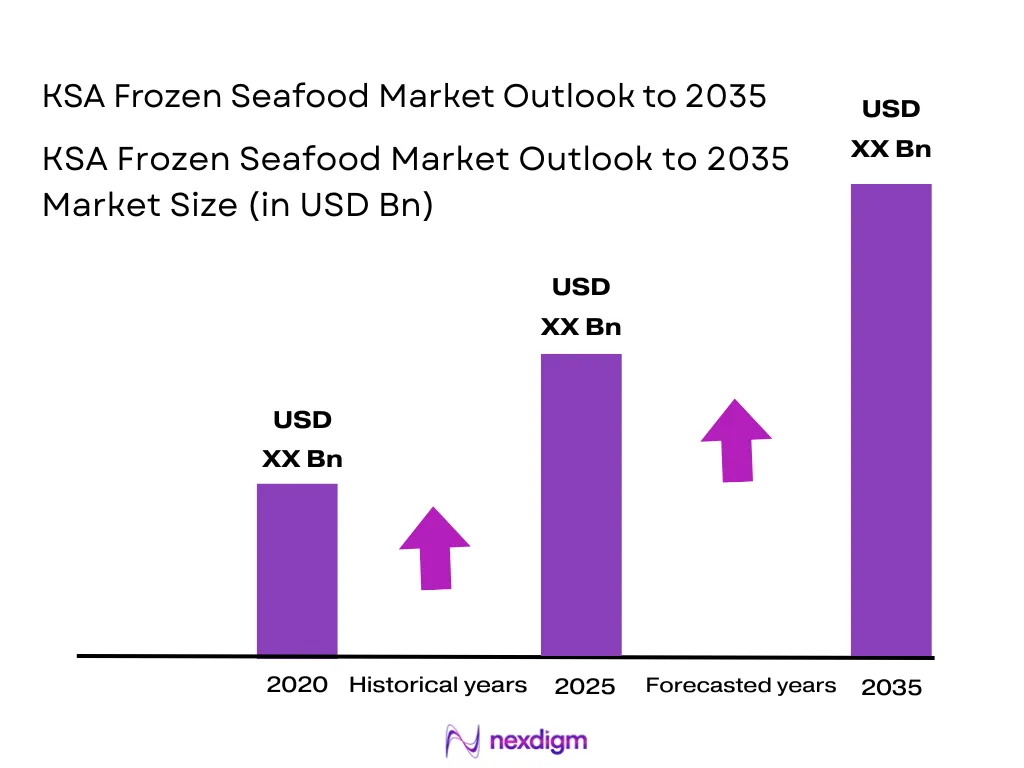
The KSA Frozen Seafood Market is positioned within Saudi Arabia’s seafood market, valued at USD ~ billion, based on the latest completed annual market base. The preceding published base was close to USD ~ billion, showing a stable seafood demand pool supported by population growth, protein diversification, foodservice procurement and retail freezer expansion. Frozen seafood demand is driven by imported shrimp, frozen fish fillets, salmon, tuna, squid, breaded seafood and Saudi aquaculture output. Riyadh, Jeddah and Dammam dominate the KSA Frozen Seafood Market due to retail density, cold storage, hotel procurement, institutional catering and import access through Jeddah Islamic Port and King Abdulaziz Port Dammam. Key source countries include Thailand, Indonesia, Norway, Vietnam, India, Oman and China because they supply processed fish, salmon, pangasius, shrimp, tuna and frozen fillets. The KSA Frozen Seafood Market is expected to record a forecast CAGR of 5.7% during 2026-2035, aligned with the global frozen seafood outlook, where frozen seafood demand is supported by longer shelf life, protein diversification, retail freezer penetration, online grocery expansion and ready-to-cook meal adoption.
Market Segmentation
By Product Type
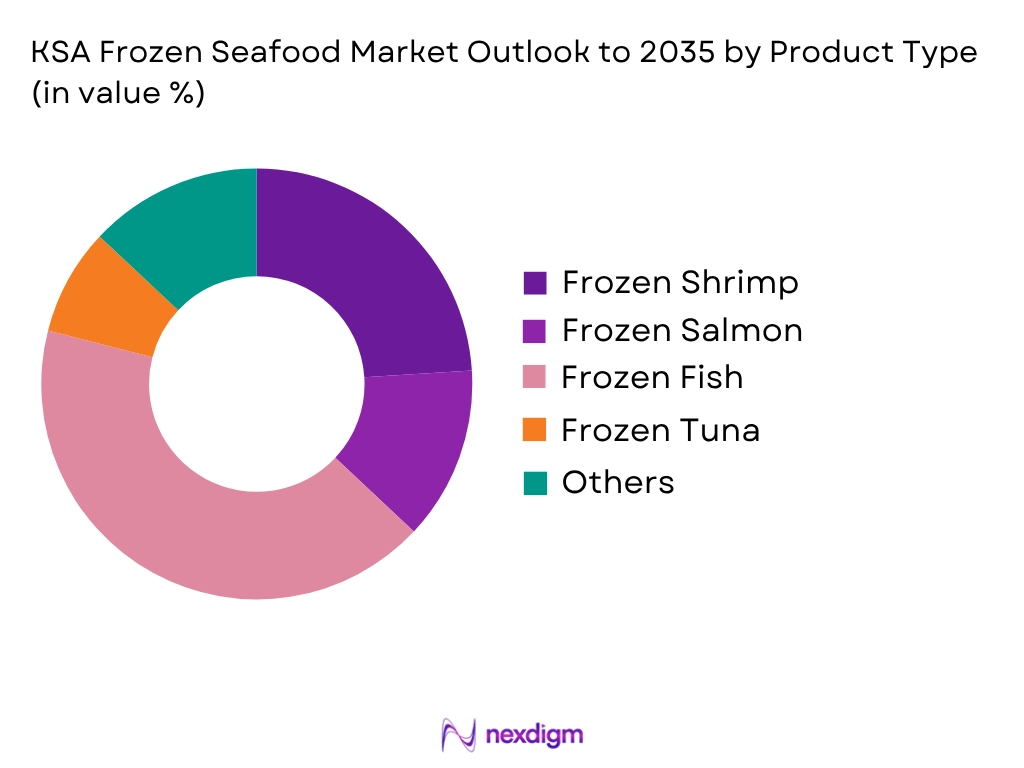
KSA Frozen Seafood Market is segmented by product type into frozen fish and fish fillets, frozen shrimp and prawns, frozen salmon and premium fish, frozen tuna and mackerel, frozen squid and octopus, breaded seafood, and frozen shellfish. Recently, frozen fish and fish fillets have a dominant market share in Saudi Arabia under product type segmentation, due to broad household and foodservice usage across Riyadh, Jeddah, Dammam, Makkah and Madinah. The segment benefits from imported pangasius, mackerel, tuna, salmon portions, seabass, seabream and white fish fillets, along with domestic aquaculture products. Frozen fish is easier for retailers and caterers to manage because it supports portioning, long storage, bulk procurement and Arabic-English labelled retail packs. Fish also dominates Saudi seafood consumption because it is suitable for traditional meals, institutional catering, hotel buffets and family consumption occasions.
By Distribution Channel
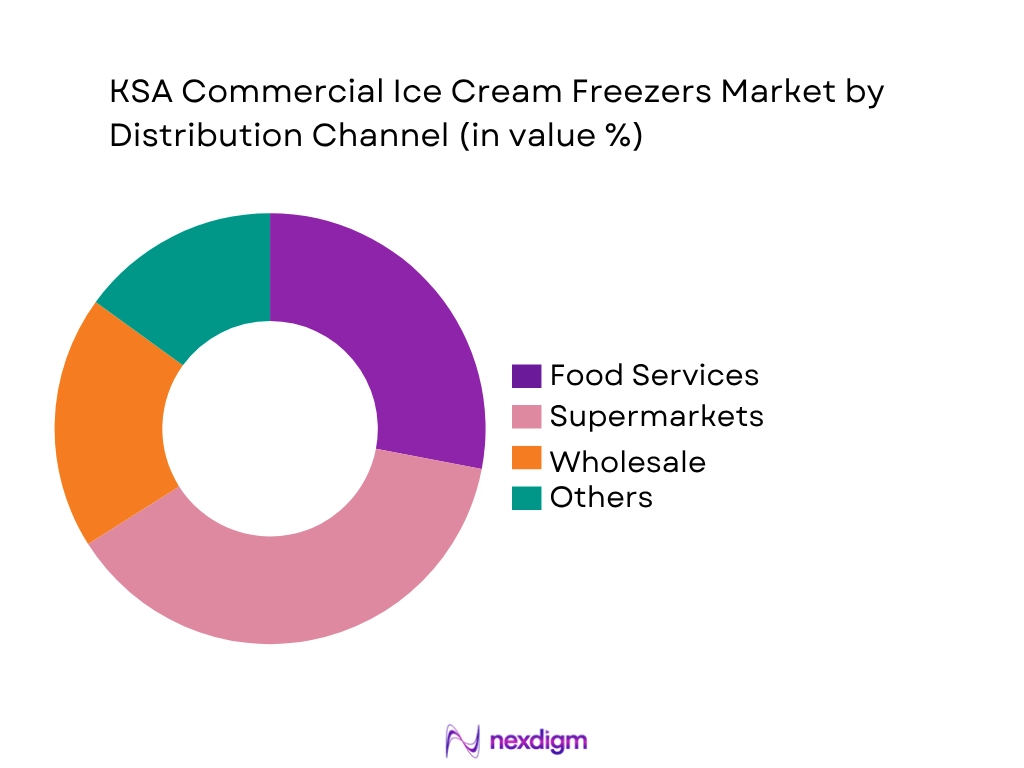
KSA Frozen Seafood Market is segmented by distribution channel into hypermarkets and supermarkets, foodservice and HoReCa distributors, wholesale and cash-and-carry, online grocery and quick commerce, specialty seafood retailers, and institutional procurement. Recently, hypermarkets and supermarkets have a dominant market share in Saudi Arabia under distribution channel segmentation, due to the strong presence of Panda, Danube, Tamimi, Carrefour, Lulu and Farm Superstores across major urban centers. This channel benefits from freezer cabinet visibility, branded frozen seafood packs, private labels, family packs, promotions and consumer trust in regulated cold-chain handling. Foodservice distributors remain critical for hotels, restaurants, catering companies and religious tourism demand, but retail has wider household reach. Frozen fish fillets, shrimp packs, salmon portions, seafood mixes, breaded fish and value-added seafood products are increasingly merchandised in organized retail freezers, supporting recurring consumer purchases.
Competitive Landscape
The KSA Frozen Seafood Market is served by a combination of domestic aquaculture producers, frozen-food importers, seafood distributors, modern retailers and HoReCa suppliers. NAQUA and Saudi Fisheries Company strengthen the domestic supply base, while Almunajem Foods, Sunbulah Group, Panda Retail and LuLu support imported frozen seafood availability through cold-chain and retail distribution networks. Competition is shaped by product portfolio breadth, SFDA compliance, cold storage access, importer relationships, retail freezer reach and foodservice penetration.
| Company | Establishment Year | Headquarters | Core Seafood Focus | Channel Reach | Sourcing Model | Cold-Chain Role | Product Positioning | Strategic Strength |
| National Aquaculture Group — NAQUA | 1982 | Al Lith, KSA | ~ | ~ | ~ | ~ | ~ | ~ |
| Almunajem Foods | 1950 | Riyadh, KSA | ~ | ~ | ~ | ~ | ~ | ~ |
| Saudi Fisheries Company | 1980 | Riyadh, KSA | ~ | ~ | ~ | ~ | ~ | ~ |
| Sunbulah Group | 1980 | Jeddah, KSA | ~ | ~ | ~ | ~ | ~ | ~ |
| LuLu Group Saudi Arabia | 2009 | Riyadh / Saudi retail network | ~ | ~ | ~ | ~ | ~ | ~ |
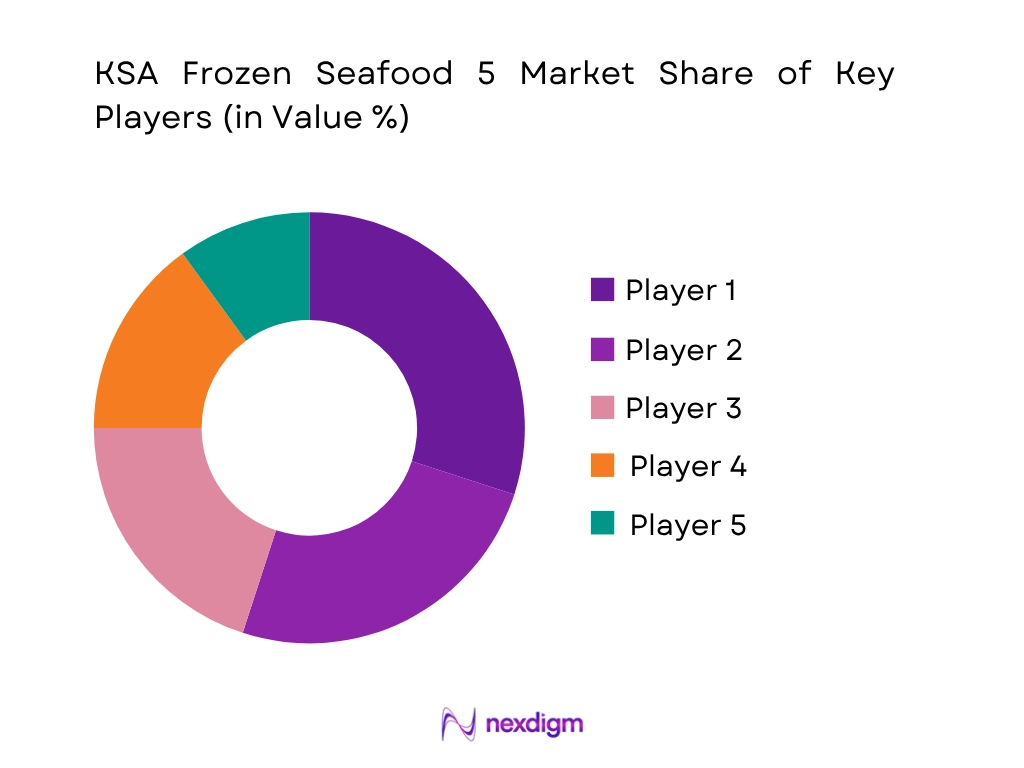
KSA Frozen Seafood Market Outlook to 2035
Growth Drivers
Domestic Aquaculture Output Supporting Saudi-Origin Frozen Seafood
KSA Frozen Seafood Market is supported by expanding domestic aquaculture output, especially shrimp, tilapia and seabass, which improves local availability for frozen retail packs, HoReCa supply and institutional procurement. GASTAT’s Fisheries and Aquaculture Statistics show total fisheries production of 246.9 thousand tons in 2024, supported by aquaculture projects production of 161.6 thousand tons and marine fisheries catch of 85.3 thousand tons. Within aquaculture, marine aquaculture projects produced 95.6 thousand tons, while inland water projects produced 65.9 thousand tons. Shrimp was the leading aquaculture species at 71.7 thousand tons, followed by tilapia at 62.8 thousand tons and seabass at 16.4 thousand tons. This production mix is directly relevant to frozen seafood because shrimp and fish fillets can be processed into IQF packs, bulk cartons, breaded seafood and retail freezer SKUs. World Bank macro data shows Saudi Arabia’s GDP at USD ~ trillion, GDP per capita at USD 35,121.7, and population at ~ million in 2024, supporting large-scale seafood consumption and food-security investment.
Tourism and Religious Hospitality Supporting Frozen Seafood Procurement
KSA Frozen Seafood Market is driven by hospitality, religious tourism and institutional foodservice demand, where frozen fish, shrimp, salmon portions, squid rings and breaded seafood are used for consistent portioning and bulk menu planning. Data Saudi reported 116 million tourists in 2024, including 29.7 million inbound tourists and 86.2 million domestic tourists. GASTAT reported 1,833,164 Hajj pilgrims in the 1445H season, including 1,611,310 pilgrims arriving from outside Saudi Arabia and 221,854 internal pilgrims. It also reported 3,348,512 foreign Umrah performers in Q3 2024, including 1,707,514 male performers and 1,638,743 female performers. This visitor base supports frozen seafood consumption through hotels, catering companies, Makkah and Madinah foodservice, airline catering, restaurants and central kitchens. Frozen seafood is operationally suitable because it allows inventory planning across peak travel periods. World Bank data records Saudi Arabia’s GDP at USD 1.24 trillion and GDP growth at 2.0 in 2024, supporting foodservice expansion and organized procurement.
Market Opportunities
Local Frozen Shrimp and Fish Processing for Retail and HoReCa
KSA Frozen Seafood Market has an opportunity in Saudi-origin frozen shrimp and fish processing, backed by current domestic production and import volumes. GASTAT reported aquaculture production of 161.6 thousand tons in 2024, with shrimp at 71.7 thousand tons, tilapia at 62.8 thousand tons and seabass at 16.4 thousand tons. Marine catch added 85.3 thousand tons, with the Arabian Gulf contributing 53.6 thousand tons and the Red Sea contributing 31.7 thousand tons. At the same time, marine product imports reached 179.9 thousand tons, while exports reached 46.6 thousand tons. These figures indicate room for processors to convert local aquaculture output into frozen peeled shrimp, IQF fish fillets, frozen seabass portions, family packs, foodservice cartons and Arabic-labelled retail SKUs. The opportunity reflects future growth because domestic processors can use current production depth to reduce dependence on bulk imports and strengthen Saudi-origin branding. World Bank data shows GDP per capita at USD 35,121.7 and population at 35 million in 2024, supporting premium local protein demand.
Digital Grocery and Foodservice Channel Expansion for Frozen Seafood
KSA Frozen Seafood Market has an opportunity in digital grocery, quick commerce and organized foodservice channels, where frozen seafood benefits from controlled shelf life, standard pack sizes and centralized distribution. World Bank data shows individuals using the internet in Saudi Arabia at 100 per 100 people in 2024, creating a broad base for app-based grocery, frozen delivery and online food ordering. GASTAT reported 959,175 employees in tourism activities during Q2 2024, indicating a large hospitality operating base that purchases ingredients through distributors and central kitchens. Data Saudi reported 86.16 million domestic tourists, 538.62 million overnight stays and 6.25 nights as average stay in domestic tourism, all of which support hotel, resort, restaurant and catering procurement. Frozen seafood fits this channel because distributors can supply shrimp counts, fish fillets, seafood mixes and breaded items with stable specifications. The opportunity reflects future growth using current channel readiness rather than future projections. World Bank macro indicators also show Saudi GDP at USD 1.24 trillion and GDP per capita at USD 35,121.7 in 2024.
Market Challenges
Import Dependence and Supply-Origin Exposure
KSA Frozen Seafood Market faces a challenge from import dependence, particularly for frozen salmon, pangasius, tuna, mackerel, frozen fish fillets, prepared fish and shrimp products. Agriculture and Agri-Food Canada reported Saudi Arabia fish and seafood imports of Can$836.2 million in 2024, while the top five suppliers contributed Can$441.9 million. The same source identified prepared fish, Atlantic salmon, mackerel and frozen fish fillets among Saudi Arabia’s top fish and seafood imports in 2024. GASTAT also reported marine product imports of 179.9 thousand tons in 2024, compared with exports of 46.6 thousand tons, showing that external supply remains important despite domestic aquaculture growth. This creates exposure to origin-country harvest cycles, reefer container availability, port handling, food safety documentation and supplier concentration. For frozen seafood distributors, any disruption from Norway, Vietnam, India, Thailand, Indonesia, Oman or China can affect SKU availability. World Bank data shows Saudi Arabia’s population at 35 million and GDP at USD 1.24 trillion in 2024, indicating large demand that must be supported by reliable external sourcing.
Cold-Chain, Biosecurity and Compliance Burden
KSA Frozen Seafood Market faces operational challenges from cold-chain integrity, aquaculture biosecurity and food import compliance. Frozen seafood requires stable storage and transport from ports, aquaculture farms and distributors to retail cabinets, HoReCa kitchens and online delivery hubs. GASTAT’s 2024 fisheries data shows aquaculture production of 161.6 thousand tons, including 71.7 thousand tons of shrimp, making biosecurity material because shrimp disease or water-quality stress can disrupt supply for frozen shrimp processors. Marine product imports of 179.9 thousand tons add another compliance layer, as imported seafood must pass documentation, inspection, labelling and shelf-life requirements before distribution. The domestic supply chain also spans Red Sea and Arabian Gulf fisheries, with marine catch of 85.3 thousand tons, requiring temperature management after landing and during inland distribution. These risks are heightened by the country’s large geography and desert climate. World Bank data records GDP per capita at USD 35,121.7, population at 35 million, and GDP growth at 2.0 in 2024, indicating strong purchasing power but also higher consumer and regulatory expectations for frozen seafood quality.
Future Outlook
Over the next decade, the KSA Frozen Seafood Market is expected to grow through a combination of imported seafood availability, Saudi aquaculture expansion, modern retail penetration and rising foodservice demand. Frozen fish, shrimp, salmon, tuna, squid and ready-to-cook seafood will remain core categories across household and HoReCa channels. Domestic aquaculture will become more important as Saudi Arabia continues to invest in shrimp and marine fish production under food-security priorities. Retailers and distributors will focus on freezer merchandising, Arabic-English packaging, traceability, private labels and premium seafood packs. Online grocery, quick commerce and cold-chain logistics will also reshape frozen seafood access in Riyadh, Jeddah and Dammam.
Major Players
- National Aquaculture Group — NAQUA
- Almunajem Foods
- Saudi Fisheries Company
- Tabuk Fisheries Company
- Arab Fisheries Company
- Jazadco
- IZAFCO
- Shell Fisheries Company
- Asmak Saudi
- Sunbulah Group
- Americana Foods KSA
- LuLu Group Saudi Arabia
- Carrefour Saudi Arabia
- Panda Retail Company
- Tamimi Markets
Key Target Audience
- Frozen seafood importers and distributors
- Domestic aquaculture companies
- Hypermarkets, supermarkets and specialty seafood retailers
- HoReCa chains, hotels and catering companies
- Online grocery and quick commerce platforms
- Cold-chain logistics and reefer transport companies
- Investments and venture capitalist firms
- Government and regulatory bodies
Research Methodology
Step 1: Identification of Key Variables
The initial phase involves constructing an ecosystem map of seafood importers, aquaculture farms, frozen-food distributors, retailers, HoReCa buyers, cold stores, online grocery platforms and regulatory bodies. This step defines variables such as source type, product type, freezing format, distribution channel, region, SFDA compliance, cold-chain capacity and end-user demand.
Step 2: Market Analysis and Construction
In this phase, historical seafood demand, import performance, aquaculture production and retail/freezer channel data are compiled. The market is constructed using a top-down seafood market base and a bottom-up channel validation approach. Product segmentation is assessed across fish, shrimp, salmon, tuna, cephalopods, shellfish and value-added seafood.
Step 3: Hypothesis Validation and Expert Consultation
Market hypotheses are validated through interviews with seafood importers, aquaculture operators, cold-chain distributors, retail category managers and foodservice procurement teams. These consultations help verify product mix, frozen seafood turnover, channel demand, import-origin reliability, storage requirements and regulatory compliance issues.
Step 4: Research Synthesis and Final Output
The final phase integrates secondary research, trade intelligence, company profiling and expert consultation into a structured market model. Segment shares, competitive positioning, future outlook and growth opportunities are refined through triangulation. This ensures that the final KSA Frozen Seafood Market report reflects practical business dynamics and decision-ready market intelligence.

- Executive Summary
- Research Methodology (Market Definitions and Assumptions, Abbreviations, Market Sizing Approach, HS Code Mapping, SFDA Food Import Mapping, Saudi Customs Trade Review, GASTAT Fisheries Data Review, Importer and Distributor Interviews, Retail SKU Audits, HoReCa Procurement Checks, Cold-Chain Capacity Review, Top-Down Import Reconciliation, Bottom-Up Channel Revenue Mapping, Limitations and Future Conclusions)

- Definition and Scope
- Overview Genesis
- Timeline of Major Players
- Business Cycle
- Supply Chain and Value Chain Analysis

- Growth Drivers (Protein Diversification, Shelf-Life Advantage, Health Positioning, Retail Freezer Expansion, Ready-to-Cook Demand)
- Rising Demand for Convenient High-Protein Meals
- Market Challenges (Import Exposure, Species Price Volatility, Labor Costs, Cold Chain Disruption, Quality Perception)
- Market Opportunities (White Space Products, Channel Expansion, Technology Adoption, Premiumization, Local Aquaculture Branding)
- Market Trends (Retail Merchandising, Product Innovation, Sustainability, Digital Grocery, Packaging Shift)
- Government Regulation (Food Import Registration, SFDA Clearance, Label Approval, Health Certificates, Halal Requirements, Cold-Chain Standards, Fisheries Conservation)
- Supply Chain Risk Analysis
- SWOT Analysis
- Porter’s Five Forces
- Stakeholder Ecosystem

- By Value (2020-2025)
- By Volume (2020-2025)
- By Average Realization (2020-2025)

- By Product Type (In Value %)
Frozen Fish
Frozen Shrimp
Frozen Premium Seafood
Frozen Cephalopods - By End User (In Value %)
Retail Consumers
HoReCa
Catering and Institutional Buyers
QSR and Cloud Kitchens - By Distribution Channel (In Value %)
Importer and Distributor Channel
Hypermarkets and Supermarkets
Online Grocery and Quick Commerce
Specialty Seafood Retail - By Region (In Value %)
Riyadh Region
Makkah Region
Eastern Province
Madinah Region
Asir and Jazan Regions

- Market Share of Major Players by Product Segment
- Cross Comparison Parameters (Product Portfolio, Import Origin Network, Domestic Aquaculture Integration, Cold-Chain Infrastructure, HoReCa Distribution Reach, Retail Listing Strength, Certification and Compliance Systems, Value-Added Seafood SKU Depth)
- SWOT Analysis of Major Players
- Detailed Profiles of Major Companies
National Aquaculture Group — NAQUA
Almunajem Foods
Saudi Fisheries Company
Tabuk Fisheries Company
Arab Fisheries Company
Jazadco
IZAFCO
Shell Fisheries Company
Asmak Saudi
Arabian Aquaculture Society
Sunbulah Group
Americana Foods KSA
LuLu Group Saudi Arabia
Carrefour Saudi Arabia
Panda Retail Company

- HoReCa Buyer Analysis
- Retail Consumer Analysis
- Catering and Institutional Buyer Analysis
- Online Grocery Buyer Analysis
- Food Processor Buyer Analysis

- By Value (2026-2035)
- By Volume (2026-2035)
- By Average Realization (2026-2035)


 Request a Sample
 Ask for Customization
 Get a Quote
 Enquire Now