
 Download PDF
Market Overview
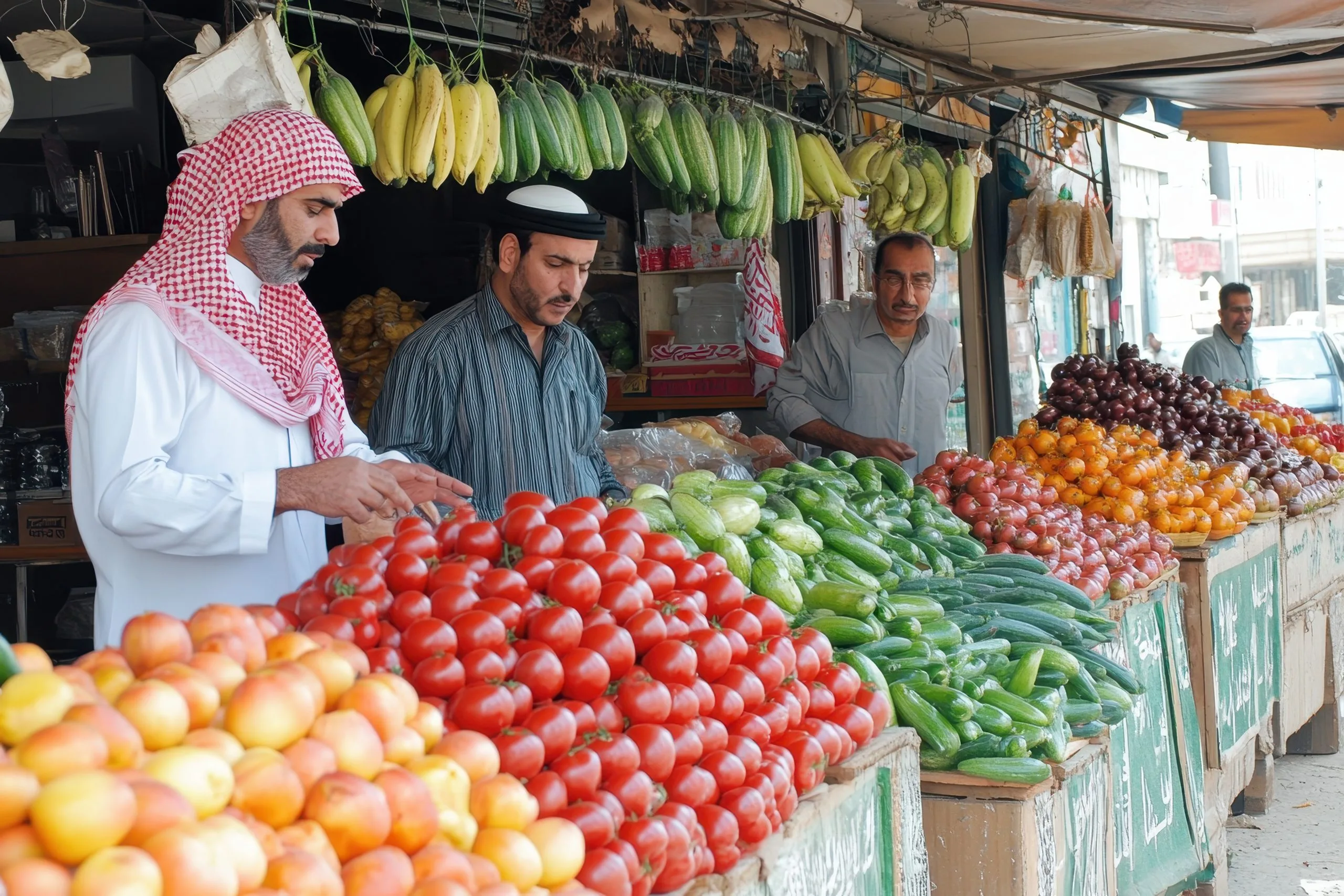
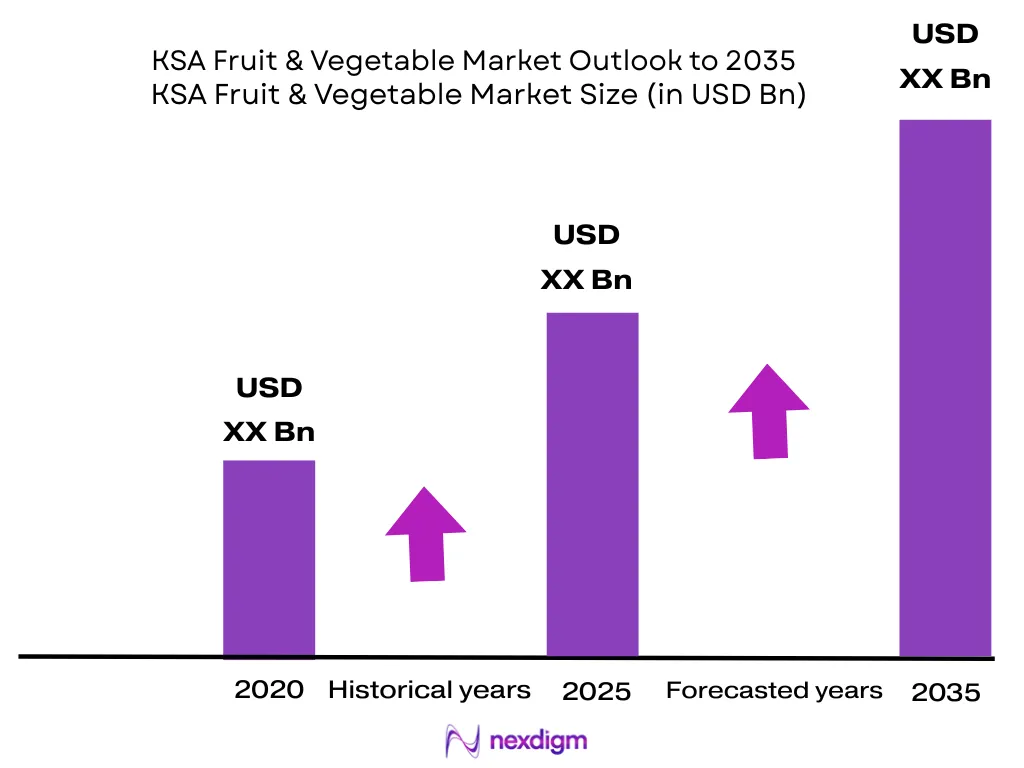
KSA Fruit & Vegetable Market is valued at USD ~ billion, based on a five-year historical analysis, and is forecast to grow at 6.1% CAGR across the 2026-2035 outlook period, aligned with the latest available 2026-2031 forecast benchmark. The market is driven by import availability, modern retail, foodservice, pilgrim demand and protected agriculture. Greenhouse vegetable production reached 797 thousand tons, up from the previous level, with tomatoes at 329 thousand tons and cucumbers above 232 thousand tons. Riyadh, Jeddah, Makkah, Madinah, Dammam and Al Ahsa dominate KSA Fruit & Vegetable Market because they combine population density, wholesale flows, port access, pilgrim catering, retail chains and local production clusters. Jeddah anchors Red Sea imports and Makkah-Madinah foodservice flow; Riyadh dominates national retail distribution; Dammam supports Gulf-side imports. Open-field vegetable production reached 2.745 million tons from 89,700 hectares, with potatoes at 624 thousand tons and watermelons at about 612 thousand tons.
Market Segmentation
By Product Type
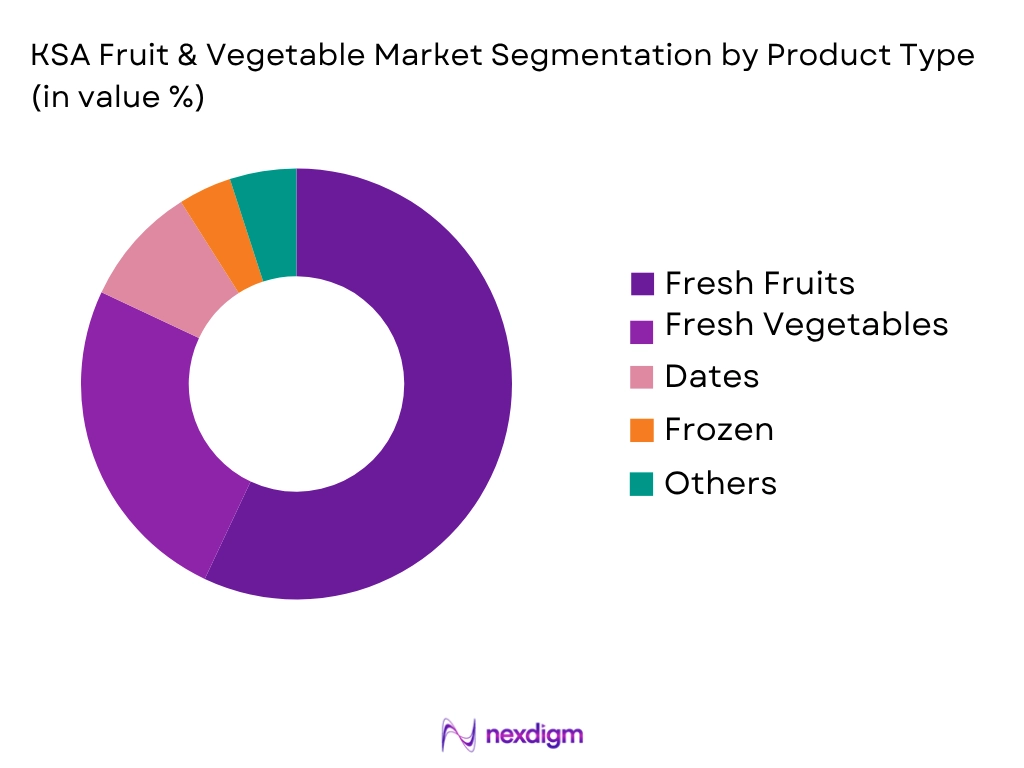
KSA Fruit & Vegetable Market is segmented by product type into fresh vegetables, fresh fruits, dates and date-based produce, frozen/canned/ambient produce, and fresh-cut and ready-to-eat produce. Recently, fresh vegetables have a dominant market share in KSA under the segmentation product type, it is due to daily household cooking, foodservice procurement, pilgrim catering demand and rising domestic greenhouse supply. Tomatoes, cucumbers, potatoes, onions, lettuce, peppers, carrots, eggplant, zucchini and leafy greens are high-rotation products across hypermarkets, central wholesale markets, restaurants and institutional kitchens. The dominance is reinforced by Saudi Arabia’s expanding protected agriculture base, where greenhouse vegetable production reached 797 thousand tons and open-field vegetable production reached 2.745 million tons.
By Distribution Channel
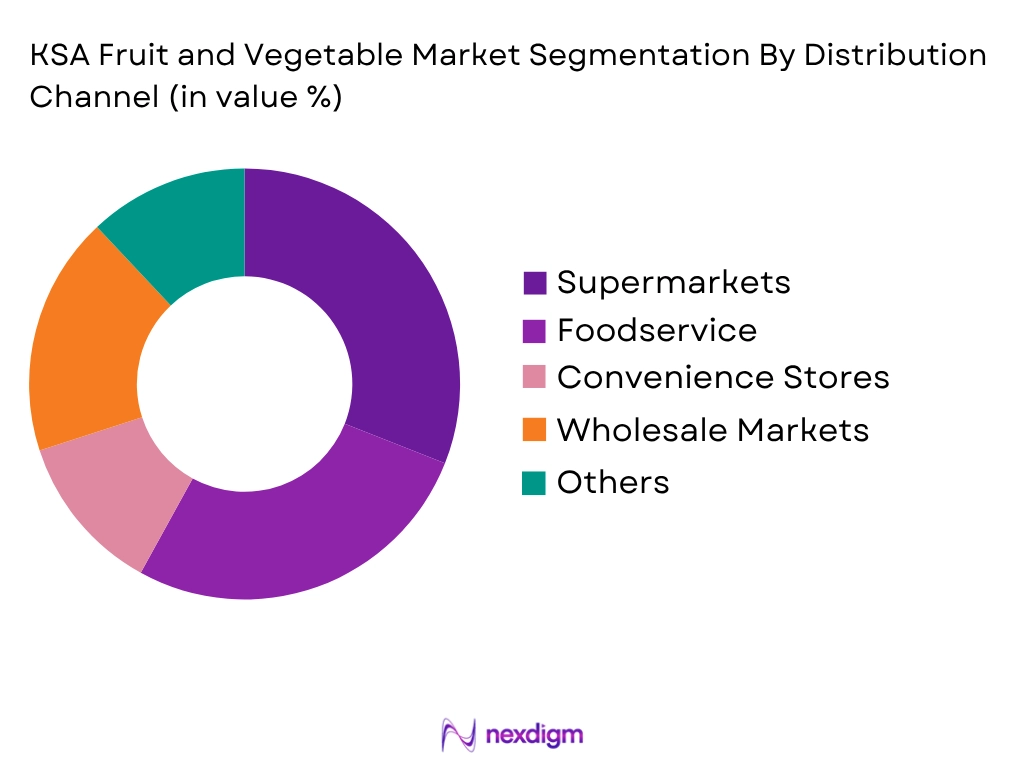
KSA Fruit & Vegetable Market is segmented by distribution channel into hypermarkets and supermarkets, central wholesale markets and import distributors, foodservice/catering/institutional supply, traditional retailers and convenience stores, and online grocery/direct farm supply. Recently, hypermarkets and supermarkets have a dominant market share in KSA under the segmentation distribution channel, it is due to strong grocery penetration in Riyadh, Jeddah, Dammam, Makkah and Madinah, centralized procurement, private-label fresh produce, chilled displays and broad imported produce assortments. Chains such as Panda, Carrefour, Tamimi Markets, Danube and LuLu merchandise bananas, apples, citrus, grapes, dates, tomatoes, cucumbers, leafy greens, berries and premium imported fruit. Central wholesale markets remain important for bulk redistribution, but modern retail dominates packaged, quality-sorted and higher-value fresh produce.
Competitive Landscape
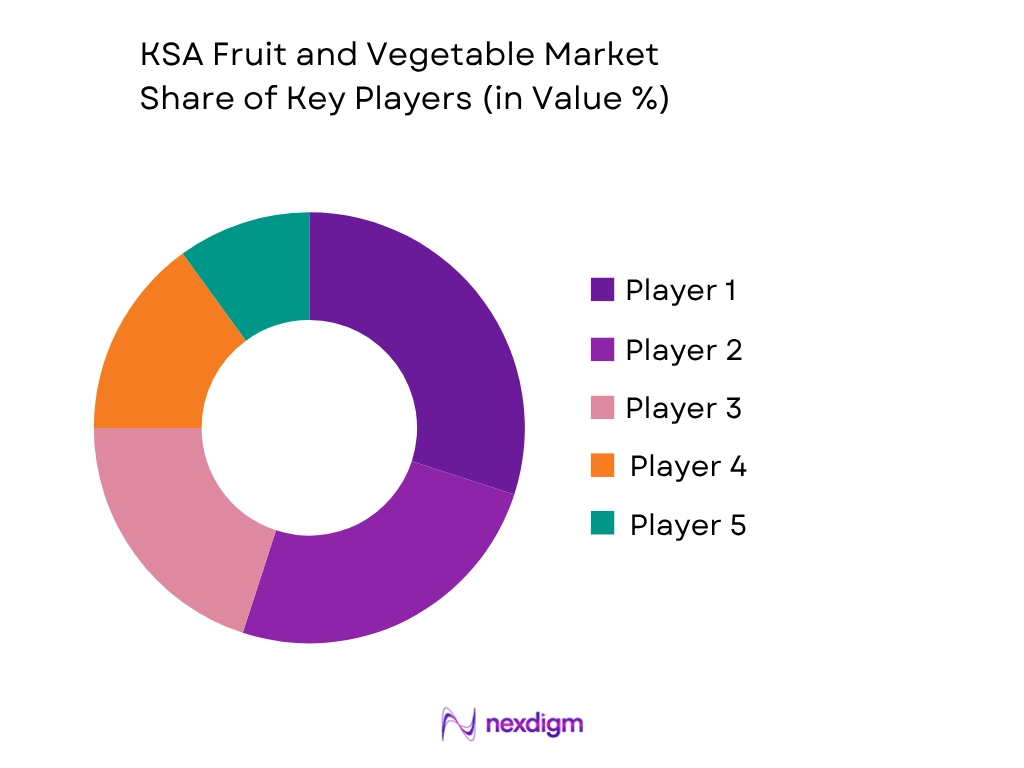
KSA Fruit & Vegetable Market is fragmented across importers, wholesale traders, local farms, date producers, food distributors and modern retailers. However, organized players such as Saudi Fruit Trading Co., Global Star Trading & Distribution, Al Munajem Foods, NADEC and Astra Farms have strong influence because they combine import sourcing, chilled logistics, domestic farming, retail reach and foodservice relationships. Competition is shaped by freshness, origin diversity, SFDA compliance, cold-chain capability, central market access, greenhouse output, date portfolio and ability to serve Hajj, Umrah and hospitality buyers.
| Company | Establishment Year | Headquarters | Key Categories | Business Model | Key Channel | Supply Footprint | Market-Specific Capability | Competitive Advantage |
| Saudi Fruit Trading Co. | 1980s | Riyadh | ~ | ~ | ~ | ~ | ~ | ~ |
| Global Star Trading & Distribution | 1987 | Riyadh | ~ | ~ | ~ | ~ | ~ | ~ |
| Al Munajem Foods | 1950 | Riyadh | ~ | ~ | ~ | ~ | ~ | ~ |
| NADEC | 1981 | Riyadh | ~ | ~ | ~ | ~ | ~ | ~ |
| Astra Farms | 1978 | Tabuk | ~ | ~ | ~ | ~ | ~ | ~ |
KSA Fruit Vegetable Market Analysis
Growth Drivers
Protected Vegetable Production Strengthens Local Supply for Retail and Foodservice
KSA Fruit Vegetable Market is supported by a large consumer economy and an expanding protected agriculture base. World Bank data records Saudi Arabia’s GDP at USD 1.24 trillion, GDP per capita at USD 35,121.7, and population at 35,300,280 people in 2024, supporting fresh produce demand across households, hypermarkets, restaurants and institutional catering. GASTAT reported protected vegetable production of 797 thousand tons in 2024, cultivated across 7.8 thousand hectares and more than 121 thousand greenhouses. Tomatoes led protected vegetable output at 329 thousand tons, followed by cucumbers at more than 232 thousand tons. This is market-specific because tomatoes and cucumbers are high-frequency products in Saudi household meals, salad bars, QSR kitchens, hotel buffets and Hajj-Umrah catering menus. Protected production also allows local suppliers to reduce lead times, improve freshness and support year-round availability despite desert climatic conditions.
Open-Field Vegetable and Date Production Supports Domestic Food Basket Depth
KSA Fruit Vegetable Market is driven by high-volume domestic production of staple vegetables and dates. World Bank data places Saudi Arabia’s GDP at USD 1.24 trillion, GDP per capita at USD 35,121.7, and population at 35,300,280 people in 2024, creating a large base for daily fresh produce consumption. GASTAT reported open-field vegetable cultivation of 89.7 thousand hectares and open-field vegetable production of 2,745 thousand tons in 2024, with potatoes at 624 thousand tons and watermelon at approximately 612 thousand tons. GASTAT also reported date production at 1,923 thousand tons, while Food Security Statistics recorded dates at 36 kg per capita per year among plant products. This supports domestic supply depth for potatoes, tomatoes, cucumbers, watermelon and dates across central wholesale markets, hypermarkets, traditional retailers, foodservice distributors and Ramadan-linked date consumption.
Market Challenges
High Agricultural Crop Import Volume Creates Supply-Chain Exposure
KSA Fruit Vegetable Market remains exposed to import logistics because domestic production does not cover the full fresh produce basket, especially imported fruits such as bananas, apples, citrus, grapes, berries, avocados and mangoes. World Bank data records Saudi Arabia’s GDP at USD 1.24 trillion, GDP per capita at USD 35,121.7, and population at 35,300,280 people in 2024, indicating strong demand that must be supported through domestic output and overseas sourcing. GASTAT reported total agricultural crop imports of 18,762 thousand tons in 2024, while total agricultural crop exports amounted to 506 thousand tons. The scale of inbound crop movement creates operational risk for importers, cold stores, ripening operators, wholesale markets and retailers. Fresh produce availability depends on port clearance, reefer capacity, country-of-origin seasonality, SFDA compliance, phytosanitary documents, inland trucking and temperature-controlled warehousing across Riyadh, Jeddah, Dammam, Makkah and Madinah.
Limited Cultivated Area Restricts Domestic Substitution for Imported Produce
KSA Fruit Vegetable Market faces a structural production challenge because local cultivation is concentrated in specific crops and protected systems. World Bank data records Saudi Arabia’s population at 35,300,280 people and GDP per capita at USD 35,121.7 in 2024, creating broad fresh produce demand across retail, foodservice and institutional channels. Against this demand base, GASTAT reported only 89.7 thousand hectares of open-field vegetable cultivation and 7.8 thousand hectares of protected vegetable cultivation in 2024. Organic crop production reached 98.3 thousand tons, while organic crop area reached about 6.2 thousand hectares, showing that premium local production is still limited relative to mainstream fresh produce requirements. This restricts rapid import substitution in apples, bananas, citrus, grapes, berries, avocados, onions and selected vegetables. It also raises pressure on greenhouse cooling, water-efficient irrigation, crop selection, yield management and post-harvest handling.
Market Opportunities
Greenhouse and Hydroponic Expansion Can Scale Local Salad Vegetable Supply
KSA Fruit Vegetable Market has a strong opportunity in greenhouse and hydroponic production because current protected vegetable output already provides a working platform for local substitution. World Bank data records Saudi Arabia’s GDP at USD 1.24 trillion, GDP per capita at USD 35,121.7, and population at 35,300,280 people in 2024, supporting investment in food security and high-frequency fresh produce categories. GASTAT reported 797 thousand tons of protected vegetable production, 7.8 thousand hectares of protected vegetable area, and more than 121 thousand greenhouses in 2024. Tomatoes accounted for 329 thousand tons, while cucumbers exceeded 232 thousand tons. These current figures support future growth in hydroponic lettuce, cucumbers, tomatoes, capsicum, herbs, microgreens and leafy greens. Retailers and foodservice buyers can benefit from shorter supply chains, better freshness control, domestic-origin claims and reduced exposure to import delays for salad vegetables.
Date and Organic Produce Platforms Create Value-Added Fresh Produce Opportunities
KSA Fruit Vegetable Market has a clear opportunity in premium dates, organic crops and value-added produce because current domestic output provides a strong raw-material base. World Bank data records Saudi Arabia’s population at 35,300,280 people and GDP per capita at USD 35,121.7 in 2024, supporting premium retail, gifting, HoReCa and Ramadan-linked consumption. GASTAT reported date production of 1,923 thousand tons in 2024, and Food Security Statistics recorded dates at 36 kg per capita per year among plant products. GASTAT also reported organic crop production of 98.3 thousand tons and organic crop area of about 6.2 thousand hectares. These figures support future growth in packaged dates, date gift boxes, date ingredients, organic vegetables, premium local produce, fresh-cut packs and branded Saudi-origin SKUs. The opportunity is strongest across Riyadh, Jeddah, Makkah, Madinah and Dammam, where modern retail, pilgrim demand and hospitality procurement support premiumization.
Future Outlook
Over the next five years, KSA Fruit & Vegetable Market is expected to grow through higher import diversification, domestic greenhouse expansion, foodservice demand, online grocery adoption and government-backed food security investments. The 2026-2035 forecast CAGR is assessed at 6.1%, using the latest available 2026-2031 benchmark for Saudi Arabia fruits and vegetables. Fresh vegetables will remain a key domestic growth category because tomatoes, cucumbers, lettuce, herbs and peppers are suitable for greenhouse and hydroponic production. GASTAT reported greenhouse vegetable production of 797 thousand tons, supported by more than 121,000 greenhouses and 7,800 hectares of cultivated greenhouse area.
Fresh fruits will remain more import dependent, with demand led by bananas, apples, citrus, grapes, mangoes, berries, avocados and stone fruits. Egypt, India, South Africa, Turkey, Jordan, Lebanon, the Philippines and Ecuador will remain important sourcing countries due to seasonality, product specialization and logistics access through Jeddah Islamic Port, King Abdulaziz Port and airport cargo corridors. Domestic agriculture investment will be centered on water-efficient protected farming. Greenhouse tomatoes, cucumbers, lettuce and herbs will benefit from Vision 2030 food security priorities, while date production will remain strategically important for domestic consumption, gifting, Ramadan demand and export positioning. The 2025 MEWA packaging and labelling rules for fruits and vegetables will also increase the importance of origin disclosure, handling transparency and compliance across suppliers and retailers.
The strongest opportunities will be in hydroponic vegetables, premium fruits, date gift packs, fresh-cut produce, salad bowls, online grocery and Hajj-Umrah catering supply. Cold-chain investments in ripening rooms, temperature-controlled warehousing, reefer trucking and wholesale market modernization will remain critical to reduce shrinkage and improve quality consistency across Riyadh, Jeddah, Makkah, Madinah and the Eastern Province.
Major Players
- Saudi Fruit Trading Co.
- Global Star Trading & Distribution
- AK Group
- Al Munajem Foods
- NADEC
- Astra Farms
- Almarai
- Red Sea Farms
- Mirai Solar
- Bustanica KSA / Controlled Environment Agriculture Operators
- Tamimi Markets
- Panda Retail Company
- Danube
- Carrefour KSA
- Bateel
Key Target Audience
- Fresh fruit and vegetable importers
- Central wholesale market traders and distributors
- Hypermarkets, supermarkets and premium grocery retailers
- Online grocery and fresh delivery platforms
- HoReCa, Hajj, Umrah and institutional catering suppliers
- Greenhouse, hydroponic and controlled-environment agriculture companies
- Investments and venture capitalist firms
- Government and regulatory bodies (Ministry of Environment, Water and Agriculture, Saudi Food and Drug Authority, General Authority for Statistics, Zakat, Tax and Customs Authority, Saudi Standards, Metrology and Quality Organization, Saudi Ports Authority)
Research Methodology
Step 1: Identification of Key Variables
The initial phase involves constructing an ecosystem map encompassing all major stakeholders within the KSA Fruit & Vegetable Market. This includes importers, wholesalers, greenhouse farms, date producers, retailers, online grocery platforms, foodservice distributors, central markets, cold-chain operators and regulators. The objective is to identify variables such as import dependence, local production, channel mix, foodservice demand and compliance exposure.
Step 2: Market Analysis and Construction
In this phase, historical data is compiled and analyzed for KSA Fruit & Vegetable Market revenue, production, imports, wholesale movement, modern retail demand and foodservice procurement. The analysis combines top-down market sizing with bottom-up product-level assessment. Key focus areas include fresh vegetables, imported fruits, dates, greenhouse crops, frozen produce and fresh-cut formats.
Step 3: Hypothesis Validation and Expert Consultation
Market hypotheses are validated through computer-assisted telephonic interviews with importers, wholesale traders, retail category managers, greenhouse operators, foodservice distributors and cold-chain service providers. These consultations provide operational insights into sourcing cycles, quality requirements, delivery frequency, shelf-life issues, local produce acceptance and Hajj-Umrah procurement behavior.
Step 4: Research Synthesis and Final Output
The final phase integrates secondary research, official statistics, company profiling and expert validation into a structured market report. The output provides market size, segmentation, competitive landscape, future outlook, target audience mapping and strategic recommendations. This ensures that the KSA Fruit & Vegetable Market analysis reflects both import-led trade realities and local food security priorities.

- Executive Summary
- Research Methodology (Market Definitions and Assumptions, Fresh and Processed Produce Classification, Farm-Gate and Import Valuation, Wholesale and Retail Valuation, GASTAT Agricultural Statistics Review, MEWA Policy Mapping, SFDA Food Safety Review, ZATCA Import Data Mapping, Top-Down Consumption Model, Bottom-Up Production and Import Model, Primary Interviews with Importers, Wholesalers, Retailers, Greenhouse Farms, Foodservice Buyers, Cold-Chain Operators and Packhouse Managers, Limitations and Forecast Assumptions)

- Definition and Scope
- Market Genesis and Evolution
- KSA Fresh Produce Demand Landscape
- Role of Imports in Year-Round Availability
- Role of Domestic Dates, Greenhouse Vegetables and Open-Field Crops

- Growth Drivers (Large Consumer Base, High Import Availability, Supermarket Expansion, Tourism and Pilgrim Demand, Foodservice Growth, Domestic Greenhouse Output, Food Security Strategy, Cold-Chain Development)
- Market Challenges (Water Scarcity, High Import Dependence, Desert Climate, Cold-Chain Cost, Food Safety Compliance, Shelf-Life Loss, Price Volatility, Packaging Regulation)
- Market Opportunities (Hydroponics, Greenhouses, Local Leafy Greens, Date Value Addition, Fresh-Cut Produce, Premium Retail Produce, Hajj-Umrah Catering Supply, GCC Distribution)
- Trends (Local-Origin Branding, Protected Agriculture, Premium Fresh Delivery, Date Product Innovation, Sustainable Packaging, Food Waste Reduction, Traceability, Refrigerated Logistics)
- SWOT Analysis
- Porter’s Five Forces

- By Value (2020-2025)
- By Volume (2020-2025)
- By Average Realization (2020-2025)

- By Product Category (In Value %)
Fresh Fruits
Fresh Vegetables
Dates and Date-Based Produce
Frozen, Canned and Ambient Produce
Frozen Mixed Vegetables
- By Fruit Type (In Value %)
Dates and Indigenous Fruits
Bananas and Tropical Fruits
Citrus Fruits
Apples, Grapes and Stone Fruits - By Distribution Channel (In Value %)
Hypermarkets and Supermarkets
Central Wholesale Markets
Traditional Retailers
Online Grocery
Convenience Stores - By Geography (In Value %)
Riyadh
Jeddah
Makkah
Madinah
Dammam

- Market Share of Major Players (Value Share, Volume Share, Import Share, Domestic Production Share, Retail Channel Share, HoReCa Channel Share)
- Cross Comparison Parameters (Import Sourcing Footprint, Domestic Farm and Protected Agriculture Capacity, Cold-Chain and Ripening Infrastructure, Retail and E-Grocery Channel Penetration, HoReCa/Hajj/Umrah Catering Account Reach, Central Market and Wholesale Distribution Capability, SFDA/MEWA Compliance and Traceability Infrastructure, Premium/Organic/Date/Hydroponic Product Portfolio)
- SWOT Analysis of Major Players
- Pricing and SKU Benchmarking of Major Players
- Detailed Profiles of Major Companies
Saudi Fruit Trading Co.
Global Star Trading & Distribution
AK Group
Al Munajem Foods
NADEC
Astra Farms
Almarai
Red Sea Farms
Mirai Solar
Bustanica KSA / CEA Operators
Tamimi Markets
Panda Retail Company
Danube
Carrefour KSA
Bateel

- Household Consumers
- Hypermarkets and Supermarkets
- Hotels, Restaurants and QSRs
- Hajj, Umrah and Institutional Catering
- Online Grocery and Fresh Delivery Platforms

- By Value (2026-2035)
- By Volume (2026-2035)
- By Average Realization (2026-2035)


 Request a Sample
 Ask for Customization
 Get a Quote
 Enquire Now