
 Download PDF
Market Overview
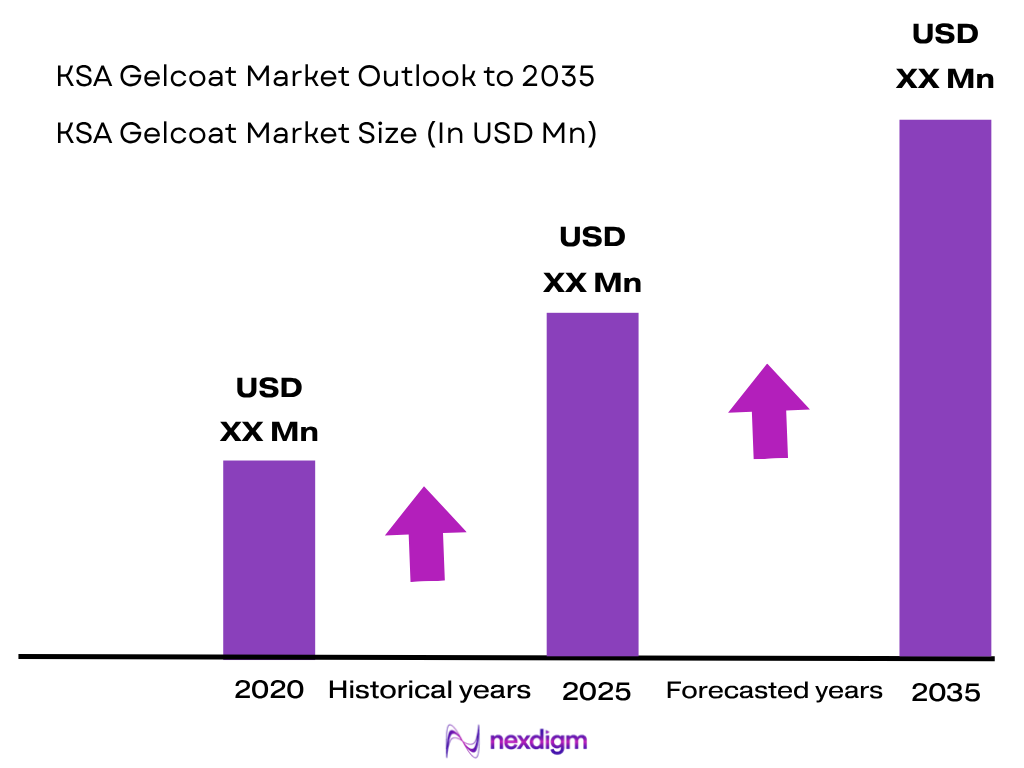
The KSA Gelcoat Market is valued at approximately USD ~XX million, based on historical demand from GRP water tanks, pipes, marine components, construction panels and chemical-containment equipment. Demand is reinforced by desalination output, which progressed from more than 2 billion m³ of annual freshwater production across 33 production systems in the preceding period to 11.1 million m³/day of combined public-private desalination production across 41 seawater systems in the latest period.
Dammam–Jubail, Jeddah, Riyadh and the Red Sea coastal corridor dominate the KSA Gelcoat Market because they concentrate resin manufacturing, GRP fabrication, petrochemicals, water infrastructure, marine activity and construction. Dammam hosts ICR’s resin manufacturing base, while Jeddah hosts Afifi Resins. Maritime activity expanded from its preceding base to 334.5 million tonnes of loaded and unloaded cargo and 8,693 vessel arrivals, strengthening gelcoat demand around eastern and western coastal industrial clusters.
Market Segmentation
By Resin Chemistry
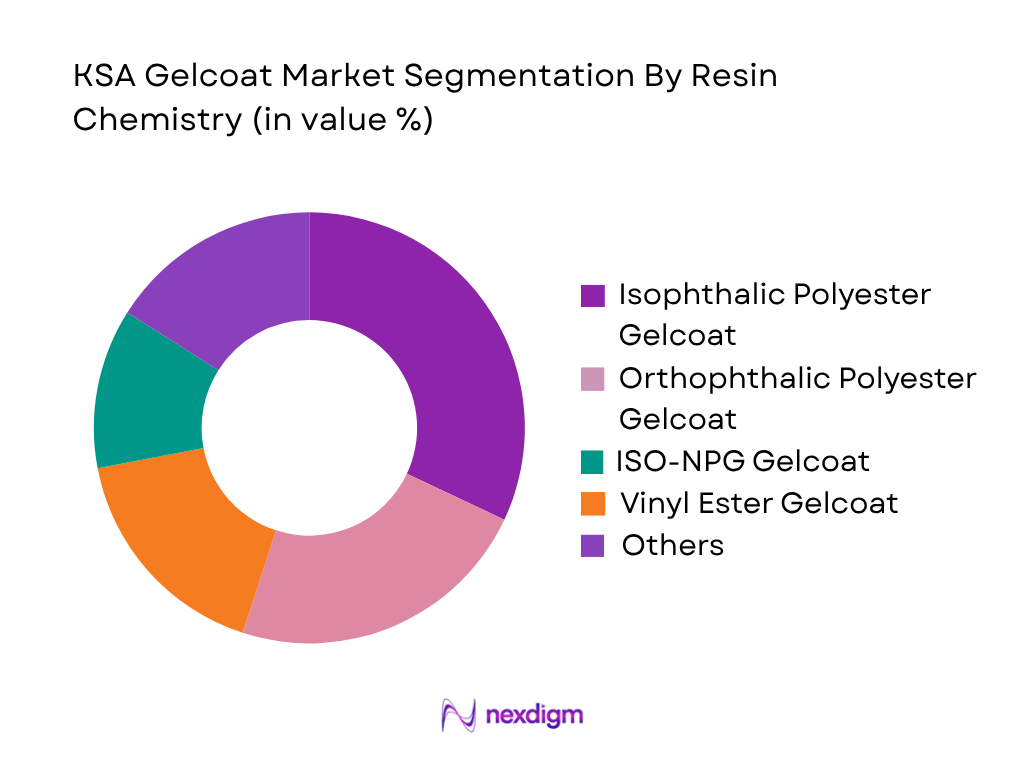
The KSA Gelcoat Market is segmented into orthophthalic polyester, isophthalic polyester, ISO-NPG, vinyl ester, epoxy, low-styrene and other specialty gelcoats. Isophthalic polyester gelcoat holds the dominant report-model share because Saudi Arabia has a substantial installed base of GRP water tanks, pipes, construction products, automotive components and industrial composite structures requiring better chemical, weathering and hydrolysis performance than basic general-purpose systems. Domestic suppliers reinforce this position: SUPIC manufactures isophthalic polyester resin, NPG-based isophthalic resin, NPG gelcoat and white isophthalic gelcoat, while ICR supplies gelcoats designed for potable-water tanks, automobiles and industrial products. ISO-NPG occupies higher-performance marine and outdoor applications because of stronger weather and hydrolysis resistance. Vinyl ester products are concentrated in aggressive chemical environments such as process tanks, pipes and containment systems. The Kingdom’s combination of local unsaturated-polyester manufacturing and demanding climatic conditions therefore favours established isophthalic chemistry while progressively supporting higher-performance ISO-NPG and vinyl-ester systems.
By End-Use Industry
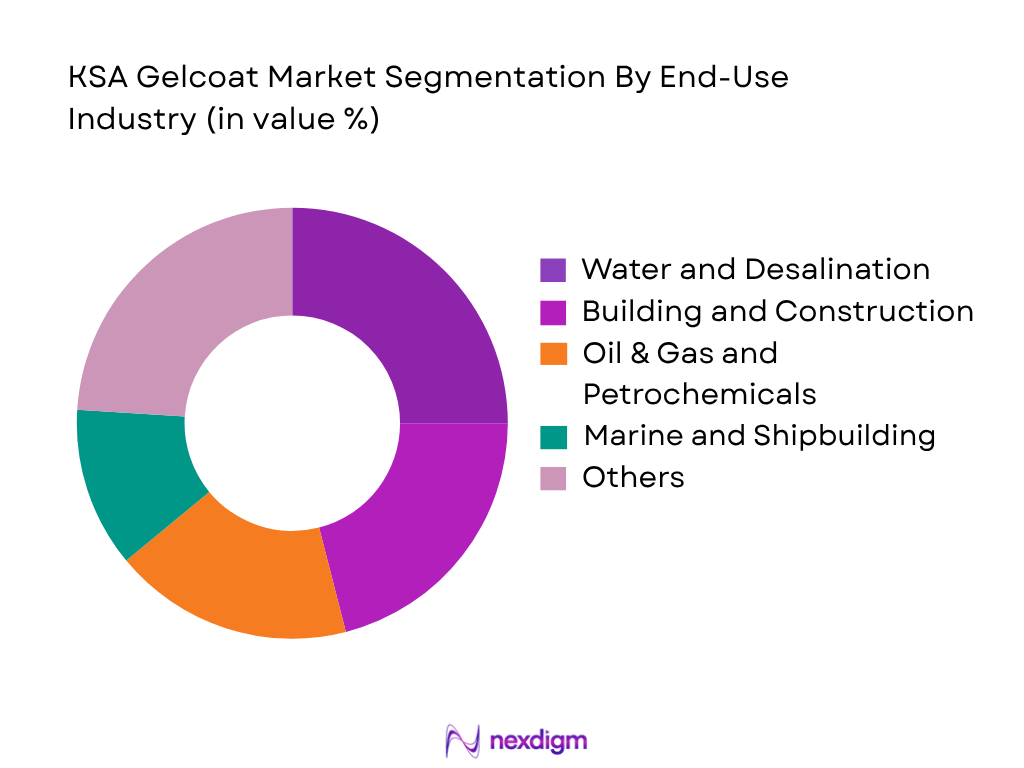
The KSA Gelcoat Market is segmented into water and desalination, building and construction, oil and gas and petrochemicals, marine and shipbuilding, transportation, industrial equipment, swimming pools and other applications. Water and desalination hold the dominant report-model share, reflecting Saudi Arabia’s exceptional dependence on desalinated water and extensive use of corrosion-resistant infrastructure. Combined seawater desalination production reached 11.1 million m³/day across 41 systems, while the Saudi Water Authority subsequently reported national desalination capacity reaching 15 million m³/day. Gelcoat demand is generated indirectly through GRP tanks, covers, housings, pipes, fittings and chemically resistant composite equipment supporting water treatment, storage and distribution. Oil, gas and petrochemicals form another technically important demand pool because vinyl-ester and chemical-resistant systems withstand aggressive process environments. Construction is significant through architectural GRP, cladding, decorative components and water tanks, while expanding Red Sea tourism and maritime development strengthen marine-grade ISO-NPG opportunities.
Competitive Landscape
The KSA Gelcoat Market combines domestic resin and gelcoat manufacturers with international composite-material suppliers. Local companies such as Afifi Resins, SUPIC and ICR benefit from proximity to Saudi GRP processors, regional formulation experience and shorter supply chains, while international suppliers compete through specialised ISO-NPG, vinyl-ester, marine, fire-retardant and low-emission technologies. Afifi manufactures gelcoats and topcoats in Jeddah, SUPIC offers orthophthalic and NPG gelcoats, and ICR produces gelcoat systems from Dammam.
| Major Player | Established | Headquarters | Gelcoat / Resin Portfolio | Marine Capability | Water & GRP Capability | Chemical Resistance | KSA Manufacturing / Supply Position | Technical Formulation Capability |
| Afifi Resins | 2010 | Jeddah, KSA | ~ | ~ | ~ | ~ | ~ | ~ |
| SUPIC | 2017 | Dammam, KSA | ~ | ~ | ~ | ~ | ~ | ~ |
| ICR Resin House | 1998 | Dammam, KSA | ~ | ~ | ~ | ~ | ~ | ~ |
| Scott Bader | 1921 | Wollaston, UK | ~ | ~ | ~ | ~ | ~ | ~ |
| Polynt Composites | 1955 | Scanzorosciate, Italy | ~ | ~ | ~ | ~ | ~ | ~ |
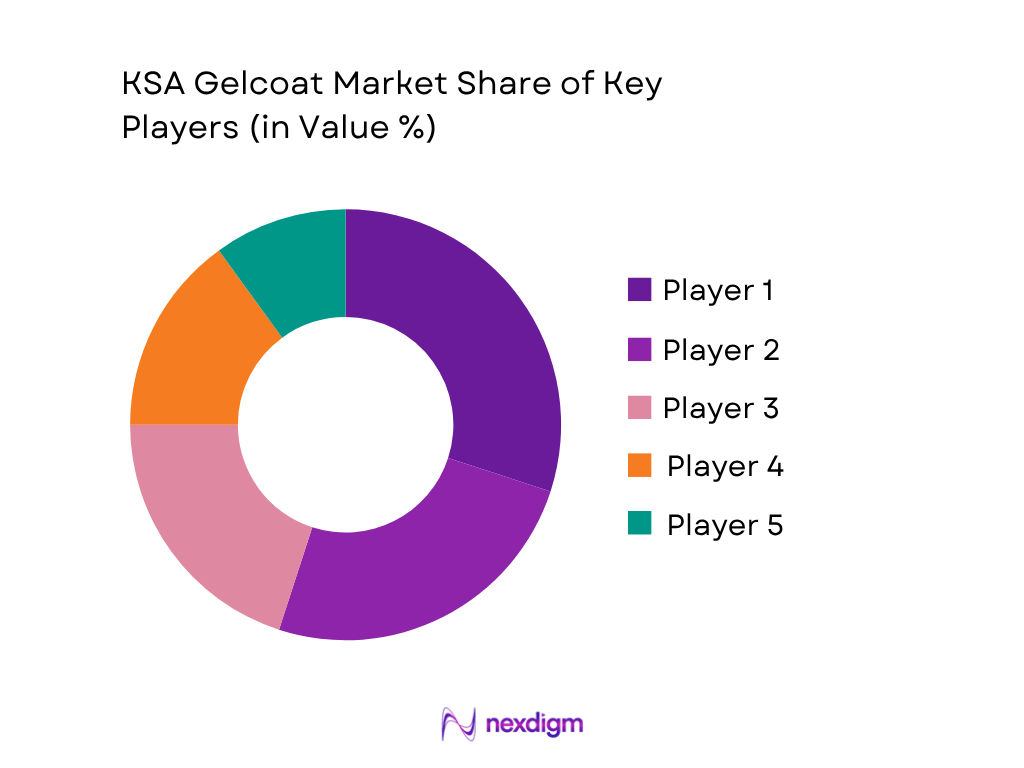
KSA Gelcoat Market Analysis
Growth Drivers
Expansion of Desalination and GRP Water Infrastructure
Saudi Arabia’s desalination and water infrastructure is a major growth driver for the KSA Gelcoat Market because GRP tanks, covers, ducts, pipes, fittings and corrosion-resistant process components require durable polyester, ISO-NPG and vinyl-ester surface systems. National desalination capacity reached 15 million cubic metres per day in 2024. Water transmission infrastructure extended 14,210 kilometres and managed 19.42 million cubic metres daily, while drinking-water storage capacity reached 8.9 million cubic metres. During 2024, 36 water-service projects were completed, adding 894,000 linear metres of main lines and networks. These assets enlarge the installed base where gelcoat supports hydrolysis resistance, chemical protection, surface integrity and maintenance life in harsh operating conditions. Saudi Arabia’s economic scale reinforces this downstream material requirement, with 2024 GDP of USD 1,239.8 billion and GDP per capita of USD 35,121.7. For gelcoat suppliers, the water sector therefore provides recurring demand across new fabrication, refurbishment and replacement of composite structures, while the scale of national water operations supports higher-performance grades engineered for continuous moisture, salinity, treatment chemicals, temperature exposure and demanding outdoor service conditions.
Growth of Maritime, Petrochemical and Industrial Composite Applications
Saudi Arabia’s maritime and industrial ecosystem provides another direct growth driver for the KSA Gelcoat Market, particularly for marine-grade surfaces, GRP equipment, chemical-resistant structures, process housings and composite enclosures. Saudi ports handled more than 334.5 million tonnes of loaded and unloaded cargo in 2024, while 8,693 ships arrived across the Kingdom’s ports. Jeddah Islamic Port received 3,805 ships, and King Abdulaziz Port in Dammam received 1,980 ships, demonstrating concentrated marine activity across both western and eastern industrial corridors. Manufacturing depth strengthens industrial gelcoat demand: the December 2024 index for chemicals and chemical products stood at 113.0, non-metallic products at 128.0, and basic metals at 123.3. These industries support FRP tanks, ducts, panels, equipment covers and corrosion-resistant structures requiring gelcoat and barrier systems. Saudi Arabia recorded 2024 GDP of USD 1,239.8 billion and GDP per capita of USD 35,121.7. This combination of maritime throughput, chemical production and downstream industrial processing provides a diversified application base for isophthalic, ISO-NPG, vinyl-ester and specialty gelcoats used by marine, petrochemical, utility and composite-fabrication customers.
Market Challenges
Dependence on Specialty Formulation Inputs and Stringent Material Qualification
Specialty formulation dependence remains a challenge for the KSA Gelcoat Market because the Kingdom’s industrial base is strongest in large-scale petrochemicals, while high-performance gelcoats require tightly controlled specialty resins, pigments, additives, initiators, UV stabilizers and corrosion-resistant chemistries. In December 2024, Saudi Arabia’s chemicals and chemical-products manufacturing index stood at 113.0, compared with 103.7 for coke and refined petroleum products and 128.0 for non-metallic products. These figures demonstrate substantial domestic industrial capability, but marine, desalination and chemical-processing applications still require consistent specialty inputs and qualification performance. Disruption in approved resin systems, pigment packages, initiators or additives can affect colour matching, curing behaviour, gloss, hydrolysis resistance and chemical durability. The challenge affects an industrial economy handling more than 334.5 million tonnes of port cargo and 8,693 arriving ships in 2024. Saudi Arabia’s 2024 GDP stood at USD 1,239.8 billion, with GDP per capita at USD 35,121.7. Gelcoat suppliers consequently require resilient inventories, alternative sourcing arrangements, domestic formulation capability and rigorous quality-control systems to maintain supply continuity across Saudi Arabia’s technically demanding marine, water-treatment, petrochemical and industrial composite applications.
Extreme Service Conditions Increase Gelcoat Performance Requirements
Saudi Arabia’s water, coastal and industrial environments create a technical challenge for the KSA Gelcoat Market because surface systems must retain adhesion, gloss and barrier performance under prolonged moisture, salinity, process chemicals and intensive outdoor exposure. National water infrastructure included 14,210 kilometres of transmission pipelines handling 19.42 million cubic metres per day, alongside drinking-water storage capacity of 8.9 million cubic metres. Desalination capacity reached 15 million cubic metres per day in 2024, placing composite tanks, covers, ducts and treatment components within an exceptionally large operating environment where premature surface degradation can increase maintenance requirements. Marine exposure adds another demanding application base: Saudi ports handled more than 334.5 million tonnes of cargo and received 8,693 ships during 2024. These operating conditions increase the importance of resin chemistry, gelcoat thickness, catalyst control, surface preparation and laminate compatibility, particularly for ISO-NPG and vinyl-ester systems. Saudi Arabia’s 2024 GDP was USD 1,239.8 billion, with GDP per capita at USD 35,121.7. Suppliers therefore need to combine formulation performance with application engineering, inspection, process control and troubleshooting rather than compete solely through material availability.
Market Opportunities
Localization of High-Performance Gelcoats for Water Infrastructure
Localization of high-performance surface systems represents a significant future opportunity for the KSA Gelcoat Market as the Kingdom expands domestic manufacturing around water treatment, storage and transmission infrastructure. Saudi desalination capacity reached 15 million cubic metres per day in 2024, while water transmission infrastructure extended 14,210 kilometres and managed 19.42 million cubic metres daily. The National Water Company completed 36 water-service projects during 2024 and installed 894,000 linear metres of main lines and networks. In 2026, the Saudi Water Authority identified 18 investment opportunities specifically aimed at localizing water-sector industries and services, demonstrating continued policy emphasis on domestic supply-chain development. For gelcoat producers, this creates scope to establish local production of ISO-NPG, vinyl-ester, chemical-resistant and low-styrene systems for GRP tanks, covers, ducts and treatment equipment while developing domestic colour matching, testing and application support. Saudi Arabia’s economic capacity supports industrial localization, with 2024 GDP of USD 1,239.8 billion and GDP per capita of USD 35,121.7. Suppliers capable of integrating formulation, inventory, technical service and quality validation can capture increasing value from the Kingdom’s established water-infrastructure ecosystem.
Marine, Yacht and Coastal Composite Applications
Marine, yacht and coastal-development applications represent another future opportunity for the KSA Gelcoat Market, particularly for ISO-NPG marine gelcoats, UV-resistant systems, repair materials and decorative composite surfaces. Saudi ports handled more than 334.5 million tonnes of cargo in 2024 and received 8,693 ships, including 3,805 ships at Jeddah Islamic Port and 1,980 ships at King Abdulaziz Port in Dammam. The developing leisure-marine ecosystem creates additional applications for composite hulls, decks, covers, marina equipment and architectural GRP. AMAALA’s marina basin covers 107,680 square metres, contains approximately 950,000 cubic metres of water, includes 1.8 kilometres of quay wall and can accommodate yachts up to 130 metres. These physical assets create downstream requirements for high-gloss, colour-stable, hydrolysis-resistant and repairable surface systems suited to saltwater exposure and intensive outdoor service. Saudi Arabia recorded 2024 GDP of USD 1,239.8 billion and GDP per capita of USD 35,121.7, supporting continued investment in premium infrastructure. Gelcoat manufacturers with marine-grade formulations, local colour matching, rapid repair support and technical application capability are positioned to serve this expanding coastal composite ecosystem.
Future Outlook
The KSA Gelcoat Market is forecast to expand at approximately ~XX% CAGR during 2026–2035, supported by desalination infrastructure, domestic industrial localization, maritime development, petrochemical processing, construction and tourism-related coastal projects. Future demand is expected to become progressively more performance-oriented, favouring ISO-NPG, vinyl-ester, UV-resistant, fire-retardant and lower-styrene systems. Water infrastructure represents a particularly durable demand platform. Saudi desalination capacity has reached 15 million m³/day, while the government continues to emphasize localization and private-sector participation in water technologies. This creates an addressable ecosystem for GRP tanks, piping, covers, process equipment and other corrosion-resistant structures requiring durable gelcoat or barrier surfaces.
Marine opportunities are also expanding. Saudi ports recorded 8,693 ship arrivals and more than 334.5 million tonnes of loaded and unloaded cargo. Jeddah Islamic Port received 3,805 ships, while King Abdulaziz Port in Dammam received 1,980. These operating environments complement new maritime manufacturing, yacht, leisure and coastal-tourism activities, strengthening demand for marine-grade ISO-NPG gelcoats and repair systems. The Red Sea corridor adds a differentiated leisure-marine opportunity. AMAALA’s marina basin covers 107,680 m², contains approximately 950,000 m³ of water and incorporates 1.8 km of quay wall, with capacity for yachts up to 130 metres. Such coastal infrastructure can broaden downstream requirements for yachts, marina equipment, watercraft, architectural composites and corrosion-resistant GRP components.
Major Players
- Afifi Resins
- Saudi Universal Petrochemical Industries Company (SUPIC)
- Industrial Chemicals & Resins Company (ICR Resin House)
- Industrial Resin Factory (IRF)
- Scott Bader Middle East
- Polynt Composites
- BÜFA Composite Systems
- Alta Performance Materials
- allnex
- AOC
- Swancor
- Eternal Materials
- Mäder
- Sicomin
- Resoltech
Key Target Audience
- Gelcoat, Unsaturated Polyester Resin and Vinyl Ester Resin Manufacturers
- GRP Water Tank, Pipe and Composite Equipment Manufacturers
- Marine, Shipbuilding, Yacht and Boatbuilding Companies
- Desalination, Water Treatment and Water Infrastructure Companies
- Oil, Gas, Petrochemical and Chemical Processing Companies
- Construction, Giga-Project and Architectural Composite Developers
- Investments and Venture Capitalist Firms
- Government and Regulatory Bodies (Ministry of Industry and Mineral Resources, Saudi Water Authority, Saudi Standards Metrology and Quality Organization, National Center for Environmental Compliance, Ministry of Environment Water and Agriculture)
Research Methodology
Step 1: Identification of Key Variables
The initial phase involves constructing an ecosystem map encompassing all major stakeholders within the KSA Gelcoat Market, including domestic UPR manufacturers, gelcoat formulators, fiberglass suppliers, distributors, GRP processors, water-tank manufacturers, desalination contractors, shipyards and petrochemical end users. Desk research identifies critical variables such as resin chemistry, gelcoat consumption, coated surface area, application thickness, end-use exposure, domestic production, imports and technical performance requirements.
Step 2: Market Analysis and Construction
Historical market demand is constructed through integrated top-down and bottom-up analysis. The top-down model evaluates desalination infrastructure, GRP water systems, construction activity, maritime demand, petrochemical applications and transportation composites. The bottom-up model assesses gelcoat consumption through GRP production volumes, surface area, coating thickness, application losses, product chemistry, manufacturer throughput, distribution volumes and project-level requirements, producing independently derived value and volume estimates for triangulation.
Step 3: Hypothesis Validation and Expert Consultation
Market hypotheses are validated through computer-assisted telephone interviews with resin manufacturers, gelcoat suppliers, GRP fabricators, distributors, water-infrastructure contractors, marine processors and chemical-containment specialists. Discussions test assumptions concerning orthophthalic versus isophthalic usage, ISO-NPG penetration, vinyl-ester requirements, spray and hand application, colour matching, UV durability, chemical resistance, local sourcing, customer qualification and technical-service requirements within Saudi Arabia.
Step 4: Research Synthesis and Final Output
The final phase integrates supply-side intelligence, end-use indicators, domestic manufacturing evidence, import flows and application-level consumption estimates. Top-down industry indicators are reconciled with bottom-up gelcoat requirements to validate market value, volume and segmentation. Competitive benchmarking then evaluates local manufacturing, formulation breadth, marine capability, chemical resistance, water-sector exposure, distribution coverage and application support to generate the final KSA Gelcoat Market assessment and long-term outlook.

- Executive Summary
- Research Methodology (Market Definition and Scope, KSA Gelcoat Market Classification, Gelcoat Consumption Assessment, Unsaturated Polyester and Vinyl Ester Resin Mapping, Domestic Gelcoat Manufacturing Assessment, Marine and Shipbuilding Composite Demand Mapping, Desalination and Water Infrastructure GRP Assessment, Oil and Gas Corrosion-Resistant Composite Analysis, Construction and Architectural FRP Demand Assessment, Transportation Composite Mapping, Import and Distribution Analysis)

- Definition and Scope
- KSA Gelcoat Industry Evolution and Development of Domestic Resin Manufacturing, GRP Fabrication, Marine, Water Infrastructure and Industrial Composite Ecosystem
- Gelcoat Formulation, Unsaturated Polyester Resin Manufacturing and FRP Processing Industry Structure
- KSA Gelcoat Value Chain Analysis
- KSA Gelcoat Supply Chain Analysis
- Petrochemical Feedstock Supplier, Resin Producer, Gelcoat Formulator, Fiberglass Supplier, Composite Distributor, GRP Fabricator, EPC Contractor and End-User Ecosystem Analysis
- Gelcoat Manufacturing and Application Integration Across Marine, Desalination, Oil and Gas, Construction, Transportation and Industrial Composite Applications

- Growth Drivers (Expansion of Domestic GRP and Resin Manufacturing, Development of Maritime Industries and Ras Al-Khair Shipbuilding Ecosystem, Growth of Desalination and Water Infrastructure, Oil and Gas Corrosion-Resistant Composite Demand, Expansion of Giga-Project Construction, Increased Use of FRP Tanks and Pipes, Commercial Vehicle Composite Applications, Industrial Localization under Vision 2030)
- Market Challenges (Dependence on Imported Specialty Gelcoat Technologies, Styrene Exposure and VOC Management, Extreme Heat and UV Degradation Requirements, Sand and Abrasion Exposure, Resin and Additive Qualification Requirements, Inconsistent Surface Quality in Manual GRP Processing, Thermoset Composite Waste Management, Skilled Composite Applicator Availability)
- Market Opportunities (Localization of ISO-NPG and Vinyl Ester Gelcoat Manufacturing, Marine-Grade Gelcoat Demand from Domestic Shipbuilding, Desalination-Grade Chemical-Resistant Surface Systems, Oil and Gas FRP Corrosion Protection, Giga-Project Architectural Composite Applications, Low-Styrene and Styrene-Free Gelcoat Adoption, Fire-Retardant Infrastructure Gelcoats, Automated Gelcoat Application, Local Colour-Matching and Formulation Capability)
- Market Trends (ISO-NPG Gelcoat Adoption, Vinyl Ester Barrier Systems, High-UV-Resistance Formulations, Low-Styrene Processing, Locally Manufactured UPR Systems, Custom Colour-Matched Architectural Gelcoats, Fire-Retardant Composite Surfaces, Automated Spray Application, High-Temperature Surface Durability, Bio-Based and Lower-Emission Composite Chemistry)
- Regulatory and Standards Landscape (Saudi Standards Metrology and Quality Organization Requirements, Ministry of Environment Water and Agriculture Requirements, Saudi Water Authority Specifications, Saudi Civil Defense Fire Safety Requirements, National Center for Environmental Compliance Requirements, Hazardous Chemical Management, VOC and Workplace Exposure Requirements, Marine Classification Requirements)
- SWOT Analysis
- Porter’s Five Forces Analysis
- PESTLE Analysis
- Stakeholder Ecosystem
- Competition Ecosystem

- By Market Value (2020-2025)
- By Gelcoat Consumption Volume (2020-2025)
- By Domestic Gelcoat Production Volume (2020-2025)
- By Polyester Gelcoat Consumption Volume (2020-2025)
- By Vinyl Ester Gelcoat Consumption Volume (2020-2025)
- By Marine-Grade Gelcoat Consumption Volume (2020-2025)
- By Imported Gelcoat and Specialty Composite Resin Volume (2020-2025)

- By Resin Chemistry (In Value %)
Orthophthalic Polyester Gelcoat
Isophthalic Polyester Gelcoat
Isophthalic-Neopentyl Glycol Gelcoat
Vinyl Ester Gelcoat
Epoxy Gelcoat
Bisphenol-Based Corrosion-Resistant Gelcoat
Low-Styrene Polyester Gelcoat
Styrene-Free Gelcoat
Bio-Based and Lower-Emission Gelcoat
Other Specialty Gelcoats - By Product Type (In Value %)
General-Purpose Gelcoat
Marine-Grade Gelcoat
UV and Weather-Resistant Gelcoat
Chemical and Corrosion-Resistant Gelcoat
Fire-Retardant Gelcoat
Tooling Gelcoat
Barrier Gelcoat
Swimming Pool Gelcoat
Clear and Transparent Gelcoat
High-Gloss Decorative Gelcoat
Repair and Refurbishment Gelcoat - By Application Type (In Value %)
Boat Hulls, Decks and Marine Structures
Ship and Recreational Vessel Components
GRP Water Tanks
Desalination Plant FRP Components
FRP Pipes and Process Vessels
Oil and Gas Chemical Containment Systems
Architectural Domes, Facades and Decorative Panels
Swimming Pools and Water Features
Commercial Vehicle and Bus Components
Industrial Equipment Covers and Enclosures - By Processing Technology (In Value %)
Hand Lay-Up
Spray-Up
Filament Winding
Resin Transfer Moulding
Light Resin Transfer Moulding
Vacuum Infusion
Compression Moulding
Pultrusion-Associated Surface Systems
Automated Gelcoat Spray Application
Brush and Roller Application - By End-Use Industry (In Value %)
Marine and Shipbuilding
Water and Desalination
Oil and Gas
Petrochemicals and Chemicals
Building and Construction
Transportation and Commercial Vehicles
Industrial Equipment
Swimming Pools and Leisure Infrastructure
Power and Utilities
Sanitaryware - By Distribution Channel (In Value %)
Direct Manufacturer-to-GRP Fabricator Supply
Domestic Resin and Gelcoat Manufacturer Supply
Authorized Composite Material Distributors
Industrial Chemical Distributors
Marine Composite Material Suppliers
EPC and Project-Based Procurement
OEM Contract Supply
Local Colour-Matching and Custom Formulation Supply
Imported Specialty Gelcoat Distribution

- Market Share of Major Players (By Revenue, Gelcoat Volume, Resin Chemistry, Product Category, End-Use Industry, Application Technology, KSA Manufacturing Footprint, Distribution Channel)
- Cross Comparison Parameters (KSA Gelcoat Revenue, Domestic UPR and Gelcoat Manufacturing Capability, Marine-Grade and ISO-NPG Gelcoat Portfolio Breadth, Vinyl Ester and Chemical-Resistant Gelcoat Capability, Desalination and GRP Water Infrastructure Customer Exposure, Oil Gas and Petrochemical Application Capability, KSA Manufacturing Distribution and Colour-Matching Footprint, Application Engineering and Technical Support Capability)
- SWOT Analysis of Major Players
- Competitive Positioning Matrix
- Gelcoat Chemistry and Product Portfolio Benchmarking
- Marine, Desalination and Chemical-Resistance Performance Benchmarking
- Domestic Manufacturing and Formulation Capability Assessment
- Application Technology and Processing Compatibility Assessment
- Customer Industry and KSA Distribution Assessment
- Detailed Profiles of Major Companies
Afifi Resins
Saudi Universal Petrochemical Industries Company
International Chemical & Resins Company
Industrial Resin Factory (IRF)
Scott Bader Middle East
Polynt Composites
BÜFA Composite Systems
Alta Performance Materials
allnex
AOC
Swancor
Eternal Materials
Mäder
Sicomin
Resoltech

- GRP Water Tank Manufacturer Gelcoat Procurement Assessment
- Desalination Equipment Manufacturer Surface-System Requirement Analysis
- Oil and Gas FRP Fabricator Chemical-Resistance Assessment
- Petrochemical Process Equipment Manufacturer Gelcoat Requirement Analysis
- Shipyard and Boatbuilder Marine Gelcoat Procurement Assessment
- Architectural GRP Manufacturer Surface-Finish Analysis
- Commercial Vehicle Composite Manufacturer Gelcoat Requirement Assessment
- Swimming Pool Manufacturer Hydrolysis-Resistant Gelcoat Analysis
- Industrial Composite Fabricator Procurement Assessment

- By Market Value (2026-2035)
- By Gelcoat Consumption Volume (2026-2035)
- By Domestic Gelcoat Production Volume (2026-2035)
- By Polyester Gelcoat Consumption Volume (2026-2035)
- By Vinyl Ester Gelcoat Consumption Volume (2026-2035)
- By Marine Gelcoat Consumption Volume (2026-2035)
- By Imported Gelcoat and Specialty Composite Resin Volume (2026-2035)


 Request a Sample
 Ask for Customization
 Get a Quote
 Enquire Now