

 Download PDF
Market Overview
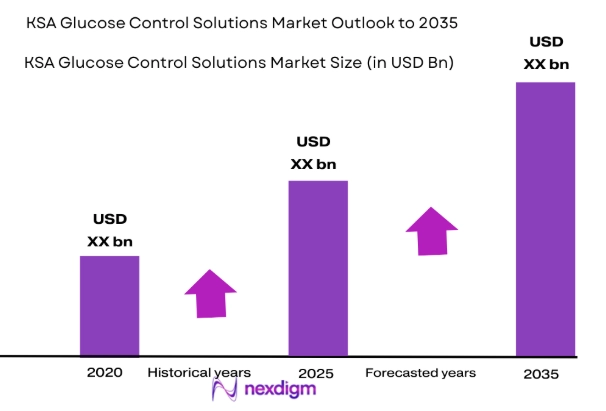
The KSA Glucose Control Solutions market is valued at approximately USD ~ billion in 2025, driven by the rising prevalence of diabetes in the country and increasing government support for healthcare initiatives. According to the Saudi Ministry of Health, over 4 million people in Saudi Arabia are living with diabetes, representing a significant portion of the population. The increasing awareness of glucose management tools, such as Continuous Glucose Monitoring Systems (CGMS) and advanced insulin therapies, further propels market growth. Additionally, the market is shaped by innovations in healthcare technologies and an aging population, which increases the demand for reliable glucose control solutions.
The dominant cities driving the KSA Glucose Control Solutions market include Riyadh, Jeddah, and Dammam. Riyadh leads due to its central role as the political and economic hub, where many healthcare institutions and pharmaceutical companies are based. Jeddah and Dammam also play key roles due to their strategic locations and extensive healthcare infrastructure. These cities have seen an increase in demand for diabetes care due to higher urbanization, a growing healthcare ecosystem, and improved access to medical services. These factors contribute to the concentration of demand for glucose control solutions in these metropolitan areas.
Market Segmentation
By Product Type
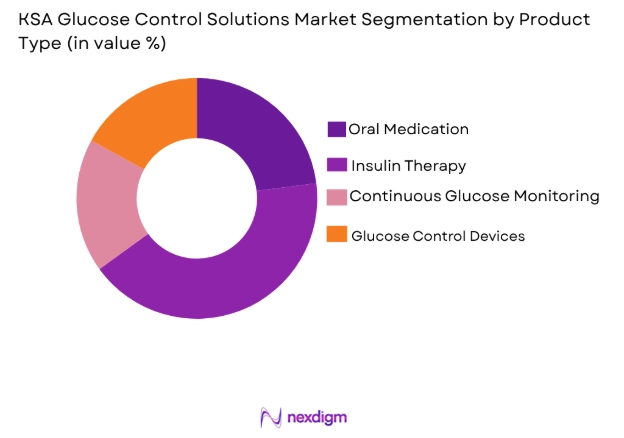
The KSA Glucose Control Solutions market is primarily segmented by product type, with oral medication, insulin therapy, continuous glucose monitoring systems (CGMS), and glucose control devices as the key categories. Insulin therapy has the largest share in the market due to the widespread use of insulin in managing both Type 1 and Type 2 diabetes. This segment is dominated by the high adoption of insulin injections and pens, coupled with the presence of major pharmaceutical companies such as Novo Nordisk and Sanofi. These companies have established strong brand recognition and loyalty within the market, enhancing insulin’s dominance as a primary glucose control solution.
By Application
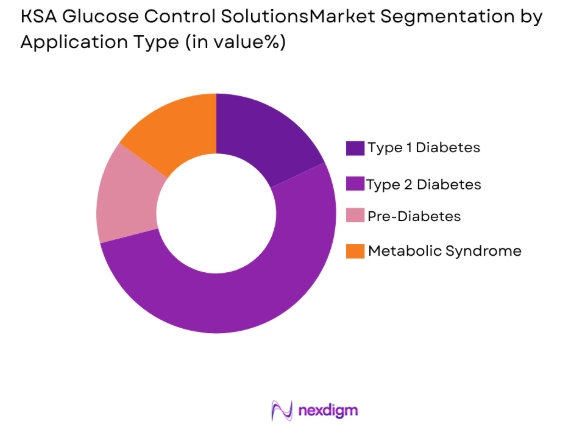
The KSA Glucose Control Solutions market is segmented by application into Type 1 diabetes, Type 2 diabetes, pre-diabetes, and metabolic syndrome. Type 2 diabetes commands the largest market share, driven by a combination of lifestyle factors such as obesity, sedentary habits, and poor dietary choices. The Saudi Arabian government has implemented various health initiatives aimed at raising awareness about the prevention of Type 2 diabetes. Additionally, there has been a growing shift towards preventive healthcare, with an increasing number of individuals opting for early-stage glucose control solutions.
Competitive Landscape
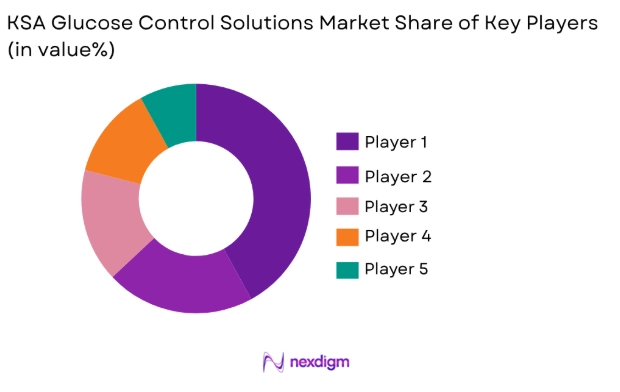
The KSA Glucose Control Solutions market is highly competitive, dominated by both international pharmaceutical companies and local healthcare providers. Major global players like Novo Nordisk, Sanofi, and Medtronic have a significant presence in the market, offering a wide range of glucose control solutions, from insulin to continuous glucose monitoring systems. In addition to these multinational companies, local players also contribute to the market’s dynamism by offering products tailored to the needs of the Saudi population.
| Company Name | Establishment Year | Headquarters | Market Share (2024) | Product Type | Distribution Channels | Annual Revenue | Regulatory Compliance | Partnerships |
| Novo Nordisk | 1923 | Denmark | 18% | ~ | ~ | ~ | ~ | ~ |
| Sanofi | 2004 | France | 15% | ~ | ~ | ~ | ~ | ~ |
| Medtronic | 1949 | Ireland | 12% | ~ | ~ | ~ | ~ | ~ |
| Roche | 1896 | Switzerland | 11% | ~ | ~ | ~ | ~ | ~ |
| Abbott | 1888 | USA | 10% | ~ | ~ | ~ | ~ | ~ |
KSA Glucose Control Solutions Market Analysis
Growth Drivers
Increasing Diabetes Prevalence
The prevalence of diabetes in Saudi Arabia has been steadily rising over the past years, with over 4 million people currently affected. According to the Saudi Ministry of Health, the country’s diabetes rate has increased significantly, with projections indicating that one in every four adults will be living with diabetes by 2030. The rising cases are attributed to factors such as unhealthy diets, lack of physical activity, and increasing urbanization. The number of cases of Type 2 diabetes is particularly growing, driven by the country’s high obesity rate, which stood at 59.4% in 2022 (World Health Organization).
Government Health Programs and Subsidies
The Saudi government has been increasingly committed to improving healthcare outcomes, particularly for chronic conditions like diabetes. The Ministry of Health’s National Diabetes Program, launched in 2022, has allocated funding to increase awareness, early detection, and intervention. The program includes subsidized medications and glucose monitoring tools for patients in need, ensuring better access to healthcare services. The Saudi government’s efforts are complemented by the Vision 2030 initiative, which aims to improve healthcare infrastructure and reduce the burden of chronic diseases. In 2023, the Saudi government allocated USD ~ billion for healthcare investments, directly benefiting diabetes management and glucose control solutions.
Market Challenges
High Costs of Advanced Glucose Control Devices
While the Saudi healthcare system has made strides in improving access to healthcare solutions, the high cost of advanced glucose control devices remains a significant challenge. In 2023, the cost of Continuous Glucose Monitoring (CGM) systems was noted to be a barrier for many Saudi diabetic patients, with some models exceeding SAR 8,000 (USD 2,100) for a complete system, including sensors. The high cost of insulin pumps, which are essential for some diabetic patients, adds another layer of financial strain. With the healthcare system struggling to reduce these costs despite government subsidies, the affordability of advanced glucose control devices remains a challenge for many in need.
Regulatory and Approval Delays
Regulatory and approval delays also present challenges in the availability of glucose control solutions in Saudi Arabia. Although the Saudi Food and Drug Authority (SFDA) has made progress in accelerating medical device approvals, the process remains lengthy, especially for newer, cutting-edge technologies. In 2023, approval times for medical devices like CGMs and insulin pumps were reported to be longer than those in other Gulf Cooperation Council (GCC) countries, with delays often stretching beyond 12 months. This slow approval process hinders the timely introduction of new products that could improve patient outcomes, keeping the market dependent on older, less efficient technologies.
Opportunities
Untapped Rural Markets
Saudi Arabia’s rural regions present significant opportunities for growth in the glucose control solutions market. As of 2023, approximately 30% of Saudi Arabia’s population resides in rural areas, and many have limited access to modern healthcare services. Rural regions have relatively fewer healthcare facilities, especially in terms of specialized diabetes care. The Ministry of Health has already initiated outreach programs to deliver healthcare services in these underserved areas. The introduction of affordable glucose control solutions, such as portable glucose meters and low-cost insulin options, would cater to this largely untapped market. Given the increasing prevalence of diabetes in these areas, there is an opportunity for healthcare providers and companies to expand their reach and provide better access to glucose control solutions.
Demand for Mobile Healthcare Solutions
With the rise in mobile technology, the demand for mobile healthcare solutions has grown, particularly for chronic disease management like diabetes. In Saudi Arabia, the adoption of smartphones has reached 98% as of 2023, with an increasing number of diabetes patients turning to mobile apps to manage their condition. Mobile health applications that integrate with glucose monitoring devices are becoming increasingly popular, offering convenience and real-time data analysis for patients. These mobile solutions offer new avenues for glucose control solutions providers to cater to the growing demand, especially with the government pushing for greater digital health adoption.
Future Outlook
Over the next 5 years, the KSA Glucose Control Solutions market is expected to experience steady growth, driven by the government’s continued emphasis on healthcare reforms, rising diabetes awareness campaigns, and the increasing prevalence of diabetes across the nation. Additionally, technological advancements in glucose monitoring devices and insulin therapies will further boost market expansion. The growing adoption of smart healthcare solutions and the integration of digital health platforms are expected to offer new avenues for growth, particularly in remote patient monitoring and mobile health applications. The increasing demand for innovative and cost-effective solutions for managing diabetes will continue to shape the future trajectory of the market.
Major Players
- Novo Nordisk
- Sanofi
- Medtronic
- Roche
- Abbott
- Johnson & Johnson
- Merck
- Boehringer Ingelheim
- AstraZeneca
- Eli Lilly
- Bayer
- Dexcom
- LifeScan
- Omron Healthcare
- Tandem Diabetes Care
Key Target Audience
- Government and Regulatory Bodies
- Healthcare Providers
- Pharmaceutical Companies
- Investments and Venture Capitalist Firms
- Medical Equipment Manufacturers
- Hospitals and Clinics
- Insurance Providers
- Retail and Online Pharmacies
Research Methodology
Step 1: Identification of Key Variables
The initial phase involves identifying key stakeholders in the KSA Glucose Control Solutions market, including healthcare providers, pharmaceutical companies, and distributors. Secondary research through industry reports, government data, and market intelligence tools is used to identify critical variables that influence the market dynamics, such as market growth drivers and challenges.
Step 2: Market Analysis and Construction
Historical data on market trends and consumer behavior are analyzed to assess the penetration of glucose control solutions across different segments. This phase involves a detailed review of product offerings, sales data, and technological innovations in the market to create a robust market structure.
Step 3: Hypothesis Validation and Expert Consultation
Market hypotheses are developed based on the analysis of secondary data, followed by expert consultations with professionals in the healthcare and diabetes care industry. Interviews with key stakeholders such as hospital administrators, endocrinologists, and technology providers validate these hypotheses and provide operational insights.
Step 4: Research Synthesis and Final Output
The final phase involves synthesizing the data gathered from all sources. Direct engagement with major players and local healthcare providers helps in validating findings and ensuring that the market data is accurate and comprehensive. This step culminates in a detailed report on the KSA Glucose Control Solutions market outlook.

- Executive Summary
- Research Methodology (Market Definitions and Assumptions, Abbreviations, Market Sizing Approach, Consolidated Research Approach, Understanding Market Potential Through In-Depth Industry Interviews, Primary Research Approach, Limitations and Future Conclusions)

- Definition and Scope
- Overview Genesis
- Evolution of Key Players in the Market
- Business Cycle
- Supply Chain and Value Chain Analysis
- Regulatory Landscape and Compliance

- Growth Drivers
Increasing Diabetes Prevalence
Government Health Programs and Subsidies
Technological Advancements in Glucose Monitoring Devices
Increasing Health Awareness - Market Challenges
High Costs of Advanced Glucose Control Devices
Regulatory and Approval Delays - Opportunities
Untapped Rural Markets
Demand for Mobile Healthcare Solutions - Trends
Wearable Glucose Monitoring Technologies
Integration with Digital Health Platforms - Government Regulation
Health Insurance Policies and Coverage
Regulatory Barriers for Medical Device Approvals - SWOT Analysis
- Porter’s Five Forces
- Competition Ecosystem

- By Value, 2020-2025
- By Volume, 2020-2025
- By Average Price, 2020-2025

- By Product Type (In Value %)
Oral Medication
Insulin Therapy
Continuous Glucose Monitoring Systems (CGMS)
Glucose Control Devices
- By Application (In Value %)
Diabetes Type 1
Diabetes Type 2
Pre-Diabetes
Metabolic Syndrome
- By Distribution Channel (In Value %)
Pharmacies
Hospitals
Online Channels
- By End-User (In Value %)
Healthcare Providers
Patients
Research and Clinical Trials
- By Region (In Value %)
Central Region
Eastern Region
Western Region
Southern Region

- Market Share of Major Players
- Market Share by Product Type
- Cross Comparison Parameters (Company Overview, Business Strategies, Recent Developments, Strengths and Weaknesses, Distribution Channels, Revenue, Number of Dealers and Distributors, Production Plant, Margins, Unique Value Offering)
- SWOT Analysis of Major Players
- Pricing Analysis of Major Players in KSA Glucose Control Solutions Market
- Detailed Profiles of Major Companies
Sanofi
Novo Nordisk
Abbott
Medtronic
Roche
Johnson & Johnson
Merck
Boehringer Ingelheim
AstraZeneca
Eli Lilly
Bayer
Dexcom
LifeScan
Omron Healthcare
Tandem Diabetes Care

- Market Demand and Utilization
- Purchasing Power and Budget Allocations
- Regulatory and Compliance Requirements
- Needs, Desires, and Pain Point Analysis
- Decision-Making Process

- By Value, 2026-2035
- By Volume, 2026-2035
- By Average Price, 2026-2035


 Request a Sample
 Ask for Customization
 Get a Quote
 Enquire Now